Thursday, October 1, 2026
Home Blog Page 6923

Two Industry Officials Expected to Help Oversee E.P.A. Chemical Rules

0
Two Industry Officials Expected to Help Oversee E.P.A. Chemical Rules


A former chemical-industry executive who fought against stronger regulations under the first Trump administration is returning to take a critical role at the Environmental Protection Agency, two people with knowledge of the appointment said, raising concerns of corporate influence on chemical safety regulations.

Nancy B. Beck, a toxicologist and former executive at the American Chemistry Council, the industry’s main trade group, is set to reprise a role helping to oversee chemical policy similar to the one she held from 2017 to 2021, though her exact title and scope of work has yet to be determined, the people said. The chemistry council represents dozens of chemical companies and major manufacturers.

Dr. Beck is credited with leading a wide-ranging pushback against chemical regulations during the first Trump administration, as well as what a subsequent internal investigation described as political interference in agency science and policymaking. She rewrote rules, for example, that made it harder to track the health consequences of a “forever chemical” linked to cancer, and therefore to regulate it.

She also helped scale back proposed bans on other substances like asbestos and methylene chloride, a harmful chemical found in paint thinners. Neither the E.P.A. nor Dr. Beck responded to requests for comment for this article.

Hunton Andrews Kurth, the law firm where Dr. Beck served most recently as director of regulatory science, said she was no longer with the firm. Dr. Beck is listed in the E.P.A. staff directory as a political appointee.

Dr. Beck is expected to be joined by Lynn Ann Dekleva, who also worked for the American Chemistry Council, who is set to return to a role helping to oversee new chemicals as deputy assistant administrator, though her title could still change, the people said. An environmental engineer by training, her career in the chemicals industry includes more than three decades at DuPont, the chemicals giant.

Recent reports released by the E.P.A.’s Office of Inspector General said that, under Dr. Dekleva, employees were pushed to approve new chemicals based on less stringent assessments and were retaliated against if they raised concerns.

Dr. Dekleva did not respond to requests for comment.

Chris Jahn, chief executive of the American Chemistry Council, said in a statement that the group looked forward “to working with all EPA staff in support of sound science” and policy to strengthen America’s competitiveness and create jobs.

The appointments of Dr. Beck and Dr. Dekleva to advisory or deputy jobs at the agency are not expected to require approval by Congress. Dr. Beck was previously nominated to head the Consumer Product Safety Commission in 2020, but did not get to a Congressional vote after Democrats and environmental groups accused her of using her previous government positions to advance the chemical industry’s agenda.

“Nancy Beck, E.P.A.’s ‘toxics czar’ during the first Trump Administration, is back to fulfill the chemical industry’s wish list,” said Daniel Rosenberg, director of federal toxics policy at the Natural Resources Defense Council, an environmental advocacy group. “The weakening of health protections” from toxic chemicals “is just around the corner,” he said.

Over the past four years the Biden administration has tried to catch up on regulating the most dangerous chemicals on the market, as required under a law that was strengthened in 2016.

The Biden administration proposed or finalized restrictions on 10 dangerous chemicals, including trichloroethylene, a chemical used in cleaners and lubricants also linked to cancer, as well as asbestos, a heat- and fire-resistant mineral widely used in building materials that can cause cancer and lung disease. Currently, more than 80,000 chemicals on the market are not subject to environmental testing or regulation.

The Biden administration also set the first-ever federal standards for PFAS in drinking water, and designated two types of PFAS as hazardous substances under a law that shifts the responsibility for the cleanup of toxic sites from taxpayers to industry.

The chemicals industry has asked the Trump administration to roll back many of those rules. In a letter to Mr. Trump last month, a coalition of industry groups, including the chemistry council, called for a reversal of what they called the Biden administration’s “unscientific, sledgehammer approach” to chemical policy.

In the letter, the industry groups in particular ask the Trump administration to revisit PFAS drinking-water standards and the designation of the two PFAS chemicals as hazardous. They also press the E.P.A. to speed up its review of new chemicals, and to roll back its effort to place new regulations on existing chemicals, something chemical companies said was causing “confusion, duplication and overregulation.”


Trump administration orders DEI employees to be put on leave | Donald Trump News

0
Trump administration orders DEI employees to be put on leave | Donald Trump News


The US president is pursuing an aggressive push against diversity, equity and inclusion programmes.

United States President Donald Trump’s administration has directed that all federal diversity, equity and inclusion (DEI) staff be put on paid leave and eventually be laid off, as the Republican leader takes aim at initiatives meant to address systemic racism.

An Office of Personnel Management memo, first reported by CBS News, directed agencies to place DEI office staffers on paid leave by 5pm (22:00 GMT) on Wednesday and take down all public DEI-focused webpages by the same deadline.

Agencies must also cancel any DEI-related training and end any related contracts, and federal workers are being asked to report to the office if they suspect any DEI-related programme has been renamed to obfuscate its purpose within 10 days – or face “adverse consequences”.

By Thursday, federal agencies have been directed to compile a list of federal DEI offices and workers as of Election Day in November. They also are expected to develop a plan to execute a “reduction-in-force action” against those federal workers by next Friday.

The moves follow an executive order Trump signed on his first day in office this week ordering a sweeping dismantling of the federal government’s DEI programmes, which could touch on everything from anti-bias training to funding for minority farmers and homeowners.

Trump has called the programmes “discrimination” and insisted on restoring what he describes as strictly “merit-based” hiring.

But civil rights advocates have argued that DEI programmes are necessary to address longstanding inequities and structural racism.

Basil Smikle Jr, a political strategist and policy adviser, said he was troubled by the Trump administration’s assertion that diversity programmes were “diminishing the importance of individual merit, aptitude, hard work, and determination” because it suggested women and people of colour lacked merit or qualifications.

“There’s this clear effort to hinder, if not erode, the political and economic power of people of colour and women,” Smikle said.

“What it does is open up the door for more cronyism,” he said.

Trump’s anti-DEI push picks up where his first administration left off.

One of Trump’s final acts during his first term in 2017-2021 was an executive order banning federal agency contractors and recipients of federal funding from conducting anti-bias training that addressed concepts like systemic racism.

His successor, Democrat and former US President Joe Biden, promptly rescinded that order on his first day in office and issued a pair of executive orders — now rescinded — outlining a plan to promote DEI throughout the federal government.

While many changes may take months or even years to implement, Trump’s new anti-DEI agenda is more aggressive than his first and comes amid far more amenable terrain in the corporate world.

Prominent companies from Walmart to Facebook have already scaled back or ended some of their diversity practices in response to Trump’s election and conservative-backed lawsuits against them.


Turkey mourns victims of fatal Bolu hotel fire as efforts to identify them continue

0
Turkey mourns victims of fatal Bolu hotel fire as efforts to identify them continue


Kathryn Armstrong

BBC News

Esra Yalcinalp & Aynur Tekin

BBC Turkish

Reporting fromKartalkaya, Turkey

Deadly fire at Turkey ski resort hotel

A day of mourning is under way in Turkey for the 76 victims of a fire that engulfed a popular ski resort hotel in the country’s north-west.

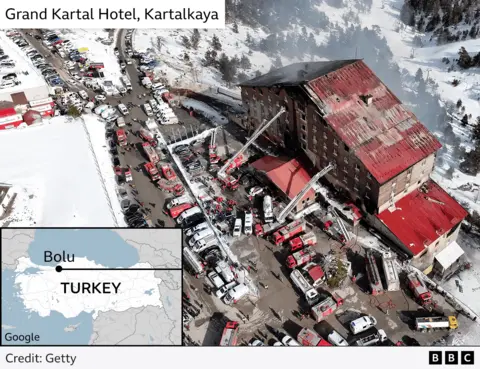
The fire broke out at the wooden-clad 12-storey Grand Kartal Hotel in Bolu at 03:27 local time (00:27 GMT) during a busy holiday period when 234 people were staying there. It took 12 hours to put out.

An investigation has been launched into the incident and there have been conflicting reports about whether the hotel was up to safety standards.

Nine people have been arrested, including the hotel’s owner.

President Recep Tayyip Erdogan, who visited Bolu on Wednesday, said those responsible for negligence leading to the fire “will be held accountable”.

Flags are flying at half-mast across Turkey in memory of the victims of the fire, while the first funerals are being held.

Search and rescue teams are making their final efforts to find any remaining bodies.

The authorities said that they were assessing all risks, including the possibility of collapse, for the building.

Alongside the fatalities, 51 people were injured in the fire, according to health minister Kemal Memisoglu. One was receiving treatment in intensive care, and 17 people have been discharged. Relatives have been gathering outside the hospitals where they are being treated.

A person the BBC met in front of the morgue said that he had received news that seven of his relatives had died and that he had visited hospitals looking for their bodies. He later learned that the morgue was empty.

Footage circulating showed linen hanging from windows which was used by those trying to escape the burning building. On Wednesday, these could still be seen swaying in the wind.

The cause of the fire has not yet been found, but Bolu governor Abdulaziz Aydin said initial reports suggested it had broken out in the restaurant section of the hotel’s fourth floor and spread to the floors above.

Aydin said the hotel’s remote location and freezing conditions meant it took more than an hour for fire engines to arrive.

The hotel was last inspected in 2024, and the tourism minister said there had been no concerns regarding the hotel’s fire safety prior to Tuesday’s disaster.

However, the Union of Chambers of Turkish Engineers and Architects (TMMOB) said that, according to regulations, an automatic fire extinguisher system was needed, and it appeared from photos of the hotel that one had not been installed.

It added that it was unclear if other regulations had been complied with, but based on the statements of survivors, “it is understood that the detection and warning systems did not work and the escape routes could not be determined”.

Some survivors reported that they had not heard any fire alarms.

The Bolu mountains are popular with skiers from Istanbul and Turkey’s capital Ankara, which is roughly 170km (105 miles) away, and the hotel was operating at high occupancy at the start of the two-week school holidays.

Who are the victims?

Instagram Zehra Gültekin and her husband Bilal Gültekin smile in a black and white photo seated with their children on a lawn in front of a large building. Zehra is wearing a headscarf and dark glasses, and one child - on the far left of the picture - is also wearing sunglassesInstagram

Zehra Gültekin and her husband Bilal Gültekin were at the hotel with their three young sons

Information about those who died in the fire is continuing to emerge, although some of the bodies are still to be identified. At least two people were killed after they tried to jump to safety.

Many children and young people are among the dead and, in many cases, several members of the same family have been killed.

Turkish Airlines confirmed that Zehra Sena Gültekin died along with her husband, businessman Bilal Gültekin, and three children. Boğaziçi Executives Foundation said two of Bilal’s siblings were also killed.

These included Dr Enes Gültekin, who the Medical Union said had died, along with Izmir dentist Dr Kübra Tonguç Altın and his daughter Alya.

More than 10 members of the Gültekin family are thought to have died in total.

Dentist Dr Burak Hasar announced that his colleague of 15-years, Dr Yasemen Boncuk Tüzgiray, her husband Dr Erhan Tüzgiray, and their children Defne and Demir had all died.

The Turkish Wind Energy Association announced that two executives from one of its members, Inovat Energy Storage Solutions, were killed. They are the company’s CEO Can Tokcan, his brother Atıl Enis Tokcan, and their children Kemal and Atlas Kaan.

Tarsus American College announced the death of its graduates Mert Doğan, his wife Duygu, and their children Mavi and Doğa, as well as another graduate’s grandson Ömür Kotan.

The İELEV Schools association announced the death of students Pelin Güngör, her mother Burcu, father Kıvanç and brother Kerem.

Staff at the hotel were also killed, including chef Eslem Uyanik. Turkish media quoted Süleyman Nazik, who said his daughter, Esra Nazik, had died and had just started working there.

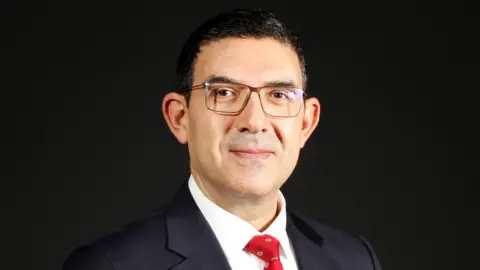
Özyeğin Üniversitesi Prof Dr Atakan Yalçın, wearing spectacles and a black suit with red tieÖzyeğin Üniversitesi

Prof Dr Atakan Yalçın and his daughter both died in the fire

Prof Dr Atakan Yalçın, who worked at the Özyeğin University Faculty of Business, and his daughter Elif Derin, both died.

Nedim Turkmen, a writer for Sozcu newspaper, his wife Ayse Neva, and their two children, 18-year-old Ala Dora and 22-year-old Yüce Ata, were all killed.

TED Istanbul College announced the death of students Alican Boduroğlu, his sister Elif Nas, as well as their mother Ebru.

Meanwhile, TED Ankara College shared the news of the death of Eren Bağcı on its social media accounts.

Dilara Ermanoglu, 24, was also among the victims, and her father who had gone to Bolu to look for her was treated by health workers for a heart attack.

Vedia Nil Apak, a 10-year-old swimmer with Fenerbahce Sports Club in Istanbul, also died, along with her mother Ferda.

Club management also said that Ceren Yaman Doğan, the wife of the vice president of its Bolu association, and their 17-year-old daughter Lalin, were killed. Ceren was also the daughter of a well-known local businessman.

Mehmet Cem Doğan, the Bolu factory director for OYAK cement, died, as did his wife Ayşemin Elif and daughter Ayşe Maya.

The Turkish Neurology Association said its member, Dr Ahmet Çetiz, was killed alongside his family.

Başkent University published a condolence message regarding the death of its graduate Müge Suyolcu and her daughter Pera.

The death of intern doctor Yiğit Gençbay, a senior student at the university’s medicine department, was also announced.

A map and aerial view of the Grand Kartal Hotel after the fire, showing a large number of emergency vehicles


Israel Keeps Up Raids in West Bank, Arresting 25, Palestinian Reports Say

0
Israel Keeps Up Raids in West Bank, Arresting 25, Palestinian Reports Say


Israel’s military continued what it called a new counterterrorism operation in the Israeli-occupied West Bank on Wednesday, arresting at least 25 people over the last day, Palestinian news media reported.

The total death toll since the start of the raid rose to 10, up from eight on Tuesday, and four more people were injured in Jenin, according to Palestinian officials cited by Wafa, the Palestinian Authority’s official news agency.

The Israeli offensive, in its second day, was not just focused on Jenin.

On Wednesday, the military made arrests in Jenin, Ramallah, Hebron, Tulkarm and Bethlehem, the officials said. Enhanced security at Israeli checkpoints across the territory slowed or stopped traffic; in one case a 45-year-old woman died at a checkpoint outside Hebron while waiting to be allowed to go to a hospital, the Palestinian Health Ministry said.

The mayor of Jenin, Mohammad Jarar, told Wafa that Israeli forces held as many as 600 people overnight at the Jenin Governmental Hospital, but they were allowed to leave Wednesday morning. The news agency described Israeli bulldozers blocking the hospital’s doors with dirt from nearby streets.

Mr. Jarar also said people had been forced to leave their homes, a claim that Lt. Col. Nadav Shoshani, an Israeli military spokesman, denied. “There’s no evacuation order in Jenin,” he said.

Briefing reporters about the operation, Colonel Shoshani said people at the hospital were held temporarily to ensure they were not hurt by explosives that the military was detonating nearby.

Since a temporary cease-fire took hold in Gaza over the weekend, Israel has turned its attention to the West Bank, where tensions have risen as militants have grown in power and Israeli settler violence against Palestinian civilians has soared.

Colonel Shoshani said the operation in the West Bank was similar in scope to one that the military carried out in August. That 10-day raid in Jenin killed 21 people, according to Palestinian news media and residents. It was one of the most extensive and deadly raids in the West Bank in years.

The colonel said the operation was Israel’s latest effort to curb militant attacks, many of which involved improvised explosives that had been planted under both civilian streets and Israeli military vehicles.

“Our strategy is to fight those terrorists while we enable the civilian population to go on with their lives,” Colonel Shoshani said.

In a series of social media posts on Wednesday, Roland Friedrich, the West Bank director of the United Nations agency that helps Palestinians, said the Israeli operation was “expected to last days” and was using advanced weapons on Jenin, including with airstrikes.


Labeling Mexican Cartels ‘Terrorists’ Could Expose U.S. Companies to Sanctions

0
Labeling Mexican Cartels ‘Terrorists’ Could Expose U.S. Companies to Sanctions


President Trump’s executive order designating Mexican cartels and other criminal organizations as foreign terrorists could force some American companies to forgo doing business in Mexico rather than risk U.S. sanctions, according to former government officials and analysts — an outcome that could have a major effect on both countries given their deep economic interdependence.

The executive order, which Mr. Trump signed on Monday, is intended to apply maximum pressure on Mexico to rein in its dangerous drug trade. The designation, more generally, also gives his administration more power to impose economic penalties and travel restrictions, and potentially even to take military action in foreign countries.

Yet, disentangling cartel operations from U.S. interests in Mexico could be immensely complicated. Mexico is the United States’ largest trade partner of goods, and many American companies have manufacturing operations there.

Even more complicated, these criminal networks have extended their operations far beyond drug trafficking and human smuggling. They are now embedded in a wide swath of the legal economy, from avocado farming to the country’s billion-dollar tourism industry, making it hard to be absolutely sure that American companies are isolated from cartel activities.

“This has come up in previous administrations across the political spectrum and from members of Congress who have wanted to do it,” said Samantha Sultoon, a senior adviser on sanctions policy and threat finance in the Trump and Biden administrations.

“But no one has done it because they have looked at what the implications would be on trade, economic and financial relationships between Mexico and the United States,” she added. “They have all come away thinking that such a designation would actually be super shortsighted and ill-considered, though prior administrations viewed the U.S.-Mexico relationship far differently than the incoming Trump administration appears to.”

The foreign terrorist designation could lead to severe penalties — including substantial fines, asset seizures and criminal charges — on companies and individuals found to be paying ransom or extortion payments. U.S. companies could also be ensnared by standard payments made to Mexican companies that a cartel controls without the American companies’ knowledge.

Some extortion payments, even if made under duress, could be considered “material support” to cartels, said Pablo Zárate, senior manager director at FTI Consulting, an American firm that released a report laying out some of the risks of the terrorist designation.

Former U.S. officials and analysts pointed out that it would be nearly impossible to identify which business may employ or be affiliated with cartel members given the tens of thousands of people involved and operating in various industries, including the hotel and agriculture sectors. Cartels use the legal economy to launder money, which could mean that unwitting employees working at a resort or an avocado packing company could technically be on the cartel payroll but not know it.

As a result, companies in the risk-averse American financial sector may simply refuse to wire money to a Mexican factory, for example, to facilitate cross-border production and trade, or to wire money between personal accounts.

“Banks may turn away customers, because they may not think they are worth the risk if they have links to Mexico,” said Eric Jacobstein, a former State Department official in the Biden administration.

Banks could ultimately decide to avoid entire sectors perceived as high risk, said Fabian Teichmann, a Swiss lawyer and expert on terrorist financing. Mr. Teichmann singled out Mexico’s avocado trade, where cartels have drastically expanded their operations, as one area that could come under greater scrutiny.

“Banks might say, ‘We don’t want to be anywhere close to those who are considered to be terrorists, so we want to avoid that risk,’” Mr. Teichmann said. “From a banking perspective, that will be a very reasonable decision.”

Other types of financial institutions that facilitate payments between the United States and Mexico could also be affected, such as Venmo or PayPal, which Mr. Trump’s close confidante Elon Musk helped found.

The terrorist label could also push big parts of Mexico’s economy further into the shadows, where cash is used instead of electronically traceable transactions, making it harder for investigators to examine the cartels’ financial structures, Mr. Teichmann said.

“If people can’t bank legitimately, they escape to so-called underground banking systems,” Mr. Teichmann said.

In 2024, the U.S. Chamber of Commerce surveyed 218 companies and found that 12 percent of respondents said that “organized crime has taken partial control of the sales, distribution and/or pricing of their goods.”

The multinational banana producer Chiquita Brands was found liable in 2024 for killings by a Colombian right-wing paramilitary group that was designated as a terrorist organization. Chiquita Brands said that it had been extorted by the paramilitary group and forced to make payments to protect its Colombian employees. Plaintiffs, however, argued that the company had paid the paramilitary group to run out residents to buy land at depressed values.

The terrorist designation would also hurt American companies that are firmly north of the border but rely on Mexican labor. The designation is so broad and vague that ranches in Texas or farms in California could be swept up by the penalties if their employees send remittances to family members in Mexico who are involved in organized crime.

If money transfer companies like Western Union also stop transactions to Mexico over worries about properly vetting Mexican clients, it could affect the remittances the country relies on. That would be devastating for the Mexican economy, which received $63.3 billion in remittances in 2023, nearly 5 percent of the country’s gross domestic product.

The foreign terrorist designation could also pave the way for the United States to deploy forces inside Mexico against criminal organizations without the Mexican government’s consent, as it did in Afghanistan and Syria.

But Afghanistan was occupied by the United States, and Syria’s government lost control over much of its territory in recent years. That gave Washington some cover under international law for the American military to deploy troops and launch special-forces operations to kill or capture terrorist leaders in those countries.

Mexico, however, has built up cooperation with the United States for over 30 years to counter the cartels. Mexico could threaten to halt cooperation if the United States is seen to be violating Mexico’s sovereignty. When the U.S. federal prosecutors office arrested Mexico’s former defense secretary during Mr. Trump’s first administration, the Mexican government halted all cooperation with the U.S. Drug Enforcement Administration.

“Unilateral action would be catastrophic,” said Craig Deare, a former U.S. military attaché at the U.S. Embassy in Mexico in the 1990s.

“It would dismantle any collaboration and decades of Republican and Democratic efforts to build a defense relationship with Mexico,” he said, adding, “If you don’t like cooperation now, wait until Mexico cuts all ties.”

On Tuesday, President Claudia Sheinbaum of Mexico issued a stern warning to Mr. Trump during her daily news conference. “We will always defend our sovereignty,” Ms. Sheinbaum said. “We all want to fight the drug cartels, that is obvious. So what should we do? We have to coordinate efforts; we have to collaborate,” she said.

“May they know that the president of the republic will always defend Mexico above all else,” the Mexican president added.


Libya Deports 613 Migrants Headed for Europe

0
Libya Deports 613 Migrants Headed for Europe


The 613 men had traveled from their native Niger to neighboring Libya, where many of them planned to reach Europe over the Mediterranean Sea, a journey thousands of people from sub-Saharan Africa endeavor to make every year.

But late last month, the men were deported by Libyan authorities in one of the country’s largest expulsions in years. The mass deportation is part of a common pattern: North African governments, funded by the European Union to tackle migration, using brutal tactics to block sub-Saharan Africa migrants from heading to Europe.

The 613 men reached Niger’s closest town to the Libyan border on Jan. 3, disheveled and hungry, some barefoot and sick after months of detention and days of travel across the Sahara. Two of the men died shortly after arriving in Niger.

“I lived through hell,” said Salmana Issoufou, one of the men. Mr. Issoufou, 18, said he had been beaten by Libyan prison guards with wires and weapons throughout his eight-month detention.

As anti-migrant sentiment rises across Europe, from France to Germany to Hungary, the citizens of sub-Saharan Africa trying to reach the continent are being pushed back by North African governments in proportions unseen in years. The E.U. has signed bilateral agreements with Tunisia, Morocco, Libya, Mauritania, that include financial support to curb migrant flows.

The strategy appears to be working: illegal border crossings dropped sharply in 2024, according to recent data from the European Union’s border agency, Frontex.

But rights groups say the methods being used to keep sub-Saharan migrants from traveling to Europe include well-documented human rights violations, such as so-called desert dumps. Migrants have been abandoned in the Sahara without food or water, or kept in North African prisons where they face torture, sexual violence and starvation.

Since Tunisia struck a deal with the European Union in 2023, it has dumped more than 12,000 people, including children and pregnant women, into deserted areas of Libya, according to the United Nations. Last year, the E.U. signed a similar deal with Mauritania.

In Libya, the European Union has financed the country’s coast guard, which has been accused of firing live ammunition during interceptions at sea and of handing migrants over to violent militias.

An investigation by a consortium of news outlets last year showed that vehicles and intelligence provided by E.U. countries have been used by North African security forces to arrest migrants or transport them to desert areas.

The 613 men who were sent back to Niger this month were detained in Libya since at least last fall, according to regional officials in Niger, who escorted them from the border to Dirkou, a Nigerien town about 260 miles south of Libya.

Two men died in Dirkou, according to Abba Tchéké, a social worker who assisted the men there and who works for Alarm Phone Sahara, a nonprofit that rescues stranded migrants in the desert.

The men reached Agadez, the largest city in Niger’s north and a major transit hub for migrants, last week. They were exhausted and dehydrated, and some had skin lesions and broken limbs. Half a dozen men who were deported all said in interviews with The New York Times that they had been mistreated by the Libyan authorities.

Adamou Harouna, 36, said prison guards had burned plastic on him while he was being held.

The mass deportation from Libya echoes similar movements from Algeria, which shares a 580-mile-long border with Niger and last year deported more than 31,000 people, the highest figure in years, according to Alarm Phone Sahara.

The Algerian authorities drop migrants at the border with Niger, forcing them to walk for hours in the desert before reaching the closest town. The migrants also face beatings and physical violence in Algerian prisons. (The European Union doesn’t have a migration agreement with Algeria.)

While expulsions from Libya to Niger have thus far been lower than from Algeria, the recent mass deportation has raised concerns about a potential increase. Last year, hundreds of African citizens were forcibly returned from Libya to Chad, Egypt, Sudan and Tunisia, according to the United Nations.

In Africa, deported migrants are returned to their home countries by the United Nations’ International Organization for Migration. In Niger, the organization transports people abandoned in border areas back to Agadez and later to their home countries on planes that depart several times a week.

For the Nigerien men, the organization arranged buses. Mr. Issoufou, 18, said he would remain in Niger. Mr. Harouna said he plans to travel back to Libya as soon as possible.

Ibrahim Manzo Diallo contributed reporting from Niamey, Niger, Saikou Jammeh from Dakar, Senegal, and Jenny Gross from London.


As gold prices surge, Ghana faces ‘looming crisis’ over illegal mining | Environment News

0
As gold prices surge, Ghana faces ‘looming crisis’ over illegal mining | Environment News


When activist Oliver Barker Vormawor saw reports in September that Ghana’s water agency would not be able to supply some parts of the country with water due to extreme contamination of main rivers from small-scale mining activities, he knew he had to do something.

Later that month, Vormawor and dozens of other concerned Ghanaians took to the streets in the capital city, Accra, to protest against what they said was President Nana Akufo-Addo’s inaction to stop a “looming environmental catastrophe”. They were determined to put the matter on the ballot ahead of the hotly contested December general elections. But rather than get a reaction to their demands, Vormawor and several of his comrades were arrested and imprisoned for weeks on charges of illegal assembly.

Now, although Akufo-Addo’s New Patriotic Party (NPP) was voted out, activists like Vormawor say they have just as little faith in the new president, John Mahama, and his ability to keep the mounting pollution of Ghana’s rivers and soil in check.

“There isn’t any roadmap yet from Mahama on how to tackle the problem,” Vormawor, who once served at the United Nations as a legal officer, told Al Jazeera. “It’s really difficult to say that his government will be more aggressive on this because even as the opposition party, they were very tentative and uncomfortable taking up the issue,” he added, referring to Mahama’s National Democratic Congress (NDC).

Formerly called the “Gold Coast”, the West African nation is bending under pressure from widespread, incessant small-scale mining of the shiny metal. Much of that artisanal activity falls under what locals call “galamsey”, or in full “gather them and sell”. The term once referred to illegal mining, carried out by mostly untrained young men and women, but now more loosely encompasses licensed small-scale operations that mine unsustainably.

Galamsey
A galamseyer, an illegal gold panner, clears mud and sand by hand as he works on a gold field in Kibi, eastern Ghana [File: Cristina Aldehuela/AFP]

Officials allegedly complicit in galamsey

Galamsey has been in practice for many years, but prices of gold that rose globally to an all-time high (close to $3,000 per gram) in late 2024 caused a corresponding surge in illegal mining across Ghana, and in effect, more intense devastation of water bodies.

Small-scale miners use lots of water by digging up soil around riverbeds in forested areas and washing it off to reveal gold ore. They use toxic chemicals such as mercury and cyanide to separate the gold from the ore, and those chemicals flow into rivers that hundreds of communities depend on for drinking and domestic use. Some people say they earn about $70 to $100 a day.

By 2017, more than 60 percent of the country’s water bodies were already polluted by mercury and other heavy metals, turning once-clear rivers a murky brown, according to the country’s Water Resources Commission. The chemicals, which can damage lungs, are affecting thousands of acres of farmlands. Ghana’s Cocoa Board (COCOBOD) said it lost 2 percent of the total cocoa cultivation area to mining. Some farmers allege that galamsey operators buy off their land or intimidate them into selling.

“This is a problem that has been going on for decades now, but it’s a problem that’s escalating fast and this has created a sense among Ghanaians that we are running out of time to protect our country and our people,” Ewurabena Yanyi-Akofur, country director of the nongovernmental organisation WaterAid, told Al Jazeera.

“While illegal gold mining was happening mainly in the south of the country, our research shows that it’s now endemic in the north. The presence of mercury and other toxins in water is leading to skin diseases and other health crises,” she added.

Ghana gold mining
Protesters chant slogans and carry placards during a demonstration demanding government action on illegal gold mining, in Accra on October 3, 2024 [Nipah Dennis/AFP]

In a 2024 report, WaterAid warned that Ghana might have to import water by 2030 in a business-as-usual scenario as drinking water sources shrink.

Activists are particularly angry at LI 2462, an Akufo-Addo-era law that passed in November 2022, which allowed for mining concessions to be allocated in the country’s biodiversity hotspots, including protected forests. A previous policy limited mining in forests and protected reserves to about 2 percent of their total area.

Many activists at the time denounced the law and called attention to the fact that the country lost the equivalent of 30,000 football fields to deforestation for logging, agriculture, and illegal mining of gold and other minerals like bauxite that year.

However, the government pushed ahead with the law and proceeded to approve mining licences – for exploration, industrial operations, and small-scale mining, at an unprecedented rate. Where officials gave out an estimated 90 licences between 1988 and early 2017, at least 2,000 more were given out between September 2017 and January 2025, according to data from the Ghana Mining Repository. That period falls under Akufo-Addo’s tenure. Most licences were for small-scale mines, and key reserves like the Nkrabia Forest Reserve, west of Accra, and the Boin Tano Reserve, located in the country’s Western Region, were among those allocated.

Anger against the Akufo-Addo government intensified after it surfaced that some of the companies newly licensed under LI 2462 belonged to high-placed politicians and members of Akufo-Addo’s NNP party and that some of those people were also running illegal mines.

In April 2023, an explosive report by former Environment Minister Kwabena Frimpong-Boateng to Akufo-Addo leaked to the public. In it, Frimpong-Boateng accused “many party officials … their friends, personal assistants, agents, relatives” of engaging in illegal mining. He accused, among others, Gabby Asare Otchere-Darko, an influential businessman and relative of Akufo-Addo, of interfering in the arrest of mining companies that destroyed forests.

“It was an open secret that they were using this as a way to raise money for the party, that officials would get their own little corners,” Vormawor, the activist, told Al Jazeera. Activists like him say the proliferation of small-scale mining attracted more illegal mines, as the government failed to set standards and ensure supervision.

The Akufo-Addo government denied the allegations levelled in the Frimpong-Boateng report and said it was a catalogue of “personal grievances” with no evidence. In October 2024, the administration deployed the military across water bodies in the country to crack down on illegal miners under a special “Operation Halt”.

New president, but little hope

Still, the results of galamsey are glaring. On January 2, the Ghana water agency again shut down a water treatment plant, this time in the western Tarkwa-Nsuaem region, due to severe pollution of the River Bonsa, which provides drinking water for more than 200,000 people in the area. It was the second time in five months authorities were forced to cut supply.

President Mahama, who was sworn in for a second time into office on January 7, has promised to “reset” Ghana and deal with illegal mining.

In an interview with Voice of America days after his sweeping win in the December elections, Mahama said his government would prioritise passing a law to ban mining in forest reserves and areas close to water bodies. He also promised that his administration would work with the country’s Environmental Protection Agency (EPA) to clean up polluted rivers of effluents and heavy metals.

ghana
Ghana’s President John Dramani Mahama gestures during the swearing-in ceremony for his second term, in Accra on January 7, 2025 [Francis Kokoroko/Reuters]

However, the president stopped short of promising to reverse the small-scale licences recently approved, or to put a hold on new concessions, pointing out that it provides a means of livelihood.

“People need to distinguish between small-scale mining and illegal mining: small-scale mining is legal,” the president said. “There are ways of doing it without destroying the environment in Canada, Australia, and the United States. Technology exists. So why don’t we … train our people to do mining in a way that is safe for the environment? We’re willing to consider those things.”

Mahama first led the government for four years between 2012 and 2016. At that time, galamsey was already an issue, although his administration is credited for banning mining in forest reserves.

Still, some accused Mahama’s administration of failing to check the influx of Chinese nationals who poured into Ghana to invest in small-scale mining equipment such as soil excavators and who worked alongside Ghanaian locals. In 2013, the Ghana Immigration Service deported more than 4,500 Chinese nationals after raids on illegal mines. Now, much of the illegal mining is done by Ghanaians.

Activist Vormawor said he does not expect much from the Mahama government because of his administration’s “weak action” in his first presidency. The president, he said, ought to repeal the controversial Akufo-Addo law and several licences and declare a state of emergency. Without those measures, Vormawor said, he will not stop protesting.

“Yes, there is small-scale mining and there is illegal mining, but most of it is simply irresponsible mining,” the activist said. “The work does not end yet because there’s a looming crisis, and we must draw a line between people having a livelihood and damaging the environment.”


Biden Says He Urged Netanyahu to Accommodate Palestinians’ ‘Legitimate Concerns’

0
Biden Says He Urged Netanyahu to Accommodate Palestinians’ ‘Legitimate Concerns’


President Biden said Thursday that in the days after the war in Gaza began, he pushed Prime Minister Benjamin Netanyahu of Israel to prevent civilian deaths and to accommodate Palestinians’ concerns, while maintaining the United States’ firm support for Israel.

Mr. Biden spoke with the MSNBC host Lawrence O’Donnell in his last television interview while in office, during which he also discussed his political career and presidency. The interview, which aired Thursday night, was taped earlier in the day.

The 15-month-long war, which began after Hamas led a deadly attack on Israel on Oct. 7, 2023, has killed tens of thousands of Palestinians. Most of Gaza’s roughly two million residents have been displaced at least once, and much of the enclave has been destroyed.

Mr. Biden and other leaders announced a provisional cease-fire deal on Wednesday that has raised hopes that Israel’s military assault on Gaza will come to an end. Under the deal to halt the fighting, some hostages held by Hamas in Gaza would be released.

The president and his advisers struggled for months to negotiate an end to the conflict. Mr. Biden, who put the cease-fire deal on the table in May, said on MSNBC that he had told Mr. Netanyahu repeatedly that “he has to find a way to accommodate the legitimate concerns” of Palestinians. He called Mr. Netanyahu a friend but said, “We don’t agree a whole lot lately.”

Critics, including some families of hostages who have pressed for a cease-fire deal, have accused Mr. Netanyahu of intentionally stalling negotiations to prolong the conflict. Mr. Biden did not directly answer when asked whether he thought Mr. Netanyahu had done so. He said that the Israeli prime minister had come under political pressure from Israel’s right-wing, and was at times forced “to do some of the things that, in my belief, I thought were counterproductive.”

To achieve the cease-fire agreement, President-elect Donald J. Trump and Mr. Biden directed their advisers to work together. Mr. Biden said in the Thursday interview that he had had no discussions with Mr. Trump about the negotiations during the past two weeks.

Mr. Biden recalled that the first time he urged Mr. Netanyahu to prevent civilian deaths was during a visit to Israel 10 days after the Hamas attack on Oct. 7, 2023. Mr. Biden said he told the prime minister that the United States would support Israel, but that “you can’t be carpet-bombing these communities.”

Israel’s bombing campaign has been one of the most intense in 21st-century warfare, and the country has at times used inaccurate bombs.

During the interview, Mr. Biden defended his steadfast support for Israel throughout the conflict.

“When Iran thought it was going to blow Israel off the map — they had those thousands of missiles heading their way,” he said. “Well, guess what? We didn’t let it happen.”


Trump Is Said to Push for Early Reopening of North American Trade Deal

0
Trump Is Said to Push for Early Reopening of North American Trade Deal


The Trump administration intends to push to renegotiate the U.S. trade deal with Canada and Mexico ahead of a required 2026 review of it, seeking to shore up U.S. auto jobs and counter Chinese firms that are making inroads into the Mexican auto sector, people familiar with the deliberations said.

The U.S.-Mexico-Canada Agreement, which Mr. Trump signed in 2020, required the three countries to hold a “joint review” of the deal after six years, on July 1, 2026. But Mr. Trump intends to begin those negotiations sooner, according to the people, who spoke on the condition of anonymity to discuss plans that had not been made public.

Trump officials particularly want to tighten the pact’s rules governing the auto sector, to try to discourage auto factories from leaving the United States, they said. They are also seeking to block Chinese companies making cars and auto parts from being able to export to the United States through factories in Mexico.

Mr. Trump has also threatened to impose a 25 percent tariff on products from Canada and Mexico, saying those countries are allowing drugs and migrants to flow across American borders. Speaking from the Oval Office on Monday night after his inauguration, he said he planned to move forward with the tariffs on Feb. 1.

Members of the Trump team believe that Mexico has been violating the terms of a separate agreement to limit metal exports to the United States, and they are eager to show the Mexican government that they mean to take action against such trade violations, one person familiar with the conversations said.

The Wall Street Journal earlier reported that Mr. Trump was pushing for an early renegotiation of his North American trade deal. The three countries are required to meet to discuss the terms of the trade deal six years after the agreement went into force, but trade experts have expected the Trump team to speed up work on the issue.

Mexico and Canada had initially insisted on having six years elapse before the terms of the deal would be revisited because they thought that would get them through a second consecutive Trump administration, a person familiar with the negotiation said. Instead, the requirement for talks in 2026 will fall squarely in Mr. Trump’s lap.

Mr. Trump has long criticized the previous trade deal, the North American Free Trade Agreement, and his officials negotiated their new deal to replace and update it. One of the pact’s major changes was raising the threshold of a vehicle’s content that needed to be produced in North America to qualify for zero tariffs. The deal also included other provisions requiring carmakers to use more North American metal and higher-paid workers.

But Mr. Trump and his advisers now think those terms have not been restrictive enough to prevent car manufacturers from moving factories outside the United States. They have also been wary of a surge in Mexican imports of cheap and high-quality Chinese vehicles, as well as Chinese efforts to set up auto factories in Mexico.

Speaking at the Detroit Economic Club in October, Mr. Trump said that “Mexico is becoming the second China.”

“When China comes in, they take over everything, and you’d have no car manufacturing anymore,” he added.

People familiar with the plans cautioned that they could still change. It also remains to be seen whether Mr. Trump is threatening tariffs against Canada and Mexico as a negotiating tactic to extract certain concessions from their governments, or would simply impose them outright. The Trump administration’s press office did not immediately respond to a request for comment.

Mr. Trump signed an executive order on Monday evening directing various agencies to study a wide variety of trade issues. He did not immediately impose any new tariffs, as he had threatened previously, but the order teed up the possibility of a host of trade actions in the months to come.

One provision in the order directed trade officials to assess the impact of the North American trade deal on workers, farmers and other businesses and “make recommendations regarding the United States’ participation in the agreement.” It also directed them to begin soliciting public comments in preparation for the July 2026 review of the trade deal.


Bimla Bissell, Ambassadors’ Aide and a Social Hub in India, Dies at 92

0
Bimla Bissell, Ambassadors’ Aide and a Social Hub in India, Dies at 92


Bimla Bissell, the indispensable and well-connected social secretary to four American ambassadors to India who was a kind of unofficial ambassador herself, a shrewd local guide to the culture and complexities of a sprawling country, died on Jan. 9 at her home in Delhi. She was 92.

The cause was complications of diabetes, her daughter, Monsoon Bissell, said.

Ms. Bissell’s first ambassadorial boss was John Kenneth Galbraith, the erudite liberal economist who forged a deep bond with Prime Minister Jawaharlal Nehru of India. He was followed by Chester Bowles, the adman turned civil rights champion.

Both were appointees of John F. Kennedy, and it was Ms. Bissell’s job to organize, among many complicated diplomatic extravaganzas, Jacqueline Kennedy’s nine-day trip to India in 1962, an event breathlessly covered by the global press. “Mrs. Kennedy Gets a Festive Welcome on Arrival in India” read the front-page headline in The New York Times when first lady landed, accompanied by her sister, Lee Radziwill.

It also fell to Ms. Bissell to gently let Ms. Kennedy know that the gifts she had brought her Indian hosts — leather picture frames stamped with the words “100% American Beef” — would not be appropriate.

When Richard Celeste was hired to be Mr. Bowles’s personal assistant and embassy protocol officer in 1963, he was flummoxed by the latter job description. So Ms. Bissell took him in hand.

“She took charge of my education with ease and grace,” said Mr. Celeste, who would go on to be a director of the Peace Corps, governor of Ohio and President Bill Clinton’s envoy to India. She also scooped him up for dinner every night until his wife arrived with their newborn.

By all accounts, Ms. Bissell was a one-woman social network, a deft saloniste who seemed to know everybody of any significance in every field.

She was discreet and diplomatic, friends and associates said. She was curious, game and gregarious. She read 14 newspapers every morning. She was politically astute, and in her later years she could often predict a local election down to the number of votes. She had a preternatural capacity for empathy and friendship, and for nurturing and maintaining those friendships.

She counted among her admirers — and they were legion — heads of state, diplomats, policymakers, NGO leaders, journalists, movie directors, authors, artisans, artists and students, all of whom she collected for lavish lunches and dinners at her sprawling stucco house in a leafy development in South Delhi, which was chockablock with crafts and textiles, art and antiques.

She and her husband, John Bissell, were a Delhi institution. He was a lanky, Connecticut-born Yale graduate who in 1958 had traveled to India on a Ford Foundation grant and never left, having fallen in love with the country and his future wife. He founded a company to export Indian crafts, and then a school to educate artisans.

Their household was a kind of North Star, said Marie Brenner, one of many journalists whom Ms. Bissell drew into her circle. Others called it Grand Central East for its open-door policy. “It was always filled with remarkable people,” Ms. Brenner said. “The operating energy was this very high level of political and intellectual discourse.”

Mr. Celeste said: “John was the dreamer and Bim was the doer. She was extremely well-informed, and her instincts were extremely well-grounded.”

At a certain point, Mr. Celeste realized that Ms. Bissell was juggling two jobs. In the mid-1950s she had founded the Playhouse, Delhi’s first progressive preschool, which would become a launchpad for generations of Indians and expat children.

“Over time I came to appreciate that Playhouse School served as a magnet for hard-working, aspirational Indian families,” Mr. Celeste said. “Bim was building a dynamic set of relationships that, as social secretary, gave her a unique Rolodex.”

Senator Michael Bennet of Colorado, a family friend, described Ms. Bissell as an “extraordinary citizen-diplomat for India.” (He was born in India; his father, Douglas Bennet, was also an aide to Ambassador Bowles.)

He added, in an email, “For the generations of newcomers she welcomed to Delhi — especially young people, whom she loved and would enchant with stories from her remarkable life — she was a guiding light.”

Bimla Nanda, known as Bim, was born Oct. 12, 1932, in Quetta, now part of Pakistan. She was the eldest of three daughters of Sita (Sibal) Nanda and Pran Nath Nanda, a veterinary surgeon who became the first husbandry commissioner of independent India. He was also a table tennis champion who invented a unique way to hold the paddle, which became known as the “Nanda grip,” according to Ms. Bissell.

Bim grew up in Lahore, in the Punjab region, until just after Partition, in 1947, when the family moved to Delhi. She majored in English at the Miranda House College for Women, at the University of Delhi.

Her first marriage, an arranged match with a government aide from a suitable family, was brief and unhappy. Divorce at that time was unthinkable, but Bim left her husband, and India, for the University of Michigan, where she earned a master’s degree in education in 1958. When she returned home, she was ostracized, barred from the local gymkhana, the social club that was a leftover from the Raj.

“She broke all the conventions,” said her daughter, “but she did it without trying to make a point. She did it because this was the life she needed to live.”

Bim Nanda was working for a government organization promoting traditional crafts when Mr. Bissell arrived on his Ford Foundation grant. He was instantly smitten with her; she thought he was smitten with her country. In any case, they became fast friends while Mr. Bissell wooed her with fervor and great discipline. For the next five years, as she would tell it, he sent her a note and a red rose every day.

At a certain point Mr. Bissell’s mother intervened. “I want to know your feelings toward my son,” she told Bim. “He is in love with you.”

“He is in love with India,” Bim replied.

“I know my son,” Ms. Bissell said, “and it’s time to fish or cut bait.”

They married in 1963 at Mr. Bowles’s house.

With his wife’s help and connections, Mr. Bissell founded a company, Fabindia, to sell products — home furnishings, clothing and jewelry — made by Indian artisans using traditional techniques. At first it operated out of a room in his rented apartment. Over the decades it grew into a household name in India, with a thriving export business as well as hundreds of retail stores across the country.

After Mr. Bowles’s appointment ended in 1969, Ms. Bissell served his successors, Ambassadors Kenneth B. Keating and Daniel Patrick Moynihan, whose term ended in 1975.

She then joined the World Bank as its external affairs officer in India, essentially working as a cultural ambassador for the bank and as an all-around fixer, helping the bank’s expatriate officials find housing and schools for their children, shopping with their wives, even setting up their telephone lines. She worked with scores of nongovernmental organizations — and founded one, Udyogini, with a mission to empower Indian women entrepreneurs.

In addition to her daughter, Ms. Bissell is survived by her son, William, who runs Fabindia, two grandchildren, and a sister, Meena Singh. Mr. Bissell died in 1998.

After leaving the World Bank in 1996, Ms. Bissell worked as a consultant to a number of organizations and continued to be the center of a cross-cultural social whirlwind. She sold her school, the Playhouse, in 2005. Her house remained a hub for a glittering array of politicians, artists and literary figures who, until her death, relied on her for her political acumen and were buoyed by her friendship.

Eric Garcetti, the former mayor of Los Angeles and the departing U.S. ambassador to India, was just as taken with Ms. Bissell as his predecessors had been.

“You are India,” he told her. “And India is you.”