Wednesday, September 30, 2026
Home Blog Page 6968

What are the chances of another Iran nuclear deal? | TV Shows

0
What are the chances of another Iran nuclear deal? | TV Shows


Iran and European powers to meet days before Donald Trump returns to the White House.

Talks between European powers and Iran on its nuclear programme are expected to take place before United States President-elect Donald Trump returns to the White House later in January.

Where do things stand and what does each side want?

Presenter:

Imran Khan

Guests:

Hassan Ahmadian – Professor, University of Tehran

Ellie Geranmayeh – Deputy director of the Middle East and North Africa Programme at the European Council on Foreign Relations

Trita Parsi – Executive vice president at the Quincy Institute in Washington, DC


Saturday bank holiday: Are banks open on Jan 4? Full list for this month

0
Saturday bank holiday: Are banks open on Jan 4? Full list for this month


Jan 03, 2025 04:05 PM IST

Saturday bank holiday: Banks are usually closed on second and fourth Saturdays, along with on Sundays.

Saturday bank holiday: Banks are usually open on the first, third, and fifth Saturdays (if any) of a month, while they are closed on all second and fourth Saturdays as well as on all Sundays, according to the mandate of the Reserve Bank of India (RBI).

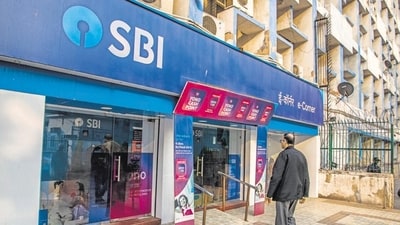
Saturday bank holiday: While bank branches will be closed for all the aforementioned dates, customers can still access digital or net banking services throughout the year, unless the bank notifies otherwise (Usually for maintenance work).(Pradeep Gaur/Mint. Image for representational purpose)

Since January 4, 2025, is a first Saturday, banks will remain open and function as usual.

Also Read: UPI transactions touched record 16.73 billion in December 2024: NPCI data

List of bank holidays in January 2025

Banks will remain closed on several days in January 2025 due to various occasions, including Sri Guru Gobind Singh’s Birthday, Missionary Day/Imoinu Iratpa, Makar Sankranti/Uttarayana Punyakala/Pongal/Maghe Sankranti/Magh Bihu/Birthday of Hazarat Ali, Thiruvalluvar Day, Uzhavar Thirunal, and the birthday of Netaji Subhas Chandra Bose/Vir Surendrasai Jayanti.

However, this is also dependent on which state you are in. The following table shows the entire state-wise list of bank holidays for December 2024.

January 2025 1 2 6 11 14 15 16 23
Agartala •
Ahmedabad •
Aizawl • • •
Belapur
Bengaluru •
Bhopal
Bhubaneswar • •
Chandigarh •
Chennai • • • •
Dehradun
Gangtok • • •
Guwahati •
Hyderabad – Andhra Pradesh •
Hyderabad – Telangana •
Imphal • •
Itanagar • •
Jaipur
Jammu
Kanpur •
Kochi
Kohima •
Kolkata • •
Lucknow •
Mumbai
Nagpur
New Delhi
Panaji
Patna
Raipur
Ranchi
Shillong •
Shimla
Srinagar
Thiruvananthapuram

Holiday Description Day
New Year’s Day/Loosong/Namsoong 1
Loosong/Namsoong/New Year Celebration 2
Sri Guru Gobind Singh’s Birthday 6
Missionary Day/Imoinu Iratpa 11
Makar Sankranti/Uttarayana Punyakala/Pongal/Maghe Sankranti/Magh Bihu/Birthday of Hazarat Ali 14
Thiruvalluvar Day 15
Uzhavar Thirunal 16
Birthday of Netaji Subhas Chandra Bose/Vir Surendrasai Jayanti 23

Source: RBI Website

Also Read: ‘I want dictatorship of Blinkit’: People praise company’s ‘ambulance in 10 minutes’ service

It is best advised to contact your nearest bank branch in case there are any further confusions regarding bank holidays.

What are the banking services which will be available on bank holidays?

While bank branches will be closed for all the aforementioned dates, customers can still access digital or net banking services throughout the year, unless the bank notifies otherwise (Usually for maintenance work).

All bank websites, banking apps, UPI, and ATM services will be active throughout the year otherwise. You can even start a fixed deposit or a recurring deposit on such days digitally.

Also Read: Centre to give automatic ‘Right of Way’ permissions for BharatNet project

Stay updated with the…

See more


US surgeon general calls for cancer warnings on alcoholic drinks

0
US surgeon general calls for cancer warnings on alcoholic drinks


Getty Images Two glasses of red wineGetty Images

America’s top doctor has called for risk warnings on alcoholic beverages, similar to the labels on cigarettes, following new research that links the drinks to seven types of cancer.

The advisory from US Surgeon General Vivek Murthy says the “majority of Americans are unaware of this risk” that leads to about 100,000 cases of cancer and 20,000 deaths annually in the US.

It would require an act of Congress to change the existing warning labels, which have not been updated since 1988.

Mr Murthy has also called for reassessing recommended limits for alcohol consumption and boosting education efforts regarding alcoholic drinks and cancer.

The Surgeon General, who is the leading spokesperson on matters of public health in the federal government, said that alcohol was the third most common preventable cause of cancer after tobacco and obesity.

“The direct link between alcohol consumption and cancer risk is well-established for at least seven types of cancer …regardless of the type of alcohol (e.g., beer, wine, and spirits) that is consumed,” Mr Murthy said in a statement.

This includes increased risk of cancer of the breast (in women), throat, liver, oesophagus, mouth, larynx and colon.

The new report recommends health care providers should encourage alcohol screening and treatment referrals as needed, and efforts to increase general awareness should be expanded.

The warning labels are currently required to state that women who are pregnant should not drink alcohol due to birth defect risks. It also must state that “consumption of alcoholic beverages impairs your ability to drive a car or operate machinery, and may cause health problems”.

Over the last two decades, countries have increasingly introduced warning labels to inform consumers about the health risks of alcohol.

The World Health Organization’s Global Status Report for Alcohol and Health in 2018, cited in Mr Murthy’s report, said 47 member states mandated health and safety warnings on alcohol, up from 31 in 2014.

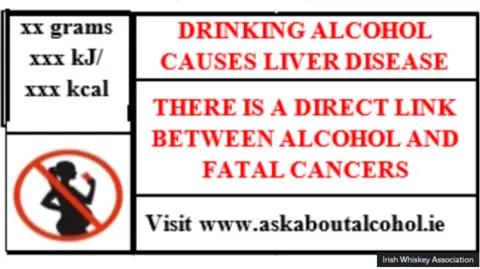
Ireland is the first country in the world to mandate a warning linking any level of alcohol consumption to cancer. From 2026, it will be a legal requirement for all bottles of alcohol in the Republic of Ireland to carry a label.

Irish Whiskey Association A warning label that suggests alcohol causes liver disease and cancerIrish Whiskey Association

From 2026, it will be a legal requirement for all bottles of alcohol in the Republic of Ireland to carry a label

South Korea also requires cancer-specific warnings on alcohol.

In the US, only Congress can amend the new warning labels recommended by Mr Murthy, and it’s not clear that the incoming Trump administration would support the change.

Many countries have also revised the recommended limits for consumption after new studies pointed that no amount of alcohol is safe to drink.

Canada revised its recommendation from nearly two drinks per day to two per week last year.

The US recommends no more than two drinks a day for men and one for women, while the UK suggests no more than 14 “units” of alcohol – around six glasses of wine, or pints of beer – per week.

Share prices of US-listed alcoholic beverage companies – including Diageo, the world’s biggest spirits manufacturer – fell by up to 4% following the announcement.


Rupee falls to record 85.77 vs $, forex kitty at 8-month low

0
Rupee falls to record 85.77 vs $, forex kitty at 8-month low


Rupee falls to record 85.77 vs $, forex kitty at 8-month low

MUMBAI: The rupee closed at a record low of 85.77 against the dollar on Friday, marking its ninth consecutive week of losses. The decline is attributed to the drop in the Chinese yuan, which weakened past the 7.3 mark, as well as the dollar’s rise.
The rupee hit its lowest intraday level at 85.80, before settling at 85.77 – down 2 paise from its previous close.
Meanwhile, the country’s foreign exchange reserves fell for the fourth consecutive week and stood at an eight-month low of $640.3 billion as of Dec 27, Reuters reported. Foreign currency assets dropped by $4.6 billion to $551.9 billion. However, gold reserves increased by $541 million to $66.3 billion. Special Drawing Rights (SDRs) decreased by $12 million to $17.9 billion, while India’s reserve position with the IMF remained unchanged at $4.2 billion.
The rupee depreciated by 0.2% over the week. The dollar index surpassed 109, driven by expectations of fewer rate cuts and a strong US economy. The rupee was under pressure despite a slight softening of crude oil prices. Brent crude fell 0.4% to $75.60 per barrel.
Traders are focused on the impact of US economic data, with the US jobs report due next Friday and inflation data scheduled for Jan 15. Analysts predict the rupee could touch 86/$ in the short term.
Dealers said that corporates were buying the dollar on dips while RBI was ensuring that there was enough supply of the greenback at higher levels. Jateen Trivedi of LKP Securities noted a strong dollar index and rising crude prices, both of which are contributing to pressure on the rupee.


Elon Musk Trolls Britain and Defends Tommy Robinson in Flurry of Social Media Posts

0
Elon Musk Trolls Britain and Defends Tommy Robinson in Flurry of Social Media Posts


He demanded the release of a convicted criminal and far-right agitator. He falsely accused the prime minister, Keir Starmer, of failing to go after child rapists when he was head of public prosecutions. He endorsed a post calling on King Charles III to dissolve Parliament and call elections to remove Britain’s seven-month-old Labour government, a constitutional impossibility.

Elon Musk has once again set his sights on Britain, putting the country in the bull’s-eye in the capricious world of his online obsessions. In a fusillade of posts that began before the new year, Mr. Musk moved on from his enthusiastic boosting of a far-right party in Germany to targeting Britain on multiple politically sensitive fronts.

After mostly ignoring Mr. Musk’s trolling, which has been going on for months, the British government on Friday snapped back, though in characteristically polite fashion.

“Elon Musk is an American citizen and perhaps ought to focus on issues on the other side of the Atlantic,” the government’s health minister, Andrew Gwynne, said in an interview with LBC radio. Mr. Gwynne’s boss, the health secretary, Wes Streeting, told reporters, “Some of the criticisms Elon Musk has made, I think, are misjudged and certainly misinformed.”

Britain is one of several European countries where Mr. Musk is trying to replicate the influence he wielded on behalf of President-elect Donald J. Trump in the American election last fall. In addition to Germany, where his advocacy of a far-right party with neo-Nazi ties, Alternative for Germany, has roiled that country’s politics before elections next month, Mr. Musk has nurtured close ties to Italy’s right-wing prime minister, Giorgia Meloni.

In Britain, Mr. Musk’s antagonism toward the Labour government is rooted in part in its aggressive response to hate speech online. Officials said false and inflammatory posts helped incite anti-immigrant riots that followed the killing of three girls in a mass stabbing in the town of Southport last July. They arrested more than 30 people, which prompted Mr. Musk to condemn the government for what he called an attack on the free speech that he extols on his platform, X.

Britain, he said, “is turning into a police state.”

Since then, however, Mr. Musk has waded into other volatile issues, from declaring his support for the anti-immigrant party, Reform U.K., to stirring up anger over the government’s response to a decade-old child sexual abuse scandal in the northern town of Rotherham. An estimated 1,400 girls were exploited by “grooming gangs” composed largely of British Pakistani men.

Perhaps most provocatively, Mr. Musk has taken up the cause of Tommy Robinson, a far-right, anti-immigrant agitator whose real name is Stephen Yaxley-Lennon. He has been in prison since October after being convicted of defying a court order by repeating false claims about a teenage Syrian refugee who had successfully sued him for libel.

Mr. Robinson has been previously jailed for assault, mortgage fraud and traveling on a false passport to the United States, where he has sought to establish ties with right-wing groups.

“Free Tommy Robinson!” Mr. Musk posted on Jan. 2 as his pinned item atop his X account, which has 210 million followers.

Mr. Musk’s championing of Mr. Robinson has put his other right-wing allies in Britain in an awkward spot. Nigel Farage, the leader of Reform U.K. and a close ally of Mr. Trump’s, has long shunned Mr. Robinson, who founded the English Defence League, an Islamophobic, nationalist group known for its violent street protests in the late 2000s and 2010s.

Mr. Farage, who has reveled in Mr. Musk’s endorsement and has courted him in the hopes of winning a donation to Reform U.K., echoed his demands for a new investigation of the child sex abuse scandal. But he has been conspicuously silent about Mr. Robinson.

As in Germany, where Mr. Musk’s promotion of the far-right AfD party provoked a widespread backlash against him, Mr. Musk’s interventions have won him few fans in Britain. But analysts say his proximity to, and influence over, Mr. Trump mean that his opinions, amplified by his social media platform, cannot be ignored by the government.

“His message doesn’t work in Britain and Germany, and yet the governments are constrained by their relationships with Trump,” said Sunder Katwala, the director of British Future, a research organization in London. “It will be hard enough to have a relationship with Trump. What Musk does is put this nongovernment official in the center of the court.”

Mr. Katwala argued that it made sense for the government to respond to Mr. Musk’s more extreme or erroneous statements, if only because his unpopularity makes him an inviting target for other critics. “They leave an open goal by not saying anything,” he said.

Privately, British officials say they hope that after Mr. Trump’s inauguration later this month, Mr. Musk will be too busy overhauling the American federal government to continue his daily barrage of criticism of Britain and Germany. But in the meantime, his online reach is broad enough that “it affects the political weather,” Mr. Katwala said, citing the child sex abuse scandal as a case in point.

Mr. Musk’s posts have helped whip up a tempest over a case that was the subject of local and national inquiries dating back to 2014. After one of Mr. Starmer’s ministers, Jess Phillips, pushed back on calls for yet another national investigation — saying it was a matter for the local council — the leader of the opposition Conservative Party, Kemi Badenoch, followed Mr. Farage in castigating the government. “No one in authority has joined the dots,” she posted on X on Jan. 2.

On Friday, Mr. Musk claimed that Ms. Phillips, the under secretary for safeguarding and violence against women and girls who has long campaigned for women’s rights, was a “rape genocide apologist” — language that women’s rights supporters said jeopardized Ms. Phillips’ safety. He has also tried to turn the scandal against Mr. Starmer, who ran the Crown Prosecution Service from 2008 to 2013, when the abuses first came to light.

Although several men were imprisoned, the inquiries found that the police and prosecutors were slow to react to the allegations, in part because the victims were reluctant to come forward and in part because of worries about racism, given that most of the accused were British Pakistanis.

“Starmer was complicit in the RAPE OF BRITAIN when he was head of Crown Prosecution for 6 years,” Mr. Musk said in a post that was pinned to the top of his account earlier on Friday. “Starmer must go and he must face charges for his complicity in the worst mass crime in the history of Britain.”

In fact, in 2013, in the wake of the scandal, Mr. Starmer published new guidelines for how the Crown Prosecution Service should deal with cases of sexual exploitation of children.

Having won a landslide Parliamentary majority in July, Mr. Starmer is in no immediate danger of losing his job. But the drumbeat of disinformation and criticism from Mr. Musk, combined with the prospect of him giving money to Reform U.K., has rattled people across the political spectrum in Britain. Lawmakers have called on the government to tighten laws to restrict foreigners from donating to British political parties.

Mr. Musk’s endorsement of posts calling on Charles to step in and call an election betrayed his ignorance of how Britain works. Under the terms of its constitutional monarchy, the king can dissolve Parliament, but only at the request of the prime minister, who decides when to call an election.

“He’s a 21st-century Citizen Kane,” Mr. Katwala said of Mr. Musk. “He’s got a picture of Britain, a picture of Germany, and he looks for information that confirms those pictures. The problem he has in exporting it to Britain or Germany is the evident lack of knowledge of Britain or Germany.”


Committed To Make India A Chip Manufacturing Hub, Prepare Skilled Workforce: Ashwini Vaishnaw | Economy News

0
Committed To Make India A Chip Manufacturing Hub, Prepare Skilled Workforce: Ashwini Vaishnaw | Economy News


New Delhi: The Central government is committed to transforming India into a leading hub for semiconductor manufacturing, while preparing a skilled workforce that meets the evolving demands of the industry, Union Railways and Electronics and IT Minister, Ashwini Vaishnaw, said here on Friday. 

After inaugurating the National Institute of Electronics and Information Technology (NIELIT), deemed to be a university at 12 locations including five locations in the northeastern states, the minister said the university is set to play a crucial role in equipping students with the necessary skills to thrive in a rapidly changing technological environment.

He added that now the meaning of northeast is “New Engine”, to lead the development and growth of the country. At the event, a memorandum of understanding (MoU) was also signed between NIELIT and Tata Electronics Private Ltd (TEPL) to collaboratively enhance the semiconductor skilling ecosystem in India.

The MoU was signed by Dr M.M. Tripathi, Director General, NIELIT and Dr Randhir Thakur, CEO and MD, TEPL. The partnership aims to establish skill centres, develop diploma and certification programmes and conduct workshops in semiconductor ATMP (Assembly, Testing, Marking, and Packaging) technologies.

TEPL will offer technical expertise and internship opportunities, while NIELIT will focus on education, training, and outreach. Both organisations will also jointly pursue research and funding initiatives, with a special emphasis on creating opportunities in the northeastern region, said the government.

The minister announced the launch of NIELIT University, highlighting that it is inspired by the vision of the Prime Minister to prepare professionals in cutting-edge fields such as Semiconductor Manufacturing, Artificial Intelligence, Industry 4.0, and Quantum Computing.

Vaishnaw said the new campus of NIELIT will be developed in Jagiroad town near Guwahati, which will focus on semiconductor manufacturing and electronics manufacturing. Assam Chief Minister Himanta Biswa Sarma reiterated Prime Minister Narendra Modi’s vision of a future where the entire world will rely on semiconductor chips that are “Made in India” and “Made in Assam.”

He emphasised the significant potential for the semiconductor industry to thrive in the region, highlighting the necessity for a skilled workforce and trained manpower to support this growing sector. “This underscored the commitment to fostering local talent and creating job opportunities, ensuring that Assam plays a pivotal role in the global technology landscape,” said Sarma.


Panama reports sharp drop in irregular migration through Darien Gap | Migration News

0
Panama reports sharp drop in irregular migration through Darien Gap | Migration News


The number of migrants and asylum seekers traversing the Darien Gap — the treacherous strip of jungle connecting South and North America — has fallen by nearly 41 percent in the last year.

On Thursday, Panama’s right-wing President Jose Raul Mulino announced the decline, touting it as a success for the country’s efforts to limit irregular migration.

“We have achieved a 41 percent reduction in the flow of migrants crossing the Darien jungle,” Raul Mulino told Panama’s Congress in a speech.

“We work every day to ensure that illegal migration does not reach [Panama City] or the rest of the country.”

Panama faced pressure to crack down on irregular migration in recent years, as the number of migrants and asylum seekers travelling north hit record highs.

In fiscal year 2023, the United States reported 2.48 million “encounters” with migrants and asylum seekers at its southern border with Mexico.

That was a new high-water mark for the US, and it led to a political backlash, with immigration featuring prominently in the country’s general elections in 2024.

For instance, President-elect Donald Trump — the victor in the 2024 presidential race — has pledged to pursue a “mass deportation” campaign upon taking office on January 20.

Likewise, in Panama, 2023 broke records for migrants and asylum seekers navigating the Darien Gap.

An estimated 520,085 people passed through the perilous jungle, known for its steep terrain, swift rivers and criminal networks.

But in 2024, Panama’s immigration authorities saw a steep drop in the number of people risking their lives in the jungle. Some 302,203 crossed the Darien Gap last year.

The US has similarly seen falling numbers at its southern border. In the fiscal year 2024, US Customs and Border Protection documented 2.14 million irregular “encounters” with migrants and asylum seekers, down 14 percent.

November alone saw the lowest monthly total of irregular border crossings in the four years of US President Joe Biden’s term.

But the US has attempted to clamp down on irregular migration in recent months. Last year, Biden implemented stiff measures limiting asylum access to those who cross the US-Mexico border outside official channels.

Penalties included a five-year ban from the US and possible criminal prosecution.

Biden also threatened to suspend asylum petitions altogether if the average daily number of irregular border crossings reached 2,500 per day.

Critics warned these measures could violate international and US humanitarian law, by limiting the ability of asylum seekers to urgently flee persecution.

But supporters of the new policies argued they were necessary to rein in irregular migration.

The US has also pushed its allies in South and Central America to limit irregular migration northwards.

Panama and the US, for instance, signed an agreement in July to “close the passage of illegal migrants” through the Darien Gap, with the US offering to fund deportation flights and other logistics.

Approximately 1,548 migrants and asylum seekers have since been repatriated on US-backed deportation flights from Panama.

The US also established “Safe Mobility Offices” in countries like Costa Rica, Guatemala and Colombia in an effort to dissuade would-be migrants and asylum seekers from making the dangerous trek to the border.

Mulino revealed in December that at least 55 migrants and asylum seekers had died while navigating the Darien Gap in 2024, and an estimated 180 children were abandoned.

Given the inhospitable nature of the terrain, some bodies are never reported or found.

Critics point out that efforts to stamp out irregular migration often overlook the fundamental issues that spur migrants and asylum seekers to make life-threatening trips in the first place.

This past year, for instance, an estimated 69 percent of the migrants and asylum seekers documented in the Darien Gap were from Venezuela.

There, human rights experts warn of government abuses, particularly in the wake of a contested presidential race that saw 2,000 arrested and 23 killed in post-election protests.

Venezuela has also suffered from economic turmoil that has put access to basic supplies like food and medicine out of reach for many residents. Some 7.7 million people have fled the country.



Biden blocks Japan’s Nippon Steel from buying US Steel

0
Biden blocks Japan’s Nippon Steel from buying US Steel


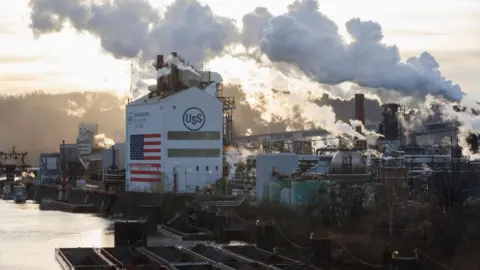
Getty Images U.S. Steel's Clairton Coke Works rests along the Monongahela River in ClairtonGetty Images

US President Joe Biden has formally blocked the takeover of US Steel by a bigger Japanese company, saying foreign ownership could pose risks for national security.

The controversial decision comes a year after Nippon Steel first announced the $14.9bn (£12bn) deal, describing it as a lifeline for its smaller Pennsylvania-based rival.

But the transaction ran into near immediate trouble, after leaders of the United Steelworkers union loudly opposed the deal, bringing political pressure to bear in a key state during the 2024 presidential election.

Biden ultimately decided to scrap the deal despite concerns by some advisors that it could damage Washington’s relations with Tokyo, a key ally.

Nippon Steel and US Steel, which had previously threatened to sue the government if the deal did not happen, on Friday accused Biden of manipulating the review of the deal for political gain.

They said they would take “appropriate action to protect their legal rights”.

“We believe that President Biden has sacrificed the future of American steelworkers for his own political agenda,” the companies said in a statement, adding that the move sent “a chilling message to any company based in a US allied country contemplating significant investment in the United States”.

Biden’s decision raises significant questions about the path forward for US Steel, a 124-year-old company that was once a symbol of American industrial might but is now much diminished.

It had spent months looking for a buyer before announcing the tie-up with Nippon Steel, the world’s fourth largest steelmaker.

In the months since the announcement, the two companies vowed not to cut jobs and made other concessions in an effort to win support.

Just this week, they offered to fund a workforce training centre – and reportedly give the government the right to veto potential production cuts.

US Steel has also warned that it might have to close factories without the investment that would come with a new owner, concerns that had been echoed by some workers and local politicians.

Other business groups said they feared rejecting the transaction could scare off international investors at a time when protectionism in the US has been on the upswing.

But the arguments failed to convince Biden, who had come out in opposition to the deal early last year.

The transaction was also criticised by President-elect Donald Trump and the incoming vice-president, JD Vance.

The US government panel charged with reviewing the deal for national security risks failed to reach a consensus by late December, leaving the decision to Biden, who was required to act within a 15-day deadline.

In his announcement on Friday he said maintaining US ownership was important to keeping the US steel industry and it supply chains strong.

“As I have said many times, steel production – and the steel workers who produce it – are the backbone of our nation,” he said.

“That is because steel powers our country: our infrastructure, our auto industry, and our defense industrial base. Without domestic steel production and domestic steel workers, our nation is less strong and less secure.”

The United Steelworkers union called the decision the “right move for our members and our national security”, saying its opposition had been driven by concerns about the long-term viability of its industry.

“We’re grateful for President Biden’s willingness to take bold action to maintain a strong domestic steel industry and for his lifelong commitment to American workers,” President David McCall said.

Shares in US Steel fell about 5% in morning trade on Friday.

But Terry Haines of Pangaea Policy said he did not think the move necessarily marked the end of the deal.

“One of the things that’s difficult about this decision is that Japan is a very close US ally,” he said. “The government’s got frankly a big evidentiary burden in order to justify what they’re doing today – and it hurts bilateral relations with Japan, something Trump will want to avoid.”

Prof Stephen Nagy, of the Department of Politics International Studies at the International Christian University in Tokyo, also said he thought the companies might decide to try again under Trump, potentially offering different terms that would allow the new president to claim he had negotiated a better deal.

He called Biden’s decision “political”, noting that the administration from its start promised a foreign policy “for the middle class”.

“This was a direct response and continuation of the Trump MAGA agenda of Making America Great Again,” he said.

“The Biden administration couldn’t appear weak on foreign businesses, whether it’s an ally or adversary.”


On Blinkit’s 10-minute ambulance service, govt’s ‘law of land’ condition

0
On Blinkit’s 10-minute ambulance service, govt’s ‘law of land’ condition


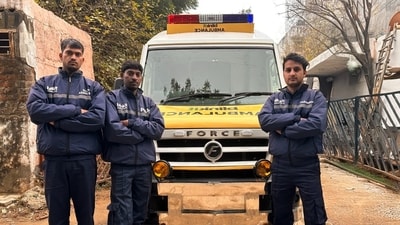
Union minister Piyush Goyal on Friday said quick commerce giant Blinkit will have to ensure it meets legal requirements for its recently started 10-minute ambulance service and that the company adheres to “the law of the land”.

Blinkit aims to expand to all major cities over the next two years.(X/@albinder)

After daily essentials and other things, Blinkit on Thursday announced it was adding one more service – ambulances at patient’s doorstep in about 10 minutes.

Also Read: Blinkit CEO turns delivery agent on New Year’s Eve, apologises for being ‘too slow’

“As regards Blinkit with ambulance service or medicines being delivered, my only submission would be that they have to make sure that they meet the law of the land, and whatever other legal requirements should be properly taken care of. No laws of the land should be broken,” news agency PTI quoted Piyush Goyal said.

Piyush Goyal was addressing a press briefing.

Blinkit’s ambulance service plan

In a post on microblogging platform X, Blinkit said it started the service with five ambulances hitting the road in Haryana’s Gurugram on Thursday. Founder and CEO of Blinkit, Albinder Dhindsa, said yesterday they aim to solve the problem of providing quick and reliable ambulance service in Indian cities.

Dhindsa said Blinkit ambulances are equipped with essential life-saving equipment, including oxygen cylinders, AED (Automated External Defibrillator), stretcher, monitor, suction machine, and essential emergency medicines and injections.

Each ambulance would have a paramedic, an assistant and a trained driver to make sure they are able to deliver quality service.

“Profit is not a goal here,” the startup founder had said. “We will operate this service at an affordable cost for customers and invest in really solving this critical problem for the long term.”

Blinkit aims to expand to all major cities over the next two years.

As Blinkit launched this ambulance service, Dhindsa appealed to people to make way for an ambulance always.

Quick commerce bloomed in India and across the world during the Covid-19 pandemic when curbs were imposed on non-essential movement of people to check the spread of the virus.


South Korea Fails to Detain Impeached President in Standoff at His Home

0
South Korea Fails to Detain Impeached President in Standoff at His Home


When around 100 criminal investigators and police officers entered a hilly compound in central Seoul on Friday morning, they tried to achieve something that has never been done before in South Korea: detain a sitting president.

First, they made it through two blockades formed by parked vehicles and people. Then, when they came within 650 feet of the building where President Yoon Suk Yeol was believed to be holed up, they came face to face with an even more formidable barrier: 10 buses and cars along with 200 elite soldiers and bodyguards belonging to Mr. Yoon’s Presidential Security Service. Small scuffles erupted as the investigators tried in vain to break through and serve a court-issued warrant to take Mr. Yoon away.

Three prosecutors were allowed to approach the building. But there, Mr. Yoon’s lawyers told them that they could not serve the warrant because it was “illegally” issued, according to officials who briefed news media about what happened inside the compound.

Outnumbered, the 100 officials retreated after a five-and-a-half-hour standoff.

“It’s deeply regrettable,” the Corruption Investigation Office for High-Ranking Officials, the independent government agency that led the raid into the presidential compound on Friday, said in a statement. It accused Mr. Yoon — who has already been suspended from office after being impeached by Parliament last month — of refusing to honor a court-issued warrant. “We will discuss what our next step should be.”

The failure to bring in the deeply unpopular president deepened a growing sense of helplessness among South Koreans, exacerbated by the country’s sharply polarized politics. The nation appears rudderless and distracted by infighting at a time when it faces major challenges at home and on the international scene.

There is already uncertainty around its alliance with the United States as the unpredictable Donald J. Trump prepares to return to the White House. Seoul’s decades-old foe North Korea has sought to score propaganda points from the South’s political quagmire, with its state media reporting that its neighbor was in “paralysis of its state administration and spiraling sociopolitical confusion.”

And, at home, the crash of a Jeju Air passenger jet that killed 179 of the 181 people on board on Sunday has added to as list of challenges that range from widespread labor strikes to rising household debts. On Thursday, the finance ministry sharply downgraded its growth forecast for 2025.

A Constitutional Court is deliberating whether to remove Mr. Yoon, who was impeached on Dec. 14 by the National Assembly. That came after he abruptly declared martial law 11 days earlier, prompting national outrage and calls for his ouster.

On Friday, the besieged Mr. Yoon vowed to fight to return to office through the Constitutional Court trial and showed he had no intention of voluntarily subjecting himself to criminal investigations. Mr. Yoon faces accusations that he committed insurrection by sending armed troops into the National Assembly during his short-lived military rule.

By refusing to honor the warrant, Mr. Yoon “kept adding more reasons he should be removed from office through impeachment,” said Lim Ji-bong, a professor of law at Sogang University in Seoul.

“He may think he survived today, but what he did today would not go down very well with the justices at the Constitutional Court and judges who would eventually try his insurrection case.”

Mr. Yoon is not the first South Korean politician who has defied court warrants to detain them. In 1995, prosecutors wanted to question the former military dictator Chun Doo-hwan on insurrection and mutiny charges stemming from his role in a 1979 coup and a massacre of demonstrators the following year. He defied the summons and headed to his southern hometown, trailed by a crowd of supporters.

The prosecutors chased him there. After an overnight standoff, Mr. Chun surrendered himself.

But unlike Mr. Yoon, Mr. Chun was out of office when he faced the insurrection charge. Mr. Yoon, though suspended, is still guarded with the full support of his Presidential Security Service, a government agency that hires teams of elite bodyguards and anti-terrorist experts selected from the police, military and other government services.

“People who have seen him rely on his bodyguards as a shield against his legal trouble will see him as a coward,” Mr. Lim said.

The investigators warned that they would charge the presidential bodyguards with obstruction of justice.

“We will do everything we can to provide security for the object of our service according to laws and principles,” the Presidential Security Service said in a statement.

Public surveys showed that a majority of South Koreans wanted Mr. Yoon ousted and punished for insurrection. But his governing party, which opposed his impeachment, denounced attempts to hold him.

Mr. Yoon also has die-hard supporters — mostly among mostly older South Koreans. Thousands of his supporters have been camped out for days on the pavement, chanting, “Let’s protect Yoon Suk Yeol!”

In a message delivered on New Year’s Day, Mr. Yoon called them “citizens who love freedom and democracy” and thanked them for braving the cold weather to show their support out on the street near his home.

“I will fight with you to the end to save this country,” Mr. Yoon said.

When the officials withdrew from Mr. Yoon’s compound, they shouted: “We have won!”

Protesters who have been clamoring for Mr. Yoon’s arrest began gathering again on Friday, marching near Mr. Yoon’s residence and shouting “Arrest Yoon Suk Yeol!” They, as well as the country’s opposition parties, expressed fury over the failure to detain Mr. Yoon, calling his presidential security service “accomplices” in an insurrection.

“I’m so angry,” said Lee Ye-seul, 19, a university student in Seoul. “I will speak out until he is removed and the people involved in the insurrection are punished.”

To Mr. Yoon’s supporters outside his residence, the security service was the last line of defense to save Mr. Yoon.

“The presidential guard should throw grenades if necessary to stop them from coming near the president,” said Lee Young-jin, 65.

But Mr. Yoon’s tactic of stoking political divides to avoid his legal trouble reflected poorly on South Korea, said Ahn Byong-jin, a professor of political science at Kyung Hee University in Seoul.

It “exposed weaknesses in South Korea as a democracy,” he said.