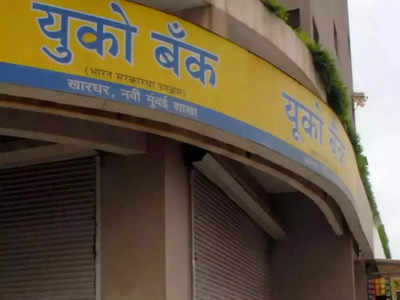
UCO Bank has announced stronger annual growth for the quarter ending December 2024, with the lender’s total business rising by 12.18 per cent to Rs 4.88 lakh crore. Provisional figures submitted to the stock exchanges reveal a significant 16.20 per cent increase in total advances, which reached Rs 2.08 lakh crore. This growth was primarily driven by an impressive 18.83 per cent surge in domestic advances, now standing at Rs 1.83 lakh crore. Deposits also saw healthy growth, climbing 9.37 per cent year-on-year to Rs 2.80 lakh crore. Domestic deposits rose by 7.29 per cent to Rs 2.65 lakh crore, contributing to the overall performance. The bank’s current account savings account (CASA) ratio, a key indicator of a low-cost deposit base, remained stable at 37.96 per cent, compared to 37.61 per cent in December 2023. Additionally, the credit-deposit (CD) ratio improved significantly, standing at 74.55 per cent during the reporting quarter, up from 69.93 per cent in the same period last year. This reflects better asset utilisation by the lender.
At least 35 Palestinians have been killed in multiple Israeli attacks on Gaza, as high-level negotiators prepare to resume stalled ceasefire talks.
Israeli forces killed at least 19 people in the central Gaza Strip on Friday, medical sources told Al Jazeera.
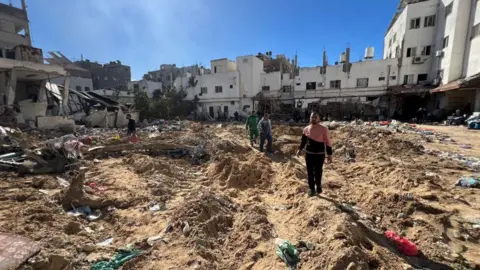
Reporting from Deir el-Balah, central Gaza, Al Jazeera’s Tareq Abu Azzoum said Friday was shaping up to be “another bloody day”, following a 24-hour period in which at least 71 Palestinians were killed in 34 Israeli air attacks, according to Gaza’s Government Media Office.
Abu Azzoum said gunfire in Deir el-Balah suggested a “potential military advance by Israeli ground forces” in response to a Hamas attack on an Israeli tank in the area.
Israeli fighter jets destroyed buildings in the centre of the Strip, killing journalist Omar al-Diraoui in his home in az-Zawayda – the second journalist to be killed in 24 hours.
On Thursday, it was confirmed that photographer Hassan al-Qishaoui had been killed in an Israeli attack.
Following the deaths, Gaza’s Government Media Office revised its toll of journalists killed in the enclave since the beginning of the nearly 15-month war to 202.
Meanwhile, Israel pressed on with a renewed military offensive in the north of Gaza, with Abu Azzoum reporting that Israeli forces have ordered the immediate evacuation of the Indonesian Hospital in Beit Lahiya.
Israelis also woke up to an attack early on Friday morning, with the army intercepting a missile reportedly fired from Yemen, which had set off air raid sirens in Jerusalem and central Israel.
Ceasefire talks to resume
As the attacks continued, ceasefire negotiations were expected to resume on Friday.
Israeli Prime Minister Benjamin Netanyahu’s office said he had authorised a delegation from the Mossad intelligence agency, the Shin Bet internal security agency and the military to continue negotiations in Qatar.
Sami al-Arian, director of the Centre for Islam and Global Affairs at Istanbul Zaim University, said Hamas could be willing to walk back one of its key demands – the immediate withdrawal of all Israeli forces from Gaza.
“There has been a lot of pressure from the mediators – particularly the Qataris and Egyptians – to be flexible on these terms,” he told Al Jazeera.
“They have assured the resistance, Hamas and other groups, that eventually Israel will withdraw,” he said.
But Ori Goldberg, a Tel Aviv-based political analyst, told Al Jazeera he does not see any grounds for optimism that a ceasefire will be agreed on at the talks, amid a lack of significant international pressure being applied on either side.
“To the best of my knowledge, Hamas is interested in a deal but not excessively, because its recruitment rates are rising the longer Israel continues its genocide in Gaza,” he said.
“Certainly, the Israeli public is interested in a deal. [But] the Israeli government? Not so much – the war serves its interests,” he said.
Key mediators Qatar, Egypt and the United States have been attempting to secure a lasting deal in indirect talks for months.
The toll from the first three days of 2025 takes the number of deaths in Gaza to nearly 46,000 since Israel began its war on the enclave on October 7, 2023, following Hamas-led attacks.
The war has caused widespread destruction and displaced some 90 percent of Gaza’s population of 2.3 million, many of them multiple times.
Hamas-led forces killed some 1,200 people in Israel in attacks on October 7, 2023 and took about 250 captives.
About 100 captives are still in Gaza, although at least a third of them are believed to be dead.
New Delhi: The National Stock Exchange (NSE) on Friday announced that it achieved record numbers of IPOs within Asia and the highest equity capital raised in the primary market globally in the calendar year 2024. NSE achieved 268 successful IPOs across mainboard (90) and SME (178) in the calendar year 2024, raising Rs 1.67 lakh crores.
This marks the highest number of IPOs recorded in any calendar year, demonstrating the growing confidence of investors in India’s capital markets. In 2024, there were a total of 1145 IPOs raised globally compared to 1,271 in the year before (2023).
India led the chart with NSE said it facilitated 268 companies going for IPOs, including the largest IPO in India and the second largest IPO globally of USD 3.3 billion of Hyundai Motor India Ltd. SMEs collectively raised around Rs 7,349 crore (USD 0.86 billion).
Sriram Krishnan, Chief Business Development Officer (CBDO), NSE stated, “The record number of IPOs during this calendar year highlights the resilience and potential of the Indian economy.” “Companies across various sectors are recognizing the value of public markets to support their growth strategies.”
Krishnan, citing some data, said NSE has alone done more number of IPOs than other top exchanges in Asia which includes the IPOs Japan’s (Japan Exchange Group), Hong Kong’s (Hong Kong Stock Exchange), and China’s (Shanghai Stock Exchange) have done cumulatively. In 2025, NSE said it remains committed to strengthening its platform for higher capital raising and supporting businesses.
Taking opportunities in India’s booming stock market, many companies intended to list their shares, and a sizable number of them have made handsome gains. Initial public offering (IPO) refers to the process where companies sell their shares to the public to raise equity capital from the investors.
The hospital director was detained during an Israeli raid last Friday
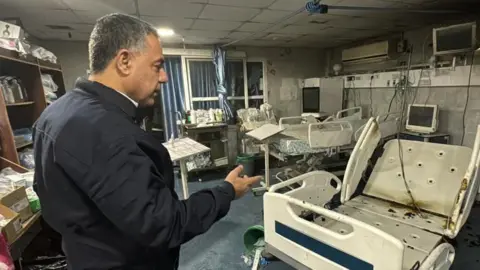
Israel has confirmed it is holding Gaza hospital director Dr Hussam Abu Safiya after earlier telling a local NGO that it was unaware of his case, sparking concern for his well being.
The Israel Defense Forces (IDF) statement said he was “currently being investigated by Israeli security forces” in person.
The statement did not offer an explanation for the confusion but repeated that he was suspected of being a “terrorist” and for “holding a rank” in Hamas, the armed Palestinian group at war with Israel in Gaza.
Dr Abu Safiya was arrested as the Israeli military forced patients and medical staff to leave Kamal Adwan hospital in northern Gaza last Friday, alleging the facility was a “Hamas terrorist stronghold”.
On Thursday the IDF told Physicians for Human Rights Israel (PHRI) that it had “no indication of the arrest or detention of the individual in question”.
The PHRI filed a petition with the Israeli High Court of Justice on Thursday, demanding Dr Abu Safiya’s location be disclosed. It said the court had given the IDF a week to comply.
Meanwhile Amnesty head Agnès Callamard said Israeli authorities must “urgently disclose his whereabouts”.
She said Israel had detained “hundreds of Palestinian healthcare workers from Gaza without charge or trial” and said they had been “subjected to torture and other ill-treatment and been held in incommunicado detention”.
Israel denies mistreating detainees.
Dr Abu Safiya’s family previously told BBC Arabic they believe he is being held at Sde Teiman military base in southern Israel, where Israeli forces have taken many detainees from Gaza for interrogation.
Whistleblowers have previously told the BBC and other international media of extremely harsh conditions for detainees there. Israel has said all detainees there are kept “carefully and appropriately”.
The IDF ordered everyone inside Kamal Adwan hospital to leave last Friday morning, giving the hospital about 15 minutes to move patients and staff into the courtyard, medical staff told the BBC.
Beit Lahia, where the hospital is located, has been under a tightening Israeli blockade imposed on parts of northern Gaza since October. The UN has said the area has been under “near-total siege” as the Israeli military heavily restricts access of aid deliveries to an area where an estimated 10,000 to 15,000 people remain.
Reuters
On Saturday, the IDF said it apprehended 240 combatants at Kamal Adwan and said Dr Abu Safiya was among medical staff taken for questioning.
Video footage showed him walking towards an Israeli armoured vehicle before being taken for interrogation. An Israeli military spokesperson confirmed the arrest that same day, saying the doctor had been transferred for questioning.
Dr Abu Safiya was previously arrested by Israeli forces during an earlier raid on the hospital in October, but was freed shortly afterwards. During that Israeli operation Dr Abu Safiya’s 15-year-old son was killed in a drone strike. Footage from later that day showed him leading funeral prayers for his son in the hospital courtyard.
Israeli attacks on Gaza’s healthcare facilities have prompted increasing condemnation.
Israel’s mission in Geneva said Israeli forces operated in accordance with international law and would “never target innocent civilians”.
Israel launched a campaign to destroy Hamas in response to the group’s unprecedented attack on southern Israel on 7 October 2023, in which about 1,200 people were killed and 251 others were taken hostage.
More than 45,580 people have been killed in Gaza since then, according to the territory’s health ministry.
Syria’s new leaders are set to meet the French and German foreign ministers in the capital, Damascus, on Friday in one of the highest-level Western diplomatic visits since the fall of President Bashar al-Assad last month.
Annalena Baerbock, Germany’s top diplomat, and Jean-Noël Barrot, the French foreign minister, arrived in Damascus for the first such trip in years on behalf on the European Union, as world powers have begun building ties with Hayat Tahrir al-Sham, the Islamist group that leads the new Syrian government.
Ms. Baerbock and Mr. Barrot were scheduled to meet with Ahmad al-Shara, the group’s leader. The two also visited the notorious Sednaya prison, where Mr. al-Assad’s regime tortured and killed thousands of detainees.
“We are traveling to Damascus today to offer our support, but also with clear expectations of the new rulers,” Ms. Baerbock said in a statement. “A new beginning can only happen if all Syrians, no matter their ethnicity and religion, are given a place in the political process.”
The visits are among a flurry of meetings between rebel leaders and Western officials looking to gradually open channels to the new Syrian authorities as Mr. al-Shara has worked to project a moderate image since taking power.
Hayat Tahrir al-Sham is still blacklisted as a terrorist group by the United States and the United Nations because of its past ties to Al Qaeda. Mr. al-Shara has called on the international community to remove the designation, sought to reassure minority groups and said he wants to focus on rebuilding Syria after years of civil war.
“The current events demand the lifting of all sanctions on Syria,” he said in a televised interview last month.
Many countries — including the United States — have begun forging ties with the new government. In late December, Barbara Leaf, the senior State Department official for the Middle East, met with Mr. al-Shara in Damascus and told him that Washington would no longer enforce a years-old bounty for his arrest.
On Friday, Mr. Barrot also visited the site of the disused French embassy in Damascus, which was closed in 2012 as the civil war escalated, the French Foreign Ministry said.
The diplomacy comes during a realignment across the Middle East, where Syria has historically been a major power and was for decades an emblem of iron-fisted rule by a single dynasty, opposed by most Syrians. At least six foreign militaries were involved in the country’s nearly 14-year civil war, including Iran, Russia, Turkey and the United States.
Mr. al-Shara’s group is conservative and follows tenets of political Islam, but it broke from Al Qaeda and the Islamic State years ago, and has even fought them. It has administered much of Syria’s Idlib Province, which was held by the opposition to the Assad government, since 2017.
Officials within the group have laid out an ambitious plan for establishing a new government, and rebel leaders have assumed key positions to oversee a transition. A caretaker government is to be installed in consultation with Syrians of all backgrounds, and a committee to create a new Syrian Constitution will be established.
Here are other developments in the region:
Houthi missile attacks: The Iran-backed Yemeni militia launched a ballistic missile at Israel before dawn on Friday, setting off air-raid sirens across central Israel, including in Jerusalem. The Israeli military said it had intercepted the missile and there were no reports of serious casualties. Israeli fighter jets have flown over 1,000 miles to strike Houthi-controlled areas in Yemen but Israel has struggled to stop the attacks, which have escalated over the past month.
Israeli strikes in Lebanon: The Israeli military said on Thursday night that it had bombarded Hezbollah sites in southern Lebanon as a 60-day truce largely continues to hold. Since the agreement went into effect in late November, Israel has repeatedly bombarded what it says are Hezbollah fighters violating the agreement. Hezbollah has generally refrained from responding militarily. The current cease-fire is set to expire in late January, although the United States and its allies hope it becomes permanent.
Parekh was behind one of the worst financial scandals in India’s history at the turn of the century
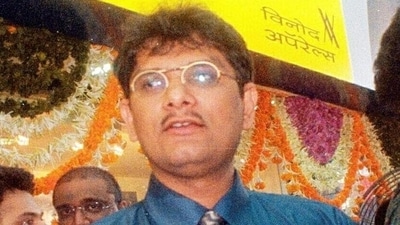
Market regulator Securities and Exchange Board of India (SEBI) has banned former stock broker Ketan Parekh from buying and selling securities again. This time, it is for allegedly front-running trades of a US-based fund, Bloomberg reported.
SEBI had investigated the trades undertaken by individuals and brokers associated with Parekh over a two-year period which ended on June 2023(File Photo)
Parekh was behind one of the worst financial scandals in India’s history at the turn of the century.
SEBI had investigated the trades undertaken by individuals and brokers associated with Parekh over a two-year period which ended on June 2023, the order released by the regulator on Thursday, January 2, 2025, said.
The investigation showed that Parekh had allegedly obtained non-public information of a major US fund’s trades from Singapore-based Rohit Salgaocar, who had an agreement to refer trades of that fund to Motilal Oswal Financial Services Ltd. and Nuvama Wealth Management Ltd, according to the report.
Parekh then passed on the information to his associates to front run the trades, SEBI member Kamlesh Varshney had said in the order.
SEBI had initially banned Parekh in 2003 for 14 years due to allegations of insider trading, price rigging and illegal diversion of bank funds into the stock market.
These actions resulted in a stock market crash in February and March 2001.
Varshney had also ordered the impounding of about ₹65.80 crore in “unlawful gains” made by these entities allegedly involved in the scam.
Russia’s gradual, grinding advance in parts of Ukraine’s eastern region of Donetsk succeeded in wresting away 4,168 sq km (1,609 square miles) of fields and abandoned villages in 2024 – equivalent to 0.69 percent of the country.
That was the assessment of the Institute for the Study of War, a Washington-based think-tank, based on satellite imagery and geolocated video footage.
“Russian forces have seized four mid-sized settlements – Avdiivka, Selydove, Vuhledar, and Kurakhove – in all of 2024, the largest of which had a pre-war population of just over 31,000 people,” said the ISW.
More than 400,000 Russian soldiers are reported to have died while fighting in Ukraine in 2024 [File: Shamil Zhumatov (Reuters)
Russian forces spent four months taking Avdiivka, and two months each for Selydove and Kurakhove.
“Seizing these settlements has not allowed Russian forces to threaten any notable Ukrainian defensive nodes,” said the ISW, adding that Moscow’s troops failed to conduct the kind of rapid, mechanised manoeuvre necessary to convert these “tactical gains into deep penetrations of Ukraine’s rear”.
At this rate, Russia would need two more years to complete its conquest of Donetsk alone, the ISW assessed – something Russian President Vladimir Putin had ordered his commanders to do by October 1.
(Al Jazeera)
Russia’s sacrifices to achieve these advances have been immense, as Ukrainian forces used their defender’s advantage to inflict high casualties, especially in urban settings where they fought building-to-building, street-to-street.
Ukrainian Commander-in-Chief Oleksandr Syrskii said on Monday that Russian forces had suffered an estimated 427,000 wounded and killed in 2024. A few days later, Ukraine’s Ministry of Defence put Russia’s losses last year at 430,790 soldiers – the equivalent of 36 Russian motorised rifle divisions – outnumbering its losses in 2022 and 2023 combined.
These losses amounted to an average of 1,180 a day, but casualty figures rose substantially towards the end of the year, as Russian forces increased their assaults in an apparent effort to influence the US election.
The highest monthly losses, the Defence Ministry said, came in November and December – 45,720 and 48,670 respectively – as Russia intensified its attacks in Donetsk.
“This year, the Russians paid the highest price for the war against Ukraine, as our army and all of our defence and security forces of Ukraine destroyed more enemy equipment and manpower than in any of the previous years of the war,” Syrksyi told his forces in an address on December 31.
(Al Jazeera)
‘1,700 killed and wounded every day’
Russia did manage to increase its daily land grab from 14 sq km (5.4 square miles) in October to 28 sq km in November but fell back to 18 sq km (11 square miles) a day in December. Apparently, its losses did not fall commensurately.
“Over the past week, the invaders have been losing about 1,700 people killed and wounded every day,” Syrksyi said on Monday.
December also produced two possible Russian casualty records.
On December 29, Ukraine’s general staff said Russian forces lost 2,010 people. They suffered a possible all-time record of 2,200 daily casualties in a total of 191 combat clashes on December 19.
(Al Jazeera)
Ukraine also estimated it had taken out 3,689 Russian tanks, thousands of armoured combat vehicles, and more than 13,000 artillery pieces. Ukraine’s navy said it sank five ships and 458 smaller craft.
Russia recruited North Korean fighters in an effort to relieve pressure on its manpower, but Ukrainian President Volodymyr Zelenskyy said a quarter of them had been wiped out.
“According to preliminary data, the number of killed and wounded North Korean soldiers in the Kursk region already exceeds 3,000 people,” Zelenskyy said in his evening address on December 23.
A drone view shows residential and administrative buildings damaged and destroyed by continued Russian military attacks in the town of Toretsk, Donetsk region, Ukraine [File: Сonsolidated Brigade ‘Khyzhak’ of the Ukrainian Patrol Police Department/Handout via Reuters]
He more recently claimed Russia was killing North Koreans in danger of falling into the hands of Ukrainian forces.
“Everything is arranged in a way that makes it impossible for us to capture the Koreans as prisoners – their own people are executing them, there are such cases,” Zelenskyy said in an evening address on December 27.
Ukraine’s military intelligence, GUR, said more North Koreans were being brought to Kursk to replace losses.
(Al Jazeera)
Russia eyes Central Asia to heal economy
Putin appears to have prioritised manpower for the war over workers for the economy.
He signed a decree on Monday forcing all undocumented migrants to depart Russia by the end of April, but joining the military allows them to circumvent normal legal status requirements.
Ukraine’s Foreign Intelligence Service estimated Russia suffered from a labour shortage of 1.5 million people last year, as the available labour force declined by a million. Yet Putin’s decree would suck foreign workers out of the economy and put them on the front lines.
Putin acknowledged shortages of “hundreds of thousands” in an end-of-year news conference on December 19, but did not connect those shortages to the war. Instead, he proposed bringing more migrant workers from Central Asian countries.
He dwelled on the need “to develop a network of Russian schools there, to study the Russian language, to introduce people who are going to come to work here” and spoke of the need to increase labour productivity through higher technologies.
Ukraine and Russia have both transitioned to war economies, Russia’s financed by income from fossil fuels and Ukraine’s by aid from its Western allies.
Both have sought to become as weapons-autonomous as possible.
In his New Year’s address, Zelenskyy said 30 percent of the weapons Ukraine used last year were domestically made.
“I felt ashamed as a citizen that since the 90s, the state hadn’t noticed such people of ours,” he said. “And I am proud… that Ukraine is once again building its own, its own missiles. And for the first time, it produces over a million drones in a year.”
Ukraine has used aerial and naval drones of its own design to strike deep inside Russia and across the Black Sea.
Ukraine’s military intelligence said on Tuesday it used a SeaDragon missile launched from a Magura V naval drone to down a Russian Mi8 helicopter.
“Today, for the first time, a helicopter was shot down, it fell into the water. That is, the fact of the destruction of an air target over the Black Sea has been recorded,” Kirill Budanov, Ukraine’s intelligence chief, told a telethon.
GUR released footage of the strike. Previously, Russian helicopters struck in this war had managed to reach an airfield, he said.
Russia has also invested in drones, though it is hampered by Western sanctions on imports of sensitive technology.
Its drone plant in Alabuga, 1,000km (620 miles) east of Moscow, produced 5,760 drones in the first nine months of last year, Ukrainian intelligence sources told CNN, double its 2023 output.
Ukraine’s air force said in 2024, it faced a much greater missile and drone threat against critical infrastructure than in 2023, partly because Russia was also using decoy Shahed drones that do not carry explosives but confuse and overwhelm air defences.
“The enemy is trying to complicate the air situation as much as possible, overload our air defences and exhaust our sky defenders,” the air force said.
Throughout last year, Ukraine said it shot down 11,200 “attack” drones, of which 7,800 were Shaheds.
Kyiv alone faced 200 aerial assaults last year, the municipality said, involving 1,300 drones, more than 200 cruise missiles and 46 ballistic missiles.
Ukraine’s prosecutor general reported a civilian death overnight on New Year’s Eve, after a Russian drone crashed into a residential building in Kyiv. Another drone caused a fire at the National Bank of Ukraine.
The drones were part of a huge attack involving 111 Shahed kamikaze drones, Ukraine’s air force said, 63 of which it said it shot down.
Despite its rising weapons output, Ukraine remained highly dependent on supplies from its allies.
United States President Joe Biden on Monday announced $2.5bn in military aid to Ukraine, half of it in immediately drawdown capability.
Biden said the package represented the remainder of the $60bn in aid he signed into law for 2024, and included “hundreds of thousands of artillery rounds, thousands of rockets, and hundreds of armored vehicles” as well as air defence equipment.
Recent trials of the Vande Bharat sleeper train have demonstrated its capability to reach 180 kilometres per hour.
Vande Bharat sleeper hits 180 kmph in trials! Railway Minister Ashwini Vaishnaw has shared a video of the Vande Bharat sleeper train trials which shows the train hitting a peak speed of 180 kmph during its trials. The first prototype of the Vande Bharat sleeper is currently undergoing RDSO field trials. According to Indian Railways, recent trials of the Vande Bharat sleeper train have demonstrated its capability to reach 180 kilometres per hour. These trials will continue through the month’s end before the Vande Bharat sleeper is introduced for passenger travel. The Vande Bharat sleeper, as the name suggests, is a sleeper variant of Indian Railways’ flagship Vande Bharat train. The new train has been designed and manufactured for long-distance overnight travel, and is said to be superior to the premium Rajdhani Express trains.
Vande Bharat Sleeper Hits 180 kmph
In the video shared by Ashwini Vaishnaw, a nearly full glass of water is placed beside a mobile phone inside the Vande Bharat sleeper train. The steady water level, whilst the train maintains a speed of 180 kilometres per hour, illustrates the journey’s smoothness, Indian Railways said.
These achievements were recorded during three days of trials, concluding on January 2, when the fully loaded train reached its maximum speed of 180 kmph. For passenger operations the train will be cleared for 160 kmph speeds. The Vande Bharat sleeper train reached 180 kilometres per hour speed during a 30-kilometre journey between Kota and Laban in Rajasthan’s Bundi district on Thursday. Previously, on January 1, 2025, it reached the same speed during a 40-kilometre trial from Rohal Khurd to Kota. That day also saw speeds of 170 and 160 kilometres per hour on the Kota-Nagda and Rohal Khurd-Chau Mahla routes. Following these trials, the Railway Safety Commissioner will assess the Vande Bharat sleeper train at maximum speed. The Vande Bharat sleeper trains will receive official certification and begin regular service only after clearing this final evaluation.
Vande Bharat Sleeper Train Features
The soon to be introduced Vande Bharat sleeper trains come equipped with sophisticated features, including automatic doors, comfortable berths, internet connectivity and an aeronautical-inspired design.
Enhanced Ride Comfort: More comfortable berths and redesigned ladders for upper berth access.
Fire Safety Compliance: Adheres to EN-45545 HL3 standards.
Shock Absorption: Equipped with anti-climbers for improved safety.
Safety Design: EN standard-compliant carbody with advanced safety features.
Energy Efficiency: Regenerative braking mechanism reduces energy consumption.
Superior Performance: Faster acceleration and deceleration for efficient operations.
Emergency Communication: Direct link between passengers and the Train Manager or Loco Pilot.
PRM-Friendly Features: Special facilities for Passengers with Restricted Mobility in end driving coaches.
Automated Systems: Automatic doors with central controls and sealed gangways.
Monitoring and Control: Integrated Coach Monitoring System manages air conditioning and lighting.
Security: Surveillance cameras installed across all carriages for passenger safety.
Currently, 136 Vande Bharat AC chair car trains operate throughout India on short and medium-distance routes, offering passengers reclining seats and premium travel facilities. According to Indian Railways, many technical hurdles were faced in incorporating berths and conducting comprehensive trials with full passenger capacity and baggage load whilst maintaining the target speed of 180 km/hour for the Vande Bharat sleeper coaches. Following successful testing, travellers can look forward to superior long-distance journeys on routes such as Kashmir to Kanyakumari, Delhi to Mumbai, and Howrah to Chennai, with notably reduced journey times, Indian Railways said. For comparison, the current average speed on the Mumbai-Delhi route is 90 km/hr, with Tejas Rajdhani Express achieving the highest permitted speed of 140 km/h amongst all Rajdhani services in India.
Venezuela’s government has offered a $100,000 (£81,000) reward for information leading to the arrest of the opposition’s exiled presidential candidate Edmundo González.
He fled the country in September and was granted political asylum in Spain after Venezuela’s authorities ordered his arrest, accusing González of conspiracy and of forging documents.
González had vowed to return to Venezuela before President Nicolás Maduro’s inauguration next Friday, accusing the government of rigging the vote.
Shortly after the reward was announced, González said he was travelling to Argentina to begin a tour of Latin America, where he will meet fierce Maduro critic President Javier Milei on Saturday.
The voting tallies – a detailed official breakdown of the votes from each polling station – have been at the centre of the dispute over who won the election.
The government-aligned National Electoral Council (CNE) declared the incumbent, Maduro, the winner but failed to provide the voting tallies to back up its claim.
The opposition, which with the help of accredited election witnesses collected and published more than 80% of the voting tallies, says these prove that its candidate, González, was the overwhelming winner.
González was not well known in Venezuela when he registered as a candidate for the country’s presidential election back in March.
He had never run for public office before and was not even widely known in opposition circles.
But months after he decided to run for the top office, the low-key former diplomat overtook Maduro in the opinion polls.
Venezuela has seen divisions between government and opposition supporters get ever deeper over the past decade or so.
González’s reconciliatory tone during the presidential campaign was in stark contrast to that of Maduro, who warned of a “bloodbath” should González win.
New Delhi: Net leasing of office space rose 18 per cent last year to a record 495.6 lakh square feet across seven major cities on strong demand especially in IT hub Bengaluru, according to JLL India.
Real estate consultant JLL India on Friday released the data for seven office markets –Bengaluru, Chennai, Delhi NCR, Hyderabad, Kolkata, Mumbai, and Pune.
In 2023, the net leasing of workspace stood at 420.2 lakh square feet.
Net absorption is calculated as the new floor space occupied less floor space vacated. Floor space that is pre-committed is not considered to be absorbed until it is physically occupied.
“In the calendar year 2024, India’s office market has become a key hub for global companies expanding their workforce and real estate footprint, as evidenced by a historic peak in net absorption reaching 49.56 million (495.6 lakh) square feet,” JLL India said.
The year concluded with an exceptional fourth quarter (October-December 2024), marked by record net absorption figures of 18.53 million (185.3 lakh) sq ft, underscoring the robust growth in this sector, it added.
Among cities, Bengaluru — a major office market — saw a 64 per cent increase in net leasing of office space to 147.4 lakh square feet in 2024 from 90.1 lakh square feet in the preceding year.
In Delhi-NCR, the net leasing grew 30 per cent to 94.4 lakh square feet last year from 72.5 lakh square feet in 2023.
Net leasing of office space in Mumbai increased to 70.7 lakh square feet from 60 lakh square feet.
In Hyderabad, the net demand rose to 73.1 lakh square feet from 68.9 lakh square feet.
However, the net leasing in Chennai dropped 24 per cent to 50 lakh square feet from 66.1 lakh square feet.
Pune saw a marginal 2 per cent decline in office demand to 48.2 lakh square feet from 49.2 lakh square feet.
In Kolkata, the net leasing fell 12 per cent to 11.9 lakh square feet in 2024 from 13.5 lakh square feet in the preceding year.