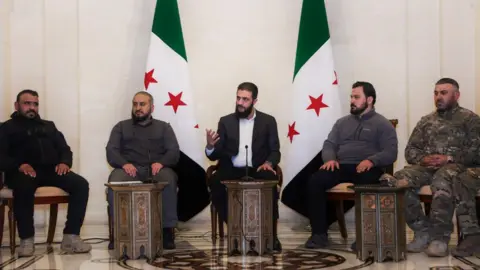
Ahmed al-Sharaa (centre) and the leaders of Syria’s new ‘joint force’
Syria’s new leaders are reported to have given some foreign Islamist fighters senior official posts in the country’s armed forces.
The army is being re-organised by Hayat Tahrir al-Sham (HTS) – the Islamist group that is now effectively in charge of the country – following the overthrow of Bashar al-Assad earlier this month.
While there has been no confirmation of the move by the new leadership, it is likely to raise concerns inside and outside Syria over the role radicalised foreign militants could play in the country’s future.
Several Syrian sources have deduced that out of almost 50 new military roles that have been announced, at least six have gone to foreigners.
Based on the names that have been published, they are said to include Chinese Uyghurs, a Jordanian and a Turkish national. All are said to have been given high-ranking positions as colonels or brigadier-generals.
The role of foreign fighters in various armed groups during the civil war is one that stirs strong feelings in Syria.
Thousands of fighters from many different countries joined the uprising against Assad as it became an all-out armed conflict when mass protests were met with violence by the security forces.
Some formed their own groups and others provided the core of the Islamic State group, which took control of large regions in the east of Syria.
Watch: BBC speaks to Syrian rebel leader Ahmed al-Sharaa
Opponents of HTS had long accused it of being largely made up of foreign jihadists – a charge Assad supporters used to try to delegitimise the group as it mounted its final, decisive offensive against the regime.
But in the years that he ran the rebel enclave in Idlib, Ahmed al-Sharaa – the leader of HTS and now Syria – had been getting rid of some of those foreign fighters in a bid to bolster his group’s credentials as a nationalist rather than overtly jihadist force.
Al-Sharaa’s message since taking power has again and again stressed the vision of a unified Syrian state, in which all communities must be respected and have a stake.
For those who are concerned that his actions might not match his words, this apparent move to formalise the positions of some prominent foreign fighters may give them further pause for thought.
The appointments appear to have been made in order to reward those fighters – whether from Syria or elsewhere – who played a significant role in the final triumph over the regime.
For the same reason, some of the remaining foreign fighters – along with their families – now seem likely to be given Syrian citizenship.
The issue is just one of many that could complicate any successful transition to a new political and social framework in Syria.
The new authorities are putting a lot of weight on a National Dialogue Conference that is being prepared to bring together representatives from all sections of society – although no date has been set.
The hope is that the conference will set in motion the process to rebuild the institutions of the broken and divided country.
Google’s CEO Sundar Pichai said that the company will see 2025 as a defining year due to the rapid evolution of artificial intelligence (AI) in a strategy meeting held in California on December 18, CNBC reported.
Google CEO Sundar Pichai testifies during a House Judiciary Committee hearing on Capitol Hill.(Saul Loeb/AFP)
He urged the employees to “internalise the urgency of this moment” and to “move faster as a company,” since “the stakes are high.”
“These are disruptive moments,” the report quoted Pichai as having said. “In 2025, we need to be relentlessly focused on unlocking the benefits of this technology and solving real user problems.”
This comes at a time when Google is focusing on its ambitious AI push with the Gemini app, which gives users a range of tools.
“Scaling Gemini on the consumer side will be our biggest focus next year,” he said. The target is 500 million users.
“With the Gemini app, there is strong momentum, particularly over the last few months. But we have some work to do in 2025 to close the gap and establish a leadership position there as well,” he said.
In August, the federal judge ruled that Google illegally maintains a monopoly in the search market.
“It’s not lost on me that we are facing scrutiny across the world,” the report quoted him as saying. “It comes with our size and success. It’s part of a broader trend where tech is now impacting society at scale. So more than ever, through this moment, we have to make sure we don’t get distracted.”
Despite intense competition, Pichai noted that being “first” is not always necessary for success. “In history, you don’t always need to be first but you have to execute well and really be the best in class as a product,” he said. “I think that’s what 2025 is all about.”
As 2024 comes to a close, it is essential to reflect on the tragic events that have profoundly impacted our nation, marked by a series of violent crimes and incidents that have left many in shock. This year has underscored the ongoing challenges in law enforcement, social justice, and public safety. Incidents of violence, including rape and murder, have dominated the headlines. From horrific attacks and killings to acts of terrorism and organized crime, these events have sparked widespread outrage, igniting public debate and urgent calls for reform. In this year-end review, let us take a moment to examine the stories that have shaken our nation, fostering discussions about security, justice, and the deep-rooted issues that continue to affect our society. Sandeshkhali mob violence
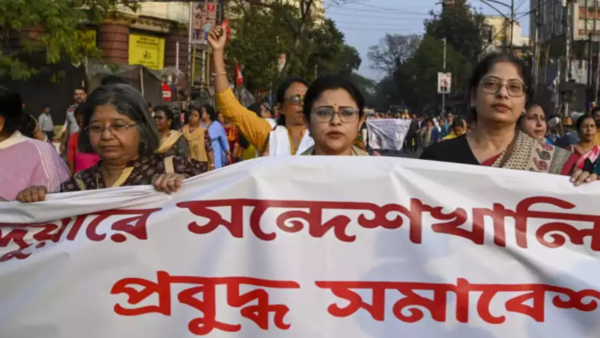
Sandeshkhali had been in turmoil since January 5, when a mob attacked Enforcement Directorate officials searching the premises of Trinamool Congress leader Shahjahan Sheikh, who was wanted in a ration scam. Right after the raid, Enforcement Directorate (ED) officers were assaulted by local villagers, who, along with Sheikh Shahjahan’s supporters, destroyed their phones and important files. Protests in Sandeshkhali began shortly after the incident and were mainly led by women. The unrest soon escalated into a major political controversy. Women protesters demanded the arrest of TMC leader Shajahan Sheikh and his associates, accusing them of land grabbing, sexual harassment, and coercion. The National Commission for Women (NCW) visited the area and, in a critical report, highlighted systemic abuse and fear in Sandeshkhali, implicating both police officers and TMC members. The report alleged that local women have been subjected to ongoing abuse and harassment under the influence of Shajahan Sheikh and his supporters. The political blame game further intensified as the BJP and NCW accused Mamata Banerjee’s TMC party of being complicit in these crimes. Union Minister Smriti Irani also alleged that Hindu women in Sandeshkhali were being subjected to rape. This claim added a new layer to the ongoing controversy and has garnered national attention. Bengaluru CEO accused of killing son
The year began with a chilling case where a woman allegedly murdered her 4 year old son at a service apartment in Candolim, North Goa. Suchana Seth, the woman accused in the tragic incident, is a 39-year-old CEO of a Bengaluru based company, Mindful AI Lab. The incident that took place on 9 January, was discovered when hotel staff alerted the police after finding a blood stain in the room after Suchana checked out. CCTV footage revealed she left alone, prompting further investigation. After the crime, she left for Bengaluru in a taxi, carrying her son’s body in a bag. However, police found that Suchana lied about leaving her son at a friend’s house in Fatorda, and contacted the taxi driver. He was instructed to take the vehicle to a nearby police station. Upon reaching the police station, the boy’s body was found in the bag after which Suchana was detained in Karnataka. The motive behind the murder was a strained relationship with her husband, with the couple engaged in a bitter custody battle over their child. Police investigations found empty bottles of cough syrup in her room, suggesting that Seth might have given a heavy dose of the medicine to her son before smothering him to death. Post mortem reports also revealed that the child was smothered to death by either a cloth or pillow. Bangalore cafe bombing
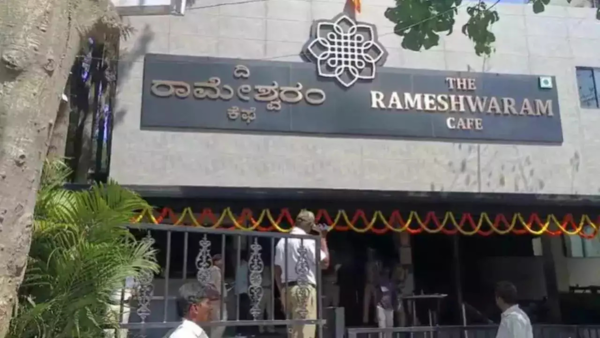
On March 1, a large explosion occurred at Bengaluru’s popular Rameshwaram Café during the busy lunch hour, injuring at least nine people, including two staff members and seven customers. The café was located in Whitefield’s Brookfield area, a vibrant business and tech hub. Initial reports suggested a gas cylinder blast, but further investigations ruled out any gas leakage. Karnataka’s Director of Fire and Emergency Services confirmed that no gas leak was detected, and the explosion appeared to have been caused by something in the handbag. Investigators from the National Investigation Agency (NIA) who were looking into the explosion at the café in Bengaluru found that the suspect bomber went to Ballari and then got on another bus that was going to Gokarna. The accused, Mussavir Hussain Shazib and Abdul Matheen Taha were given a 10-day custody period by the NIA in connection with the case. After being transported from Kolkata on transit remand, they were presented before a judge of the NIA special court in Bengaluru. According to the NIA’s conclusions, Taha was the attack’s mastermind, while Shazib was in charge of setting the improvised explosive device (IED) at the cafe. The café was established in 2021 by CA Divya Raghavendra Rao and Raghavendra Rao. Its name was chosen as a tribute to the birthplace of the late Dr. APJ Abdul Kalam. Pune Porsche case
On May 19, 2024, at 2:30 am, a tragic accident took the lives of 2 techies, Anish Awadhia and Ashwini Kosta, when a 17-year-old boy, driving a Porsche Taycan, rammed onto their motorcycle. The devastating hit-and-run incident occurred on Kalyan Nagar Airport Road in Pune, falling within the Yerwada police station limits. However, what sparked outrage across the country was the Juvenile Justice Board’s decision of granting bail to the accused minor, slapping him with nothing more than a trivial 300-word essay and 15 days of traffic police duty, despite the grave nature of the crime. As the investigation progressed, several shocking revelations came to light, including the tampering of the teen’s blood sample to conceal evidence of alcohol consumption. The boy’s grandfather who was accused of coercing a driver to take the blame for the crash, was arrested, while his father, a prominent builder, was also taken into custody for allowing his son to drive while intoxicated. Additionally, two doctors from Sassoon General Hospital were also arrested for allegedly swapping the blood samples and taking a bribe from the boy’s father. His father reportedly also brought Maharashtra MLA Sunil Tingre to the police station, delaying the blood alcohol test. In the aftermath, the families of the two victims expressed their deep dissatisfaction when the father of the main accused, along with several others involved in the case, was granted bail. Reasi pilgrim attack
In a tragic incident that occurred on June 9 in J&K’s Reasi district, at least nine pilgrims, including a child, were killed and 41 others injured when their bus, returning from the Shiv Khori cave shrine. The bus fell into a gorge after being ambushed by terrorists near Teryath village along a hilly, forested link road of NH144A. Local residents and authorities launched rescue operations, while security forces, including the police, Army, and CRPF, initiated a search to apprehend the attackers. Initially, the Resistance Front (TRF) claimed responsibility for the ambush but later retracted the statement. However, Jammu and Kashmir police suspect that the attack was carried out by Lashkar-e-Taiba, with the TRF thought to be a front for the group. RG Kar Hospital rape and murder case
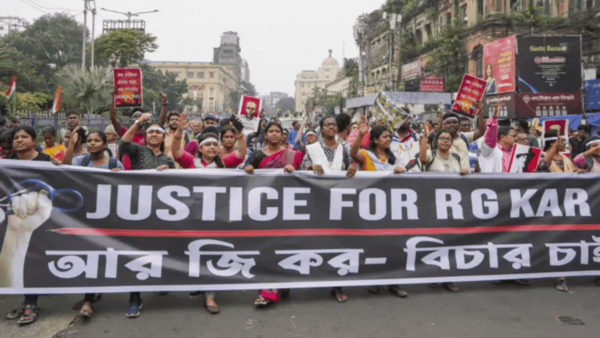
The morning of 9th August 2024 sent shockwaves across the nation when a 31 year old trainee doctor’s life was brutally cut short in a gruesome case of rape and murder at RG Kar Medical College and Hospital in Kolkata. The victim was found in the seminar hall inside her college building in a half dressed state, covered in her own blood due to multiple external and internal injuries. The murder set off widespread outrage, with doctors and nurses across Kolkata protesting. Junior doctors in West Bengal went on strike for 42 days, and the unrest spread to other parts of India. Sanjay Roy, a Kolkata police civic volunteer, was arrested just six hours after the police set up a seven-member Special Investigation Team (SIT) to probe the case. However, following orders from the Calcutta High Court, the investigation was transferred to the Central Bureau of Investigation (CBI). After filing an FIR in New Delhi, the CBI took Roy into custody as the primary suspect in the brutal crime. Recently a CFSL report revealed that evidence of possible struggle between the victim and her assailant was not found at the scene of the crime, the seminar hall, sources reported on Monday. The victim’s family has filed a plea for a fresh investigation, which is set to be heard by the Calcutta High Court on January 2. This devastating incident stands as a sober and painful reminder of the ongoing threat to women’s safety in today’s society. Badlapur school assault case
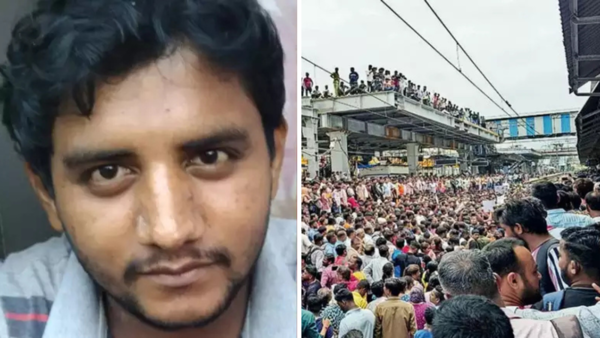
As the nation was grappling with the horrors of RG Kar rape case, another similar crime came to light in the Badlapur district of Maharashtra, where, two four year old nursery girls were sexually abused by the sweeper of a reputed co educational school. The accused, who joined the school on August 1, working as a sweeper, assaulted the minors in the washroom on August 12th and 13th. On August 16, the parents of the assaulted girls approached the Badlapur police station to file a case, only to face a concerning 12-hour delay before the FIR was registered, well past midnight. The delay, first by the school administration and then by police sparked a wave of outrage among the people who then held protests in multiple areas, including vandalising the school and halting train services at Badlapur station for over 8 hours. Amidst the outrage, the school administration attempted to cover up its negligence by dismissing the accused sweeper, Akshay Shinde, from his job. Additionally, they suspended the principal, the class teacher, and two female attendants who were responsible for escorting the girls to and from the washroom. On August 20, the accused was shot dead while being transported to a transit remand for the rape charges in a “retaliatory firing”. Sambhal violence
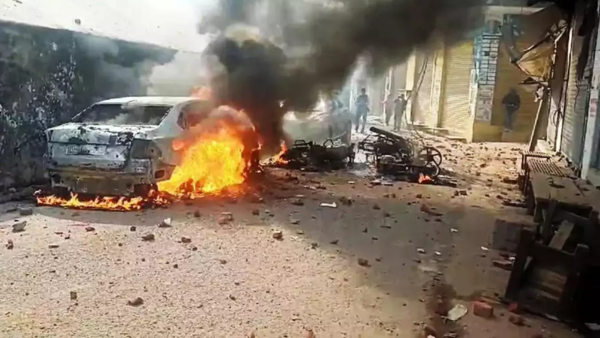
On November 24, 2024, Sambhal was engulfed in violent clashes, during the second survey of the Mughal-era Shahi Jama Masjid, resulting in deaths of five people, including one unreported case along with several injuries. Multiple vehicles were torched, leading to the reinforcement of security forces from nearby districts. The Uttar Pradesh administration had to invoke Section 144 of the Criminal Procedure Code to curb gatherings and prevent any further violence. However, the unrest had already begun in Sambhal since November 19, triggered by an initial mosque survey ordered by the court. The survey was conducted in response to a petition asserting the prior existence of a Harihar temple at the site. The survey, conducted under a local court order, was met with gunfire and stone-pelting, escalating tensions in the area. Many of the perpetrators were under 25 years old, and the involvement of women was notable, with two women being taken into custody. In response, the Uttar Pradesh government formed a judicial commission to investigate the incident. The violence was linked to a petition claiming the mosque was built over a former Hindu temple. Police also discovered a connection to Pakistan after finding a cartridge made in Pakistan at the incident site. A three-member judicial inquiry commission was set up to investigate the November 24 violence in Sambhal and its surrounding areas on Sunday. The commission, headed by retired Allahabad High Court judge Devendra Kumar Arora, includes former IAS officer Amit Mohan Prasad and retired IPS officer Arvind Kumar Jain. The panel, which was formed on November 28 through a government notification, is expected to complete its investigation within two months. Jiribam violence
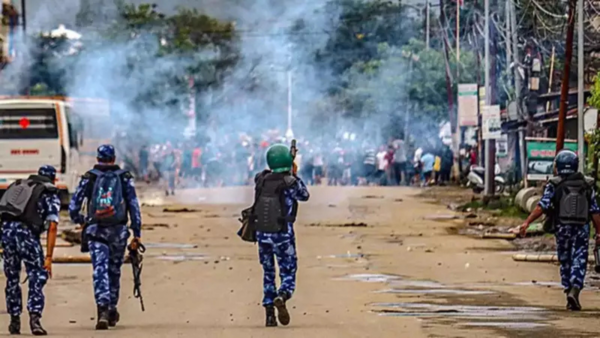
A large-scale protest erupted in Imphal Valley on November 16, following the discovery of three bodies in Manipur’s Jiribam district. The bodies, identified as a woman and two children, were found floating in the Barak River near Jirimukh. The discovery sparked fears that the victims could be among six residents from a nearby displacement camp who had gone missing. This camp was located near the site where security forces killed 10 Hmar “militants” on November 11, further intensifying tensions in the already volatile region. Protesters, primarily women, blocked key roads in the Kwakeithel area and Sagolband Tera in Imphal West district by burning tyres, causing significant traffic disruptions. At Khwairamband Market, Imphal’s central marketplace, women vendors held a rally to condemn the killings, while heavy security was deployed throughout the city. Representatives from various tribal organizations also gathered outside Silchar Medical College and Hospital, expressing concern over the delayed post-mortem examinations of the 10 ‘militants’ killed in the encounter. In the aftermath of the Jiribam massacre, where Kuki militants killed six members of a Meitei family, family members and survivors are urging the government and human rights organizations to secure the death penalty for the perpetrators. The victims, three women and three children (including a baby, a three-year-old, and an eight-year-old), were living in a relief camp in Jiribam when they were abducted by Kuki militants on November 11. Their bodies were later found at various locations near the Assam-Cachar district border. Stepping into a new year, it is evident that the path forward demands not only stronger laws but also a collective commitment from every sector of society: law enforcement, the government, and the citizens themselves.
[EXPLOSION] “The people are running away from the bombing. People are dying. We just send this to the nation to see what is happening in Nuba Mountains.” [GUNSHOTS] “Yeah.” Sudan is in the grip of a brutal civil war. Eleven million people have been driven from their homes, and tens of thousands have been killed. As a paramilitary group called the Rapid Support Forces — [CRIES] — battles the Sudanese Army for control of the country. The U.N. has accused both sides of abuses. But a six-month investigation by The New York Times shows that the R.S.F. is committing systemic atrocities across Sudan, including ethnic cleansing – often under the watch of its commanders. The opaque structure of the R.S.F. makes it hard to identify the leaders responsible. But by analyzing dozens of slick propaganda videos, where the commanders are presented as benevolent actors, we mapped out for the first time a command structure of at least 20 key figures and the regions they operate in. R.S.F. fighters under these commanders often film atrocities themselves, evidence that may one day hold perpetrators to account. So The Times teamed up with researchers at C.I.R.‘s Sudan Witness Project to collect these videos as the R.S.F. moved across Sudan. We analyzed fire signals and images collected by satellites, too. We interviewed an R.S.F. commander on the front line. And we spoke to witnesses to the war by partnering with Ayin Media, a network of reporters working anonymously in Sudan. Taken together, the evidence traces a playbook of terror being waged by the R.S.F. in multiple states. And locates Commanders like these — at or very near the sites of crimes. Sudan has been here before. Almost two decades ago, a notorious militia called the Janjaweed, meaning devils on horseback, carried out a genocide in Darfur. Over 300,000 people were estimated to have been killed. A former Janjaweed commander, Mohamed Hamdan Dagalo, or Hemeti, now leads the Rapid Support Forces, along with his brother Abdul Rahim as his deputy. And their fighters are using the tactics of Darfur from 20 years ago, in today’s civil war. We documented three broad patterns of abuse — executing unarmed captives, deliberately torching communities and directly abusing civilians, including with sexual violence. R.S.F. fighters can be identified by their uniform. They wear light camouflage, often with a Sudanese flag on one sleeve and a distinctive logo on the other. They sometimes recruit mercenaries and fight alongside loose-knit militias, who are usually in plain clothes. And many have scarves known as kadamols wrapped around their heads. We often hear them use the language of ethnic cleansing. Sudan’s army is also accused of war crimes, including deliberately starving civilians, shelling hospitals and indiscriminate airstrikes. [WARPLANE FLYING] As many as 200 people were reportedly killed in airstrikes earlier this month in Darfur. But in this investigation — — we documented abuses by the R.S.F. on a much wider scale — — that may amount to crimes against humanity. One of the commanders we found at the site of several atrocities is Hussein Barsham. He usually directs fighting in the Kordofan region, and that’s where we find him in October 2023, when the R.S.F. seized Baleela Airport and a major oil field nearby. Barsham celebrates by the front of the terminal, but video filmed on the other side shows what their victory looks like — [RAPID GUNFIRE] — fighters executing a group of captives. A warning — these videos are very graphic. So we’ve blurred some scenes. As the person filming enters this parking lot, a gunman is firing into a pile of bodies on the ground. [GUNSHOTS] R.S.F. fighters circle the victims and applaud the killing. Fourteen bodies in total. Many of them are wearing the dark fatigues typical of the Sudanese army, who were defending the airport. They are now unarmed, and to execute them would be a war crime. In addition to our analysis, a doctor with expertise in conflict-related injuries told us there are signs that that’s exactly what happened here. The blood is fresh. Several of the bodies are twitching, indicating they were recently killed. The blood splatter matches the gunshot wounds, and some of the body positions suggest they were killed here, not moved after the fight. Barsham is nearby, showing off the jacket of a Sudanese soldier. A satellite image taken on Oct. 30 shows the execution site, confirming the men were killed on that day. Barsham was just 100 yards away. He’s at the scene, commanding his forces around the time of the executions. Under the laws of war, he may bear responsibility if he ordered this crime or did nothing to prevent it. Eight months later, we found Barsham with three more R.S.F. commanders, Salih Al Futi, Al Taj Al Tijani and a field commander with the nom de guerre John Garang, when their fighters carried out another execution. This time it was in El Fula, the capital of West Kordofan. On June 20, we see a large convoy of R.S.F. fighters rolling into the town. [CHEERING] They spread out between streets of homes — — brag about men they had killed — — and threaten others taken captive. Hundreds of Sudanese soldiers defending El Fula had fled south earlier that day, and the R.S.F. easily overruns the city. [GUNSHOTS] Barsham is there among them. Al Tijani, too, standing alongside Barsham. And nearby, fighters swarm around Salih Al Futi as he walks. During the attack, the R.S.F. rounds up 20 men and takes them just outside the town. An unidentified fighter says that he recognizes one of the men as an army officer. A few of the men are wearing military fatigues but none of them are armed. Then, just as they did at Baleela Airport, the R.S.F. opened fire. [GUNSHOTS] The field commander, who goes by John Garang, is with them. In the fray, they laud their senior commanders, Al Tijani and Al Futi. Al Tijani, Al Futi and Barsham are not in the videos of these executions. But by analyzing footage of them that day, we know they were less than a mile away. And we know they’re in El Fula around the same time as the executions because the shadows in both sets of videos match. These commanders know each other. They’re repeatedly filmed together in West Kordofan. And in the eight months between the executions at Baleela and El Fula, they appear to have done nothing to stop their fighters’ behavior. One of the war’s most notorious episodes was the execution of the then governor of West Darfur, Khamis Abakar. In June 2023, he was captured by the R.S.F. hours after he publicly criticized the group. Video shows him being forced inside a building by a commander, Abdelrahman Joma Barakallah. This was the last time he was seen alive. Video filmed hours later showed his bloodied body. Governor Abakar’s killing happened during a campaign of ethnic violence targeting his tribe, the Masalit community in El Geneina, the same group the Janjaweed terrorized decades ago. Mariam Mohammed Ismael is among half a million Sudanese who fled the violence to Chad. The R.S.F. laid waste to El Geneina, burning down or destroying close to one quarter of the city’s 300,000 buildings, just as the Janjaweed did decades ago. And they’ve used fire as a method of war across the rest of Darfur and beyond for almost two years. In Kutum, in North Darfur, entire communities have been destroyed since October. Satellite images show no natural fire path between burned homes, and multiple villages are separately burned. These are telltale signs of arson. Hundreds of miles away in Al Takmah, we catch R.S.F. fighters in the act. They’re jubilant — — as homes and shops burn. They destroyed half the town. At a military base the R.S.F. seized in Sidrah, a commander oversees the burning. A fighter walks into view, holding a torch and burning down huts. The one he just passed is now ablaze, and the group gloats as they burn. A field commander named Al Gouja is nearby — — bragging as even more huts go up in flames. Al Gouja is not the only commander implicated in scorched earth tactics. We found four R.S.F. commanders directing attacks during a deadly monthlong assault in North Darfur: Al Nour Al Guba and Geddo Hamdan Abu Shouk, both high-ranking commanders, and Ali Rizkallah and Zeer Salim, both lower-ranking field commanders. For weeks, they oversaw a brutal campaign to capture the state’s capital, El Fasher, from Sudan’s army and forces allied with them. The R.S.F. encircled the city in April. Dozens of outlying villages were torched in attacks targeting the Zaghawa ethnic group. The siege forced a heavily pregnant Ekhlas Adam Ali El Haj to flee her home village of Tawila. She reached the village near Golo Dam. It’s here, in Golo Dam, that we find the first of the North Darfur commanders, Ali Rizkallah, telling passersby not to leave, that they’re safe. The reservoir in Golo Dam was the main water source for the area, serving more than 200,000 people. Rizkallah ordered it to be turned off. Ekhlas escaped again, this time to a school in El Fasher. But the R.S.F. pushed into the city. This is where we see another three commanders on the front line — Zeer Salim, the lower-ranking commander, and Al Guba and Abu Shouk, the senior commanders. An R.S.F. field commander in El Fasher confirmed to us that the senior commanders are in charge. We’re going to focus here on 48 hours on June 1 and 2, when we see these commanders together as a whole neighborhood is torched. Zeer Salim is regularly filmed fighting on the streets with his forces. On June 1, he appears in another video, not fighting this time but giving the call to prayer inside a mosque. We located the mosque to eastern El Fasher. The next day, Zeer Salim is out in the street, just two blocks from the mosque. [GUNSHOTS] That same day, he’s with his superior officers, Al Guba and Abu Shouk, 1,000 feet from the mosque as they rally their troops. All around this area, clusters of buildings were burned down as the R.S.F. took control, and on June 1, even more buildings were torched. The R.S.F. commander denied responsibility and blamed the Sudanese Army bombing. There are some signs of bombardment, but most of the destruction that we analyzed is consistent with the R.S.F. scorched-earth tactics. A mile away from the mosque, a neighborhood the size of 10 city blocks in Manhattan is ablaze that morning. Multiple fires appear to have been ignited around the same time, where members of the Zaghawa ethnic group were believed to be living. This is evidence of a targeted ground-based attack, researchers from the Humanitarian Research Lab at Yale University say. By August, more than 20,000 structures were damaged or destroyed, many by fire. The devastation is heavily concentrated in the eastern part of the city, the area of R.S.F. advance. Arafa Ali Yagoub was living in this area, and she recalled the R.S.F. terrorizing them before they fled. Her husband was abducted. Arafa was displaced from her home by the Janjaweed when she was a child, and now by the R.S.F. The senior commanders on the ground in El Fasher, Al Guba and Abu Shouk, were both in the Janjaweed and have led R.S.F. forces in North Darfur for years. Abu Shouk is a relative of the R.S.F. leader Hemeti, and he has a history of ethnic violence with Zaghawa rivals, who his forces targeted again in El Fasher. The presence of these high-ranking commanders in El Fasher — — shows the significance of this campaign to the R.S.F., and it unwittingly links them to these atrocities. Ekhlas, Arafa and many thousands more were forced to flee, this time back to Ekhlas’s home in Tawila. When Ekhlas reached her home, even that had been looted. The terror that Ekhlas and Arafa endured in El Fasher is being inflicted on ordinary civilians throughout Sudan. Countless videos show the R.S.F. whipping people. Beating them, sometimes shooting them. [GUNSHOTS] And forcing them to make animal noises. In October, the R.S.F. repeatedly attacked civilians in Gezira State, after Abu Aqla Kaykal, an R.S.F. commander from that area — — defected to Sudan’s army. This triggered a wave of retaliation by the R.S.F. Across Kaykal’s home state. Villages in Gezira were also attacked when Kaykal was in the R.S.F. But this time, they specifically targeted the tribe he was from. Hundreds were killed in a matter of weeks. One of the towns invaded by the R.S.F. is Al Seriha. An R.S.F. commander leading that campaign is Al Gouja, who we saw when huts were torched earlier. Here he is, 300 yards from Al Seriha, shooting at it and directing R.S.F. fighters around him. Once inside, they round up men and hold them. We don’t see what happens next. But the R.S.F. reportedly kills more than 100 people here. Simultaneous attacks were happening in villages right across the eastern Gezira region. In many places, the R.S.F. round up the men of the area or force them to run away at gunpoint. [GUN COCKS] Witnesses we spoke to were terrified. They stole Ammar El Awad Alam’s herd of goats. The R.S.F. emptied Al Seriha and many other villages. And the fighters gloated about their ethnic cleansing. The attacks triggered another exodus. 150,000 people left in two weeks. They are among over eight million people now displaced in Sudan, and millions more who have fled to neighboring countries. Evidence we collected of the R.S.F. rampage in Gezira match multiple accounts of another type of abuse — sexual violence. Survivors have given testimony to experts we interviewed, including Hala Al Karib, head of SIHA, a women’s advocacy group. Her team also received testimonials of rape in several towns in Gezira, particularly around the area that Kaykal was from. Tambul, Rufaa and Azraq are among the villages R.S.F. fighters bragged that they had destroyed. Experts we spoke to said that separating men from their families, as we see in Gezira, is a key indicator of sexual violence. Witnesses rarely talked directly about sexual violence, but they feared for the women and girls in their communities. Hanan Abbakar Al Tahir recalled R.S.F. fighters leering at her in her home in Gezira. They also killed a man for defending women. As Al-Nazeer fled his home, the R.S.F. beat him when he objected to women in his group being harassed. And later, he was shot. Human Rights Watch, the U.N. and other groups have documented sexual violence in at least five states in Sudan since the conflict broke out. Decades on from the genocide in Darfur, just one person has been put on trial at the International Criminal Court. This time, there may be a stronger prospect for accountability. The videos that fighters perceive as trophies of their exploits are regarded by the prosecutor of the I.C.C. as something else — evidence. “So we can piece together the different types of evidence sets that are available now, from phones, from video and audio recordings, that are also proving to be extremely critical to pierce the veil of impunity.” In this investigation, the footage allowed us to find 10 commanders overseeing potential crimes and identify the areas of operation of many more. Their leader, General Dagalo, or Hemeti, may bear ultimate responsibility. Over and over, fighters pay fealty to him. And the field commander we spoke to said that they take orders from the top. In almost two years of war, Hemeti has failed to stop them from carrying out abuses. But there are glimmers of hope. The survivors we spoke to recalled the kindness of strangers, fellow citizens who offered food, shelter or protection as they fled. What they need now is for the violence to end.
MUMBAI: The National Bank for Financing Infrastructure and Development (NaBFID) has invested Rs 745 crore in long-term bonds issued by NDR InvIT, the company said on Tuesday. NDR InvIT is an Infrastructure Investment Trust managed by NDR InvIT Managers and sponsored by NDR Warehousing Private Limited. These 15-year bonds, rated AAA/Stable by India Ratings (FITCH) and CARE, underscore NDR InvIT’s key role in advancing India’s warehousing and industrial parks sector, NDR said. The funds will accelerate NDR InvIT’s strategic growth plans, it added. With demand for robust logistics infrastructure soaring due to rapid manufacturing growth and the exponential rise of e-commerce, this investment positions NDR InvIT as a driving force in bridging critical infrastructure gaps, it noted. The investment comes at a time when India’s logistics and warehousing sectors are poised for exponential growth, it said. According to a recent report by Motilal Oswal, the domestic logistics market, valued at Rs 9 trillion in FY23, is projected to grow to Rs13.4 trillion by FY28, registering a CAGR of 8-9 per cent, NDR said. As per IBEF, the Indian warehousing market is predicted to reach USD 34.99 billion (Rs 2,872.10 billion) by 2027, expanding at a CAGR of 15.64 per cent from 2022 to 2027, it added. “This partnership with NaBFID represents a significant leap in our journey toward becoming a leading enabler of India’s industrial growth,” said Krishnan Iyer, CEO, NDR InvIT Managers. The funds raised will enable us to capitalise on market opportunities, strengthen our portfolio, and deliver high-quality infrastructure that drives economic growth, he added. “The issuance of this long-term bond demonstrates our ability to access sustained capital at competitive terms, a key differentiator in the infrastructure investment space,” said NDR InvIT Managers CFO Sandeep Jain. The first ‘perpetual warehousing and industrial parks’ InvIT to be listed on the NSE, the Trust currently has 16.99 msf assets under management, across 13 cities, and 33 industrial parks, with over 50 warehouses.
Lack of access to clean and safe drinking water leads to multiple ailments. And the only way to curb these ailments and diseases is by installing a water purifier at your home. The best water purifiers combine advanced technologies like reverse osmosis (RO), ultraviolet (UV) sterilization, and ultrafiltration (UF) to offer comprehensive purification. Brands like Kent, Aquaguard, and Pureit provide reliable options tailored for diverse water conditions, such as high TDS (total dissolved solids) or bacterial contamination.
Top Water Purifier for home
Smart features like app connectivity for filter monitoring and eco-friendly designs enhance usability. Investing in a good water purifier is crucial for health and long-term savings.
Just in case, you are looking to buy a brand-new RO water purifier for your home, we have listed some top picks of water purifiers for you.
The HUL Pureit Eco Water Saver Mineral Water Purifier is an efficient and eco-friendly solution for clean and healthy drinking water. Its advanced RO+UV+MF technology ensures up to 60% water recovery, minimizing water wastage during purification. Designed for modern kitchens, it boasts a 10-liter capacity and wall-mounted installation, making it suitable for large households. The purifier retains essential minerals, offering both safety and taste in every sip.
Specifications of HUL Pureit Eco Water Saver Mineral RO+UV+MF AS Water Purifier:
Purification Technology: RO+UV+MF
Stages of Filtration: 7
Storage Capacity: 10 liters
Purification Capacity: 24 liters per hour
Power Consumption: 60W
Tank Material: Food-grade plastic
Dimensions: 29.7 x 36.1 x 48.7 cm
Weight: 8 kg
Reasons to Buy
Reasons to Avoid
High water recovery, eco-friendly design
Larger size might require more space
Advanced RO+UV+MF filtration
Slightly higher price point
Retains essential minerals for better taste
Requires periodic filter replacement
Suitable for large families
The Livpure GLO PRO++ Water Purifier offers advanced water purification with its RO+UV+UF technology. Designed to provide pure and safe drinking water, it features a sleek and compact design suitable for modern kitchens. The purifier removes harmful contaminants, ensuring clean and healthy hydration. Its multi-stage purification process, combined with a user-friendly interface, makes it an ideal choice for households. With a large storage capacity, it ensures an uninterrupted supply of purified water, even during power cuts. Trust Livpure for reliable and high-quality water purification technology.
Specifications of Livpure GLO PRO++ RO+UV+UF Water Purifier:
The AQUA D PURE Copper + Alkaline RO Water Purifier combines modern purification technology with the health benefits of copper and alkaline water. It features a robust RO system for removing impurities and an alkaline enhancer to balance the pH of your drinking water. The addition of copper infusion ensures better immunity support. This purifier is designed to provide safe, tasty, and mineral-rich water for households, with a spacious storage capacity and sleek design.
Specifications of AQUA D PURE Copper + Alkaline RO Water Purifier
Suitable for Water Sources: Borewell and Municipal Water
Material: ABS Food-Grade Plastic
Power Consumption: 45 Watts
Dimensions: 38 x 28 x 49 cm
Reasons to Buy
Reasons to Avoid
Copper infusion for health benefits
Slightly heavier compared to alternatives
Balances pH levels with alkaline water
May not be suitable for areas with extreme TDS
Elegant and compact design
Provides tasty, mineral-rich water
The Aquaguard Sure Delight NXT is a 6-stage water purifier designed to ensure thorough removal of impurities while retaining essential minerals. Its compact design and advanced purification make it a great fit for homes with moderate water requirements. Built with durable materials, it ensures long-term reliability. The NXT technology optimizes the purification process, providing clean and refreshing water every time.
Specifications of Aquaguard Sure Delight NXT 6-Stage Water Purifier
Technology: 6-Stage Purification
Storage Capacity: 6 Liters
Filtration Stages: 6
Suitable for Water Sources: Municipal and Borewell Water
Material: Food-Grade Plastic
Power Consumption: 30 Watts
Dimensions: 30 x 20 x 45 cm
Reasons to Buy
Reasons to Avoid
Compact and space-saving design
Lower storage capacity (6L)
Advanced 6-stage filtration
May not suit large households
Retains natural taste and minerals
Budget-friendly option
The Faber Neutron Pro is an advanced water purifier equipped with RO, UV, MAT (Mineral Addition Technology), Copper Guard, and a pH Enhancer. This multi-stage purifier not only removes impurities but also enriches water with essential minerals and adjusts its pH for better health benefits. The elegant design and high storage capacity make it suitable for large households. Built with a focus on durability and performance, this purifier ensures a consistent supply of safe and healthy water.
Specifications of Faber Neutron Pro RO + UV + MAT + Copper Guard + pH Enhancer:
Technology: RO+UV+MAT+Copper Guard+pH Enhancer
Storage Capacity: 10 Liters
Filtration Stages: 8
Suitable for Water Sources: Borewell, Tap, and Municipal Water
Material: ABS Food-Grade Plastic
Power Consumption: 45 Watts
Dimensions: 39 x 28 x 50 cm
Weight: 9 kg
Reasons to Buy
Reasons to Avoid
Combines multiple advanced technologies
Bulky design might take up more space
Enhances pH and mineral content
Slightly higher price range
High storage capacity for large households
Requires regular maintenance
Sleek and durable design
e V-Guard Zenora RO UF Water Purifier offers an efficient and cost-effective solution for pure drinking water. Its dual RO and UF filtration technology removes contaminants and ensures water is safe and healthy for daily use. The purifier features a user-friendly design and a moderate storage capacity, making it a suitable choice for small to medium households. Designed with a focus on simplicity and durability, it delivers consistent performance for your hydration needs.
Specifications of V-Guard Zenora RO UF Water Purifier
Technology: RO+UF Purification
Storage Capacity: 7 Liters
Filtration Stages: 6
Suitable for Water Sources: Municipal and Borewell Water
Material: Food-Grade Plastic
Power Consumption: 36 Watts
Dimensions: 35 x 25 x 47 cm
Weight: 7.5 kg
Reasons to Buy
Reasons to Avoid
Affordable and efficient filtration
Limited to moderate storage capacity (7L)
Dual RO and UF technology
Lacks advanced features like copper infusion
Compact and lightweight design
Requires regular maintenance
The Aquaguard Marvel NXT combines cutting-edge technology with the health benefits of active copper infusion. Its 10-stage purification process ensures superior water quality by removing impurities while retaining essential minerals. The sleek design and high storage capacity make it perfect for large families. With added copper technology, it promotes better immunity, making it an excellent choice for health-conscious users.
Specifications of Aquaguard Marvel NXT 10-Stage Active Copper Tech Water Purifier
Technology: 10-Stage Purification with Active Copper
Storage Capacity: 8 Liters
Filtration Stages: 10
Suitable for Water Sources: Municipal and Borewell Water
Material: Food-Grade Plastic
Power Consumption: 40 Watts
Dimensions: 41 x 28 x 47 cm
Weight: 9 kg
Reasons to Buy
Reasons to Avoid
10-stage filtration for thorough cleaning
Slightly heavier than competitors
Active copper technology for health benefits
May require frequent filter replacements
Stylish and durable build
Suitable for high TDS areas
The AO Smith Z5 Pro Water Purifier is a premium choice for households seeking advanced water purification with a sleek design. Featuring RO and SCMT (Silver Charged Membrane Technology), it ensures safe and bacteria-free water. Its sophisticated features include a digital display for monitoring purification status and a robust storage capacity. The Z5 Pro combines style and efficiency, making it an excellent addition to modern kitchens.
Suitable for Water Sources: Borewell and Municipal Water
Material: ABS Food-Grade Plastic
Power Consumption: 48 Watts
Dimensions: 40 x 28 x 49 cm
Weight: 10 kg
Reasons to Buy
Reasons to Avoid
Silver Charged Membrane Technology for safety
Slightly higher power consumption
Digital interface for user convenience
Premium pricing compared to competitors
High storage capacity for large households
Modern and sleek design
The Urban Company Native by UC M1 Water Purifier combines advanced purification with the added benefits of copper and alkaline technology. It features a robust RO system for thorough filtration, UV for bacteria elimination, and copper infusion for improved immunity. Additionally, its alkaline technology balances pH levels, ensuring water that is not only safe but also health-enhancing. With its stylish design and sufficient storage capacity, the UC M1 is an excellent choice for modern households.
Specifications of Urban Company Native by UC M1 RO+UV+Copper+Alkaline Water Purifier
Technology: RO+UV+Copper+Alkaline Technology
Storage Capacity: 8 Liters
Filtration Stages: 6
Suitable for Water Sources: Borewell and Municipal Water
Material: Food-Grade Plastic
Power Consumption: 42 Watts
Dimensions: 36 x 26 x 48 cm
Weight: 8 kg
Reasons to Buy
Reasons to Avoid
Combines RO, UV, copper, and alkaline benefits
Slightly lower storage compared to competitors
Stylish and space-saving design
May not be ideal for very large households
Balances pH and improves taste
Provides added health benefits with copper
The KENT Supreme Copper RO Water Purifier is a state-of-the-art appliance designed to provide safe, tasty, and mineral-rich drinking water. Its RO+UV+UF purification system effectively removes contaminants, while the active copper technology infuses water with essential health benefits. With a high-capacity design, it is perfect for large families. Additionally, the water recovery system minimizes wastage, making it an eco-friendly choice.
Specifications of KENT Supreme Copper RO Water Purifier
Technology: RO+UV+UF+Active Copper
Storage Capacity: 8 Liters
Filtration Stages: 7
Water Recovery: 50% Recovery Rate
Suitable for Water Sources: Borewell, Tap, and Municipal Water
The HUL Pureit Eco Water Saver Mineral RO+UV+MF is one of the best value-for-money water purifiers on Amazon. It combines efficient RO+UV+MF purification technology with an advanced 7-stage filtration process. Its high water-saving capability ensures minimal wastage, making it eco-friendly and economical. Additionally, the purifier offers ample capacity for large families, making it a reliable choice for a mid-budget segment.
The Livpure GLO PRO++ RO+UV+UF stands out as the best overall water purifier on Amazon. It offers a robust combination of RO, UV, and UF technologies for maximum purity and safety. Its lightweight design and compact size make it convenient for wall mounting or countertop placement. With an advanced filtration system and an affordable price, this purifier ensures clean and safe drinking water for every household.
Factors to Consider Before Buying the Best Water Purifiers
Purification technology: Choose based on water quality, such as RO for hard water, UV for microbial contamination, or a combination for better results.
Storage capacity: Consider the size of your household to determine the required storage.
Water quality and TDS levels: Opt for a purifier that matches your water’s total dissolved solids (TDS) levels.
Maintenance cost: Check the cost and frequency of filter replacements.
Certifications and warranty: Ensure the purifier is certified and comes with a good warranty.
Design and space: Compact designs are ideal for small kitchens.
What is the ideal purification technology for hard water?
RO (Reverse Osmosis) is best for hard water as it removes high TDS, salts, and heavy metals.
How often should I replace the filters?
Filter replacement depends on usage and water quality, typically every 6–12 months.
Are copper-infused water purifiers better?
Copper adds antimicrobial and health benefits to water. It’s a good choice for health-conscious users.
How do I check the TDS level of my water?
Use a TDS meter, available online or at local stores, to measure your water’s TDS level.
Disclaimer: At Hindustan Times, we help you stay up-to-date with the latest trends and products. Hindustan Times has an affiliate partnership, so we may get a part of the revenue when you make a purchase. We shall not be liable for any claim under applicable laws, including but not limited to the Consumer Protection Act, 2019, with respect to the products. The products listed in this article are in no particular order of priority.
New Delhi: In the 2024 election season, political slogans become more than just catchy phrases; They were powerful tools for influencing public opinion, organizing voters, and shaping the narratives of various campaigns. Slogans, often short but powerful, encapsulated the core messages of political parties and provided a sense of direction to their supporters. These slogans reflected both the optimism and concerns of voters and played an important role in the electoral battle. One of the most talked about and divisive slogans was the one that echoed across Maharashtra, where Uttar Pradesh Chief Minister Yogi Adityanath’s statement, “Batoge to katoge” took center stage. The slogan immediately attracted attention and prompted both criticism and appeasement from various political circles. When Bharatiya Janata Party ,BJP) did not officially endorse it, nor deny its implications. Prime Minister Narendra Modi avoided using the controversial phrase in his speeches, but subtly adapted it, turning it into a more catchy version: “Ek hai to surakshit hai” (If united, then safe). The message was clear – unity, especially within the Hindu vote bank, was essential to maintain political strength. The 2024 elections saw a fierce battle not only for seats but also for narrative dominance and slogans played an important role in this contest. From aggressive campaign messages to appeals for unity, political parties devised slogans that were designed to influence different sections of society, often invoking deep concerns, cultural identities and aspirations. Here is a look at some of the most influential slogans that shaped the 2024 election landscape.
BJP’s “this time it has crossed 400”
The BJP, led by Prime Minister Narendra Modi, continued its ambitious quest to win majority in the Lok Sabha with the slogan “Abki Baar 400 Paar” (This time, more than 400 seats). Building on the success of their 2019 campaign slogan, “Abki Baar 300 Paar”, this slogan strengthened the party’s confidence in expanding its political reach and dominance while also strengthening the fear that it might lose seats. Can. With the promise of securing more than 400 seats, the BJP aimed to project an image of invincible strength and political dominance. The slogan was not only about achieving victory but also about setting an optimistic atmosphere for the party’s future rule.
“If we divide we will be divided” and “If we are united then we are safe”
In Maharashtra where BJP faced competition from both the regional parties CongressTwo slogans emerged: “Batenge to katenge” and “Ek hain to sukhar hain.” The first, “Batenge to Katenge”, was aimed at unifying the Hindu voter base by warning against fragmentation and division. The second, “Ek hain to surakshit hain” (If united, then safe), was intended to promote unity within the Hindu community as a protection against political opponents. These slogans were particularly important in Maharashtra, a state with a large number of constituencies and a complex political landscape. He sought to consolidate Hindu votes and strengthen the BJP’s position at both the state and national levels.
“If Eknath is there then he is safe”
In an effort to ensure Enath Shinde’s dominance in the Maharashtra elections, Shiv Sena changed Prime Minister Modi’s slogan “If there is one, it is safe” to “If there is one (Nath), it is safe”, and Eknath Shinde was elected Chief Minister of Maharashtra. Advocated to remain. This change has come after the strong performance of the Mahayuti alliance in the recent assembly elections. PM Modi had earlier used the original slogan to promote unity and called it the “maha-mantra” of the country. Drawing comparisons to Bihar, where Nitish Kumar remains the CM despite his party’s low number of seats, the Sena argued that Shinde should retain his role.
Congress’s “If you police, you will kill”
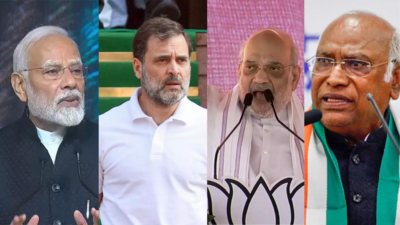
In an attempt to counter the BJP’s “Batenge” slogan, the Congress party led by Rahul Gandhi introduced the slogan “Daroge to maroge” (If you are afraid, you will die) during the elections. The slogan sought to empower the public to oppose what the Congress described as the BJP’s authoritarian tactics and “climate of fear”. It was inspired by Gandhi’s recent comments, encouraging people to overcome fear and challenge the dominance of the BJP. Congress leader Mallikarjun Kharge popularized this slogan in Jharkhand, accusing the BJP of divisive politics and spreading fear. He compared the BJP’s aggressive rhetoric, exemplified by Uttar Pradesh Chief Minister Yogi Adityanath’s “batoge to katoge” (if you speak, you will suffer), with the Congress’s message of resistance and courage.
“The Constitution is in danger”
In a bold campaign strategy, the Congress raised concerns about the future of India’s Constitution with the slogan “Samvidhan Khatar Mein Hai” (The Constitution is in danger). The Congress leadership, especially Rahul Gandhi, tried to exploit public fears about the erosion of democratic principles and the possible weakening of the Constitution. The party described the BJP as a threat to the constitutional integrity of the country and portrayed the saffron party as willing to destroy or alter the founding document of the republic. The slogan resonated among a significant section of voters who were concerned about the BJP’s increasing centralization of power and efforts to modify the constitutional framework. Despite the BJP’s denial, the Congress managed to keep the issue on the agenda, and ensured that it remained in the public discussion.
Congress’s “Jal Jungle Zameen” vs BJP’s “Roti, Beti, Aur Mati”
In Jharkhand, the Congress targeted tribal voters with the slogan “Jal Jungle Zameen” (Water, Land, Forest), which was deeply connected to the concerns of indigenous communities in the region. The Congress tried to portray itself as a defender of tribal rights, focusing on issues of land, water and forest resources, which directly affected the livelihoods of tribal communities. In response, the BJP came up with its slogan, “Roti, Beti, aur Maati” (Food, Daughters, and Land), which aimed to address broader issues of livelihood, women’s safety, and land rights. While the Congress emphasized environmental and tribal concerns, the BJP focused on economic empowerment and social security in the hope of attracting a broader section of voters.
RSS’s “Be alert”
BJP’s ideological parent Rashtriya Swayamsevak Sangh (RSS) played an important behind-the-scenes role in the elections and mobilized its vast network of workers in support of the BJP. The RSS slogan, “Sajag Raho” (Be alert), calls on its members to remain alert and protect the country from external and internal threats. The slogan was central to the Sangh’s strategy to garner support for the BJP through its wide grassroots network, especially in rural and semi-urban areas. By emphasizing vigilance, the RSS tried to create a sense of urgency and responsibility among voters, and urged them to protect India’s cultural and political identity.
“Knock, knock, knock”
Congress leader Rahul Gandhi said during his rally in Rajasthan as a symbol of the rapid progress and development made by his party that “1 lakh will come to your account “Khatkhat Khatkhat”. The phrase “Khatkhat Khatkhat” means quick and immediate. The idea was to take action in poverty alleviation, with the promise of transferring Rs 1 lakh annually to women from below poverty line families, this slogan raised the aspirations of the voters. And to portray the Congress as a party focused on rapid growth, Prime Minister Modi mocked the slogan, predicting that Congress leaders would win after the elections in the summer. Will flee the country for the holidays, a jibe aimed at portraying Rahul Gandhi and his allies as detached from the struggles of common citizens. The 2024 election season was the year of slogan wars in shaping political discourse and influencing voter behavior. These slogans were not merely political tools but encapsulated the aspirations, fears and concerns of voters. From the BJP’s strong appeal for unity and political dominance to the Congress’ appeal for constitutional protection and empowerment, these catchphrases captured the essence of the political battle. Whether promoting unity, addressing core issues such as land and livelihoods, or warning against perceived threats to democracy, slogans have proven to be a vital element in the success of political campaigns. His ability to encapsulate complex political messages into a simple, memorable phrase made him indispensable to both parties and leaders. In a country as diverse and complex as India, where political campaigns are often dictated by policy as well as emotional appeals, slogans remain an important tool to shape the narrative and win the hearts and minds of voters.
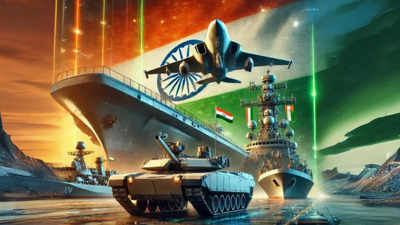
This is an AI-generated image, used for representational purposes only. (Image courtesy: DALL-E)
As we close the chapter on 2024, conflicts continue in various regions around the world. Despite ongoing efforts aimed at establishing peace, hostilities remain intense on multiple fronts, increasing the risk of broader global conflict. Prime Minister Narendra Modi repeatedly reiterated the country’s commitment to the principle of “no era of war”, and urged global leaders to embrace “peace, dialogue and diplomacy”. However, India also recognized the need to enhance its defense capabilities to establish itself as a recognized regional power. Furthermore, increasing unrest in neighboring regions has increased India’s imperative to enhance its defense strategy to safeguard its national interests. In response, India has significantly increased its military arsenal in 2024 to meet its security needs. Notably, these advances not only strengthened the country’s military capabilities but also advanced the ambitious Make in India Initiative. Most of these enhancements were either entirely domestically produced or consisted of substantial components manufactured within India. Following are the latest inductions into the Indian Armed Forces:- AK-203 rifles
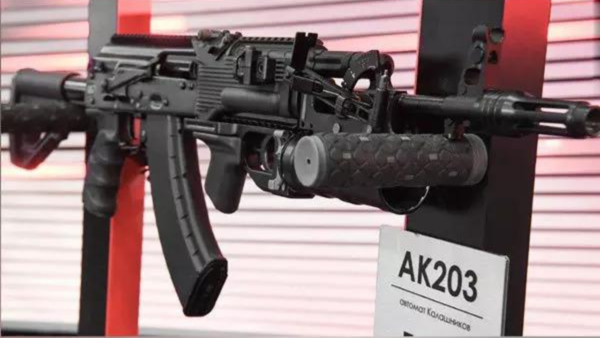
The AK-203 is a modernized version of the famous Kalashnikov series, chambered for the 7.62×39mm cartridge. In 2024, the India-Russia joint venture, Indo-Russia Rifles Pvt Ltd (IRRPL), delivered 35,000 AK-203 rifles. Indian ArmyEnhancing infantry capabilities with improved accuracy, reliability and ease of maintenance. asmi smg
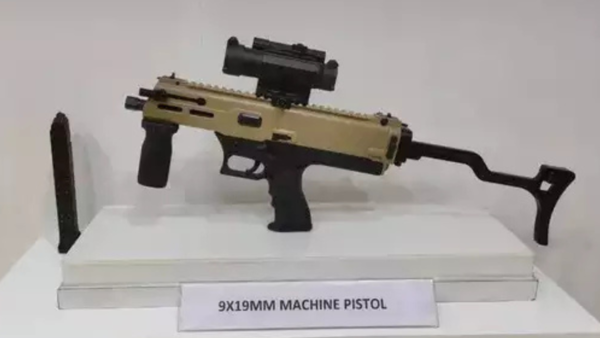
ASMI is an indigenous 9 mm submachine gun developed by the Infantry School of the Indian Army and DRDO. Designed for close combat, it provides a compact and lightweight solution for counter-terrorism and special operations. In 2024, the Indian Army inducted 550 ASMI units into the Northern Command, strengthening its close-combat arsenal. Bheeshma Cubes
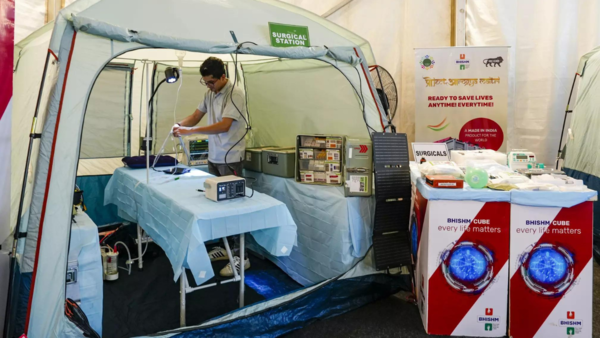
Bheeshma Cubes are innovative mobile medical units developed under Project Bheeshma (Bharat Health Initiative for Co-operation in Health). friendshipThese are specifically designed to provide emergency medical care in conflict zones and disaster affected areas. Equipped with trauma, burn and surgical facilities, they operate autonomously with electricity and oxygen generation. firearms
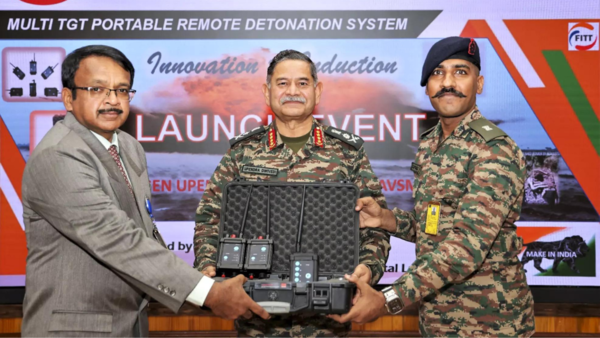
It is a portable multi-target detonation device developed by the Corps of Engineers of the Indian Army. This microprocessor-based innovation enhances the safety and efficiency of demolition operations, offering superior range and selective targeting. With a range of 2.5 km, Agnistra proves invaluable in conventional and counter-terrorism operations, such as room interdiction, IED destruction and destroying remote bunkers or hideouts. Nagastra-1
This is the first indigenous Loiter Munition i.e. suicide drone of the Indian Army. A man-portable, electric UAV weighing 9 kg with a range of up to 30 km. Equipped with a 1 kg warhead, it provides GPS-enabled precision strikes and low acoustic signature, making it effective in both day and night operations. It has more than 75% indigenous content and its unique recovery and reuse capabilities set it apart from global counterparts. T-90 Mk-III tank
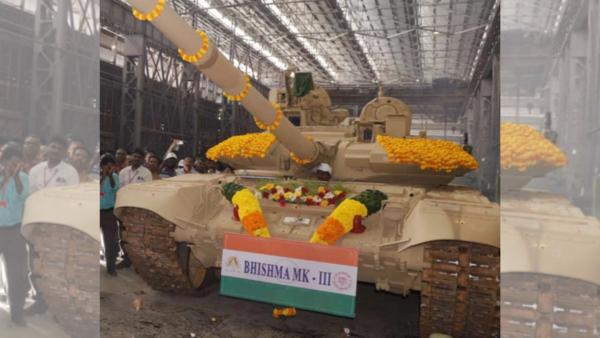
India’s defense sector marked a milestone with the rollout of 10 T-90 MK-III tanks (upgraded version of T-90 Bhishma tank) by Armored Vehicles Corporation Limited. Manufactured at the HVF, these tanks feature upgrades such as an automatic target tracking system, a digital ballistic computer and an indigenously developed commander sight. The entire batch of 464 tanks will be delivered over five years. Igla-s manpads
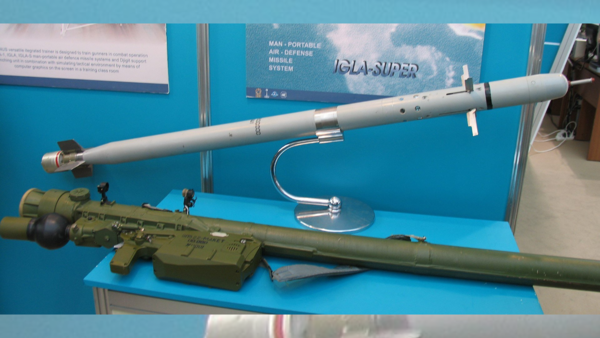
In 2024, the Indian Army inducted 24 Russian-made Igla-S MANPADS with 100 missiles to enhance its very short-range air defense (VSHORAD). This system targets low flying aircraft, droneAnd missiles. The deal involves domestic production of replacement of aging Igla-1M systems through transfer of technology. sky arrow
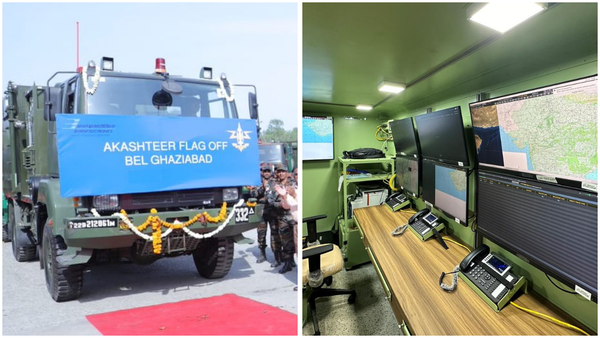
In 2024, the Indian Army introduced Akashteer, an advanced air defense system. It combines sensors from different sources to create a clear view of the sky, helping the military respond quickly to threats such as aircraft and missiles. With the supply of over 100 systems, the project will be fully deployed by 2027, strengthening India’s defence. serine hexadron
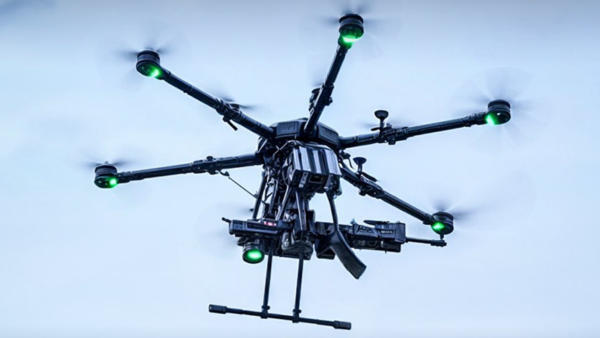
Indian Army introduced Sirin Hexadrone, an advanced hexacopter drone designed for combat operations. With a flight endurance of 45 minutes, it can carry up to 1 kilogram of weapons, including machine guns and grenades. Developed by Ikran Aerospace, it features advanced targeting, encrypted communications and efficient electric propulsion, enhancing surveillance and reducing troop casualties. INS Tushil
Indian Navy The induction of INS Tushil, a multi-role stealth-guided missile frigate, is an important milestone in enhancing India’s maritime capabilities. The seventh ship in the Project 1135.6 series, INS Tushil has advanced weapons such as BrahMos missile and Shtil surface-to-air missile. It integrates 26% indigenous systems. INS Sandhyak
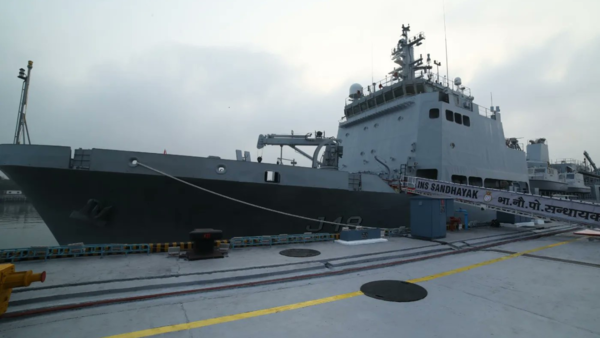
The Indian Navy commissioned INS Sandhyak, an advanced survey vessel, at Visakhapatnam in 2024. The 110 meter vessel is equipped with state-of-the-art sonar systems, enhancing the Navy’s hydrographic survey and ocean research capabilities. With a speed of 18 knots, INS Sandhyak will strengthen India’s maritime security and research. INS Triput
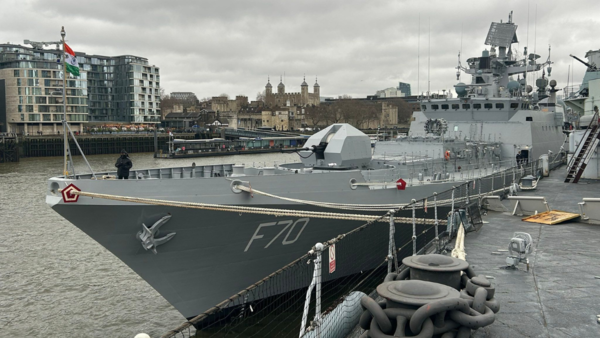
INS Triput is India’s first indigenously built Talwar class frigate and was launched in 2024. It was built by Goa Shipyard Limited (GSL). Part of India’s effort to strengthen its maritime defence, the 124.8-metre ship features advanced stealth technology and powerful weapon systems, including BrahMos missiles. INS Arighat
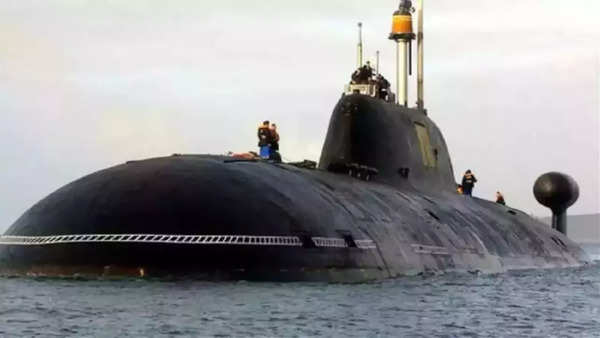
India will commission its second nuclear-powered submarine INS Arighat in 2024, enhancing its strategic deterrence capability. Equipped with K-15 (750 km range) and K-4 (3,500 km range) submarine-launched ballistic missiles, it joins INS Arihant in strengthening India’s nuclear triad. Powered by a pressurized light-water reactor, INS Arighat ensures survivability to counter-attacks, supporting India’s “no first use” policy. INS Director
The second ship of the Survey Vessel (Large) project, INS Direksha, was commissioned into the Indian Navy in 2024. Built with more than 80% indigenous content, it has advanced hydrographic systems for ocean mapping and navigation. The ship supports India’s maritime diplomacy and security in the Indian Ocean region. INS Malpe and INS Mulki
Indian Navy launches Malpe and Mulki, the fourth and fifth ships of the Anti-Submarine Warfare Shallow Water Craft (ASW SWC) project in 2024, built by? Cochin Shipyard The LTD ships, part of the Mahe class, have more than 80% indigenous content and are designed for coastal anti-submarine operations with a speed of 25 knots and an endurance of up to 1800 nautical miles. vision 10 starliner drone
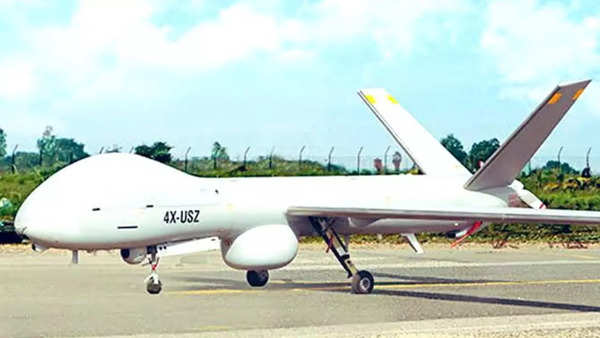
Indian Navy acquired its first indigenous medium-altitude long-endurance (MALE) drone, Drishti 10 Starliner, developed by Adani Defense and Aerospace in collaboration with Elbit Systems. With 70% indigenous content, the drone offers 36 hours of endurance, 450 kg payload capacity and adaptability to surveillance and reconnaissance missions. INS Surat and INS Nilgiri
Indian Navy to get destroyer INS Surat and frigate INS Nilgiri in 2024. Built by Warship Design Bureau and MDL, these ships enhance India’s naval capabilities with a focus on self-reliance. INS Surat, the fourth and final Project 15B destroyer, claims to be upgraded WeaponAI integration, and speeds of over 30 knots.
INS Nilgiri, the first Project 17A frigate, is equipped with state-of-the-art missile systems. Both ships have 75% indigenous content.
advanced weapons testing
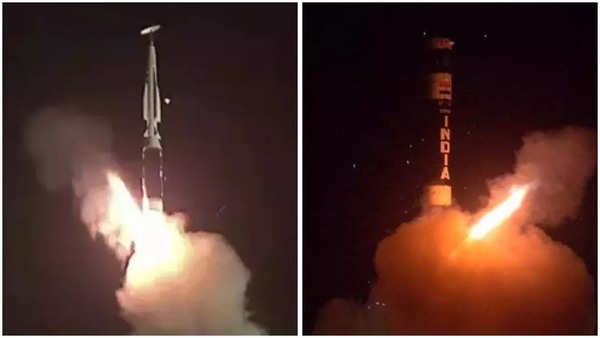
Apart from these inductions, India conducted successful tests and trials of several other lethal advanced weapons this year. The country test-fired a domestically developed long-range hypersonic missile capable of carrying a payload over 1,500 km at a speed exceeding Mach 5.
The Navy test fired the extended range BrahMos missile, while the Agni Prime missile with MIRV technology was also successful in its test firing.
defense deals
India signed agreements with several countries to acquire new weapons, including a Rs 28,000 crore deal with the US for MQ-9B Predator drones and the inauguration of Spain’s C-295 aircraft manufacturing plant in Vadodara, Gujarat .
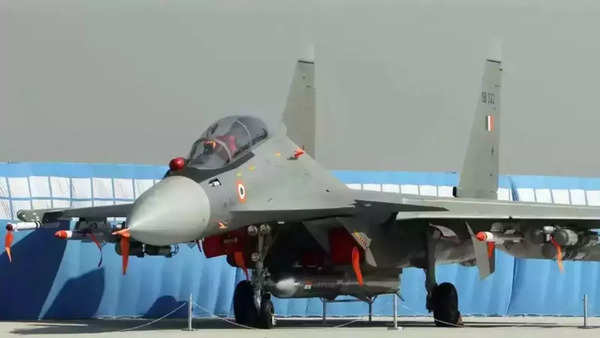
The country has also approved various upgrades to its existing arsenal to enhance its combat capabilities. For example, the Sukhoi-30s, considered the backbone of the Indian Air Force, will get a major makeover to extend their life by 30 more years.
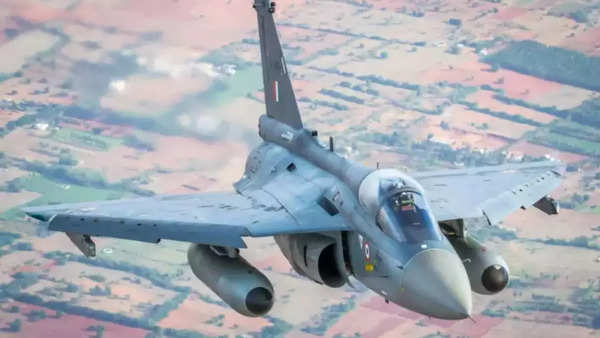
The IAF will also soon receive the first batch of Indian-made LCA Tejas, an upgraded version of the Tejas MK-1A, which is being developed by HAL.
Here are the key developments on the 1,041st day of Russia’s invasion of Ukraine.
Here is the situation on Tuesday, December 31:
Fighting
A Ukrainian drone attack in the western Russia region of Smolensk, which borders Ukraine, caused a fuel spill and fire at an oil depot. The local governor said Russian air defence systems “suppressed an attack by Ukrainian” drones in Yartsevo district.
Russia’s Ministry of Defence reported 68 Ukrainian unmanned aerial vehicles were downed overnight with 10 destroyed over the Smolensk region.
Russia and Ukraine have swapped more than 300 prisoners of war (POWs) in an exchange brokered by the United Arab Emirates. Russia’s Defence Ministry said it swapped 150 Ukrainian POWs while Ukraine’s President Volodymyr Zelenskyy said 189 Ukrainians returned home.
Syria’s de facto leader Ahmed al-Sharaa, right, also referred to as Abu Mohammed al-Julani, walks to meet a Ukrainian delegation in Damascus [Khalil Ashawi/Reuters]
Politics:
US President Joe Biden announced his administration will provide nearly $2.5bn in military aid to Ukraine in the latest move to support the war-torn country ahead of President-elect Donald Trump’s inauguration in January.
The United States also announced an additional $3.4bn in economic assistance to help Ukraine’s government and prop up its infrastructure with Biden stating he ordered his government to provide “as much assistance to Ukraine as quickly as possible”.
Syria’s new leader Ahmed al-Sharaa and other officials met Ukraine’s foreign minister with Syria expressing hopes of establishing “strategic partnerships” between the two countries.
Chinese President Xi Jinping promised to promote “world peace” in a New Year’s message to his Russian counterpart Vladimir Putin, saying “China and Russia have consistently moved forward hand-in-hand along the correct path of non-alignment, non-confrontation and not targeting any third party”.
In a letter to mark the New Year, North Korean leader Kim Jong Un extended his greetings to his “dearest friend and comrade” Putin, the Russian people and Russian military personnel.
Moldova’s separatist Transnistria region cut gas supplies to state institutions ahead of the year-end expiration of a Russian gas transit deal through Ukraine – a day after Russian energy giant Gazprom said it would suspend gas exports to Moldova on January 1 over unpaid debts.
Seoul: A team of US investigators including representatives from Boeing have examined the site of a plane crash that killed 179 people in South Korea while authorities were conducting safety inspections on all Boeing 737-800 aircraft operated by the country’s airlines.
All but two of the 181 people aboard the Boeing 737-800 operated by South Korean budget airline Jeju Air died in Sunday’s crash. Video showed the aircraft, without its landing gear deployed, crash-landed on its belly and overshoot a runaway at South Korea’s southern Muan International Airport before it slammed into concrete fence and burst into a flame.
The plane was seen having an engine trouble, and preliminary examinations also say the pilots received a bird strike warning from the ground control centre and issued a distress signal as well. But many experts say the landing gear issue was likely the main cause of the crash.
The South Korean government has launched safety inspections on all the 101 Boeing 737-800s in the country. The Transport Ministry said authorities are looking at maintenance and operation records during five days of safety checks that are to run until Friday.
The ministry said that a delegation of eight US investigators — one from the Federal Aviation Administration, three from National Transportation Safety Board and four from Boeing — made an on-site visit to the crash site on Tuesday. The results of their examination weren’t immediately available.
Kim E-bae, Jeju Air’s president, told reporters Tuesday that his company will add more maintenance workers and reduce flight operations by 10-15 per cent until March as part of efforts to enhance the safety of aircraft operations.
John Hansman, an aviation expert at MIT, said the crash was most likely the result of a problem with the plane’s hydraulic control systems. He said that would be consistent with the landing gear and wing flaps not being deployed “and might indicate a control issue which would explain the rush to get on the ground”.
The Boeing 737-800 — an earlier version of 737 than the Max — is a widely used plane with a good safety record, according to Najmedin Meshkati, an engineering professor at the University of Southern California who has studied aviation safety.
He said the failure of the plane’s system for broadcasting location, operating its landing gear and extending the wing flaps to slow down indicate a widespread problem that affected electrical and hydraulic systems. He is confident that investigators will learn what went wrong by analysing information from the flight data and cockpit voice recorders.
“These are really the two pillars for accident analysis and accident reconstruction,” Meshkati said. Like other aviation experts, Meshkati also questioned the location of a solid wall just a few hundred feet (metres) past the end of the runway, given that planes occasionally do overshoot runways. “Having such a big concrete barrier over there was really very bad luck for this particular airplane,” he said.
South Korean officials have said they will look into whether the Muan airport’s localiser — a concrete fence housing a set of antennas designed to guide aircraft safely during landings — should have been made with lighter materials that would break more easily upon impact.
The crash was the deadliest disaster in South Korea’s aviation history in decades. A seven-day national mourning has been declared until January 4.
The Transport Ministry said Tuesday that authorities have identified 175 bodies and are conducting DNA tests to identify the remaining five. Bereaved families said that officials told them that the bodies were so badly damaged that officials need time before returning them to relatives.
On Tuesday, Park Han Shin, a representative of the families, accused the government of failing to provide freezers on time as promised and said there are worries that the bodies could decompose.
“The last dignities of the victims are seriously hurt. We strongly criticise authorities for failing to keep its promise,” Park said.





 Sana
Sana