New Delhi: The Confederation of Indian Industry (CII) on Sunday urged the Central government to reduce the income tax for individuals and cut excise duty on fuels to increase disposable incomes in the hands of consumers, which would increase spending thereby spurring economic growth.
As part of its wishlist in the run-up to Union Budget 2025-26, the apex business chamber has said that reducing the excise duty on fuels is crucial as fuel prices significantly drive up inflation, forming a substantial portion of the overall household consumption basket.
The central excise duty alone accounts for approximately 21 per cent of the retail petrol price and 18 per cent for diesel. Since May 2022, these duties have not been adjusted in line with the approximately 40 per cent decrease in global crude prices. Lowering excise duty on fuel would help reduce overall inflation and increase disposable incomes, according to the CII statement.
It also states that the gap between the highest marginal rate for individuals at 42.74 per cent and the normal Corporate Tax Rate at 25.17 per cent, is high. Further, inflation has reduced the buying power of lower- and middle-income earners. The Budget could consider reducing marginal tax rates for personal income up to Rs 20 lakh per annum. This would help trigger the virtuous cycle of consumption, higher growth and higher tax revenue.
CII has sought an increase in the daily minimum wage under the MGNREGS from Rs 267 to Rs 375 as suggested by the ‘Expert Committee on Fixing National Minimum Wage’ in 2017. CII Research estimations show that this will entail an additional expenditure of Rs 42,000 crore.
The business chamber has further suggested that the government increase the annual payout under the PM-KISAN scheme from Rs 6,000 to Rs 8,000. Assuming 10 crore beneficiaries, this will entail an additional expenditure of Rs 20,000 crore.
It has also come out in favour of an increase in the unit costs under the PMAY-G and PMAY-U schemes, which have not been revised since the scheme’s inception. The CII has also suggested that consumption vouchers be introduced, targeted at low-income groups, to stimulate demand for specified goods and services over a designated period.
The vouchers could be designed to be spent on designated items (specific goods and services) and could be valid for a designated time (like 6-8 months), to ensure spending. The beneficiary criteria can be defined as Jan-Dhan account holders who are not beneficiaries of other welfare schemes.
Highlighting the weakening trend in household savings, CII Director General Chandrajit Banerjee noted that “low returns on bank deposits compared to other avenues such as equities and funds, coupled with a higher tax burden on interest income, have made bank savings less attractive”.
Bank deposits as a proportion of a household’s financial assets have declined from 56.4 per cent in FY20 to 45.2 per cent in FY24. To encourage bank deposit growth, CII, in its budget proposals for 2024-25, has suggested taxing interest income from deposits at a lower rate and reducing the lock-in period for fixed deposits with preferential tax treatment from the current five to three years, which can help boost bank deposits.
“Domestic consumption has been critical to India’s growth story, but inflationary pressures have somewhat eroded the purchasing power of consumers. The government interventions could focus on enhancing disposable incomes and stimulating spending to sustain economic momentum”, Banerjee added.
Thousands of Georgians are protesting in the capital Tbilisi as a new president allied with the ruling Georgian Dream party was inaugurated.
Mikheil Kavelashvili, a former pro-footballer, has been sworn in during a critical political period for the country after the government suspended its application to join the European Union.
Georgian Dream won parliamentary elections in October, but the victory was mired in allegations of fraud which have since sparked several street protests.
Outgoing president Salome Zourabichvili refused to step down on Sunday, saying she was the “only legitimate president”.
Addressing crowds gathered outside, Zourabichvili said she would leave the presidential palace but branded her successor illegitimate.
“This building was a symbol only as long as a legitimate president was sitting here,” she said.
Georgia’s four main opposition groups have rejected Kavelashvili and boycotted parliament.
Kavelashvili is a former MP with the Georgian Dream party and was the only candidate for the job. Zourabichvili has previously denounced his election as a travesty.
Georgian Dream has become increasingly authoritarian in recent years, passing Russian-style laws targeting media and non-government groups who receive foreign funding, and the LGBT community.
It refused to join Western sanctions on Russia after the full-scale invasion of Ukraine, and called the West the “global war party”, making a mockery of its stated aim of joining the EU and Nato.
An overwhelming majority of Georgians back the country’s path to the EU and it is part of the constitution.
But in November, the country’s ruling party said the government would not seek EU accession talks until 2028.
The announcement sparked days of protests, and riot police used tear gas and water cannon against protesters, who fought back by throwing fireworks and stones.
On Saturday, protesters waving Georgian and EU flags gathered again ahead of the inauguration, forming a human chain that spanned kilometres.
“I am out in the street together with my whole family trying somehow to tear out this small country out of the claws of the Russian empire,” one protester told the Associated Press.
The US this week imposed sanctions on Georgia’s former prime minister and billionaire founder of Georgian Dream, Bidzina Ivanishvili.
Georgia is a parliamentary democracy with the president the head of state, and the prime minister the head of parliament.
When Zourabichvili became president in 2018 she was endorsed by Georgian Dream, but she has since condemned their contested election victory in late October as a “Russian special operation” and backed nightly pro-EU protests outside parliament.
Mumbai: Middle-class families like to talk about themselves as “ordinary families” or say, “We are ordinary people.” But are families simple?
Earlier this month, software engineer Atul Subhash, 34, took his own life in the midst of a messy divorce after he left a video testimony detailing how he was dealing with an adversarial and corrupt Indian legal system as well as that of his estranged wife. Feeling tortured by hostility. Nikita Singhania’s family.
Their video testimony presents an emotional portrait of contemporary social life, of how the idea of ’simple families’ becomes a denial of human complexities. This denial underlines how parents expect children to fulfill social roles and destinies. Nowhere is this expressed more clearly than in the anxiety and frustration associated with marriage.
Although the contours of marriage are changing, it is still not considered negotiable and according to a Lok Foundation-Oxford University survey 93% of marriages in India are arranged.
Like many Indians, Atul Subhash and Nikita Singhania met on a matrimonial portal and got married soon after. However, during their honeymoon in Mauritius, Singhania told Subhash that she never wanted to get married. The family had put pressure on her to marry due to her father’s ill health and their desire to see him ‘settled down’ before he died.
One can imagine what a terrifying moment this would be for a newly married couple. This is not an expectation of honeymoon intimacy, but the honeymoon, now a standard part of the marriage ritual, is often the first time a couple actually encounters each other in person. And when the choice is made on the basis of affiliation, not affinity, things can get complicated.
Conversations about what it means to be with another person are absent or suppressed, because anything that might create space for the individual is seen as a threat to this world of the ‘ordinary family’. Personal desires, friendships, interests, ‘pass time’, career preferences, romantic desires – all that makes one an autonomous adult – are viewed as betrayals, met with tears, threats and drama.
One can exist only by dividing oneself – playing a role, hiding one’s individual self. When this self emerges in love, sex or intimacy the guilt or shame can lead to attacking those who ‘pressured’ those glimmers of freedom. When a partner reveals their true self that is beyond expected norms, social, sexual or physical, it creates an identity crisis – and sometimes this can be expressed as disgust rather than curiosity or engagement. Is.
Atul Subhash and Nikita Singhania had met very little before marriage. He told that she spoke very little during their conversations. They considered this a sign of ‘being wise’, a type of move in which feminine wisdom is seen as calming masculine unrest and bringing stability to life. In fact, Singhania later told him that his mother and aunts had told him to speak less because speaking too much, revealing one’s true self, could break engagements and marriages. The details of this marriage, even if only heard from one party, are one of deep incompatibility and alienation. In many cases when such rifts are encountered, there is pressure to adjust or have children to save the marriage. Neither party has the emotional or social resources to even consider ending it with some reciprocity, imagining individual happiness rather than social conformity.
But there is a gradual change. At one time the term ‘innocent divorcee’ was commonly seen in matrimonial columns to refer to someone seeking to remarry after divorce. This indicates that they were victims of someone’s wrongdoing. If left to their own devices, they would never actually want something like divorce. The divorce rate in India, although still low, has doubled in the last two decades. This has been driven in part by changes in women’s lives and roles. Women are more expressive, they aspire for material and personal pleasures.
trap set for men
Romance is often talked about as an exclusively feminine fantasy – and feminine folly. The truth is that for many women the idea of romance places the idea of liberation and individuality at its center. Bringing up romance to always be judged based on their suitability, it symbolizes being loved just as you are and an escape from social realities. However, for men, romance becomes another iteration of the masculine role, associated with discovery and conquest, which symbolizes their success.
We make fun of women’s romantic fantasies. But men have also been raised on a fantasy that we don’t accept: the fantasy of masculinity. It is the cunning trickery of patriarchy that men confuse supremacy with freedom.
Families raise men to imagine that they will always be the central, decision-maker. They are also constantly reminded of how much their success is being affected, how all the family’s resources—emotional and material—are being thrown at them. It is a debt he must repay by becoming a real man. And to be human means to be successful in every way, to be invincible and above reproach. The worries and loneliness of such a life remain unseen.
This often leads to hostile and secretive relationships with families. Hiding their insecurities, suffering alone, feeling anger for the burden being placed on them and also a feeling of helpless compassion about betraying their family if they choose something that makes them happy.
In this context, there comes immense pressure on intimate relationships to become the automatic solution to separation. Intimacy, by nature complex, uncertain and full of vicissitudes, becomes an abyss, far from that simplicity. Facing insecurity and lack of control becomes unbearable. This is why romantic failure leads to so much violence in men – either toward themselves, or toward others. There is a reason why the character of Devdas seems symbolic to generations of Indians. In the old days, when marriages did not work out, people were told that it takes time to adjust. What remained unsaid was that the adjustment was primarily women’s. The idea today that relationships take time requires a change in the masculine mindset – a commitment to an uncertain process for which they cannot be prepared.
For decades, struggling with these restrictions, we turned to popular culture to experience our personal emotional complexities. Love stories, family dramas, questions of choice between honor and happiness reflect emotional experiences and provide them with gendered psychological validation and catharsis. While older films are often criticized for their conservatism, these narratives made some space for both unusual men and the diverse nature of emotional life.
The pain of love, the density of companionship and shelter, the acceptance of loss, and the re-emergence of hope, the deep interiority of personal life that were once expressed in song, are completely absent from a culture where visibility and immediate meaning are our primary means. Control life. Social realism is the only arbiter of truth, whether public, private or personal.
The emotional isolation of our society is reflected in the gender isolation of our films. Women-centric films mostly present the reality of women in the context of violence and sociology, for example ‘Thappad’. Male-centric films focus on the masculine wound, which ends either in death, as in the old Bachchan films, or in men being unable to break out of the loop of violence, as in ‘Animal’. Perhaps something very gentle is needed to break and heal this sexual impasse. Something like love, whose vitality lies in that it offers new meanings every day, how to make space for the other without submerging oneself.
Unfortunately, the prevailing discourse on masculinity has failed to address these internal crises. Flat descriptions of toxic masculinity often stigmatize marginalized men. The victim narratives promoted by men’s rights activists only push men deeper into these gendered fates. New age discussions on masculinity ask men to embrace their emotional and vulnerable selves, cook a meal or two, but never question the imperatives of social and economic success on which masculinity is based. They leave a group of men struggling in an economy that can’t afford them jobs that don’t conform to societal imaginings of what men should be.
The death of Atul Subhash undoubtedly highlights the terrible flaws in the legal system and the misuse of laws. But these shortcomings and abuses are not limited to gender issues. Many people are disenfranchised by the nature of our legal system. Therefore the argument for its reform is broad. Touting a law designed to protect women from dowry violence may not actually help men, no matter what the claims.
In fact, the most compassionate response to the tragedy of a death is to recognize the deeper tragedies in which it is embedded. As families become nuclear and as people migrate in the capitalist world, we need to learn to relate as individuals, beyond identity. There is a need for a humanitarian cultural revolution that recognizes this emotional juncture at which we find ourselves. But for this we need both emotional politics and emotional education.
(Paromita Vohra is a city-based writer and filmmaker.)
Chadians are voting in parliamentary, regional and municipal elections for the first time in more than a decade, continuing the former military-turned-civilian government’s push to put the Central African country on a democratic path. But opposition party members are sceptical.
Officials in N’djamena say Sunday’s vote will formally end a three-year “transitional period” that followed the 2021 death of longtime leader Idriss Deby Itno and the forceful takeover by his son, Mahamat Idriss Deby, who was confirmed as the country’s president after an election in May.
However, many opposition parties are boycotting the polls, calling them a “masquerade” and accusing the Patriotic Salvation Movement (MPS) government of trying to legitimise what they call a political dynasty.
Chad, one of Africa’s poorest countries, is the first in a string of coup-hit states in the Sahel to hold elections as promised, even if polls were severely delayed. The country is no stranger to coups or repressive governments and has been ruled by the Deby family since 1991.
Sunday’s vote comes amid a barrage of security challenges: Sudan’s war is raging along the eastern border; the Boko Haram armed group is attacking security locations around Lake Chad; and N’Djamena recently broke a military pact with former colonial master and strong ally, France.
Rights groups say without full opposition participation, the election is not likely to be fair.
“It will be difficult to have a credible election without inclusivity,” Isa Sanusi, Amnesty International’s country director in neighbouring Nigeria, told Al Jazeera. “That some are boycotting the election shows that there must be a review of the process and system to ensure that a level playing field is provided to accommodate all Chadians.”
Here’s what you need to know about the parliamentary elections and why the country’s fledgling steps towards democracy are controversial:
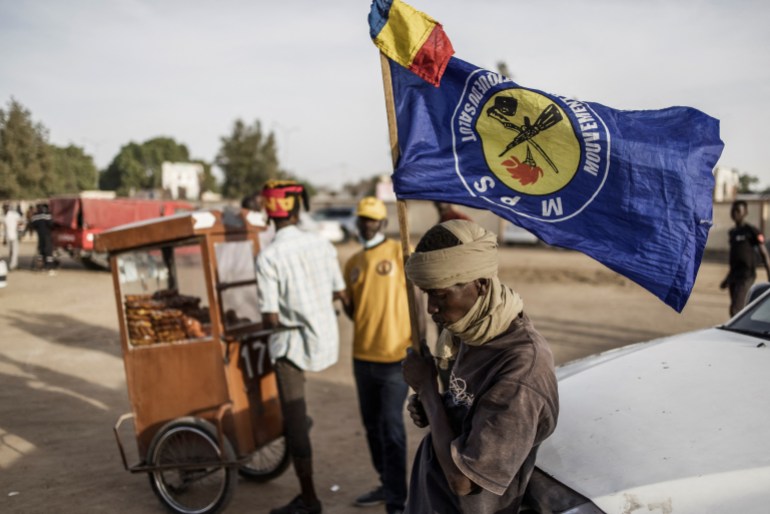
A supporter of the Patriotic Salvation Movement (MPS) waves a party flag as he attends a political rally, in N’Djamena in 2021 [File: Marco Longari/AP]
How will voters elect?
Some 8.3 million registered voters of the country’s 18-million population will vote for legislators in the country’s 188-seat parliament. Parties need 95 seats for a majority.
More than 100 political parties have put forward some 1,100 candidates for the parliamentary elections. Winners are elected by a first-past-the-post or a more-than-half majority method, depending on the constituency size.
Voters will also choose regional and local governments across 22 regions and the capital, N’Djamena.
The Transformers Party, as well as dozens of other opposition parties, are boycotting the elections, arguing that the vote will neither be free nor fair.
Why were there no parliamentary elections in more than a decade?
Parliamentary elections were last held in 2011. Although the term for the legislators was meant to end in 2015, the government indefinitely postponed polls, claiming there were no funds to organise elections.
Although the landlocked country is an oil producer, it ranks fourth from the bottom in the United Nations Human Development Index due to years of stagnant economic activity and harsh climate conditions.
Despite a clamour by opposition members to hold the elections promptly, former President Deby continued to postpone them. In 2019, the newly established National Independent Electoral Commission (CENI) finally promised to hold elections in 2020. However, the COVID-19 pandemic disrupted those plans.
Following his father’s death at the hands of rebels in May 2021, General Mahamat Idriss Deby, 40, seized power, despite loud calls for elections from opposition parties. The military disbanded parliament and put a one-year Transitional Military Council in place, headed by Deby. In October 2022, the leader disappointed many Chadians when he extended the transition period to 2024. Thousands, especially youth, took to the streets in protest, but security forces opened fire on them, killing more than 100 people.
Succes Masra, the young leader of the opposition Transformers Party, was at the forefront of the protests. Masra fled to the United States following the killings.
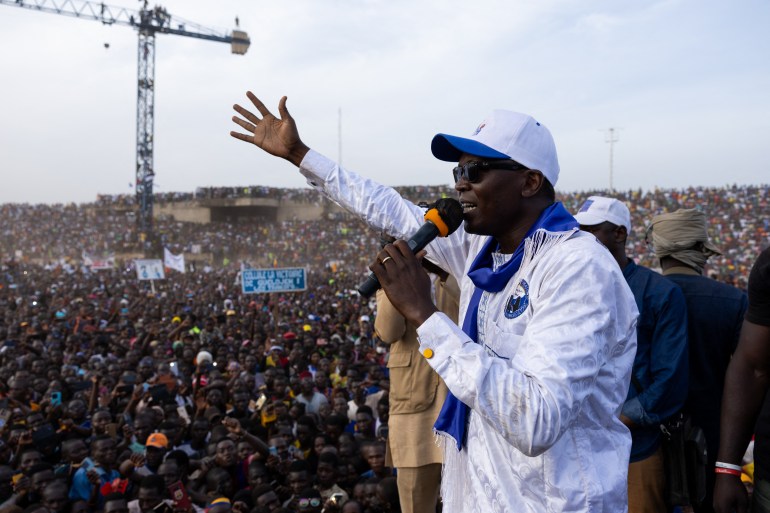
Mahamat Idriss Deby speaks at a stadium in the Dombao district, in Moundou, Chad, in April 2024 [File: Joris Bolomey / AFP]
Have there been other elections?
Yes, authorities held a successful referendum in December 2023 that supported a new constitution and, in effect, new elections.
In May this year, Deby swept to victory in controversial presidential elections, amid claims his party rigged the vote with the help of the National Election Management Agency (ANGE).
Critics also accused Deby of murdering opposition candidates before the elections. Chadian security forces killed Yaya Dillo, Deby’s cousin and a leading opposition member of the Socialist Party Without Borders (PSF) in February. He was widely seen as the president’s biggest challenger at the time.
Officials claimed Dillo led a deadly attack on the headquarters of the country’s intelligence agency on February 28, but Dillo denied the allegations. Dillo was killed in a shootout the following day, along with several other PSF members. Many members are still detained in the notorious Koro Toro maximum security prison, according to Amnesty International. Organisations like Human Rights Watch in 2022 documented how prison officials tortured and murdered detained protesters in the facility.
Deby won 61.3 percent of the vote to the anger of opposition groups who claimed the elections were rigged. International rights groups, such as the International Federation for Human Rights, said the presidential elections were “neither credible, free, nor democratic”.
The president placed well ahead of his biggest opponent, candidate Masra of the Transformers Party, who came second with 18.5 percent of the vote. Masra had returned to the country in January this year following a peace agreement and was named prime minister in what many saw as Deby’s attempt to win over opposition members. Tensions returned, however, when the two faced each other in the elections. Masra resigned as prime minister and has since returned to leading the opposition.
Which parties are running in this election?
Patriotic Salvation Movement (MPS): Led by agricultural expert and former Prime Minister Haroun Kabadi, who currently heads the Transitional Council, the MPS is the governing party. It was founded by former President Deby Itno and current President Deny is a “honorary president”. MPS has controlled parliament since 1996. Before the Transitional Council was put in place in 2021, the party was in a coalition government with the allied Rally for Democracy and Progress (RDP) and National Rally for Democracy and Progress (RNDP) and controlled 134 parliament seats.
National Union for Democracy and Renewal (UNDR): Led by politician Saleh Kebzabo, it was one of the main opposition coalitions against the rule of former President Deby Itno. The current president appointed Kebzabo as prime minister from 2022-2024. The party controlled 10 seats until 2021.
National Rally of Chadian Democrats (RNDT): Once allied in a ruling coalition with the MPS, RNDT is largely seen as a “semi-opposition” group. It’s led by former Prime Minister Albert Pahimi Padacke (2021- 2022). Padacke competed in the May presidential elections and won 16.9 percent of the votes. RNDT controlled eight seats in parliament until 2021.
Succes Masra delivers a speech during a campaign meeting before presidential elections in April 2024 [File: Joris Bolomey / AFP]
Why are some opposition parties boycotting the parliamentary elections?
Some opposition parties, including Masra’s Transformers, Group of the Cooperation of Political Actors (GCAP), and more than 10 others, are not participating in the vote in protest, and have been distributing flyers to people to encourage them not to vote.
The parties accuse Deby’s government of repression and autocracy and say opposition members have already “lost in advance”.
Masra, who came second in the presidential vote, told the AFP news agency that “participating in the legislative elections under the current conditions is participating in legislative apartheid.”
Some parties, like Chad’s Party of Democrats, claimed to be blocking MPS members from holding campaigns by setting roadblocks in their strongholds.
Authorities have rejected the claims. Minister of Infrastructure Aziz Mahamat Saleh told reporters the elections will enable the ruling MPS and President Deby to attain the majority needed “to translate his political programme into reality”.
Why are Chadian journalists protesting?
Meanwhile, online journalists this week decried a December 4 ban that prevents online newspapers from broadcasting audiovisual content related to the elections, and in general. Authorities also suspended interactive broadcasts that involved phone-ins.
The country’s High Media and Audiovisual Authority (HAMA), which issued the restrictions, alleges that online publications repost videos without content producers’ permission, in violation of content laws. In the past, HAMA accused online journalists of publishing “unverifiable” information about President Deby.
A Supreme Court decision on December 20 ordered the content ban be lifted immediately. However, HAMA has not yet implemented the ruling. Speaking on state television on Tuesday, HAMA President Abderrahmane Barka said the order was in line with Chadian law on sharing content but did not state whether the agency would respect the judgement.
Some 40 media publications have been on strike. On Tuesday, many reporters took to the streets in N’djamena to protest the decision, accusing HAMA and the MPS government of trying to silence online media before the elections. The restrictions, they said, also prevent them from publishing locally created audiovisual content.
Rights groups criticised the ban. “As a regulatory body, HAMA’s mission is to regulate the media space, not to restrict it preventively,” Sadibou Marong, sub-Saharan Africa director of Reporters Without Borders (RSF), said in a statement.
“The difference is thin, but essential to guarantee freedom of the press in Chad. If the distribution of content without the consent of their producer is to be prohibited, RSF asks HAMA to amend its decision by not prohibiting online media from broadcasting and producing their own audiovisual content.”
What’s next?
Analysts say the MPS appears set to win a majority in parliament, essentially cementing the party’s decades-long dominance, as well as strengthening the Deby family’s grip on power.
In huge rallies in N’Djamena over the weekend, MPS politicians distributed caps, key chains, and other mementoes painted in the party’s blue and yellow colours to thousands of supporters.
Rights groups are calling on authorities to ensure an inclusive vote, however. “Authorities in Chad have a duty to not only ensure that the election is free and fair but also to ensure that it is inclusive,” said Sanusi of Amnesty International.
Opposition boycotters meanwhile have pledged to independently monitor the vote and to report evidence of violations to the Tanzania-based African Court, which has jurisdiction in African Union member states, in order to get the court to annul the vote.
NEW DELHI: India’s exports to its trade agreement partner Australia rose 64.4 per cent year-on-year to USD 643.7 million in November on account of healthy growth in sectors such as textiles, chemicals and agricultural products, according to the commerce ministry data. However, the country’s merchandise exports recorded a decline of 5.21 per cent year-on-year to USD 5.56 billion during April-November 2024-25, the preliminary data showed. India and Australia implemented an interim trade pact — economic cooperation and trade agreement (ECTA) — on December 29, 2022 and are now in negotiations to widen the scope of the pact and make it a Comprehensive Economic Cooperation Agreement (CECA). On the completion of two years of ECTA, commerce and industry minister Piyush Goyal said the agreement has brought with it increased market access for Indian exporters, expanded opportunities for MSMEs and farmers, and generated several employment avenues. It has also enabled growth in exports by 14 per cent in 2023-24; notable boost in IT/ITeS, business and travel services; and port-study work and work holiday visas, he said in a port on social media platform X. “The expanding trade and investment ties between the two countries under the agreement reflect the growing business-to-business and people-to-people engagements. We are committed to building on the momentum that the Ind-Aus ECTA has generated and achieve the USD 100 billion trade target by 2030,” Goyal said. In a statement, the commerce ministry said the key sectors like textiles, chemicals, and agriculture have shown substantial growth, while exports on new lines, including gold studded with diamonds and turbojets highlight the diversification enabled by the agreement. Imports of essential raw materials, such as metalliferous ores, cotton, wood and wood products have fuelled India’s industries, it said, adding that sectors such as electronics and engineering have room for growth. Since its signing, bilateral merchandise trade has more than doubled, surging from USD 12.2 billion in 2020-21 to USD 26 billion in 2022-23. The total trade, however, moderated in 2023-24 to USD 24 billion in 2023-24. “The current fiscal year continues to reflect strong momentum. Total merchandise bilateral trade from April-November 2024 reached USD 16.3 billion,” the ministry said. Exchange of preferential import data has commenced between both countries, highlighting the effective implementation of the agreement in 2023. The data reveals export and imports utilisation at 79 per cent and 84 per cent, respectively. So far, ten rounds and inter-sessional discussions have been held for the proposed CECA.
The Bharatiya Janata Party-led Rajasthan government on Saturday canceled at least nine of the 17 new districts and all three new divisions created by the previous Congress government ahead of the state assembly elections last year, officials said.
Rajasthan Chief Minister Bhajanlal Sharma during a press conference in Jaipur.(PTI)
Chief Minister Bhajan Lal Sharma approved this decision in the cabinet meeting on Saturday. With the latest decision, there will now be 41 districts and 7 divisions in Rajasthan. The nine districts whose membership has been canceled by the Cabinet include Shahpura, Dudu, Jaipur Rural, Neem Ka Thana, Kekri, Gangapur City, Jodhpur Rural, Anupgarh and Sanchore, while three new divisions Pali, Banswara and Sikar have also been suspended. Is.
“Rajasthan came into existence as a separate state in 1959 with 26 districts. Till 2023, only seven new districts were created keeping in mind the convenience of the people and administration. Therefore, it is clear that the sudden formation of 17 districts And the 3 new divisions were also not the need of the hour, it was also not planned according to the same parameters as the district formation notified by the Central Government such as administrative advantage, behavioral and cultural similarity and population,” Parliamentary Affairs said. Minister Jogaram Patel addressing the press after the meeting
He said, “Therefore, the government has decided to cancel 9 of those new districts after expert review, while retaining the remaining 8 new ones. We have also suspended 3 new divisions. Rajasthan now has 33 There will be 41 districts including the old ones and 8 new ones, and also 7 divisions as before.”
The government has decided to continue with Beawar, Balotra, Deeg, Didwana-Kuchaman, Dudu, Kotputli-Behror, Khairthal-Tijara, Phalodi and Salumber while suspending nine new ones.
Just months before the assembly elections in the state, the then CM Ashok Gehlot-led Congress government in the state announced 17 new districts on August 5 last year, taking the total number of districts in Rajasthan to 50 and two big cities again. The determination was made. Districts – Jaipur and Jodhpur, as per the recommendation of Ram Lubhaya Committee. A total of three new divisions were also notified in the state.
Later, on October 6, just a day before the election code of conduct was to be implemented by the Election Commission of India, Gehlot also announced three more new districts – Malpura, Sujangarh and Kuchaman. However, officials said they could not be informed due to conflicts with the COC’s timing.
However, the initiative has created a fresh political stir ahead of the assembly elections as the BJP alleged that the move to create new districts is a futile exercise aimed at boosting the chances of Congress candidates in the upcoming elections.
After the BJP came to power in the state following a landslide victory in the state elections last December, the government announced a review of several schemes launched by the Gehlot government as well as the formation of new districts and divisions.
On June 13, the state revenue department also issued a new order announcing that CM Sharma has constituted a cabinet committee of five ministers to review the formation of new districts. The five members include Deputy CM Prem Chand Bairwa, Cabinet ministers Rajyavardhan Singh Rathore, Kanhaiyalal Meena, Suresh Rawat and Hemant Meena.
Bairava was also made the convenor of the five-member subcommittee.
Later, on June 29, the government also constituted a new committee of officers led by an ex-IAS officer to review the formation of 17 new districts notified by the previous Congress government in August last year, officials familiar with the matter said. Said .
“Rajasthan Chief Minister Bhajan Lal Sharma has approved the formation of a committee regarding reorganization of districts in the state. The committee headed by former IAS officer Lalit K. Panwar has given its approval to the Cabinet sub-committee regarding reorganization of new districts. Will submit the report.” The Chief Minister’s Office said in an official statement on June 29.
After conducting surveys in all the new districts, the Panwar committee has submitted its final report to the Cabinet sub-committee on August 31. Commenting on the survey methodology, Panwar told HT, “The committee has considered 10 parameters to conduct the survey including geographical location, population, administrative structure, economic backwardness, distance between district headquarters and tehsils, effective laws and Maintaining order are some of the key parameters.
Meanwhile, on September 18, the government also removed Education Minister Madan Dilawar and appointed Deputy Chief Minister Prem Chand Bairwa as the convenor of the cabinet subcommittee. Officials said the Dilawar-led committee has taken final consideration of the Panwar report and presented it before the CM on Saturday, following which the latest decision to suspend nine districts and three divisions was taken.
Minister Patel further said in the press conference, “This decision was never political. We have not judged the parameters based on the favor of BJP and Congress. The committee is of the firm opinion that the decision to form the Congress government has not been taken.” Many of the new districts do not even have proper collector buildings considering any revenue resources and other administrative infrastructure.”
He said, “This was against the interest of the government. It was clear from the Panwar Committee report that we do not need those districts at this time.”
Commenting on the development, the Congress meanwhile has also announced the launch of massive protests against the move after January 1, when the period of state mourning due to the demise of former Prime Minister Dr Man Mohan Singh ends.
In the press conference, Congress President Govind Singh Dotasara said, “This is an inhuman decision taken by the government today.” How did they reach this decision when one committee has ruled in favor of the formation and one against it?” It appears that the CM has got a fresh slip from Delhi to take this step as we all know. That he has been visiting there for the last few days, but we all thought that PM Narendra Modi can gift some new development projects to Rajasthan, what did we get?
He also alleged: “The CM has only thought about his own interest. He did not suspend Deeg district because it was separated from his hometown Bharatpur. But, he suspended Dudu who was the Deputy CM of Bairwa district. He was also removed.” The sub-committee should first look into this fact.”
Announcing the mass movement, Dotasara further said, “The state mourning for former Prime Minister Late Singh is not over yet. Once it is over, the Congress will take to the streets after January 1 and make this government realize that they What have you done?” Not happy with this decision. New collectors, superintendents of police and other staff have been appointed in all those districts, what will happen to them now?”
During this, Leader of Opposition Tikaram Julie said, “Former CM Vasundhara Raje had also spoken in favor of smaller and new administrative units in her speeches in the Assembly during the previous BJP government. It was during his tenure that a small district like Pratapgarh was formed. This shows that BJP also understands the importance of small districts. Why does the BJP government want to end the facilities provided to the people of the new districts? ,
He further said, “The new year is about to start and it is time to take new thinking and steps towards development. Abolishing new districts will not only cause problems to the people, but this step will also be a step backward in the direction of development. May go.” ,
In a post on Twitter, Gehlot commented, “The BJP government’s move to suspend 9 out of 17 new districts created by our government is an example of indiscretion and mere political vendetta. During our tenure, on March 21 A committee was formed.” In 2022, the districts were reorganized under the leadership of senior IAS officer Ramlubhaya, in which reports were received from dozens of districts, after examining all these reports, the committee finalized its proposal – based on which we decided to form those districts. decision made.
He said, “After the bifurcation of Chhattisgarh and Madhya Pradesh, Rajasthan became the largest state in the country. Yet, the administrative units were not reorganized keeping that ratio in mind. Despite being smaller than Rajasthan, Madhya Pradesh Today there are 53 districts.
According to Gehlot, before the formation of new districts, the average population per district in Rajasthan was 35.42 lakh, spread over an average of 12,147 sq km, which came down to 15.35 lakh per district, spread over 5268 sq km, after the notification of new districts. “Smaller units are always good for better and faster administrative delivery,” he said.
“The districts which the BJP government has canceled on the pretext of being small, is also unfair. The size of the district depends on the geographical conditions there. The success of the government scheme is also more in the districts with less population. It is easy There is also.” To maintain law and order in small districts, because the police reach there is more.
YesNervousness and anxiety become rampant during year-end stock taking. As 2024 comes to an end, three stalwarts of India passed away in its final days, leaving the world poorer. former prime minister Manmohan SinghAuthor M.T Vasudevan Nairand film producer Shyam BenegalAll of whom, in their own ways, touched the lives of everyday Indians.
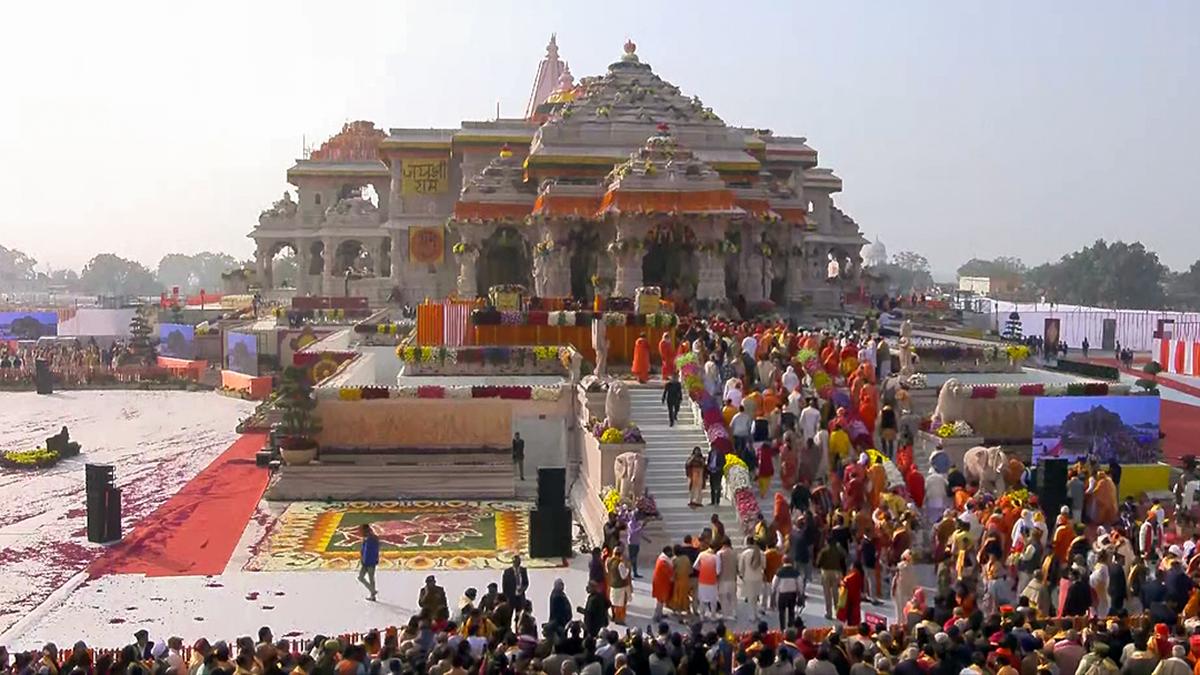
Meanwhile, the camera continues to record everything that comes its way without any bias: here’s a curation of how photographers have reacted to events while covering them. They witness irregular weather, disasters, elections, election promises, victories and defeats. Somewhere, in an old temple town, a new temple came up; Wars never seem to end, no matter how much chatter, and children suffer the worst, as in any conflict; International sporting events gave rise to climaxes and anti-climaxes; Disasters, both man-made and natural, changed life forever; An all-female cinema team won international acclaim; And in another moment a former President narrowly escaped being shot just days before being re-elected to office.
And the camera keeps testifying.
Photo: ANI
Display of faith: Devotees worship at the Ram Janmabhoomi temple in Ayodhya after the ‘Pran Pratishtha’ ceremony on January 22.
Photo: Nisar Ahmed
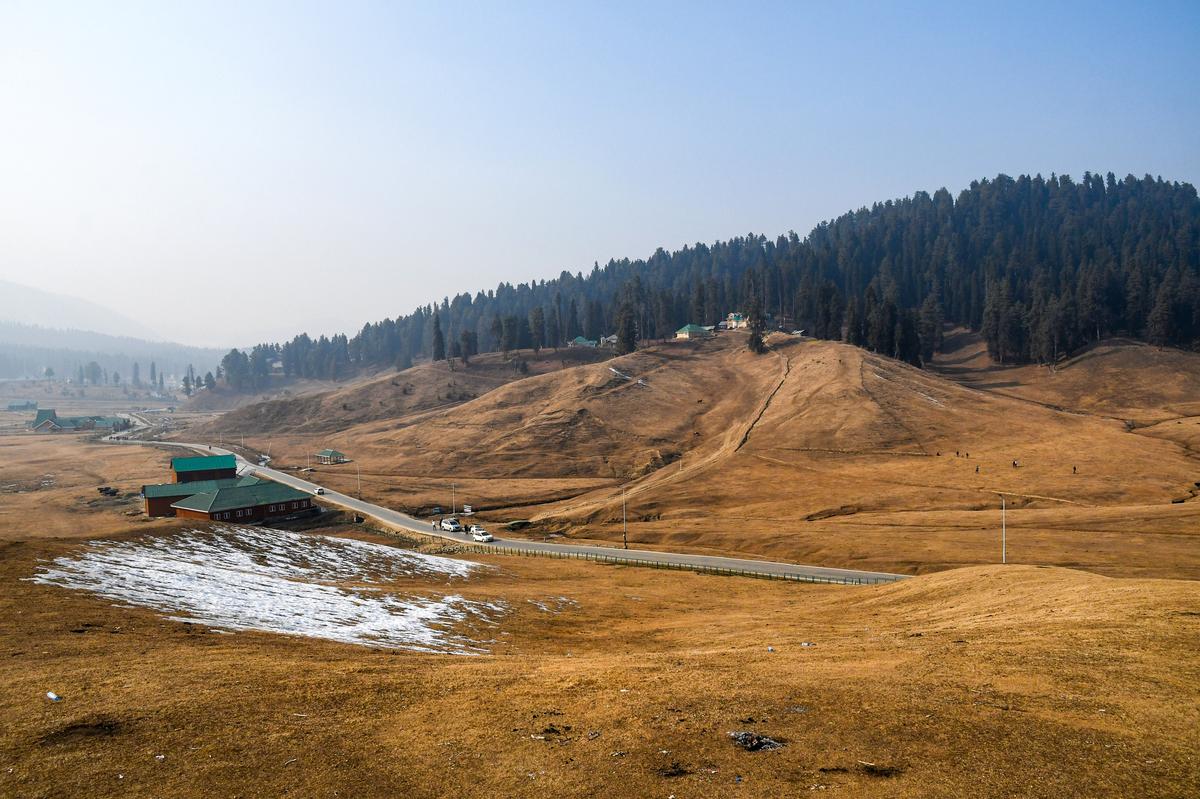
A view of Gulmarg ski resort in North Kashmir’s Baramulla on January 21, seen without snow for the first time.
Photo: PTI
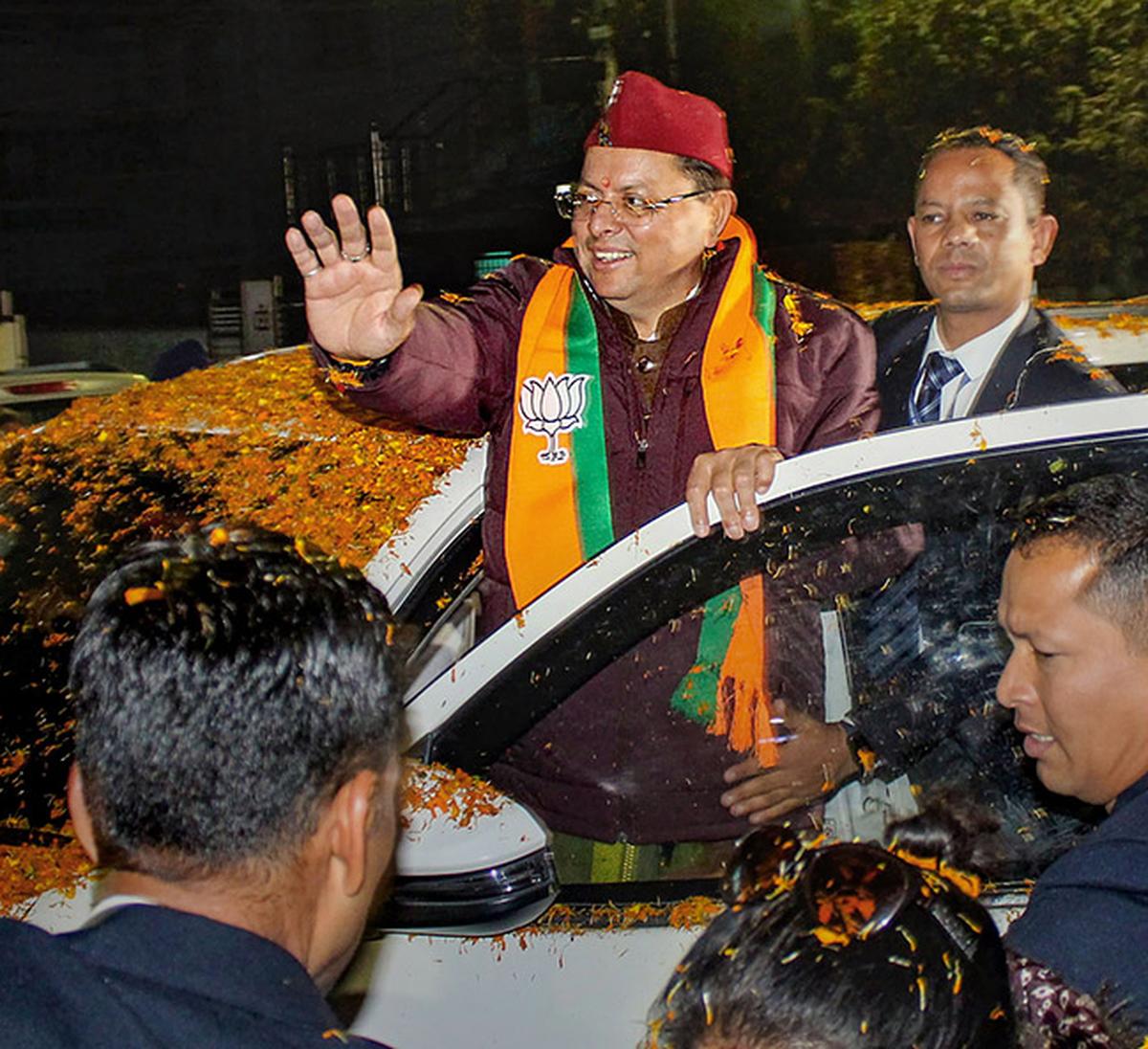
Chief Minister Pushkar Singh Dhami was welcomed by BJP leaders and supporters at the party office in Dehradun after the Uniform Civil Code Bill was passed by the state Assembly on February 7.
Photo: Shashi Shekhar Kashyap
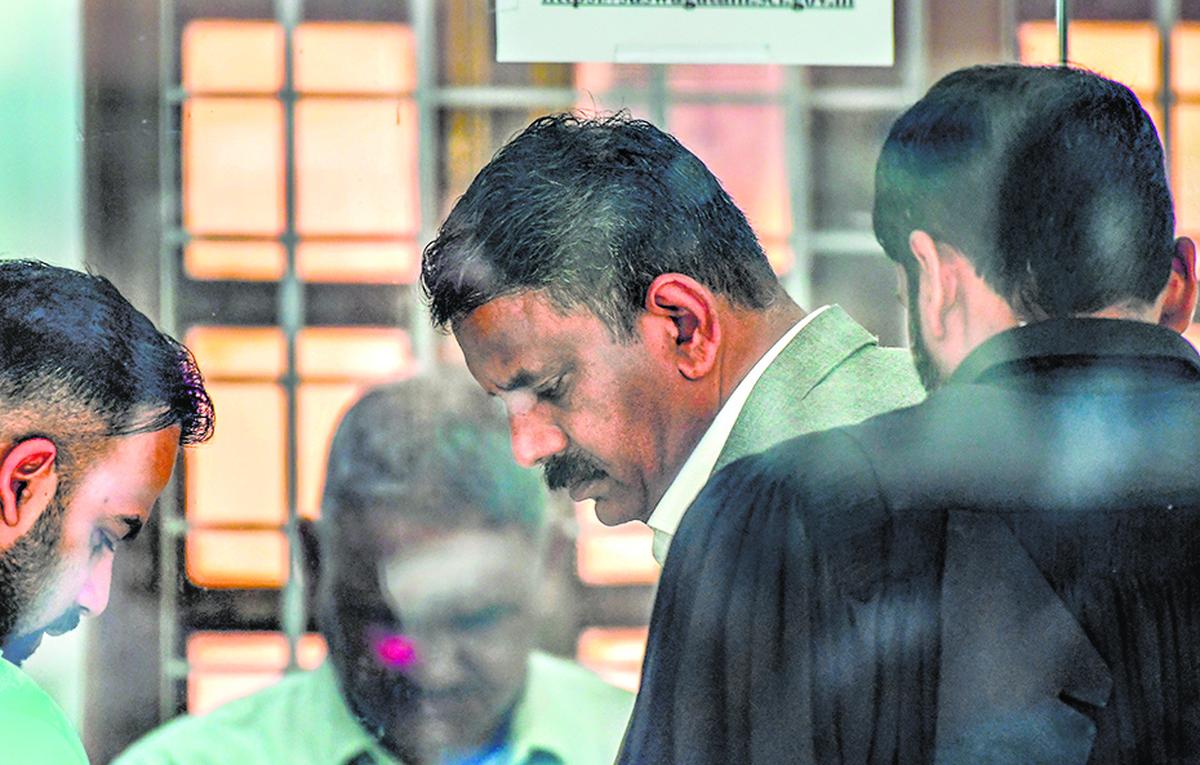
Anil Masih, the returning officer who conducted Chandigarh mayor’s election, has reached the Supreme Court as the court is set to investigate the ballot papers invalidated by him in New Delhi on February 20.
Photo: AP
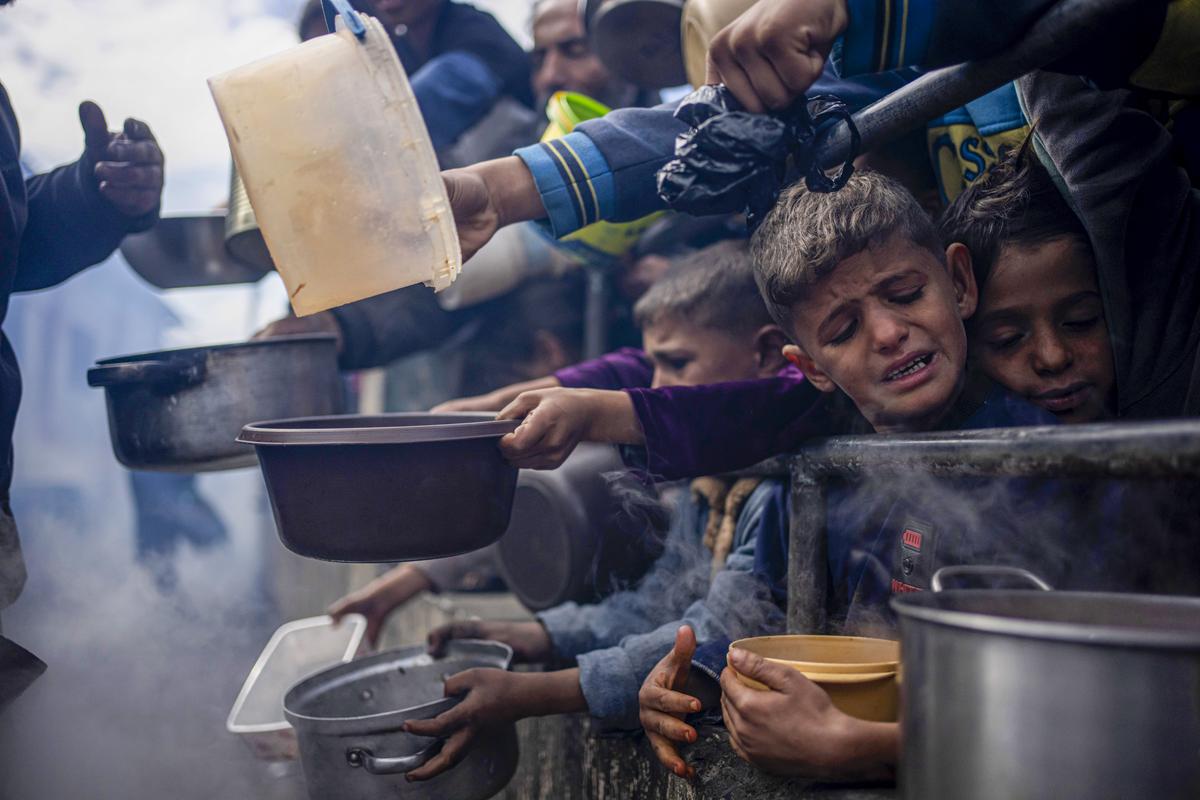
Hungry stomachs: Displaced Palestinians in refugee camps line up for food in Rafah, Gaza Strip, on February 26.
Photo: AM Farooqui
Bhopal’s many water bodies, including lakes and dams, help residents find relief from the heat with the Upper Lake, also known as Bada Talab, becoming a favorite spot for some refreshing moments. Some unusual tourists also take a dip: in Kamala Park near the lake, living on trees, some of them even 100 years old, bats spread their wings away from the trees around sunset to cool their bodies and feel the splash. Go away. Of water in the lake.
Photo: Sushil Kumar Verma
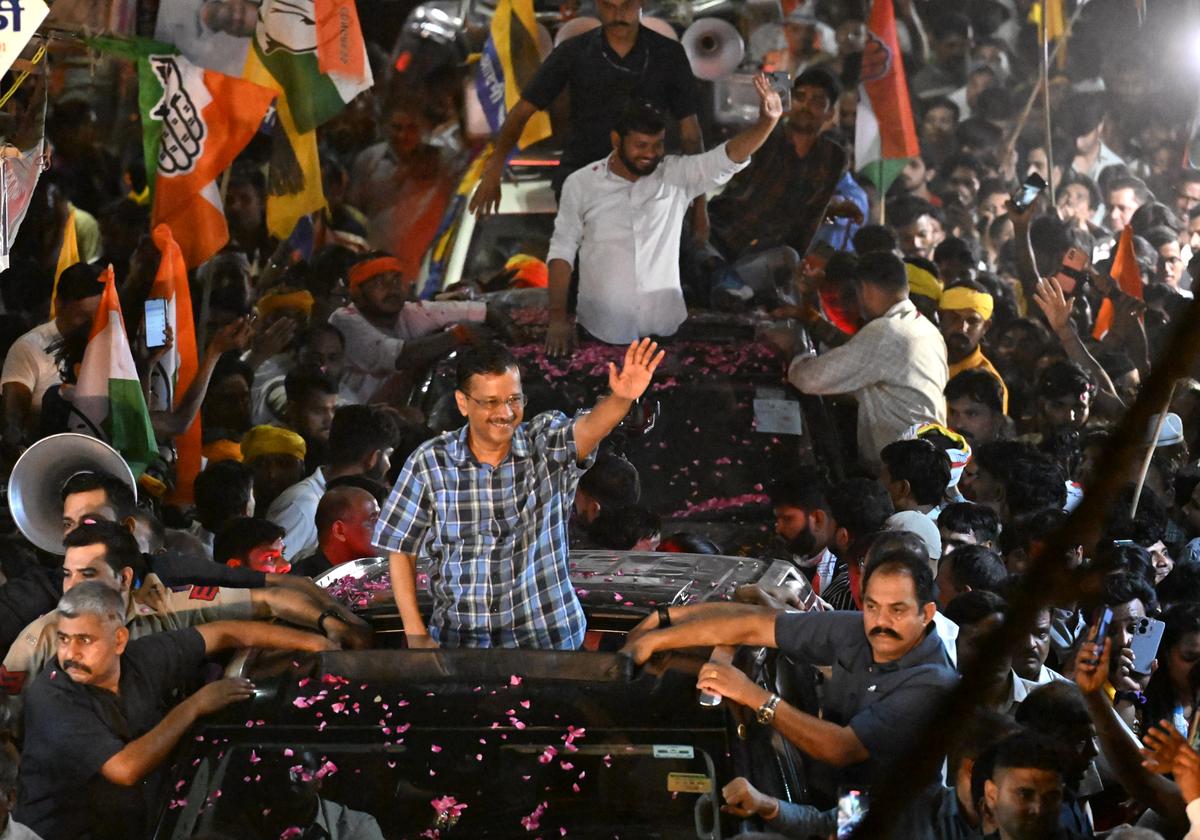
Common man party leader and former Delhi Chief Minister Arvind Kejriwal is back in action, coming out of Tihar Jail after getting bail from the Supreme Court.
Photo: AFP
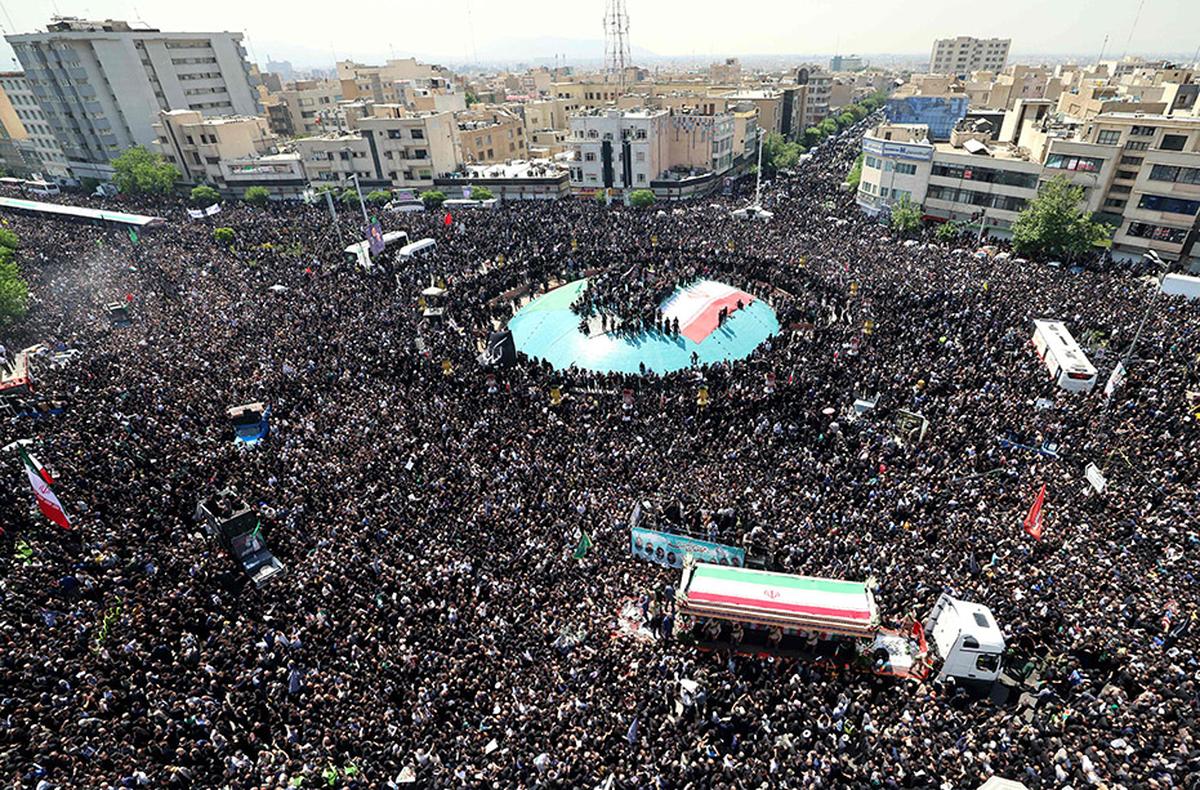
Shock farewell: Mourners attend the funeral of Iranian President Ebrahim Raisi, who was killed in a helicopter crash in Tehran on May 22.
Photo: AFP
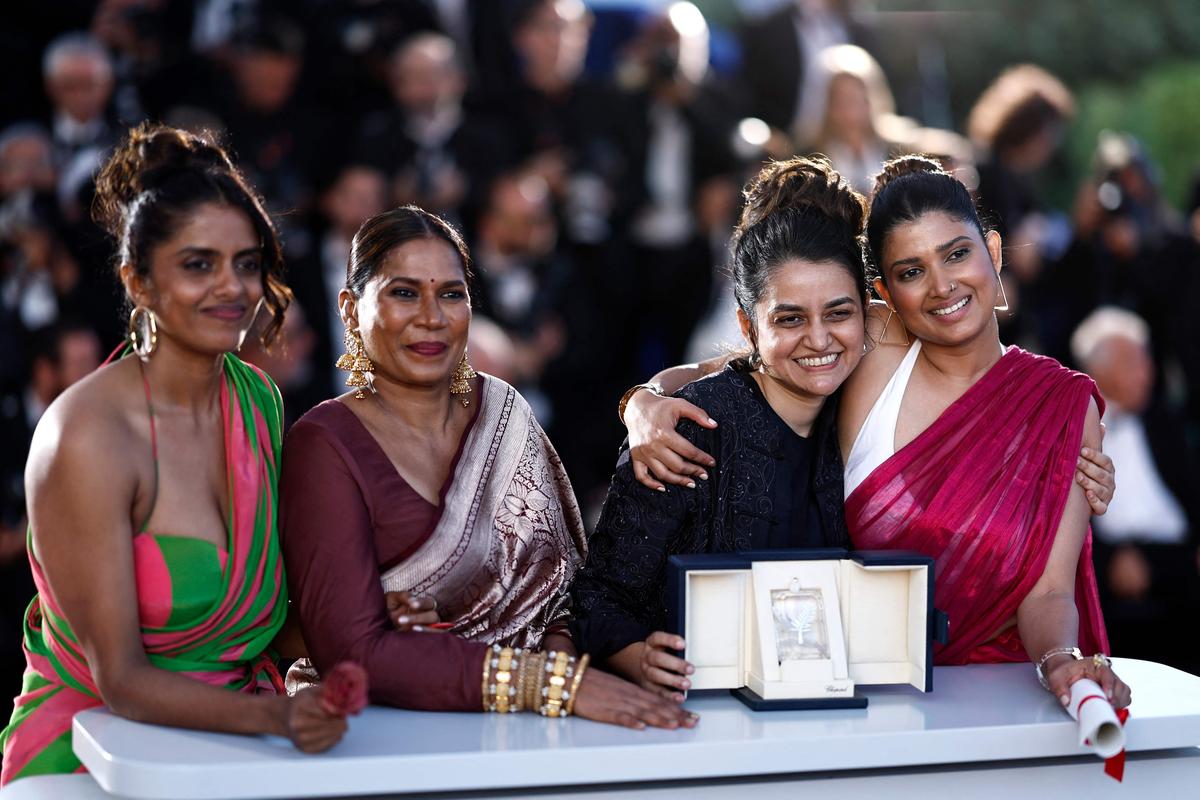
In the spotlight: Actors Kanye Kushruti, Chhaya Kadam and Divya Prabha shared their proud moment with director Payal Kapadia after their film ‘All We Imagine as Light’ won the Grand Prix at the Cannes Film Festival on May 25.
Photo: AFP
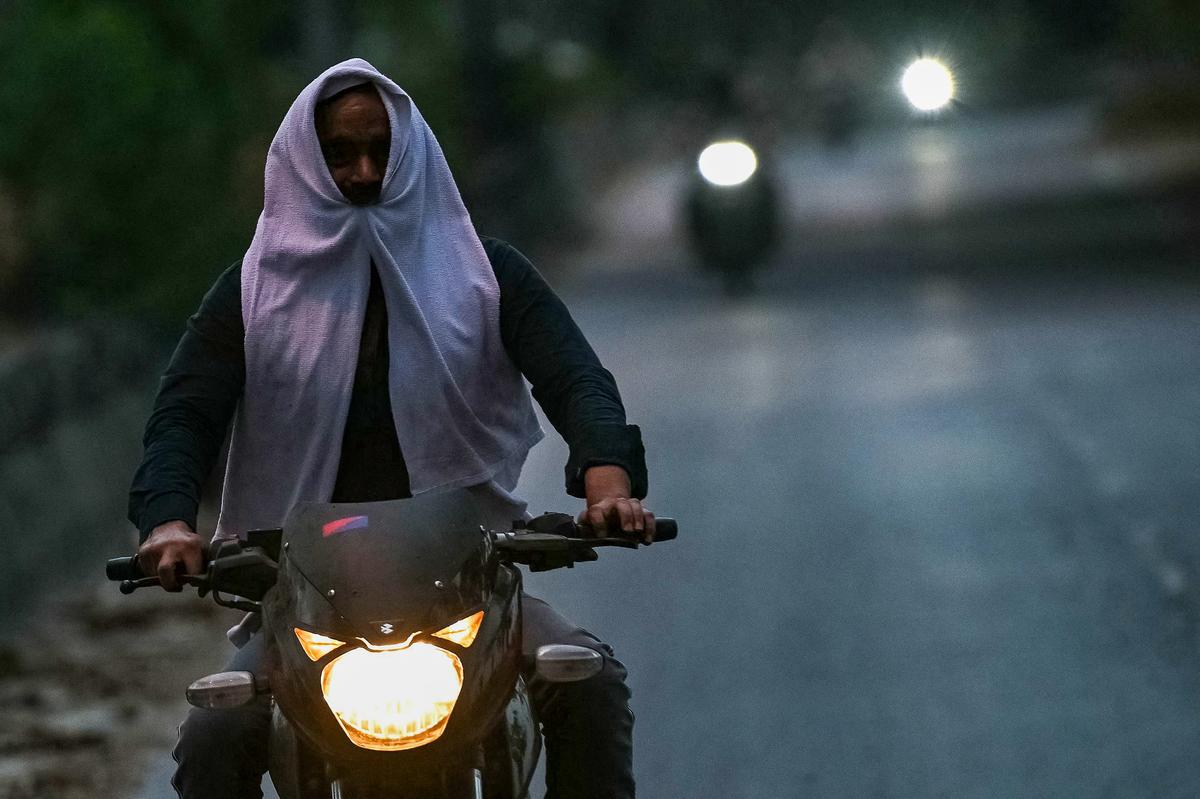
No respite: A man riding a motorcycle covered his face with a cloth amid a heat wave in New Delhi on May 29, one of the hottest days in the capital.
Photo: RV Murthy
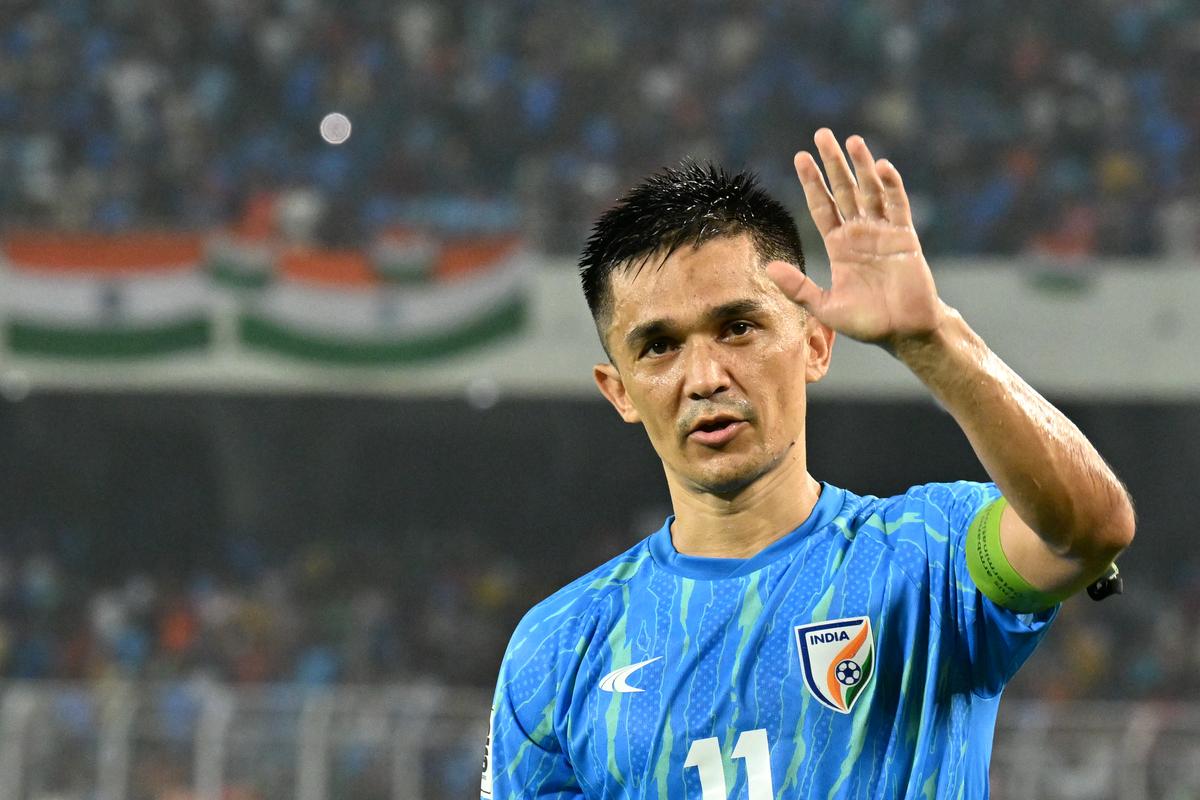
Last dance: Indian football team captain Sunil Chhetri bid farewell after his last match at the Salt Lake Stadium in Kolkata on June 6.
Photo: RV Murthy
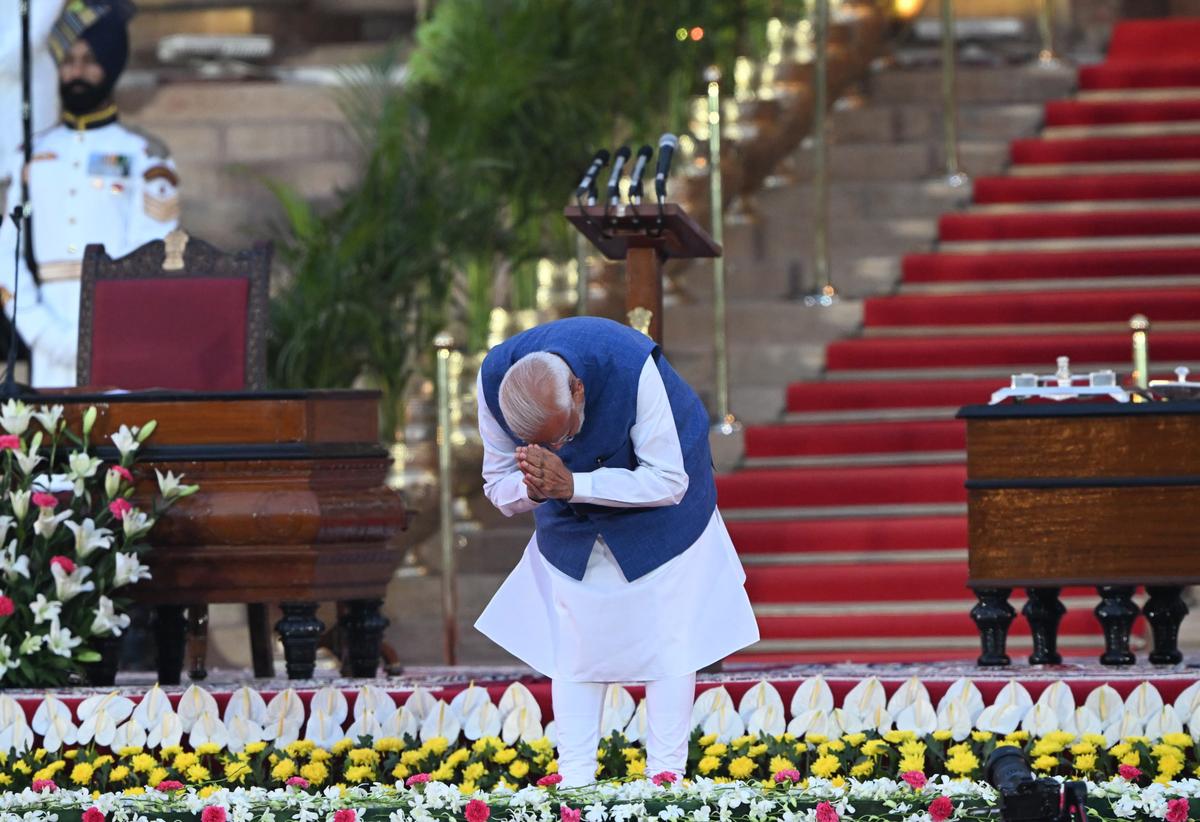
RECENT TERM: Prime Minister Narendra Modi greets the crowd before being sworn in for his third term in office on June 9 in New Delhi.
Photo: SS Kumar
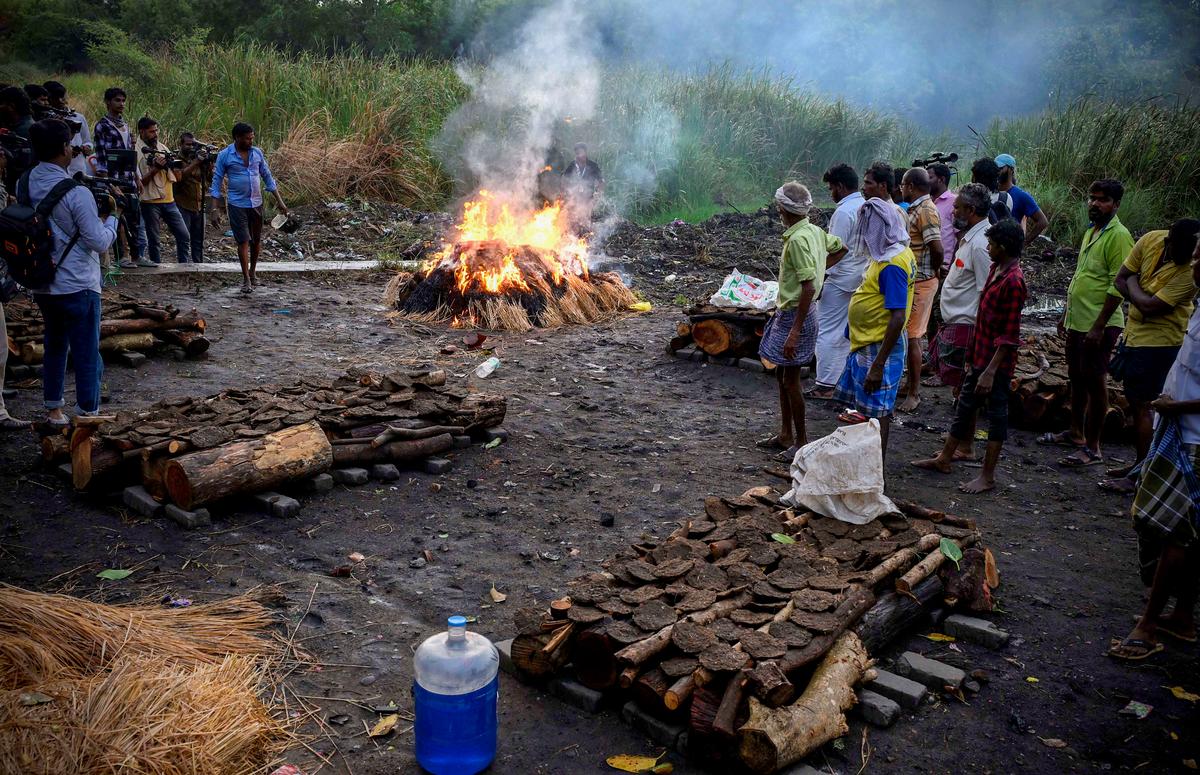
Lost lives: The victims of the hooch tragedy are being cremated on the banks of the Gomukhi river in Kallakurichi, Tamil Nadu on June 20.
Photo: KR Deepak
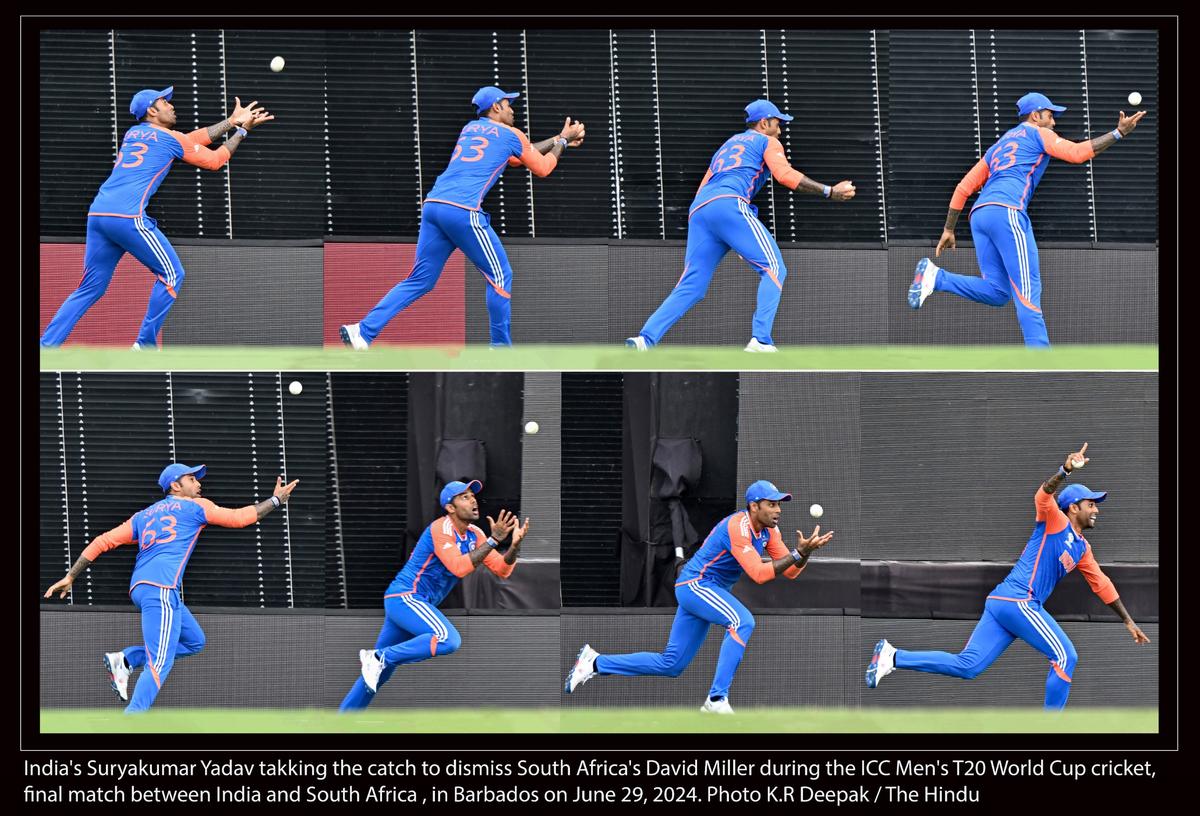
Game Changer: Suryakumar Yadav takes a catch to dismiss South Africa’s David Miller during the ICC Men’s T20 World Cup cricket final in Barbados on June 29.
Photo: ANI
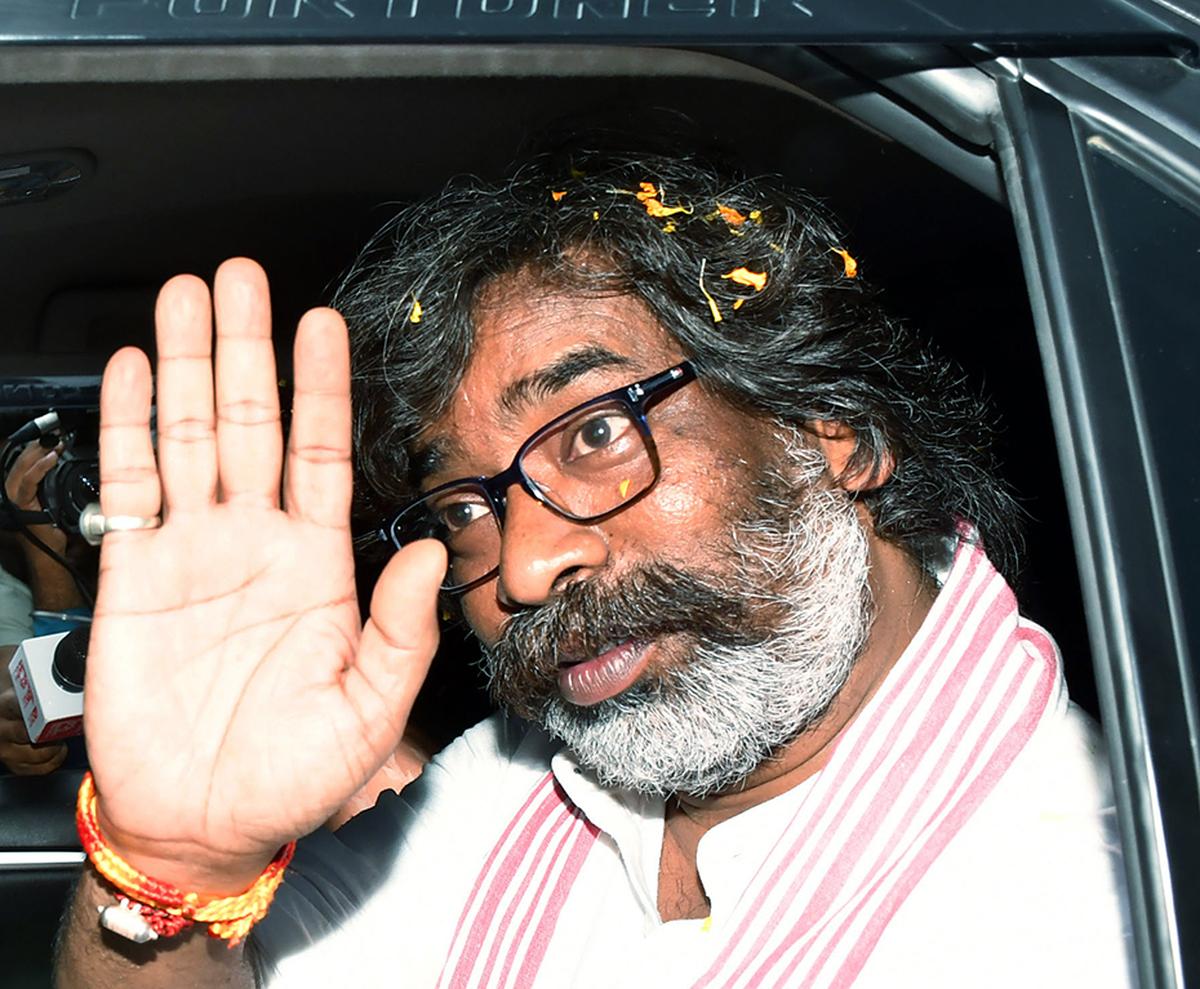
Jharkhand Chief Minister Hemant Soren walks in on freedom fighter Birsa Munda after paying tribute to him during a meeting with Jharkhand Mukti Morcha (JMM) supporters following his release on bail in Ranchi on June 29.
Photo: RV Murthy
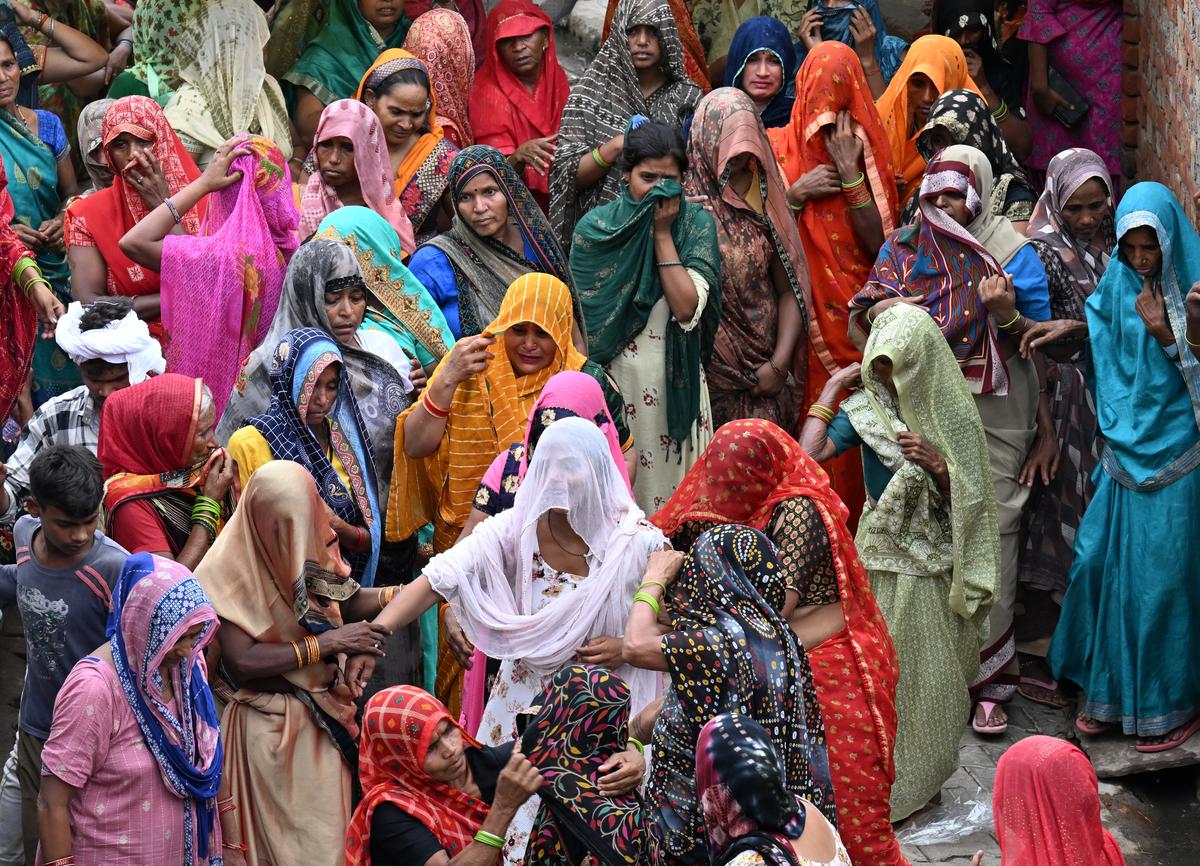
Tragic loss: A grieving family member of one of the 121 people killed in the stampede in Hathras, Uttar Pradesh on July 3.
Photo: RV Murthy
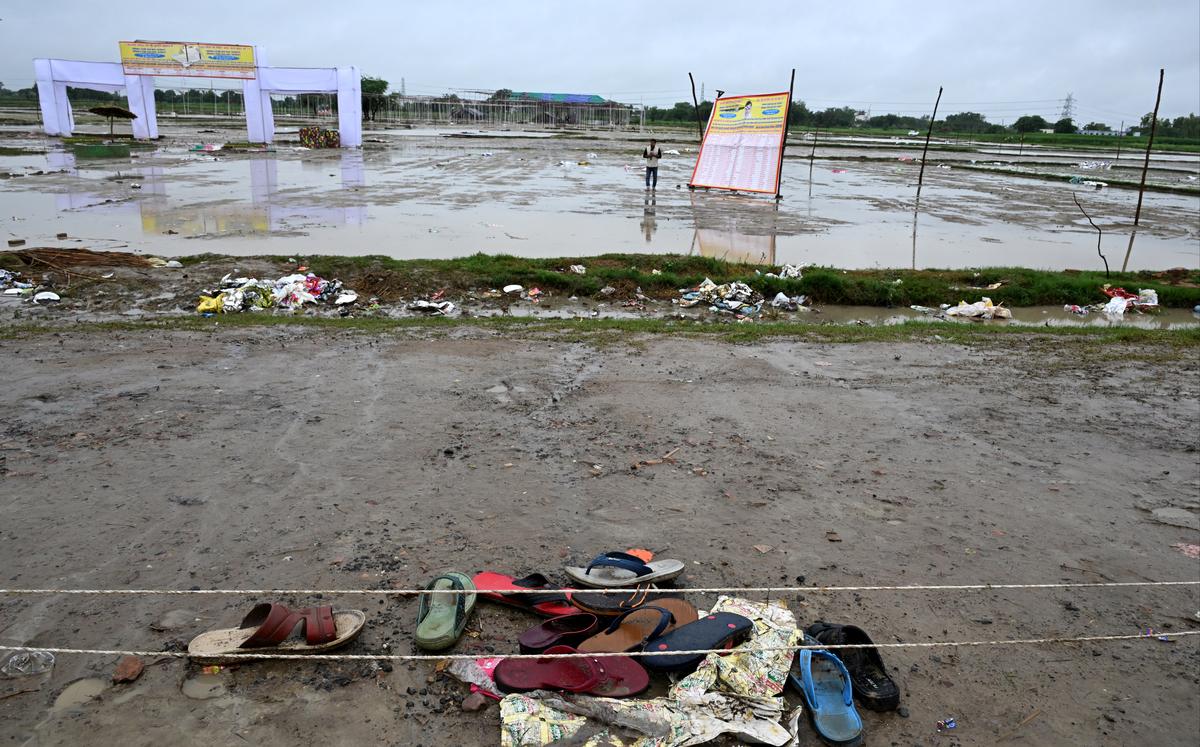
The slippers of the victims who died due to a stampede at a religious gathering in Hathras, Uttar Pradesh.
Photo: Getty Images
Prime Minister Sir Keir Starmer and wife Victoria greet supporters as they enter 10 Downing Street following Labour’s landslide election victory on July 5 in London, England. The Labor Party won a landslide victory in the 2024 general election, ending 14 years of Conservative government.
Photo: Reuters
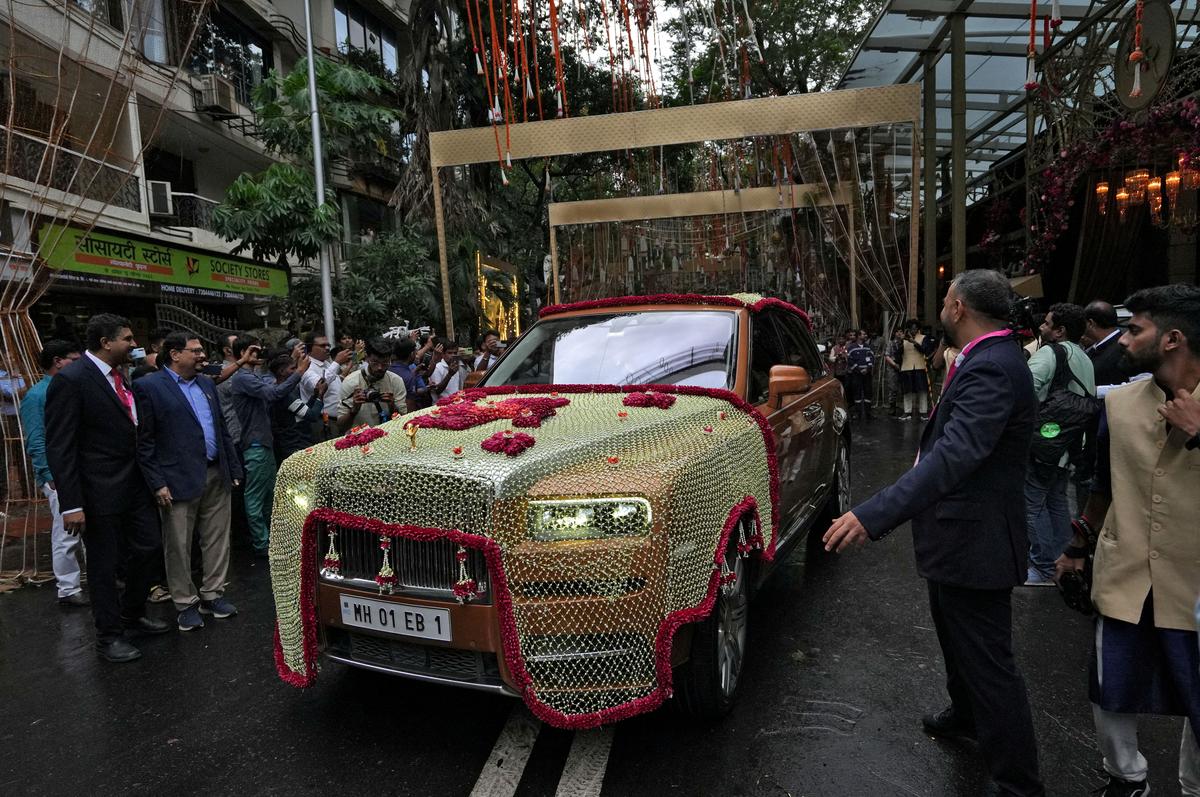
Star-studded: A decorated car carrying guests on the wedding day of businessman Mukesh Ambani’s son Anant Ambani on July 12.
Photo: ANI
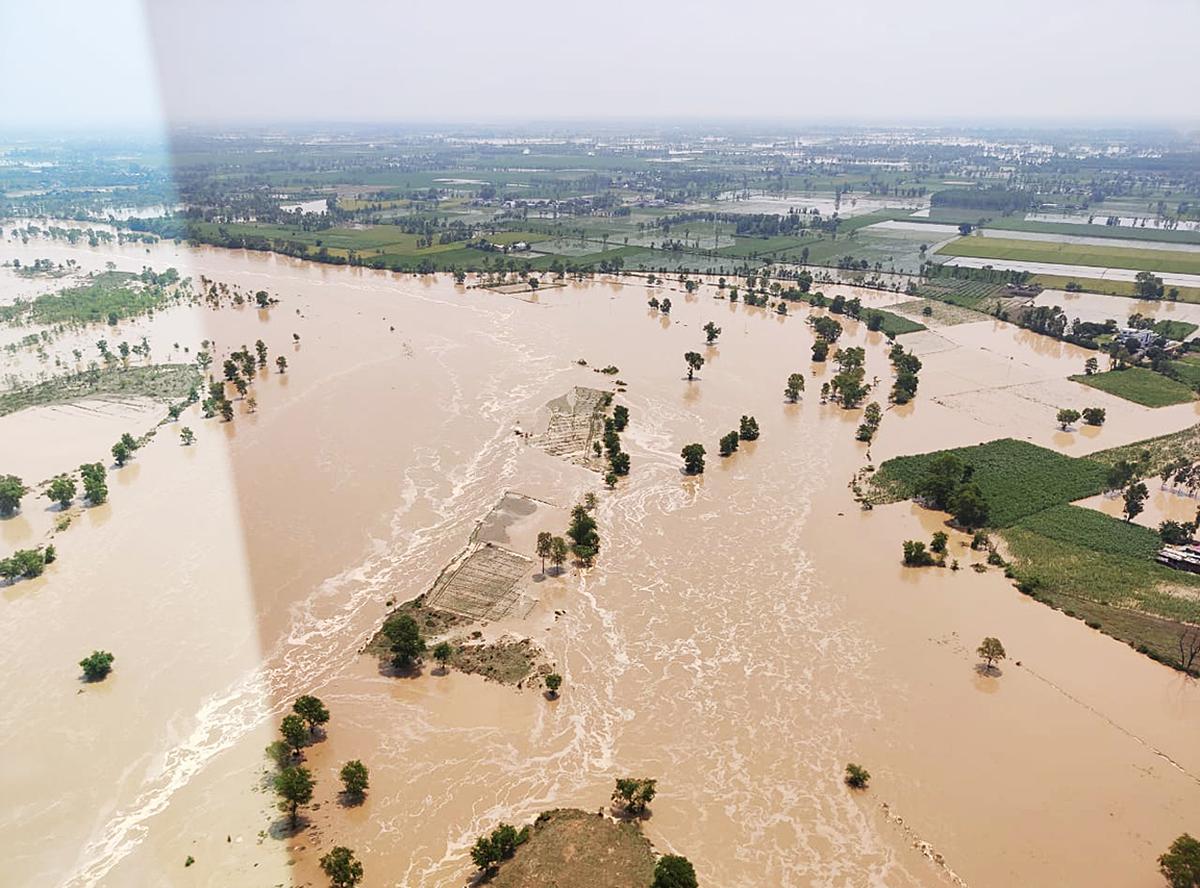
After continuous rains on July 9, aerial survey of Haldwani, Banbasa, Tanakpur, Sitarganj, Khatima and other flood affected areas under Kumaon division is being conducted by Uttarakhand Chief Minister Pushkar Singh Dhami (unseen).
Photo: AP
Flexible face: Donald Trump is surrounded by Secret Service agents after he was shot during a US presidential election campaign rally on July 13.
Photo: Ritu Raj Konwar
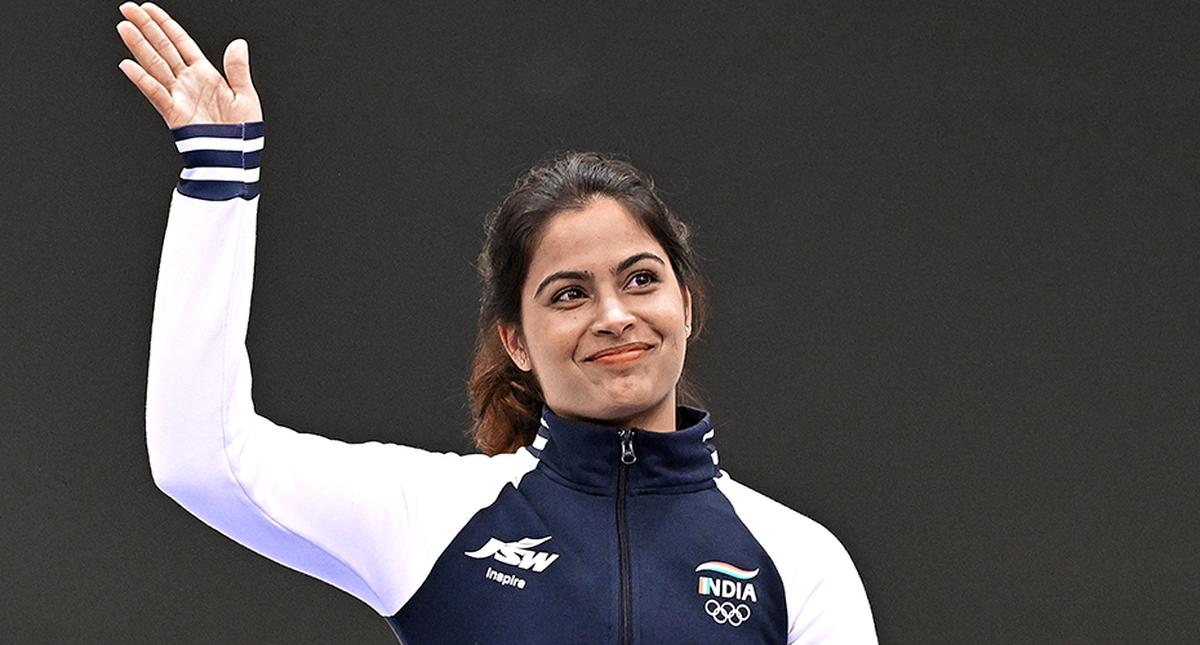
On target: Shooter Manu Bhaker celebrates after winning the first of her two bronze medals at the Paris Olympics on July 28.
Photo: Tulsi Kakkat
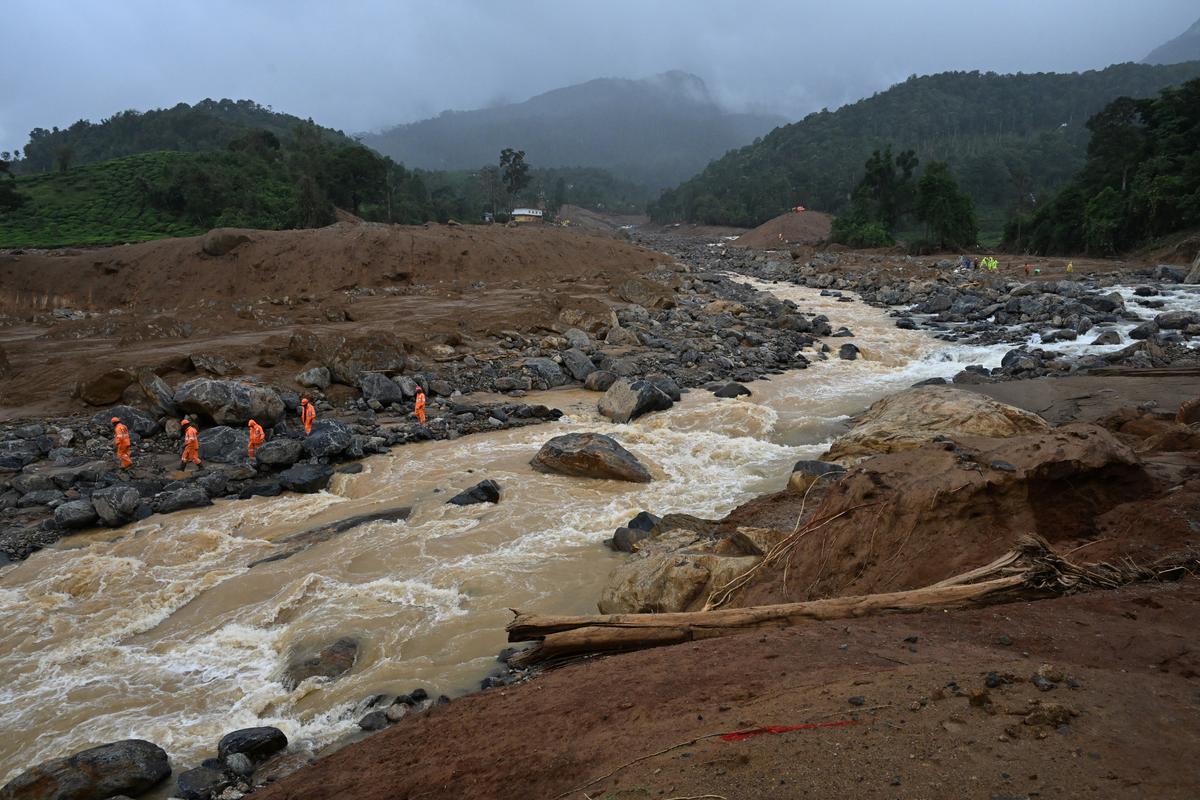
Facing danger: NDRF personnel are engaged in rescue operations after the catastrophic landslide in Churalmala, Wayanad on July 31.
Photo: AP
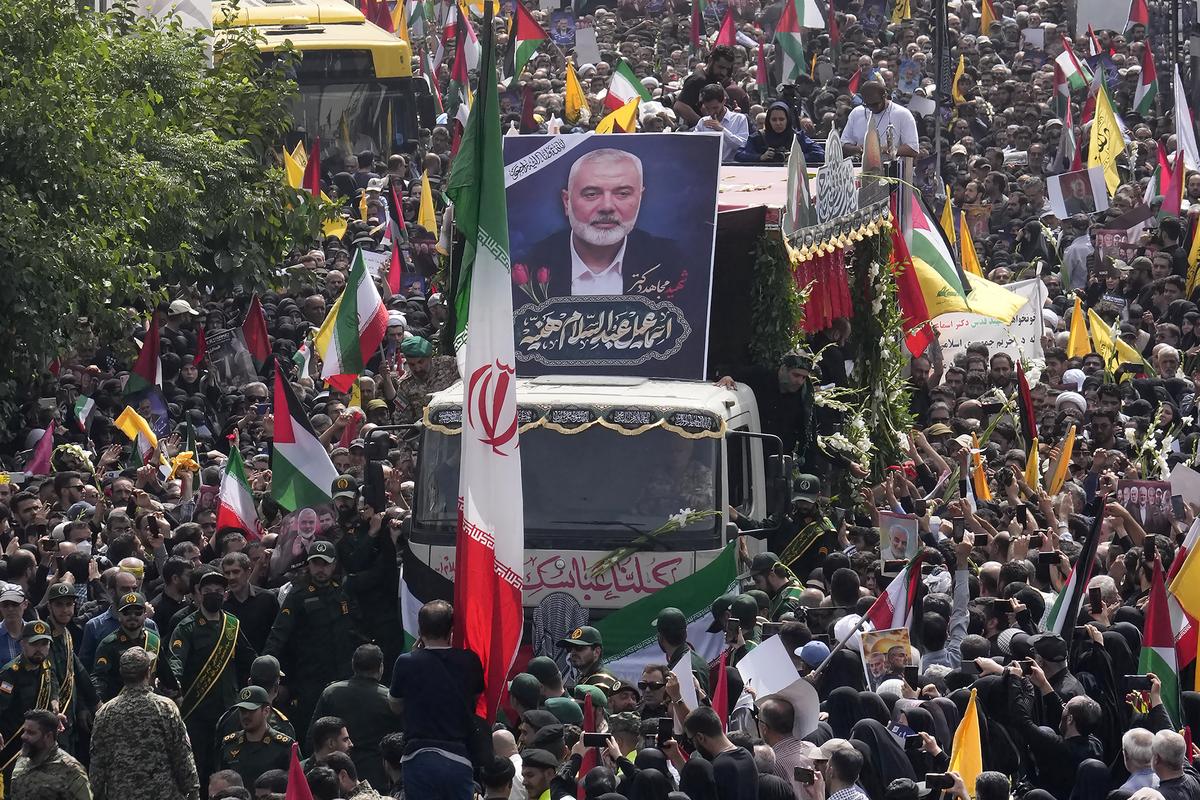
Iranians chase a truck carrying the coffins of Hamas leader Ismail Haniyeh and his bodyguard during a funeral ceremony in Enqelab-e-Islami (Islamic Revolution) Square. In Tehran on 1 August.
Photo: ANI
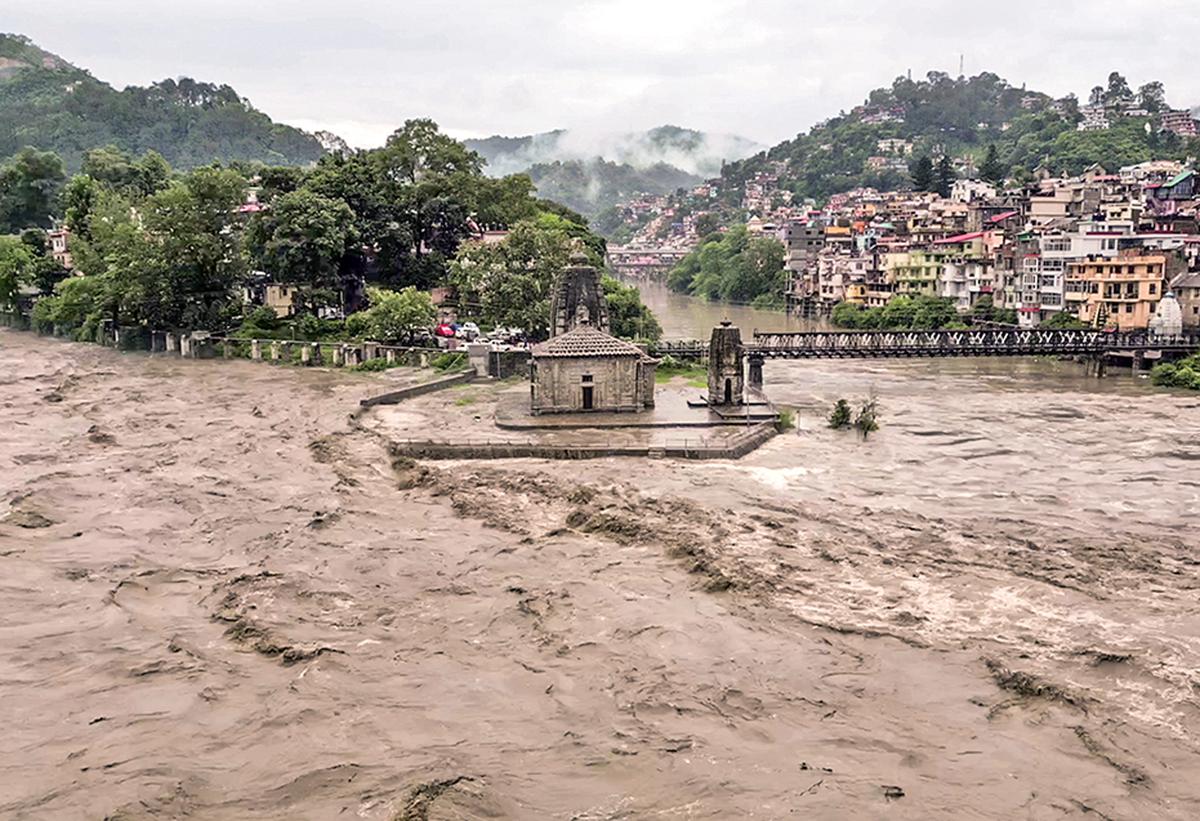
View of flood like situation after the water level of Beas river increased due to heavy rains in Mandi on August 1.
Photo: AFP
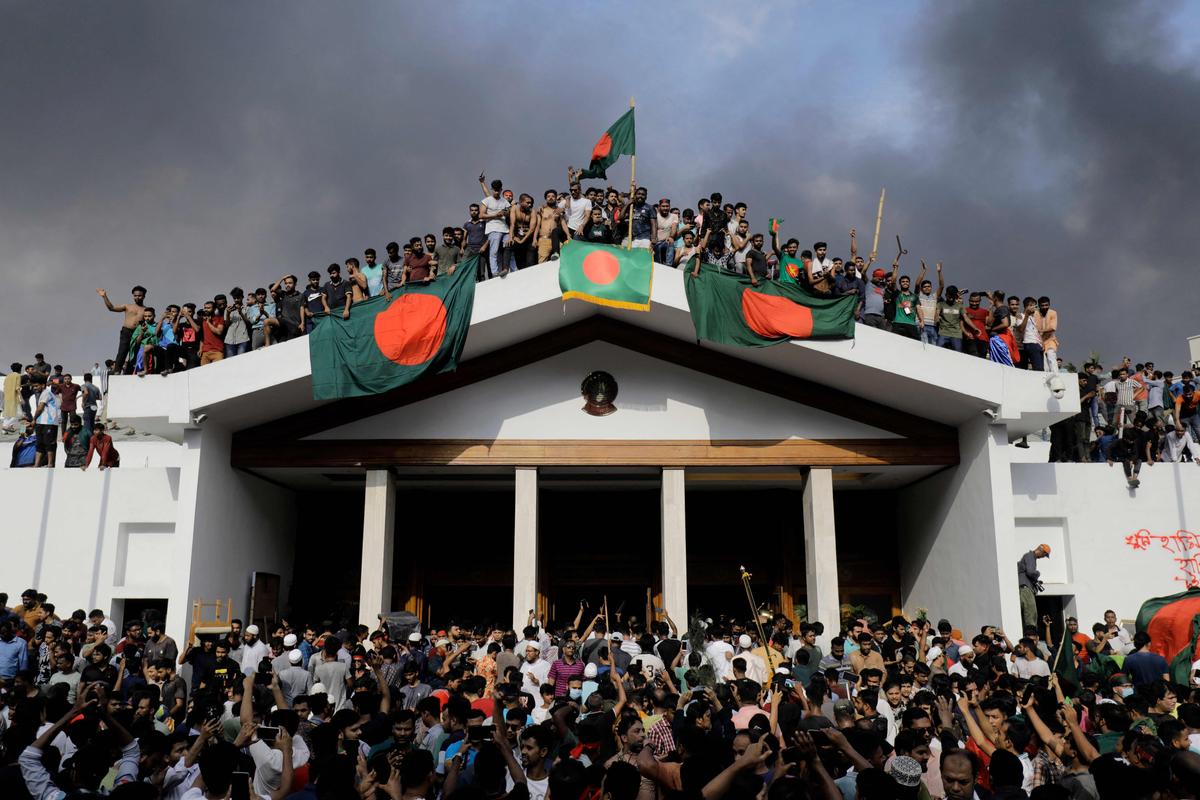
Fall of a leader: Anti-government protesters in Bangladesh attacked Prime Minister Sheikh Hasina’s palace in Dhaka on August 5.
Photo: PTI
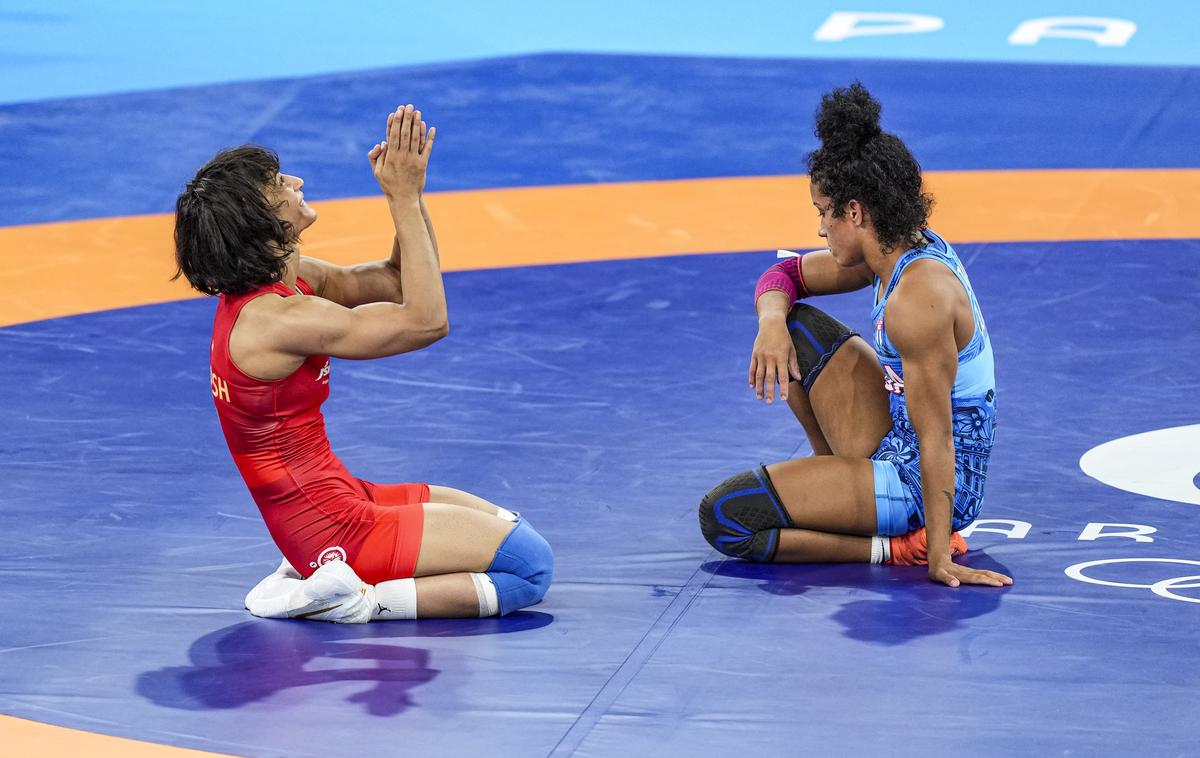
Vinesh Phogat after winning the women’s freestyle 50kg semi-final wrestling match against Cuba’s Usnelis Guzman Lopez at the 2024 Summer Olympics in Paris, France on August 6.
Photo: ANI
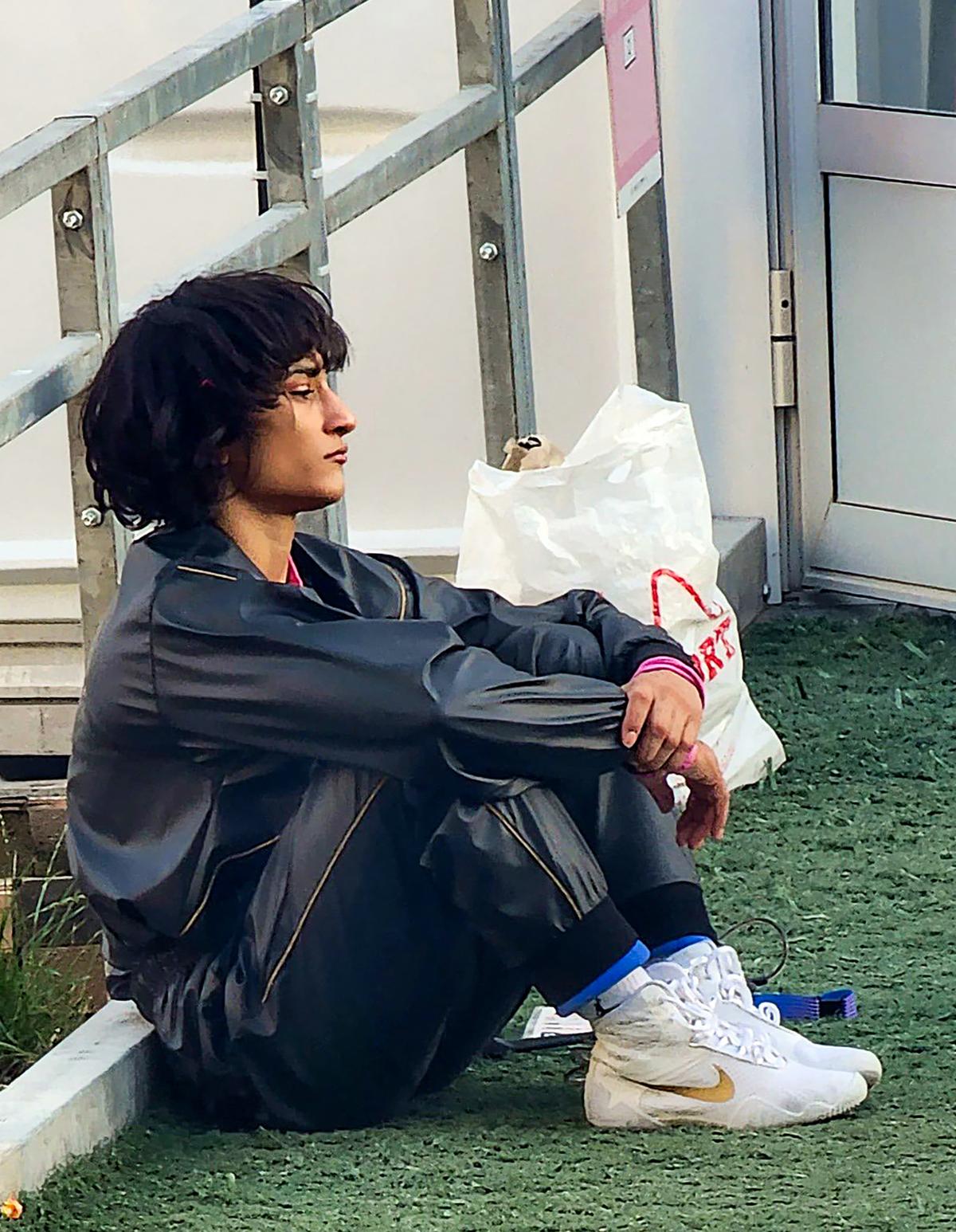
Disappointed champion: Wrestler Vinesh Phogat was disqualified from her event at the Paris Olympics on August 7 due to being 100 grams overweight.
Photo: Emmanuel Yogini
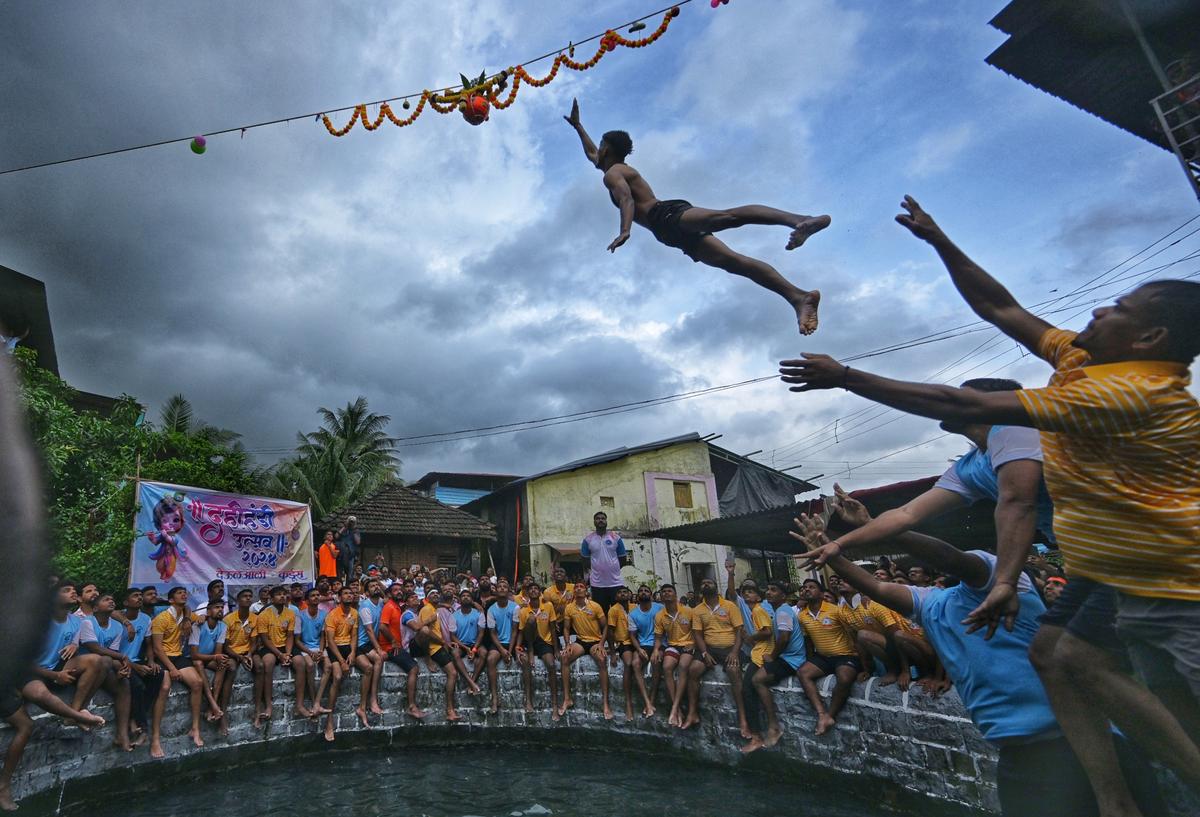
Aim higher: Devotees help a man jump while trying to reach Dahi-Handi during Janmashtami celebrations in Raigad, Maharashtra on August 27.
Photo: Getty Images
Saand Ki Nazar: Sheetal Devi, who became India’s youngest Paralympic medalist, is training ahead of her event at the Paris Paralympics 2024 on August 28.
Photo: KVS Giri
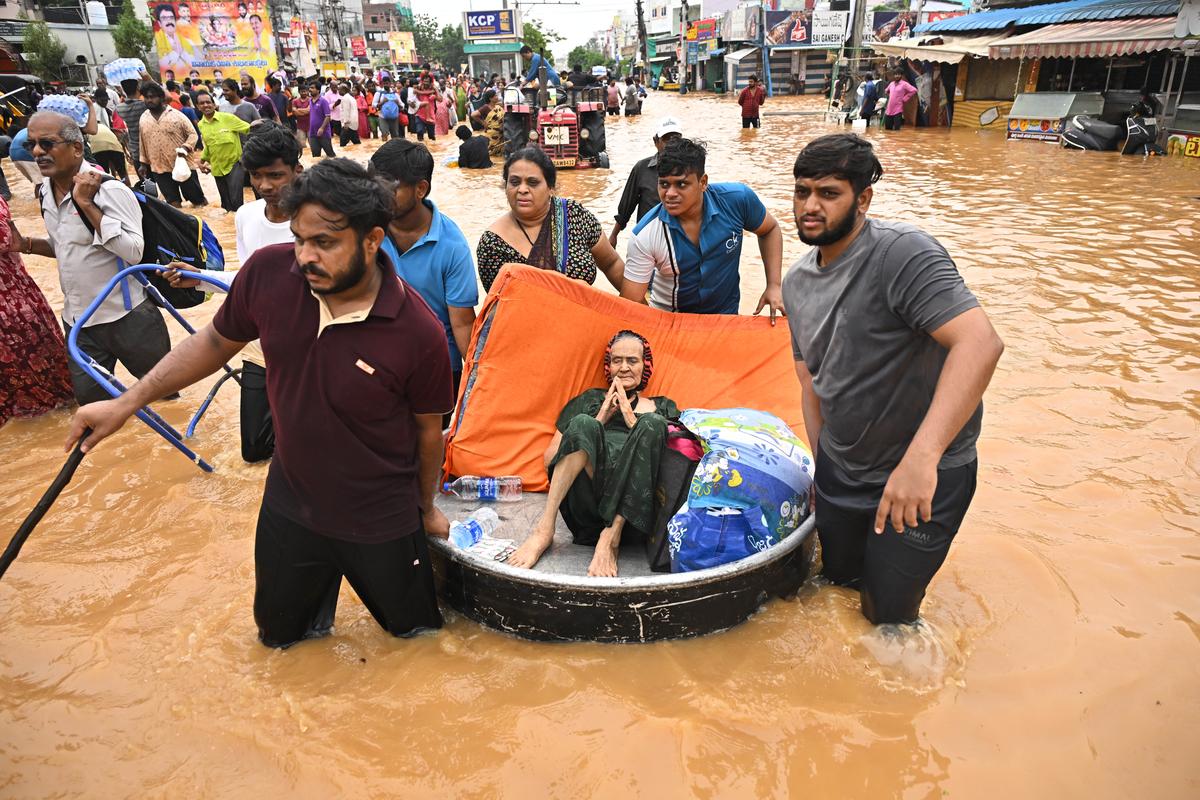
Volunteers carrying a woman in an aluminum vessel to safety in Ajit Singh Nagar, Vijayawada on September 3.
Photo: PTI
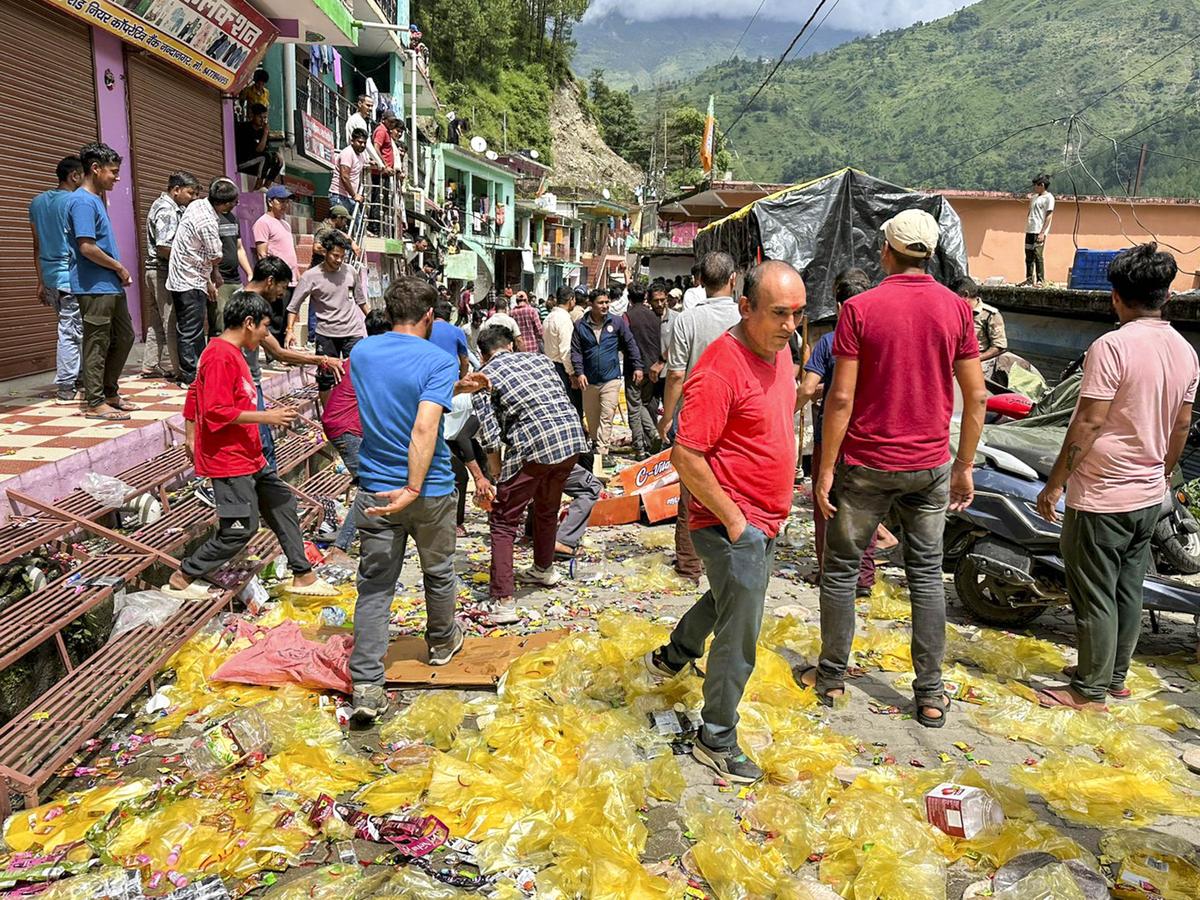
On Sunday, September 1, people vandalized shops in Nandnagar, Chamoli over the alleged molestation of a minor girl by a barber.
Photo: AFP
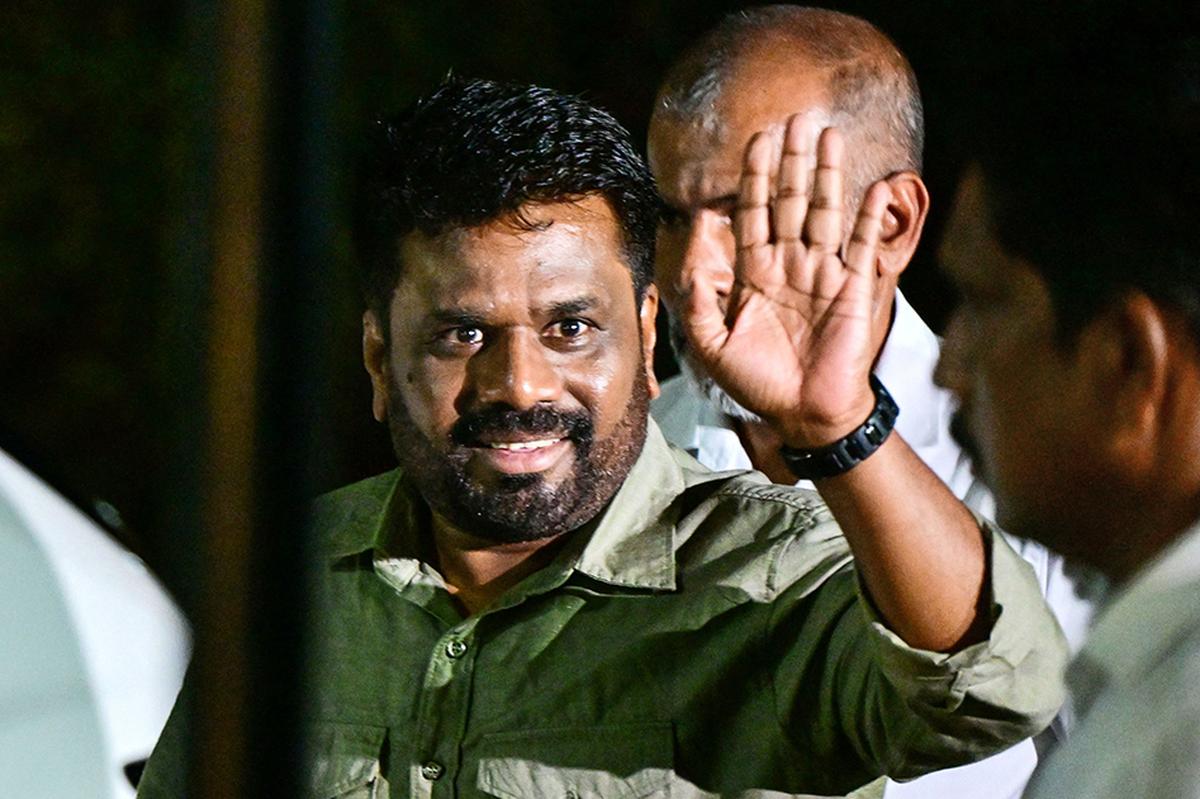
Sri Lanka’s newly elected President Anura Kumara Dissanayaka gestures as he arrives at the Election Commission office in Colombo on September 22 following his victory in the country’s presidential election.
Photo: AFP
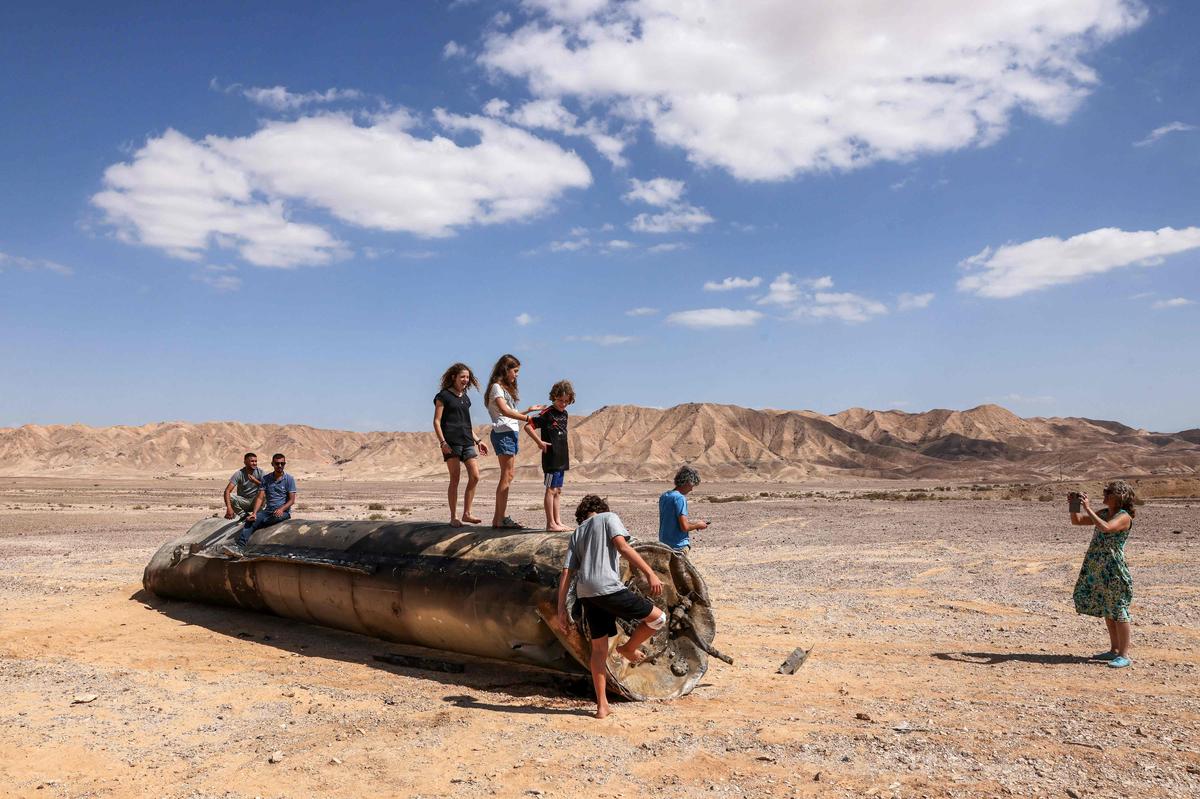
Remnants of war: People stand over the remains of an Iranian missile in the Negev desert near Arad, following the Iranian missile attack on Israel on October 2.
Photo: B. Velankanni Raj
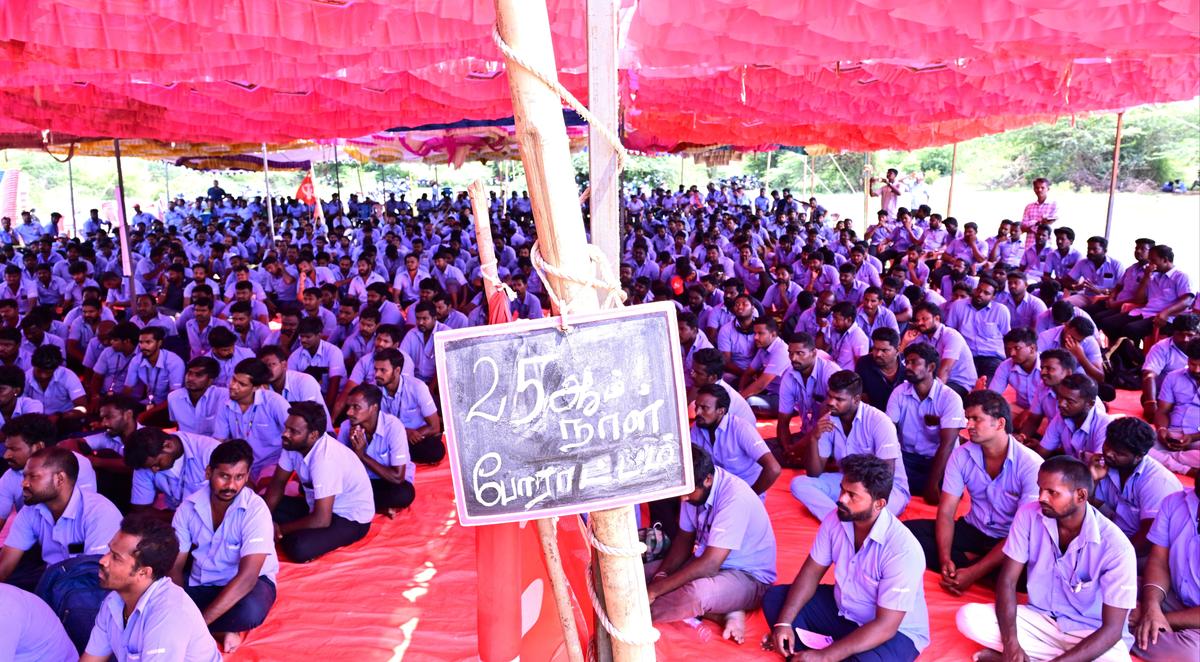
Samsung India factory workers are on strike for the 25th consecutive day at Sunguvarchatram near Kanchipuram on October 3.
Photo: Shubhomoy Sikdar
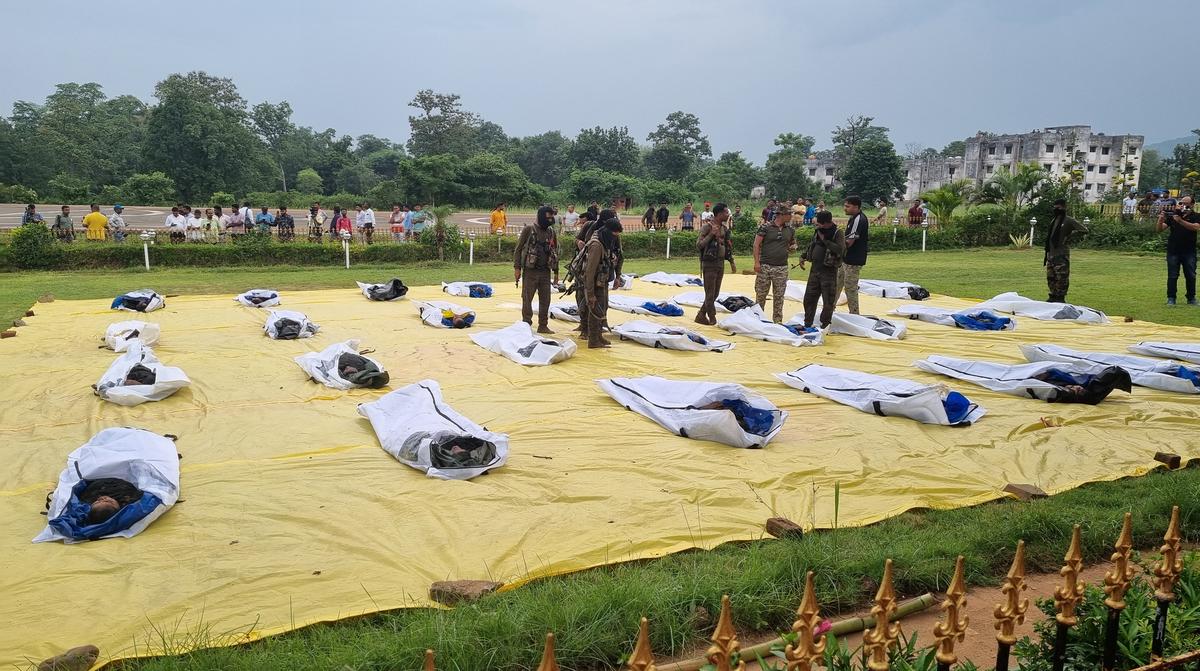
Security personnel along with the bodies of 31 of the 38 Maoists killed in the forest area on the Narayanpur-Dantewada border on October 5 were kept at the Dantewada Police Lines. This is the biggest encounter so far in the history of conflict-affected Chhattisgarh.
Photo: Shashi Shekhar Kashyap
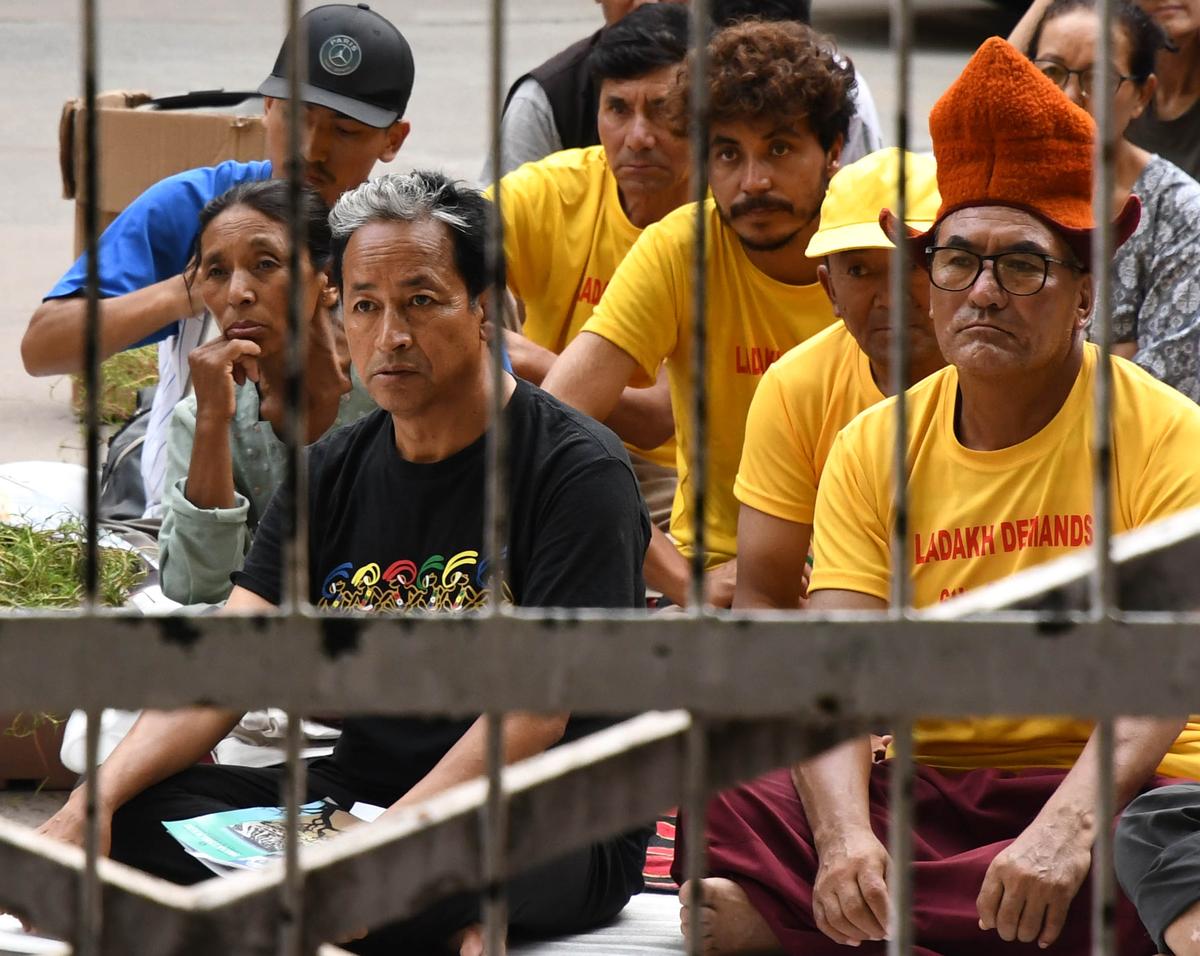
Ladakh activist Sonam Wangchuk held an indefinite fast at Ladakh Bhawan in New Delhi on 7 October demanding the inclusion of Ladakh in the Sixth Schedule.
Photo: Imran Nisar
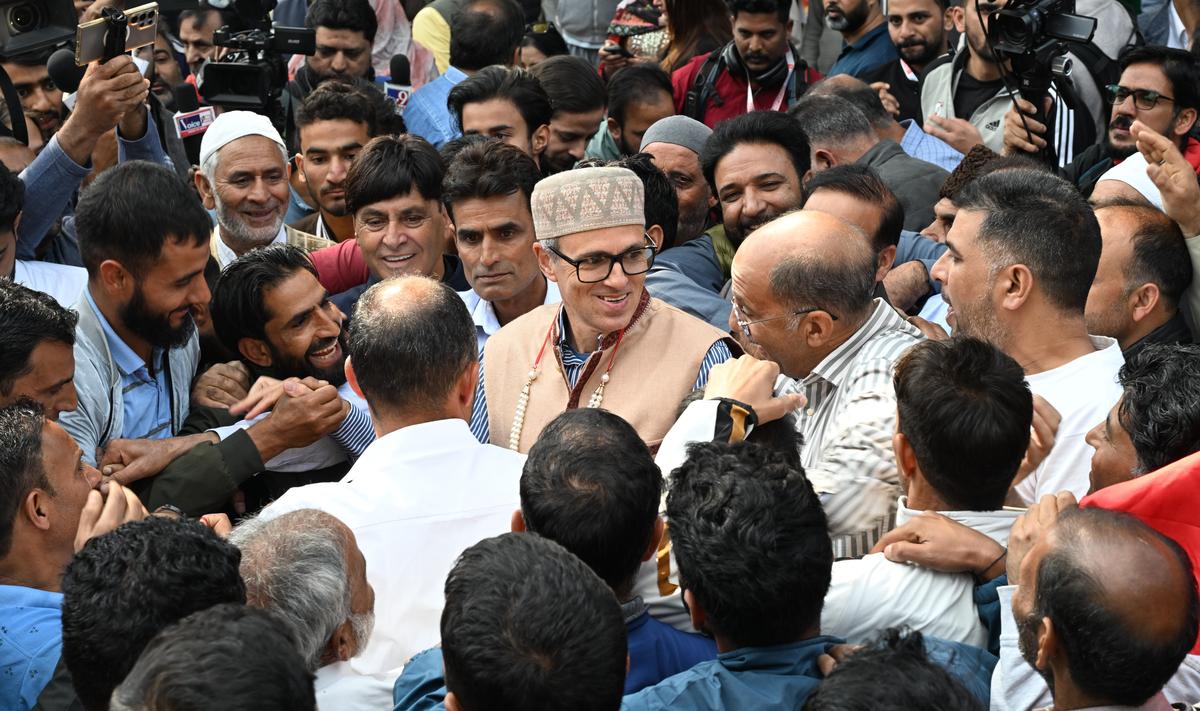
Jammu and Kashmir National Conference (JKNC) party leader Omar Abdullah was welcomed with flower garlands by his supporters at his residence in Srinagar on October 9, a day after his victory in the local assembly elections.
Photo: ANI
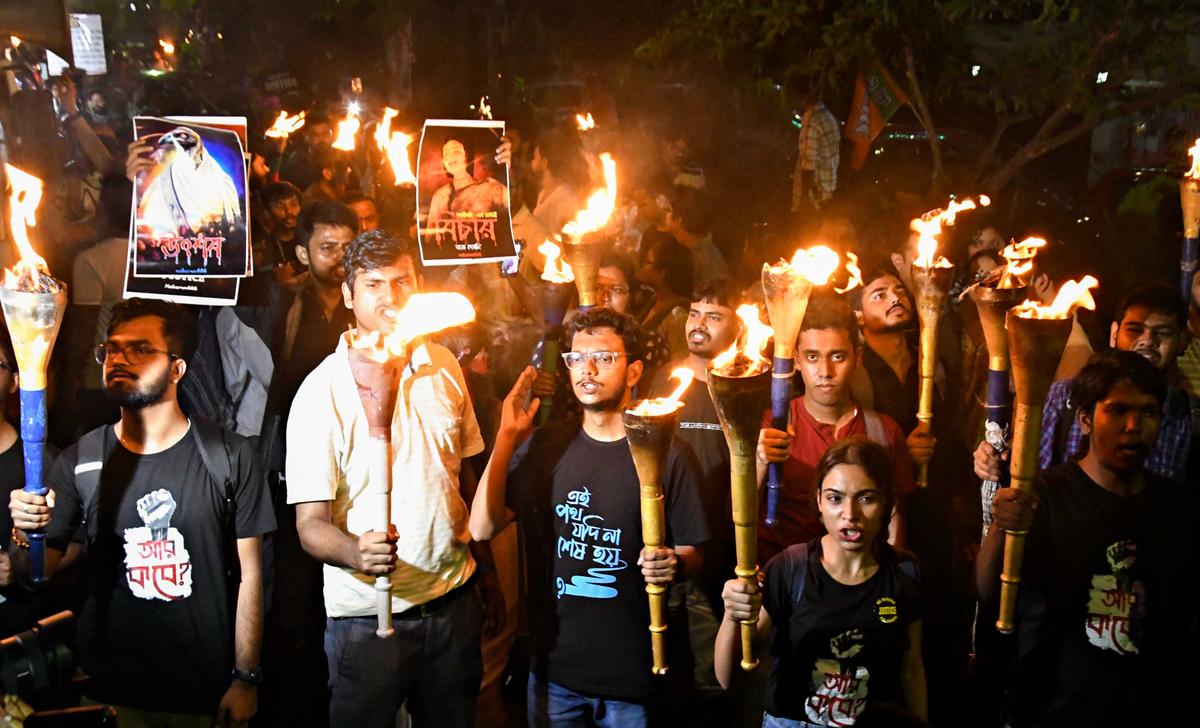
Rising up: Junior doctors of West Bengal take out torch rally demanding justice for the victims of RG Kar Medical College and Hospital incident in Kolkata.
Photo: Emmanuel Yogini
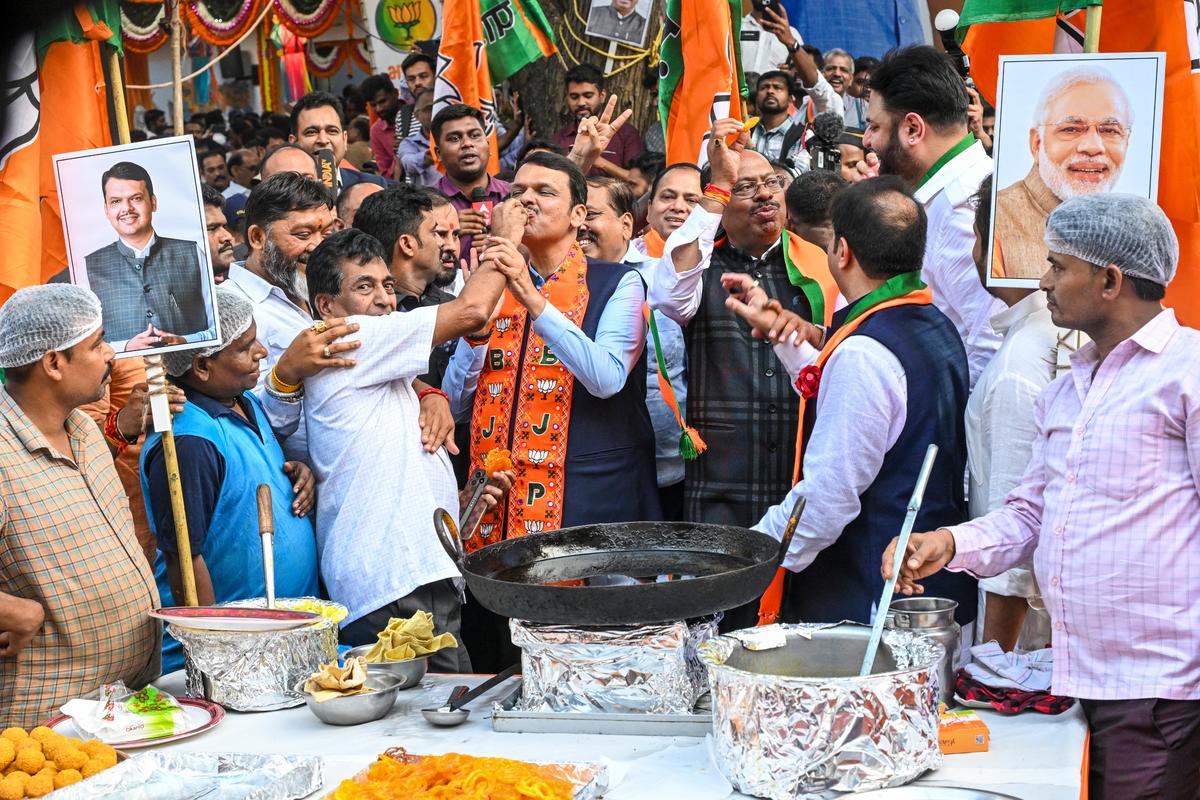
Maharashtra Chief Minister Devendra Fadnavis making jalebi during the celebration outside the BJP party headquarters after victory in the local assembly elections.
Photo: AFP
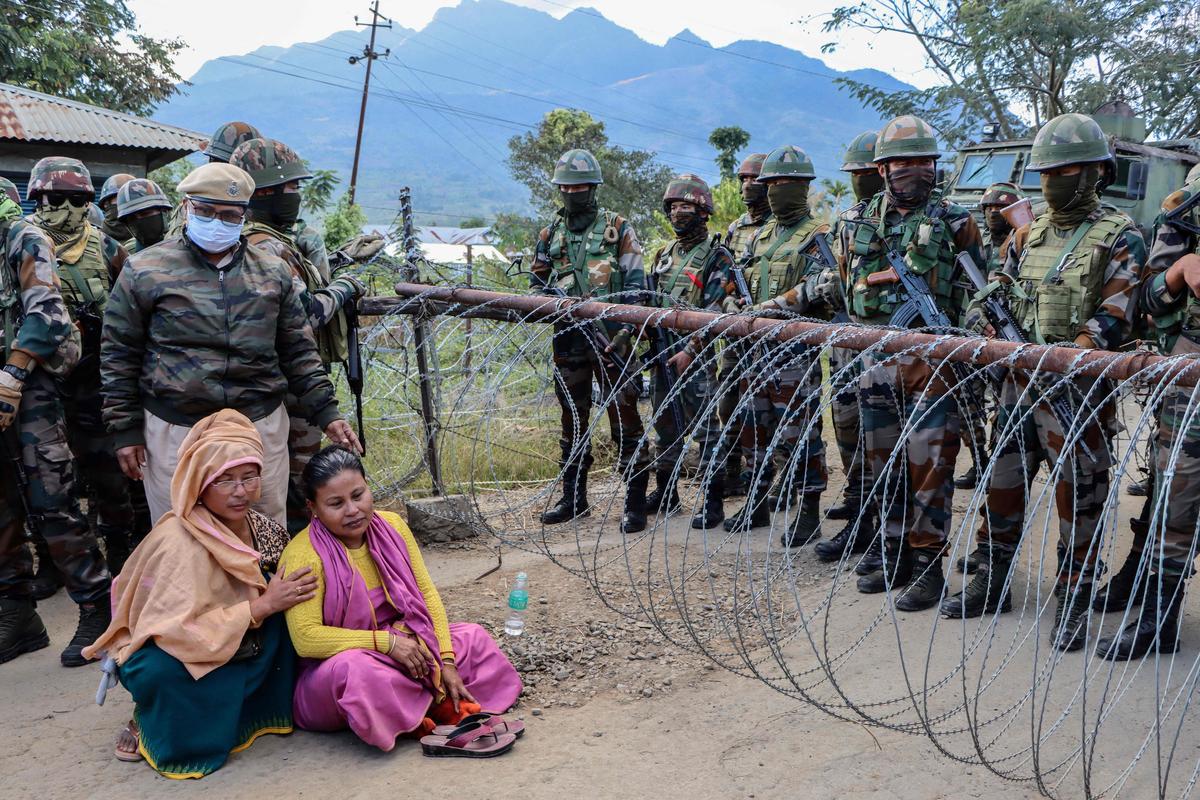
State clashes: Army personnel deployed at a checkpoint during a demonstration following the alleged disappearance of a person from the Meitei community working at a camp in Imphal West on November 30, following which family members sat in protest.
Photo: C. Venkat Chalapathi
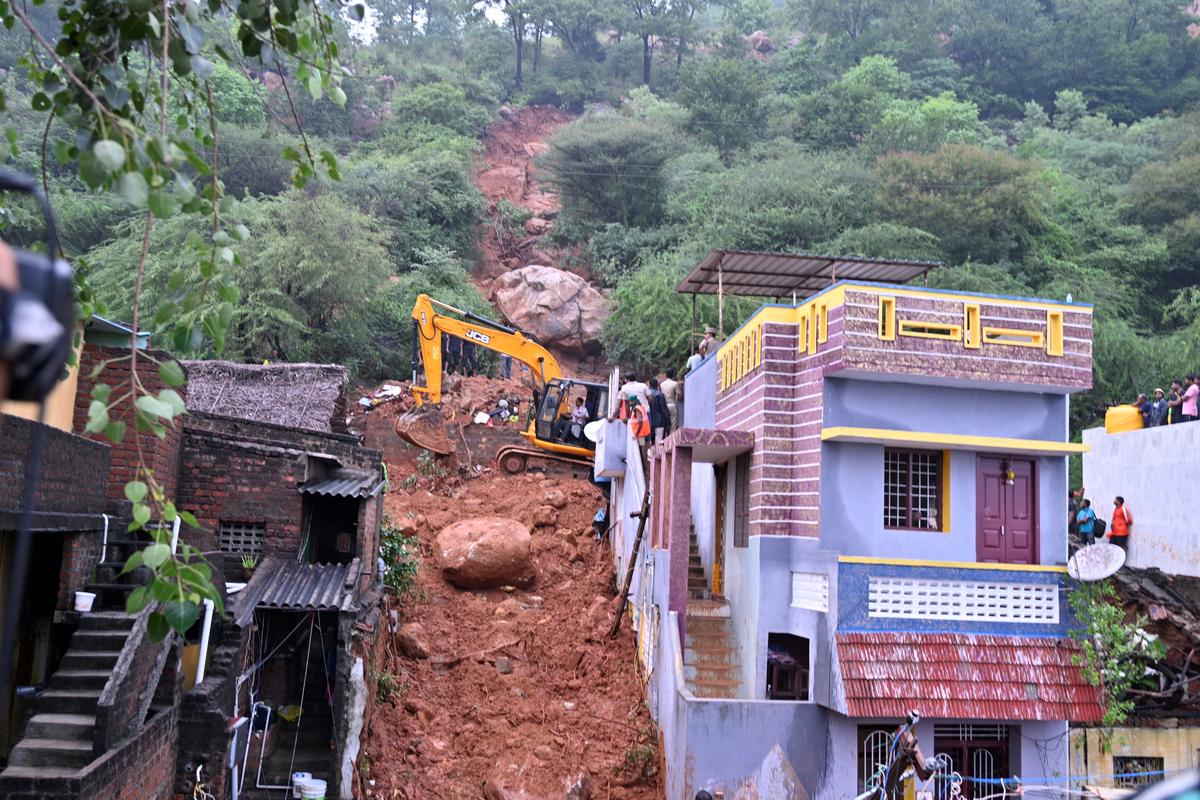
Hitachi being used in rescue operations at the landslide site at VOC Nagar, Tiruvannamalai on December 2.
Photo: Shashi Shekhar Kashyap
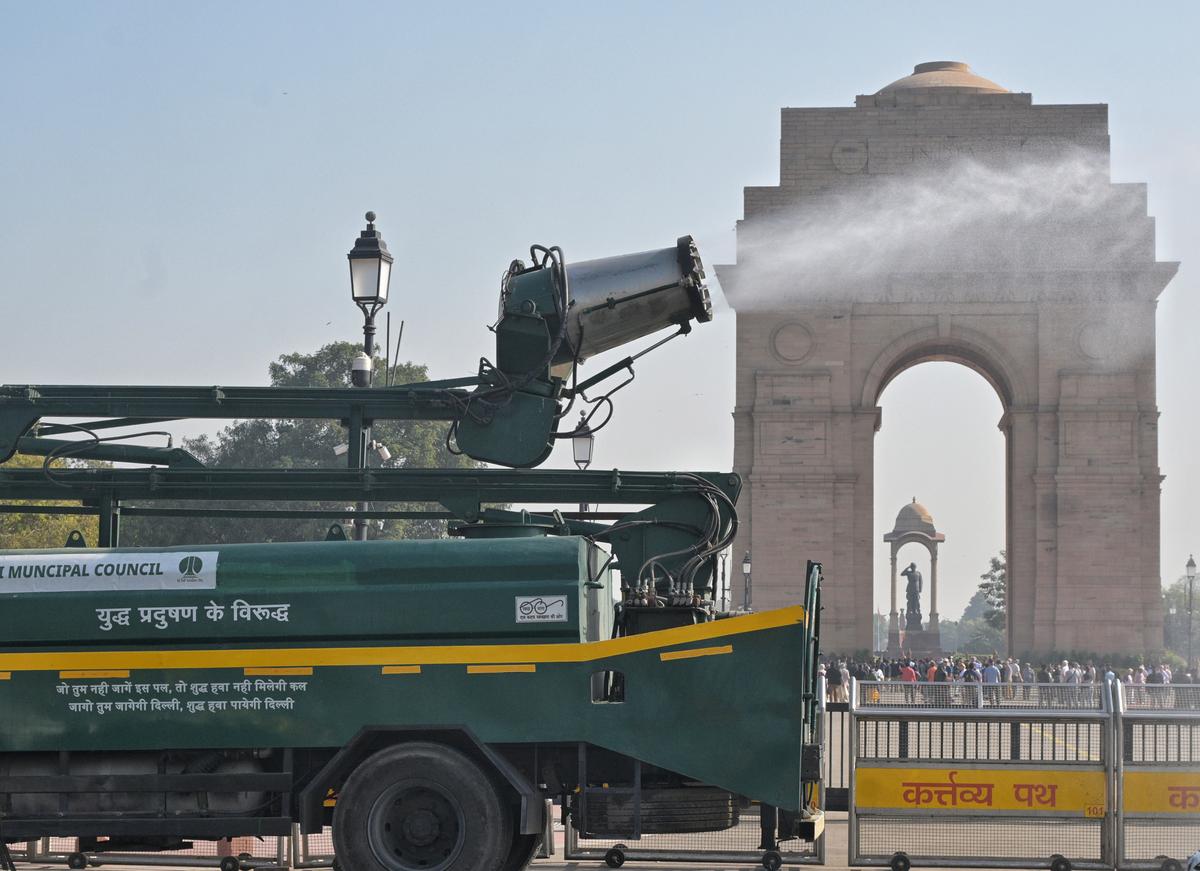
Green Drive: Anti-smog guns are being used to spray water to curb pollution in New Delhi on December 6.
Photo: PTI
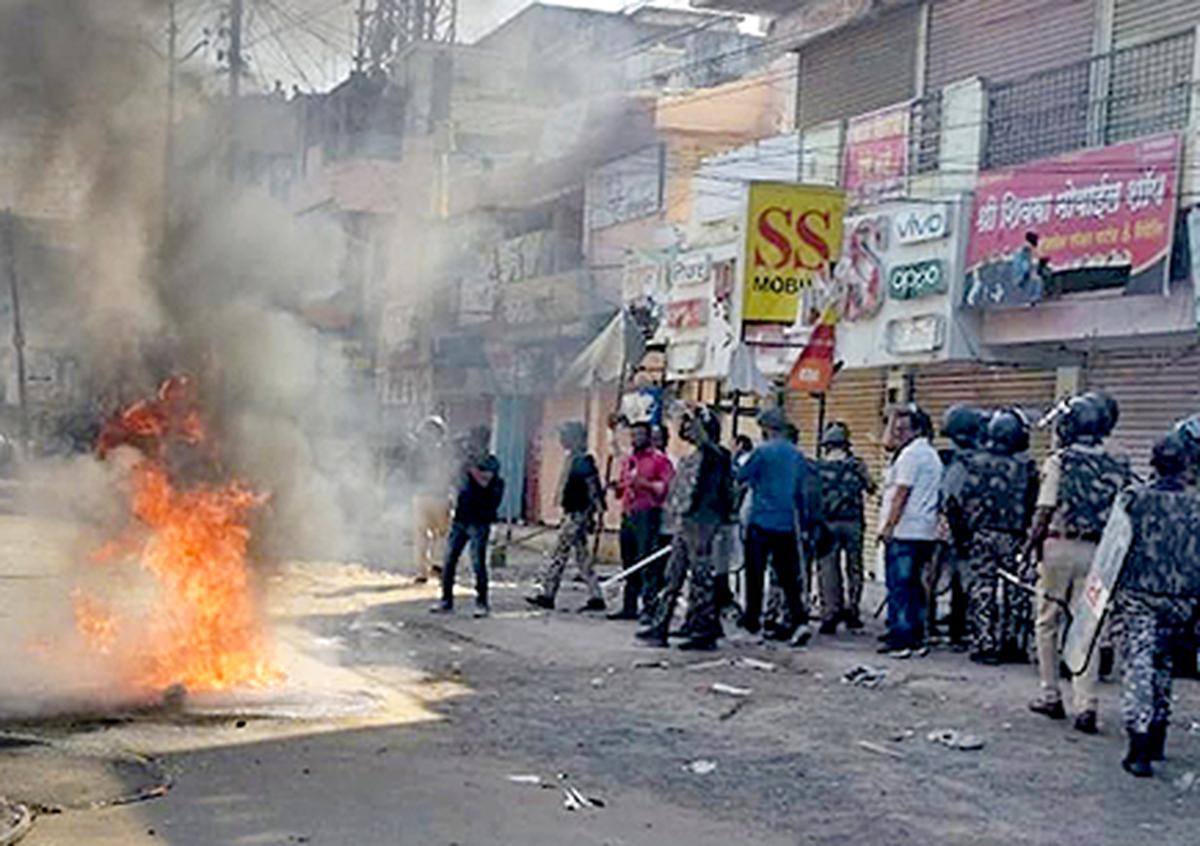
On 11 December, a structure was set on fire in Parbhani, Maharashtra in protest against the alleged demolition of a replica of the Indian Constitution. The stone replica of the Constitution was placed in front of the statue of Dr. BR Ambedkar outside Parbhani Railway Station. It was found to be damaged, triggering protests.
Photo: PTI
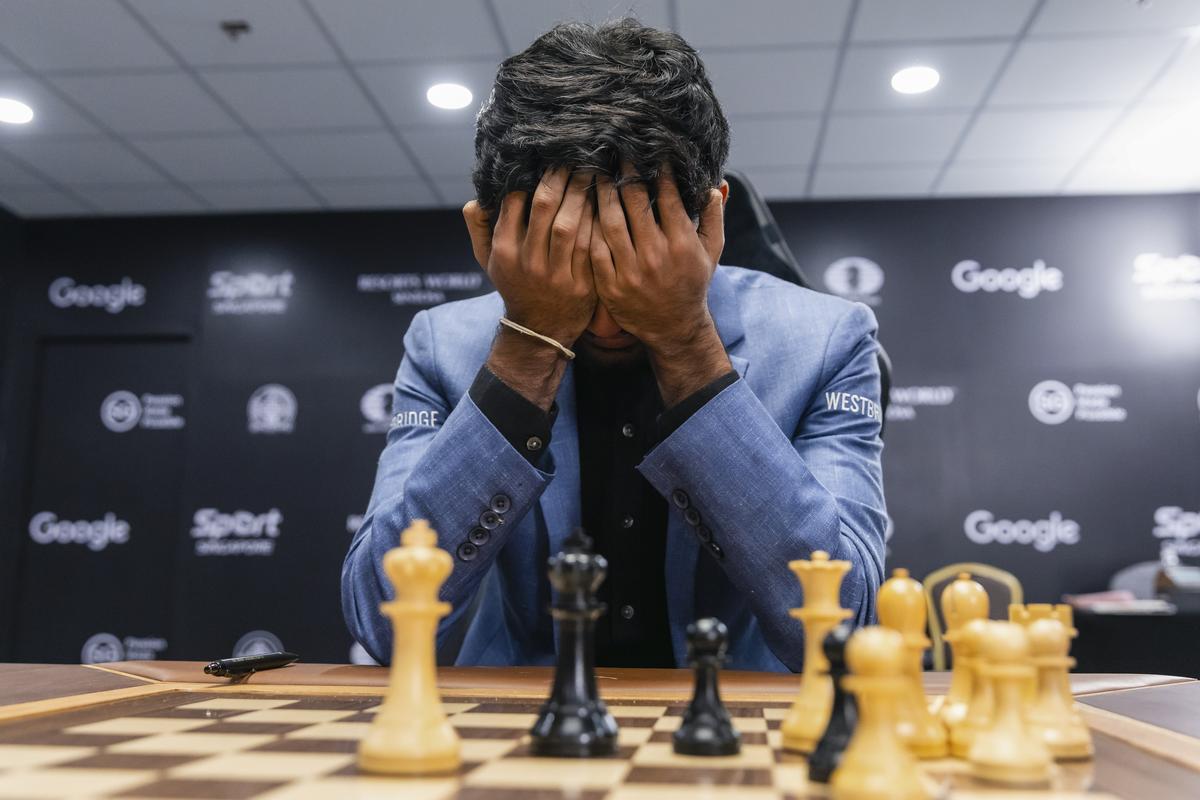
D. Gukesh reacts after defeating title winner Ding Liren of China in the 14th and final game of the FIDE World Chess Championship 2024 in Singapore on December 12.
Photo: R. Ravindran
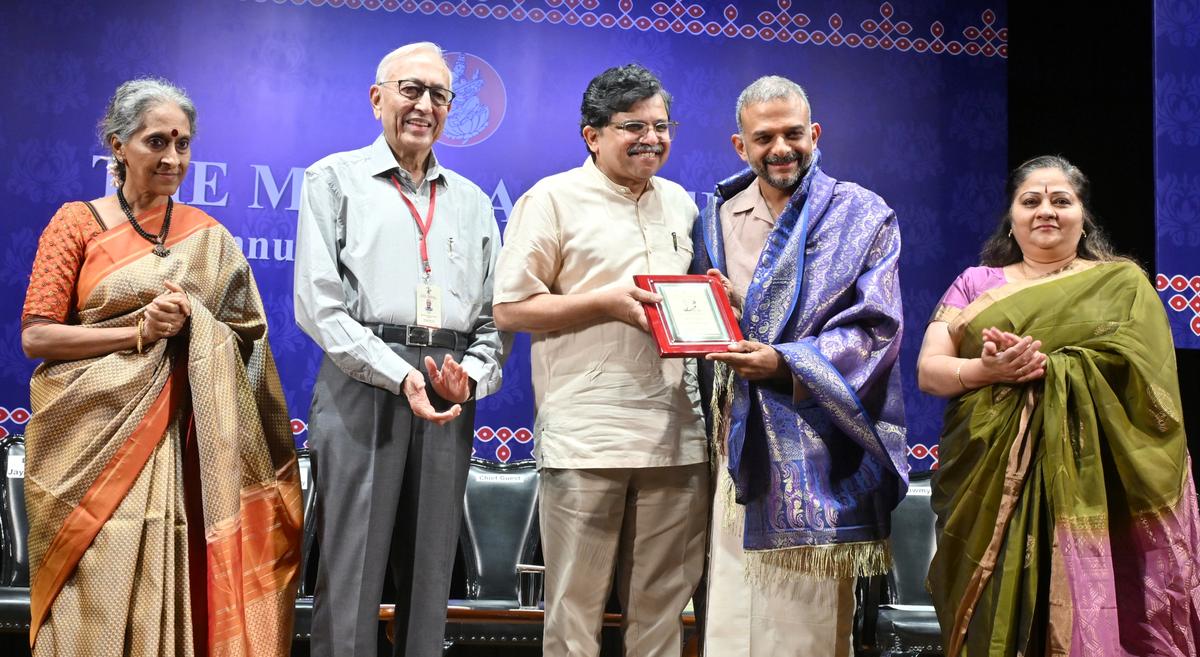
Former Chief Justice of Orissa High Court S. Muralidhar presented the MS Subbulakshmi Award to nominee Sangeetha Kalanidhi TM Krishna at the inaugural ceremony of the 98th Annual Conference and Music Festival of the Music Academy in Chennai. Also, Carnatic singer Bombay Jayashree Ramnath, Chairman of the Executive Committee of the Music Academy and member N. Murali and Carnatic singer Soumya are also seen.
Photo: PTI
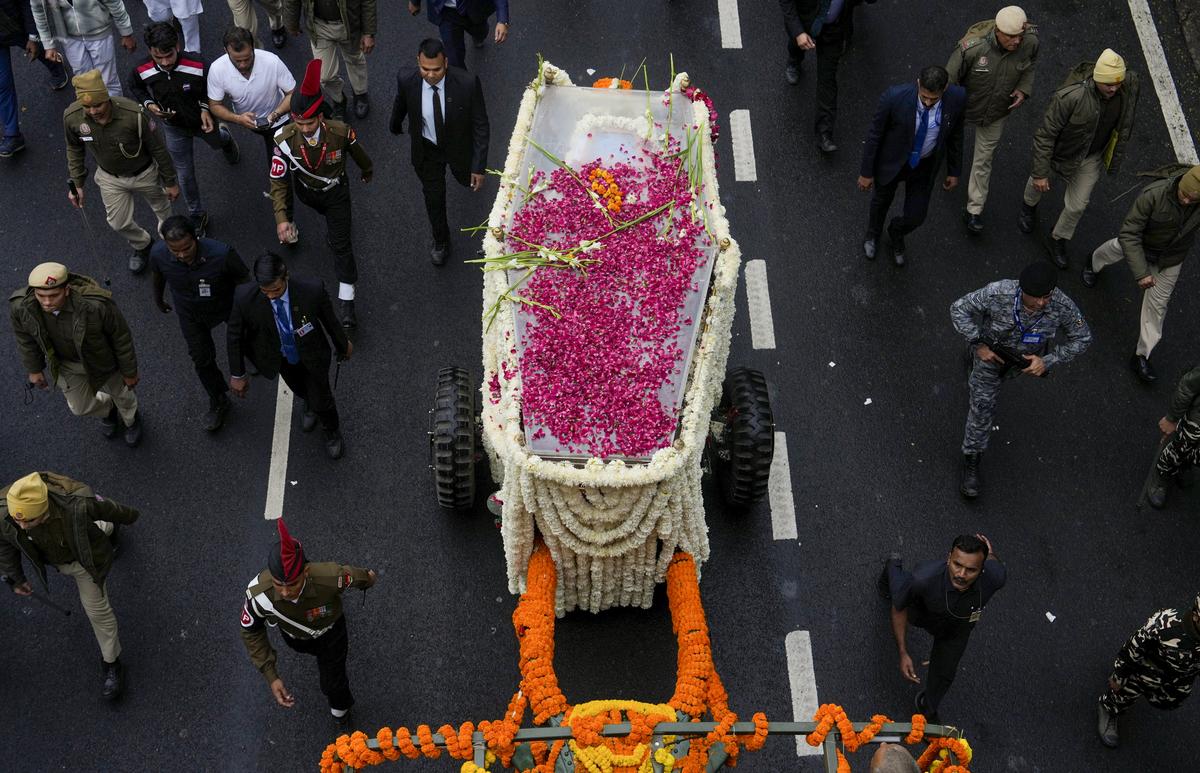
Last rally: The mortal remains of former Prime Minister Manmohan Singh being taken for a state funeral in New Delhi on December 28.
When dry skin feels tight, flaky, or irritated, a nourishing body lotion can give long lasting relief. The right body lotion for dry skin works wonders by locking in moisture, replenishing hydration and transforming rough patches into soft, smooth skin. Packed with rich, emollient ingredients like shea butter, cocoa butter and ceramides, these lotions deeply moisturise and protect the skin’s natural barrier. Many body lotions for dry skin also contain vitamins and antioxidants to repair and rejuvenate the skin. Some products also have soothing botanical extracts like aloe vera and chamomile, which calm irritation and provide relief from itching or redness. Regular use of a good body lotion does more than just hydrate, it helps to maintain the skin’s elasticity, prevent the uncomfortable cracks and creases that come with dryness. Check out this list of the best body lotion brands that you may try!
Explore the best body lotion for dry skin and soothe your skin.(Freepik)
10 best body lotion for dry skin
Here is a list of the best body lotions for winter that you include in your daily skincare routine:
Cetaphil Restoraderm Body Moisturiser is designed to soothe and replenish very dry and eczema-prone skin. With a unique combination of ceramide and Filaggrin technology, it may strengthen the skin’s protective layer, offering long-lasting hydration. The fast-absorbing, non-greasy formula is safe even for babies as young as three months, making it suitable for sensitive skin. It is hypoallergenic and free from preservatives and fragrances, which makes it safe to use.
Specifications of Cetaphil Restoradem Body Moisturiser:
Skin type: Dry
Benefits: Restore moisture
Why to choose: Perfect for sensitive or baby skin needing gentle moisture and long-lasting hydration.
Why to buy
Why to avoid
Ideal for eczema-prone skin.
May not be as hydrating for extremely dry skin.
Soothes, hydrates, and strengthens the skin barrier with a non-greasy, fragrance-free formula.
O’Keeffe’s Skin Repair Body Lotion is perfect for dry, itchy skin. Its hypoallergenic, non-greasy formula absorbs quickly, providing intense moisture and relief for up to 48 hours. Regular use of this body lotion may heal and prevent flare-ups, which makes it suitable for conditions like diabetes and eczema. With consistent use, it may help to maintain hydration, leaving skin soft, smooth, and soothed. Ideal for those with extremely dry skin, O’Keeffe’s Skin Repair offers quick absorption and long-lasting comfort.
Specifications of O’Keeffe’s Skin Repair Body Lotion:
Skin type: Dry
Benefits: Boosts hydration
Why to choose: Excellent for people needing quick relief and long-lasting hydration without greasiness.
Why to buy
Why to avoid
Provides intense moisture for up to 48 hours.
The fragrance-free formula may not appeal to those seeking a scented lotion
It is ideal for very dry skin or conditions like eczema and diabetes.
Eucerin Smoothing Repair Dry Skin Lotion promises to deliver immediate hydration and strengthen the skin’s moisture barrier. This intense hydrating lotion for dry skin is formulated with shea butter and other nourishing ingredients to lock in moisture, leaving skin soft and smooth. This may help to prevent dryness from recurring, improving the skin’s texture and appearance over time. Perfect for very dry skin, it is dermatologist-tested and fragrance-free, making it suitable for sensitive skin. Regular use of this product may help to restore healthy, hydrated skin, reducing roughness and making skin feel replenished and nourished.
Specifications of Eucerin Smoothing Repair Dry Skin Lotion:
Skin type: Dry
Benefits: Repair dry skin
Why to choose: Best for dry skin that needs long-lasting hydration and repair.
Why to buy
Why to avoid
Restores moisture with shea butter and strengthens the skin’s barrier.
May not be suitable for those with very sensitive skin.
AmLactin Rapid Relief Restoring Lotion is a powerful moisturiser, which contains 15% lactic acid and three ceramides. This exfoliating and hydrating lotion may help to relieve dry, rough, and bumpy skin. It also promises to provide 24-hour relief, promoting skin’s natural renewal while gently exfoliating and locking in moisture. Ideal for conditions like keratosis pilaris, the formula smooths skin and leaves it feeling soft and hydrated without the greasy residue. The brand claims that this product is paraben-free and dermatologist-recommended.
Specifications of AmLactin Rapid Relief Restoring Lotion:
Skin type: Flaky skin, dry, rough
Benefits: Dry skin relief
Why to choose: Ideal for rough, bumpy skin like keratosis pilaris, providing relief and moisture.
Why to buy
Why to avoid
Contains exfoliating lactic acid and ceramides to smooth rough skin and provide 24-hour hydration.
May irritate extremely sensitive skin due to its exfoliating properties.
Victoria’s Secret Coconut Passion Body Lotion claims to offer a luxurious, hydrating experience with the tropical scent of coconut and vanilla. This nourishing body lotion may deeply moisturise dry skin, leaving it soft, smooth, and lightly scented. Perfect for daily use, it provides long-lasting hydration and promotes the skin’s natural glow. The formula also contains nourishing ingredients that may help to restore moisture, providing relief from dry patches and rough skin.
Specifications of Victoria’s Secret Coconut Passion Body Lotion:
Skin type: Dry
Benefits: Boosts nourishment
Why to choose: Great for those seeking hydration with a pleasant fragrance and soft skin.
Why to buy
Why to avoid
Hydrates dry skin while offering a tropical scent and a smooth, nourished feel.
May not be enough for extremely dry or cracked skin.
Gold Bond Ultimate Healing Skin Therapy Lotion for Dry Skin contains aloe vera, which may help to soothe and heal dry, irritated skin. Its non-greasy formula may absorb quickly and provide moisture for 24 hours, keeping skin hydrated and smooth. Perfect for tackling problem areas like elbows, knees, and feet, this lotion restores moisture and protects the skin’s barrier. The added aloe may help to cool and calm sensitive skin while preventing further dryness.
Specifications of Gold Bond Ultimate Healing Skin Therapy Lotion for Dry Skin:
Skin type: Dry
Benefits: Heals dry skin
Why to choose: Perfect for soothing and hydrating dry, irritated areas like elbows and knees.
Why to buy
Why to avoid
Aloe vera soothes irritated skin while providing 24-hour moisture and healing benefits for dry areas.
May not be enough for extremely dry or cracked skin.
Lubriderm Daily Moisture Lotion may provide immediate hydration, leaving skin soft and smooth. Enriched with essential moisturisers, it may help to replenish moisture throughout the day, preventing dryness. It is ideal for individuals with sensitive skin and is dermatologist-tested and free from fragrances and harsh chemicals, ensuring safe, effective care for your skin.
Specifications of Lubriderm Daily Moisturise Lotion:
Skin type: Dry, normal
Benefits: Moisturising
Why to choose: Ideal for normal to dry skin that needs gentle, fragrance-free moisture.
Why to buy
Why to avoid
Provides immediate hydration.
May not provide deep hydration for very dry skin.
It is suitable for sensitive skin, leaving it soft and smooth.
CeraVe Moisturizing Lotion is designed to hydrate dry skin and restore its natural protective barrier. It contains three essential ceramides and hyaluronic acid, which may help to deeply nourish and protect skin. Ideal for both face and body, it may help to prevent moisture loss and provide long-lasting hydration. This dermatologist-approved lotion is perfect for dry skin, offering lightweight yet powerful moisturization without clogging pores.
Specifications of CeraVe Moisturising Lotion for Dry Skin:
Skin type: dry, normal
Benefits: Maintains skin’s natural barrier
Why to choose: Excellent for daily use, maintaining skin hydration and barrier health.
Why to buy
Why to avoid
Contains essential ceramides and hyaluronic acid
Not suitable for those with very oily skin due to its richness.
It may help to restore the skin’s natural barrier and provide long-lasting hydration.
Aveeno Skin Relief Moisturizing Lotion claims to offer 24-hour hydration to soothe and replenish dry, sensitive skin. It contains a unique prebiotic Triple Oat Complex, along with natural shea butter, to restore the skin’s moisture balance. Ideal for skin that is prone to irritation, this dermatologist-recommended lotion may help prevent dryness while calming itchy skin. The brand claims that this product is free from fragrance and steroids, which makes it suitable and safe to use.
Specifications of Aveeno Skin Relief Moisturising Lotion:
Skin type: Sensitive, dry, normal
Benefits: Moisturises skin
Why to choose: Great for sensitive skin needing soothing, long-lasting moisture and relief from itching.
Why to buy
Why to avoid
Offers 24-hour hydration, soothing irritated skin with oat complex and shea butter.
May not be enough for extremely dry or cracked skin.
Dermafique Intensive Restore Body Lotion is a rich, creamy serum designed to provide intense hydration for dry skin. Enriched with 10x Vitamin E, it helps repair the skin’s moisture barrier while preventing collagen breakdown. This deep-moisturizing formula restores moisture, leaving skin soft, smooth, and visibly healthier. Suitable for dry skin, it hydrates and heals dry patches, leaving skin feeling nourished and rejuvenated. The serum’s higher concentration of active ingredients makes it more effective than regular lotions, delivering deeper hydration and promoting smoother, more supple skin with regular use.
Specifications of Dermafique Intensive Restore Body Lotion Serum:
Skin type: Dry
Benefits: Hydrating
Why to choose: Ideal for dry skin needing intense hydration and long-term skin health.
Why to buy
Why to avoid
Provides deep hydration with Vitamin E
May not be suitable for those with oily skin due to its richness.
It may help to repair the skin’s moisture barrier, promoting smoother skin.
When choosing the best body lotion for all skin types, consider the following factors:
1. Check for hydrating ingredients: Look for the best body lotion for women or men that contain deeply moisturising ingredients like glycerin, hyaluronic acid, or shea butter. These help lock in moisture and keep skin soft and hydrated.
2. Opt for ceramides: Ceramides are lipids that help restore the skin’s natural barrier, which is often compromised in dry skin. Opt for the best body lotion for glowing skin that contains ceramides, which may help prevent moisture loss and protect the skin from further dryness.
3. Avoid harsh chemicals: Choose the best body lotion for men and women that are fragrance-free and paraben-free. Harsh chemicals can irritate dry skin, so go for products with gentle, natural ingredients.
4. Look for nourishing oils: Ingredients like jojoba oil, almond oil, or coconut oil are great for dry skin as they provide deep nourishment and help improve skin elasticity.
5. Choose dermatologist-recommended brands: For sensitive or severely dry skin, opt for lotions recommended by dermatologists. These are often designed to be safe and effective for delicate or compromised skin.
6. Texture: Opt for richer, cream-based lotions if your skin is very dry. Lighter formulas may work for mildly dry skin but may not provide enough moisture for more intense dryness.
What are the benefits of using body lotion for dry skin?
1. Hydration: Body lotion may replenish moisture, helping combat the dryness and tightness in dry skin, leaving it feeling soft and smooth.
2. Skin barrier protection: Many body lotions contain ingredients like ceramides and fatty acids. This helps strengthen the skin’s natural barrier, preventing moisture loss and protecting against environmental irritants.
3. Improved skin texture: Regular use of body lotion can smooth rough patches, reducing flakiness and restoring a more even, healthy-looking skin surface.
4. Soothing & calming: Body lotions often contain calming ingredients like aloe vera and chamomile, which may help to relieve irritation, redness, and itching commonly associated with dry skin.
5. Enhanced elasticity: Regular use of body lotion may help improve skin elasticity, preventing cracks, creases, and discomfort associated with excessive dryness.
Top three features of the best body lotion for dry skin:
Best body lotion for dry skin
Price
Quantity
Skin type
Cetaphil Restoraderm Body Moisturizer, Shea Butter
2,223
295 ml
Dry skin
O’Keeffe’s Skin Repair Body Lotion and Dry Skin Moisturizer
Apply body lotion after a shower or bath on slightly damp skin. Massage gently in circular motions to ensure even absorption and maximum hydration throughout the day.
Which body lotion is best for dry skin?
The best body lotion for dry skin should contain hydrating ingredients like shea butter, glycerin, hyaluronic acid, and ceramides.
Can body lotion help with dry, itchy skin?
Yes, body lotions with soothing ingredients like oatmeal, aloe vera, and vitamin E help relieve dryness and itching by moisturizing the skin and restoring its natural barrier.
How often should I apply body lotion for dry skin?
For optimal results, apply body lotion for dry skin at least twice a day—once in the morning and once before bedtime—to maintain hydration and prevent moisture loss.
Disclaimer: At Hindustan Times, we help you stay up-to-date with the latest trends and products. Mint has an affiliate partnership, so we may get a part of the revenue when you make a purchase. We shall not be liable for any claim under applicable laws, including but not limited to the Consumer Protection Act, 2019, with respect to the products. The products listed in this article are in no particular order of priority.
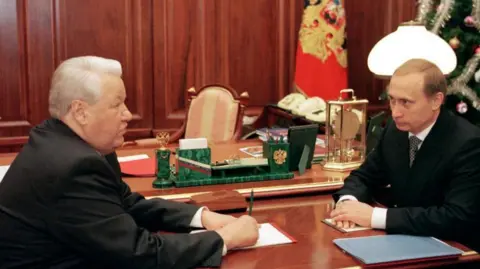
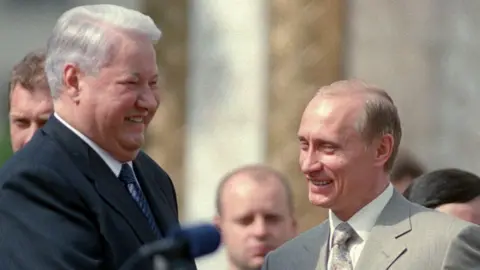
Boris Yeltsin (L) announced he would be resigning immediately and handing over presidential powers to Vladimir Putin on 31 December 1999
I will never forget New Year’s Eve 1999.
I was working as a producer in the BBC’s Moscow bureau. Suddenly there was breaking news: Russia’s President Boris Yeltsin had stepped down.
His decision to resign took everyone by surprise, including the British press corps in Moscow. When the news broke there was no correspondent in the office. That meant I had to step in to write and broadcast my first BBC dispatch.
“Boris Yeltsin always said he would see out his full term in office,” I wrote. “Today he told Russians he’d changed his mind.”
It was the start of my career as a reporter.
And the start of Vladimir Putin’s as Russia’s leader.
Following Yeltsin’s resignation, in accordance with the Russian constitution, Prime Minister Putin became acting president. Three months later he won the election.
On leaving the Kremlin, Yeltsin’s parting instruction to Putin was: “Take care of Russia!”
Getty Images
President Putin (R) presents himself as the defender of Russian sovereignty – something he says his predecessor Boris Yeltsin was failing to do
I’ve found myself recalling these words of Yeltsin more and more, the closer Russia’s war on Ukraine gets to the three-year mark.
That’s because President Putin’s full-scale invasion of Ukraine has had devastating consequences.
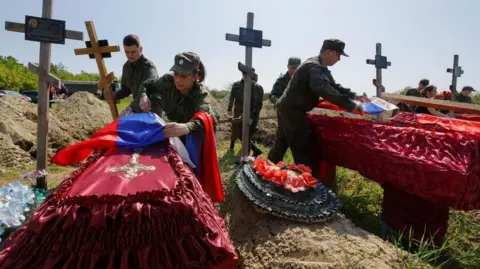
Primarily for Ukraine, which has seen massive destruction and casualties in its cities. Almost 20% of its territory has been occupied and 10 million of its citizens have been displaced.
But for Russia, too:
I’ve been reporting on Putin since he came to power a quarter of a century ago.
On 31 December 1999, who would have thought that Russia’s new leader would still be in power two and a half decades later? Or that Russia today would be waging war on Ukraine and facing off with the West?
Reuters
Russia has sustained heavy losses on the battlefield since President Putin launched his so-called ‘special military operation’ in Ukraine in 2022
I often wonder whether the course of history would have been drastically different if Yeltsin had picked someone else to succeed him. The question, of course, is academic. History is full of ifs and buts and maybes.
One thing I can say with certainty: over twenty-five years I’ve seen different Putins.
And I’m not the only one.
“The Putin I met with, did good business with, established a Nato-Russia Council with, is very, very different from this almost megalomaniac at the present moment,” former Nato chief Lord Robertson told me in 2023.
“The man who stood beside me in May 2002, right beside me, and said Ukraine is a sovereign and independent nation state which will make its own decisions about security, is now the man who says that [Ukraine] is not a nation state.
“I think that Vladimir Putin has a very thin skin and a huge ambition for his country. The Soviet Union was recognised as the second superpower in the world. Russia can’t make any claims in that direction. And I think that ate away at his ego.”
That is one possible explanation for the change we’ve seen in Putin: his burning ambition to “Make Russia Great Again” (and to make up for what many perceive as Moscow’s defeat in the Cold War) put Russia on an inevitable collision course with its neighbours – and with the West.
The Kremlin has a different explanation.
From the speeches he gives, the comments he makes, Putin appears driven by resentment, by an all-encompassing feeling that for years Russia has been lied to and disrespected, its security concerns dismissed by the West.
But does Putin himself believe that he has fulfilled Yeltsin’s request to “take care of Russia?”
I recently had a chance to find out.
BBC’s Steve Rosenberg challenges Putin on 25-year Russian rule
More than four hours into his lengthy end-of-year press conference, Putin invited me to ask a question.
“Boris Yeltsin told you to take care of Russia,” I reminded the president. “But what of the significant losses in your so-called ‘special military operation’, the Ukrainian troops in Kursk region, the sanctions, the high inflation. Do you think you’ve taken care of your country?”
“Yes,” President Putin replied. “And I haven’t just taken care of it. We’ve pulled back from the edge of the abyss.”
He portrayed Yeltsin’s Russia as a country that had been losing its sovereignty. He accused the West of having “patronisingly patted” Yeltsin on the shoulder while “using Russia for its own purposes”. But he, Putin, was “doing everything”, he said, “to ensure Russia was an independent sovereign state”.
Presenting himself as the defender of Russian sovereignty: is this a view he’s come up with retrospectively to try to justify the war in Ukraine? Or does Putin really believe this take on modern Russian history?
I’m still not sure. Not yet. But I sense that it is a key question.
The answer to it may well influence how the war ends – and Russia’s future direction.
Seoul: The combined market capitalisation of Samsung Group’s affiliates dropped about 23 per cent in 2024 due to the sluggish performance of its key affiliate Samsung Electronics, data showed on Sunday.
The market value of Samsung’s affiliates stood at 548.4 trillion won ($371.5 billion) as of Thursday, compared with 709.6 trillion won a year earlier, according to data compiled by Yonhap Infomax, the financial news arm of Yonhap News Agency.
Samsung Group has 22 affiliates listed on the local stock market, including Samsung Electronics Co., Samsung Biologics Co., Samsung C&T Corp. and Samsung Life Insurance Co.
The overall decrease came as shares of Samsung Electronics tumbled 31.71 per cent this year, with those of Samsung SDI Co. and Hotel Shilla Co. falling 47.66 per cent and 42.58 per cent, respectively.
“Shares of Samsung Electronics are expected to trade within a limited range for the time being due to the downcycle of memory chips,” said Kim Dong-won, a researcher at KB Securities Co. Meanwhile, Earnings forecast for Samsung Electronics for the fourth quarter have been revised down largely due to a downturn in industry demand.
According to the latest survey conducted by Yonhap Infomax, which polled 20 Korean brokerage houses, Samsung Electronics’ operating profit for the October-December period is estimated at 8.58 trillion won ($5.92 billion).
While the latest forecast is sharply higher than the 2.82 trillion won recorded in the fourth quarter of last year, it represents a drop of over 1 trillion won compared with the previous estimate of 9.77 trillion won made in October and November.
Market observers say the deepening slump in demand for traditional IT products, including smartphones and PCs, has contributed to prolonged weak profitability in Samsung’s core memory business.
The US Commerce Department recently awarded Samsung Electronics up to $4.745 billion in direct funding to support the South Korean tech giant’s chipmaking investment in central Texas, as it strives to strengthen domestic semiconductor production.