Wednesday, September 30, 2026
Home Blog Page 6990

‘Indian queen rules the board’: Anand Mahindra’s special message for Koneru Humpy after chess win | Trending

0
‘Indian queen rules the board’: Anand Mahindra’s special message for Koneru Humpy after chess win | Trending


Dec 29, 2024 10:18 AM IST

Anand Mahindra’s post came after Koneru Humpy was crowned the 2024 FIDE Women’s World Rapid Champion. Her historic win has impressed her fans.

Indian Grandmaster Koneru Humpy pulled off a sensational win against Irene Sukandar of Indonesia to win the FIDE Women’s World Rapid Champion title. Congratulations have been pouring in on social media following her victory, and the latest one came from Anand Mahindra. In a special post, he praised Koneru.

Anand Mahindra’s post for Koneru Humpy after her chess win has gone viral. (X/@NisithPramanik, PTI)

“An Indian Queen rules the board. Thank you Koneru Humpy for making us so proud. And for providing a winning and fitting finale to what has been an absolutely brilliant year for Indian chess!” the business mogul wrote. He concluded his post with clapping and Indian flag emoticons.

His post came as a reaction to a share by the International Chess Federation. “Humpy Koneru is the 2024 FIDE WOMEN’S WORLD RAPID CHAMPION!” the organisation wrote on X, along with a picture of the winner.

Take a look at the post:

Social media is overjoyed:

People posted congratulatory and praiseful posts on Anand Mahindra’s share. An individual wrote, “Congratulations. well done keep going Humpy madam.” Another posted, “Congratulations. Well done.” A third reacted with folded hands emoticons.

Koneru Humpy on her win:

I’m very excited and I feel very happy. In fact, I expected it to be a very tough day, like some sort of tie-break. But when I finished the game, I only got to know when the arbitrator told me, and it was a tense moment for me,” Humpy told PTI.

“So, this is quite unexpected because the whole year I have been struggling a lot and I had very bad tournaments where I just ended up in last place. So, this came as a surprise,” she added.

Her achievement adds to the sensational year for Indian chess. Just a few days earlier, D Gukesh bagged the title of youngest chess champion after defeating China’s Ding Liren.

Get Latest Updates on…

See more


Pastor Luke Walford dies in shark attack on Australia’s Great Barrier Reef

0
Pastor Luke Walford dies in shark attack on Australia’s Great Barrier Reef


A 40-year-old man has died after being attacked by a shark on the edge of Australia’s Great Barrier Reef, local police said.

Luke Walford, a youth pastor, had been spearfishing with his family when he was bitten on Saturday afternoon.

He sustained “life-threatening injuries” and despite paramedics’ efforts, he died at the scene about an hour later, authorities said.

He and his family had been in the water at Humpy Island, in the Great Barrier Reef’s Keppel Bay Islands National Park, when the attack happened. The area is a popular spot for diving and snorkelling.

Walford had been a school chaplain and pastor at the Cathedral of Praise church in Rockhampton, Queensland.

Donna Kirkland, his local MP, said she was in shock, and that Walford was a friend to her and “countless others.”

“My prayers and heartfelt condolences are with his beautiful family and indeed the many who will be devastated, as I am, at this news”, she added.

A family friend told ABC News he had watched the rescue helicopter fly over his house, unaware it was for his friend.

“I always say a little tribute for whoever it may be, but to find out it was Luke was a very sad day,” Doug Webber said.

Queensland police said a report would be prepared for the coroner.

Australia’s last fatal shark attack happened in December 2023, when a teenage boy was killed in the south.

Just this year, there have been four other shark incidents in Australia, according to a local database.

In general, Australia sees more shark attacks than any other country except the US.


U.S.-India ties will be strengthened, but expect tariff trouble, FTA push: Former Ambassador Juster

0
U.S.-India ties will be strengthened, but expect tariff trouble, FTA push: Former Ambassador Juster


Former Trump envoy to India says the new administrations will push hard on Iran sanctions, China challenge

India should expect raised tariffs, and a renewed push to get a Free Trade Agreement finalised from the United States as Donald Trump gets set to begin a second term in office, said former Ambassador to India Kenneth Juster. In an exclusive interview to The Hindu, Mr. Juster, a former U.S. department of Commerce official who was appointed by Mr. Trump to India in the first term (2017-2021) said that the first tenure and Mr. Trump’s campaign pronouncements were indicators that the second term would see a further strengthening of India-U.S. ties, but certain irritants in ties, such as over high tariffs, market access in areas like “agricultural exports from United States to India and the IT (information technology) equipment sector and medical devices”, and differences over Iran policy could also return. In Mr. Trump’s first term, the U.S. had withdrawn India’s GSP status for exporters, and forced India to cancel all oil imports from Iran.

Mr. Juster pointed out that Mr. Trump’s cabinet nominees thus far had very strongly pro-India positions, and that they also saw China as the U.S.’s “major strategic challenge”, pointing in particular to NSA-designate Michael waltz, currently co-chair of the India Caucus in the House of Representatives, whom External Affairs Minister S. Jaishankar met in Washington last week. Mr. Juster said that it was unlikely the Department of Justice indictments in the Pannun case and against the Adani group would have “any substantial effect on the broader US-India relationship”.

When asked about a possible invitation to Prime Minister Narendra Modi for the Trump inauguration on January 20, Mr. Juster pointed out that foreign leaders have not traditionally attended the inauguration, but that the two leaders share a close personal relationship from Mr. Trump’s previous term. 

With the inauguration of Donald Trump as the President of the United States for the second time just weeks away, New Delhi stepped up its outreach to the incoming administration with External Affairs Minister S. Jaishankar and Foreign Secretary Vikram Misri both spending the year-end week in Washington. In an exclusive interview to The Hindu over a video conference, Mr. Trump’s last envoy to India (2017-2021) Kenneth Juster spoke about what to expect from his next tenure in office.

Broadly, how do you think President Trump will approach India, given your experience of the ties during his previous tenure? 


I think there’s going to be a very strong U.S.-Indian relationship during the second term of the Trump presidency, and I base that on what happened during the first term. U.S.-India relations were among the highlights of the Trump administration’s foreign policy. President Trump was the first U.S. President to label China as a strategic challenge to the United States and to popularize the concept of the Indo Pacific, which strategically links the Indian Ocean and the Pacific Ocean regions. It was a concept that was pioneered by former Prime Minister Shinzo Abe of Japan, but the United States really enhanced it by its own activities, and soon the entire region and world was speaking of the Indo Pacific. Under the Trump administration, we also revived the Quad, the grouping among the United States, India, Japan and Australia, which has continued to thrive under the Biden administration. 

We enhanced our defence cooperation significantly, signing three major foundational agreements, increasing the number of military exercises and having the first ever tri-services exercise. We increased energy exports to India of all types, clean coal, natural gas, oil and renewables, and worked closely with India on those issues. There was also a very strong people-to-people relationship. There was a Howdy Modi event in Houston with over 50,000 people that President Trump was at. And then there was a Namaste Trump event in February of 2020, that had over 100,000 people in Gujarat. So, there’s a very strong relationship between the President and the Prime Minister, and the United States really provided very critical and important assistance to India when China came across the Line of Actual Control into disputed territory in 2020. 

What should one make of Trump nominees thus far, including Rubio, Hegseth, Gabbard, Ramaswamy and Hegseth, all of whom have been positively disposed towards India?


Let me also mention Representative Michael waltz, who’s going to be the incoming National Security Advisor, who is currently co-chair of the India Caucus in the House of Representatives. And yes, I think the appointees by and large will be furthering the strength of the US-India relationship that we saw in the first term of the Trump administration. Senator Rubio, who’s the nominee to be Secretary of State, had introduced legislation that would treat India as equivalent to an ally for purposes of technology transfers and provide a variety of other positive elements to the US-India relationship. But in addition, these advisors see China as the major strategic challenge that the United States faces. And in that sense, I think there’s a certain strategic clarity between the United States and India as to what some of the challenges will be in the Indo-Pacific region. 

What about the unusual and special relationship with Elon Musk, who has been trying to bring in companies like Tesla and Starlink to India, but asking for more concessions, tax waivers. Do you think India should be prepared to give more when it comes to business?


Well, that’s going to be a business decision for India. India made concessions to bring Apple into India, and that’s been a great success in terms of its manufacturing operations there. And the government of India will have to decide whether the concessions being sought by Mr. Musk relative to Tesla and Starlink, and I don’t know all the specifics of that, make sense from its perspective or not. 

But given Mr. Trump’s threats of the past on India being a “tariff abuser” and how India lost its GSP status for exporters, should India expect more of such shock therapy? 


Look, the President has been clear that he believes India should lower tariffs and is too protectionist, and he bases this on both the levels of tariffs, which the real tariff level in India is high, and the trade deficit that exists between the United States and India. And he had this opinion during the first term. 

I don’t think it’s correct to say that the GSP issue was shock therapy. There’s a statute that provides the generalized system of preferences benefits to countries, which gives tariff free entry to hundreds and even thousands of products into the United States. But the statute also requires that the beneficiary country increase its own market access to US products. There were complaints filed by the medical devices industry and the dairy industry that they were not getting access to India. So, the US Trade Representative’s Office undertook a full investigation. They felt that there were other industries, including the IT services industry, that also were not getting sufficient access. But instead of withdrawing GSP right away, the US government undertook an extensive negotiation with the Government of India to try to reach some resolution of this issue. The negotiations lasted for over one year. The US government felt that they were coming close to an agreement, but it could never get concluded. And finally, under the statutory requirement, they were compelled to have to terminate GSP, and yet still continued negotiations after that to try to reinstate GSP, to get some market opening measures. Regrettably, that was still not possible. I think by the time President Trump came to India in February of 2020, it looked like the Indian side was willing to close the deal, but at that point the President was seeking a bigger deal.

We have to remember that part of the effort in putting tariffs on a country is to try to get a negotiation to increase market access for the United States. So, the President-elect has indicated that he will slap tariffs of 10 to 20% on most countries around the world, and I think that would probably include India. But I also think that could be the beginning of a negotiation to open markets a bit and, from India’s perspective, to try to lock down the benefits of its largest trade partner, the United States, in both goods and services. And one should think expansively in terms of what other issues of concern, whether it be in technology, in energy, or elsewhere, where the two sides could do some horse trading and reach a broader trade and economic agreement. 

Will reopening FTA talks be a priority for the Trump administration, as when the Biden administration came in it made it clear it wasn’t a priority? 


Well, to be fair, the Biden administration chose not to move forward in the free trade agreement area and, instead, launched a different initiative, the Indo-Pacific Economic Framework for Prosperity. President Trump, despite being known as someone who loves tariffs, also negotiated several trade deals during his first term, including with Mexico and Canada and with Japan as well. And I think he would want to do so in the second term with India. Some of the areas that were sticky were in some agricultural exports from United States to India and the IT (information technology) equipment sector and medical devices. And I would hope that we could get beyond those issues, reduce tariffs there, and then look at other broader measures that could be addressed to enhance our economic relationship. One strategic reason for doing this is that China really dominates the Indo Pacific region with its economic strength, and if the United States and India were to strike a larger trade and economic agreement, that would begin to counter some of China’s enormous presence in the region. 

Also, we should work out an understanding on the digital economy, because so much data flows back and forth between our two countries. Both of our technology sectors are critical to our economies and are leading technology sectors of the world. 

Do you think the ease of doing business in India is now better in these last four years? 


Yes, I think the ease of doing business in India has certainly improved, although I think there could still be further improvements. We’ve seen enormous investments by the government in infrastructure, whether it be airports, seaports, roads or highways. We’ve seen efforts to attract investors through a variety of different incentives, and certainly India is on the radar screen of most major US and other international companies that are looking for a major market to invest in. I still hear, though, from US companies that they find the regulatory framework can be a bit slow and burdensome, and that at times there’s regulatory uncertainty. My concern at times about some of the high barriers to trade — not to investment, but to trade — is that this may dissuade some companies that want to move goods in and out of India from making it the supply chain hub that India would like to be. 

Like with the GSP removal, the feeling in India is that the Trump administration strong-armed India- the US insisted that India must zero out Iran oil import. It’s interesting that despite many requests from the Biden administration, India did not actually reduce its oil intake from Russia. What would the expectations be from India in the next four years? 


I don’t think we strong armed India on trade, because we never changed the situation. So, it was a negotiation that was unable to be concluded. Yes, you are correct on Iran, the Trump administration had a maximum pressure campaign, which I think may well get reinstituted in this next term. India was treated like every other country, which meant you needed to zero out oil imports from Iran. And India complied with that. I think on Russia, there is an understanding of the long historical relationship India has had. And in the previous term of the Trump administration, there were not ultimatums put on India with regard to Russia. As you know, there was an S-400 sale. There was talk of potential sanctions under CAATSA, but that never was implemented. I think Russia is a fluid issue, and it may well depend on how negotiations go between Russia and Ukraine. But I think Iran is one area where the administration has shown a very consistent and tough position in terms of seeking to economically isolate the Iranians. 

Delhi has also been shocked by US Department of Justice investigations and indictments- first in the Pannun assassination plot case, and then against the Adani group. Do you think a Trump administration will approach these DOJ investigations and indictments differently, and now that the Pannun case trial is actually underway, will it affect India US bilateral ties? 


Well, when cases get into our Justice Department and into the legal process, I would not want to comment on them, and they should probably not be affected by any concerns other than the legal considerations that are being followed by the prosecutors. I would not expect that the Trump administration would seek to inject itself in these cases. I can’t foresee what the legal people at the Department of Justice will do and how they will read the evidence overall. But beyond that, I don’t see these cases having any substantial effect on the broader US-India relationship.

The BJP has said on its official handle in response to these cases that the US State Department is targeting the Modi government, and that it is, in fact trying to in some way weaken India. Were you surprised that the investigations have had such a negative effect in India? 


Well unfortunately, at times, folks in India can be very sensitive about legal matters, but I can tell you from my experience, this would not have been something that the State Department would have chosen to push or not push. If anything, the diplomatic community would wish that these types of cases did not exist, but they get into our legal process, and we are very strict about not interfering with what the prosecutors do. The Attorney General and the people in the Justice Department make those decisions, but it’s really inappropriate for someone at the State Department or an ambassador or diplomat to try to inject him or herself into those matters. 

The Biden administration has sought to leave its legacy on Indian ties with the iCET. What do you think will be the major areas of growth for the India, US relationship in the next four years of Trump? 


The US-India relationship has continued to grow in a positive direction over the last 25 years, and each administration has built on the successes of the previous one, despite changes of parties (in power), and I expect that to continue. Technology has always been an important aspect of the US-India relationship. When I was Under Secretary of Commerce (2001-2005), we launched the High Technology Cooperation Group. We then had an initiative called the Next Steps in Strategic Partnership (NSSP) that worked on civil defence, civil nuclear and high technology issues. We then had the civil nuclear deal, which was a landmark occasion, followed by the Defence Technology Transfer Initiative (DTTI). So, the initiative on Critical and Emerging Technologies (iCET) really builds on top of those. And I expect technology to continue to be an important area and a key area for the two countries to focus on. The exact nature that it takes will depend on conversations that the two countries have. Semiconductors has been an area where they’ve been working together. There may be other avenues in artificial intelligence and elsewhere, but technology is a key linkage between our countries. In fact, many CEOs of US companies are Indian Americans, who came from India and contributed to our country. 

I think defence cooperation will also continue to be very critical. We hopefully will do more tabletop exercises together and scenario planning and other issues, understanding that India wants to maintain its own autonomy. But I think it’ll be important that we increase our ability to work together and have some level of interoperability. Lastly, I think energy is an area that holds enormous promise, because India needs to import a lot of energy, and the Trump administration will be pushing all forms of energy exports, as in the first Trump term, whether it be liquefied natural gas, oil, clean coal or renewables.

Would a revival of the big Tellurian LNG deal, that was announced by the leaders, but never made headway, be on the cards?


I don’t know what the status of that deal in particular is, but deals of that type, I think , have potential. 

There’s a lot of speculation in India about who will be the next Trump envoy to India. Given your experience, including of handling his unexpected social media posts (on Twitter/X), what are the skills that you think he should be looking for? 


Well, obviously I have some biases in terms of what one should look for, but one should remember that people in Washington do not wake up in the morning worrying about India. They may worry about China, about Russia, about Iran. Ideally, you want the ambassador to be someone who knows a lot about India and understands its history and culture and has dealt with Indians previously, because it’s a complicated country. But at the same time, one must have good relationships back in Washington, DC, at the White House and with the State Department, so that this individual can help shape policy and be actively involved in a country with a ten and one-half hour time difference (from the United States). Over time, the US has gravitated increasingly toward political appointees (for India), and so I would expect you’ll see that here as well. I know there are a number of candidates interested, but I’m not sure who has the leading edge on it thus far. But the choice should be one that understands President Trump and how he operates, so that he or she can help deal with any statements that come out of Washington in terms of translating them effectively to the Indian government. 

There’s also some commentary on whether Prime Minister Modi will get an invitation to the Trump inaugural on January 20, as Chinese President Xi Jinping has. Your thoughts?


It’s not normally been the tradition to have foreign leaders come to an inauguration. Instead, it’s been representatives and ambassadors in Washington who attend. I don’t know what the thinking is within the administration, and I have not yet heard anything one way or the other in terms of an invitation to Prime Minister Modi. But I would emphasize again that the two leaders have a very good relationship. President Trump felt his trip to India in February 2020 was an excellent one. And I think that personal relationship will be important going forward. The Biden administration has had a strong relationship with India, I think the first Trump team did too and I expect that trend to continue going forward.


Budget 2025-26: CII calls for cut in excise duty on fuel, consumption vouchers to stir demand

0
Budget 2025-26: CII calls for cut in excise duty on fuel, consumption vouchers to stir demand


Budget 2025-26: CII calls for cut in excise duty on fuel, consumption vouchers to stir demand

NEW DELHI: Industry body CII in its budget suggestions for 2025-26 has recommended lowering the excise duty on fuel to boost consumption, especially at the lower income level, arguing that fuel prices significantly drive inflation. The budget could also consider reducing marginal tax rates for personal income up to Rs 20 lakh per annum. This would help trigger the virtuous cycle of consumption, higher growth and higher tax revenue, said CII.
Asserting that the gap between the highest marginal rate for individuals at 42.74 per cent and the normal Corporate Tax Rate at 25.17 per cent, is high, it said, inflation has reduced the buying power of lower and middle-income earners.
“The central excise duty alone accounts for approximately 21 per cent of the retail price for petrol and 18 per cent for diesel. Since May 2022, these duties have not been adjusted in line with the approximately 40 per cent decrease in global crude prices. Lowering excise duty on fuel would help reduce overall inflation and increase disposable incomes,” the industry body said.
Chandrajit Banerjee, Director General, CII, said domestic consumption has been critical to India’s growth story, but inflationary pressures have somewhat eroded the purchasing power of consumers.
“Government interventions could focus on enhancing disposable incomes and stimulating spending to sustain economic momentum. Persistent food inflationary pressures particularly impinge upon low-income rural households who allocate larger share to food in their consumption basket”, he added.
According to him, while recent quarters have shown promising signs of recovery in rural consumption, targeted government interventions, such as increasing per unit benefit under its key schemes like MGNREGS, PM-KISAN and PMAY, and providing consumption vouchers to low-income households, can further enhance the rural recovery.
In its pre-budget proposals, CII has also recommended an increase in the daily minimum wage under the MGNREGS from Rs 267 to Rs 375 as suggested by the ‘Expert Committee on Fixing National Minimum Wage’ in 2017, with the industry body estimating that this will entail an additional expenditure of Rs 42,000 crore.
Further, it urged the government to raise the annual payout under the PM-KISAN scheme from Rs 6,000 to Rs 8,000. Assuming 10 crore beneficiaries, this will entail an additional expenditure of Rs 20,000 crore, CII said.
The Confederation of Indian Industry (CII) also sought an increase in the unit costs under the PMAY-G and PMAY-U schemes, which have not been revised since the scheme’s inception.
The CII suggested the introduction of consumption vouchers, targeted at low-income groups to stimulate demand for specified goods and services over a designated period.
The vouchers could be designed to be spent on designated items (specific goods and services) and could be valid for a designated time (like 6-8 months), to ensure spending. The beneficiary criteria can be defined as Jan-Dhan account holders who are not beneficiaries of other welfare schemes.


India’s Exports To Australia Up 64.4 Per Cent In Nov: Commerce Ministry Data | Economy News

0
India’s Exports To Australia Up 64.4 Per Cent In Nov: Commerce Ministry Data | Economy News


New Delhi: India’s exports to its trade agreement partner Australia rose 64.4 per cent year-on-year to USD 643.7 million in November on account of healthy growth in sectors such as textiles, chemicals and agricultural products, according to the commerce ministry data.

However, the country’s merchandise exports recorded a decline of 5.21 per cent year-on-year to USD 5.56 billion during April-November 2024-25, the preliminary data showed. India and Australia implemented an interim trade pact — Economic Cooperation and Trade Agreement (ECTA) — on December 29, 2022 and are now in negotiations to widen the scope of the pact and make it a Comprehensive Economic Cooperation Agreement (CECA).

On the completion of two years of ECTA, Commerce and Industry Minister Piyush Goyal said the agreement has brought with it increased market access for Indian exporters, expanded opportunities for MSMEs and farmers, and generated several employment avenues.

It has also enabled growth in exports by 14 per cent in 2023-24; notable boost in IT/ITeS, business and travel services; and port-study work and work holiday visas, he said in a port on social media platform X.

“The expanding trade and investment ties between the two countries under the agreement reflect the growing business-to-business and people-to-people engagements. We are committed to building on the momentum that the Ind-Aus ECTA has generated and achieve the AUD 100 billion trade target by 2030,” Goyal said.

In a statement, the commerce ministry said the key sectors like textiles, chemicals, and agriculture have shown substantial growth, while exports on new lines, including gold studded with diamonds and turbojets highlight the diversification enabled by the agreement.

Imports of essential raw materials, such as metalliferous ores, cotton, wood and wood products have fuelled India’s industries, it said, adding that sectors such as electronics and engineering have room for growth.

Since its signing, bilateral merchandise trade has more than doubled, surging from USD 12.2 billion in 2020-21 to USD 26 billion in 2022-23. The total trade, however, moderated in 2023-24 to USD 24 billion in 2023-24. “The current fiscal year continues to reflect strong momentum. Total merchandise bilateral trade from April-November 2024 reached USD 16.3 billion,” the ministry said.

Exchange of preferential import data has commenced between both countries, highlighting the effective implementation of the agreement in 2023. The data reveals export and imports utilisation at 79 per cent and 84 per cent, respectively. So far, ten rounds and inter-sessional discussions have been held for the proposed CECA.


For the Anglo-Indian community in Kolkata, hope lives in the shadow of its past

0
For the Anglo-Indian community in Kolkata, hope lives in the shadow of its past


Bustling crowds at Bow Barracks in central Kolkata. The century-old Anglo-Indian hub has become a prime destination to celebrate Christmas in the city.

Bustling crowds at Bow Barracks in central Kolkata. The century-old Anglo-Indian hub has become a prime destination to celebrate Christmas in the city.
| Photo Credit:
DEBASISH BHADURI

Sister Marisa at a reunion with her former Anglo-Indian students at Marian Co-Educational School in Kolkata’s Picnic Garden area.

Sister Marisa at a reunion with her former Anglo-Indian students at Marian Co-Educational School in Kolkata’s Picnic Garden area.
| Photo Credit:
DEBASISH BHADURI

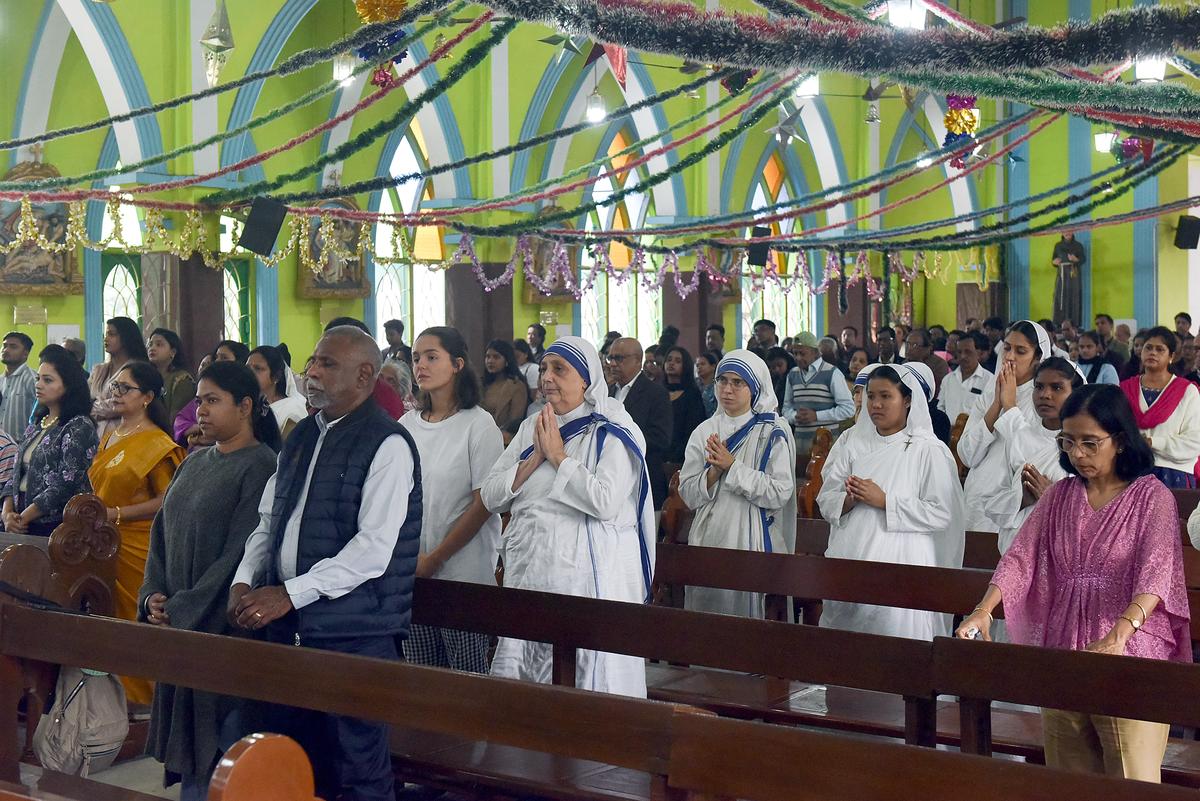
Morning mass at St. Teresa Church on Christmas.

Morning mass at St. Teresa Church on Christmas.
| Photo Credit:
DEBASISH BHADURI

Guy Gomes, 54, feels that December 23 is the best day in the Christmas week to visit Bow Barracks in central Kolkata. Like every year, this year too, Guy found himself at the centre of the quadrangle in the area, guiding hundreds of visitors who thronged the century-old Anglo-Indian hub to soak in the Christmas festivities.

“So many people from around the city, especially the Anglo-Indians who moved away, come here every year for the musical night. The atmosphere is electric,” the travel industry professional says. Guy is one of the few Anglo-Indian residents who continued living at the brick-coloured, three-storey buildings at Bow Barracks, believed to have been a garrison’s mess for the Allied Forces during World War I.

A little north of Kolkata’s central business district, dotted with several colonial buildings, a narrow lane leads to these dilapidated red buildings with green windows. Over the past few years, Bow Barracks has become a prime destination to celebrate Christmas in the city.

Down the 500-metre lane at the festively decorated barracks, white-haired residents chat in circles as visitors enthusiastically photograph each other under glittering Christmas lights. Some groups revel in reuniting with family and community friends, sharing home-made wine.

“Many Anglo-Indians eventually moved out of here to different parts of the city, and many more moved out of the country for better prospects,” Guy says. “But the hype around visiting Bow Barracks during Christmas has only increased in the last decade. The crowd of visitors only gets bigger every year,” he says, smiling.

A day later, on Christmas eve, around 100 people dressed in finery — suits, dresses, ornate saris, and salwar kameezes — pour into St. Francis Xavier’s Church in Bowbazar, a stone’s throw from Bow Barracks. The church stands out in the densely populated neighbourhood in central Kolkata with pink and white columns and can be traced to the late 19th century.

Earlier, the church was the parish for most of the Roman Catholic Anglo-Indians who lived in Bow Barracks. However, as members of the community migrated out of the area and the country, the number of Anglo-Indians attending dwindled massively over the last decade.

The great exodus

Article 366(2) of the Constitution describes “Anglo-Indian” as “a person whose father” or “other male progenitors in the male line” is of European descent, living in India. While India’s last census in 2011 pegged the total number of Anglo-Indians at 296, members of the community believe the figure is a gross understatement.

“It is accepted that there are about 4 lakh Anglo-Indians in India today. That makes it not only a microscopic community when looked at in the context of a national population of 1.4 billion, but also a minority community in the respective States,” writes Barry O’Brien in his 2022 book, The Anglo-Indians: A Portrait of a Community.

Rianne Iona Selwyn relocated from Calcutta to Dubai for work. On December 23, she was among the many performers at the Bow Barracks Christmas Festival. “Every time I visit, the community seems to get smaller and smaller,” she says. “But at the same time, our community has blossomed and expanded beautifully as more and more people opened up to marriage with different communities,” she adds.

Selwyn recalls that when she was younger, she was always encouraged to find a “good Anglo-Indian boy” to marry. “Although like many, I moved abroad for job prospects, I believe one of the reasons most Anglo-Indians move out of the city is because our community can be a little cloistered and clannish,” she says.

John Eldrige, an elderly resident of Bow Barracks, recalls how he had always encouraged his sons to move abroad for better job prospects and quality of life. While his younger son still lives in India, his older son lives in Melbourne, Australia.

“In the 1960s, as a teenager, I had asked my father why we did not migrate back to the U.K. like most other Anglo-Indians. He was born in Sheffield. But he said life in Calcutta is better than anywhere else in the world, even the U.K.,” Eldrige says. He remembers his father fondly, a police officer in Calcutta, who was awarded two President’s medals for his work.

Other institutions like the Calcutta Rangers Club, originally known as the Calcutta Naval Volunteers’ Athletic Club, remind the city of the thriving Anglo-Indian population of some decades ago. “Established in 1896, this is the only exclusively Anglo-Indian club outside the British Isles. Only Anglo-Indian members and their families have voting rights,” Ernest Maxwell Dias, 73, a senior member of the club, says. He points out that emigration has “drastically reduced” club members to about 400-500.

In his book on the community, O’Brien highlights the various stages of the ‘Anglo-Indian exodus’ from India. “The first exodus was when thousands of Anglo-Indians set sail for ‘home’ in the 1940s and 1950s in England fearing the uncertainty and insecurity that comes with fitting into a new country with new rulers,” he writes.

Soon after, a second, equally massive exodus took place in the 1960s and 1970s, when Anglo-Indians in their 30s and 40s emigrated to various parts of the world in the hope of a better life. However, according to O’Brien, from the 1980s to date, the emigration of Anglo-Indians steadily declined but continued, mostly for reasons similar to that of other communities settling abroad.

Educating a community

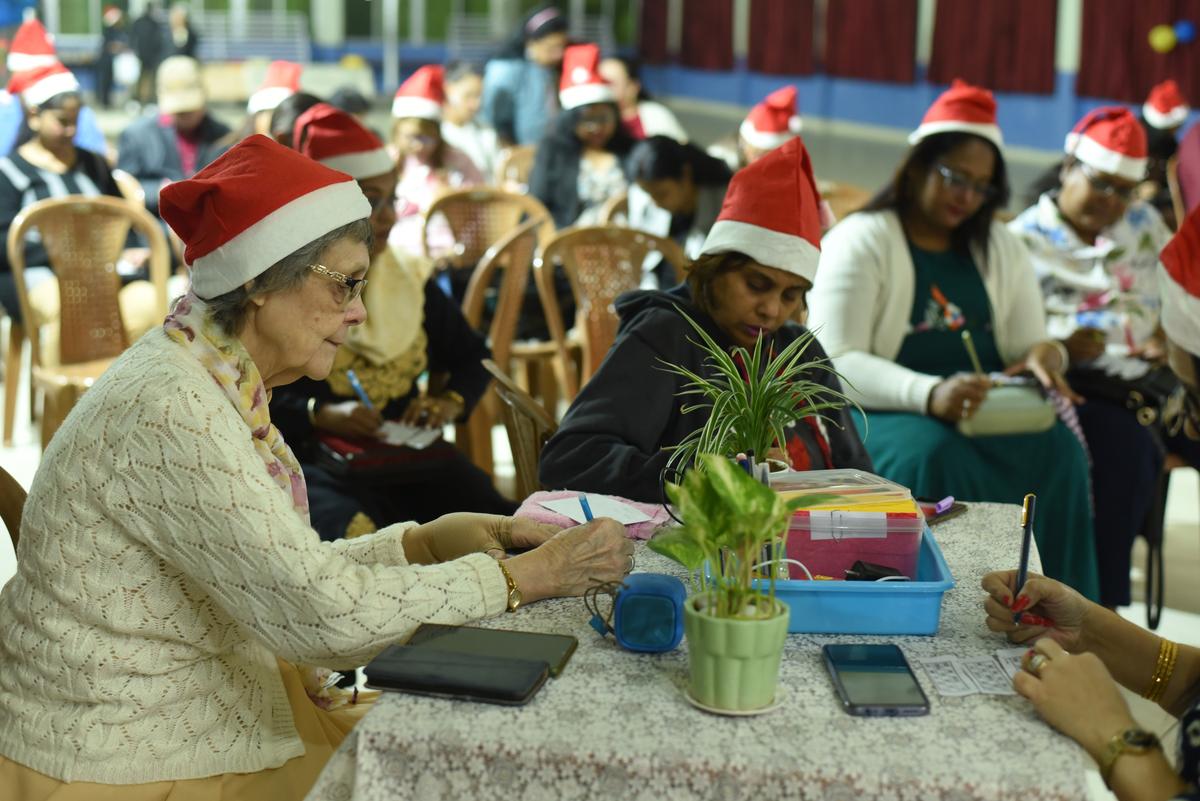
Nearly a fortnight before Christmas this year, festivities had begun at Marian Co-Educational School in Kolkata’s Picnic Garden area. Around 50 middle-aged people of the city’s Anglo-Indian community gathered at the school’s assembly hall in the evening to ring in Christmas with Sister Marisa, the principal and respected member of the community.

“They are my children. I took them in and taught them when they got thrown out of schools for various reasons — if they could not pay the fees, keep up with studies, or did not know Hindi or Maths. The schools discriminated against them. But look at how far they have come,” Sister Marisa says, beaming at her jubilant former students playing the classic Anglo-Indian game of “housie”. ABBA songs played in the background.

Sister Marisa says she was born in Bombay in 1944 and became a nun very early. A close associate of St. Mother Teresa, she recalled how her mission brought her to Kolkata in July 1984 to teach. This was when she decided to start a school for school dropouts, especially Anglo-Indians, who could not complete their education due to economic or social challenges.

“When I briefly came to Calcutta in 1972 to do my BEd, I got a cultural shock. I realised how mistreated and miserable most Anglo-Indians were in this city, especially in the existing schools. I had come from Bombay, where our community did not have these issues,” Sister Marisa says, clad in a beige sari with a scarf around her neck.

Her office reflects the passionate educationist in her — books, school documents, and stationery coexisting with her love for her faith, manifested in the many paintings and sculptures of Jesus in the room.

She recalls coming across “tortured drug addicts, school dropouts, and distraught survivors of broken marriages and families” during her brief tryst with the community in the city. “I remember coming to Ripon Street for Mass and seeing these 30-something Anglo-Indians, as old as I was, sitting on the pavement, pulling the blues, their eyes all coloured,” she says. “That scene left a deep impact on me.”

Between 1985 and 2000, Sister Marisa educated nearly 3,000 school dropouts, mostly the city’s Anglo-Indians, teaching them basic maths, languages, elementary humanities, and the sciences through remedial classes at St. Mary’s School on Ripon Street. Her alumni include a now-retired tram loco pilot, teachers, entertainment professionals, and entrepreneurs.

Music and more

Among the many Anglo-Indian attendees at Sister Marisa’s student reunion was Linda Churm, formerly Thompson, who recalls her days as a musician in iconic cultural hotspots of the city. “I started as a gospel singer, my first love, and still is, at the Assembly of God church. I then progressed to singing pop music. I started at the Great Eastern Hotel, then Trincas for 12 years, and then finally the Oberoi Grand,” she says. “I know most of the Anglo-Indian bands in Kolkata. I sang with a few of them. Some went abroad and some are no longer with us.”

She gleefully adds how these venues would be hosting visitors from around the world between the 60s and 80s. “I met my husband 20 years ago. We said hi and bye for 15 years before that,” Churm says. “I also sang for Princess Anne (of the British royal family), and she danced to a few of my songs at the Oberoi.”

Anglo-Indians, especially in Calcutta, were at the forefront of the city’s cultural landscape, famously shaping its music, theatre, and fashion scene in the post-British era. Many consider the boom in contemporary English music in Calcutta between the 1960s and the 1980s as a contribution of the city’s Anglo-Indian community, which would famously perform rock ‘n’ roll, jazz, and blues in restaurants and bars across Park Street and central Kolkata.

After working so hard for all these years, Churm and her husband Ian now relax by travelling and looking after those less fortunate. “I feel the biggest struggles lie with the elderly members of the Anglo-Indian community. Most of them are lonely since their children migrated,” she says.

Actor and casting director for English-speaking foreigner roles in Tollywood, Mario Edmonds, 53, feels that one of the biggest crises of the current Anglo-Indian community is the gradual fading away of its age-old traditions. “Many of our traditions are in danger, be it culinary, cultural, or sociopolitical. Maybe in the next 10 to 20 years, they might completely die out, unless our youngsters actively hold on to it,” he says.

Like his teacher Sister Marisa, he also mentions the removal of the nomination of MPs and MLAs from the Anglo-Indian community in 2020 as one of the biggest losses the community faced in recent times.

Elvina Carr, 56, a corporate trainer for soft skills, feels the best way Anglo-Indians can help themselves and each other is through employment and financial independence. “Empowerment of any community lies in financial sustainability. Anglo-Indians have so many positive traits, they are fluent in English, enterprising, social, and well-groomed. Connecting them to opportunities and helping them hone their skills is my favourite way of contributing to the community,” she says.

This year, Anglo-Indian entrepreneur based in Kolkata and Elvina’s business partner, Craig Gomes, started AngloNet, a virtual professional and social networking platform for Anglo-Indians across the world.

Craig says untrue and negative stereotypes of Anglo-Indians being hedonistic or exclusionary in their ways have led to the community being distant from others, as well as from the city’s innovation and business circles.

“I think it was a vicious cycle of Anglo-Indians feeling like misfits, and consequently becoming more biased and clannish in their mindset. When I created AngloNet and met more and more Anglo-Indians, I realised even more strongly how vast our community is and how well we can help each other,” Craig says.

“AngloNet also helps Anglo-Indians in need access the support they need,” he says. When an elderly dialysis patient required financial support, members of AngloNet helped raise funds for him and connected him to a subsidised facility.

“A lot of friends and family who got disconnected for multiple decades also found each other on the platform,” Craig says. Elvina says it has even opened matrimonial propositions.

This year, Craig also started The Anglo, a monthly magazine that archives Anglo-Indian history, culture, recipes, and personal life stories of community members. Three digital and physical editions of the magazine have already been circulated worldwide. “My next aim is to bring to life the Global Anglo Business Council, where an advisory board of high-profile Anglo-Indians can create business opportunities for members of the community,” he adds.


Video: Georgia’s new president sworn in as predecessor refuses to step down | Politics

0
Video: Georgia’s new president sworn in as predecessor refuses to step down | Politics


NewsFeed

Mikheil Kavelashvili has been sworn in as Georgia’s new president in parliament, while his pro-EU predecessor Salome Zourabichvili told supporters she remains the legitimate officeholder.


Former soldiers give up their weapons for papers

0
Former soldiers give up their weapons for papers


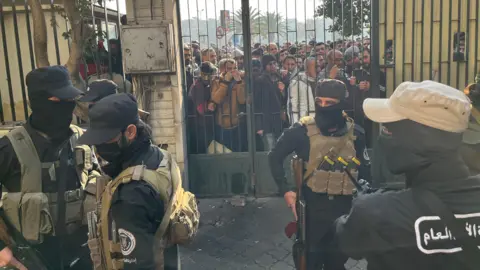
Aamir Peerzada/BBC Armed and masked men stand inside a gate, while a crowd of other men press against the gate.Aamir Peerzada/BBC

This “reconciliation centre” in Damascus is run by rebel group HTS

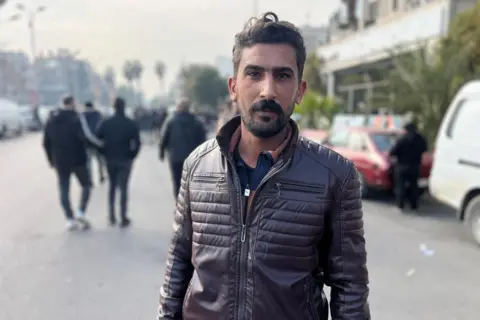
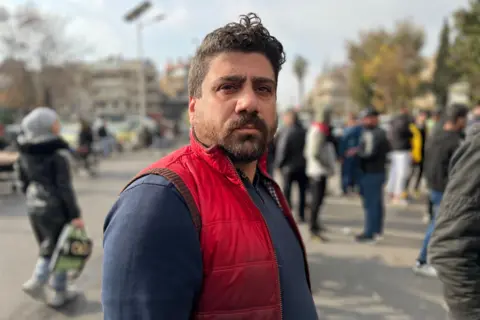
On the night of 6 December, Mohammed el-Nadaf, a soldier in the Syrian army, was at his position in Homs.

As rebels led by Hayat Tahrir al-Sham (HTS) pushed into the city, days after they had seized control of Aleppo and Hama in a lightning offensive, Mohammed decided he didn’t want to fight.

“We had no orders, no information. I took off my uniform, left my weapons, and started to make my way to my village in Tartous,” he said.

At around the same time, Mohammed Ramadan was at a position on the outskirts of the capital, Damascus.

“There was no one to give orders to us. Many of our commanders fled before us. So I thought, why should I die and fight for someone who didn’t even give me enough of a salary to be able to feed my family?

“For our daily rations as soldiers we got just one egg and one potato.”

The next morning, he also left his position and went home.

The testimony of the soldiers provides an insight into the rapid collapse of ousted President Bashar al-Assad’s regime.

For many of his demoralised and poorly paid forces on the ground, the speed at which their defence disintegrated in the face of the rebel offensive did not come as a surprise.

Many soldiers told us they were paid less than $35 (£28) a month and had to do other jobs to get by in a country where that would only cover a fraction of basic living costs.

Aamir Peerzada/BBC Mohammed Ramadan, a man with dark hair wearing a leather jacket.Aamir Peerzada/BBC

Mohammed Ramadan said he was not able to feed his family on his soldier’s salary

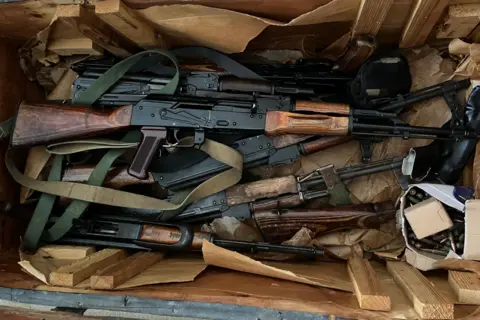
Mohammed Ramadan was clutching the Kalashnikov rifle he’d been previously assigned when we met him and several others in Damascus more than two weeks after the regime fell, at a “reconciliation centre” run by HTS.

At the centre, former military, police and intelligence officers, as well as anyone who was part of pro-Assad militia groups, can register for a temporary civilian identity card and deposit their weapons.

HTS has announced a general amnesty for those who worked for the former regime.

Aamir Peerzada/BBC Guns in a wooden crateAamir Peerzada/BBC

These guns have been handed in as part of an amnesty for Assad’s forces

Waleed Abdrabuh, a member of the group looking after the reconciliation centres in Damascus, said: “The goal is to have the weapons issued by the former regime to be returned to the state. And for the members of the forces to get a civilian ID so that they can be re-integrated into society.”

Under Assad, conscription into the army was mandatory for adult males. Conscripts had to hand in their civilian IDs and were given military IDs instead.

Without a civilian ID it would be hard to get a job or move around freely in the country, which partly explains why tens of thousands have showed up at centres in various cities.

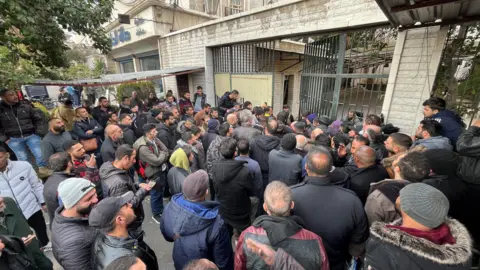
Aamir Peerzada/BBC There were crowds of men outside the reconciliation centre when the BBC visitedAamir Peerzada/BBC

At the centre in Damascus, formerly an office of Assad’s Baath Party, hundreds of men were thronging to the gate, hankering to be let in.

Many of them were keen to distance themselves from the crimes of the regime.

“I didn’t participate in any of their bad deeds. I consider them despicable acts. I did everything to avoid being a part of massacres and crimes against Syrians,” Mohammed al-Nadaf said.

“I even tried to leave the military twice because I knew I was on the wrong side. But it was not possible to escape. The military had all my civilian documents.”

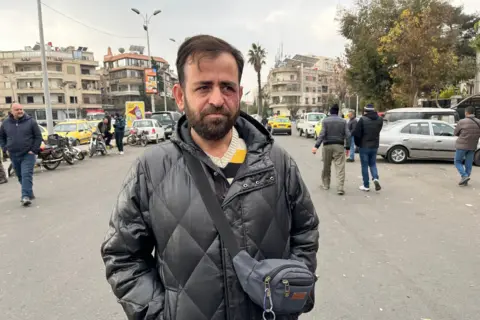
Aamir Peerzada/BBC A man wearing a red gilet is pictured in the streetAamir Peerzada/BBC

Mohammed al-Nadaf wants to regain his civilian documents and says he had wanted to leave the military

Somar al-Hamwi, who served in the military for 24 years, said: “Most people don’t know anything, OK? For me, I don’t know what happened in Saydnaya or any of the prisons.”

The BBC cannot independently verify their claims.

Anger at the regime and Assad’s decision to flee to Russia on 7 December as the rebels approached Damascus was also palpable.

“He [Bashar al-Assad] took a lot of money and ran away. He left all these people, all of us military to our own destiny,” said Somar.

Aamir Peerzada/BBC A man wearing a black padded jacket stands on the street in Damascus.Aamir Peerzada/BBC

Somar al-Hamwi was in the military for 24 years

There were many worried faces among the crowds at the reconciliation centre, but the environment appeared relatively amicable despite the 13-year civil war that left more than half a million people dead.

“Everyone told me it is safe, and to go and make a settlement at the centre. The safety assurance made by HTS has made a big difference,” said Mohammed al-Nadaf.

But from different parts of Syria, reports of suspected revenge attacks involving killing, kidnapping and arson are increasingly coming in. There are no reliable statistics confirming how many attacks have taken place but dozens have been reported on social media.

In the past week, three judges who arbitrated property-related matters in the previously regime-controlled town of Masyaf in north-western Syria – Mounzer Hassan, Mohammed Mahmoud and Youssef Ghanoum – were killed. Sources from the hospital where their bodies were examined have told the BBC they were struck in the head by a sharp object.

We went to Alamerea village to visit the home of Mounzer Hassan. It was bare, cold, and looked like it needed repairs.

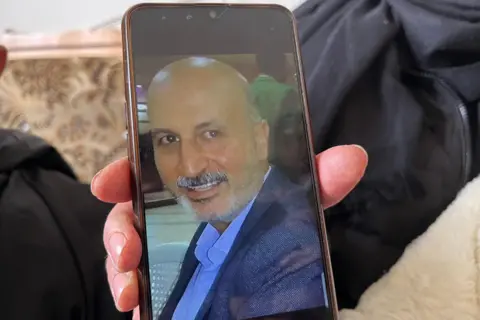
Aamir Peerzada/BBC A photo of a bald man with a moustache is seen on a mobile phone screenAamir Peerzada/BBC

Mounzer Hassan was a judge in civil cases in north-western Syria

Mounzer’s wife, Nadine Abdullah, told us she believed her husband was targeted because he was an Alawite – the minority sect from which the Assad family originates, and to which many of the former regime’s political and military elite belonged.

“Since they were civil, not criminal court judges, I think they were killed simply because they were Alawites. All Alawites did not benefit from Bashar al-Assad. Those who worked for the regime were forced to follow orders, otherwise brutal measures would be imposed on them,” Nadine said.

Mounzer’s brother Nazir said: “This is a crime against an innocent person. It’s unacceptable. Those being killed had no connection to the politics of the regime. They were just working to support their poor families.”

Mounzer was the father of four young children, and was the only wage earner in his family, also looking after his ailing father and brother.

His family said they were speaking out because they want such deaths prevented in future.

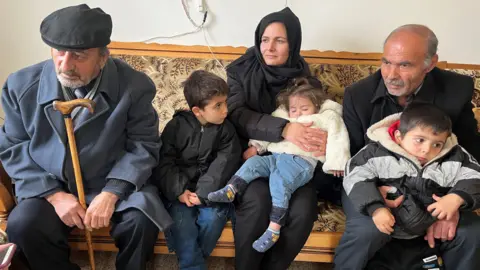
Aamir Peerzada/BBC A woman, three young children and two older men are seen sitting on a bench.Aamir Peerzada/BBC

Mounzer Hassan leaves behind his wife and children, as well as his brother

“Everyone says HTS did not commit the crime. But as the governing authority now, they must find out who did it. They have to ensure protection for all of us,” Nadine said.

HTS’s interim government has condemned the killing of the judges and said it will find the perpetrators. It has also denied being involved in any reprisal killings.

Protests were held in Masyaf following the killing of the judges, and many Alawites have told the BBC they are now worried for their safety.

While HTS has announced an amnesty for Assad’s forces, they have also said those involved in torture and killing will be held to account. That will be a difficult balance to strike.

A few weeks since the fall of the regime, it is a delicate moment for Syria.

Additional reporting by Aamir Peerzada and Sanjay Ganguly.


Singapore declares former tycoon Lim Oon Kuin bankrupt after oil empire collapses

0
Singapore declares former tycoon Lim Oon Kuin bankrupt after oil empire collapses


Dec 29, 2024 02:01 PM IST

Former tycoon Lim Oon Kuin has been declared bankrupt in Singapore, following the collapse of his oil trading empire.

Former tycoon Lim Oon Kuin has been declared bankrupt in Singapore, following the collapse of his oil trading empire.

After his oil trading empire collapsed, former tycoon Lim Oon Kuin was declared bankrupt in Singapore. (Bloomberg)

The name of the founder of Hin Leong Trading Pte. and his children Lim Huey Ching and Lim Chee Meng were listed as having been issued a bankruptcy order on Dec. 19, the government gazette showed. The younger Lims were both directors at the company.

Leow Quek Shiong and Seah Roh Lin of BDO Advisory Pte. Ltd. are the trustees, according to the gazette.

Also read: Bank heist: Committee to oversee return of recovered valuables to owners

At its peak, Hin Leong traded a range of oil products, made lubricants and operated loading terminals and storage facilities. But the downfall of the man widely known as OK Lim came in 2020, as Covid—19 sent oil prices into freefall.

Hin Leong was accused of hiding more than $800 million in losses and leaving more than 20 banks with huge liabilities.

Singapore’s High Court in September approved the Lims’ agreements to pay $3.59 billion to the liquidators of his collapsed firm and creditor HSBC Holdings Plc, ending the civil case against him.

“While I continue to deny the claims made against me in all the civil suits, I did not wish to take up any more of the Court’s time and resources and I therefore offered to all the claimants who sued me that I will consent to judgment without admission to liability,” Lim, 82, said in a emailed statement late Saturday. “I also informed these claimants that I do not have assets to pay all of them and will therefore be applying for bankruptcy.”

Separately, Lim was sentenced in November to jail for cheating HSBC and instigating forgery. Lim filed an appeal, and will not begin to serve his sentence until after the appeal hearing.

Also read: Gurugram: 3 held for attempting to extort ₹50 lakh from businessman

Representatives of BDO didn’t immediately respond to an email seeking comment outside of regular business hours.

Stay updated with the…

See more


High employee attrition of 25 per cent in private banks pose operational risk: RBI Report

0
High employee attrition of 25 per cent in private banks pose operational risk: RBI Report


High employee attrition of 25 per cent in private banks pose operational risk: RBI Report

NEW DELHI: Employee attrition in private sector banks has witnessed an increase to about 25 per cent and this high turnover rate poses significant operational risk, according to the latest Report on Trend and Progress of Banking in India 2023-24. Employee attrition rates are high across select private sector banks and small finance banks (SFBs), the report, which was released by the Reserve Bank of India (RBI) said.
The total number of employees of private banks surpassed that of public sector banks (PSBs) during 2023-24, but their attrition has increased sharply over the last three years, with average attrition rate of around 25 per cent, it said.
“High attrition and employee turnover rate pose significant operational risks, including disruption in customer services, besides leading to loss of institutional knowledge and increased recruitment costs. In various interactions with banks, the Reserve Bank has stressed that reducing attrition is not just a human resource function but a strategic imperative,” it said.
Banks need to implement strategies like improved onboarding processes, providing extensive training and career development opportunities, mentorship programmes, competitive benefits, and a supportive workplace culture to build long-term employee engagement, it said.
In view of several irregularities observed in grant of loans against gold ornaments and jewellery, including top-up loans, the Reserve Bank advised supervised entities to comprehensively review their policies, processes and practices on gold loans to identify gaps and initiate appropriate remedial measures in a time-bound manner.
Supervised entities were advised to closely monitor their gold loan portfolios and ensure adequate controls over outsourced activities and third-party service providers, it said.
The report said climate change risks are envisaged to impact profitability of financial institutions, growth prospects, and inflation dynamics and, thus, impinge upon financial stability and price stability.
To foster assessment of these concerns by regulated entities, regulatory and supervisory frameworks need to be strengthened with enhanced risk management guidelines, disclosure requirements, periodic stress testing, and stipulating reasonable verification and assurance functions, it added.