A debate over what shape hardline immigration policies will take regarding high-skilled work visas has become the first major policy dispute among prominent supporters of United States President-elect Donald Trump – just weeks ahead of the Republican’s new presidential term.
On one side are members of Trump’s so-called “Make America Great Again”, or MAGA movement, who have called for a crackdown on the high-skilled H-1B visas as part of the president-elect’s wider pledge to tighten migration and immigration.
Trump’s campaign pledges particularly focused on the US-Mexico border, although he has floated other restrictions.
In the other camp are prominent Trump supporters – including tech billionaire Elon Musk – who have defended the visas as essential to US industrial and economic growth.
Here’s what to know.
How did this start?
The latest debate sparked when Laura Loomer, a far-right personality who has had close ties to Trump in the past, took to social media to criticise the president-elect’s selection of an adviser on artificial intelligence, who has argued the US needs more foreign skilled workers to remain competitive in the technology industries.
The criticism from Loomer, who has been accused of racism and spreading conspiracy theories in the past, was quickly seized on by several high-profile figures in the tech industry.
That included SpaceX and Tesla CEO Musk, who has been tapped by Trump to lead a government efficiency advisory board.
In response, Loomer accused tech billionaires of influencing Trump for their own gains.
“We have to protect President Trump from the technocrats,” Loomer said in a post on X on December 25.
Who receives H-1B visas?
H-1B visas are typically reserved for specialised foreign workers with a bachelor’s degree or higher who have been offered a temporary job paying an industry-standard wage in the US.
The US authorities can issue 65,000 H-1B new visas a year, with a possible extra 20,000 for people with master’s degrees.
The visas can also be extended upon expiration, with more than 309,000 approved for continuing employment in Fiscal Year 2022, according to US Citizenship and Immigration Services.
About 70 percent of H-1B visa recipients are from India and another 10 percent are from China.
What have Musk and other defenders of H-1B said?
Musk has said that the “number of people who are super talented engineers AND super motivated in the USA is far too low” and has described the H-1B programme as critical “for those who want America to win”.
In a series of posts on X, which he also owns, Musk further pledged to “go to war on this issue”.
Vivek Ramaswamy, a former presidential candidate who has been picked to work alongside Musk on the government efficiency board, has criticised the programme as “badly broken”, but does not support removing them completely, instead saying that the visas should be granted on merit.
Ramaswamy antagonised the hardline anti-immigration faction of Trump’s supporters after he posted on social media on Thursday that tech companies hired immigrants because “American culture has venerated mediocrity over excellence for way too long”.
“A culture that celebrates the prom queen over the math olympiad champ, or the jock over the valedictorian, will not produce the best engineers,” he wrote.
What about Trump?
Trump weighed in on the issue for the first time on Saturday.
He told the New York Post: “I have many H-1B visas on my properties. I’ve been a believer in H-1B.”
“I have used it many times,” he said, referring to his own real estate ventures. “It’s a great programme.”
However, the statements were a departure for the president-elect.
In the past, he has criticised the visas as “very bad” and “unfair” to US workers and his administration sought to increase barriers for applicants during his first term.
Why does this matter?
The back-and-forth underscores a growing fault line between many of the earliest supporters of Trump and those like Musk who only embraced him in the 2024 election campaign. Many of the latter – like Musk – are associated with the tech industry, and are less prone to amplifying nativist rhetoric.
The infighting could inform the next four years of Trump’s presidency, with Musk already warning of a “MAGA civil war” over the issue.
Several of Trump’s most prominent supporters during his first term have joined in, with strategist Steve Bannon condemning “Big Tech oligarchs” who support the visas.
New Delhi: Hindu devotees in India and across the world are eagerly waiting for the once-in-twelve-year Mahakumbh beginning January 13, 2025, in the ancient city of Prayagraj. Over 40 crore people are expected to attend the Mahakumbh which is held once every 12 years. the Uttar Pradesh government is making extensive preparations to ensure that Mahakumbh 2025 in Prayagraj is a grand, safe, and spiritually enriching event.
The Mahakumbh is boosting local trade with a surge in demand for Mahakumbh-themed products like diaries, calendars, jute bags, and stationery. As per a statement from the Ministry of Culture, sales of such items have increased by up to 25 per cent due to meticulous branding.
This 45-day festival, from January 13 to February 26 will showcase India’s rich cultural heritage and spiritual traditions. The host Uttar Pradesh has set up a temporary city-like setup. Mahakumbh Nagar is being transformed into a temporary city with thousands of tents and shelters, including super deluxe accommodations like the IRCTC’s ‘Mahakumbh Gram’ luxury tent city which will offer deluxe tents and villas with modern amenities.
Renovation works of 92 roads and beautification of 17 major roads are nearing completion, as per the government statement. Construction of 30 pontoon bridges is underway; 28 are already operational. A total of 800 multi-language signages (Hindi, English, and other languages) are being installed to guide visitors. Over 400 have been completed, with the rest to be ready by December 31.
Special provisions have been made for international visitors with multilingual signages and cultural programs showcasing India’s diversity. Through these comprehensive efforts, Mahakumbh 2025 aims to be not just a religious gathering but a global celebration of spirituality, culture, safety, sustainability, and modernity.
Over 2,69,000 checkered plates have been laid for pathways. Mobile toilets and robust waste management systems will ensure hygiene. Technology is being used to assist pilgrims. Among others, an AI-powered chatbot, equipped with multi-lingual capability, has been placed to assist pilgrims and visitors. This is an innovative experiment of its kind, with technology at its core. The AI chatbot will answer questions related to Kumbh in various languages.
The AI chatbot is integrated with the ‘Bhasini App’ to give answers in various languages. The Kumbh Mela organiser has also set up a call centre to guide visitors. AI-enabled cameras are also being installed for security and amenities for visitors.
The main bathing festival, known as the “Shahi Snan” (royal baths), will take place on January 14 (Makar Sankranti), January 29 (Mauni Amavasya), and February 3 (Basant Panchami) when the attendees’ number is likely to be highest.
Uttar Pradesh Chief Minister Yogi Adityanath took stock of the preparations recently. He toured the under-construction tent city. He emphasised the importance of making arrangements for food and other things on time considering the cold weather.
The Chief Minister also highlighted that separate wards for men and women are being set up and that shift duties for personnel should be strictly followed. Additionally, he instructed that ambulance response times be minimised during emergencies.
Former US President and Nobel Peace Prize recipient Jimmy Carter has died at the age of 100, the Atlanta Journal-Constitution reports
Defeated Ford in 1976, lost heavily to Reagan in 1980
,
Egypt-Israel peace was the supreme diplomatic achievement
,
The Iran hostage crisis ended the last 444 days of his presidency.
,
In 1979, he lamented America’s ‘crisis of confidence’
,
Won the 2002 Nobel Peace Prize for his peacekeeping work.
by Will Dunham
Washington, 2024 – Jimmy Carter, the honest Georgia peanut farmer who struggled with the poor economy and the Iran hostage crisis as U.S. president, but brokered peace between Israel and Egypt and later won the Nobel Peace Prize for his humanitarian work. Received, he has passed away. The Atlanta Journal-Constitution reported Sunday. He was 100 years old.
A Democrat, he served as President from January 1977 to January 1981, after defeating incumbent Republican President Gerald Ford in the 1976 U.S. election. Four years later, Carter was removed from office in an electoral landslide as voters embraced Republican challenger Ronald Reagan, a former actor and governor of California.
Carter lived longer after his term than any other American president. During this time, he earned a reputation as a better former president than a president – a position he readily accepted.
His one-term presidency was marked by the highs of the 1978 Camp David Accords between Israel and Egypt, which brought some stability to the Middle East. But it was a struggling economy, persistent unpopularity and the embarrassment of the Iran hostage crisis that doomed his final 444 days in office.
In recent years, Carter had experienced several health problems, including melanoma that spread to his liver and brain. Carter decided to receive hospice care in February 2023 rather than additional medical intervention. His wife Rosalynn Carter died on November 19, 2023, at the age of 96. He looked frail as he attended his memorial service and funeral in a wheelchair.
Carter left office with extreme unpopularity but worked energetically for decades on humanitarian causes. He was awarded the Nobel Peace Prize in 2002 for his “tireless efforts to find peaceful solutions to international conflicts, advance democracy and human rights, and promote economic and social development.”
When Carter entered the White House as the 39th US President, he was a centrist with populist tendencies as the Governor of Georgia. He was a Washington outsider at a time when America was still reeling from the Watergate scandal that led to Republican Richard Nixon’s resignation from the presidency in 1974 and Ford’s promotion to Vice President.
“I’m Jimmy Carter and I’m running for president. I would never lie to you,” Carter promised with a smile from ear to ear.
Asked to assess his presidency, Carter said in a 1991 documentary: “Our greatest failure was political failure. I was never able to convince the American people that I was a forceful and strong leader. ”
Despite his difficulties in office, Carter had few rivals for accomplishments as a former president. She won global praise as a tireless human rights advocate, a voice for the disenfranchised, and a leader in the fight against hunger and poverty, and earned the respect that eluded her in the White House.
Carter won the Nobel Peace Prize in 2002 for his efforts to promote human rights and resolve conflicts around the world, from Ethiopia and Eritrea to Bosnia and Haiti. His Carter Center in Atlanta sent international election-monitoring delegations to elections around the world.
A Southern Baptist Sunday school teacher since his teens, Carter brought a strong sense of morality to the presidency, while speaking openly about his religious faith. He also tried to take some of the pomp out of his increasingly royal presidency, such as walking instead of riding in a limousine in his 1977 inauguration parade.
The center point of Carter’s foreign policy was the Middle East. The 1979 Egypt–Israel Peace Treaty, based on the 1978 Camp David Accords, ended the state of war between the two neighbors.
Carter brought Egyptian President Anwar Sadat and Israeli Prime Minister Menachem Begin to the Camp David presidential retreat in Maryland for talks. Later, as the agreements began to unravel, Carter saved the day by flying to Cairo and Jerusalem for personal shuttle diplomacy.
The treaty provided for Israel’s withdrawal from Egypt’s Sinai Peninsula and the establishment of diplomatic relations. Begin and Sadat both won the Nobel Peace Prize in 1978.
By the 1980 election, the major issues were double-digit inflation, interest rates over 20% and rising gas prices, as well as the Iran hostage crisis which embarrassed the US. These issues plagued Carter’s presidency and diminished his chances of winning a second term.
hostage crisis
On November 4, 1979, revolutionaries devoted to Iran’s Ayatollah Ruhollah Khomeini attacked the U.S. Embassy in Tehran, seizing the Americans stationed there and demanding the return of deposed King Mohammad Reza Pahlavi, who had been imprisoned by the United States. He was receiving medical support and was being treated. An American hospital.
The American public initially rallied behind Carter. But his support faded in April 1980 when a commando raid failed to rescue hostages, when a plane crash in the Iranian desert killed eight American soldiers.
Carter’s ultimate infamy was that Iran held 52 hostages until minutes after Reagan took the oath of office to replace Carter on January 20, 1981, then released the planes carrying them to free them. Gave.
In another crisis, Carter protested the former Soviet Union’s 1979 invasion of Afghanistan by boycotting the 1980 Olympics in Moscow. He also asked the US Senate to postpone consideration of a major nuclear arms deal with Moscow.
Undeterred, the Soviets remained in Afghanistan for a decade.
Carter won Senate approval in 1978 of a treaty transferring control of the Panama Canal to Panama, despite critics arguing that the waterway was vital to U.S. security. He also completed negotiations on full US relations with China.
Carter created two new US Cabinet departments – Education and Energy. Amid high gas prices, he said America’s “energy crisis” was the “moral equivalent of war” and urged the country to embrace conservation. “Our country is the most dysfunctional country on earth,” he told Americans in 1977.
In 1979, Carter gave what would later become known as his “malignant” speech to the nation, although he never used that term.
“Listening to the American people, I am reminded again that all the laws in the world cannot fix what is wrong with America,” he said in a televised address.
“The threat is almost invisible in normal ways. It is a crisis of confidence. It is a crisis that attacks the heart, soul and spirit of our national will. The erosion of our confidence in the future threatens social destruction and America’s political warp weft.”
As president, the straight-laced Carter was embarrassed by the behavior of his hard-drinking younger brother, Billy Carter, who claimed: “I’ve got red necks, white socks and Blue Ribbon beer.”
‘There you go again’
Jimmy Carter fended off a challenge from Massachusetts Senator Edward Kennedy for the 1980 Democratic presidential nomination, but came up short politically in the general election battle against a strong Republican opponent.
The conservative Reagan, who projected an image of strength, kept Carter off balance during their debates before the November 1980 election.
When the Republican challenger felt the President had misrepresented Reagan’s views during a debate, Reagan dismissed Carter, saying, “There you go again.”
Carter lost the 1980 election to Reagan, who won 44 of the 50 states and an overwhelming majority in the Electoral College.
James Earl Carter Jr. was born on October 1, 1924 in Plains, Georgia, one of four children of a farmer and a shopkeeper. He graduated from the U.S. Naval Academy in 1946, served in the nuclear submarine program and left to manage the family peanut farming business.
He married his wife Rosalyn in 1946, a union he called “the most important thing in my life.” He had three sons and a daughter.
Carter became a millionaire, a Georgia state legislator, and Governor of Georgia from 1971 to 1975. He made a weak bid for the 1976 Democratic presidential nomination, and bested his rivals for the right to face Ford in the general election.
As Walter Mondale’s vice presidential nominee, Carter got a boost from a major mistake Ford made during one of their debates. Ford stated that despite decades of such dominance, “there is no Soviet dominance in Eastern Europe and there never will be under a Ford administration.”
Carter outpolled Ford in the election, even though Ford actually won more states – 27 to Carter’s 23.
Not all of Carter’s work after his presidency was appreciated. Former President George W. Bush and his father, former President George H.W. Bush, both Republicans, were said to be unhappy with Carter’s independent diplomacy in Iraq and elsewhere.
In 2004, Carter described the Iraq War, started by the young Bush in 2003, as one of “the most serious and damaging mistakes our country has ever made.” He called the administration of George W. Bush “the worst in history” and said Vice President Dick Cheney “was a disaster for our country.”
In 2019, Carter questioned the legitimacy of Republican Donald Trump as president, saying, “He was put in office because the Russians interfered on his behalf.” Trump responded by calling Carter “a terrible president.”
Carter also visited communist North Korea. The 1994 visit defused the nuclear crisis, as President Kim Il Sung agreed to halt his nuclear program in exchange for resumed negotiations with the United States. This led to an agreement in which North Korea promised not to restart its nuclear reactor or reprocess the plant’s spent fuel in exchange for aid.
But Carter upset the administration of Democratic President Bill Clinton by announcing the deal with North Korea’s leader without checking with Washington first.
In 2010, Carter won the release of an American sentenced to eight years of hard labor for illegally entering North Korea.
Carter wrote more than two dozen books, ranging from presidential memoirs to children’s books and poetry, as well as works about religious faith and diplomacy. His book “Faith: A Journey for All” was published in 2018.
This article was generated from an automated news agency feed without any modifications to the text.
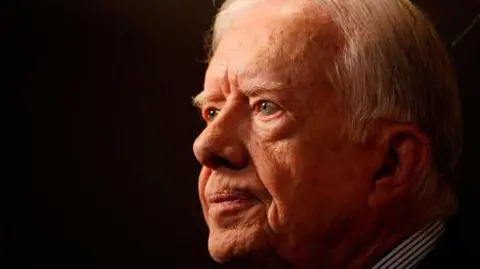
Former US President Jimmy Carter has died aged 100, the centre he founded has confirmed.
The former peanut farmer lived longer than any president in history and celebrated his 100th birthday in October.
The Carter Center, which advocates for democracy and human rights around the world, said he died on Sunday afternoon at his home in Plains, Georgia.
The Democrat served as president from 1977 to 1981, a period beset by economic and diplomatic crises.
After leaving the White House with low approval ratings, his reputation was restored through humanitarian work which earned him the Nobel Peace Prize.
“My father was a hero, not only to me but to everyone who believes in peace, human rights, and unselfish love,” his son, Chip Carter, said in a statement.
“The world is our family because of the way he brought people together, and we thank you for honouring his memory by continuing to live these shared beliefs.”
Carter is survived by his four children, 11 grandchildren and 14 great-grandchildren.
His wife, Rosalynn, who he was married to for 77 years, died in November 2023.
This breaking news story is being updated and more details will be published shortly. Please refresh the page for the fullest version.
You can receive Breaking News on a smartphone or tablet via the BBC News App. You can also follow @BBCBreaking on X to get the latest alerts.
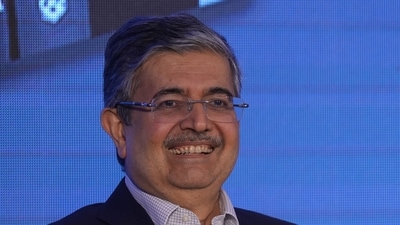
As the curtains come down to the calendar year 2024, Uday Kotak, Founder and Director of Kotak Mahindra Bank, has listed ten-point priority areas for the overall growth of the Indian economy in the year that knocks our doors.
Founder of Kotak Mahindra Bank, Uday Kotak. took to social media platform X to talk about the growth of the Indian economy(PTI)
Taking to X, in his first point, Uday Kotak suggested that India must prioritise economic growth.
“Go for growth. Let’s get enterprise and animal spirits firing,” the veteran banker wrote on his X timeline on Sunday.
The Indian economy grew by 5.4 per cent in real terms in the July-September quarter of the current financial year 2024-25. The quarterly growth was quite lower than RBI’s forecast of 7 per cent. In the April-June quarter too, India’s GDP grew at a slower pace than was estimated by its central bank. Urban consumption had reportedly witnessed a slowdown as persistent inflation dampened the purchasing power of the urban poor.
The veteran banker was also vocal against protectionism.
“Shun protectionism,” he wrote on X, arguing that protectionism may benefit in the short term but in the long term it makes the country’s economy uncompetitive.
Protectionism typically refers to government policies that restrict imports to help domestic industries
Further, as part of his year-end musings, Uday Kotak said India needs a plan to eliminate the current account deficit in a reasonable time.
He also called for increased investment in defence. “Power is power. Safety is prerequisite for prosperity,” wrote Uday Kotak.
India is investing heavily in defence and aerospace manufacturing, with defence hubs being set up.
India’s defence exports have touched a record ₹21,083 crore (about USD 2.63 billion) in the financial year 2023-24, with a growth of 32.5 per cent over the last fiscal when the figure was ₹15,920 crore. The recent figures indicate that the defence exports have grown by 31 times in the last 10 years as compared to 2013-14.
Further, Uday Kotak also called for continued fiscal consolidation.
The government intends to bring the fiscal deficit below 4.5 per cent of GDP by the financial year 2025-26.
Presenting the Union Budget for 2024-25, Union Finance Minister Nirmala Sitharaman on Tuesday pegged the fiscal deficit target at 4.9 per cent of gross domestic product (GDP).
In the Interim Budget tabled on February 1, she pegged it at 5.1 per cent of GDP.
In 2023-24, the government pegged the fiscal deficit target for 2023-24 at 5.9 per cent of gross domestic product (GDP). Later, the fiscal deficit for 2023-24 was downwardly revised to 5.8 per cent. The difference between total revenue and total expenditure of the government is termed the fiscal deficit.
In another suggestion, he noted that India must avoid over-regulation and micro-management across sectors.
He was also for free and fair markets. He said intervention must be made only if there is evidence of “bubbles or manipulation”.
In his last point, he called for less polluted Indian cities. “We must get out of having amongst the most polluted cities in the world. Let us walk the talk,” Uday Kotak noted.
Head of one of northern Gaza’s last partially functioning hospitals arrested as Israeli military raids the facility and forces out dozens of doctors and patients.
Concerns are rising about the safety of the director of one of the last partially functioning hospitals in northern Gaza after the Israeli military detained him.
Hussam Abu Safia, 51, was arrested by Israeli forces during their raid on Kamal Adwan Hospital in Beit Lahiya on Friday. It is not known where he has been taken.
The World Health Organization said it lost contact with Abu Safia after the raid, which also saw the Israeli military force out dozens of medical staff and patients.
The director general of the Ministry of Health in Gaza, Munir al-Barsh, said Abu Safia was severely beaten with batons and sticks by Israeli forces, who forced him to strip and put on clothes meant for prisoners.
It was the second time in as many months that Abu Safia had been detained by Israeli forces as they conduct their genocide in Gaza.
Here’s what you need to know about him:
Abu Safia, a paediatrician by training, is a prominent figure in Gaza’s healthcare system. He holds a master’s degree and a Palestinian board certification in paediatrics and neonatology.
Also known by his nickname Abu Elias, Abu Safia was born on November 21, 1973, in the Jabalia refugee camp in the northern Gaza Strip. His family was displaced in 1948 from the Palestinian town of Hamama in the Ashkelon district.
Abu Safia refused multiple Israeli orders to leave Kamal Adwan Hospital after the Israeli military imposed a devastating blockade on the northern Gaza Strip on October 5. The siege saw Israel cut off supplies of food and water to the Palestinians in the area while launching air strikes and conducting shelling, killing hundreds of civilians.
The siege also has had a devastating impact on the region’s hospitals. Abu Safia was briefly arrested and then released when Israeli forces stormed the facility in late October and detained 44 of its staff members, leaving him and a handful of medical workers to care for dozens of wounded people.
During the same operation, Israeli forces killed Abu Safia’s son Ibrahim in a drone strike at the gate of the hospital. The doctor led the funeral prayers for his son in the hospital’s courtyard as he accused the Israeli military of killing his son to punish him for refusing to leave the hospital.
In spite of the siege, the medical team, which included a few doctors such as Abu Safia and a small group of nurses, remained at the hospital, refusing repeated orders from the Israeli military to leave.
By staying put in the hospital, Abu Safia had kept the world informed of Israel’s near-daily attacks, issuing video statements and pleading for international intervention to end the attacks.
He was wounded by shrapnel from an Israeli drone attack on the hospital on November 23 while he was exiting the operating room. He sustained six shrapnel wounds to his thigh, which caused ruptures in his veins and arteries. But he pleaded to continue his work.
“This will not stop us,” he said. “I was injured at my workplace, and that is an honour. My blood is no more precious than that of my colleagues or the people we serve. I will return to my patients as soon as I recover.”
NEW DELHI: Macroeconomic data announcements, trading activity of foreign investors and global trends will guide equity market movement this week, which would also mark the beginning of the new calendar year and month, analysts said. Movement of rupee, which registered the steepest fall in almost two years to hit its lifetime intra-day low on Friday, will also be tracked by investors. “Persistent FIIs (Foreign Institutional Investors) selling has been a source of pressure on Indian markets, and their stance in the new year could shape near-term trends. Meanwhile, monthly auto sales data will also be closely watched. As the Q3 earnings season approaches, corporate quarterly updates will begin trickling in, setting the stage for market expectations,” Santosh Meena, Head of Research, Swastika Investmart Ltd, said. On the international front, key economic indicators like manufacturing PMI data from China and the US, along with US jobless claims, will play a crucial role, Meena said. However, the dollar index and US bond yields remain the most critical factors influencing the direction of global markets, he added. Auto stocks will also remain in the limelight this week amid monthly sales data announcement. “As we step into the new calendar year and month, auto sales data will be closely monitored for initial market cues. In the absence of any significant events, attention is likely to shift toward FII flows and currency movement, especially as the rupee continues to weaken against the US dollar. These factors could play a crucial role in shaping market direction in the near term,” Ajit Mishra — SVP, Research, Religare Broking Ltd, said. Last week, the BSE benchmark climbed 657.48 points, or 0.84 per cent, and the Nifty went up 225.9 points, or 0.95 per cent. Vinod Nair, Head of Research, Geojit Financial Services, said, “Looking ahead, significant market attention is expected for the upcoming Q3 results, which will play a crucial role in shaping market trajectory. Investors are likely to align their portfolios based on pre-Budget expectations. “Additionally, key data points such as the PMI data for India, the US, and China, as well as US jobless claims, will influence investor sentiment.” The past week was marked by consolidation with bouts of intra-day volatility, an analyst said, adding that FIIs exhibited thin volumes due to the Christmas and New Year holidays, continuing as net sellers. “The outlook for the market will be guided by major domestic and global economic data such as India’s infrastructure output, manufacturing PMI of India, UK S&P global manufacturing PMI, US initial jobless claims,” Puneet Singhania, Director at Master Trust Group, said. “With no significant triggers in the near term, markets are likely to remain range-bound,” Siddhartha Khemka, Head — Research, Wealth Management, Motilal Oswal Financial Services Ltd — said.
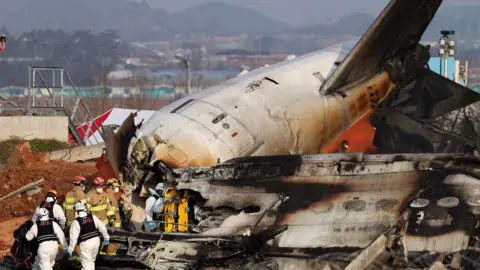
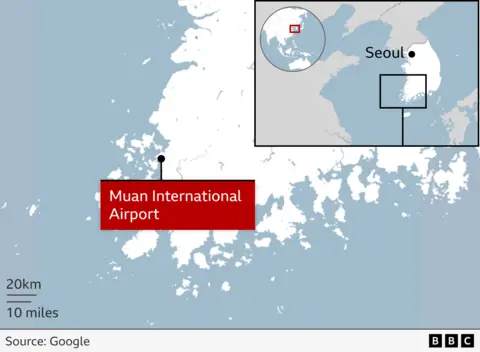
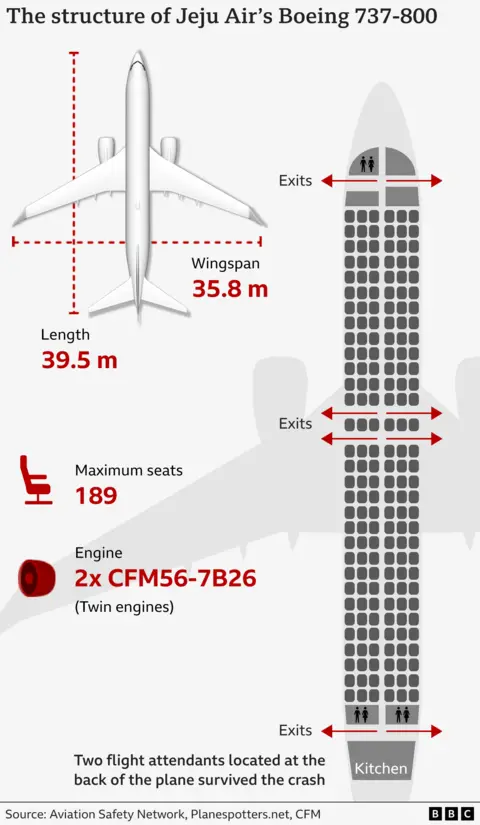
The Jeju Air plane came off the runway before colliding with a wall at Muan International Airport in the south west of the country.
The plane, which was returning from Bangkok, in Thailand, was carrying 181 people – 179 of whom have died, while two crew members were rescued from the wreckage.
Authorities are investigating the cause of the crash, which fire officials have indicated may have occurred due to a bird strike and bad weather. However experts have warned the crash could have been caused by a number of factors.
Was bird strike a factor in the crash?
Getty Images
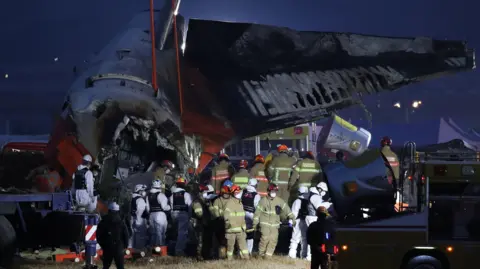
A fire chief said the tail was identifiable but “one cannot recognise the shape of the rest of the plane”
The flight, 7C2216, was a Boeing 737-800 operated by Jeju Air, Korea’s most popular budget airline.
The plane arrived in Muan at about 09:00 local time (00:00 GMT).
A South Korean transport official said that the plane had been attempting to land but was forced to hold off after air traffic control gave a bird strike warning – an alert about the risk of a collision with birds.
About two minutes later, the pilot called in a Mayday and air traffic command gave permission for the plane to land from the opposite direction, the official said.
One video appears to show the plane touching down without using its wheels or any other landing gear. It skidded down the runway and crashed into a wall before erupting into flames.
A witness told the South Korean news agency Yonhap that they heard a “loud bang” followed by a “series of explosions”.
Videos from the scene show the plane ablaze with smoke billowing into the sky. Fire crews have since extinguished the fire.
BBC reports from site of South Korea’s deadliest plane crash
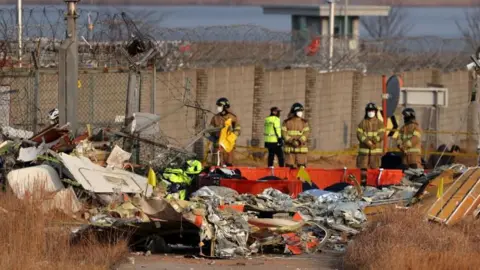
Lee Jeong-hyun, the chief of the Muan fire department, told a televised briefing that the tail section of the plane was identifiable but “one cannot recognise the shape of the rest of the plane”.
He said that the bird strike and bad weather may have caused the crash – but that the exact cause is still being investigated. The flight and voice recorders from the plane have been recovered, though the Yonhap news agency reported that the former was damaged
One passenger on the flight messaged a relative, saying that a bird “was stuck in the wing” and that the plane could not land, local media reported.
Officials, however, have not confirmed whether the plane did actually collide with any birds.
The head of Jeju Air’s management said that the crash was not due to “any maintenance issues”, Yonhap reported.
The South Korean transport department said that the head pilot on the flight had held the role since 2019 and had more than 6,800 hours of flight experience.
Geoffrey Thomas, an aviation expert and editor of Airline News, told the BBC that South Korea and its airlines were considered “industry best practice” and that both the aircraft and the airline have an “excellent safety record”.
He added: “A lot of things about this tragedy don’t make sense.”
EPA
The crash is the deadliest in South Korean history
What is a bird strike?
A bird strike is a collision between a plane in flight and a bird. They are very common – in the UK, there were more than 1,400 bird strikes reported in 2022, only about 100 of which affected the plane, according to data from the Civil Aviation Authority.
Professor Doug Drury, who teaches aviation at CQUniversity Australia, wrote in an article for The Conversation this summer that Boeing planes have turbofan engines, which can be severely damaged in a bird strike.
He said that pilots are trained to be especially vigilant during the early morning or at sunset, when birds are most active.
But some aviation experts are sceptical about whether a bird strike could have caused the crash at Muan Airport.
“Typically they [bird strike] don’t cause the loss of an airplane by themselves,” Mr Thomas told Reuters.
Australian airline safety expert Geoffrey Dell also told the news agency: “I’ve never seen a bird strike prevent the landing gear from being extended.”
Who was on board?
The plane was carrying 175 passengers and six crew. Two of the passengers were Thai and the rest are believed to have been South Korean, authorities have said. Many are thought to have been returning from a Christmas holiday in Thailand.
The official death toll stands at 179 – making it the deadliest plane crash in South Korean history.
All the passengers and four members of crew died.
Authorities have so far identified at least 88 bodies.
Five of the people who died were children under the age of 10. The youngest passenger was a three-year-old boy and the oldest was 78, authorities said, citing the passenger manifest.
South Korea’s National Fire Agency said two members of flight crew – a man and a woman – survived the crash. They were found in the tail side of the aircraft after the crash and taken to hospital, it said.
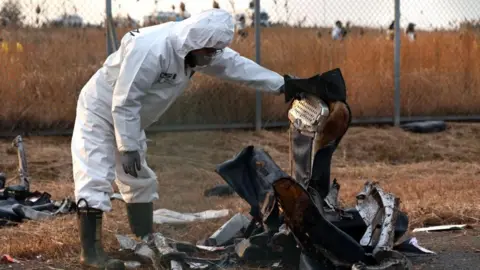
More than 1,500 emergency personnel have been deployed as part of recovery efforts, including 490 fire employees and 455 police officers. They have been searching the area around the runway for parts of the plane and those who were onboard.
EPA
Emergency workers have been searching around the runway for parts of the plane
What’s been the response?
Acting President Choi Sang-mok has declared a special disaster zone in Muan, which makes central government funding available to the local government and victims.
All flights to and from Muan International Airport have been cancelled.
Families of the victims of the crash have been travelling to the airport in the hope of finding out what happened to their relatives. Video footage from Reuters shows officials reading names of the victims out loud.
Getty Images
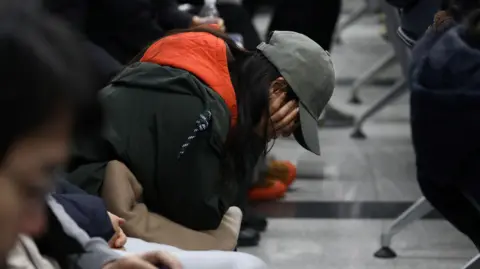
Relatives have been gathering at the airport
Airport authorities and the Red Cross have set up more than a dozen tents in the airport for bereaved families to grieve in private.
Sounds of crying echoed through the terminal. Some are frustrated at how long it is taking to identify the bodies.
Jeju Air has apologised to families. Its chief executive said in a news conference that the airline had no history of accidents. It is believed that Sunday’s crash has been the only fatal accident since the airline was launched in 2005.
Plane manufacturer Boeing has offered condolences to those affected.
Choi, South Korea’s acting president, said: “I express my deepest condolences to the many victims in the incident. I will do all I can for the injured to quickly recover.”
The government has declared a period of national mourning for the country for the next seven days, during which flags at government offices will be lowered.
BEIJING: China on Sunday unveiled an updated model of its high-speed bullet train which its manufacturer claims reached speeds of 450 kmph during the test runs, making it the world’s fastest high-speed train. According to the China State Railway Group Co (China Railway), the new model, known as the CR450 prototype, will further shorten travel time and improve connectivity, making travel more convenient and efficient for the country’s vast passengers.
The CR450 prototype reached a test speed of 450 kmph, with key performance indicators — operational speed, energy consumption, interior noise, and braking distance — setting a new international benchmark, official media here reported. It is significantly faster than the CR400 Fuxing high-speed rail (HSR) currently in service, which operates at speeds of 350 kmph, a report by state-run Xinhua said.
A prototype of the CR450 bullet train that will run at 400 kilometers per hour debuted in Beijing on Sunday. Check out how fast it can go! pic.twitter.com/TASiO7ZVfC
— China Xinhua News (@XHNews) December 29, 2024
China Railway will arrange a series of line tests for the prototypes and optimise technical indicators to ensure the CR450 enters commercial service as soon as possible, it said. According to the latest official figures, China’s operational HSR tracks have reached about 47,000 kms, connecting major cities in the country.
Though not profitable, China says the HSR network expansion has played a crucial role in the nation’s economic and social development, reducing travel times and boosting industrial development along railway routes.
According to internal surveys, the Beijing-Shanghai train service was the most profitable, while the networks in other cities have yet to turn lucrative.
In recent years, China’s HSR exported its network in Thailand and Indonesia, and built the Belgrade-Novi Sad HSR in Serbia.
A 20-day-old baby in Gaza has died from severe cold, the fifth such fatality from hypothermia in six days in the Israeli-besieged Palestinian enclave.
Jumaa al-Batran died on Sunday while his twin brother, Ali, remains in intensive care at Al-Aqsa Martyrs Hospital, Gaza’s Ministry of Health said in a statement.
Jumaa’s father, Yahya al-Batran, said his son was found with his head as “cold as ice” when he woke up on Sunday.
He said the twins were born one month prematurely and spent just a day in the nursery at the hospital in Deir el-Balah, which like other health centres in Gaza has been overwhelmed and is only partially functioning due to relentless Israeli bombings.
Ali al-Batran, a 20-day-old infant, lies in the intensive care unit with hypothermia at Al-Aqsa Martyrs Hospital in Deir el-Balah, central Gaza [Abdel Kareem Hana/AP]
He said doctors told their mother to keep the newborns warm but it was impossible because they live in a tent and temperatures regularly drop below 10 degrees Celsius (50 degrees Fahrenheit) at night.
“We are eight people, and we only have four blankets,” al-Batran said as he cradled his son’s pale body. He described drops of dew seeping through the tent cover overnight.
“Look at his colour because of the cold. Do you see how frozen he is?” said al-Batran, whose family has sought shelter inside a tattered tent in the city of Deir el-Balah in central Gaza.
“There is no electricity. The water is cold, and there is no gas, heating or food. … My children are dying in front of my eyes, and nobody cares. Jumaa has died, and I fear his brother Ali may follow.”
Children, some of them barefoot, stood outdoors and watched Yahya mourn. The shrouded infant was laid at the feet of an imam, barely larger than his shoes. After prayers, the imam took off his ankle-length coat and wrapped it around the father.
Imam Islam Abu Suaied prays over the bodies of Jumaa and another baby who died at birth at Al-Aqsa Martyrs Hospital in Deir el-Balah [Abdel Kareem Hana/AP]
Al Jazeera’s Hind Khoudary said the area where the al-Batran family was sheltering is “very close to the sea and very windy”.
“There are no tarps or tents, and Jumaa’s father was unable to give his children basic necessities,” she said. “Not only are Palestinian babies and children dying from air attacks and artillery but also from malnutrition and hypothermia.”
Israeli forces have displaced nearly the entire 2.3 million residents of Gaza, forcing tens of thousands of them to huddle in unsuitable tents along the rainy, windswept coast in southern Gaza.
Three of the five Palestinian babies who froze to death in less than a week lived in the “humanitarian zone” in al-Mawasi.
Marwan al-Hamas, head of field hospitals in Gaza, confirmed Jumaa’s death, saying it brought to five the number of children “who have died due to severe cold” in recent days.
(Al Jazeera)
Ahmed Alfarra, a doctor at Al Tahreer Maternity Hospital in Khan Younis, said he sees an average of five to six cases of hypothermia among babies every day.
“I visited the tents where these infants are living, and I saw the condition. It is miserable,” Alfaraa told Al Jazeera.
Since the war began in October last year, Gaza’s residents have endured severe shortages of electricity, drinking water, food and medical services as they have been forced out of their homes and displaced – many repeatedly.
The Israeli genocide in Gaza has killed at least 45,484 Palestinians and wounded 108,090. At least 1,139 people were killed in Israel during Hamas-led attacks on October 7, 2023, and more than 200 were taken captive.