Wednesday, September 30, 2026
Home Blog Page 7000

Manmohan Singh: The astute economic thinker who left behind a lasting legacy. latest news india

0
Manmohan Singh: The astute economic thinker who left behind a lasting legacy. latest news india


What is the economic legacy of Manmohan Singh in India? Both the Left and the Right would like to remember him as the man who brought economic reforms and privatization to a state-dominated license-quota raj economy.
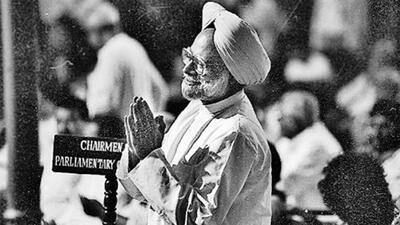
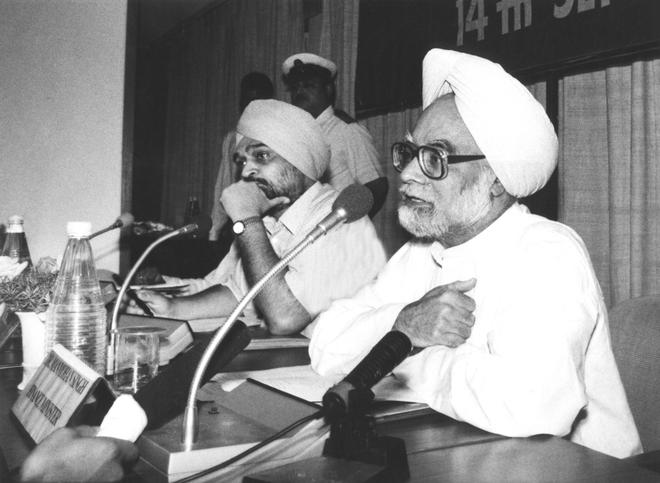
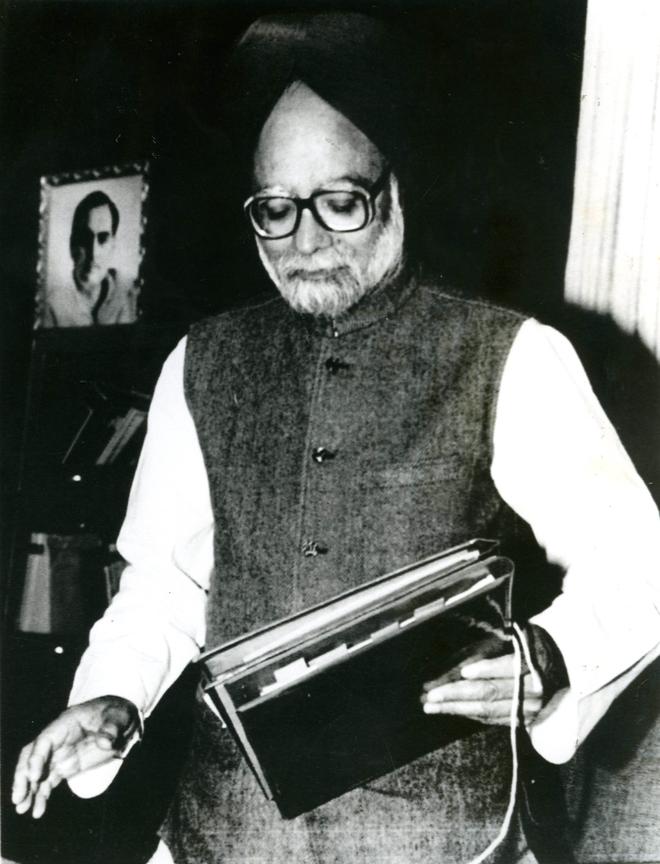
Manmohan Singh on July 22, 1997 (HT file photo)

Singh himself would have preferred to be different. “What is the future of capitalism, especially in India?” Singh was asked in a 2009 Financial Times interview. His answer must have disappointed the market fundamentalists. “Capitalism with a human face. We are a mixed economy. We will remain a mixed economy. The public and private sectors will continue to play a very important role,” he replied.

Certainly, Singh’s ideas about a mixed economy were completely different from what his party, the Congress, tried to achieve when India gained independence.

The South Commission Report published in 1990 (Singh was the Secretary General of the Commission) provides some insight into Singh’s views on misplaced romanticism over state-led development strategies in the Third World.

The report states, “In many countries, the state has underachieved because it has tried to do too much, too soon… In such situations, the withdrawal of the state from some activities may lead to its failure as an instrument of development.” “Can increase effectiveness.” Said.

Also read: How did Manmohan Singh’s economic reforms change India?

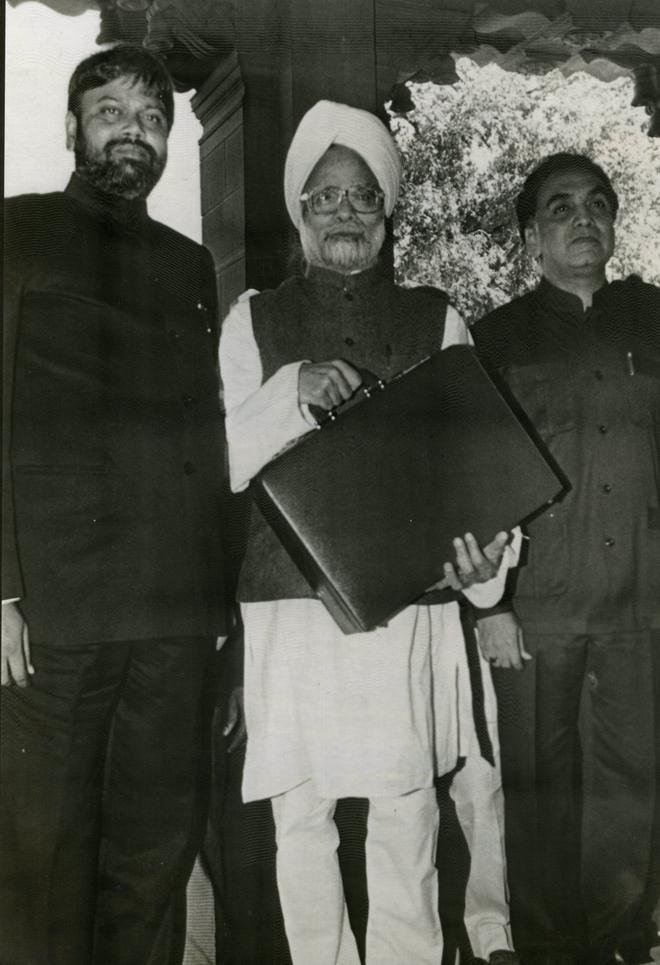
Singh’s 1991 budget speech, perhaps the most important ever made in post-independence India, echoes this sentiment. “The public sector has contributed significantly to the diversification of our industrial economy. But there have been many shortcomings in it. In particular, the public sector is not able to generate internal surplus on a large scale. At this critical juncture, it has become necessary to take effective measures to make the public sector an engine of growth rather than an absorber or national savings without adequate returns”, it said. A new industrial policy was brought in with the Union Budget of 1991, which reserved a large number of sectors from public sector monopoly.

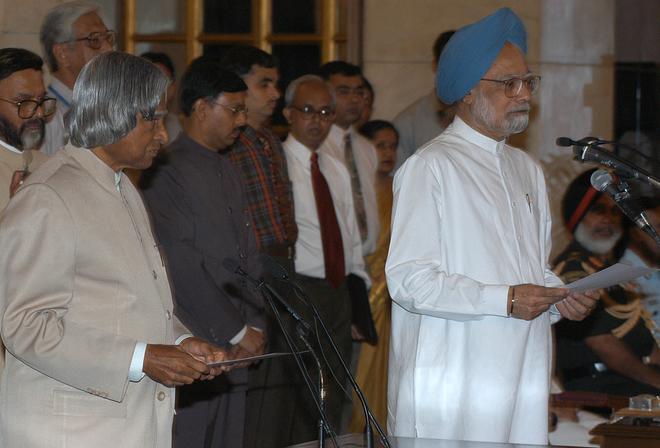
Singh played the most important role in this transformation of the Indian economy, first as Finance Minister in the Narasimha Rao government of 1991 and then as Prime Minister of India for 10 years from 2004 to 2014. GDP growth rates – external factors can emerge as major disruptors and some policies yield growth dividends only in the long run – are applied to judge Singh’s performance, his tenure was one of the most successful in India.

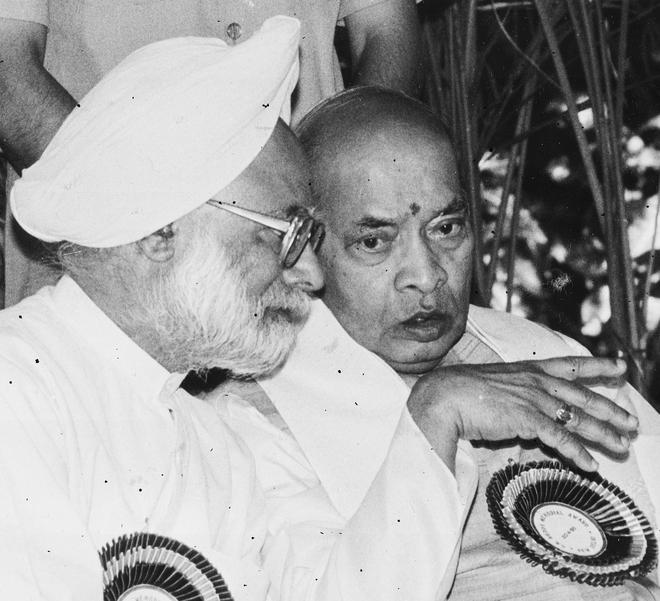
An academic turned technocrat, Singh entered the political arena and learned to deal with the constraints posed by politics in policy making. Narasimha Rao government was in minority. But the first opposition to dismantling the Nehruvian consensus on economic policy came from within the Congress Party. Most of the 1991 reforms were actually covert reforms, wrapped in rhetorical commitments to continue the old ways. While political expediency required that Singh demonstrate commitment to old supporters from outside, he was quite determined when it came to pushing his reform agenda from within.

in his essay Industrial policy reforms of 1991 and the way forwardpublished in the collection Transforming India: 25 years of economic reformsRakesh Mohan, former deputy governor of the Reserve Bank of India (who was then serving in the Ministry of Industry), provides an account of Singh’s determination to take the reform process forward.

“Within days of his appointment (as Finance Minister), Manmohan Singh called a meeting of all the Secretaries of key economic ministries and the Chief Economic Adviser…Manmohan Singh outlined a complete economic reform program which followed The next five years – and more importantly, the latter included immediate action on industry policy – ​​whatever needed to be done to resolve the crisis. To make him the Prime Minister’s full The order was received… Since he was aware that some of the mandarins present did not agree with the kind of liberal economic reforms that were envisaged, he said: ‘If any of you have any difficulty with the proposed reform programme, So we can find other things for you!’ This was perhaps the most determined and powerful performance of Dr. Manmohan Singh so far.

welfare state

The first four years of the United Progressive Alliance (UPA) government, of which Singh headed, were spent relying on the parliamentary support of the Communists, who were the most consistent critics of economic reforms or neoliberal policies in India. In this phase, radical and progressive changes were seen in the social-democratic fabric of India. The enactment of the National Rural Employment Guarantee Act, the world’s largest demand-driven employment program and the Right to Information Act are some such examples. Welfare efforts would continue in the UPA’s second term as well, this time without the support of the Communists – they parted ways on the question of the India-US nuclear deal and on the basis of the better performance of the Congress party itself. And this will continue with NDA under the leadership of Narendra Modi.

The 2009 election results were perhaps the biggest political vindication of Singh’s vision of capitalism with a human face.

Things changed soon after the moment of glory. Although the 2008 economic crisis did not have an immediate impact on India’s growth prospects, the export engine of growth degenerated soon thereafter. This was accompanied by a sharp rise in commodity prices and what many economists believe was a delay in the withdrawal of the fiscal stimulus that was administered to deal with the 2008 crisis, making things very difficult for the Indian economy. . Inflation, fiscal deficit and trade deficit increased; Development slowed down. Appearing to be on the cusp of sustained double-digit growth, India joined the infamous club of five vulnerable countries whose macroeconomic fundamentals were in deep danger. The fact that the UPA did not take adequate steps to reform the governance structure in banks played a major role in the accumulation of bad loans in the banking system. This would emerge as a major obstacle to growth, creating a dual-balance sheet problem.

The post-2008 crisis was also a moment of reckoning for Singh’s economic philosophy of capitalism with a human face. With a decline in revenue growth and an increase in economic misery, which was largely the result of rising prices, his government found it impossible to balance macro-economics and welfare demands.

The best, and perhaps most stark, expression of this growing contradiction came from Singh himself in a 2012 speech in which, among other things, he tried to justify increasing the price of diesel and limiting the number of subsidized LPG cylinders. Went.

“…subsidies on petroleum products have increased significantly. it was Last year Rs 1 lakh 40 thousand crore. If we had not taken action it would have been over. Rs 200,000 crore this year. Where would the money for this have come from? Money doesn’t grow on trees. If we had not acted, it would have meant a higher fiscal deficit, i.e. an unsustainable increase in government expenditure relative to government income. If unchecked, this will lead to a steep rise in prices and loss of confidence in our economy,” Singh said.

Both the UPA government and Singh’s political clout could not recover from the economic crisis, which ultimately paved the way for the Bharatiya Janata Party (BJP)’s sweeping victory in 2014, followed by an even bigger victory in 2019. Certainly, the myriad allegations of corruption against various UPA ministers also played a role in undermining the credibility of the Congress, especially Singh, in the eyes of voters. Singh himself admitted that his hands were tied due to political reasons.

“My compulsion is that I have to endure a lot because we cannot hold elections every six months,” Singh was quoted as saying in a 2011 HT story. “Some compromises have to be made in managing alliances. Coalition government should be seen in the context that no single party has emerged to rule on its own.” He said, ”In coalition, coalition is dharma. Obviously things are not quite the way I want them to be. But to be honest, I never felt like resigning. I have something to do.”

Of all people, Singh should have realized what the consequences of such politics would be. Once again, the 1990 South Commission report, which Singh played a key role in writing, was prescient. “Politics cannot be ignored in the management of development. But if it is to be constructive then politics should be a servant of social sympathy. It should be an instrument of purposeful social change rather than a ticket to power and privilege or another lucrative profession.

In a media interaction in January 2014, a few months before the Congress suffered a crushing defeat, Singh made a bold attempt to defend his legacy. “I honestly believe that history will be kinder to me than the contemporary media, or for that matter, the opposition parties in Parliament. I cannot disclose everything that happens in the cabinet system of government. I think, keeping in mind the circumstances and the compulsions of coalition politics, I have done my best in those circumstances.

Whether the Congress party and Singh’s legacy will be able to regain its lost glory is a question best left to the future. However, one can say with a fair level of confidence and gratitude that Manmohan Singh played a significant role in transforming India’s economy from the shackles of misconceptions of state-led transformation to a market-oriented one without any major disruption and collateral damage. Had played. There are too many examples of failed shock therapy and lost decades, which are the result of complete dedication to the zeal of the proponents of the Washington Consensus, which teaches us that India should always be grateful for the fine balance that Dr. Singh struck. He set out to achieve – and did.

‘History will indeed remember you’: Colleagues, former colleagues pay tribute to Manmohan Singh

0
‘History will indeed remember you’: Colleagues, former colleagues pay tribute to Manmohan Singh


Former Prime Minister Manmohan SinghParting shot – “History will be kinder to me than the contemporary media.” – The last press conference he addressed in January 2014 before leaving office was heard on Thursday night as condolences poured in following his death, with many of his former cabinet colleagues and UPA allies quoting his words Said that this will actually happen.

Tamil Nadu Chief Minister and DMK President MK Stalin credited Dr Singh for driving India’s economic transformation. “His tenure brought about an era of stable growth, social progress and reforms that improved the lives of millions of people.” Reflecting on DMK’s stable presence in the UPA, he said Dr Singh’s partnership with M Karunanidhi played an important role in furthering the development of Tamil Nadu. “Even during turbulent times, Dr #ManmohanSingh and Thalaivar Kalaignar stood together, exemplifying the strength of coalition politics built on trust and respect for regional identity,” Mr Stalin said.

Obituary Manmohan Singh, the gentleman politician who opened up India’s economy in 1991

West Bengal Chief Minister and Trinamool Congress chief Mamata Banerjee referred to their tenure in the Union Cabinet, when the two worked closely together. “His erudition and intelligence were unquestionable and the depth of the financial reforms he initiated in the country are widely acknowledged,” she said, adding that she would miss his leadership and affection. She was the Railway Minister in Dr. Singh’s cabinet between 2009 and 2011.

Former Deputy Chief Minister of Bihar, Tejashwi Yadav described Dr. Singh as the father of economic reforms in the country and said that the former Prime Minister presided over a historic period of unprecedented growth and development of the country. His “intellect, patience, foresight, humility and dedication will always be remembered.”

“Undoubtedly, history will judge you kindly, Dr. Manmohan Singh ji!” Senior RJD leader and Rajya Sabha MP Manoj K. Jha wrote on X. The RJD remained with the UPA for both terms and remained a key ally of the Congress.

timeline visualization

Former Finance Minister P. Chidambaram said that Dr Singh’s work from 1991 to 2014 would be remembered as a “golden chapter in the history of India”. “I worked closely with him for many years. I have not met a more humble and self-respecting person than Dr. Singh. He took his scholarship for granted and never took credit for any of his historical achievements.” He said, “I am sure that when we look back at Dr. Singh’s 23 years of active politics, we will see his true contribution.” You will realize.”

Congress General Secretary Jairam Ramesh, who has perhaps had the longest association with Dr Singh among his former Cabinet colleagues, praised Dr Singh’s “steely resolve” to remain “soft-spoken, composed and always dignified”.

“His Prime Ministership saw revolutionary laws related to rural employment, tribal rights, reservation for Scheduled Castes, Scheduled Tribes and OBCs, primary education, food security and land acquisition. The India-US nuclear deal was a milestone that enhanced India’s global standing. His prime ministership saw the highest GDP growth rate in the history of the country,” he said.

Shri Ramesh said, he practices politics of dialogue, consensus and adjustment even in difficult circumstances. Humility and integrity defined him. “Those who tried to defame him exposed his true colours. Many of the initiatives he took as Prime Minister were marketed, branded and presented as contributions of his successors. But Dr Singh never minded and gave his trademark smile,” he wrote on X.

Nationalist Congress Party (SP) leader Sharad Pawar called Mr Singh a “global statesman” whose legacy will inspire future generations.

KT Rama Rao, working president of Bharat Rashtra Samithi (erstwhile Telangana Rashtra Samithi), who was part of UPA-1, described Dr. Singh as the silent architect of modern India, a visionary, a true intellectual and a compassionate human being and said, “History has indeed been kind to you.” And will be grateful.”

Former Union Minister and senior Congress leader Anand Sharma said that working with Dr Singh was a humbling learning experience.

Former Union Minister and one of the youngest members of Dr Singh’s Cabinet, Sachin Pilot said the former Prime Minister will always be remembered for his intelligence and invaluable contribution to India’s economic growth.

Former colleagues who have now separated from Congress also spoke with affection. Union minister Jitin Prasada, who switched to BJP from Congress, said the country has lost a “scholarly and sensitive” leader. He wrote on X, “I consider myself lucky that I worked closely with Manmohan Singh for a long time.”


Is Israel using starvation as a war tactic in Gaza? | Israel-Palestine conflict

0
Is Israel using starvation as a war tactic in Gaza? | Israel-Palestine conflict


Warnings of an imminent risk of famine are rising in parts of Gaza.

That’s due to Israel’s attacks and blocking of humanitarian aid and food supplies.

Malnutrition is affecting many people – in particular children, with long-term risks to their health.

Is Israel using starvation as a weapon of war?

Presenter: Adrian Finighan

Guests:

Arwa Damon – Founder of the International Network for Aid, Relief and Assistance

Neve Gordon – Professor of international law at Queen Mary University of London


Finance Minister Nirmala Sitharaman Hosts Pre-Budget Discussion With Industry Leaders | Economy News

0
Finance Minister Nirmala Sitharaman Hosts Pre-Budget Discussion With Industry Leaders | Economy News


New Delhi: Union Finance Minister Nirmala Sitharaman held the fourth Pre-Budget Consultation meeting on Thursday, bringing together stakeholders and experts from the export, trade, and industry sectors. The discussions were part of the preparations for the upcoming Union Budget 2025-26, focusing on key inputs to shape economic policies and priorities.

In a social media post, the Ministry of Finance shared, “Union Minister for Finance & Corporate Affairs Smt. @nsitharaman chairs the fourth Pre-Budget Consultation with the stakeholders and experts from export, trade and industry sectors in connection with the upcoming Union Budget 2025-26, in New Delhi, today.”

The meeting saw the participation of prominent officials, including Minister of State for Finance Pankaj Chaudhary, the Finance Secretary, the Secretary of Economic Affairs, the Secretary of DIPAM (Department of Investment and Public Asset Management), and the Chief Economic Adviser to the Government of India.

Earlier this week on Tuesday, Prime Minister Narendra Modi interacted with a group of eminent economists and thought leaders in preparation for the Union Budget 2025-26 at the NITI Aayog premises. Prior to this in Jaisalmer on December 20, Sitharaman also chaired a pre-budget meeting with finance ministers of States and Union Territories.

Along with MoS Pankaj Chaudhary, the meeting was also attended by Chief Ministers of Goa, Haryana, Jammu and Kashmir, Meghalaya and Odisha; Deputy Chief Ministers of Arunachal Pradesh, Bihar, Madhya Pradesh, Rajasthan and Telangana. Finance Ministers of States/UTs. Secretaries of Departments of Economic Affairs and Expenditure and senior officials of the Ministry of Finance were also present during the meeting.

Sitharaman has so far held a series of meetings with various stakeholders, including with MSMEs, farmers’ associations, and economists. The Finance Ministry conducts several pre-Budget consultation meetings annually with experts, industry leaders, economists, and state officials. The formal exercise to prepare the annual Budget for the next financial year has already begun.

As is the convention, the Budget for 2025-26 will be tabled on February 1, 2025.The 2025-26 Budget will mark Nirmala Sitharaman’s eighth budget. All eyes will be on the key announcements and the government’s forward-looking economic guidance for the remainder of the Modi 3.0 tenure. (With ANI Inputs)


Barefoot journey on unpaved road for education

0
Barefoot journey on unpaved road for education


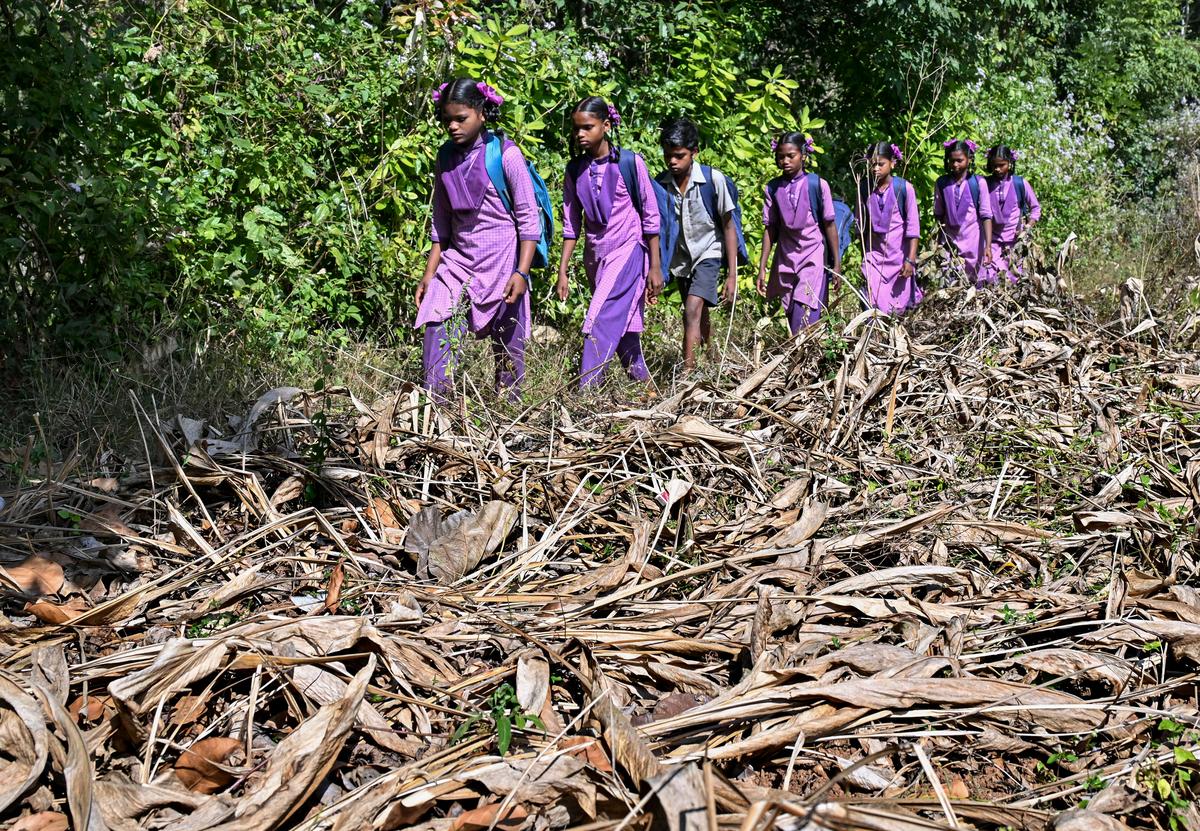
Eight-year-old Jameli Meghna, a Class 3 student of Korrapadu village, has to make a dangerous journey of about 3 km from her village through a dense forest full of poisonous snakes to reach school every day.

Yet, she is still pursuing her educational dreams along with 17 other children from her village. She bravely crosses three raging rivers and slippery roads to reach her school. This adventure becomes even more risky during the rainy season, when the roads on the hill tops become unsuitable for trekking due to landslides.

Despite growing awareness about the importance of formal, accessible schools remain a distant dream, especially for vulnerable tribal groups (PVTGs) living in the interior settlements of the agency areas of Alluri Sitarama Raju (ASR) district in Andhra Pradesh. . Education and the desire to pursue it. All these children belong to the Kondhu tribe, which speaks the Kui language and is spread across Andhra Pradesh and Odisha.

The village road is not suitable for walking and is dangerous for motorcyclists. The vehicle should be driven to the end of the road overlooking the valley, with a pile of rocks in the center.

Sometimes Meghna and the children have to wade through knee-deep water. Villagers say that their children often slip and get injured while going to school.

fear of graveyard

However, for Meghna, the graveyard lying on the way is more scary than the slippery roads and the jungle full of snakes. “I have got used to tracking. But the graves in cemeteries scare me,” she says, adding that, out of fear, children start running as they approach cemeteries and in that haste, they slip on the wet roads, becoming more injured. ,

“Parents take turns accompanying their children to the graveyard and pick them up from there after school,” says Gemmili Krishna, a former ward member and village elder. If children have to come alone they get scared and run away.”

Shri Krishna says that setting up a school in his village will solve his problems and give his children a better chance to excel academically.

snake encounter

When? The Hindu Visited Korrapadu on bike with much difficulty, passing through rocky terrain and crossing some streams, found a poisonous snake killed by the local people. The children said in unison that they often have to face snakes while going to school.

“It is impossible for us to drop and bring children to school as we have to go to work in agricultural fields or coffee plantations. During the coffee picking season, we have to protect the crop from monkey attacks and we cannot leave the place.”gemmili krishnaFormer Ward Member, Korrapadu

Korrapadu can be reached by two-wheelers; Some also have bikes. “It is impossible for us to drop and bring children to school as we have to go to work in agricultural fields or coffee plantations. During the coffee plucking season, we have to protect the crop from monkey attacks and we cannot leave the place,” says Mr Krishna.

A school was sanctioned at Tattipalem, another hill village, a short distance from Korrapadu, but there is no building there. Teachers hold classes under the shade of trees and under a temporary shed during rains.

There is Mandal Parishad Higher Primary School at Kothapalem in Chintapalli mandal of ASR district on the way to Korrapadu. Children from four villages study here, but about 20 students from Kidagari in G Madugula mandal have to cover a distance of 3 km through forest and hill slopes to reach the school. A total of 174 children study in this school from classes one to seven.

“We leave at 7 in the morning and it takes an hour to reach school. We start in groups as it is safer to be with others when walking through the forest.K.RadhikaGovernment school student, Kidagari village

K.Radhika, a 10-year-old from Kidagari village, who is studying in class six and aspires to become a doctor, said she has no option but to walk to school. “We leave at 7 in the morning, and it takes an hour to reach school,” Killa Bhanu, another seventh-grader from the same village, said reluctantly. We start in groups as it is safer to be with others when walking through the forest.

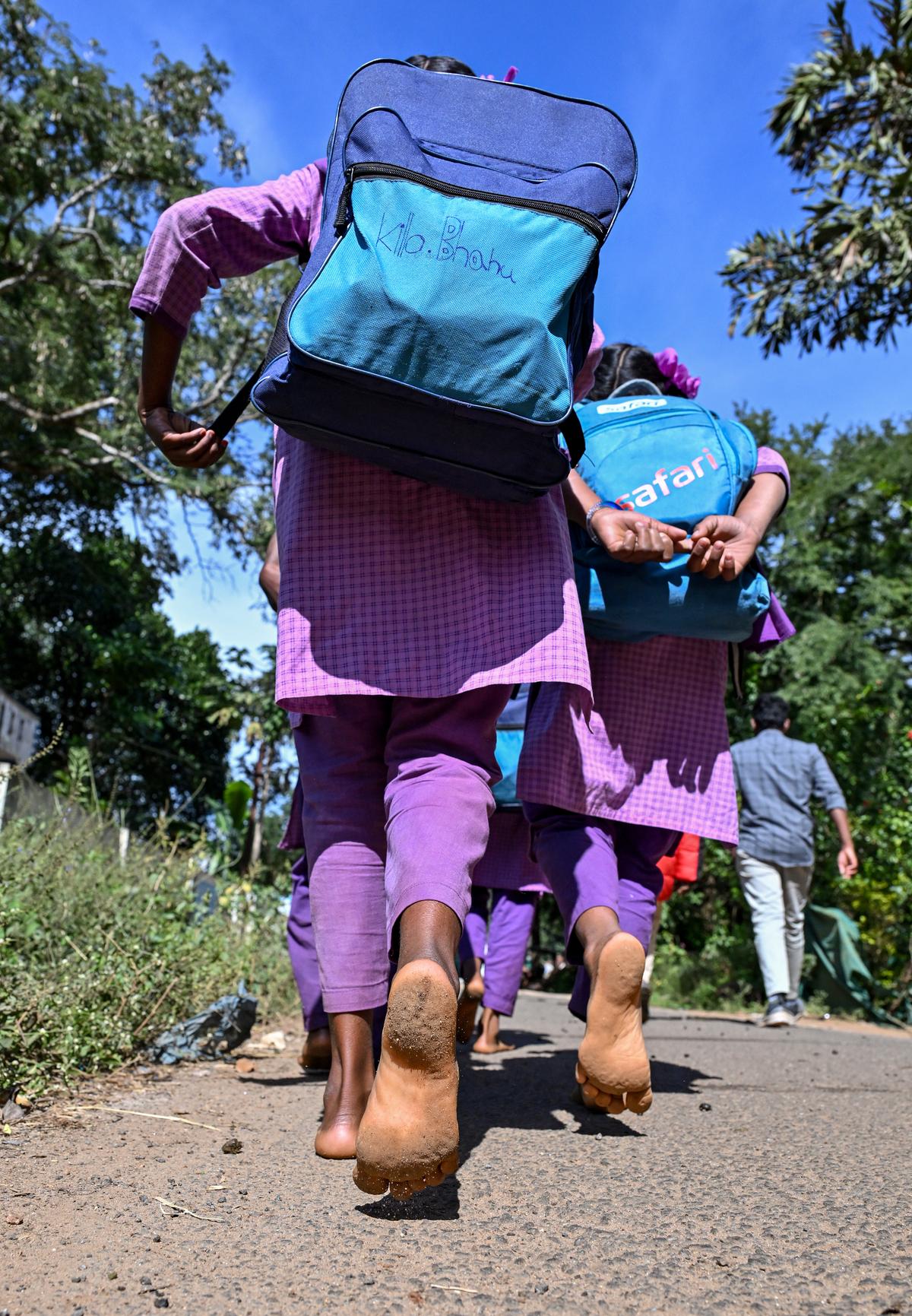
Due to lack of proper roads, these children have to walk barefoot, which affects their studies. “They cannot bear the weight of the school bag, which weighs around 4 kg to 5 kg, and that is why they leave their bags at school,” says P. Srinivas, who teaches mathematics and science at the school. ”

Since children could not study at home, they lagged behind. So, from last year we started giving them plastic bags to carry books. We started giving them homework for only one or two subjects every day so that they could take only those books to study at home, says Mr. Srinivas.

With 20 years of teaching experience in government schools in the plains, Mr. Srinivas says language is a significant barrier in teaching these children. He says that even children are not receptive towards new people. “After coming here on promotion two years ago, I found it difficult to teach for the first few months because the children would not respond or respond due to the language barrier,” he says.

shoe worries

The previous government had provided a pair of shoes to each of these children. However, this practice was futile, as parents say the shoes did not last long in the muddy, mountainous terrain.

The previous government had provided a pair of shoes to each of these children. However, this practice was futile, as parents say the shoes did not last long in the muddy, mountainous terrain. , Photo Courtesy: KR Deepak

Another issue of concern about these children is that they walk barefoot on muddy roads even during the rainy season, putting them at risk of health problems. Srinivas says that parents do not insist on their children to wear shoes and slippers because they are not in the habit of wearing shoes and slippers at home.

The previous government had provided a pair of shoes to each of these children. However, this practice was futile, as the shoes did not last long in the muddy, mountainous terrain in which they trekked.

“While crossing rivers, their shoes would get wet and this would cause rashes on their feet. So he stopped wearing them. Students should have been provided with shoes similar to Crocs. ,school student’s parentsKidagari Village

“While crossing rivers, their shoes would get wet and this would cause rashes on their feet. So he stopped wearing them. “Students should have been provided shoes similar to Crocs,” says the parent of a Kindergarten student.

Meanwhile, J., 18 km away from Chintapalli mandal headquarters. 24 children from Chintalwada, Dabbagandi and Kondapalli study in another primary school run by the Tribal Welfare Department in Rallagadda village. To reach their school, children from Kondapalli have to walk a distance of 4 km, while children from Chintalwada have to cross a stream.

We collected ₹2 lakh from the villagers two years ago and built a kutcha road so that our children could reach school safely. But it got washed away during the recent rains, says a villager in Kondapalli.

We collected ₹2 lakh from the villagers two years ago and built a kutcha road so that our children could reach school safely. But a villager in Kondapalli says it was washed away during the recent rains Photo courtesy: KR Deepak

“We collected ₹2 lakh from villagers two years ago and built a kutcha road so that our children could reach school safely. But it got washed away during the recent rains,” says a villager from Kondapalli. Some villagers say they have sent their children to their relatives’ homes in remote places where they have good road access to schools.

The lack of road access to schools is not limited to one or two panchayats or mandals in the district. Six students from Tertala, which falls under G Madugula gram panchayat, travel more than a kilometer on the hilly ghat roads of Killamkota to reach school. Korra Meghna, a Class 5 student of Killamkota school, says she has to cross a drain to reach her school.

According to an official of the Integrated Tribal Development Agency (ITDA), Paderu, 972 villages do not have road connectivity within their limits. In the entire ASR district, about 1,224 villages are without roads.

“Schools are located within two to three km of these villages, and going to school is a problem for children in these villages, especially when it rains. The rivers are flowing in full force, making it dangerous and difficult for them to cross,” says the official.

According to the official, the government plans to build roads to these interior villages under the Mahatma Gandhi National Rural Employment Guarantee Act (MNREGA) and other funds in the next three to four years.

Officials say there are about 120 ashram schools, 11 gurukul schools and 11 Eklavya model residential schools in the state, each constructed at a cost of ₹20 crore.

Vanthala Bhaskar Rao, a graduate from the Kondhu community, says there needs to be improvements in infrastructure and changes in the education system to give children from tribal areas a fair chance to compete with the mainstream world.

Shri Bhaskar Rao Ji is a volunteer of SR Sankaram Adivasi Sahay Kendram, a community-run service center to support tribals in accessing public services in ASR district, serving Madugula mandal. He made his efforts to extensively visit the tribal areas, to know the problems of the people there, to create awareness among the tribals about the facilities available in medical and health services in the government and to address their issues with the concerned authorities. Dedicated to.

“The tribals, especially the Kondhu community, have started making lifestyle changes and have shown impressive progress. Some of them are even pursuing higher education. Even though education for girls was taboo, they now encourage their girls to go to school,” says Mr. Bhaskar Rao.

Mr. Bhaskar Rao insists that teachers should remain at their workplace or at least in the nearby divisional headquarters so that they can teach till the last hour of the school day. Some teachers stay till Visakhapatnam and come to school on time as they have biometric attendance, but parents say they will not stay till the last term.

changing lifestyle

The Kondhu, belonging to the PVTG, are dependent on ‘Konda Podu’ (shift farming on the hills) and working in agricultural fields and coffee plantations. They sometimes hunt animals for their own consumption.

Once known for their infamous ‘demon marriage’ culture, where a man forcibly abducted a woman of his choice and married her, these tribes are also slowly adapting to the changing lifestyle. Villagers say that due to fear and awareness of the police case, such marriages are no longer taking place.

With the younger generation becoming educated and migrating in search of livelihood, children have also started showing interest in obtaining formal education. Residential schools have also made a huge contribution in providing education to these tribals. Youth, especially men, who have bachelor’s degrees started working in Madugula, Paderu and Visakhapatnam, says Mr. Bhaskar Rao.

However, Mr Srinivas says it is important to ensure a conducive environment in schools to retain and nurture their interest in academics. The teacher explains, “They are brought up in an environment where they roam freely in the open forest, and if we try to confine them to the classroom the whole day, they cannot stop coming to school. Therefore, we allow them to play during breaks and even while taking classes.

He says that people who see the school from outside feel that children keep playing all the time without studying, but it is not so.


Former Indian Prime Minister dies at 92

0
Former Indian Prime Minister dies at 92


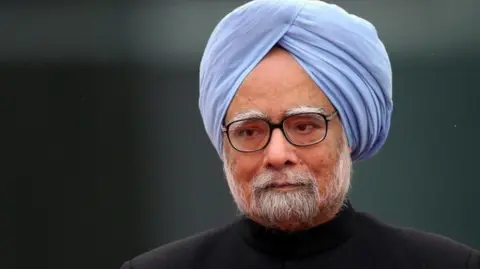
Getty Images Manmohan SinghGetty Images

Manmohan Singh is credited as the architect of key liberalising reforms in India

Former Indian prime minister Manmohan Singh has died at the age of 92.

Singh was one of India’s longest-serving prime ministers and he was considered the architect of key liberalising economic reforms, as premier from 2004-2014 and before that as finance minister.

He had been admitted to a hospital in the capital Delhi after his health condition deteriorated, reports say.

Among those who paid tribute to Singh on Thursday were Prime Minister Narendra Modi, who wrote on social media that “India mourns the loss of one of its most distinguished leaders”.

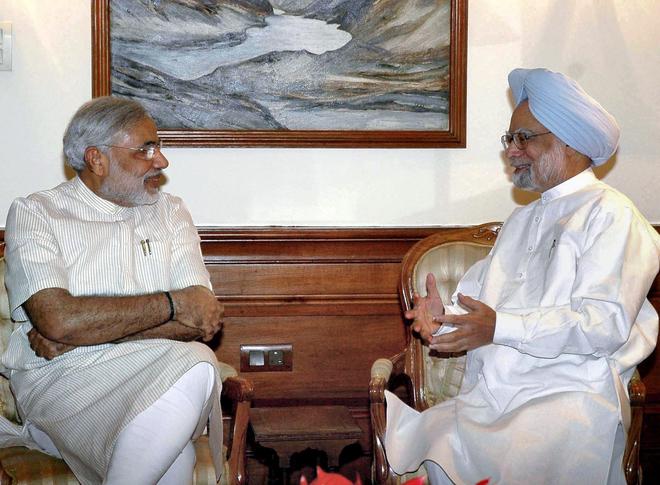
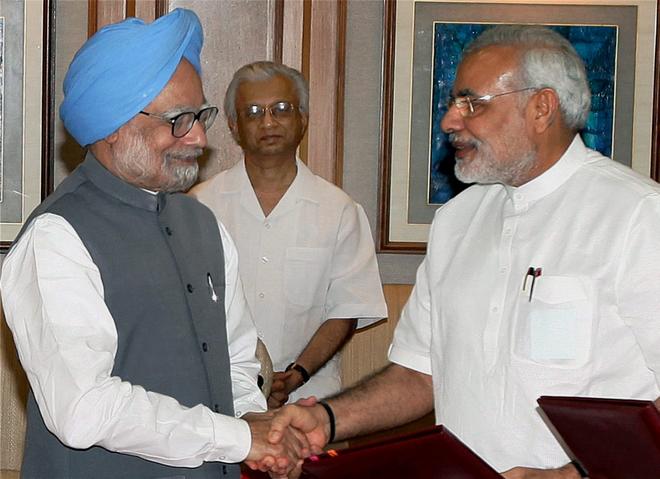
Modi said that Singh’s “wisdom and humility were always visible” during their interactions and that he had “made extensive efforts to improve people’s lives” during his time as prime minister.

Priyanka Gandhi, the daughter of former prime minister Rajiv Gandhi and a Congress party member, said that Singh was “genuinely egalitarian, wise, strong-willed and courageous until the end”.

Her brother Rahul, who leads Congress, said he had “lost a mentor and guide”.

Singh was the first Indian leader since Jawaharlal Nehru to be re-elected after serving a full first term, and the first Sikh to hold the country’s top post. He made a public apology in parliament for the 1984 riots in which some 3,000 Sikhs were killed.

But his second term in office was marred by a string of corruption allegations that dogged his administration. The scandals, many say, were partially responsible for his Congress party’s crushing defeat in the 2014 general election.

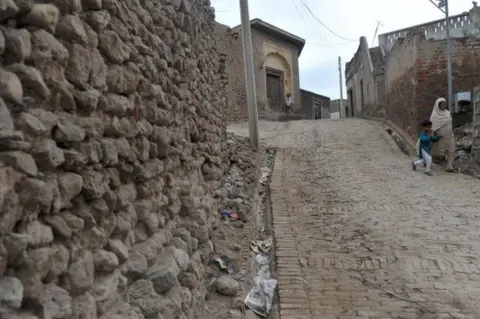
Singh was born on 26 September 1932, in a desolate village in the Punjab province of undivided India, which lacked both water and electricity.

After attending Panjab University he took a master’s degree at the University of Cambridge and then a DPhil at Oxford.

While studying at Cambridge, the lack of funds bothered Singh, his daughter, Daman Singh, wrote in a book on her parents.

Getty Images Manmohan SinghGetty Images

Singh was often called the “accidental prime minister”

“His tuition and living expenses came to about £600 a year. The Panjab University scholarship gave him about £160. For the rest he had to depend on his father. Manmohan was careful to live very stingily. Subsidised meals in the dining hall were relatively cheap at two shillings sixpence.”

Daman Singh remembered her father as “completely helpless about the house and could neither boil an egg, nor switch on the television”.

Consensus builder

Singh rose to political prominence as India’s finance minister in 1991, taking over as the country was plunging into bankruptcy.

His unexpected appointment capped a long and illustrious career as an academic and civil servant – he served as an economic adviser to the government, and became the governor of India’s central bank.

In his maiden speech as finance minister he famously quoted Victor Hugo, saying that “no power on Earth can stop an idea whose time has come”.

That served as a launchpad for an ambitious and unprecedented economic reform programme: he cut taxes, devalued the rupee, privatised state-run companies and encouraged foreign investment.

The economy revived, industry picked up, inflation was checked and growth rates remained consistently high in the 1990s.

Getty Images GahGetty Images

Singh was born in Gah, an underdeveloped village in what is now Pakistan

‘Accidental PM’

Manmohan Singh was a man acutely aware of his lack of a political base. “It is nice to be a statesman, but in order to be a statesman in a democracy you first have to win elections,” he once said.

When he tried to win election to India’s lower house in 1999, he was defeated. He sat instead in the upper house, chosen by his own Congress party.

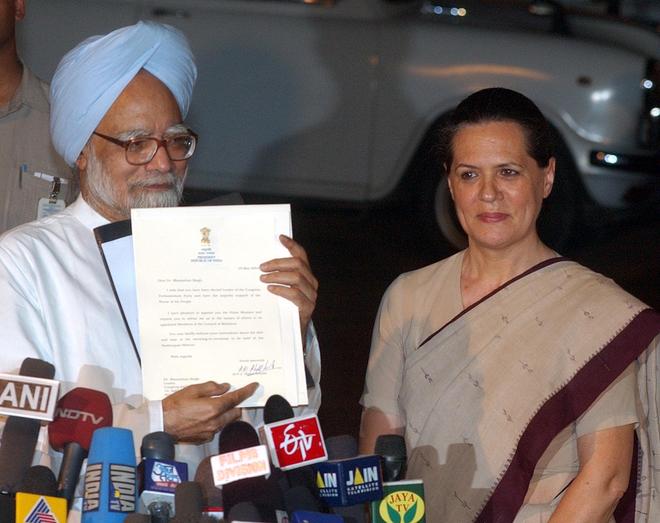
The same happened in 2004, when Singh was first appointed prime minister after Congress president Sonia Gandhi turned down the post – apparently to protect the party from damaging attacks over her Italian origins. Critics however alleged that Sonia Gandhi was the real source of power while he was prime minister, and that he was never truly in charge.

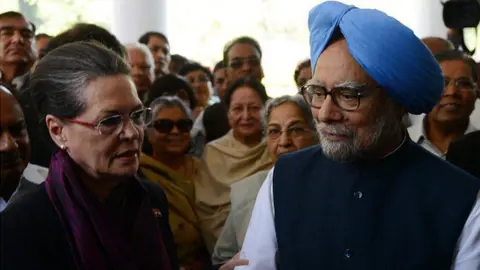
AFP Manmohan Singh and Sonia GandhiAFP

Critics said Mr Singh always played second fiddle to Sonia Gandhi

The biggest triumph during his first five-year term was to bring India out of nuclear isolation by signing a landmark deal securing access to American nuclear technology.

But the deal came at a price – the government’s Communist allies withdrew support after protesting against it, and Congress had to make up lost numbers by enlisting the support of another party amid charges of vote-buying.

A consensus builder, Singh presided over a coalition of sometimes difficult, assertive and potentially unruly regional coalition allies and supporters.

Although he earned respect for his integrity and intelligence, he also had a reputation for being soft and indecisive. Some critics claimed that the pace of reform slowed and he failed to achieve the same momentum he had while finance minister.

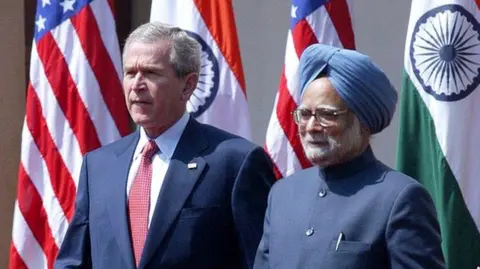
AFP George W Bush and Manmohan Singh, March 2006AFP

The biggest triumph during Mr Singh’s first five-year term was to bring India out of nuclear isolation by signing a landmark deal with the US

When Singh guided Congress to a second, decisive election victory in 2009, he vowed that the party would “rise to the occasion”.

But the gloss soon began to wear off and his second term was in the news mostly for all the wrong reasons: several scandals involving his cabinet ministers which allegedly cost the country billions of dollars, a parliament stalled by the opposition, and a huge policy paralysis that resulted in a serious economic downturn.

LK Advani, a senior leader in the rival BJP party, called Singh India’s “weakest prime minister”.

Manmohan Singh defended his record, saying his government had worked with “utmost commitment and dedication for the country and the welfare of its people”.

Pragmatic foreign policy

Singh adopted the pragmatic foreign policies pursued by his two predecessors.

He continued the peace process with Pakistan – though this process was hampered by attacks blamed on Pakistani militants, culminating in the Mumbai gun and bomb attack of November 2008.

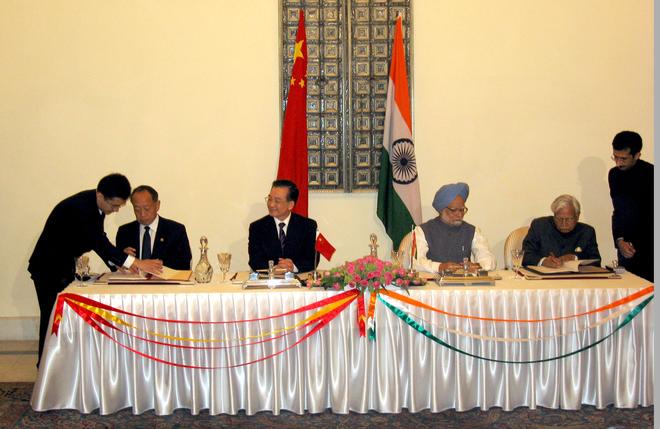
He tried to end the border dispute with China, brokering a deal to reopen the Nathu La pass into Tibet which had been closed for more than 40 years.

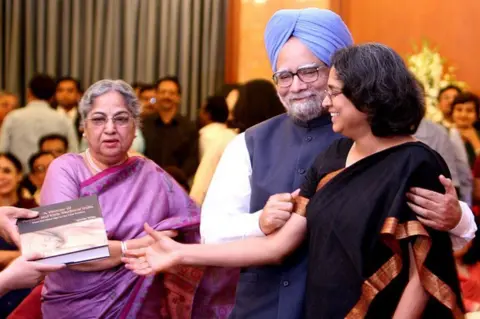
Getty Images Manmohan Singh and familyGetty Images

Singh with his daughter Upinder Singh (R) and his wife Gursharan Kaur (L)

Singh increased financial support for Afghanistan and became the first Indian leader to visit the country for nearly 30 years.

He also angered many opposition politicians by appearing to end relations with India’s old ally, Iran.

A low-profile leader

A studious former academic and bureaucrat, he was known for being self-effacing and always kept a low profile. His social media account was noted mostly for dull entries and had a limited number of followers.

A man of few words, his calm demeanour nevertheless won him many admirers.

Responding to questions on a coal scandal involving the illegal allocation of licences worth billions of dollars, he defended his silence on the issue by saying it was “better than thousands of answers”.

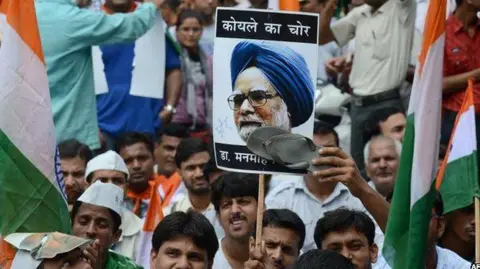
AFP An activist from India Against Corruption (IAC) stamps the picture of Manmohan Singh before marching towards the Prime Minister's residence in Delhi on August 26, 2012AFP

Singh’s opponents accused him of involvement in a coal scandal in 2012

In 2015 he was summoned to appear in court to answer allegations of criminal conspiracy, breach of trust and corruption related offences. An upset Singh told reporters that he was “open for legal scrutiny” and that the “truth will prevail”.

After his time as premier, Singh remained deeply engaged with the issues of the day as a senior leader of the main opposition Congress party despite his advancing age.

In August 2020, he told the BBC in a rare interview that India needed to take three steps “immediately” to stem the economic damage of the coronavirus pandemic, which had sent the country’s economy into a recession.

The government needed to provide direct cash assistance to people, make capital available for businesses, and fix the financial sector, he said.

History will remember Singh for bringing India out of economic and nuclear isolation, although some historians may suggest he should have retired earlier.

“I honestly believe that history will be kinder to me than the contemporary media, or for that matter, the opposition parties in parliament,” he told an interviewer in 2014.

Singh is survived by his wife and three daughters.


‘Don’t fall for it’: Radhika Gupta of Edelweiss Mutual Funds on India’s ‘startup romance’

0
‘Don’t fall for it’: Radhika Gupta of Edelweiss Mutual Funds on India’s ‘startup romance’


Radhika Gupta, CEO of Edelweiss Mutual Funds, cautioned aspiring entrepreneurs against falling for the “startup romance.” She pointed out that many successful businesses often present only the glamorous aspects of their journey, overlooking the challenging and arduous efforts that play a crucial role in achieving success.

Radhika Gupta hospitalised after head injury, praised swift Indian healthcare recovery.(Instagram/Radhika Gupta)

“There is now an increased air of ‘startup romance’ that paints startup life as working in chiller attire out of a fancy co-working space, talking ideas all day, raising funding rounds, giving gyaan on social media, hosting Fri Eve drinks for colleagues,” Radhika Gupta wrote on a post on X (Formerly Twitter).

“Don’t fall for it,” Radhika Gupta added.

Also Read: 3 reasons why gold gained 27% in 2024, outperforming both Nifty 50, S&P 500

Also Read: How will sale of used cars will be taxed under new GST rules? A simple guide

She said “start-up reality” hits soon, and this means “painful execution, limited budgets and even more limited working conditions, constant rejection, challenges in hiring and retention, pressure for revenue at any cost, and uncertainty for a very long period of time.”

Radhika Gupta’s comments come after Dhruv Suyamprakasam, the co-founder and CEO of iCliniq, a telemedicine startup, said in an interview with Business Insider that he had to move out of Bengaluru due to the difficulties he faced there.

Suyamprakasam, originally from Coimbatore in Tamil Nadu, decided to move to Bengaluru in 2010 after starting his company because it was the centre of India’s mainstream startup ecosystem.

However, he was met with a lot of negative bias from investors, often feeling “excluded” as he didn’t speak Hindi, did not go to IIT, and was from a “small town many people had not heard of.”

He had other significant challenges to face too. “It’s a place that expects companies to grow fast and fail fast,” he said.

He felt that this was not “the right pressure to put on a healthcare startup, which has no margin for errors and requires a lot of trust from people.”

Also Read: Will popcorn sold in movie theatres become more expensive? Here’s how much GST will be levied

He added that he “met investors expecting to get 100 paid consultations in a day”.

His father was a first-generation entrepreneur who already had a successful business.


HT Interview | Punjabis non-radical, handful playing Pak game, says DGP Gaurav Yadav

0
HT Interview | Punjabis non-radical, handful playing Pak game, says DGP Gaurav Yadav


Punjab has by large been firmly in peace mode for past three decades after vanquishing of a violent extremist campaign of the ’80s. Yet, the sensitive border state still faces multiple challenges on the law-and-order front. A stark reminder this month was a failed assassination bid on a high-profile politician outside the Golden Temple and seven terror bomb attacks on police posts.

Punjab director general of police (DGP) Gaurav Yadav during an interaction at Hindustan Times office in Mohali on Thursday.  (Ravi Kumar/HT)

As director general of police Gaurav Yadav, a 1992-batch IPS officer well regarded for his professionalism and hands-on approach, has kept his force ahead in the game by busting a raft of terror modules and relentless crackdown on Khalistanis-gangsters nexus and drug mafia. In a wide-ranging interaction with Hindustan Times on Thursday, moderated by Executive Editor Ramesh Vinayak, he shared his end-of-the year assessment, challenges and priorities. Edited excerpts:

What is your assessment of the current law and order in Punjab?

Law and order in Punjab is among the best in the country. By all parameters, the situation is under control. All major crimes have been solved. By the standards fixed to check crimes, we are among the best when it comes to ensuring public order and tackling homicides.

The border state has seen and survived periodic attempts to revive militancy and disturb its hard-won peace. What is the worrying dimension of the disconcerting developments this year?

Yes, the recent grenade attacks must be on everyone’s mind. Punjab is a border state that has successfully fought and defeated a decade-long terrorism in the early 90s. But, post-1992 terror handlers in Pakistan and their operators in foreign countries have not given up on their nefarious designs to resurrect a violent movement here. The assassination of then chief minister Beant Singh in 1995, the 2004 Burail jailbreak, 2007 Shingar Cinema blast in Ludhiana, 2016 Nabha jailbreak, multiple targeted killings in 2016-17 that took two years to be traced, and the murders of (Vishwa Hindu Parishad leader) Vikas Bagga in Nangal and (former militant) Rattandeep Singh at Balachaur earlier this year, all show that Pakistan’s Inter-Services Intelligence (ISI) has been making a series of attempts to rupture the social fabric of the state. The recent grenade attacks are also the result of that desperation. However, let me make it clear that I have instructed officials not to brush anything under the carpet, as in the case of a recent blast that was initially termed a tyre burst inside the (Majitha) police station.

Who is behind the blasts at police installations in border districts? What is the motive?

Pakistan is directly behind these attacks. Now there has been a change of tactic. They are targeting police stations. The idea is to create a perception that even police installations are not safe. However, we have cracked five of the eight incidents. In the remaining cases too, we have got clues and are in the process of solving them. The pattern is the same. The controllers of these attacks are sitting in Pakistan. The desperation of these Pakistan intelligence officers (PIOs) has reached such an extent that they have now started calling their contacts in Punjab directly and saying, “Kuch to karo (do something at any cost)”. They are asking their contacts to just click a photo and post it on social media to build a fake narrative that even the police are not safe. These PIOs have a network of handlers in the US, Canada, the UK and other European countries from where they operate through people who are either in jail or those previously associated with them. They are even using youngsters who are not ideologically inclined to Khalistan by luring them with money.

Many Punjab-origin gangsters based abroad are said to have joined hands with pro-Khalistan elements and Pakistan’s ISI. How serious is the challenge?

Just to trace it back, this nexus of gangsters and Khalistanis started in 2016 after the Nabha jailbreak. Before that there was clear divide between organised criminals and terrorists. Terrorists would always claim that theirs is a higher cause. After the Nabha episode, it emerged that Khalistani terrorist Harminder Singh Mintoo had indoctrinated gangsters in the prison. Since then, gangsters are easily available to them. As far as the challenge posed by this nexus, yes, it is a big task for us given the larger pool available in view of the gang culture in the state. Earlier, only radicalised youngsters would commit terror acts. At the same time, the involvement of gangsters has made it easier for us to trace these cases using their tech footprints. Being not ideologically committed, they are not a hard nut to crack.

Multiple police probes have shown that Khalistani outfits are using gullible youth and small-time criminals to create terror modules. What do you make of this trend?

It’s a big cause for concern and a challenge. But we have adopted a different approach to deal with such youngsters. In fact, in the rocket propelled grenade (RPG) attack on Sarhali police station in Tarn Taran district in December 2022 , we let off six to eight youth who had played a marginal role. Under our Saanjh Project, the police are trying to rehabilitate misguided youngsters or those who are victims of drugs. We are identifying such people.

What has emerged from the police probe into the recent assassination bid on former deputy chief minister Sukhbir Singh Badal at Golden Temple. Was the alleged assassin Narain Singh Chaura acting as a lone wolf or was there a wider plot?

The investigation is underway. The name of one Dharam Singh has emerged in the case and he is yet to be arrested. Chaura is a hardened character. He wiped out his phone records, so we have sent it for forensic checks. From the CCTV footage, we have got clues that a couple of people were seen with him, including Dharam Singh. The case is being probed in a professional manner.

There have been questions on how Chaura, who is facing several cases related to pro-Khalistan and terror activities and has been on the radar of central intelligence agencies, was able to get so close to a Z-plus protectee?

The investigation is going on and if we find any lapse, we will be upfront about it. Every incident is a lesson for us. We have taken necessary steps after this incident, including reviewing security protocols in some cases.

There is a growing perception that radicalisation is on the rise in Punjab.

Punjabis are totally non-radicalised. The so-called radical vote share has always been two to three per cent. The common masses are not for separatism but there are a handful of people with an agenda who want to vitiate the atmosphere. Even if you speak to people sitting abroad, 90% of them would say they are against this radicalisation. But the perception created by few forces is as if Khalistan would be made in Brampton (Canada). Most people don’t speak up because of general reluctance. They remain the silent majority.

Are sleeper cells of Khalistani militants getting active again?

PIOs are desperately using their old contacts, drug conduits and espionage agents in their desperate bid to create tension in Punjab. There is intense ISI pressure on outfits they are protecting to do something.

What has been the result of Punjab Police’s all-out war against gangsterism?

In the past two years, we have had a sustained crackdown on organised crime. I won’t say we have wiped out this crime, but we are registering cases in every call of extortion or any other crime and solve it by making an example out of it. If you compare such crimes in Punjab to what is happening in Haryana and the National Capital Region (NCR), I think the lesser said the better. I don’t say things are rosy in Punjab, but the situation is not as bad as it is in other states.

Jailed gangster Lawrence Bishnoi’s interview to a news channel while he was in police custody led to a raging row and action against a DSP. Some quarters interpret this episode as a pointer to the police-gangster nexus?

I won’t comment on sub-judice matters. However, I would definitely like to point out that probably the police are the only department where action has been taken (against officials) in drug-trafficking cases and involvement with gangsters.

What is your assessment on the drug menace which seems to be never-ending despite police claiming to have made record seizures?

On drugs, we have made lot of inroads. Record seizures were made this year though it is lesser that last year as the Taliban have severely cut down on opium cultivation in Afghanistan. Parallelly, there has been shift towards pharmaceutical drugs. New things, such as ICE, are also coming from Pakistan now. It’s a demand-supply game. Police can only tighten things through enforcement. The government is looking at other aspects of de-addiction and prevention, and frankly, we admit this part is weak. However, somewhere joint efforts to curb the menace is turning in the state’s favour as sportspersons from Punjab have done well in the recent Asian Games. I won’t say all is well but slowly people have started acknowledging drugs as a major challenge.

How many big drug lords are still at large?

Big ones in this trade are abroad. We have categorised around 20 people, most of whom are in the US. We have put lot of big fish of this trade active in Punjab in jail also. There has been a drop in smuggling of heroin using drones as the Border Security Force’s anti-drone technology has been a success. Of the 500 drone sightings this year, more than 250 were brought down, leading to huge losses to drug lords.

Criminals in Punjab have been found to have easy access to illegal guns made in Madhya Pradesh. Police have busted rackets but there seems to be no let-up in the flow of such weapons?

Over the last two years, we seized over 400 illegal weapons. With the help of the MP police, we arrested locals from a particular community who had set up small factories there. I won’t say the supply has stopped but we have been able to reduce it.

There have been frequent transfers of SSPs. Certain districts have seen police chiefs being shifted after mere three-month tenures. Doesn’t this hamper policing?

Most of the SSPs are having a fair (duration of) tenure. Moreover, transferring a district police chief is the prerogative of the government. Sometimes, transfers are done because the officers get promotion or go on central deputation.

Punjab has seen an upsurge in protest culture, particularly after the agitation against the three farm laws, and now there is a potential flashpoint at Shambhu. How do you look at it from the prism of law and order?

We have been able to put things on track partly with the help of (Punjab and Haryana) high court directions. We cleared land for the National Highway Authority of India project in Bathinda, where we had a face-off with Bhartiya Kisan Union (Ekta-Ugrahan) activists and even as we speak, more than 1,000 police personnel have been deployed to clear the land for the Gujarat gas pipeline. Our stand is clear on these agitations: Your right to protest cannot interfere with someone else’s right.

As you said, several criminals involved in organised crime and terror activities are sitting abroad. How many criminals’ extradition is the state actively seeking?

There are about eight to 10 such people. Extradition is a long-drawn-out and torturous process. Like in the case of a gangster Ramanjit Singh Romy, who masterminded the Nabha jailbreak, it took five years for his extradition from Hong Kong. Since extradition is a lengthy process, criminals sitting abroad take it easy.

Your WhatsApp group call at 8.30am daily has generated good feedback from senior officers. How has this step helped?

I hope SSPs are not complaining that they have to get up early to join this call (laughs). But this call sets the tone of the day and we get to share information from one district to another. There is a daily briefing in this call by the ADGP, intelligence, and special DGP, internal security, and special DGP, law and order, in which they give their perspectives.

After two-and-a-half years at the helm, what are key changes you initiated in the police?

My focus has been on modernisation and strengthening police stations. I try to empower the force. We have provided new vehicles to all station house officers (SHOs), and I was told this has happened for the first time after the tenure of (former DGP) KPS Gill. We have sought the recruitment of 10,000 police personnel from the government to post them at police stations.

Reported by Ravinder Vasudeva


Two-thirds of US adults tuning out political news, poll finds | US Election 2024 News

0
Two-thirds of US adults tuning out political news, poll finds | US Election 2024 News


After months of presidential election coverage, new poll highlights years-long trend of political fatigue in US.

After a year dominated by a relentless and intense United States presidential election campaign, Americans are looking for a break from political news, a new poll suggests.

The Associated Press-NORC Center for Public Affairs Research poll released on Thursday found that 65 percent of US adults said they felt the need to limit media consumption about politics and government “due to information overload [and] fatigue”.

Broken down by political affiliation, about seven in 10 Democratic Party voters – 72 percent – said they were taking a step back from political news. Fifty-nine percent of Republicans said the same as did 63 percent of independents.

“People are mentally exhausted,” Ziad Aunallah, a 45-year-old in San Diego, California, told AP. “Everyone knows what is coming, and we are just taking some time off.”

The survey, conducted in early December, comes weeks after Republican Donald Trump secured a victory in the November 5 presidential election over his Democratic rival, Vice President Kamala Harris.

Media coverage focused on Trump and Harris as they spent months on the campaign trail, crisscrossing the country to hold rallies and meet with voters.

Since Trump’s victory, the US president-elect – and his plans for once he gets into the White House next month – have dominated the news cycle.

But like the AP-NORC poll found, US television news ratings show that many Americans aren’t tuning in as 2024 comes to a close.

After election night through December 13, the prime-time viewership of the MSNBC television news network was an average of 620,000 households, down 54 percent from the pre-election audience this year, the Nielsen company said. CNN’s average of 405,000 viewers was down 45 percent over the same period.

There was a marked difference, however, when looking at the numbers at the Fox News channel, a favourite network for Trump supporters.

There, the postelection average of 2.68 million viewers is up 13 percent, Nielsen said.

Since the election, 72 percent of the people watching one of those three cable networks in the evening were watching Fox News, compared with 53 percent prior to Election Day.

Political fatigue and a need to disengage from the news is not a new phenomenon in the US, where polarisation and divisive rhetoric have skyrocketed in recent years.

In 2020, the Pew Research Center found that about two-thirds of Americans reported feeling “worn out” by the amount of news available to them, nearly the same percentage of people who said they experienced news fatigue in 2018.

Pew also reported in September last year that 65 percent of people surveyed said they always or often felt exhausted when thinking about politics while 55 percent said they always or often felt angry.

The same survey found about eight in 10 Americans responded negatively when asked to describe the state of politics in the country with many opting for the word “divisive” to explain the situation.

Arash Javanbakht, an associate professor of psychiatry at Wayne State University in the US state of Michigan, has explained that “the politics of fear” is among the top three reasons why many Americans are disengaging from politics.

“The COVID-19 pandemic, more than a decade of intense political stress, polarizing social media and wars across the world, as well as public disillusionment with US politics and media, have led, I believe, to many people experiencing burnout and learned helplessness,” he wrote in The Conversation this month.


Govt considers income tax relief for those earning up to Rs 15 lakhs: Report

0
Govt considers income tax relief for those earning up to Rs 15 lakhs: Report


Govt considers income tax relief for those earning up to Rs 15 lakhs: Report

NEW DELHI: India is considering cutting income tax for individuals making up to Rs 15 lakh a year in February’s budget to provide relief to the middle class and boost consumption as the economy slows, two government sources told Reuters.
The move could benefit tens of millions of taxpayers, especially city dwellers burdened by high living costs, if they opt for a 2020 tax system that strips exemptions like housing rentals.
Under that system, annual income of Rs 3 lakhs to Rs 15 lakhs is taxed at between 5% to 20%, while higher income draws 30%.
Indian taxpayers can choose between two tax systems – a legacy plan that allows exemptions on housing rentals and insurance, and a newer one introduced in 2020 that offers slightly lower rates, but does not allow major exemptions.
The sources, who did not want to be named because they were not authorised to talk to the media, said they had not decided on the size of any cuts. A decision would be taken closer to the budget on Feb.1, they said.
The finance ministry did not immediately respond to an email seeking comment.
The sources declined to share revenue loss of any tax cut but one said reducing tax rates would make more people choose the new system that is less complicated.
India gets a bulk of its income tax from persons earning at least Rs 1 crore, the rate for which is 30%.
More money in the hands of the middle class might help rev up the economy, the world’s fifth-biggest and which grew at its slowest pace in seven quarters between July and September. High food inflation is also biting into demand for goods ranging from soaps and shampoos to cars and two wheelers, particularly in urban areas.
The government has also been facing political heat from the middle class over high taxes, and as growth in wages is unable to catch up with the pace of inflation.