Tuesday, September 29, 2026
Home Blog Page 7043

Jensen Huang’s cousin, CEO of $210 billion company, encourages mid-night hustle, weekend meetings | Trending

0
Jensen Huang’s cousin, CEO of 0 billion company, encourages mid-night hustle, weekend meetings | Trending


Dec 15, 2024 01:46 PM IST

55-year-old Lisa Su was named Time’s 2024 CEO of the Year. After becoming CEO in 2014, she had drastically grown her company, Advanced Micro Devices (AMD).

Lisa Su, the CEO of chipmaker Advanced Micro Devices (AMD), recently revealed the work culture in her $210 billion company in an interview. Working on weekends and having morning calls after sending memos at midnight are prevalent practices in the company whose leader was named Time’s 2024 CEO of the Year.

Lisa Su, the CEO of chipmaker Advanced Micro Devices (AMD). (X/@LisaSu)

Patrick Moorhead, a tech-industry analyst and a former AMD ­executive, told Time that Su’s hard-­charging style of leadership isn’t for everyone, and those who “don’t meet their commitments” find it hard to survive at the company. Moorhead left the company before Su joined.

The 55-year-old, also a cousin of Nvidia CEO Jensen Huang, reportedly expects her executives to be able to discuss the finer points of long documents in morning calls after circulating them at midnight. She is also known for personally scrutinizing prototype chips after they are delivered from the factory.

Who is Lisa Su?

Born in Taiwan, she moved to the US when she was just three years old, reported the outlet. Her family migrated so that her father could attend graduate school. She grew up in New York City and could write rudimentary programs from a very young age.

After attending school in the Bronx, she majored in electrical engineering at MIT and later earned a PhD in the same subject. During the first years of her career, she worked at Texas Instruments and IBM before assuming more leadership roles.

“I was really lucky early in my career,” she told Time, adding, “Every two years, I did a different thing.” She joined AMD in 2012 as a VP. In just two years, she assumed the role of CEO. According to CNBC, AMD is a $210 billion company.

Get Latest Updates on…

See more


Israel to expand Golan Heights settlements after fall of Assad

0
Israel to expand Golan Heights settlements after fall of Assad


Israel’s government has approved a plan to encourage the expansion of settlements in the occupied Golan Heights.

Prime Minister Benjamin Netanyahu said the move was necessary because a “new front” had opened up on Israel’s border with Syria after the fall of the Assad regime to an Islamist-led rebel alliance.

Netanyahu said he wanted to double the population of the Golan Heights, which Israel seized during the 1967 Six-Day War and is considered illegally occupied under international law.

Israeli forces moved into a buffer zone separating the Golan Heights from Syria in the days following Assad’s departure, saying the change of control in Damascus meant ceasefire arrangements had “collapsed”.

There are more than 30 Israeli settlements in the Golan Heights, which are home to an estimated 20,000 people. They are considered illegal under international law, which Israel disputes.

The settlers live alongside some 20,000 Syrians, most of them Druze Arabs who did not flee when the area came under Israeli control.

Netanyahu said Israel would “continue to hold on to [the territory], make it flourish and settle it”.

The announcement comes a day after Syria’s new de-facto leader Ahmed al-Sharaa criticised Israel for its ongoing strikes on military targets in the country, which have reportedly targeted military facilities.

The UK-based Syrian Observatory for Human Rights (SOHR) has documented more than 450 Israeli air strikes in Syria since 8 December, including 75 since Saturday evening.

Al-Sharaa – also known as Abu Mohammed al-Jolani – said the strikes “crossed red lines” and risked escalating tensions in the region, though he said Syria was not seeking a conflict with any neighbouring state.

Speaking to Syria TV, which was seen as pro-opposition during the civil war, al-Sharaa said the country’s “war-weary condition, after years of conflict and war, does not allow for new confrontations”, Reuters reported.

The Israel Defense Forces (IDF) has not commented on his remarks, but previously said the strikes were necessary to stop weapons falling “into the hands of extremists”.

President Bashar al-Assad and his family fled to Russia and took up asylum when al-Sharaa’s Islamist group Hayat Tahrir al-Sham (HTS) led other rebel factions in a lightning offensive on Damascus.

The groups are continuing to form a transitional government in Syria, of which al-Sharaa is the theoretical head.

On Saturday, the US Secretary of State Antony Blinken said Washington had made direct contact with HTS, which the US and other Western governments still designates as a terrorist organisation.

United Nations’ Syria envoy Geir Pedersen said on Sunday he hoped for a swift end to sanctions on the country to help facilitate an economic recovery.

“We will hopefully see a quick end to sanctions so that we can see really rallying around building up Syria,” Pedersen said as he arrived in Damascus to meet Syria’s caretaker government and other officials.

Elsewhere, Turkey’s Defence Minister Yasar Guler said Ankara was ready to provide military support to Syria’s new government.

“It is necessary to see what the new administration will do. We think it is necessary to give them a chance,” Guler said of HTS, according to state news agency Anadolu and other Turkish media outlets.


In a booster to Make in India, Dixon to form JV with Vivo India for manufacturing smartphones

0
In a booster to Make in India, Dixon to form JV with Vivo India for manufacturing smartphones


In a booster to Make in India, Dixon to form JV with Vivo India for manufacturing smartphones

New Delhi: In a major booster for India’s efforts to localise Chinese investments in India, smartphone giant Vivo has decided to form a joint venture with domestic Dixon Technologies for contract manufacturing its devices and other electronics products. Dixon will hold 51% stake in the JV, while the remaining will be with Vivo India.
Dixon and Vivo India said entered into a Binding Term Sheet for the proposed JV to undertake OEM business of electronic devices, including smartphones. However, neither Dixon nor Vivo India will have any stake in each other.
“The facility will undertake part of Vivo’s OEM orders of smartphones in India, and can also engage in OEM business of various electronic products of other brands,” Dixon said, emphasising that the deal will not have any impact on its contract manufacturing business for other brands such as Motorola and Nokia.
“The parties will agree on an optimum structure and the relevant terms and conditions to be set out in the definitive agreements. The transaction will be subject to execution of such definitive agreements, completion of customary conditions precedent and receipt of applicable regulatory approvals including as required under the foreign exchange control laws of India,” the company said.
Tata group was also believed to be looking at a deal with Vivo India, but it could not materialise.
Dixon Vice Chairman and MD Atul B Lall said the company sees Vivo India as an “ideal strategic partner” that shares its core values of quality, engineering prowess and customer satisfaction. “We believe that this association will bolster our manufacturing excellence and superior execution abilities and Vivo’s leadership in the Indian business ecosystem. We are excited to work together to create a stronger, more diversified, and future-proof organization. “
Jerome Chen, CEO of Vivo India said the deal with Dixon gets “rich localized management experience and outstanding professional manufacturing” prowess. “The proposed JV will undertake part of Vivo’s OEM orders of smartphones in India, and can also engage in OEM business of various electronic products of other brands. This partnership will effectively complement the current manufacturing operations of Vivo India,” Chen said.


Aadhaar Card Update For Free: Deadline Extended Once Again; Check Required Documents And How To Update Online | Personal Finance News

0
Aadhaar Card Update For Free: Deadline Extended Once Again; Check Required Documents And How To Update Online | Personal Finance News


Aadhaar Card Update Online For Free: The Unique Identification Authority of India (UIDAI) has extended the deadline for free updates of Aadhaar details to June 14, 2025, offering significant relief to Aadhaar holders nationwide. This extension allows individuals to update crucial information such as their address, mobile number, or other personal details at no cost through the myAadhaar portal.

Earlier, the Aadhaar card update for free is set to expire on December 14, 2024. However, the new deadline ensures ample time for users to make necessary changes online. It is important to note that this free service is exclusively available on the myAadhaar portal. Adding further, the updates made offline at Aadhaar centres will incur a fee starting June 15, 2025.

Aadhaar Card Update Fee 

Once the free update period concludes, individuals will need to pay a fee of Rs 50 for document updates at Aadhaar centers. 

Aadhaar Card Update Online For Free: Required Documents

To update your Aadhaar card, certain documents are required for verification. These include a Passport and Voter ID as identity proofs, a Ration Card and Domicile Certificate as address proofs, and a Bank Passbook for financial verification.

How To Update Aadhaar Online For Free?

Step 1: Visit the myAadhaar portal and click on the ‘Login’ button.

Step 2: Enter your Aadhaar number and captcha code, then click ‘Send OTP’.

Step 3: Enter the OTP, click ‘Login’, and select the ‘Document Update’ button.

Step 4: Read the guidelines carefully and click ‘Next’.

Step 5: Verify your details, check the verification box, and click ‘Next’.

Step 6: Upload required documents like proof of identity and proof of address, click ‘Submit’, and track the update status using the Service Request Number (SRN) sent to your email. 

How To Update Aadhaar Offline? 

Step 1: Visit the official UIDAI website and download the Aadhaar enrolment form. Fill it out completely and accurately. 

Step 2: Take the filled form along with necessary documents (proof of identity, address, etc.) to the nearest Aadhaar Sewa Kendra or authorized Aadhaar Enrolment Centre. 

Step 3: At the enrolment centre, submit your biometric data, including fingerprints, iris scan, and photograph. 

Step 4: After completing the process, you will be given an acknowledgement slip containing a unique URN. Use this to track the status of your Aadhaar enrolment or update. 


Authorities say 22 rescued from Afghanistan mine collapse | Mining News

0
Authorities say 22 rescued from Afghanistan mine collapse | Mining News


No casualties reported after hours-long rescue in Samangan province in northern Afghanistan.

Twenty-two people have been rescued after a mine collapsed in Afghanistan, capping an hours-long effort to reach them.

The mine in the Dara-i Sof Payin district of Samangan province in northern Afghanistan had collapsed late on Saturday.

Esmat Muradi, the spokesman for the province’s governor, Mullah Muhammad Shoaib, had initially told the AFP news agency that thirty-two people had been trapped.

“Excavators and rescuers have been working since early morning but unfortunately the opening to the mine is not cleared yet,” he said early Sunday.

Shoaib later said 22 people had been rescued and no more miners were believed to be trapped. He said there were no deaths in the incident.

A video of the rescue showed heavy machinery moving debris and rescuers working by torchlight to reach those trapped, although locals had expressed concern over the lack of professional rescue teams deployed.

Sources familiar with the site had previously cast doubt that there would be any survivors, citing the presence of gas in the mine, its narrowness and the likely buildup of pressure.

The type of mine involved was not immediately clear, although marble, copper, zinc, lead, gold, gemstones and coal are commonly mined in Afghanistan, which has been governed by the Taliban since its 2021 takeover.

However, there has long been little oversight over Afghanistan’s mining industry and deadly accidents are relatively common.

At least 10 miners died in February 2022 after being trapped underground when a coal mine collapsed in the northern province of Baghlan.

In June 2020, seven workers were killed after a gas blast caused a cave-in at a mine in Samangan.

And a year earlier, at least 30 people died when a gold mine collapsed in Badakhshan province.

Another gold mine collapsed in January last year in the province, although the number of casualties remains unknown.


The pending mosque-temple disputes across India 

0
The pending mosque-temple disputes across India 


The Supreme Court on December 12, 2024, issued a nationwide directive barring civil courts from registering fresh suits or passing orders in pending cases seeking the survey of mosques to ascertain whether temple structures lie beneath them. A Bench headed by Chief Justice of India Sanjiv Khanna issued the freeze order while hearing a batch of petitions questioning the validity of the Places of Worship (Special Provisions) Act, 1991 (1991 Act) — a statute which preserves the character of religious places as they existed on August 15, 1947.

Despite the law, a surge of petitions seeking the redetermination of the character of places of worship have surfaced across the country, with a bulk of them in Uttar Pradesh.

Here’s a look at the suits concerning religious shrines pending in various civil courts.

map visualization

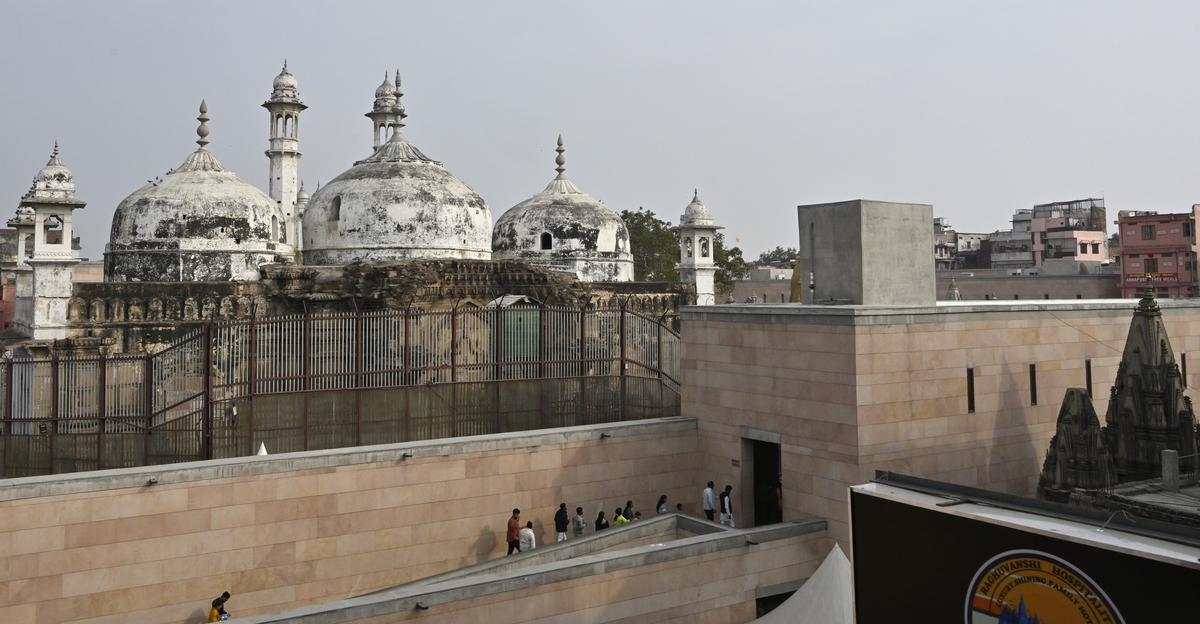
Gyanvapi mosque in Varanasi, Uttar Pradesh

A view of the Gyanvapi Mosque next to the Kashi Vishwanath temple complex at Varanasi, Uttar Pradesh

A view of the Gyanvapi Mosque next to the Kashi Vishwanath temple complex at Varanasi, Uttar Pradesh
| Photo Credit:
R.V. Moorthy

Case title: Rakhi Singh v. State of Uttar Pradesh & Ors and other connected petitions

The dispute over the Gyanvapi Masjid spans several decades. Hindu groups claim that the mosque was built atop the remnants of the Kashi Vishwanath Temple, which Mughal emperor Aurangzeb allegedly demolished in the 17th century. In 1991, a suit was filed on behalf of the deity Adi Vishweshwar demanding the removal of Muslims from the complex and the restoration of the temple. 

In 2021, five Hindu women approached a Varanasi district court seeking permission to worship religious idols purportedly located within the Gyanvapi mosque. In July 2023, the court ordered the Archaeological Survey of India (ASI) to conduct an extensive survey of the mosque to ascertain its antecedents. Subsequently, it concluded that a large Hindu temple existed before the construction of the mosque.  On January 31, 2024, the Varanasi district judge allowed Hindus to offer prayers at the southern cellar of the Gyanvapi Masjid. A petition moved by the Gyanvapi Masjid Committee seeking the implementation of the 1991 Act is currently pending before the Supreme Court.

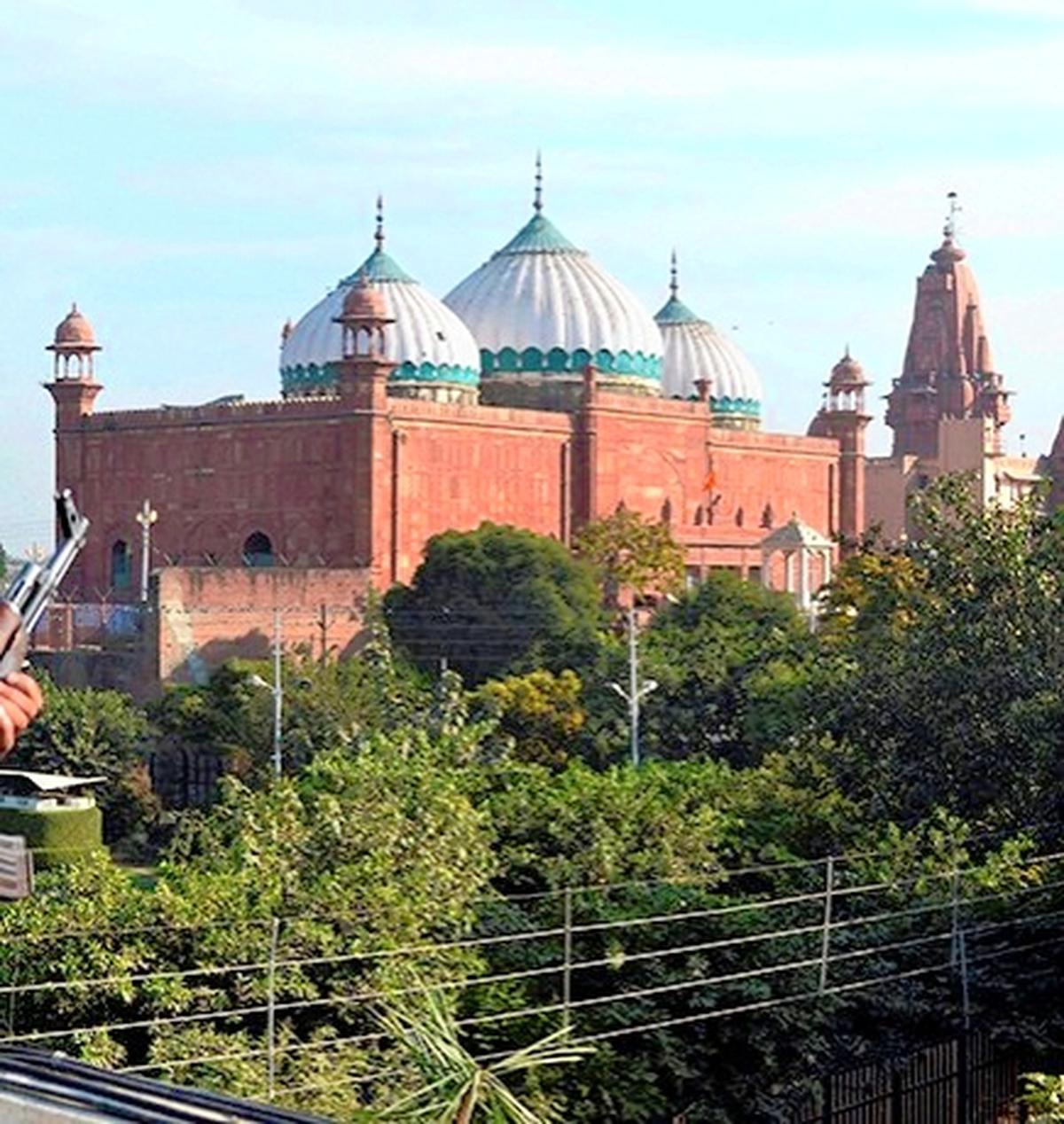
Shahi Eidgah mosque in Mathura, Uttar Pradesh

 security person keeps vigil at Sri Krishna Janambhoomi temple and Shahi Eidgah mosque on the anniversary of Babri mosque demolition in Mathura. File.

security person keeps vigil at Sri Krishna Janambhoomi temple and Shahi Eidgah mosque on the anniversary of Babri mosque demolition in Mathura. File.
| Photo Credit:
PTI

Case title: Bhagwan Shrikrishna Virajman at Katra Keshav Dev & Ors v. UP Sunni Central Waqf Board & Ors

Multiple suits concerning the Krishna Janmabhoomi-Shahi Eidgah land dispute are pending before various courts in Mathura. A common demand in these cases is the removal of the mosque from the 13.37-acre complex it shares with the Katra Keshav Dev temple claiming that it was built at the site of the birthplace of Lord Krishna. In 2020, a group of Hindu petitioners sought to annul a 1968 compromise between the mosque committee and the Shri Krishna Janmasthan Seva Sangh, which had allowed the mosque to remain at its current location.

On May 26, 2023, the Allahabad High Court transferred to itself 18 petitions related to the dispute pending across various courts in Mathura. Subsequently, on December 14, 2023, the High Court ordered a court-monitored survey of the Eidgah complex to assess the historical claims made by both sides. It also appointed an advocate-commissioner to oversee the survey of the mosque. However, the Supreme Court stayed the High Court’s order, noting that the Hindu side’s plea for the survey was very “vague”.

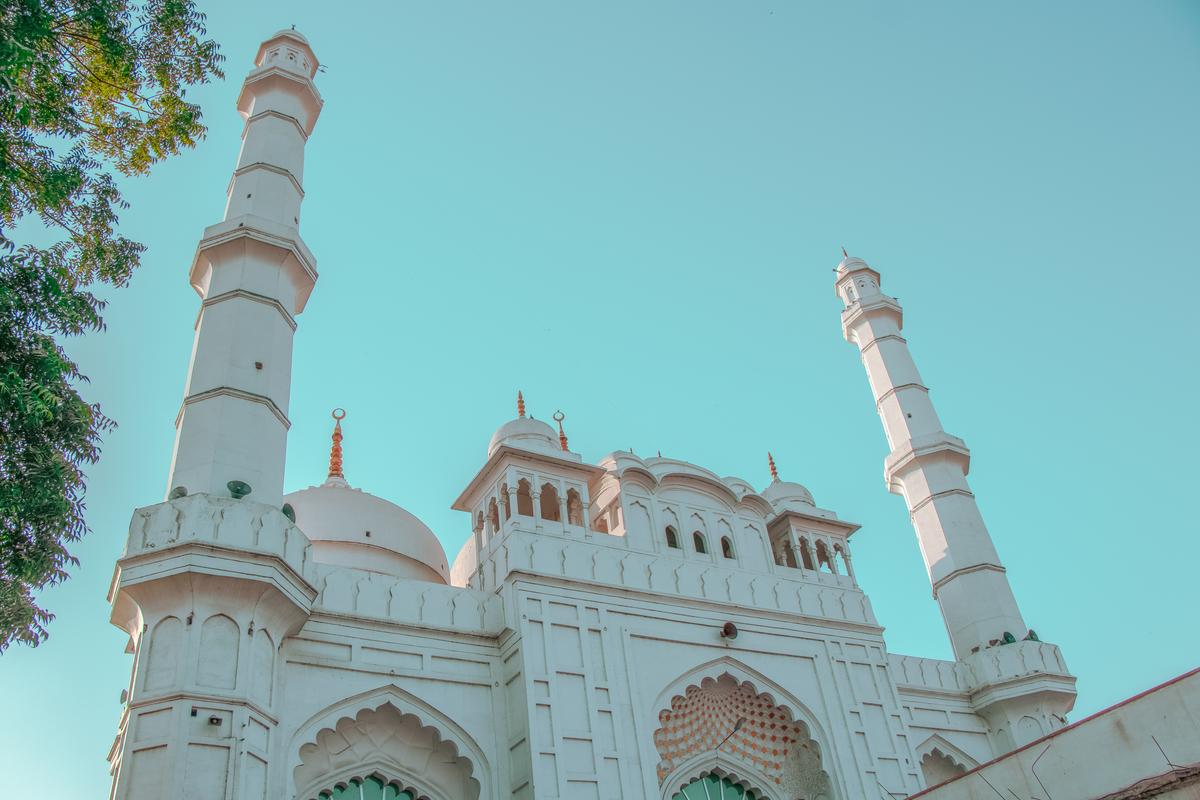
Teele Wali Masjid in Lucknow, Uttar Pradesh

Photo: Wikimedia Commons

Photo: Wikimedia Commons

Case title: Lord Sheshnagesht Teeleshwar Mahadev Virajman Ors. v. Union of India & Ors

In 2013, eight devotees of Lord Sheshnageshwar Teeleshwar Mahadev Virajman filed a suit, claiming that the Teele Wali mosque was constructed during the reign of Mughal emperor Aurangzeb by demolishing a pre-existing Hindu temple or religious structure known as Laxman Teela. The petitioners have also sought a court-appointed Commissioner to conduct a survey of the mosque. The case of the maintainability of the suit is pending before the Allahabad High Court. Another suit seeking an injunction to allow devotees to offer prayers inside the mosque premises is pending before a Civil Judge in Lucknow. The district court has fixed March 15, 2025, as the next date of hearing. 

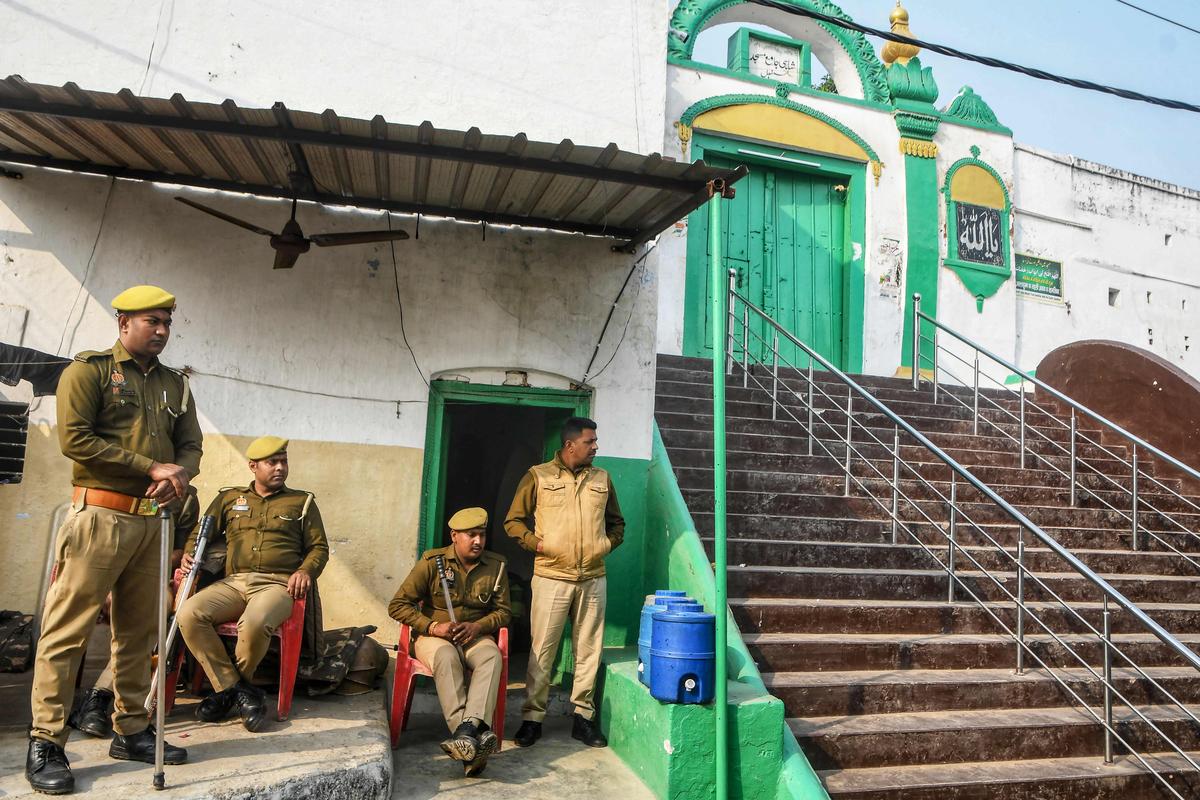
Shahi Jama Masjid in Sambhal, Uttar Pradesh

State police personnel deployed outside the Shahi Jama Masjid following religious violence in Sambhal on November 25, 2024.

State police personnel deployed outside the Shahi Jama Masjid following religious violence in Sambhal on November 25, 2024.
| Photo Credit:
afp

Case title: Hari Shankar Jain v. Union of India & Ors

On November 19, 2024, eight petitioners including advocate Hari Shankar Jain instituted a suit in a local court in Sambhal claiming that the Shahi Jama Masjid was built over a Hari Har Mandir that Mughal emperor Babur allegedly demolished in 1529. Within hours, the court ordered the appointment of an advocate commissioner to survey the mosque, which was promptly executed that evening. However, a second round of the survey on November 24 incited violence, resulting in four fatalities.

On November 29, 2024, the Supreme Court intervened and directed the trial court to defer proceedings until the Allahabad High Court hears an appeal by the mosque management committee challenging the survey. Meanwhile, two public interest litigations (PILs) remain pending before the High Court, seeking action against police and State officials for their handling of the unrest.

Dargah Sharif in Ajmer, Rajasthan

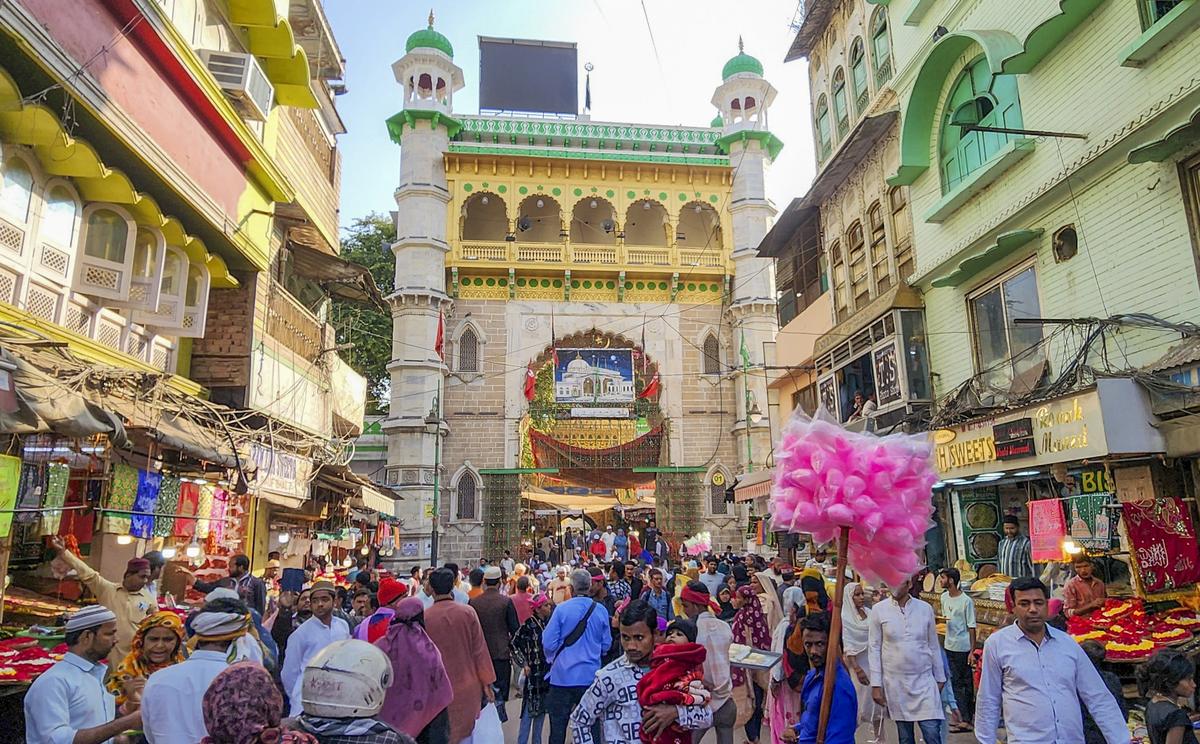
 People outside the Ajmer Sharif Dargah, Shrine of Moinuddin Chishti, in Ajmer, Rajasthan, on November 28, 2024.

People outside the Ajmer Sharif Dargah, Shrine of Moinuddin Chishti, in Ajmer, Rajasthan, on November 28, 2024.
| Photo Credit:
PTI

Case title: Bhagwan Shri Sankatmochan Mahadev Virajman & Ors v. Dargah Committee Khawaja Sahab & Ors

In September 2024, a civil suit was instituted by Hindu Sena Chief Vishnu Gupta claiming there was evidence of a temple dedicated to Lord Shiva at the site of the Ajmer Sharif Dargah. He has also sought an ASI-led survey of the site to establish its historical and religious origins. The suit further demands the reconstruction of the Bhagwan Shri Sankatmochan Mahadev temple on the disputed property. On November 27, a Civil Judge in Ajmer West issued notices to the Union Ministry of Minority Affairs, the ASI, and the Ajmer Dargah Committee in connection with the suit.

Shamsi Jama Masjid in Budaun, Uttar Pradesh

Photo: Wikimedia Commons

Photo: Wikimedia Commons

Case title: Bhagwan Shri Neelkanth Mahadev Mahakal (Ishan Shiv Mandir) v. Inrzamiya Committee tathakathit Jamiya Masjid (Jama Masjid Shamshi)

In September 2022, the Akhil Bharat Hindu Mahasabha filed a suit claiming that the Jama Masjid in Badaun is a Neelkanth Mahadev temple that was destroyed and converted into a mosque. The suit claims that the mosque was constructed by Sufi saint Badshah Sahamshuddin Altamash, a 13th-century pre-Mughal Muslim ruler of north India, after demolishing the temple. A fast-track court in Budaun is currently hearing arguments on the maintainability of the suit along with an application seeking a survey of the site. The case will next be heard on December 17.

Also Read: Timeline: Babri Masjid-Ram Janmabhoomi dispute

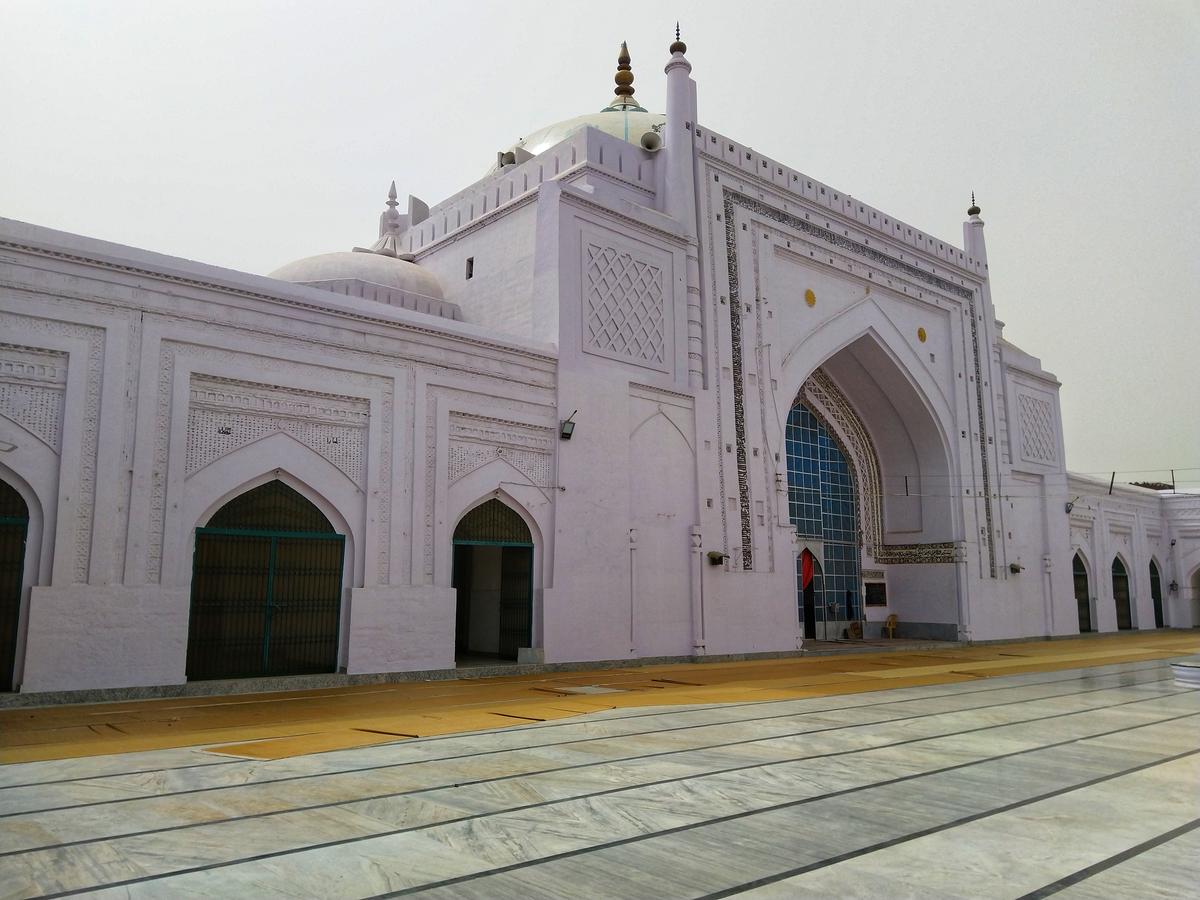
Atala Masjid in Jaunpur, Uttar Pradesh

Photo: Wikimedia Commons

Photo: Wikimedia Commons

Case title: Swaraj Vahini Association Bhadkhil Tehsil Madiahu Dist Jaunour Jariye Santosh Kumar v Peace Committee Jama Masjid (Atala Masjid) Bajriye Committee Sadar

In May 2024, the Swaraj Vahini Association, and Santosh Kumar Mishra (a local resident) filed a petition in a local court in Jaunpur seeking a declaration that the 14th-century mosque should be recognised as the “Atala Devi Mandir”. The petition contends that “followers of the Sanatan religion” have the right to worship at the site. Additionally, the petitioners have requested that the court grant them possession of the property and issue a mandatory injunction to prevent non-Hindus from entering the premises.

A survey has been ordered, and the court of civil judge (junior division) in Jaunpur is scheduled to hear a plea to provide security to the surveying authority on December 16. Meanwhile, the management committee of the mosque has moved a petition before the Allahabad High Court challenging the registration of the suit.

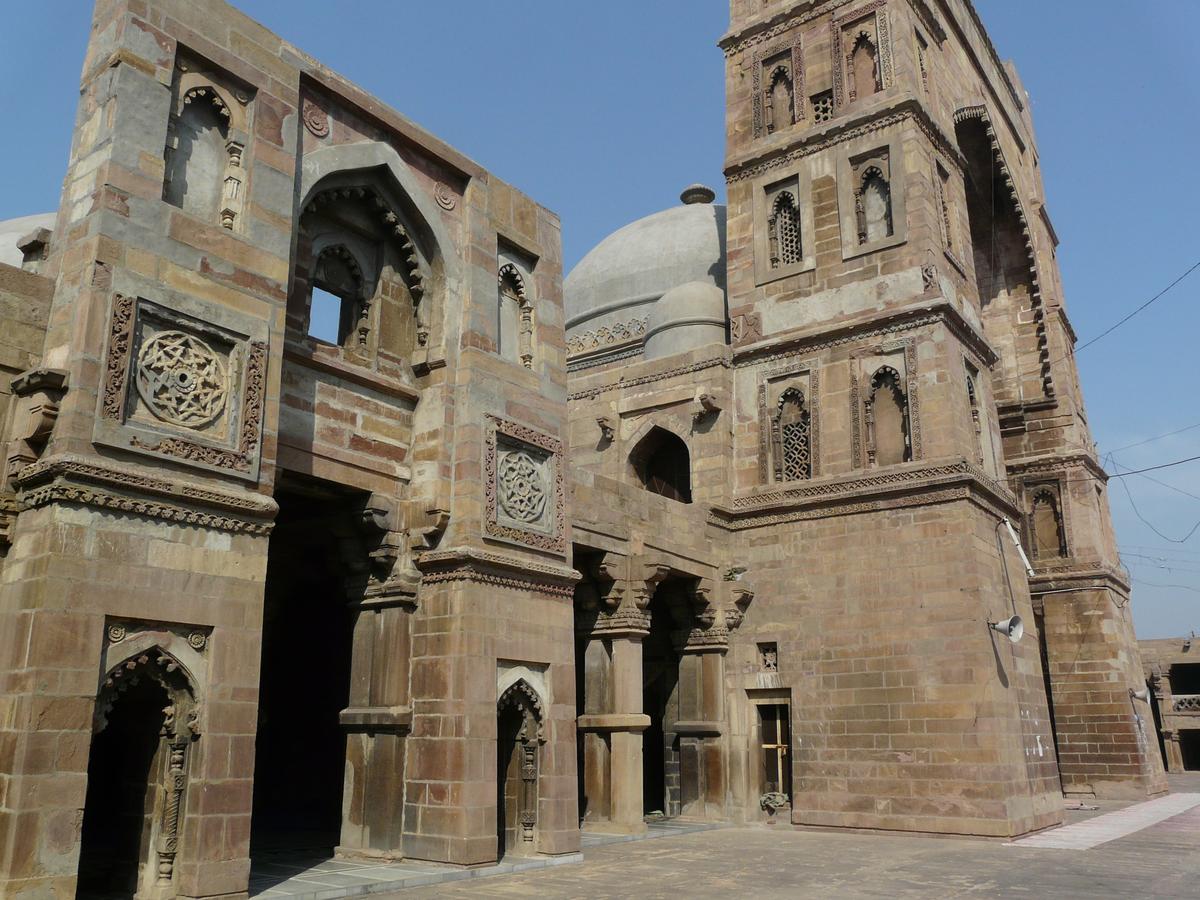
Kamal Moula mosque at the Bhojshala complex in Dhar, Madhya Pradesh

Photo: Wikimedia Commons

Photo: Wikimedia Commons

Case title: Hindu Front for Justice v. Union of India and Ors

A writ petition was filed in the Madhya Pradesh High Court seeking the reclamation of the Bhojshala complex for Hindus and requesting the prohibition of Muslim prayers (namaaz) on its premises. The petitioners also submitted an interlocutory application seeking a scientific survey of the site to ascertain its “true character.” In March 2024, the High Court ordered the ASI to conduct a “scientific survey” of the complex. On April 1, 2024, the Supreme Court refused to halt the ASI survey stressing that the monument needed to be ‘demystified and freed from the shackles of confusion’.

Also Read: What is the Bhojshala-Kamal Maula complex dispute? | Explained 

In July, 2024, the ASI submitted its findings to the High Court which stated that the existing structure of the Bhojshala complex was constructed using parts of earlier temples.

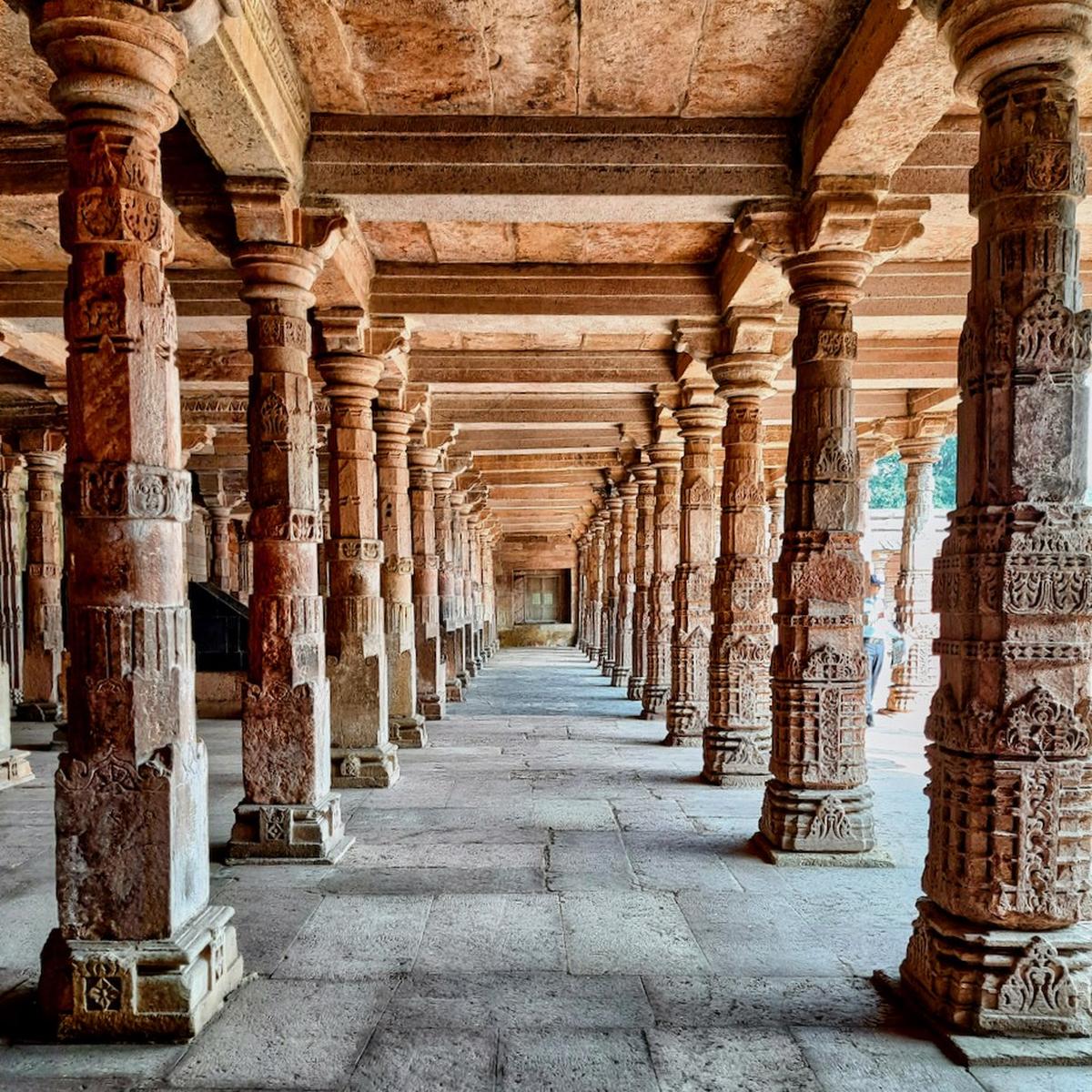
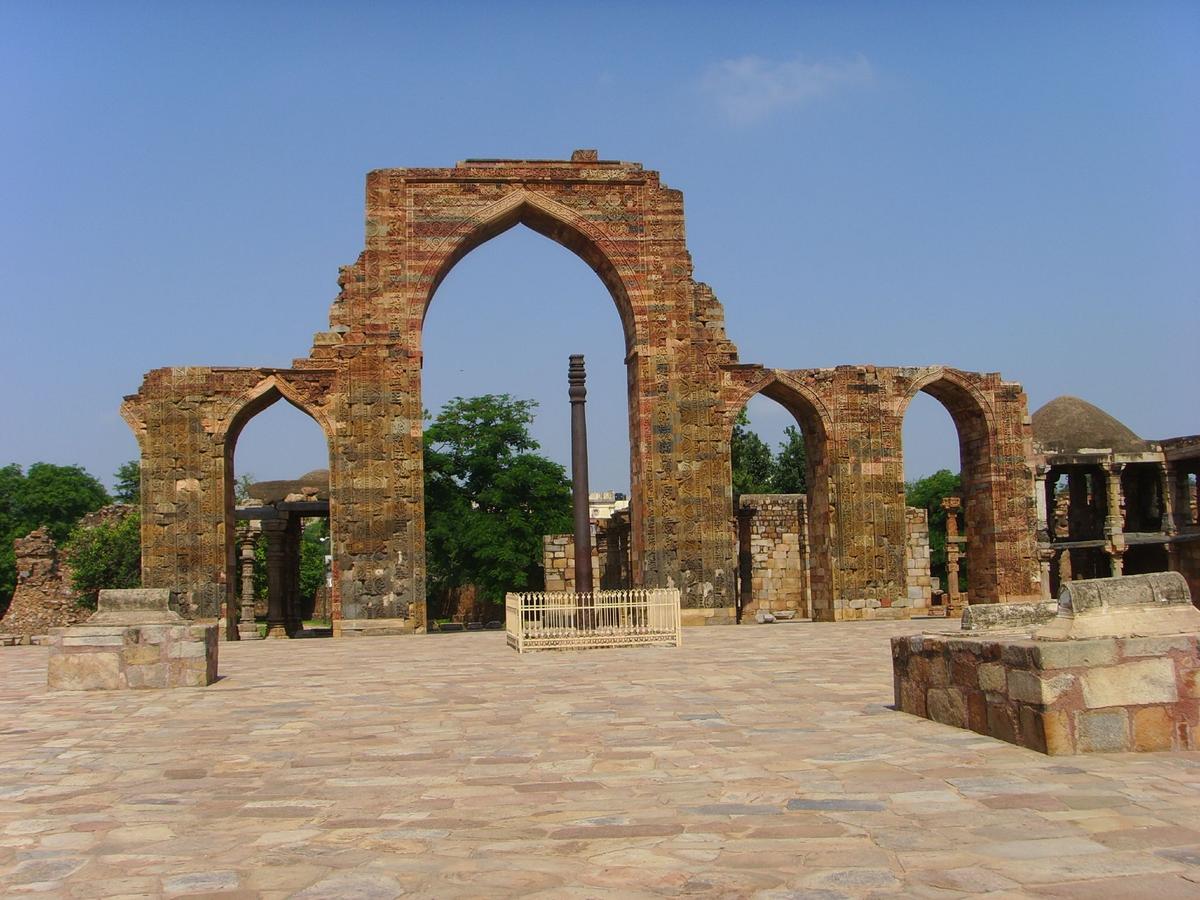
Quwwat-ul-Islam Mosque at the Qutub Minar complex in Delhi

Photo: Wikimedia Commons

Photo: Wikimedia Commons

Case title: Jitender Singh v. Union of India Tirthankar and Lord Rishabh Dev Through next friend Hari Shankar Jain v. Union of India

In 2020, a suit was filed on behalf of the deity Lord Vishnu, seeking the restoration of Hindu and Jain deities inside the Quwwat-ul-Islam Mosque, located within the Qutub Minar complex in Mehrauli. The petition claimed that 27 Hindu and Jain temples were destroyed to construct the mosque. In 2021, a Civil Judge in Delhi rejected the suit, ruling that it was barred by the provisions of the 1991 Act. A challenge to this order is currently pending before an Additional District Judge.

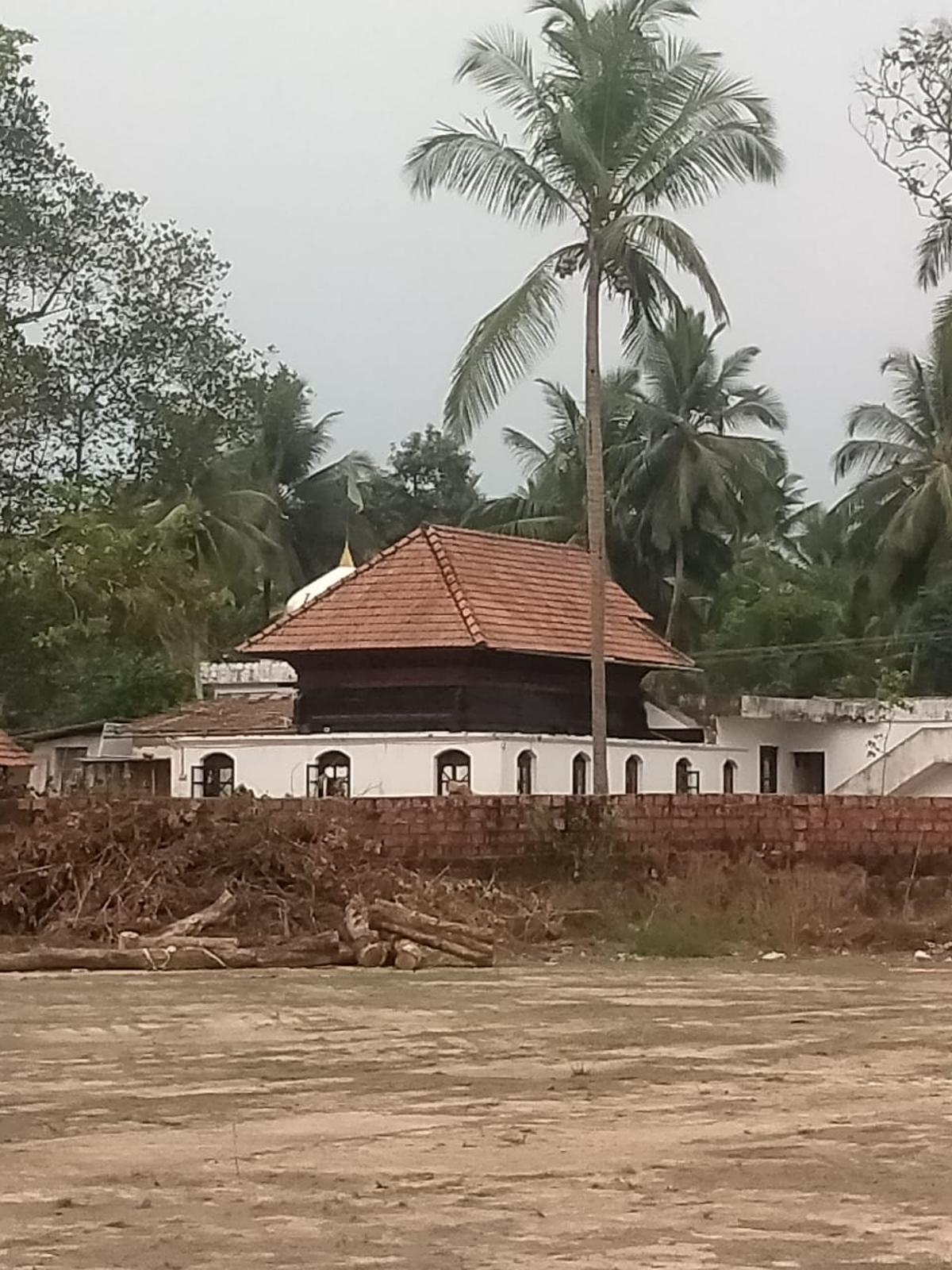
Malali Juma Masjid in Mangalore, Karnataka

Photo: ANI

Photo: ANI

Case title: Dhananjay v. Jumma Masjid Malalipete

In 2022, the Vishwa Hindu Parishad filed a suit claiming that a “temple-like” structure was discovered beneath the mosque during renovations. The suit requested a survey of the premises to further investigate the findings. On January 31, 2024, the Karnataka High Court directed the trial court to first determine the maintainability of the suits.

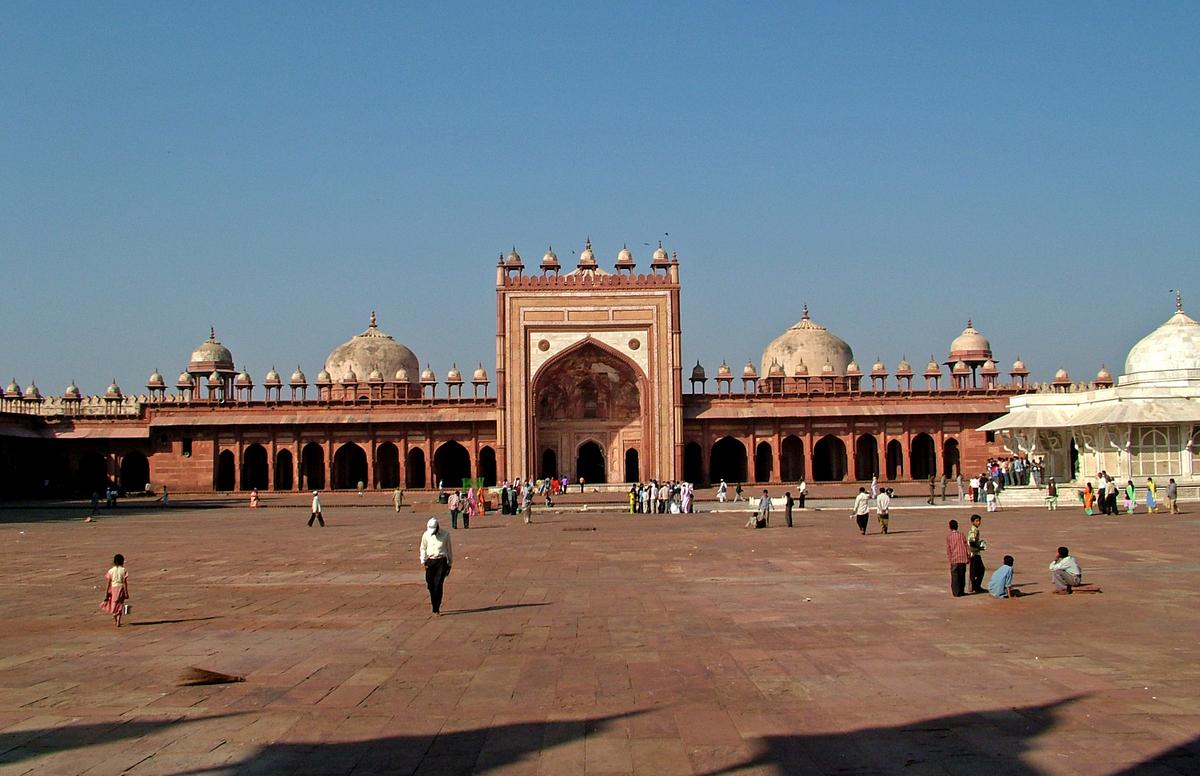
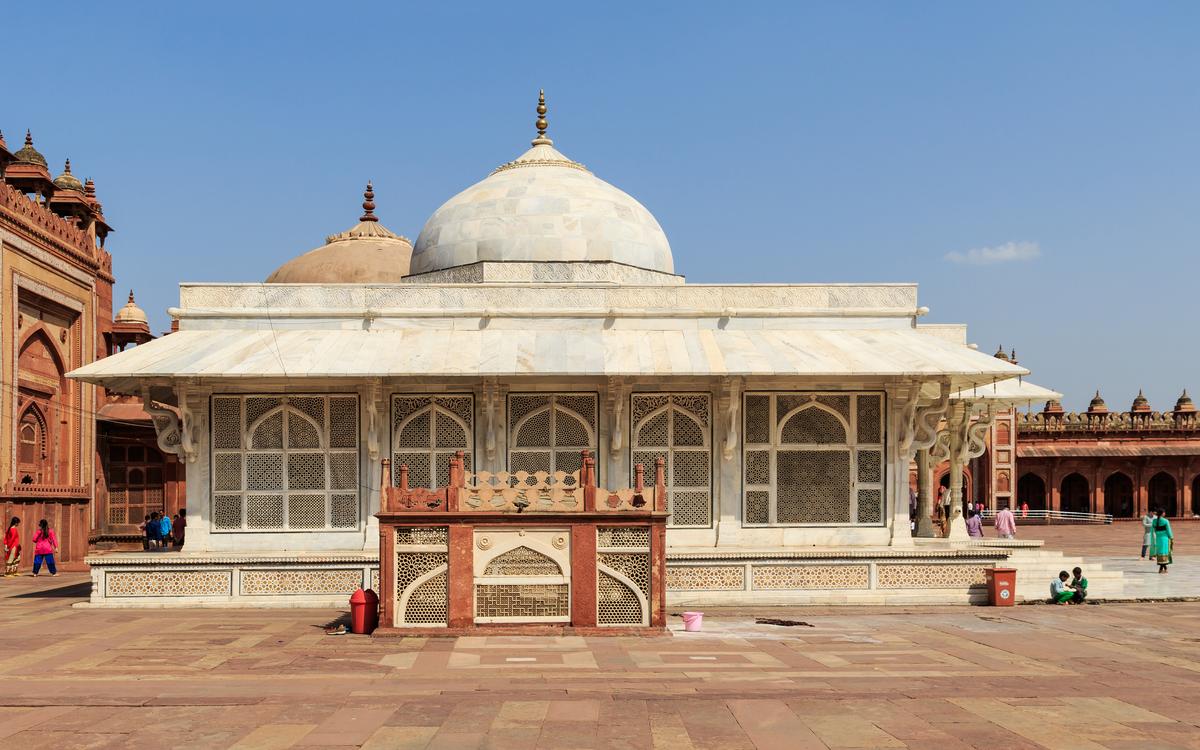
Jami Masjid and dargah of Shaikh Salim Chishti at Fatehpur Sikri, Uttar Pradesh

Jami Masjid, Fatehpur Sikri

Jami Masjid, Fatehpur Sikri

Case title: Shri Bhagwan Shri Kamakhya Mata Alias Kamakhya Devi v. UP Sunni Central Waqf Board & Ors

A suit has been filed by Ajay Pratap Singh of the Kshatriya Shaktipeeth Vikas Trust, claiming that the Dargah of Sheikh Salim Chishti and the Jami Masjid premises were originally part of a temple complex dedicated to Mata Kamakhya. The suit further alleges that Krishna idols were brought from the Sri Krishna Janmabhoomi site in Mathura and buried under the stairs of the mosque. A local court in Agra is scheduled to hear an application on December 23, 2024, seeking a survey of the mosque premises.

Tomb of Salim Chisti, Fatehpur Sikri. Photo: Wikimedia Commons

Tomb of Salim Chisti, Fatehpur Sikri. Photo: Wikimedia Commons


Five dead after shootings near Dunkirk

0
Five dead after shootings near Dunkirk


Getty French CRS Police (Republican Security Companies) block off a road near a migrant camp where two security guards and two migrants were shot dead, near Dunkirk, northern France, on December 14, 2024. Image shows a police van with blue flashing lights Getty

French CRS Police (Republican Security Companies) block off a road near a migrant camp where two security guards and two migrants were shot dead, near Dunkirk, northern France, on December 14, 2024

Five people have died in shootings in northern France, including near a migrant camp, and a 22-year-old man has turned himself in to police, according to French media.

Four people – including two security guards and two men staying in the camp – were fatally shot in Loon-Plage, a stretch of coastline near Dunkirk, the city’s chief prosecutor Charlotte Huet said in a statement, as reported by French media.

The gunman also confessed to an earlier shooting in the nearby town of Wormhout, the prosecutor added.

Dunkirk’s Mayor Patrice Vergriete said the motive behind the attacks “remains unknown”.

Several firearms were found in the suspect’s car and he was previously unknown to police, the prosecutor’s statement said.

All five murders were reportedly committed within less than two hours in the Dunkirk area.

According to the prosecutor, a 29-year-old man was killed with “several gunshots” at 15:15 local time (14:15 GMT) outside his house in Wormhout, a village just south of the city.

About 45 minutes later, two security guards aged 33 and 37 were killed near a port in Loon-Plage, just west of Dunkirk, Huet added.

Minutes later, two other men aged 19 and 30 were also shot dead. They were staying in the nearby migrant camp, the prosecutor said.

BBC News has contacted local authorities for comment.

Mayor Vergriete described the incident as a “tragedy” and said “an individual coldly murdered several people” in the area.

Xavier Bertrand, head of the region’s assembly, confirmed on X that five people had died in a “tragic event”.

French media reported a large emergency services presence close to a migrant camp, though it is unclear if the shootings took place inside a settlement.

Loon-Plage is home to several temporary settlements housing migrants. It is near to Calais and the Strait of Dover, which is the narrowest part of the Channel.

Similar camps along France’s northern coast have been used by people attempting to reach the UK via small boats.


CIL’s CSR spending surpasses Rs 5,570 crore in last 10 years

0
CIL’s CSR spending surpasses Rs 5,570 crore in last 10 years


CIL's CSR spending surpasses Rs 5,570 crore in last 10 years

NEW DELHI: Over the past 10 years, Coal India Ltd has allocated Rs 5,570 crore for Corporate Social Responsibility (CSR) initiatives with main primary focus on education, healthcare, sports, skill development and women empowerment, chairman PM Prasad revealed on Sunday.
“Coal India spent Rs 5,570 crore in Corporate Social Responsibility initiatives over the past 10 years,” Prasad said.
During the inauguration of the 3rd CIL CSR Conclave 2024 on Sunday, West Bengal Governor C V Ananda Bose highlighted the significant role of CSR initiatives in uplifting communities, particularly in the tribal areas of coal-rich regions.
“CSR initiatives are a powerful tool to transform lives, especially in vulnerable regions,” Bose told news agency PTI.
He also complimented the PSU’s contributions, including its efforts to support cancer patients, and said that such initiatives contribute to the holistic development of the nation.
Coal Secretary Vikram Dev Dutt also praised coal companies for their impactful CSR projects over the past decade, highlighting the positive impact of these initiatives on coal-bearing regions.
“Communities in coal-bearing areas are equal stakeholders in coal companies’ activities. A theme-based CSR calendar can help prioritize key areas, starting with education in January,” Dutt said.


School’s out — out in the open

0
School’s out — out in the open


Endless acres of land covered in yellow mustard glisten in the winter sun. In between are deep violet onion shoots springing out of vegetable patches. The scene paints a deceptive picture of abundance in the Nagina block of Nuh district in Haryana.

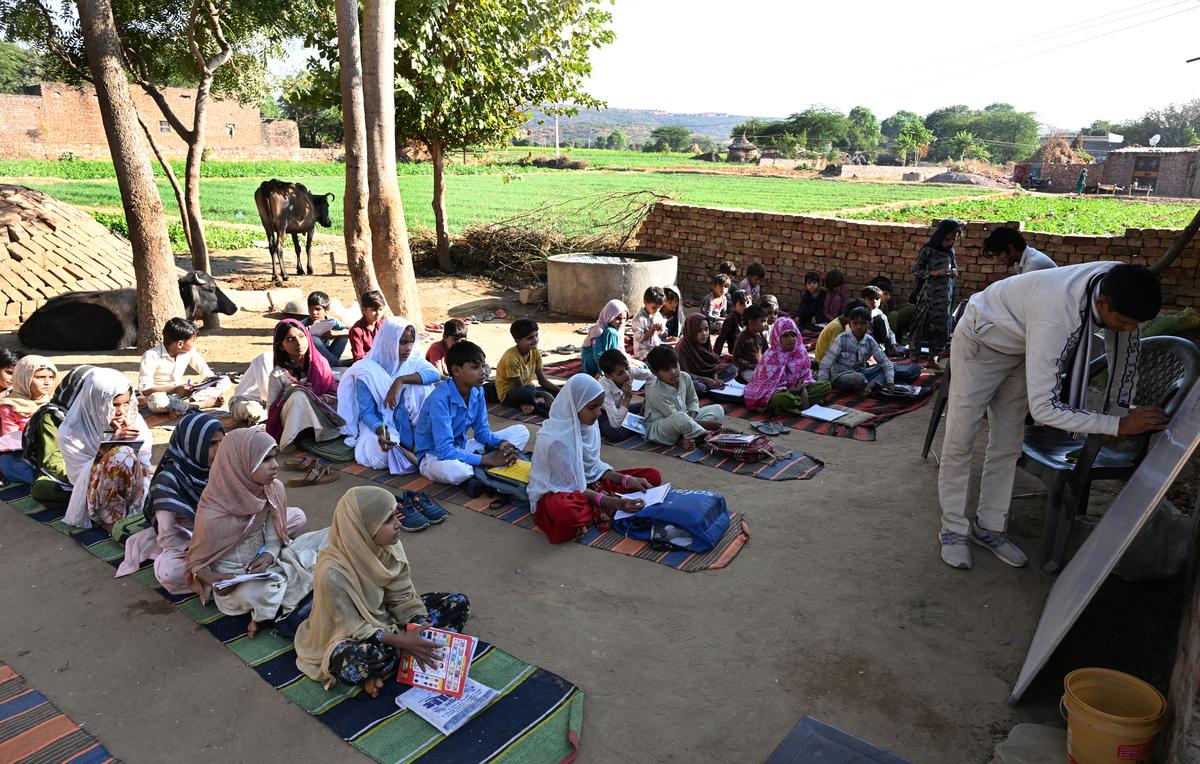
Closer to Padodiyabass village in Nagina block, children from Class 1 to 5 revise maths tables, their shrill chorus heard from a few meters away. The 30-odd children are seated under a shady neem tree with six cows to keep them company. The open space under the tree also doubles up as their classroom. The cows sip on cool water from a large concrete container, but there is no sight of a school building, toilets, or drinking water for the school children. All of these are prerequisites to run a school in India. As evening approaches, the eager children neatly form a line and tread back home through the fluorescent green fields. A herd of goats rush in through the gates to occupy the shed.

“Over the past four years, I have been scrambling for space in Padodiyabass after the school was made functional on paper by UDISE registration,” says Hari Ram, the school teacher who has been posted in at the Government Primary School in Padodiyabass. UDISE, the Unified District Information System for Education, is a database of schools in India run by the Department of School Education and Literacy, under the Ministry of Education.

Data from UDISE from the District Education Office show that the Government Primary School (GPS) in Padodiyabass features among 19 primary schools in Nuh district declared ‘buildingless’. The District Education Department has been unable to construct a building for them, despite allotting them a UDISE code in 2018-19.

Over the last six years, the schools have been running out makeshift spaces: under trees, in animal sheds, in homes, or at a village chaupal (community space). On paper, besides a building, a school should have an open playground with an impregnable boundary wall for the children’s safety.

Alladin, 58, who lent his shed to run the school says, “The school has been shifted thrice. Before this, it was running out of another villager’s shed, and for some time even out of someone’s house.”

Out of 500 government primary schools in Nuh district, 10 of these building-less schools function out of Firozepur Jhirka block, four are in Taoru block, three in Nagina, one each in Nuh and Punhana blocks. The Hindu visited four of these schools: GPS Kubdabass, GPS Ghatwasan, GPS Malibass in Firozepur Jhirka block; and GPS Padodiyabass in Nagina.

None had an assigned building, a toilet, drinking water, or electricity. There were no sports or play equipment in sight. In Padodiyabass, the teaching learning material was stacked in an animal shed, and the teachers were worried the rain would ruin it.

Squeezing out space for children

According to the Right To Education (RTE) Act, 2009, there should be one primary school accessible to children in the radius of 1 kilometre within the village. But 10 years later, children of Kubdabass were still traveling 3.5 km away to Rawli village to access the nearest school.

In 2019, when villagers of Kubdabass started demanding that a primary school be allocated to them according to these norms, the Education Department allotted them a UDISE code and a teacher was allocated. Mahesh Kumar, 27, a contractual teaching assistant, who was assigned GPS Kubdabass was shocked on his first day on the job in 2022. “The school merely existed on paper; there was no building,” Kumar says.

Kumar knocked on the doors of the people of Kubdabass, asking them to send their children to ‘school’. He chose a shady tree near the village well, and with a single rug and a black board, started holding classes there for children up to 11 years. The villagers started getting increasingly concerned for the safety of their children who were studying out in the open.

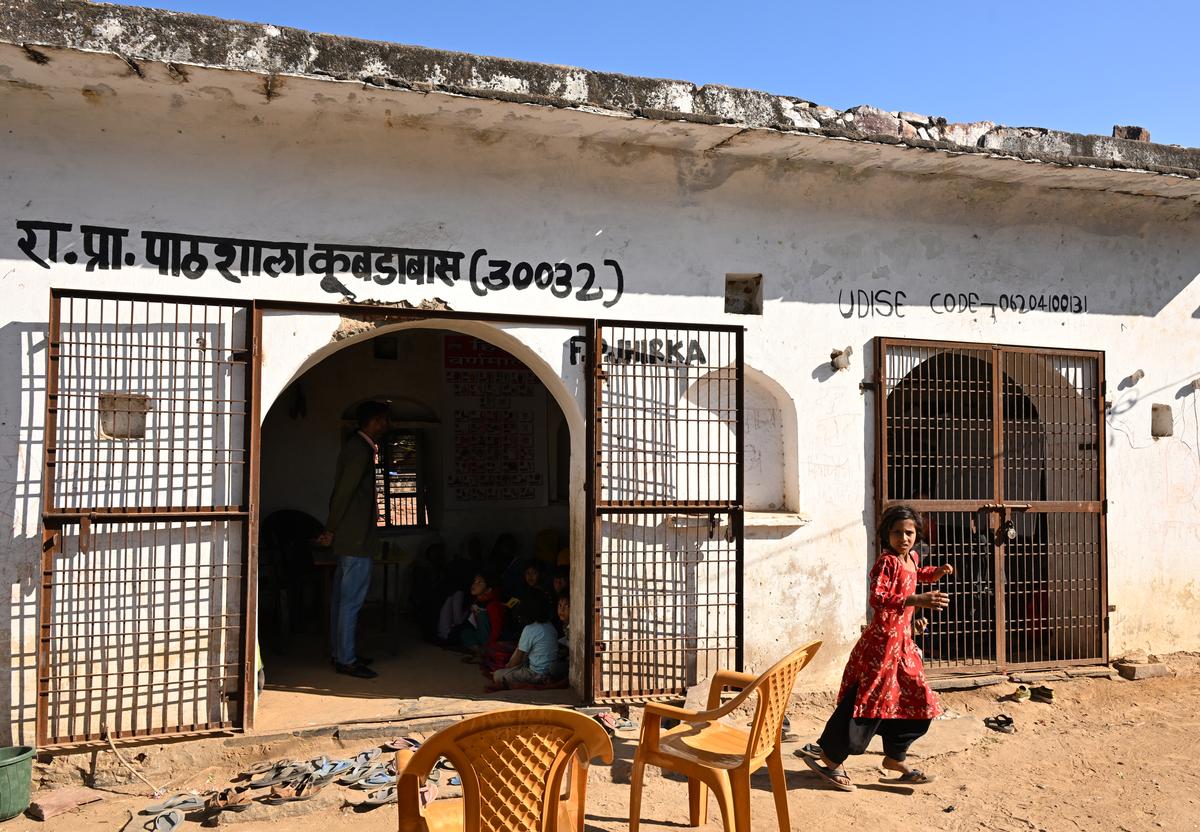
A government primary school run in a century-old dilapadated building in Kubdabass village, Nuh district, Haryana.

A government primary school run in a century-old dilapadated building in Kubdabass village, Nuh district, Haryana.
| Photo Credit:
MOORTHY RV

“The mouth of the well had to be closed. We were scared of a mishap. During the monsoon, snakes would creep out of the bushes,” says Goggan Haji Mahtab, 60, a Kubdabass resident.

As a makeshift measure, the villagers in Kubdabass spread some rugs over the kaccha mud floor of an over 100-year-old dilapidated room. They etched the UDISE code 06204100131 on the building, where now up to 60 children study. It houses Classes 1 to 5, and the bal vatika or playschool. The room is a village chaupal where in the evening, residents gather to discuss local matters. “There is still no boundary wall, no drinking water, no toilets, and no hot-cooked midday meals,” says Kumar.

Mahtab adds that the village gets electricity only for six hours a day, and so many children in an overcrowded room, in an area where temperatures soar to 48 degrees Centigrade, is another challenge. “There is always a fear of a roof collapse,” he says.

Unique challenges 

District education officials allege that buildings for these 19 schools have not been constructed as the Gram Panchayats of the villages have not allotted land to build the schools.

Each village has unique challenges. In Kubdabass, the village is designed in such a way that there is a dearth of pattey ki zameen, which is land under the Panchayat’s control within a kilometre’s radius of the village. “All land patches in the village are privately owned. The government will have to try and acquire land by providing compensation. No villager will voluntarily offer up his land for free,” says Ashfak Ali, a social worker in Firozepur Jhirka block, under which the village falls. “When the government can acquire land for massive infrastructure projects by providing compensation, why can’t they do this for building schools?”

In another case, UDISE records specify that a Government Primary School in Ghatwasan village is running out of a private house as land has not been provided by the Gram Panchayat. On ground, nearly 50 villagers at Ghatwasan walk to an acre of pattey ki zameen or panchayat land they have carved out for the school building. This was done over a year ago in coordination with the village Sarpanch.

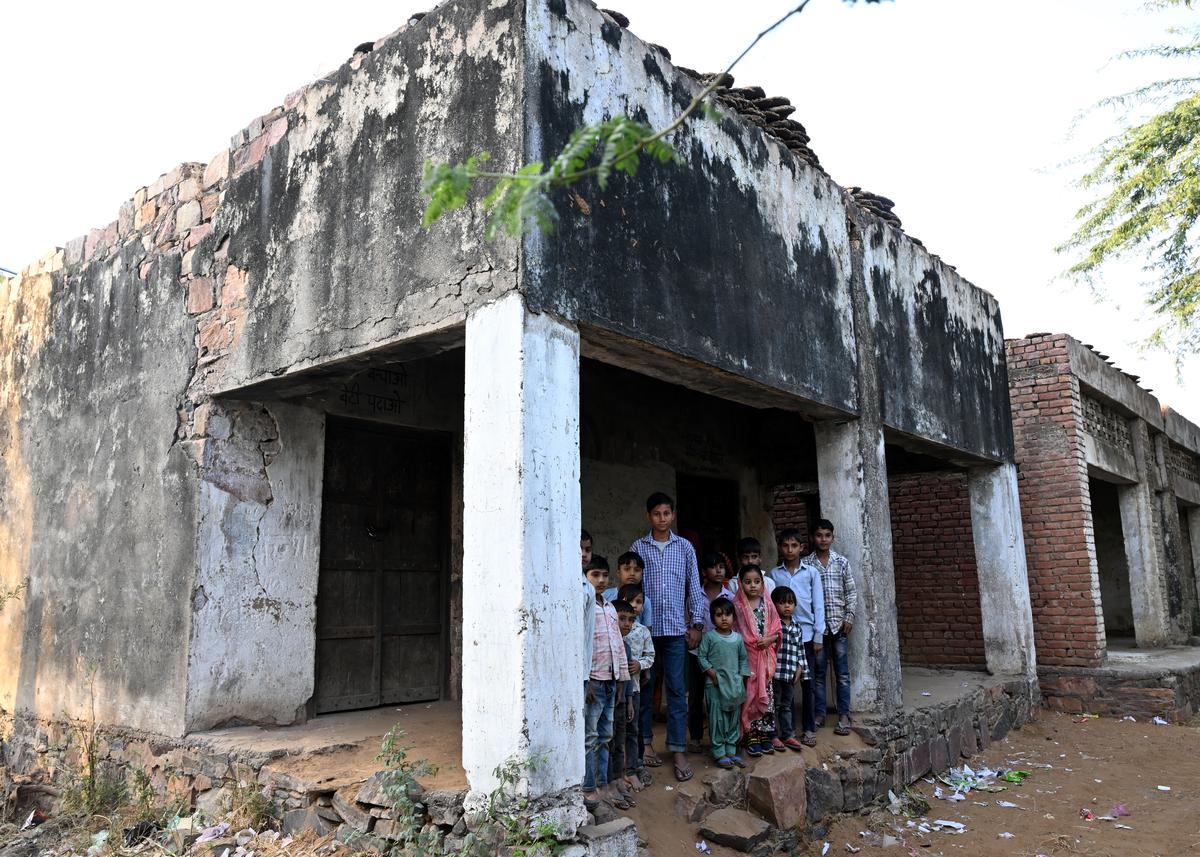
The two-room structure in Ghatwasan village which serves as the primary school ‘building’.

The two-room structure in Ghatwasan village which serves as the primary school ‘building’.
| Photo Credit:
MOORTHY RV

Now, in the two-room house that children currently call ‘school,’ 30 sacks of rice lay stacked a corner. As the application for a new school building gathers dust at government offices, thousands of ants form neat lines, making their way towards the rice, through crevices of the half broken doors of the crumbling structure.

Robin Khan, Sarpanch of Ghatwasan village maintains a bulky file of letters he has written to the District Education Office at Nuh requesting them to process the village’s application at the district and State levels, so that ultimately the land can be transferred to the State government. “It is only after the land is transferred, will the Central funds for constructing the school building be released. We have been running around for a year trying to getting a building constructed,” Khan says.

‘Punishment’ postings

Located nearly 100 km away from India’s capital Delhi, official appointments in the district of Nuh have always been viewed as ‘punishment postings’. At the District Education Office Pramjeet Chahal, Nuh’s District Education Officer (DEO) is juggling duties of four other senior posts which lie vacant: that of the District Elementary Education Officer (DEEO), heads of District Institute for Educational Training (DIET) and Block Institute for Educational Training (BIET), and the District Programme Coordinator for Samagra Shiksha, the central government’s flagship scheme that provides budgetary support for schools.

Chahal, who was formerly the principal of the DIET in Gurugram was appointed by an expert panel to weed out corruption in the district’s education department.

He sits uneasily on the chair of the District Elementary Education Officer, Mukesh Yadav, who had been in the position for a year, before being put behind bars, along with the former DEO Ramphal Dhankar, last year. They were caught by the Anti-Corruption Bureau, Haryana, when Dhankar was accepting a bribe of ₹10 lakh for favouring a firm in procurement of school benches.

According to latest data obtained from the District Elementary Education Officer, as on November 14, 2024 up to 48% of the 7,906 teaching staff posts in primary schools are vacant.

“Out of the 30 teachers selected by the State in the academic year 2023-24, only three joined. It shows how teachers don’t like Nuh as a place of posting,” a senior district education official says.

A teacher of a primary school in Padodiyabass teaching students beside an open field, with no arrangement for toilets, drinking water or electricity.

A teacher of a primary school in Padodiyabass teaching students beside an open field, with no arrangement for toilets, drinking water or electricity.
| Photo Credit:
MOORTHY RV

To remedy this situation, the Mewat Development Agency (MDA) that plays a role in the area’s socio-economic growth, joined hands with non-profits and started recruiting Shiksha Sahayaks or Teacher Assistants in 2022. Newly graduated teachers were paid a monthly salary of ₹17,000, as a makeshift measure.

In the school at Malibass village in Firozepur Jhirka, two teacher’s assistants sit with close to 50 children clustered in a single dark room. “We have been employed on a contractual basis, and there has been no raise in our pay for three years now. Last year, the renewal occurred after a delay of three months, leading to a late start in the academic year, only in September,” says Rekha Saini, 26, a teacher assistant at the school. This also meant a break in pay. At times their salaries are delayed by two or three months, she adds. They did not get paid in November, which is also the time when Diwali is celebrated.

The lack of educational facilities exacerbates the problem of children skipping school or dropping out altogether. In 2023-24, according to data obtained from DEO, 4,446 children from Classes 1 to 8 dropped out of school. Officials claim they were able to track 3,926 of these students and enrol them in 177 Kadam Centres to help them bridge the learning gap that they had accrued due to missing school. Kadam Centres are run by the international non-profit Humana People to People that addresses developmental challenges.

At least 520 children who dropped out, have slipped through the cracks. They have not returned to school.

A land of paradox

“All schools ranging from primary to secondary receive between ₹25,000 and ₹1 lakh as an annual grant for running and maintenance, under the central Samagra Shiksha scheme,” says a senior district education official working with the Prime Minister’s Schools for Rising India (PM-SHRI). This is for repairs, building toilets, replacing old equipment, paying for electricity and internet, conducting competitions, paying for transport if students are referred to a hosiptal under the school health programme, among others.

However, another 13 schools have been chosen to receive additional funding under the PM-SHRI scheme. Nuh is under the Prime Minister Narendra Modi’s pet project ‘Aspirational Districts Programme’ which aims to transform 112 most under-developed districts across India.

Education officials say that in Nuh students have little or no access to television or cell phones at home. In February this year, 2,500 students from 50 schools of Nuh from Class 6 to 12, were filled into buses and driven to Delhi, nearly 100 km away on a day picnic to see the spring blooms in Rashtrapati Bhavan’s Amrit Udyan.

“It was a wondrous sight to see 40-storey tall buildings, planes landing at the airport near Dhaula Kuan, and the rapid scale of urbanization so close to us. It was a completely strange universe,” says Chahal. He remembers some of the children gawking at these sights, saying, ‘Is this also our India?’


Kenya’s devastating drought is the worst in 40 years | Climate Crisis

0
Kenya’s devastating drought is the worst in 40 years | Climate Crisis


Drought in Kenya has reached dramatic levels, with millions of people affected by the lack of water and food. This phenomenon, which until a few years ago followed predictable seasonal cycles, has become increasingly frequent and intense.

Recent climate crises have worsened the living conditions of the inhabitants of arid and semi-arid regions, whose survival depends heavily on agriculture and livestock.

According to the United Nations, in this historical phase the Kenyan people are experiencing the worst water crisis in the last 40 years and millions of people do not have stable access to safe water sources. Rivers, lakes and aquifers are slowly drying up. In the northern areas of Kenya, women and children are forced to travel ever greater distances every day to collect unclean water from the subsoil, which can cause infections and diseases.

In the 2024 UN Climate Change Conference (COP29) held in Baku, Azerbaijan this year, Kenya reiterated the need for more financial support from developed countries to find adaptation solutions and help the country overcome such a difficult time.

Among the main outcomes of the conference was the “Baku Climate Unity Pact”, which includes new collective financial targets to support vulnerable countries and a roadmap for global climate adaptation. This agreement aims to strengthen the resilience capacity of all countries that, like Kenya, are the most affected by climate change – some of which are the least industrialized, and consequently, those with the least greenhouse gas emissions.

The results of COP29 highlight a strong global commitment to support the most vulnerable nations, but the main challenge remains to transform promises into concrete actions to mitigate the effects of drought and climate change on Kenya and other countries experiencing similar situations.