Mohammed al-Halabi is one of thousands of Palestinians living on Gaza’s beaches
The beaches of Gaza are no longer for day trips. Tens of thousands of people now have to live on the coastline, forced to leave their homes during the war.
In recent days they have come under a new kind of assault: from winter seas battering their flimsy, makeshift dwellings.
“Nothing is left in the tent: not mattresses, bedding, bread, everything was taken. The sea took it,” says Mohammed al-Halabi, in Deir al-Balah.
“We rescued a two-month-old child who was dragged out to sea.”
Nearly all of Gaza’s 2.3 million population is now displaced and nine in ten of those living in shelters are in tents, the UN says.
With temperatures plummeting, many people have been falling sick. There have been floods of rainwater and sewage.
“My children’s feet, their heads—everything is freezing,” Shaima Issa tells the BBC in Khan Younis. “My daughter has a fever because of the cold. We’re essentially living on the streets, surrounded by strips of fabric. Everyone here is sick and coughing.”
“When it rains on us, we’re drenched,” adds her neighbour, Salwa Abu Nimer, crying. “The heavy rain floods us, and we don’t have a waterproof cover. The water seeps into the tent, we wear our clothes wet.”
“No flour, no food, no drink, no shelter,” she went on. “What is this life I’m living? I go to the ends of the earth just to feed my children.”
Nine in ten Palestinians living in shelters, including Salwa Abu Nimer (left) and her child, are staying in tents
While the situation is worst in the north, UN officials are warning of dire shortages of medicines, food, shelter and fuel across Gaza, describing the situation as “catastrophic.”
There are long queues for charity handouts in parts of central and southern Gaza where most people are living.
On successive days, our local cameramen have filmed hundreds of people crowding outside bakeries where there is very little bread. At times, there are crushes as those waiting surge forward.
“I need a loaf of bread. I have pain, diabetes, and high blood pressure. I can’t push through crowds of people; I’m afraid I’ll suffocate and die,” says Hanan al-Shamali, who is in Deir al-Balah but originally comes from northern Gaza.
“I need bread so that I can feed the orphans I take care of. Every morning, I come here. In the end, do I get bread or not? Sometimes I get it, but most of the time, I don’t.”
The BBC’s local cameramen in Gaza filmed people crowding outside bakeries, desperate for bread
At the Kerem Shalom crossing, Israel’s main crossing point with Gaza, last week journalists were shown lorries moving goods that had gone through security checks.
Aid entering the Palestinian territory remains at some of the lowest levels of the past year. Israel blames aid agencies for distribution problems.
“Unfortunately we’re still seeing that the biggest backlog for humanitarian aid getting to where it needs to get to is the distribution capabilities of the international organisations, as the 800 trucks worth of aid around me attest to,” said Shimon Freedman, spokesman for Cogat, part of the Israeli military that control the crossings.
But inside Gaza, humanitarian workers say armed gangs have been looting incoming supplies brought through Kerem Shalom amid increased lawlessness. This has now led the biggest UN agency operating in the territory, Unrwa, to pause its use of this route for deliveries.
The overall picture, says Antoine Renard, local head of the UN’s World Food Programme, is of Palestinians facing “a daily struggle for survival”.
“The levels of hunger, devastation and destruction we are seeing now in Gaza is worse than ever before. People cannot cope anymore,” Mr Renard says. “There is barely any food coming in while markets are empty.”
Amid the destruction in Gaza, there is still no end in sight to the war. Just the expectation of more suffering, as cold weather sets in.
As the US Thanksgiving season wrapped up with flat sales, retailers are trying to lure in customers with a wide range of promotions and discounts on cosmetics, electronics, toys, clothing and other merchandise for Cyber Monday, America’s biggest online shopping event. Retailers have been strategizing to pull in US shoppers with notifications, mails and other heavily touted ads. With a little more than three weeks before Christmas, experts say this year’s discounts have been steeper, as shoppers are holding out for days packed with promotions. Retail chain Target, announced a “two-day Cyber Monday” starting on Sunday, offering 50 per cent discount off thousands of items that included video games, home decor and other technology. According to preliminary estimates from payments processor Mastercard, sales at brick-and-mortar stores on Friday increased by only 0.7 per cent compared to last year. Meanwhile, data firm Facteus reported that sales were actually down. In order to make it easier to help shoppers find their products on websites and mobile apps, Amazon, Walmart and other online retailers relied on generative AI customer service and search features. Cheyenne Berens, a 29-year-old resident of Pittsburgh, also used Amazon’s generative AI chatbot services to track price of merchandise, as quoted by Reuters. “I have found that using Rufus on Amazon has been extremely helpful in determining whether a ‘deal’ is actually a ‘deal’,” Berens said. Caila Schwartz, director of consumer insights at Salesforce which is a cloud computing company that monitors global shopping data from over 1.5 billion consumers, explained that GenAI tools, like chatbots that handle basic queries from online shoppers about products, have helped retailers safeguard their profit margins despite increasing costs. He also noted that, according to Salesforce estimates, retailers who utilized GenAI tools for customer service experienced a 15 per cent higher purchase rate among users on Saturday. Schwartz said that the higher conversion rate acted as “a game changer.” According to preliminary estimates from Adobe Inc., online spending in the United States on Monday is projected to hit $13.2 billion, a 6 per cent increase from Cyber Monday last year. This follows the approximately $10.8 billion Americans spent online on Black Friday, as reported by Adobe. Adobe reported that traffic to retail sites from chatbots or shoppers clicking on website links increased by 1,800 per cent from Black Friday through the weekend With many Americans taking on more debt, most are turning to third-party ‘buy now, pay later’ services, and spending on these services is expected to reach $1 billion, according to Adobe projections. Adobe tracks devices using its software, which powers over 1 trillion visits to US retail sites.
India’s 205 million acres of commons—spanning forests, pastures, and water bodies—are a lifeline for over 350 million rural people, including marginalised groups like Scheduled Castes, Scheduled Tribes, and women. These resources provide essentials such as food, firewood, and fodder, but their overuse has deepened climate vulnerability and rural distress. Equally critical are the customary self-regulation practices of local communities, particularly in tribal areas, which ensure sustainable use and foster inclusion and representation in grassroots democracies.
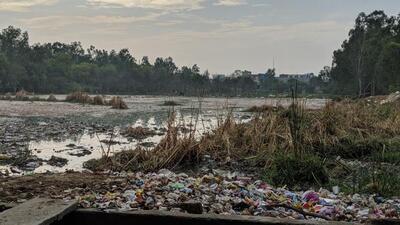
A waterbody near Surajpur police line (Greater Noida) being used as wasteland. (HT File Photo)
Jagdeesh Rao Puppala is the chief executive officer of Living Landscapes, a backbone organisation that supports the Common Ground initiative, a collaborative effort involving 23 organisations. He previously served as the CEO of the Foundation for Ecological Services (FES) for over two decades.
Q. How do existing Indian laws and regulatory frameworks facilitate or hinder effective commons conservation, particularly in the context of climate resilience and adaptation?
Answer: We are on the brink of crossing the 1.5-degree Celsius mark and are witnessing the disastrous impacts of climate change. Many significant changes like biodiversity loss, failing soil health, and depleting groundwater levels often go unnoticed. These are clear signals of a failing relationship between humans and nature. The time for debating or denying these changes has passed; now is the time to act.
India has several policies and financial flows supporting climate action, including climate missions and action plans. Acts like the Forest Rights Act (2006) and the 73rd and 74th Constitutional Amendments promote decentralisation or devolution. Funding mechanisms such as NREGA, CAMPA, and DMF, along with tools like GPDP and the Panchayat-SHG architecture, provide a strong foundation. Beyond governments, other think tanks and resource agencies also contribute significantly.
Despite such enabling conditions, there is a major gap in translating the intent into practice. Public policy often focuses on solutions driven by governments or technology, viewing citizens as passive recipients rather than active participants. Addressing climate change, biodiversity loss, and depleting water resources demands interdisciplinary collaboration, which is more often than not neglected.
Although every state has Land-use Boards, desirable practices are often ignored. Developmental approaches instead lean on land ownership, leading to permanent undesirable changes. Though the government constituted 13 or so committees over decades, agroecological zone-based planning remains ineffective. Since climate change affects each geography differently, planning aligned with local agroecological zones is essential.
Communities require tenure security and local institutions to invest in their lands for long-term benefits. However, the dominant notion that local communities cannot manage their resources effectively persists. Though governments step in, their reach far exceeds what they can grasp capably. A collaborative approach with layered roles for communities and governments could yield better results.
Q. Given India’s complex regulatory landscape, what changes would you advocate to strengthen commons governance to meet the country’s climate commitments?
Answer: Commons, by their very definition, are two-faced – ecological commons are shared resources such as community forests, pastures, and water bodies. Equally important is the self-regulatory nature of communities in framing rules and regulations of local self-governance. To strengthen Commons, secure collective property rights and match self-governing institutions need to be established. The Forest Rights Act (FRA) and 73rd and 74th Constitutional Amendments provide adequate space. However, we need to ramp up their implementation in true spirit. Such devolution does not necessarily do away with the role of governments, instead, the government’s role could be enhanced to provide an enabling environment and also play the larger regulatory functions rather than on-ground implementation and management.
It might be reductionist to look at ecological Commons in isolation. In most human-inhabited landscapes, there are private spaces, collective or common spaces, and public spaces. A landscape approach can ensure that Commons are preserved alongside private and public lands, creating a continuum where preservation, conservation, and resource extraction, could serve ecological and economic priorities. Ideally, planning based on agroecological zones and with an area-based approach could promote place and context-based land use and action, which is much needed for addressing climate change.
India’s commitments, under national and international frameworks, aim to address climate change, biodiversity conservation, land degradation neutrality among others. While these commitments are much necessary, there is considerable room to purposefully address these in a composite manner. An area-based approach can bring a cohesive perspective that integrates forests, water, agriculture and livestock systems. Coupled with efforts that enhance local self-governance, such area-based approaches could create synergies that advance climate action and several other Sustainable Development Goals (SDGs) in a rounded and impactful manner. Similarly, the National Rural Employment Guarantee (NREG), which is currently focussed on individuals, needs to be embedded in such an area-based approach to pay double dividends.
Q. Self-governance has proven effective in several commons management models worldwide. In the Indian context, what role do traditional and local governance systems play in conserving commons, and how can they be integrated more effectively with formal regulatory frameworks?
Answer: India has a long history of self-regulatory systems. Forest-dwelling communities and pastoral groups have developed mechanisms to manage their environments effectively. These traditional systems often operate on principles of shared responsibilities, equitable access, and stewardship. However, challenges arise when customary laws, such as the collective relationship of tribals with forests, do not align with modern property laws that are centred on individual ownership. Similarly, tensions exist between customary institutions like Panch Systems and formal frameworks like Panchayati Raj Institutions (PRIs). While customary institutions are considered ‘informal’ by outsiders, they are very formal in the day-to-day affairs of tribal communities even today. Superimposing modern laws and institutions on the customary ones yields suboptimal and at times very undesirable outcomes.
Adaptation measures like storage, mobility, diversification, and communal pooling, developed over centuries, are still relevant today. Storage includes preserving resources like seeds or grain for future shortages, while mobility refers to moving resources or communities to manage seasonal changes. Diversification spreads risks across different livelihood activities, and communal pooling ensures shared access to resources. Such practices, deeply rooted in local traditions, offer valuable lessons for designing adaptation strategies.
The institutional design underpinning the FRA in India is probably the most seminal advancement worldwide in aligning customary laws, norms and practices of communities living close to natural systems with contemporary laws and institutions. They also move beyond current thinking of ‘settlements’ or village-focused public policy to looking at inter and/or trans-village associations (such as hunting in different parts of the landscapes; gathering honey or specific forest produce; celebrating particular forest deities or rituals) that communities living in the proximity of forests are accustomed to.
At another level, while designing the PRIs, the lawmakers relied on the traditional Panchayat systems then prevalent in rural India and went a step ahead into making them more democratic and inclusive. While the deficiencies in the PRI system could be argued, they remain the constitutionally mandated lowest form of local self-governance critical for governing the Commons. With political backing some states advanced in making them work and certain reforms are further needed in devolving further to wards/hamlets.
The SHG framework, widely established across India, can serve as a bridge for integration, though its primary focus on economic upliftment means it may not be fully inclusive of all villagers. Embedding SHGs within larger governance structures, like panchayats, could enable broader inclusion and strengthen their role in environmental stewardship. A successful example is the Kudumbashree SHGs in Kerala, which are embedded into local governance institutions to drive both economic and governance initiatives. By marrying economic and governance-related functions, this approach can build an adaptive foundation for Commons conservation, integrating traditional knowledge with modern scientific insights.
The key to effective integration lies in bridging traditional and modern systems. Customary institutions should be complemented by formal regulatory structures. This requires a nuanced understanding of local practices and respect for the cultural and ecological knowledge embedded within them. Combining these strengths with scientific insights could create governance models that are both inclusive and adaptive to current challenges.
Q. India has made several global climate commitments under frameworks like the Paris Agreement. How can a stronger focus on commons stewardship contribute to these commitments, especially concerning biodiversity, carbon sequestration, and community resilience?
Answer: India’s ecological commons provide a singular platform for addressing poverty alleviation, reducing inequalities, and enhancing ecological health. Ecological commons directly contribute to India’s commitments on climate change and beyond. Moreover, the self-regulatory institutions of Commons provide a strong institutional foundation for resilient communities swiftly adapting to change best suited for their environment.
Revenue wastelands, a legacy of colonial policies that deemed certain lands as “wastelands” or “not worth taxing” properties, present a significant opportunity for addressing our global commitments on climate change, biodiversity losses, land degradation and water security. How can a country like India, with over 1.4 billion people, probably a matching livestock population, and with a third of the population living in poverty afford to neglect about 40 to 75 million acres of such revenue wastelands? Though they are considered wastelands, they are de-facto Commons, which village communities use for a range of benefits such as food, fodder, medicine, firewood and small timber. 75 years into independence, it is high time that the nomenclature of “wastelands” is recoined.
Instead of a commonly held notion that such revenue wastelands are required for “development” or for urban expansion, a more nuanced approach where such revenue wastelands under a few kilometre radius of tier I, II, and III cities are set aside for future expansion. Land required for ‘developmental’ purposes is identified and set aside, and the considerable land within the close proximities of villages could be vested to local communities as common lands. By delineating such lands as common lands and assigning communities’ tenure (in line with the principles of FRA) over these lands, village communities can invest their energies and futures in the restoration and management of an otherwise neglected land, thereby locking carbon, enhancing biodiversity, recharging groundwater, and improving local livelihoods.
Internationally, the dominant mindset of addressing climate change, biodiversity losses etc. seems to excessively rely on market instruments like carbon and biodiversity credits. The mechanisms necessary for village communities to negotiate with such ‘buyers’ are uneven and nascent. While literacy on such instruments and spaces that provide an equal playing field for village communities is critical, we may have to consider two important policy narratives. First, as these instruments tend to monetise several important ecological functions and services, it is imperative that as a country we embark on Natural Resource Accounting Systems (NRAS) in parallel with our Gross Domestic Product (GDP) such that true ecological and social costs and benefits are weighed. Second, market instruments are not necessarily the only means to address measures required for climate adaptation or poverty alleviation, and providing incentives in terms of secure tenure could spur local green economies and entrepreneurship.
To achieve global commitments, a supportive infrastructure around natural resource management, commons in particular, is imperative. Government capacity, private sector incentives, technological reach to the ‘first mile’, and local communities’ influence are each insufficient to catalyse the change required. It is essential to enable collaborative action amongst them from local to national levels to foster synergistic and multiplier effects. The dominant mindset necessary for such an infrastructure is to ‘distribute the ability to solve’ rather than the governments and technocrats solving the problem.
As we strengthen local capacities and align goals, local communities emerge as champions for addressing climate action and several other aligned objectives rather than being seen as passive beneficiaries.
Delhi: SBI Card has issued important notice for SBI Credit Cardholders, stating that the new rules have kicked in from 1 December 2024.
1. It said that with effect from 1 December 2024, accrual of Reward Points on spends done on Digital Gaming Platforms/Merchants will be discontinued for certain credit cards.
List of SBI Credit Cards where Reward Points will not be applicable on Digital Gaming Platforms/Merchants From December 1
AURUM
• SBI Card ELITE
• SBI Card ELITE Advantage
• SBI Card Pulse
• SimplyCLICK SBI Card
• SimplyCLICK Advantage SBI Card
• SBI Card PRIME
• SBI Card PRIME Advantage
• SBI Card Platinum
• SBI Card PRIME Pro
• SBI Card Platinum Advantage
• Gold SBI Card
• Gold Classic SBI Card
• Gold Defense SBI Card
• Gold & More Employee SBI Card
• Gold & More Advantage SBI Card
• Gold & More SBI Card
• SimplySAVE SBI Card
• SimplySAVE Employee SBI Card
• SimplySAVE Advantage SBI Card
• Gold & More Titanium SBI Card
• SimplySAVE Pro SBI Card
• Krishak Unnati SBI Card
• SimplySAVE Merchant SBI Card
• SimplySAVE UPI SBI Card
• SIB SBI Platinum Card
• SIB SBI SimplySAVE Card
• KVB SBI Platinum Card
• KVB SBI Gold & More Card
• KVB SBI Signature Card
• Karnataka Bank SBI Platinum Card
• Karnataka Bank SBI SimplySAVE Card
• Karnataka Bank SBI Card PRIME
• Allahabad Bank SBI Card ELITE
• Allahabad Bank SBI Card PRIME
• Allahabad Bank SBI SimplySAVE Card
• City Union Bank SBI Card PRIME
• City Union Bank SimplySAVE SBI Card
• Central Bank SBI Card ELITE
• Central Bank SBI Card PRIME
• Central Bank SimplySAVE SBI card
• UCO Bank SBI Card PRIME
• UCO Bank SimplySAVE SBI Card
• UCO Bank SBI Card ELITE
• PSB SBI Card ELITE
• PSB SBI Card PRIME
• PSB SBI SimplySAVE
• SHAURYA SELECT SBI Card
2. SBI Card has added that with effect from 1 December 2024, if the sum of all Utility Payments made in a billing cycle exceeds Rs.50,000, 1% fee on Total amount of Utility payments will be applicable.
Your little superhero is ready to conquer the snowy playground, but instead of his usual cape, he needs something a little more… winter-worthy. Dressing children for winter is nothing less than preparing for mini-Arctic trips! “I’m not cold!” Declarations ranging between (shivering) and “It itches so much!” Protest, finding the best winter clothes for kids can be quite an adventure.
Best Winter Apparel for Kids
But what if we told you that winter attire doesn’t have to be an everyday battle of wills? Imagine transforming your little ones into comfortable, stylish snow warriors who actually want to keep their layers intact. From thermal underlayers that feel like a warm hug to jackets that would make even penguins jealous, we’re about to embark on a winter fashion journey that will make both parents and kids smile. We’re diving into the art of effortlessly blending warmth with kid-approved style. Let’s check out some of the best winter wear for kids on Myntra.
Top Picks for Kids’ Winter Wear
If you’re dealing with a playground fashion critic or even a puddle-jumping enthusiast, we’ve got the inside scoop on the best winter apparel for kids that’s easy to handle in the real world of parenting. Comes in handy. let’s get started!
Best Winter Outfits for Girls
The Naughty Ninos Double-Breasted Pea Coat is the best winter wear for kids who want to stay fashionable and warm all winter long. It is a solid pink piece with a spread collar and long sleeves that gives a classy yet attractive look. Designed with a button-down closure and two functional pockets, it combines fashion with utility. It keeps babies warm in soft fleece, perfect for a cold winter day. It’s hip length with a straight hem and sits well over leggings or jeans for day trips.
benefits
Provides your baby with cozy warmth, classy style and practical design
fabric
to shave
perfect for
Casual outings, family gatherings, or winter outings
This super-soft and fluffy hoodie features a lined hood, providing extra warmth and protection from the winter chill. The zip-through front ensures ease of wear, while the dropped shoulders and long sleeves enhance its comfortable fit. Elasticated cuffs and hem provide a cozy finish to this best winter apparel for kids. Casual outings will become truly fashionable – it is eye-catching and equipped with graphic print and straight hemline. This 100% polyester sweatshirt has a great look and is extra durable and maintenance-free, ideal for everyday adventures.
benefits
Ultra-soft and comfortable fabric, practical hood, can be styled in many ways
fabric
100% Polyester
perfect for
Play dates, casual outings, or layering in the winter
The Oaken Heart Print Parka Jacket is a delightful blend of style and functionality for young fashion lovers. Featuring a navy blue base with a silver-tone heart print, this best winter apparel for kids looks effortless. The detachable hood adds versatility, while the zip closure and two spacious pockets provide practicality. Made from nylon with a straight hemline, it offers excellent insulation and weather resistance. The playful geometric print and casual design make it a favorite for winter wear. Pair it with boots and leggings for an adorable look in cold weather.
Keep little hands warm and adorable with the Passion Petals Penguin Design Gloves. Made from soft acrylic, these great winter outfits for kids are as cute as they are comfortable. The self-designed pattern features an attractive penguin motif that kids will love. Lightweight and comfortable, these gloves provide excellent warmth on cold days while remaining soft to the touch. Designed for durability, these are easy to maintain with hand wash, making them perfect for daily wear during winter adventures.
benefits
Soft warmth, playful design, durable materials
fabric
acrylic
perfect for
Winter days, outdoor sports and festive occasions
The PUMA brand logo hooded sweatshirt strikes the perfect balance between sporty appeal and style for girls on the go. This is a cute pink piece with white brand logo print which gives a trendy look. The hood provides extra warmth to this best winter apparel for kids, while the kangaroo pocket adds both functionality and flair. With long sleeves and straight hem, it offers a comfortable and relaxed fit. Made from a cotton-polyester blend, this sweatshirt ensures warmth and breathability, making it ideal for casual wear in winters.
The Monte Carlo Lightweight Padded Jacket is a one-stop solution for boys who want to stay warm this winter without compromising their fashion sense. This color-blocked design in rust and white with a detachable hood is versatile enough to meet a variety of weather conditions. This jacket has a zip closure, two functional pockets and long sleeves to keep out the cold. Made of polyester fabric with polyester lining, this best winter apparel for kids provides lightweight comfort while retaining warmth. A reliable choice this season for casual or adventure.
benefits
Features detachable hood, lightweight but warm padding, functional pockets
fabric
polyester
perfect for
Outdoor sports, casual wear, or cold weather layering
The United Colors of Benetton hooded sweatshirt will keep your little one warm and stylish. Featuring a super-cute grey-pink brand logo print, this sweatshirt is the ultimate comfortable fit with a trendy design. Featuring a hood for added warmth, this piece has a kangaroo pocket for quickly grabbing and carrying small essentials. The ribbed hems and cuffs ensure that the best winter wear for kids fits snugly on the body. The material is made of cotton and polyester, which is soft but long-lasting. Comfortable for casual outings or lounging, this sweatshirt is one of those ‘can’t live without’ items for a cold day.
benefits
Stylish logo print, comfortable hood, soft fabric blend
fabric
80% cotton, 20% polyester
perfect for
Everyday wear, school days, or weekend outings
US Polo Association. The single-breasted blazer should look like a classy formal wear for a young boy. This best winter outfit for kids features smooth, black fabric with a notched lapel, making this blazer great to wear with any outfit. It features a double-breasted front closure and long sleeves with two functional pockets, giving it a style along with utility. The regular-fit blazer is made of polyester-rayon blended fabric with elastane. This will provide ease of movement as well as comfort.
benefits
Its design is sophisticated, gives a comfortable fit
fabric
77% polyester, 20% rayon, 3% elastane
perfect for
formal occasion, celebration, or family gathering
This Here & Now tailored jacket is a classic piece that every guy with style should have, and warmth is a key word in this exquisitely made hoodie with two pockets and a zip closure. The cotton fabric of this stunning piece helps maintain breathability, all in an ultra-stylish slim fit that can be layered when the weather gets even cooler. Long sleeves with a straight hemline will contribute to a crisp, polished profile on baby. From regular outings to school functions, this best winter wear for kids combines utility with fashion.
benefits
Breathable cotton fabric, hooded design, tailored fit
fabric
cotton
perfect for
Casual outing, school event, or weekend attire
Jockey Thermal Undershirt is the best winter apparel to keep kids warm and comfortable in winter. The cotton used to make this off-white thermal t-shirt is super-combed and the StayFresh treatment helps keep odors out and warmth in. With a classic round neck and long sleeves to provide full coverage on a cold day, this soft, lightweight thermal shirt is perfect for layering under casual or formal outfits.
benefits
Soft and lightweight, odor resistant StayFresh treatment, perfect for layering.
fabric
combed cotton
perfect for
Cold weather layering, outdoor play, or casual indoor wear
What things should be kept in mind while choosing winter clothes for children?
You must consider these things when you want to buy the best winter clothes for kids.
content matters
Inner layers should consist of natural breathable materials including wool and cotton. Wool is an excellent insulator, yet breathable, keeping your baby warm and cozy. Cotton, although not so cold-proof, is soft on the skin, so perfect for a base layer. For outerwear, consider insulated and weather-resistant clothing, such as fleece-lined polyester or down-filled jackets.
weatherproof outerwear
When choosing a winter coat or jacket, give preference to water-resistant or waterproof options. These protect from unexpected rain or snowfall, keeping your baby dry and warm. Hoody jackets are particularly useful for providing additional protection from wind and precipitation, especially for days when an umbrella may not be practical. Consider styles with comfortable cuffs and adjustable closures to retain warmth.
kid friendly design
Selecting winter clothes for children includes practical and fashionable steps. Easy-to-wear clothing like zip-up jackets, elastic pants and slip-on shoes save time, especially during busy mornings. Plus, colorful prints or character-themed designs make dressing up for kids during winter fun and enjoyable.
Dressing in winter attire for children is not a challenge. Focus on comfort, warmth and style to keep your little one comfortable and happy all season long. The vibrant prints, water resistant fabric and great fit for kids winter wear will ensure that your little ones stay safe from the cold. With the right winter clothing, every moment spent outside is like stepping into warmth and fun.
How do I choose the right size for children’s winter wear?
Choose a size slightly larger for layering and growth, but avoid an overly baggy fit.
What fabrics are best for children’s winter clothing?
Wool and fleece are excellent for warmth, while cotton works well for base layers.
Are water resistant jackets necessary for children?
Yes, water resistant or waterproof jackets are essential to keep kids dry in snow or rain.
How many layers should children wear in winter?
Start with a base layer, add a sweater, and finish with an insulated jacket for maximum warmth.
What accessories are must-haves for winter?
Gloves, scarves, beanies and insulated shoes are essential to keep hands and feet warm.
Disclaimer: At Hindustan Times, we help you stay updated with the latest trends and products. Hindustan Times has an affiliate partnership, so we may get a share of the revenue when you make a purchase. We will not be liable for any claims under applicable laws including but not limited to the Consumer Protection Act, 2019 in relation to the Products. The products listed in this article are in no particular order of priority.
A committee of the United States Congress has backed the theory that a lab leak caused the COVID-19 pandemic.
In a report released on Monday, the Republican-controlled House of Representatives Select Subcommittee on the Coronavirus Crisis said it had concluded that the coronavirus “likely emerged because of a laboratory or research related accident”.
The 520-page report, which was two years in the making, looked at the federal and state-level response to the pandemic, as well as its origins and vaccination efforts.
“This work will help the United States, and the world, predict the next pandemic, prepare for the next pandemic, protect ourselves from the next pandemic, and hopefully prevent the next pandemic,” Brad Wenstrup, the Republican chairman of the panel, said in a letter to Congress.
Among the report’s headline conclusions was that the US National Institutes of Health (NIS) funded contentious “gain-of-function” research – which enhances viruses to find ways to combat them – at the Wuhan Institute of Virology in China prior to the outbreak.
A security official moves journalists away from the Wuhan Institute of Virology after a World Health Organisation team arrived for a field visit on February 3, 2021 [Ng Han Guan/AP Photo]
Cases of COVID-19 were first identified in Wuhan – located in central China’s Hubei province – in December 2019, with the city widely believed to be where the virus first emerged.
The virus quickly spread worldwide, killing more than 7 million people and creating turmoil in the global economy as countries closed borders and ordered lockdowns.
While US federal agencies, the World Health Organization and scientists worldwide have sought to determine the origins of COVID-19, a consensus has not emerged.
Many researchers believe the virus had a zoonotic origin – spreading from animals to humans – and may have been transmitted at a wet market in Wuhan.
However, the US Department of Energy assessed with “low confidence” in an intelligence report last year that the virus most likely escaped from a lab.
The department’s finding echoed that of the Federal Bureau of Investigation (FBI), which said in 2021 with “moderate confidence” that the virus probably spread after a laboratory mishap.
The House committee was convinced by the lab leak theory after meeting 25 times over the past two years, conducting more than 30 transcribed interviews and reviewing more than a million pages of documents.
The closed Huanan Seafood Wholesale Market in Wuhan in central China’s Hubei on January 21, 2020 [Dake Kang/AP Photo]
As part of that investigation, members of the Republican-controlled congressional panel held two days of interviews with Anthony Fauci, the government scientist who led public health messaging in the early days of the pandemic before becoming the subject of conspiracy theories about the virus’ origins.
Republicans have accused Fauci, who retired in December 2022 after 54 years at the NIH, of being responsible for causing the worst pandemic in a century by approving funding for Chinese scientists they believe manufactured SARS-CoV-2, the virus that causes COVID-19.
Fauci, who regularly clashed with US President-elect Donald Trump during his first term, has also faced accusations of suppressing the theory that COVID-19 originated from a lab leak in China.
The 83-year-old immunologist, who now lives with security protection due to death threats against his family, told the panel at a public hearing in June that it would have been “molecularly impossible” for the bat viruses studied at the Wuhan lab to turn into the virus that caused the pandemic.
“I’ve also been very, very clear, and said multiple times, that I don’t think the concept of there being a lab [leak] is inherently a conspiracy theory,” Fauci said.
“What is conspiracy is the kind of distortions of that particular subject, like, it was a lab leak and I was parachuted into the CIA like Jason Bourne and told the CIA that they should really not be talking about a lab leak,” he said.
The probe also found that lockdowns “did more harm than good” and mask mandates were “ineffective at controlling the spread of Covid-19”, contradicting research showing that masking in public does reduce transmission rates.
While social distancing guidelines came under criticism, the panel concluded that travel restrictions that were put in place saved lives.
The panel labelled Trump’s publicly-funded project to develop COVID vaccines – named Operation Warp Speed – a “tremendous success”, but concluded that school closures would have an “enduring impact” on US children.
Although smartwatches offer convenience, nothing can compare to the timeless appeal of a classic watch. The Citizen ProMaster Fugu Limited Edition redefines sophistication with its craftsmanship and stylish appeal.
This watch blends tradition with functionality while showcasing a unique design inspired by the puffer fish. The Fugu perfectly balances artistry and reliability, featuring a stylish bronze and metallic silver dial that looks classic and very modern at the same time.
Its bold aesthetics, reliable performance and unisex design ensure that it appeals to enthusiasts and casual wearers alike. Be it for formal occasions or glamorous outings, this piece makes a strong style statement.
Specifications of Citizen Promaster Fugu Limited Edition Watch
Speciality
Description
Case Material
stainless steel
Case diameter
42mm
Case Thickness
12.7mm
of panel
serrated, unidirectional
crystal
scratch-resistant mineral glass
Agitation
Automatic Cal. 8204 (self-winding and manual winding)
power reserve
42 hours
water resistance
200 meters (ISO-certified for diving)
Work
day/date display, hacking function
dial Color
Metallic silver and bronze with white accents
lease option
Polyurethane (Sporty) and Stainless Steel (Optional)
lume
Luminous hands and indices for low-light visibility
Design and aesthetics of the Citizen ProMaster Fugu limited edition watch
The Citizen Promaster Fugu Limited Edition sports a seamless combination of metallic silver, bronze and white for an attractive and stylish dial. The sleek 42mm stainless steel case pairs beautifully with the bronze bezel, creating a sophisticated yet sturdy look. The white accents on the dial enhance readability and add an eye-catching contrast against the bronze tone, making it stand out.
The wide, articulate hands contribute to its bold appeal and ensure excellent legibility. The design reflects the inspiration of the puffer fish in its serrated bezel, reflecting its natural protection, while the textured finish of the dial adds depth and beauty.
While the watch comes with a sporty polyurethane strap, I think the metal chain strap adds to its sophistication, making it an ideal choice for formal settings. The sporty strap may appeal to those who value utility, but for me it doesn’t mesh with the timeless character of the watch. Overall, the combination of colors, textures, and materials creates a balanced yet striking aesthetic.
Unboxing the Citizen Promaster Fugu limited edition watch (Hindustan Times)
mobility and efficiency
The ProMaster is powered by Fugu Citizen’s reliable Cal. 8204 Automatic movement. Its self-winding capability, complemented by manual winding, ensures consistent timekeeping. The movement has a power reserve of 42 hours, ideal for those traveling between watches.
The day/date display adds practicality, while the luminous hands and markers ensure readability in low light, making it reliable for divers. Its 200m water resistance and ISO certification emphasize its potential as a dive watch. From underwater use to daily wear, the operation and functionality provide an excellent blend of reliability and practicality.
How comfortable is the Citizen ProMaster Fugu Limited Edition watch?
This watch is designed for all-day comfort despite its substantial build. While I found it a bit heavy due to my small wrists, my partner appreciated its weight and presence. Its unisex appeal ensures that it looks great on any size wrist and also adds versatility.
The watch remains comfortable to wear for long periods of time, and the polyurethane strap ensures a comfortable fit. However, the metal strap offers a more polished look and premium feel. Its adaptable design makes it suitable for both casual and formal settings, increasing its value as an everyday accessory.
More from the Citizen ProMaster series:
How does the Citizen ProMaster Fugu Limited Edition watch perform?
The Citizen ProMaster Fugu Limited Edition watch offers impressive performance with precise timekeeping. The automatic movement maintains accuracy even with extended use, while the hacking function ensures easy synchronization. During testing, the watch showed excellent accuracy over two days thanks to its reliable 42-hour power reserve. The lume performance is equally commendable, providing great visibility underwater and in night conditions.
Additionally, the watch proves to be an excellent travel companion, providing peace of mind with its water resistance. Be it rain or spontaneous swimming, it’s perfect for both beach and mountain adventures. The lack of battery further adds to its practicality, making it a worry-free option for long trips. This combination of durability and functionality makes it ideal for professionals, enthusiasts, and travelers.
My user experience after trying out the Citizen ProMaster Fugu limited edition watch
Pros
Shortcoming
Stylish unisex design that looks great on both men and women wrists.
Strap length cannot be adjusted at home, limiting the convenience of unisex use.
Matches well with formal, casual and party attire, making it versatile.
Switching between a sports strap and a metal strap requires professional assistance.
The metallic silver, bronze and white combination is timeless and classy.
The sports strap felt flimsy for a classic look and didn’t match the dial.
The Citizen ProMaster Fugu Limited Edition is a remarkable watch combining style, functionality and heritage. Its unisex design makes it a versatile choice for couples, while the timeless aesthetics are suitable for both formal and casual occasions. Although some adjustments may require professional help, its overall value and great design far outweigh these minor inconveniences. Perfect for collectors, watch enthusiasts and anyone who wants a sophisticated and reliable timepiece, the Fugu stands out as a worthy investment.
Fish bowl test – After 3 hours the watch stopped ticking because it was not on any arm, as soon as I removed it from the bowl and put it back in, it started working flawlessly again! Really impressive. (Hindustan Times)
What is the USP of the Citizen Promaster Fugu Limited Edition watch?
The Citizen ProMaster Fugu Limited Edition watch features a reliable automatic movement, eliminating the need for batteries. It is self-winding with wrist movement and also features manual winding for convenience. With a 42-hour power reserve, it offers extended performance from the wrist, making it dependable for both daily wear and underwater adventures.
Why should you buy the Citizen ProMaster Fugu Limited Edition watch?
The build quality of the Fugu is impressive, designed to withstand years of wear and tear. Scratch resistant crystal glass keeps the watch looking pristine even after repeated use. Maintenance is straightforward, automatic operation requires no batteries, and periodic servicing keeps it running efficiently. This durability ensures that Fugu remains a favorite piece in any collection.
More options from Citizen that you should check out:
What is the water resistance of the Citizen ProMaster Fugu Limited Edition?
This watch is ISO-certified for diving, offering 200 meters of water resistance, making it ideal for underwater activities, swimming and general water exposure.
Does Citizen ProMaster Fugu need batteries?
No, it features automatic cal. 8204 movement, which is self-winding and can also be manually wound, eliminating the need for batteries.
Can the watch handle daily wear and outdoor activities?
Yes, with its scratch-resistant crystal glass, durable stainless steel case and sturdy construction, the watch is designed to endure daily use and outdoor adventures.
Is Citizen ProMaster Fugu suitable for women?
The unisex design makes it a great choice for both men and women, providing versatile style and comfort for any size wrist.
Disclaimer: At Hindustan Times, we help you stay updated with the latest trends and products. Hindustan Times has an affiliate partnership, so we may get a share of the revenue when you make a purchase. We will not be liable for any claims under applicable laws including but not limited to the Consumer Protection Act, 2019, relating to the Products. The products listed in this article are in no particular order of priority.
Critics of President-elect Donald Trump’s nominee to lead the FBI have expressed doubts that he is qualified to lead the US government’s principal law enforcement agency.
Some also raised fears that Kash Patel, a marginal figure in Trump’s first administration known for his loyalty, aims to dismantle an apolitical federal security service and refashion it into a means of partisan retribution.
“Look, 99.9% of the bureau is made up of hard working agents who adhere to the principles of fidelity, bravery and integrity,” Jeff Lanza, a former FBI agent, said. “But he’s said that he’s coming in to just decimate the agency. How is that going to go well and how will that play into the morale of the agents who have to work under him?”
The FBI director leads 37,000 employees across 55 US field offices. They also oversee 350 satellite offices and more than 60 other foreign locations expected to cover almost 200 countries.
Former FBI and Department of Justice officials who spoke to BBC said the job is difficult, and it would be nearly impossible for someone like Patel, who has limited management experience, to operate effectively.
Gregory Brower, a former FBI assistant director and deputy general counsel who worked closely with the past two directors, called the job “nonstop”.
“It’s relentless. It’s high stakes. It requires expert judgment, stamina, experience, and a strong ethical and moral compass,” he told the BBC.
When he announced his pick for FBI director, Trump called Patel “a brilliant lawyer, investigator, and ‘America First’ fighter who has spent his career exposing corruption, defending Justice, and protecting the American People”.
Patel began his career as a federal public defender in Miami before working as a terrorism prosecutor at the Department of Justice between 2014 and 2017. He then spent two years as senior aide to Republicans who led the House Intelligence Committee, reportedly fighting the investigation of Trump and Russian collusion in the 2016 election.
When Democrats took control of the House in 2019, he was hired as a staffer on Trump’s National Security Council. In February 2020, he became principal deputy in the Office of Director of National Intelligence – then led by acting director Richard Grenell.
By November of that year, he had moved to the Pentagon to serve as chief ofstaff to Acting Secretary of Defense Christopher Miller – a position he held until Trump left office two months later.
“Kash Patel has served in key national security positions throughout the government. He is beyond qualified to lead the FBI and will make a fantastic Director,” Alex Pfeiffer, a Trump transition spokesman, told the BBC.
Those critical of Patel cite past FBI directors, many of whom worked their way up through the justice department or FBI for decades, as a better measure of the qualifications needed to lead the agency.
“It’s certainly not like the backgrounds that we’ve seen other directors of the FBI and those who have overseen other similarly sized and important federal agencies bring to their jobs,” Brower said of Patel’s experience.
Some pointed to former US Attorney General Bill Barr’s recollection in his 2022 memoir of Trump’s attempt to place Patel in a senior FBI position in his first term to stress the point further.
“I categorically opposed making Patel deputy FBI director. I told Mark Meadows it would happen ‘over my dead body,’” he wrote. “Someone with no background as an agent would never be able to command the respect necessary to run the day-to-day operations of the bureau.”
Since leaving office, Patel has promised in interviews that, if Trump returns to office, he and others will use the government to go after political opponents – including politicians and members of the media who he alleges without evidence helped overturn the 2020 US presidential election results.
“We’re going to come after the people in the media who lied about American citizens, who helped Joe Biden rig presidential elections,” Patel told Steve Bannon, a White House chief strategist in Trump’s first term, on the War Room podcast.
“We’re going to come after you, whether it’s criminally or civilly. We’ll figure that out. But yeah, we’re putting you all on notice… We’re actually going to use the Constitution to prosecute them for crimes they said we have always been guilty of but never have.”
Trump said during his reelection campaign that he considers Patel’s book – titled Government Gangsters – to be a “blueprint” for his next administration.
In the memoir, which criticises the so-called deep state, Patel calls for “comprehensive housecleaning” of the FBI by firing “the top ranks”.
On a recent podcast, he said the incoming Trump administration intends to retain about 50 members of the FBI’s Washington staff, and the remaining workforce would be put into the field. They would, in essence, “close that building down”, he said, referring to FBI headquarters.
“Open it up the next day as the museum to the deep state,” he added.
The FBI did not respond to a request for comment.
Mr Grenell and other former Trump administration officials who worked with Patel have praised his nomination and characterised him as a hardworking public servant.
“I have no doubt that Kash Patel will inspire our line FBI agents who want to fight crime, destroy the cartels, capture spies, and jail mobsters, thugs, fraudsters and traffickers,” Robert O’Brien, Trump’s last national security adviser, said on X.
Few, however, mentioned current FBI Director Christopher Wray, who was appointed by Trump after the then-president fired the agency’s last leader – James Comey – or that he still has three years remaining on his term.
Ultimately, it remains up to the Senate who will vote on whether Patel’s nomination will be confirmed.
While most senators have remained relatively quiet about Patel and a few Republicans have praised the pick, there is some apparent scepticism.
Senator Mike Rounds, a Republican from South Dakota, seemed to raise some doubt that he would receive the necessary votes.
“I think the president picked a very good man to be the director of the FBI when he did that in his first term,” Rounds told ABC’s “This Week” on Sunday.
“We’ll see what his (Trump’s) process is, and whether he actually makes that nomination,” Rounds commented about Patel. “We still go through a process, and that process includes advice and consent, which, for the Senate, means advice or consent sometimes.”
Senate Judiciary Committee Chairman Dick Durbin, a Democrat who will soon hand his gavel to Republicans, stressed that Trump knows Wray’s term has not yet expired and called for his colleagues to block Patel’s confirmation.
“Now, the President-elect wants to replace his own appointee with an unqualified loyalist,” Durbin said in a statement. “The Senate should reject this unprecedented effort to weaponize the FBI for the campaign of retribution that Donald Trump has promised.”
Bill Gates, in a podcast where he called India a “kind of laboratory to try things”, also talked about climate change, energy, global health, and education.
Bill Gates’ recent podcast with Reid Hoffman went viral, but it didn’t sit well with desi commentators after the tech mogul called India a “kind of laboratory to try things.” His remark left many fuming, with people calling him out for his comment.
Bill Gates called India a ‘kind of laboratory to try things’ while appearing in a podcast with Reid Hoffman. (YouTube/@Reid Hoffman)
What did Bill Gates say?
“India is an example of a country where there’s plenty of things that are difficult there – the health, nutrition, education is improving and they are stable enough and generating their own government revenue enough that it’s very likely that 20 years from now people will be dramatically better off and it’s kind of a laboratory to try things that then when you prove them out in India, you can take to other places,” Bill Gates said in the podcast.
“And so our biggest non-US office for the Foundation is in India and the most number of pilot roll out things we’re doing anywhere in the world are with partners in India,” he added.
An X user reacted to the remark and wrote, “India is a laboratory, and we Indians are Guinea Pigs for Bill Gates. This person has managed everyone from the Government to opposition parties to the media. His office operates here without FCRA, and our education system has made him a hero! I don’t know when we will wake up!” The social media user posted a snippet of the podcast.
Take a look at the viral video here:
However, a few expressed that the flak against Microsoft co-founder is unnecessary. Just like this individual who wrote, “I genuinely don’t understand this conspiracy theory attitude against Bill Gates in India. There’s no guinea pig-style experiments for vaccines happening in India, period!”
Earlier in an interview with PTI, Bill Gates praised India for its focus on solving the problem of malnutrition. He said he would give the country “an A” for its efforts.
“Well, India, for its income level, acknowledges that some of these nutritional indicators are weaker than it would like. That kind of frankness and focus on it, I think is very impressive,” he told the outlet.
Get Latest Updates on…
See more
News/Trending/ Bill Gates draws flak for calling India a ‘kind of laboratory to try things’
MUMBAI: India needs a greater focus on farmers with small land holdings and formulate a strategy to increase their income in order to realise the goal of a Viksit Bharat, or a developed nation by 2047, said P K Mishra, principal secretary to the PM, while delivering the 19th C D Deshmukh Memorial Lecture here. During the last decade, govts – both at the Central and state levels – have taken initiatives to assist small farmers, including small and marginal farmers, he said at the lecture hosted by RBI on Nov 28. Speaking on the topic ‘Transforming Small-holder Agriculture in India in the 21st Century: Challenges and Strategies’, Mishra said many steps such as crop diversification, use of technology, climate-resilient crop varieties, storage to reduce post-harvest losses, direct farmer-consumer platforms, rural industrialisation and setting up of farmer producer organisations have been attempted. “Our analysis reveals that there is a need to have greater focus on small-holders and formulate a strategy to increase their income,” Mishra said. In this regard, he suggested diversification towards more profitable crops, livestock and fisheries; use of technology, especially focusing on small farms, among others. He said India’s agriculture is dominated by small-holders and will continue to be so in the near future. There are 168 million operational holdings, of which small holdings of less than 2 hectares contribute to 88%. During the five decades after 1970, farm size in US and Canada have increased from 157 and 187 hectares, respectively, to 178 and 331 hectares. Denmark, France, the Netherlands have seen a tripling of farm size since the early 1970s. In contrast, Mishra said the concentration of small-holdings has remained very high in Asia. “The disparity in per worker productivity or income between agriculture and non-agriculture is witnessed even in countries such as China, Vietnam and Indonesia as in India,” he said.agencies





 BBC
BBC