A throwback video of Aishwarya Rai, shot when she was just 21 years old, has recently resurfaced online, sparking nostalgia among her fans. In the clip, filmed during a 2007 event, the actress opens up about her thoughts on marriage, sharing her dreams and aspirations for the future. In the clip, Aishwarya shares her thoughts on marriage, stating that she would marry when the right person, time, and place aligned. She expresses her excitement about the prospect of enjoying married life and experiencing the joys of motherhood. As she spoke, Aishwarya blushed, and her grace, eloquence, and fluent English left a lasting impression on her fans. The video was viral, getting over 30,000 views. In the video, shared, Aishwarya talks about her hopes for marriage. She says she would marry when the right person, time, and place come along, and looks forward to enjoying married life and motherhood. Fans were charmed by her grace and thoughtful answers. The video gives a glimpse into Aishwarya’s journey as a wife and mother, and highlights the sincerity and warmth that have always defined her, even years after winning Miss World in 1994. Later, The ‘Taal’ actress tied knot with his ‘Guru’ co-actor Abhishek Bachchan on April 20, 2007, and welcomed their daughter Aaradhya on November 16, 2011, have long been one of Bollywood’s most talked-about couples. However, in recent years, there have been growing rumors about their marital life, including speculation about their separation.
Aishwarya Rai Removes ‘Bachchan’ From Her Name? Netizens See Trouble in Paradise?
A few days ago renowned composer A.R. Rahman and his wife Saira Banu announced their separation after nearly three decades of marriage, referring to emotional strain in their relationship. The news shocked fans and sparked discussions about the challenges faced by celebrity couples. Vandana Shah, the lawyer representing the couple, has been vocal in interviews about the divorce proceedings. In a recent conversation with actor R. Madhavan, Vandana discussed important considerations for couples considering divorce. Madhavan shared his own experiences, revealing that his wife Sarita felt insecure when he first began his acting career. He shared that financial decisions played a crucial role in keeping their relationship steady over the years. On the YouTube channel ‘For A Change’, Madhavan explained that during his early days as an actor, he was often seen as a heartthrob, which understandably created insecurity for Sarita. He said, “Obviously, this would create an insecurity for the woman. And having this insecurity is good enough for a marriage to become unstable. I used to ask my parents what they did, and they said, ‘We decided to spend our lives together so why assume that things are going to go wrong? We are going to say things are going to go right’. They always had a joint account for everything. I said, ‘That makes a lot of sense’'” This approach of making a joint account helped build trust and transparency in their marriage, allowing Sarita to feel secure about their financial situation, the ‘3 Idiots’ actor shared. Madhavan believes that this financial strategy worked well for them, as it eliminated any doubts about earnings and allowed Sarita to take charge of their household economics. “There was never a doubt about how much I am earning. She handles the whole economics. In fact, all the cars and properties we have bought so far… we are joint owners.”, he said. He mentioned that he relies on his credit card while Sarita manages their finances. The couple met before Madhavan became an actor when he was a communication and public speaking coach. After dating for eight years, they married in 1999 in a traditional Tamil ceremony.
New Delhi: Union Finance and Corporate Minister Nirmala Sitharaman on Saturday encouraged women to come out and take advantage of the Union Government’s programs. Addressing a gathering during her Credit Outreach Program in Madhubani today, she said that Prime Minister Narendra Modi has been putting emphasis on creating ‘Lakhpati Didis’ in every village, and banks are giving support to make the initiative successful.
“Prime Minister Narendra Modi ji says that there should be Lakhpati Didi in every village of the country. For that, whatever work has to be done by the banks, they are doing it. Financial assistance and training are being given to women through every self-help group (SHG). Due to our training, women have been able to earn a lot. I request you all to come forward and participate in schemes which are being brought to you by the banks,” she said, addressing the gathering in Hindi.
Sitharaman on Friday handed over sanction letters from banks to beneficiaries under various Central Government schemes during the Credit Outreach Programme in Madhubani, Bihar. Loans worth Rs 1,121 crore were disbursed during the credit outreach to more than 50,000 beneficiaries, Nirmala Sitharaman’s office said in a post on social media X.
The schemes under which the sanction letters have been issued include PM MUDRA, PMEGP, Kisan Credit Card (Crop), KCC (Animal Husbandry & Fisheries), Stand Up India, PM-SVANidhi, PM Vishwakarma, Retail, MSMEs, SHGs, Agricultural Loans, etc., as per the post.
The Union Finance Minister, during the Credit Outreach Programme, distributed copies of the Constitution of India in Maithili and Sanskrit languages–which were released recently on Samvidhan Diwas–to various people during the Credit Outreach Programme in Madhubani, Bihar.
Sitharaman also visited the stalls and interacted with the stall owners, who have benefited from various schemes of the central and state governments during the program. Bihar Deputy Chief Minister Samrat Choudhary and Member of Parliament Sanjay Kumar Jha participated in the event.
On Friday, Sitharaman chaired a credit outreach program in Darbhanga, Bihar. During the program, loans worth Rs 1,388 crore were distributed to 49,137 beneficiaries by various banks, according to an official statement from the Ministry of Finance. Sitharaman, along with other dignitaries, visited around 25 stalls showcasing various local products and handicrafts created by entrepreneurs financed by banks and NABARD.
A 17-page lawsuit was filed against Sean ‘Diddy’ Combs by fashion designer Bryana ‘Bana’ Bongolan in Los Angeles. He is facing allegations of sexual battery, emotional distress, and false imprisonment in the new lawsuit. The disgraced mogul is currently lodged in Brooklyn’s Metropolitan Detention Centre where he celebrated his first Thanksgiving since his arrest in September. He awaits his trial scheduled for May 5, 2025.
Sean ‘Diddy’ Combs faces a lawsuit from fashion designer Bryana Bongolan, alleging sexual battery and emotional distress. (Photo by ANGELA WEISS / AFP)(AFP)
The lawsuit stated that Diddy left the fashion designer fearing for her life. According to reports by Rolling Stone, Bryana is now expecting $10 million in damages from the rapper for the emotional distress she claimed she was left with after the incident. The lawsuit was filed in the Los Angeles Superior Court on November 27, 2024.
It also revealed that Brayana was attacked at Ventura’s luxury LA apartment by Diddy. The court documents stated, “On or about September 26, 2016, Sean ‘P. Diddy‘ Combs sexually battered Ms Bryana ’Bana’ Bongolan, dangled her off of a 17-story-high balcony, and then slammed her into the patio furniture on the balcony.” It continued, “His outrageous and abhorrent conduct violated Ms Bongolan’s fundamental dignity, bodily autonomy, and sense of safety,” as reported by The Daily Beast.
The court documents provide details into the case as it revealed that Bongolan and her girlfriend were living with the singer when an enraged Diddy appeared at their apartment and started pounding on the door. The lawsuit read, “This event was the culmination of a series of threats, intimidation, and violence that coloured many of Ms Bongolan’s interactions with Mr Combs from the day she met him.”
Moreover, she alleged that she witnessed various incidents of abuse between the disgraced mogul and his then-girlfriend Cassie Ventura. Bongolan claimed that she was intimidated and threatened by Diddy and all this resulted in one incident in September 2016. On that night, the bad Boy Records owner dangled the designer over the edge of his girlfriend’s balcony, while yelling at her.
Her attorney, James R. Nikraftar wrote, “The September 26 assault ultimately proved that Ms. Bongolan was correct to fear Mr. Combs and has resulted in deep and lasting harm. “Mr Combs’ threats that he was the ‘motherf***ing devil,’ and that ‘he could kill’ her were intended to terrorize intimidate, and instil fear.”
He continued, “Therefore when he forcibly groped her breasts, dangled her from a balcony and battered her, she reasonably believed that Mr. Combs’ assault was him making good on his threats.”
Bollywood star Saif Ali Khan‘s son, Ibrahim Ali Khan, has unintentionally amused fans and onlookers with a hilarious incident involving his gym bag. In a video shared by paparazzi, Ibrahim, in a rush to exit his car, pulled out his gym bag, only for its contents to spill onto the ground. The unexpected reveal included bizarre items: duct tape, gloves, a bank robber’s mask, scissors, rope, and keys that had fallen. Ibrahim quickly picked up the items, laughing off the situation. The video became an internet hit, with fans enjoying the funny moment. Many of his fans and internet users commented on this act, One user wrote, “Ye kya leke jaata yeh bhai,” another said, “Gym karne gaya tha ya kidnapping karne? On Friday, Ibrahim Ali Khan had a humorous moment with the paparazzi as he walked out of the gym. Dressed in a grey oversized jacket and shorts, Ibrahim was heading to his car when photographers asked him to pose for a picture. After placing his belongings in the car, Ibrahim surprised everyone by touching the feet of the photographers and saying “thank you, thank you” before quickly rushing back into the car. Moreover, it has also been reported that Ibrahim was on a holiday in the Maldives with actress Palak Tiwari, who he is reportedly dating. On the work front, He is set to make his acting debut with the film titled ‘Sarzameen’. It will be an emotional thriller with Ibrahim playing a pivotal role. The film went on floors in 2023. It also stars Kajol pairing opposite Prithviraj.
Sara Ali Khan Shocked As Elderly Man Yells At Paparazzi, Snatches their Phones & Cameras
Should we have more children? This is a heavy question for a Sunday morning, but one we must ask in our present times.
Views of Paris, London and India at night, as seen from the International Space Station. (NASA-Johnson Space Center; Adobe Stock)
In 2009, climate scientist Johan Rockström, along with 28 renowned scientists, introduced the idea of planetary boundaries, which act as a kind of master health check for the Earth. They defined limits as “safe limits to human pressure on nine critical processes that together maintain a stable and resilient Earth.”
In 2009, we exceeded recommended limits on at least two of these. By 2023, we will have crossed six thresholds, including climate change, novel entities (microplastics, endocrine disruptors and their ilk), land-use change (think deforestation), freshwater changes, biochemical fluxes, (phosphorus and nitrogen) and biosphere integrity (we are in the sixth mass extinction; the last extinction occurred when the dinosaurs disappeared).
How much of this situation is due to the fact that there are “too many” of us?
According to the History Database of Global Environments (HYDE), a population land-use model, there were an estimated 19 million people on Earth 7,000 years ago, of whom 2.5 million lived on the land that is currently India.
The creator of the database, Kees Klein Goldewijk of Utrecht University in the Netherlands, told me that the estimate was derived from subsequent population estimates, using the available literature. This was a comprehensive step, not intended to be precise at the regional level, but capable of helping us understand how land use, population and climate may interact.
Comparing the database’s estimated carbon-dioxide concentrations at that time with CO2 concentration data from ice cores shows that, if anything, HYDE’s estimates are conservative.
This was a time when the strong Indian monsoon allowed the rivers to overflow, making floodplain agriculture more productive. This probably helped India support a larger population: over the next 3,000 years, the population would grow nearly eightfold, to 20 million.
In fact, between 4000 and 2000 BCE, India probably had the fastest growing population in the world, thanks, in part, to the agricultural wonders of the Harappan civilization.
These farmers took control of their local waters, not by trying to control it, but by shaping their cities and their diets, supported by the local land and climate. Technology is, after all, merely the handmaiden of philosophy. When the philosophy was “adaptation”, there was water management and diet. And so, when water was abundant, people ate wheat, but in drought, they made do with foxtail millet, as archaeological evidence shows.
Today, we are dazzled by shiny technology, ignoring the “winner-takes-all” or “negative-external” philosophy at work behind many of them, and forgetting that philosophy, like climate, Always comes to settle in the house.
,
A study of snail shells from a lake at a Harappan-era settlement, about 4,000 years ago, revealed that the monsoon, our monsoon, remained weak not for one or two years, but for two centuries. This, along with other factors, is believed to have led to the decline, or deurbanization, of the civilization that once flourished here.
Two millennia later, climate change may have played a role in the fall of the Roman Empire. Closer to home, the interplay of climate and population appears to have shaped many of Delhi’s cities, acting like a pendulum, swinging it from river to mountain and back again.
For example, Iltutmish established his city in the safe Lal Kot, away from the Yamuna. But as the population increased, people needed water, and so they built a tank called Hauz-e-Shamsi in 1231. When this proved inadequate, the city began to grow closer to the river.
As the Mamluks submitted to the Khiljis, the weak monsoon pushed the city closer to the river, prompting Alauddin Khilji to build another tank, the Hauz Khas, to harness the rain. Even that was not enough.
As soon as the Khiljis submitted to Tughlaq, the drought intensified, thousands of people died from the famine. “Rumours of cannibalism were prevalent,” writes historian Irfan Habib in his 2001 book Economic History of Medieval India, 1200–1500.
One geological blink later, India was colonized. Between 1600 and 1700, forests rapidly changed to fields. For colonists motivated by the philosophy of maximizing revenue, it was free land. As we shall see, the bill for that “free” gift arrived much later.
,
In 18th-century England, the economist Thomas Malthus wrote that “the power of population is infinitely greater than the power of the earth to produce subsistence for man”.
In later life, he taught young men who came to India as part of the East India Company that famine was the result of rapidly growing population. Did that special instruction make colonial leaders less concerned about their role in famine relief?
Famine killed millions of people in the 19th century. Deforestation, a fixed, cash tax, and the Raj’s forest and market policies made dry stream flows less reliable, and led farmers to grow inedible or climate-unsuitable crops. Did all this, coupled with the export of grain while the masses were starving, cause death, or was it the Malthusian monster of overpopulating?
India gained independence in the next century, after which the crude death rate (the number of deaths per 1,000 in a given year) began to decline. It fell from 27 in 1941 to 15 in 1971, 10 in 1991 and 7 in 2011. India, concerned about its population, started its National Family Planning Program in 1952, the first country in the world to do so. And yet, while India’s birth rate fell, the population continued to boom.
Last year our country became the most populous country in the world. Well, this is not a bad thing. In fact, there are advantages to a larger population: a Bengaluru is bigger than an Israel; One in Delhi, one much bigger than Singapore. These small nations have made money from their weaknesses and so can we if we play our cards right, especially education and local policy.
However, according to UN data, our number is expected to increase to 100 million by 2030 – just as the climate is changing again, asking us to greener land use, allowing us to grow more crops. Or getting less space to build.
Where will these 100 million be kept when our cities and towns are losing green spaces and water bodies? Where will the land come from to graze the animals and grow the crops they need? Where will the cotton be grown for their discarded cotton?
Both population and climate limit the strategic choices we can make. With a small population and a friendly climate, we could take our water for granted. Now doing so is tantamount to ritual suicide. Being blasé about food waste is a luxury we no longer have.
We may never face famine again (and I pray we never do), but feeding so many people means that even the slightest interruption in supplies (a heat wave here or Flood there) will increase prices.
This is especially true as we have doubled down on crops that are not suited to their local climates, extracting so much groundwater to support rice and sugarcane and myriad others that we changed the tilt of the Earth’s axis. Is.
,
It is much more than food: we churn out cement, steel, cobalt, plastic, cotton and chemicals to give concreteness to our short-term desires. The average Indian consumes only 1/10th the energy and meat consumed by an American, but for some time the average Indian has been consuming more.
If this trend continues, Houston, or rather Sriharikota, has a problem for us.
This is the crucial compromise for this generation: children or philosophy, something has to be given.
A decade ago, Samuel L. Jackson, playing the eccentric villain Valentine in the Kingsman movie, said: “When you get a virus, you get a fever. That is, the human body is increasing its core temperature to kill the virus. Planet Earth works the same way. Global warming is the fever, mankind is the virus. We are making our planet sick. Murder is our only hope. If we don’t reduce our own population, this can only happen one of two ways: the host kills the virus, or the virus kills the host.
I don’t agree. Both the host and the “virus” have a way to survive: we learn to co-exist. We are evolving to become less lethal (as COVID-19 variants did), and use our resources more thoughtfully, in a philosophy that accepts that the environment matters.
However, looking at the mist around me, I wonder if it will happen that fast.
(Mridula Ramesh is a climate-tech investor and author of The Climate Solution and Watersheds. She can be reached at tradeoffs@climateaction.net)
Actor Sharad Kapoor has been accused of molestation by a 32-year-old woman who claimed he invited her to his home under the guise of discussing a project.
Sharad Kapoor has acted in films like Josh and Lakshya.
FIR filed on actor Sharad Kapoor
The Khar Police have filed a case against him under sections 74, 75, and 79 of the Bharatiya Nyaya Sanhita (BNS), and he has been summoned for questioning regarding the allegations.
According to the police officials, the incident reportedly occurred on November 26, 2024, when the victim was invited to the actor’s office under the pretence of discussing work on video reels.
The statement
An FIR was filed against the actor on grounds of sexual harrasment by Mumbai Police on November 27. A statement has been recorded against the actor as well by the complainant. “Upon arrival, she claimed Kapoor was inappropriately dressed and attempted to assault her. Following the incident, she received obscene messages from Kapoor, including a voice note that further distressed her. The victim has sought legal action against him, highlighting the need for accountability in the entertainment industry,” as per Police officials.
There has been no comment or official statement recorded from the actor on the allegations that have been made against him so far.
Sharad made his acting debut in Bollywood with the film, Mera Pyara Bharat in 1994. He has worked with most stars in the industry, although he is mostly known for acting in supoorting roles and in antagonistic parts. He has acted in several films like Josh which co-starred Aishwarya Rai Bachchan, Dastak and Hrithik Roshan-starrer Lakshya. Some of his most recent work include starring in the political drama Jai Ho, starring Salman Khan.
New Delhi, “Bhojpuri and science fiction? Who is going to watch it?” Those were the questions that writer-filmmaker Vimal Chandra Pandey encountered when he decided to adapt Bob Shaw’s famous 1966 short story “Light of Other Days” for his Bhojpuri film “Maddhim”.
Vimal Chandra Pandey on Bhojpuri’s first sci-fi film ‘Maddhim’: Wanted to tell a cinematic story in my mother tongue
Pandey, who made his film debut with 2017’s critically-acclaimed film “The Holy Fish” and is awaiting the release of his second movie “Dhatura”, says it all began with a desire to tell an interesting story in the language that he grew up speaking.
“Bhojpuri is my mother tongue and I always wanted to do something in it. The desire to do something in it kept growing. My model to tell this story was the independent cinema in the south where filmmakers are telling culturally specific stories with limited resources and they are resonating world over. I thought, ‘Why not do something similar in Bhojpuri?’” Pandey told PTI in an interview.
According to the film’s official plotline, “Maddhim” follows inspector Pratyush and constable Chaube who are investigating the death of a famous pulp fiction writer called Raman Rastogi.
“Circle officer and SP are convinced that it is a case of adultery and murder by his wife but inspector Pratyush is continuously looking for appropriate answers. Finally, he comes to know about Raman Rastogi’s past. An unbelievable but mind-blowing scientific invention helps Pratyush catch the killer red handed,” it read.
Pandey, an established Hindi writer with novels such as “Bhale Dino Ki Baat Thi”, “Lahartara” and “Dasasmedh” and story collections “Dar”, “Mastulon Ke Irdgird” and “Maaran Mantra”, said while he was keen to tell a story in Bhojpuri, the idea to make it in the sci-fi genre came from his co-writer Vaibhav Mani Tripathi.
Tripathi, a sci-fi enthusiast, initially approached Pandey to translate one of his stories for a Bhojpuri storytelling audio app. He was also keen for Pandey, who already has an Audible audio series to his credit, to do something similar for his audio app.
“He also wanted me to write an audio series. But I was more keen to make a movie in the language. He came up with the idea to make it a sci-fi project and we read a lot of literature before settling on Bob Shaw’s story, which was written in the 1960s. We took the concept of slow glass from the story and wove a murder mystery around it,” Pandey added.
The filmmaker thought the production on “Maddhim” would finish early but ended up spending more than two years on the project, encountering many hurdles and prejudices along the way.
Bhojpuri cinema, which was once known for hits such as “Ganga Maiya Tohe Piyari Chadhaibo”, “Nadiya Ke Paar” and “Ganga Kinare Mora Gaon Ho” and attracted the top writers, directors and even actors and musicians, has come to be associated with obscenity even though there are efforts to change the perception from within the industry.
According to Pandey, it is also widely believed that independent filmmakers tend to stick to a format where there has to be a downtrodden hero or heroine at the centre of the story.
“I faced challenges in casting. We thought we will not cast Bhojpuri actors but Hindi artists from the Bhojpuri region. But some of the big artists were like ‘Science fiction and Bhojpuri? Who is going to watch it?’. The assumption is that a Bhojpuri film has to be set in a village and tell a story about their condition. Why can’t it be a murder mystery and science fiction? My story belongs to this genre,” the filmmaker said, adding that he is not averse to heartland stories.
“I have the rights to one of writer Yogendra Ahuja’s stories. I initially wanted to make it in Hindi but while I was finishing ‘Maddhim’, I realised that the story would lend itself beautifully to Bhojpuri. It can be a reference point for Bhojpuri cinema. The story’s title is ‘Kushti’ and it revolves around caste issues. My screenplay is ready. It can be a wonderful movie in Bhojpuri.”
Pandey, who left his job as a journalist in Delhi to pursue filmmaking, believes cinema in languages like Bhojpuri, Magahi and Maithili can flourish with proper support to emerging voices from the region.
“The recent trailer launch of ‘Pushpa 2’ in Patna attracted a massive crowd. If as a producer, director or distributor, you get even 10 per cent of that crowd to come and support regional cinema, the situation can change drastically.
“But what happens is that while people criticise the obscenity in Bhojpuri cinema, they are not ready to extend support to filmmakers trying to change that culture,” he said.
The response to “Maddhim”, which is available on MovieSaints, has been encouraging, said Pandey, who hopes that it paves the way for him to make more films in both Hindi and Bhojpuri.
Looking back at his journey in Mumbai, the filmmaker said his friends kept telling him to start writing first before getting into direction, which would have been easier for him.
“I didn’t assist anyone or write for others and I probably should have. But when I look back at my first film ‘The Holy Fish’, I feel proud of what I have achieved. My struggle in Mumbai has been my film school. I don’t even remember when I started dreaming about becoming a director but that dream has brought me here,” he said, adding he wishes that “Dhatura” finds a proper platform.
Produced by K V Productions and Entertainment, “Maddhim” stars Paritosh Tripathi, Om Dubey, Aruna Giri, Krishna Gopal, Nishant Kumar, Rajesh Tiwari, M K Pandey and Asima Bhatt.
This article was generated from an automated news agency feed without modifications to text.
For a couple of months now, Aishwarya Rai Bachchan has been at the center of speculation regarding her marriage to Abhishek Bachchan. Rumors have circulated about potential issues in their relationship. Recently, Shrima Rai, Aishwarya’s sister-in-law shared a cryptic post that many interpreted as a subtle dig at the ‘Ae Dil Hai Mushkil’ actress. Shrima Rai, has reportedly been involved in a public rift with her. Shrima, who is also an influencer with over 132k followers on Instagram, has been vocal about her independence and achievements. Recently, she shared a cryptic post discussing the importance of recognizing one’s worth and not settling for less in life. This post came amid ongoing rumours about the state of Aishwarya and Abhishek’s marriage. On November 28, 2024, Shrima took to Instagram to clarify some misunderstandings around her birthday celebrations and the flowers she received from Shweta Bachchan Nanda. In her post, she stated that she finds it distasteful when people manipulate reality.
Her post reads, “Facts.My birthday was November 21 and as usual flowers were sent. I thanked everyone with a shout out. Before I became a blogger/content creator, I was a banker in Wealth Management for several years. I have also been a Gladrags Mrs. India Globe 2009. Post 2017, I transitioned into blogging. I have NEVER tried to open any business with anyone’s name. I am clarifying things because these are facts. I have built an independent career as a content creator for years on my own and as a woman I find it in poor taste for anyone to try to tear that fact down. For this my husband, mother-in-law, and parents can vouch for that. As a mother, it is extremely important to me that facts are clear when my name is involved.” Aishwarya and Abhishek’s marriage tied the knot in 2007 and welcomed their daughter Aaradhya in 2011. Despite their public appearances together, including recent events where they were seen separately, fans have expressed concern about their relationship.
Gladiator 2 stars Paul Mescal, Pedro Pascal, Joseph Quinn, Fred Hechinger, Lior Raz, Derek Jacobi, Connie Nielsen, and Denzel Washington.
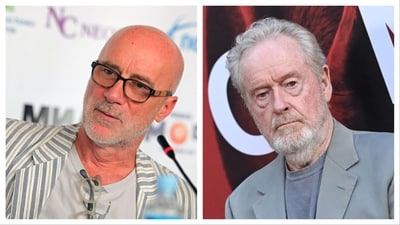
John Mathieson speaks up
During an interview on The DocFix Documentary Storytelling Podcast, John criticised Ridley’s filming process on Gladiator 2.
He said, “It’s really lazy. It’s the CG [computer graphic] elements now of tidying-up, leaving things in shot, cameras in shot, microphones in shot, bits of set hanging down, shadows from booms. And they just said [on Gladiator II], ‘Well, clean it up… He is quite impatient so he likes to get as much as he can at once. It’s not very good for cinematography.”
Talking about Ridley’s use of multiple cameras, John added, “He is quite impatient so he likes to get as much as he can at once. It’s not very good for cinematography,” he explained, saying it means you “can only light from one angle. Look at his older films and getting depth into things was very much part of lighting. You can’t do that with a lot of cameras but he just wants to get it all done. Having lots of cameras I don’t think has made the films any better…It’s a bit rush, rush, rush. That’s changed in him. But that’s the way he wants to do it and I don’t like it and I don’t think many people do, but people love his films and he’s Ridley Scott and can do what he wants”.
He shared that people want to shoot multiple cameras because they get lots of performances and they put lots of people in, but he feels it lacks care. John shared that the makers are more concerned about covering stuff.
Ridley has released four films in the last three years: The Last Duel, House of Gucci, Napoleon, and Gladiator II. He also has eight projects currently in development, including his next film The Dog Stars, starring Paul Mescal, and Gladiator III.
About Gladiator 2
Gladiator 2 stars Paul Mescal, Pedro Pascal, Joseph Quinn, Fred Hechinger, Lior Raz, Derek Jacobi, Connie Nielsen, and Denzel Washington. Derek and Connie reprise their roles from the first film, with Paul replacing Spencer Treat Clark. He plays Lucius, the son of Maximus and Lucilla, who becomes a gladiator after his home is invaded by the Roman army led by General Marcus Acacius. The film was released on November 15. The Paramount Pictures film is the sequel to a movie that won the Best Picture Oscar two decades ago