Sunday, September 27, 2026
Home Blog Page 7398

Rahman-Saira split: Lawyer denies link to bassist’s divorce

0
Rahman-Saira split: Lawyer denies link to bassist’s divorce


AR Rahman and Saira Banu divorce: Lawyer denies link to bassist Mohini Dey’s divorce, confirms no talks on financial settlements yet

Oscar-winning composer AR Rahman and his wife, Saira Banu, have decided to part ways after being married for nearly three decades. The news was confirmed by Saira’s lawyer, Vandana Shah, who explained that emotional strain was one of the reasons for their separation. Rahman also issued a statement, calling the decision a “fragile” matter and asking for privacy.
Saira’s lawyer has now clarified that no discussions about financial settlements or compensation have taken place yet. Speaking to Republic, she emphasized that the separation is amicable, saying, “Not as yet. It has not come to this stage yet. It would be an amicable divorce.”
When asked about the reasons behind the separation, Shah refrained from sharing details, citing confidentiality. However, she praised both Rahman and Saira for their maturity and grace in handling the situation. “Both of them are extremely genuine, and this decision was not taken lightly. It is not what you would call a sham marriage,” she noted.

AR Rahman Pens Separation Note With A Bizarre Sign-Off, Leaving Fans ‘Disappointed’

Interestingly, just hours after Rahman and Saira announced their separation, Rahman’s bassist, Mohini Dey, also revealed that she and her husband, composer Mark Hartsuch, have decided to divorce. Mohini shared that the decision was mutual as they both wanted different things in life.
When asked if there was any connection between the two divorce announcements, Vandana Shah denied any link, saying, “There is no connection at all. Saira and Mr. Rahman made this decision on their own.”

Shah further elaborated on the couple’s enduring respect for one another, stating, “Every long marriage goes through ups and downs, and I am extremely happy that if it has come to an end, it has done so in a dignified manner. Both Rahman and Saira will continue to support each other and wish each other well.”
The couple, who married in 1995, are parents to three children – daughters Khatija and Raheema, and son Ameen.


India’s Summer Maximum Temperature to See a Rise of 1.5 Degree Celsius by 2043, Claims New Climate Data

0
India’s Summer Maximum Temperature to See a Rise of 1.5 Degree Celsius by 2043, Claims New Climate Data


A report titled Climate Change Projections for India (2021–2040) has warned of severe implications for India’s climate, economy and food security in the coming decades. The new climate data set was published by Azim Premji University. It outlines potential climate scenarios and urges policymakers, educators, and NGOs to devise strategies that address these challenges effectively. The findings project increases in temperatures, intensified monsoons, and shifts in precipitation patterns, all of which could significantly impact health, agriculture, and rural livelihoods.

Rising Temperatures Across Scenarios

The report predicts that by 2057, India’s annual maximum temperature may rise by 1.5 degrees Celsius under a moderate emissions scenario. However, under a high-emissions trajectory, this threshold could be crossed a decade earlier, by 2043.

Low-emission pathways (SSP2-4.5) indicate that 196 districts could see summer maximum temperatures rise by at least 1 degree Celsius, with Leh projected to experience the steepest increase at 1.6 degrees Celsius. Meanwhile, under high emissions (SSP5-8.5), up to 249 districts are expected to witness similar rises, with 17 districts, including Leh, surpassing 1.5 degrees Celsius during summers.

Winter minimum temperatures are also projected to increase significantly, with districts like Anjaw in Arunachal Pradesh potentially experiencing a rise of 2.2 degrees Celsius under high emissions.

Shifts in Rainfall and Monsoonal Activity

Precipitation patterns are expected to vary widely. Western states such as Gujarat and Rajasthan may encounter a 20–50 percent rise in annual rainfall, while northeastern states like Arunachal Pradesh could see deficits of up to 15 percent. The southwest monsoon is likely to intensify in western regions, while the northeast monsoon may weaken, potentially exacerbating drought conditions in rain-dependent northeastern states.

Impacts on Agriculture and Food Security

The report highlights the potential for food insecurity due to disruptions in monsoons and rising temperatures. Increased heavy rainfall in high-altitude regions like Ladakh could trigger landslides, while drought-like conditions in northeastern areas may threaten rain-fed agriculture.

Coastal districts may face wet-bulb temperatures above 31 degrees Celsius, posing significant health risks. The report serves as a critical resource for shaping India’s response to these escalating climate challenges.


Microsoft, OpenAI Are Spending Millions on News Outlets to Let Them Try Out AI Tools

0
Microsoft, OpenAI Are Spending Millions on News Outlets to Let Them Try Out AI Tools


Microsoft and OpenAI, in collaboration with the Lenfest Institute for Journalism, announced an AI Collaborative and Fellowship programme on Tuesday. With this programme, the two tech giants will spend upwards of $10 million (roughly Rs. 84.07 crores) in direct funding as well as enterprise credits to use proprietary software. The companies highlighted that the programme was aimed at increasing the adaptation of artificial intelligence (AI) in newsrooms. As many as five news outlets have been announced as the beneficiary of this fellowship programme.

Microsoft, OpenAI to Fund News Outlets

In a blog post, OpenAI announced the fellowship programme. The AI firm highlighted that it is partnering with Microsoft and the Lenfest Institute of Journalism to “help newsrooms explore and implement ways in which artificial intelligence can help drive business sustainability and innovation in local journalism”. The funding initiative, titled Lenfest Institute AI Collaborative and Fellowship programme, has finalised five news outlets which will receive funding in the initial round.

As per the post, the selected news outlets include Chicago Public Media, Newsday (Long Island, NY), The Minnesota Star Tribune, The Philadelphia Inquirer, and The Seattle Times. Each of them will receive $2.5 million (roughly Rs. 21 crores) in direct funding and another $2.5 million in software and enterprise credits, for a total of up to $10 million.

This will be a two-year programme with The Lenfest Institute’s Local Independent News Coalition (LINC) and a group of eight metropolitan news organisations in the US. During this period, the news organisations will collaborate with each other as well as the larger industry ecosystem to “share learnings, product developments, case studies and technical information needed to help replicate their work in other newsrooms.” Additionally, three more news organisations will be awarded funding in the second round of grants.

The larger goal of the fellowship programme is to help news outlets develop the capacity to use AI for the analysis of public data, build news and visual archives, create new AI tools for newsrooms, and more. OpenAI said that the recipients were chosen after a comprehensive application process.


Google Reportedly Plans to Turn ChromeOS Into Android to Better Compete with iPad

0
Google Reportedly Plans to Turn ChromeOS Into Android to Better Compete with iPad


Google has separate operating system (OS) versions based on the device type. There’s Android for smartphones and ChromeOS for Chromebooks. However, there is one such product category where both the OSs overlap — tablets. That is not likely to be the case anymore, according to a new report. Google is said to be planning to embark on a project to fully turn ChromeOS into Android to develop a product which finally competes with the iPad.

Google Turning ChromeOS Into Android

Citing a source, Android Authority detailed Google’s plans to turn ChromeOS into Android in a report Monday. The publication claims that the Mountain View, California-based technology giant is working on a multi-year project for the development of a hybrid platform that may compete with Apple’s iPadOS which powers the iPad.

Google reportedly plans to unify its OS efforts for more efficient management of engineering resources and better compete with the iPad. Instead of merging Android and Chrome OS to develop an entirely new platform, it is claimed to have plans to migrate the latter into the former. This move will result in the availability of more apps on Android and more money for developers due to an increased number of users, as per the report.

One of the first devices to run on this hybrid platform is reported to be the purported Pixel Laptop, which is reported to be in development. This device is reported to come with high-end internals and is said to have been codenamed “Snowy”. The company is also said to be developing many new features for providing a desktop-like experience on Android, including better keyboard and mouse support, support for external monitors and multiple desktops, and more.

While these efforts are primarily reported to target Google’s internal Android-on-laptop project, they are also speculated to boost the capabilities of tablets, including the purported Pixel Tablet 2 which is slated to come with an upgraded Tensor chip, improved camera, and a new keyboard cover accessory.


Apple M4 Max, M4 Pro Spotted on Geekbench With Big Improvements Over Their M3 Counterparts

0
Apple M4 Max, M4 Pro Spotted on Geekbench With Big Improvements Over Their M3 Counterparts


Apple recently unveiled its new MacBook Pro lineup with M4, M4 Pro, and M4 Max chipsets. The latest M4 Pro and M4 Max chips built using advanced 3-nanometre technology have made their way to Geekbench with impressive results. The Geekbench performance scores of both M4 Pro and M4 Max outperform Apple’s M3 Pro and M3 Max. The MacBook Pro with Apple M4 Pro appears to have 48GB RAM while the MacBook Pro with M4 Max is listed with 128GB of RAM. The listing of both models reveals a base frequency of 4.5GHz.

M4 Max, M4 Pro Chip Listed on Geekbench

Apple’s M4 Max chip surfaced on the Geekbench website with model number ‘Mac16,5’. The new chip scored 4,060 points in single-core tests and 26,675 in multi-core. The Apple M4 Max’s multi-core performance appears to be significantly higher than the 16-core M3 Max from last year, which scored around 3,000 in single-core testing and 21,253 points in the multi-core testing. It also outperforms the M2 Ultra which scored 21,471 points.

The listed M4 Max chipset features a 16-core CPU with a base frequency of 4.50GHz. It is paired with 128GB of RAM and macOS 15.1.

Meanwhile, a 16-inch MacBook Pro appeared on the Geekbench listing with the name ‘Mac 16,7’ and M4 Pro processor. The laptop was listed with 48GB of RAM and runs macOS 15.1. It posted a single-core score of 3,925 and a multi-core score of 22,669, which is significantly higher than Apple M3 Pro’s 3 138 single-core score and 15,480 multi-core score. The listing reveals a base frequency of 4.51GHz.

Apple introduced its new MacBook Pro lineup last week with M4, M4 Pro, and M4 Max chips. They are available in 14-inch and 16-inch display options and will go on sale in India and global markets on November 8.

The price of MacBook Pro (2024) starts at Rs. 1,69,999 for the base variant with an M4 chip and a 14-inch screen.

Affiliate links may be automatically generated – see our ethics statement for details.


Niki recalls SRK visiting her at hospital at midnight

0
Niki recalls SRK visiting her at hospital at midnight


Niki Aneja recalls Shah Rukh Khan visiting her at the hospital at midnight after her accident: 'He was there by my bed stroking my hair'

Actress Niki Aneja recently reminisced about a pivotal moment in her life when Shah Rukh Khan showed up at her doorstep in the dead of night, offering not just support but genuine care. She revealed that it was Shah Rukh who uncovered the identity of the driver involved in the incident, sharing a surprising detail – the driver had been learning to drive only hours before Niki’s accident.
In a conversation with Siddharth Kannan, Niki opened up about a surreal moment during her hospital stay. She recalled being bedridden for over a month and feeling out of it due to the medication. One night, she suddenly woke up to find Shah Rukh Khan sitting by her bed. At first, she thought the medication had made her imagine him, but to her surprise, he was really there.

Niki also shared that before the accident, she had worked with Shah Rukh on several international stage shows and had even been cast as the lead in Yes Boss. Unfortunately, she had to leave the project after filming for five days but cherished her time on set.

Niki shared an emotional memory of SRK‘s visit to her hospital. She recalled how he gently held her hand and apologized for coming so late, explaining that he had to wait for the paparazzi outside to clear before he could enter. As he stroked her hair, he asked if she needed anything. When Niki curiously asked why he was there, Shah Rukh asked her if she had been hit by a red Maruti van. Surprised, she confirmed it and asked him why he was asking.

Shah Rukh shared with Niki that he had been at Film City on the day of her accident and had noticed the same red Maruti van. He explained that the van was being used by the production crew to teach someone how to drive. Shah Rukh remembered waiting for ten minutes because the learner was blocking his path. He then revealed to Niki that the person who hit her didn’t even know how to drive.
The actress shared that the production crew, in an attempt to save a mere Rs 1000, hired someone who couldn’t drive for a scene that required it, ultimately damaging her career. She expressed how Shah Rukh’s effort to visit her and explain the situation made her respect him even more. He even advised her to take legal action against the production house.


NTPC bets on large projects for 60 gigawatt solar dream

0
NTPC bets on large projects for 60 gigawatt solar dream


NTPC bets on large projects for 60 gigawatt solar dream

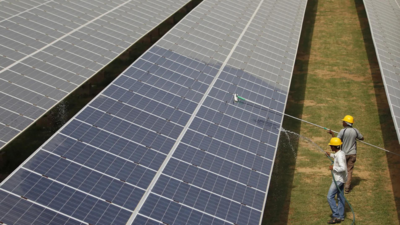
NEW DELHI: NTPC will focus on gigawatt (GW)-scale solar power projects and limit wind and battery storage projects to 10% of its renewable portfolio as the country’s largest coal-fired power producer chases a green dream of adding 60 GW green capacity by 2035.
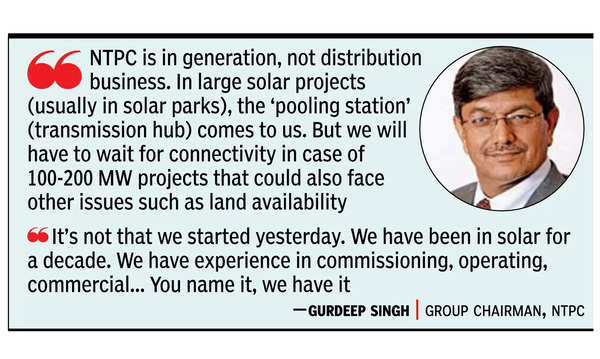
“NTPC is in generation, not distribution business. In large solar projects (usually in solar parks) the ‘pooling station’ (transmission hub) comes to us (set up on site by park promoters or utilities). But we will have to wait for connectivity in case of 100-200 MW projects that could also face other issues such as land,” group chairman Gurdeep Singh said after the Rs 10,000-crore IPO of subsidiary NTPC Green Energy opened on Wednesday.
He said NTPC has developed capabilities in all areas of the renewables and enjoys certain advantages. “It’s not that we started yesterday. We have been in solar for a decade. We have the experience in commissioning, operating, commercial… You name it, we have it,” he said.
The company is following a clear road map for renewables that gleans lessons from the past and funding plans backed up the flagship’s record. The focus on solar, however, does not come at the cost of other sustainable energy sources.

NTPC bets on large projects

“Solar is available 340-350 days across India, whereas wind is periodic – except one or two locations. So someone with wind (project) in the south and solar in Rajasthan can do mix-and-match (with smaller projects). We will certainly go into wind or add battery storage wherever we find attractive. We are also pursuing nuclear and green hydrogen separately,” he said.
NTPC aims to ramp up renewable capacity to 19 GW by 2027 after nearly doubling the present capacity of 3.5 GW to 6 GW by 2025 on way to the 60-GW mark. Singh said NTPC is well-equipped to weathering possible market shifts due to tighter import policy for solar cells or external factor such as an expected dilution in the US focus on renewables under Donald Trump’s second presidency.
“The impact of duty on solar cell imports, if it comes, will be minimal on projects. As for shift in US policy, I am told some made in India solar modules are exported. We will have to see (how things pan out). There is Europe, other regions…” he said.
On IPO pricing being “punchy” amid the market slide following Trump’s election, Singh said it’s based on misplaced notion. “We had consulted with 100s of stakeholders and investors, who expected a higher price band, which we moderated as per (post-Trump) market conditions.”


Indian Air Force Collaborates With IISc and FSID to Develop Strategy for Reliability-Centered Maintenance

0
Indian Air Force Collaborates With IISc and FSID to Develop Strategy for Reliability-Centered Maintenance


The Indian Air Force (IAF), through its Base Repair Depot at Panchwati, Palam, has formalised a Memorandum of Agreement (MoA) with the Indian Institute of Science (IISc) and the Foundation for Science Innovation and Development (FSID), Bengaluru. The agreement was signed on Monday in Bengaluru in a ceremony attended by senior officials, including Air Vice Marshal VRS Raju, Deputy Senior Maintenance Staff Officer, Headquarters Maintenance Command, Air Commodore Harsh Bahl, and the Air Officer Commanding of the Base Repair Depot. Representing IISc and FSID were Captain Sridhar Warrier (Retd.), Registrar, IISc, and Professor B Gurumoorthy, Director, FSID.

Objective of the Agreement

The collaboration aims to address challenges faced by the IAF in maintaining and servicing equipment across radar systems, aircraft, IT, and communication platforms. The focus will be on developing a strategic roadmap for reliability-centred maintenance, with an emphasis on research and development (R&D).

Advanced technologies such as Artificial Intelligence (AI), Machine Learning (ML), and Digital Twin-based systems will be explored to enhance lifecycle management, predictive maintenance, and resource optimisation.

Collaboration Highlights

This partnership will enable both organisations to share access to testing facilities. It will be creating a mutually beneficial framework. It is also expected to foster academic collaboration, with IAF personnel engaging in postgraduate programmes at IISc and participating in joint R&D initiatives. By leveraging the expertise of IISc and FSID, the IAF aims to strengthen its operational efficiency and technological capabilities.

Among the key outcomes expected from the partnership, IAF aims to develop strategies for reduced maintenance costs, advanced maintenance techniques, improved equipment reliability, and enhanced operational readiness.

Impact on Defence Indigenisation

The initiative aligns with the government’s Atmanirbhar Bharat programme by promoting self-reliance in defence manufacturing. It is anticipated that this collaboration will encourage participation from startups, micro, small and medium enterprises (MSMEs), and other industry stakeholders, further accelerating indigenisation in the defence sector.


Microsoft Forecasts Slower Cloud Business Growth in Second Quarter

0
Microsoft Forecasts Slower Cloud Business Growth in Second Quarter


Microsoft predicted increased spending on artificial intelligence this quarter but slower growth in its cloud business Azure, signaling that big AI investments were not enough to keep pace with capacity constraints at its data centers.

Shares of the Redmond, Washington-based company dipped 3.6% in after-market trading, giving up earlier gains. The company beat Wall Street’s estimates for first-quarter revenue and profit.

Facebook-owner Meta, which reported results ahead of analyst expectations as well, warned of “significant acceleration” in AI-related infrastructure expenses, sending its share price down 3.1% in after-market trading.

Brett Iversen, Microsoft’s vice president of investor relations, reiterated that Microsoft will not be able to address AI capacity constraints until the second half of its fiscal year.

Microsoft forecast second-quarter Azure revenue growth of 31% to 32%, lagging the 32.25% growth expected on average by analysts, according to Visible Alpha. Azure revenue rose 33% in its fiscal first quarter ended Sept. 30, slightly ahead of estimates.

AI contributed 12 percentage points to Azure’s growth in the first quarter, compared with 11 percentage points in the prior three-month period.

Microsoft has been pouring billions into building its AI infrastructure and expanding its data-center footprint. For the quarter, Microsoft said capital expenditures rose 5.3% to $20 billion, compared with $19 billion in the previous quarter. That was higher than Visible Alpha estimates of $19.23 billion.

Its hefty spending has raised concerns among some investors.

The company has been the worst performer among Big Tech names this year, having gained just over 15%, while Meta has surged 68% and Amazon.com climbed 28%.

Microsoft will spend over $80 billion this fiscal year, which began in July, according to analyst estimates from Visible Alpha. That is an increase of more than $30 billion from its last fiscal year.

“Microsoft is escalating a CapEx war that it may not be able to win. That level of investment is very high, it created a very big drag on free cash flow and will create a very big drag on margins going forward,” said Gil Luria, head of technology research at D.A. Davidson.

Microsoft’s rival Google has benefited from AI growth. On Tuesday, Alphabet said AI helped drive a 35% surge in its cloud business. Its shares closed up over 2.8% on Wednesday and were down 0.4% after the market closed.

OpenAI Partnership

The quarterly earnings are Microsoft’s first since it restructured the way it reports its businesses to align them more closely with how they are managed. That move has, however, made it harder to estimate the quarter’s performance.

Earnings per share stood at $3.30, compared with analysts’ average estimate of $3.10, according to LSEG data.

Revenue rose 16% to $65.6 billion in the fiscal first quarter ended September, compared with analysts’ average estimate of $64.5 billion, according to LSEG.

The company is seen as the leader among Big Tech peers in the AI race thanks to its exclusive partnership with ChatGPT maker OpenAI. Microsoft’s Azure customers get access to OpenAI’s latest models, such as its o1 models, capable of answering challenging math, science and coding problems.

In addition, Microsoft gets early access to infuse OpenAI’s technology across its product portfolio, such as in Bing and its enterprise applications such as Excel and PowerPoint, but that effort has not gone as well as expected.

Outside its cloud business, Microsoft reported revenue of $28.3 billion in its productivity business, which houses its Office suite of applications, 365 Copilot and its AI and speech-technology services.

Microsoft’s personal-computing unit, home to its Windows operating system as well as devices including Surface and gaming products including Xbox hardware, content and services, reported a 17% rise in revenue to $13.2 billion.

© Thomson Reuters 2024

(This story has not been edited by NDTV staff and is auto-generated from a syndicated feed.)


Samsung Tipped to Not Increase Galaxy S25 Series Price to Compete With Apple

0
Samsung Tipped to Not Increase Galaxy S25 Series Price to Compete With Apple


Samsung Galaxy S25 series is expected to be unveiled globally early next year. Several reports over the past few months have suggested key features of the purported handsets. The lineup will likely include a base, a Plus and an Ultra variant. Now, details about the anticipated smartphones’ pricing have surfaced online. A tipster suggested that the South Korean tech giant is expected not to hike the prices for Galaxy S25 models and maintain the pricing seen with the current Galaxy S24 phones.

Samsung Galaxy S25 Series Price (Expected)

Samsung will likely not increase the price of the Galaxy S25 series smartphones, according to a Sammy Fans report, citing an X post by user Jukanlosreve (@Jukanlosreve). The report claims that this strategy by the South Korean tech giant is influenced by Apple’s decision to not raise the price of iPhone 16 series phones over that of the preceding iPhone 15 lineup.

According to the report, the base Samsung Galaxy S25 may start in the US at $799 (roughly Rs. 67,400) for the 12GB + 128GB option, while the 12GB + 256GB variant could be marked at $859 (roughly Rs. 72,500). Meanwhile, the Samsung Galaxy S25+ version, with 12GB of RAM, is tipped to be listed at $999 (roughly Rs. 84,300) and $1,119 (roughly Rs. 94,500) for the 256GB and 512GB storage variants, respectively.

The Samsung Galaxy S25 Ultra, on the other hand, may start at a price of $1,299 (roughly Rs. 1,09,600) for the 12GB + 256GB option, while the 12GB + 512GB and 16GB + 1TB variants will likely be marked at $1,419 (roughly Rs. 1,19,800) and $1,659 (roughly Rs. 1,40,000), respectively.

The report added that the customers can get more trade-in credit alongside free double storage and up to free $50 (roughly Rs. 4,200) Samsung Credit upon pre-reservation and pre-order of the Samsung Galaxy S25 series handsets. US buyers may get freebies like Galaxy Watch or Galaxy Buds with certain terms and conditions. These additional benefits are said to be at the discretion of the sellers and retailers.

An earlier report claimed that the Samsung Galaxy S25 lineup could be unveiled globally on January 22, 2025, at a Galaxy Unpacked event. The series will likely be introduced at a San Francisco, US event.