Sunday, September 27, 2026
Home Blog Page 7405

MS Paint Gets AI-Powered Generative Fill Feature in Preview to Windows 11 Insiders

0
MS Paint Gets AI-Powered Generative Fill Feature in Preview to Windows 11 Insiders


MS Paint in Windows 11 is getting a couple of new artificial intelligence (AI) features. On Wednesday, Microsoft announced new preview features for Windows Insiders including a major AI upgrade to the Paint app. It is getting a new Generative Fill feature that uses AI to generate objects based on text prompt. Apart from that, the company is also introducing a Generative Erase feature as well as updates to Cocreator and Image Creator. Notably, these features are not available to general users of Windows 11.

MS Paint Gets New AI Features

In its Windows Insider blog post, Microsoft detailed the new AI features for MS Paint. The biggest highlight is the Generative Fill. Similar to Adobe Photoshop’s feature, Generative Fill in MS Paint can add AI-generated objects to an image either created on the app, or loaded to the app.

To use the feature, users will have to use the Selection tool in the Paint toolbar and select an area where they want the object to be added. After selecting, users will now see a small menu pop up at the bottom of the selected area. By selecting Generative Fill, users can open a small text field, where they can type a prompt on what they want to see. Once done, users will need to tap on Create to generate the object.

In case the generated object is not up to their liking, they can tap on the Try Again button to regenerate the object or add more details to the prompt. Once they find the desired output, pressing the Keep button will blend and add it to the image.

Notably, Generative Fill is initially only available on Snapdragon-powered Copilot+ PCs and users will need to sign in with their Microsoft account to access it. Currently, the feature is only available to Windows Insiders in select regions.

Apart from this, Microsoft is also adding a Generative Erase feature to MS Paint. The tool can be selected while using the eraser and it removes an object from an image while adding elements to make blend the area with the rest of the background. This is available to users on all Windows 11 PCs.

Additionally, Microsoft has also updated the diffusion-based model for Cocreator, a feature introduced earlier this year. Cocreator takes context from what the user is sketching, and generates similar images with a higher level of creativity and in a wider range of styles. Further, the Image Creator feature in Paint is also being expanded to more regions.


Redmi A4 5G With Snapdragon 4s Gen 2, 50-Megapixel Rear Camera Launched in India: Price, Specifications

0
Redmi A4 5G With Snapdragon 4s Gen 2, 50-Megapixel Rear Camera Launched in India: Price, Specifications


Redmi A4 5G was launched in India on Wednesday as an affordable 5G smartphone under the Rs. 10,000 mark. The handset is equipped with a 50-megapixel rear camera and sports a 6.88-inch LCD screen with a 120Hz refresh rate. It is powered by a 4nm Snapdragon 4s Gen 2 chip, paired with 4GB of RAM. The Redmi A4 5G packs a 5,160mAh battery that can be charged at 18W. It runs on Android 14, along with the company’s HyperOS skin.

Redmi A4 5G Price in India, Availability

Redmi A4 5G price in India is set at Rs. 8,499 for the 4GB+64GB RAM and storage configuration. It also comes a 4GB+128GB storage variant that is priced at Rs. 9,499. It is available in Sparkle Purple and Starry Black colour options.

Customers can purchase the Redmi A4 5G via the company’s website starting on November 27.

Redmi A4 5G Specifications, Features

The dual-SIM (Nano+Nano) Redmi A4 5G runs on Android 14-based HyperOS, and it will receive two years of OS updates and four years of security updates. It sports a 6.88-inch HD+ (720×1640 pixels) LCD screen with a 120Hz refresh rate. The handset is equipped with a 4nm Snapdragon 4s Gen 2 chip, paired with 4GB of LPDDR4X RAM.

For photos and videos, the Redmi A4 5G features a 50-megapixel primary camera with an f/1.8 aperture, along with an unspecified secondary camera. It also has a 5-megapixel selfie camera on the front, with an f/2.2 aperture.

You get up to 128GB of UFS 2.2 storage on the Redmi A4 5G, which can be expanded to 1TB using a MicroSD card slot. Connectivity options include 5G, 4G LTE, Wi-Fi 5, Bluetooth 5.0, GPS, a USB Type-C port and a 3.5mm headphone jack.

The Redmi A4 5G packs a 5,160mAh battery that can be charged at 18W, using the charger that ships in the box. It has a side-mounted fingerprint scanner for biometric authentication and has an IP52 rating for dust and splash resistance. It measures 171.88×77.80×8.22mm and weighs 212.35g.

Affiliate links may be automatically generated – see our ethics statement for details.


AR Rahman-Saira's daughter Raheema on their divorce

0
AR Rahman-Saira's daughter Raheema on their divorce


AR Rahman and Saira Banu's daughter Raheema Rahman opens up on hardships after divorce announcement: 'Through every hardship, there is ease'

With the recent separation announcement, AR Rahman and his wife Saira Banu‘s daughter Raheema Rahman stepped forward to place a reflective post on social media. The post carried a soothing video of snowfall and scenic views along with an emotional quote that reads, “Through every hardship, there is ease.”. Your Lord is going to give you and you will be satisfied.” This message has really connected to her personal life because her family is currently going through this trying time. Raheema also requested privacy, reiterating the point that the family should be allowed private space during this period.
Earlier, Saira Banu released an official statement, showing the strain that moved them to separate after so many years of marriage. According to the statement, the couple, despite their intense love for each other, could not bear the irreconcilable tensions that marred the relationship. The actress also requested privacy during this horrible period.
“After many years of marriage, Saira and her husband A.R. Rahman have made the difficult decision to separate from each other. This decision comes after significant emotional strain in their relationship. Despite their deep love for each other, the couple has found that the tensions and difficulties have created an insurmountable gap between them, one that neither party feels able to bridge at this time,” reads the statement.
AR Rahman also shared his thoughts with the situation in a sincere note on X, questioning what that is the end to their relationship and how they felt it hard to be separated. He thanked friends for being considerate of their privacy. “We had hoped to reach the grand thirty, but all things, it seems, carry an unseen end. Even the throne of God might tremble at the weight of broken hearts. Yet, in this shattering, we seek meaning, though the pieces may not find their place again. To our friends, thank you for your kindness and for respecting our privacy as we walk through this fragile chapter,” he wrote.
The couple has three children. Khatija and Raheema are their two daughters, and Ameen is the son. The split of the couple was spoken about by each on their social media platforms.

AR Rahman Pens Separation Note With A Bizarre Sign-Off, Leaving Fans ‘Disappointed’


AMD to Cut Four Percent of Global Workforce as it Focusses on AI Chip Development

0
AMD to Cut Four Percent of Global Workforce as it Focusses on AI Chip Development


Advanced Micro Devices is laying off four percent of its global workforce, or about 1,000 employees, as it directs efforts towards developing AI chips in a bid to compete against industry bellwether Nvidia.

AMD is regarded as the closest rival to Nvidia in the lucrative market for chips that form the brains of complex data centers that can process the large mounds of data used by generative AI technology like OpenAI’s ChatGPT.

“As a part of aligning our resources with our largest growth opportunities, we are taking a number of targeted steps,” an AMD spokesperson told Reuters on Tuesday.

Revenue in AMD’s data center segment, which houses its AI graphics processors, jumped more than two-fold in the September quarter. On the other hand, the personal computer segment grew 29%, while sales in its gaming unit slumped about 69 percent during the period.

Analysts expect the data center unit to grow 98 percent in 2024, outpacing expected total revenue growth of 13 percent, according to an average of estimates compiled by LSEG.

The company has been investing heavily to develop AI chips which command high selling prices and are in high demand among so-called hyperscalers like Microsoft.

AMD plans to start mass production of a new version of its artificial-intelligence chip called the MI325X in the fourth quarter of the year. Ramping up production of AI chips is an expensive undertaking due to constrained manufacturing capacity.

The company’s research and development costs jumped close to nine percent in the third quarter, while its total cost of sales rose by 11 percent.

Shares of AMD have dropped more than three percent so far this year, as the company struggles to live up to investors’ high expectations after Wall Street drove a two-fold surge in its shares last year, betting on the returns linked with AI technology.

© Thomson Reuters 2024

(This story has not been edited by NDTV staff and is auto-generated from a syndicated feed.)


Heart-Shaped Clams Channel Sunlight Using Fiber Optic-Like Structures, Says Study

0
Heart-Shaped Clams Channel Sunlight Using Fiber Optic-Like Structures, Says Study


Researchers have discovered a biological adaptation in heart cockles (Corculum cardissa), a species of bivalve found in the Indian and Pacific Oceans. These clams possess unique structures in their shells that act similarly to fibre optics, guiding sunlight to symbiotic algae living within them. This allows the clams to provide their algae with the necessary light for photosynthesis while simultaneously protecting them from harmful ultraviolet rays. The algae, in turn, offer the clams essential nutrients such as sugars.

Sunlight Channeling Through Shells

Heart cockles are small bivalves measuring around the size of a walnut. Their shells are covered with tiny transparent areas, which have been found to function like fibre-optic cables. This ability is attributed to the structure of aragonite, a crystalline form of calcium carbonate present in their shells. Through microscopic examinations, it was revealed that the aragonite crystals form tubes that allow light to pass through with precision while blocking damaging UV radiation.

Dakota McCoy, an evolutionary biophysicist from the University of Chicago, and her team demonstrated that the shells allow more than twice as much photosynthetically beneficial light to enter than UV light in a study published in the Nature Communications journal. This process potentially helps prevent coral bleaching and similar phenomena in clams, which can be exacerbated by climate change.

Unique Design Offers Technological Insights

The fibre-optic-like structures found in heart cockles are not only intriguing in a biological context but also present possible applications in technology. Researchers suggest that the natural light-channelling abilities of aragonite could inspire advancements in optical systems, particularly for wireless communication and precision measurement tools.

Boon Ooi, a photonics researcher at the King Abdullah University of Science and Technology, noted that mimicking these structures could lead to more efficient light collection systems, offering improvements over current fibre-optic technologies, as per a Science News report.


Bigg Boss 18: Kashish Kapoor tortures Avinash by putting THIS on his body

0
Bigg Boss 18: Kashish Kapoor tortures Avinash by putting THIS on his body


Bigg Boss 18: Kashish Kapoor tortures Avinash by putting THIS on his body

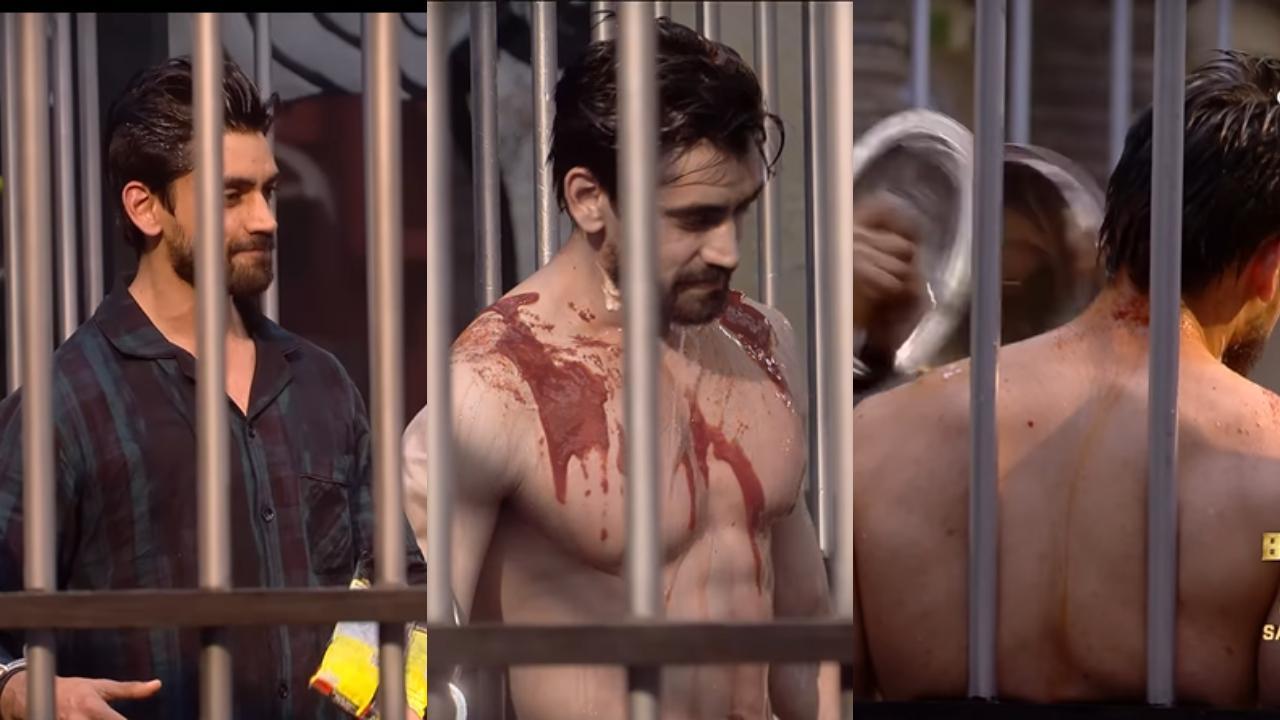
This year, Bigg Boss seems to be trying too hard to maintain its TRPs and keep the audience hooked to their TVs. However, it looks like the effort is falling short, resulting in forced fights, multiple wildcards, and an early torture task. It seems that after trying everything, Bigg Boss played his trump card in today`s episode. The episode featured Karan Veer Mehra at his best, leaving girls swooning as he did push-ups with Aditi Mistry sitting on his back. The episode took a serious turn when the men were thrown into jail to be tortured by the ladies. But did the torture task spice up the episode? Read on to know more.  

Karan Veer Mehra turned up the heat  

The fitness fever hit high when Aditi playfully challenged Karan Veer to do push-ups while she was sitting on his back. With his charm and determination, Karan Veer took on the task, leaving everyone in awe of his strength and flair. Kashish, clearly impressed by his physique, upped the ante by asking Karan Veer to repeat the feat with her—a challenge he simply couldn’t refuse!  

The fight for Vivian without Vivian  

The new wildcard Yamini Malhotra seems to be trying too hard to get into Vivian Dsena`s good books. After Rajat Dalal`s attempt to form a group with Dsena, he didn’t assign him many duties, leaving Karan Veer, Digvijay Rathee, and others with several questions. When asked why Vivian doesn’t have many duties, Rajat jumped in to defend him, leading to the actor walking out of the conversation, and leaving the audience ROFL.  

The Time God challenge  

The Time God task turned the tables, pushing the men to their physical and emotional limits. Shackled in jail, the men endured relentless torment at the hands of the women. Kashish took things too far when she applied red chilli powder to Avinash Mishra’s body, causing an unexpected uproar. The intensity peaked when some of the chilli accidentally got into Avinash’s eyes, prompting Eisha and Alice to rescue him, splashing him with water to ease the pain. The emotional ride was undeniable as Avinash and Karan Veer gritted their teeth through a brutal waxing session that had everyone cringing.  


View this post on Instagram


A post shared by ColorsTV (@colorstv)

Meanwhile, Chahat tried to manipulate Vivian with a high-stakes threat—she would toss his beloved coffee into the pool! The mere mention of losing his treasured caffeine had Vivian fuming. Despite her taunts, he held his ground, fiercely defending the ration. Later, Vivian replaced his position with Alice Kaushik, who gave Eisha Singh a chance.  

What kept the audience excited was the preview of the upcoming episode, showing Rajat Dalal and Karan Veer entering into a war of words.  

Stay tuned to midday.com for more updates on Bigg Boss 18!


The pogrom that wasn’t | Racism

0
The pogrom that wasn’t | Racism


On November 6 and 7, fans of the Israeli football team Maccabi Tel Aviv rampaged through Amsterdam ahead of a match between their team and the Dutch football club Ajax. They assaulted local residents, attacked private property, destroyed symbols of Palestinian solidarity, and chanted racist, genocidal slogans that glorified the slaughter of children in Gaza and the death of all Arabs.

While the Israeli fans were provided with a police escort, pro-Palestine demonstrations were either cancelled or relocated. On the night of November 7, following the match, local residents responded to these events by attacking Maccabi fans. Five people were briefly hospitalised but later discharged and 62 people were arrested, 10 of whom were Israeli.

A letter, released by the Amsterdam City Council and recounting the events, noted that “from 01:30 onward [on Thursday night], reports of street violence rapidly declined”. The story could have ended there. It didn’t.

Overnight, the Israeli propaganda machine went into overdrive, and by Friday morning, the world awoke to news that “anti-Semitic squads” had gone on a “Jew hunt” in Amsterdam.

Israeli President Isaac Herzog denounced the “anti-Semitic pogrom”, while Prime Minister Benjamin Netanyahu announced that military planes would be dispatched to evacuate Israeli citizens.

A wave of disinformation unleashed from Israel was replicated unchecked by Western media and the usual cohort of Western leaders, each outdoing the other at expressing the most outrage.

Dutch Prime Minister Dick Schoof condemned the “anti-Semitic attacks on Israeli citizens” and King Willem-Alexander lamented that “we failed the Jewish community … during World War II, and last night we failed again”. Amsterdam’s Mayor Femke Halsema condemned the “anti-Semitic” attacks on “Jewish visitors”, drawing comparisons with historic pogroms.

In the following days, the “pogrom” narrative fell apart, as more details and witness accounts surfaced. As the dust settled, one thing became clear: Palestinian solidarity is stronger than ever, and Zionism is crumbling.

‘Weaponisation of Jewish safety’

As major Western media outlets sought to portray the events of November 7 in the terms the Israeli government had outlined, many failed to stick to the facts. For example, while the violence was presented as “attacks on Jews”, no such attacks were reported against the local Jewish community.

On that day, a Kristallnacht commemoration, marking the pogroms against Jews in Germany in 1938, was held in peace. Throughout the day, no attack on a Jewish institution was reported.

What is more, the violence unleashed by the Maccabi fans on local residents was under-reported or not mentioned at all by Western mainstream media. The idea that perhaps what happened was in reaction to the rampage of the Maccabi fans, many of whom are Israeli Army reservists, who were glorifying genocide and chanting death to all Arabs, was never entertained.

Members of the local Jewish community who had critical opinions of what happened were not platformed.

Erev Rav, a Dutch-based anti-Zionist Jewish collective, for example, called the “weaponisation of Jewish safety incredibly alarming” on social media. In an interview, the author Peter Cohen, a former sociology professor at the University of Amsterdam, commented that “the Christian West has always constructed forms of anti-Semitism, mild and lethal, doing devastating harm to Jews in Europe”. But he was emphatic that “people who criticise Israel do just that”, adding “this does not make them anti-Semites!”.

The spin that Western mainstream media gave to the story – that “anti-Semitic” Arabs and Muslims attacked Jews – fits into the false but dominant narrative that anti-Semitism in Europe is now exclusively harboured by Arab and Muslim immigrants. This not only fuels and normalises anti-Arab racism and Islamophobia, but also downplays and obscures the very real and widespread European anti-Semitism.

Palestinian solidarity

Following the events of November 7, Amsterdam was placed under an emergency ordinance, which outlawed protests, prohibited face coverings and permitted “preventative searches” by the police. Local residents, particularly those who have regularly been demonstrating against Israel’s genocidal war in Gaza, perceived this as an undue and disproportionate infringement on their right to freedom of assembly and freedom of expression.

In defiance of a protest ban, on November 10, hundreds of people gathered in Dam Square, including myself, in solidarity with the people of Palestine. Those who turned out to protest represented a broad spectrum of Amsterdam’s population – we were young, old, Dutch, international, Arab, Muslim, Black, brown, white, and anti-Zionist Israelis, united in our condemnation of Dutch complicity in Israel’s genocide.

The police responded by confiscating Palestinian flags, banners and musical instruments, arresting people at random, and charging with batons. One woman suffered a brain injury as a result of police violence, according to her lawyer.

Some 340 people, including myself, were detained on buses and driven through the city, accompanied by several police vans and motorcycles. One might have assumed from the spectacle that the buses were transporting hardened criminals. In fact, they were carrying unarmed peace activists detained for protesting genocide.

We were driven to an industrial estate on the outskirts of Amsterdam and released, apart from one Arab man who was arbitrarily singled out, arrested and taken away. Afterwards, all that remained of the police operation was a drone overhead that monitored our movements.

As we made our way back to the city centre, cars began circling around us and the drivers beckoned for us to get in. They introduced themselves as the Moroccan drivers whose colleague had been attacked by Maccabi fans on November 6. In a heartwarming act of solidarity after hours of police repression, they drove us back to Amsterdam, making sure that we got home safely.

Protesters again defied the demonstration ban on November 13, with 281 people being detained and more acts of police brutality.

Game over for Zionism

At first glance, the narrative that came to dominate political statements and media coverage of the violence in Amsterdam and the actions of the Dutch authorities may appear as another PR success for Israel. But it is not.

It is yet another indication that the demise of Zionism is close. We are witnessing a genocidal regime in the throes of madness, making a last-ditch effort to realise a biblical fantasy of creating a greater Israel by erasing the Palestinian people.

As historian Ilan Pappe predicted in a recent article, “once Israel realises the magnitude of the crisis, it will unleash ferocious and uninhibited force to try to contain it”. The desperate attempt to distort the reality of events in Amsterdam is indicative of this panic, and the willingness of Western leaders and mainstream media to go along with this insanity is unforgivable.

Following a week of unrest, the pro-Palestinian movement scored a small victory: Amsterdam’s City Council passed a motion recognising a “real and imminent genocide” in Gaza and calling on the government to act. Meanwhile, Mayor Femke backtracked on her “pogrom” statement, saying it was weaponised by Israeli and Dutch politicians. A cabinet minister and two parliamentarians resigned in response to racist comments made within the government, sparking a political crisis and exposing cracks in the far-right government.

Though painstakingly slow, the downfall of Zionism has begun, and calls for a liberated Palestine are louder than ever.

The views expressed in this article are the author’s own and do not necessarily reflect Al Jazeera’s editorial stance.




Microsoft Outlook Updated With Personalised, AI-Powered Dynamic Themes

0
Microsoft Outlook Updated With Personalised, AI-Powered Dynamic Themes


Microsoft Outlook was updated with a new personalisation feature that uses artificial intelligence (AI) on Thursday. The feature, dubbed ‘Themes by Copilot’ is a dynamic theme generator. The feature will allow users to add customised themes that update automatically based on the current real-world conditions. The feature is currently rolling out to individual accounts with Copilot Pro subscription as well as business accounts with the Copilot add-on. The company is also revealed that it is rolling out non-Copilot static themes for all users.

Microsoft Outlook Gets AI-Powered Dynamic Themes

The company announced the rollout of AI-powered dynamic themes for Outlook via a blog post. The tech giant redesigned the email client in September 2023, but this is the first time Outlook has received support for dynamic themes.

With Themes by Copilot in Outlook, users can take advantage of the AI chatbot to generate personalised themes. The AI-powered dynamic themes can be based on locations or weather. There are 100 locations across the globe users can choose from or select their own location. Once the user’s location is available, Copilot will generate a theme inspired by it.

Just like the weather-based themes, these dynamic themes update automatically based on real-world conditions. For instance, these themes can automatically change between day and night or between different weather types based on the weather at the location.

These AI themes will be available on all platforms including iOS, Android, Windows, and Mac, as well as on the web. On the desktop interface, Outlook will get a background wallpaper. On the mobile interface, the top of the app will show the theme. Additionally, both interfaces will also get thematic accent colours, according to the company.

Microsoft says that the new AI themes are available for individual accounts with a Copilot Pro subscription. Business accounts with the Copilot add-on will also be able to access the feature.

While users on the free tier of the email client will not get Copilot-supported AI themes, they can access new non-Copilot static themes. Users can now choose between deep green, red, or purple themes.


Android 16 Developer Preview 1 Released: See Release Timeline, Eligible Devices, New Features

0
Android 16 Developer Preview 1 Released: See Release Timeline, Eligible Devices, New Features


Android 16 Developer Preview 1 has been released by Google. This is a bit early compared to Google’s previous Android launch schedules. The first developer preview of Android 15 launched in February 2024. The new developer preview comes a month after the public release of Android 15. Like previous developer previews, the Android 16 Developer Preview 1 is aimed at developers and will be initially available for download on Pixel smartphones. The preview will include bugs and broken features, and it will run from November 2024 until the final public release next year. The update brings a handful of new features like an embedded photo picker, medical record support, and an updated Privacy Sandbox.

Android 16 Release Timeline, Features

In a blog post on Monday, Google announced the launch of Android 16 Developer Preview 1. Over the past few years, the company has opted for the February launch window for its Android releases. Google also confirmed that a stable version of Android 16 would come in Q2 2025. It plans to have another release in Q4 of next year with new developer APIs.

android 16 timeline Android 16

Photo Credit: Google


Google will offer six major releases of Android 16 before the final release in the second quarter of next year. A second Developer Preview will arrive in December, while Beta releases start in January. Google is targeting Platform Stability in March and April while the final release is scheduled to take place in May.

The first developer preview of Android 16 brings an embedded photo picker for apps. This functionality will provide a built-in way for users to grant app access to selected images and videos from both local and cloud storage, instead of their entire media library.

Google is updating Health Connect in Android 16. With the update, Health Connect will let apps read and write medical records in FHIR (Fast Healthcare Interoperability Resources) format. This API is currently part of an early access program. Further, Android 16 incorporates the latest version of the Privacy Sandbox on Android.

Android 16 Developer Preview Compatibility

Google Pixel 6a and newer models are eligible to receive the Android 16 update. The first developer preview with build number BP21.241018.009 will be available for Google Pixel 9 series, Pixel 9 Pro Fold, Pixel 8 series, Pixel 8a, Pixel Fold, Pixel 7a, Pixel 7 series, Pixel 6 series and Pixel 6a. Over-the-air (OTA) images for all these smartphones are also available.

The developer preview of Android 16 can be installed on a system through the Android Emulator in Android Studio.


Nvidia App With AI-Powered RTX Game Filters, Support for 4K 120fps Video Capture Announced

0
Nvidia App With AI-Powered RTX Game Filters, Support for 4K 120fps Video Capture Announced


The new Nvidia app has been officially announced as a new way of keeping PCs updated with the latest GeForce Game Ready and Nvidia Studio drivers. It was first unveiled in February this year and was available in beta until now. The new app merges the functionality of the Nvidia Control Panel and the GeForce Experience apps into a single platform which can be used to update drivers, apply game filters and install apps like GeForce NOW and Nvidia Broadcast.

New Nvidia App Features

In a blog post, Nvidia highlighted that its new app for PCs features a unified GPU control center which acts as a one-stop solution for fine-tuning game, program, and driver settings. Users can now access gameplay recording tools, performance monitoring overlays, and game enhancing filters easily with the new redesigned in-game overlay. Those with RTX PCs can leverage new artificial intelligence (AI) game filters such as the RTX Dynamic Vibrance which are accelerated by Tensor Cores. The company says this feature supports more than 1,200 games.

It also brings support for 4K 120fps or 8K 60fps video capture in the AV1 codec, utilising the eighth-generation NVIDIA Encoders (NVENC) on GeForce RTX 40 Series graphics cards and laptop GPUs. Nvidia app has a unified interface for the Optimal Playable Settings and relevant Control Panel options.

There’s also a new Drivers page which displays the changes in bulleted points, along with the supported list of games. Furthermore, users can rollback to a driver previously installed via the Nvidia app.

In the new Discover section, other Nvidia applications such as GeForce NOW, Nvidia Broadcast, Nvidia Canvas, Nvidia FrameView, and Nvidia ChatRTX can be downloaded. Another highlight of the new app is the redesigned overlay which brings options related to video, screenshot, filter, and overlay. These settings can be adjusted by invoking the overlay or by simply using the listed hotkeys. It also carries popular features of both GeForce Experience and RTX Experience apps, including optional login to redeem bundles and rewards.