


One of Gaza’s oldest restaurants, that survived multiple wars on the enclave has been reduced to a basic food kiosk due to the Israeli military’s attacks.

One of Gaza’s oldest restaurants, that survived multiple wars on the enclave has been reduced to a basic food kiosk due to the Israeli military’s attacks.

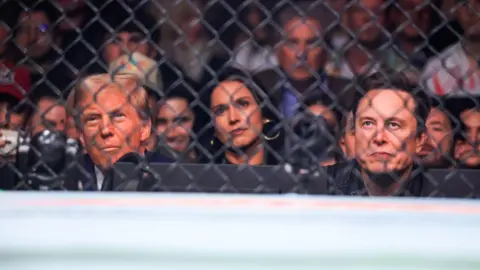
Donald Trump received a warm welcome as he celebrated his election victory at the Ultimate Fighting Championship (UFC) in New York alongside Elon Musk and some of his cabinet picks.
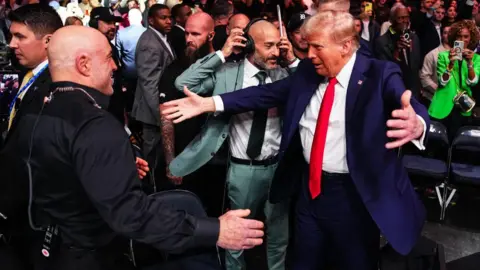
Trump entered the arena to loud music and cheers from the UFC 309 crowd at Maddison Square Garden.
He spent most of the night sat between UFC President Dana White and Tesla CEO Musk.
Two of Trump’s key cabinet picks, Robert F Kennedy Jr and Tulsi Gabbard, plus Vivek Ramaswamy, who will lead Trump’s cost-cutting “Department of Government Efficiency” with Musk, were also in the crowd.
 Getty Images
Trump enthusiastically greeted podcaster and UFC announcer Joe Rogan, who endorsed the president-elect after he appeared on his show before the election.
Trump waved to fans, who chanted “USA” as he walked to the octagon, before soaking in applause and dancing as the UFC played footage celebrating his election victory over Kamala Harris.
 Getty Images
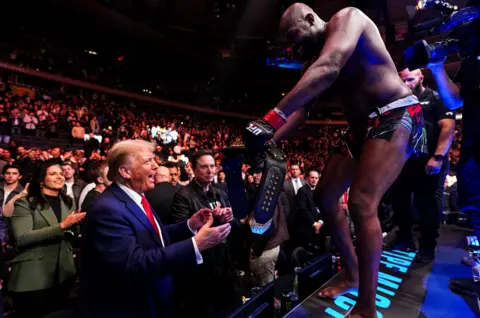
Jon Jones, who retained his heavyweight UFC title, then celebrated by heading over to greet Trump, handing the president-elect his title.
“I want to say a big thank you to President Donald Trump for being here tonight,” said Jones, receiving a huge roar of approval from the crowd.
 Getty Images
Trump has been a long-time supporter of the UFC, attending many of its live events over the years.
He usually receives a warm welcome from fans, though he received some boos at a UFC event in 2019, towards the end of his first term as president.
White has been one of Trump’s most high-profile backers.
The UFC president gave a speech at the Republican National Convention in July, saying: “I’m in the tough guy business and this man is the toughest, most resilient human being I have ever met in my entire life.”

A “massive” Russian missile and drone attack has targeted power infrastructure across Ukraine, the country’s energy minister German Galushchenko has said.
It is the largest such assault since early September, with reports of several explosions across Ukraine, according to authorities and local media.
Poland, Ukraine’s neighbour to the west, scrambled fighter jets to patrol its own airspace as a security precaution, Poland’s Operational Command said.
In a statement on social media, Mr Galushchenko said that “a massive attack on our energy system is ongoing” and that Russian forces were “attacking electricity generation and transmission facilities”.
In Ukraine’s south, the city of Mykolaiv was among the worst hit, with at least two people killed and several injured, while the Black Sea port of Odesa experienced a city-wide power cut.
In the capital, Kyiv, fragments from intercepted missiles and drones fell in several places, but there were no reports of injuries.
In a statement, Poland confirmed that operations by Polish and allied aircraft were underway.
“Due to a massive attack by Russia, which is carrying out strikes using cruise missiles, ballistic missiles and drones against sites located, among other places, in western Ukraine, operations by Polish and allied aircraft have begun,” it said.

Rajesh Kumar moved to Delhi from Bihar in 1999 at the age of 18 to help his father run a barber’s stall on the roadside in the Jasola area, a mixed neighbourhood in southeast Delhi. But after some months, he started working as an assistant to a doctor at the Apollo Hospital in Jasola, handing out prescription papers and organising patient records.
After his father’s death from cancer a year later, Kumar took on the business himself, continuing the roadside tradition. “I wanted to continue his legacy,” he says, but he also hopes his children will pursue “better career choices”.
“I live in a one-room flat, but they should have big houses,” he says.

Swami, 40, stopped his education while he was still in primary school because he was unhappy there but says he is determined to support his daughter’s dream of becoming an architect.
He first started cutting hair in his village in Uttar Pradesh. But 20 years ago, he moved to New Delhi and set up a roadside stall in the mixed, upper-middle-class Sarai Jullena neighbourhood, and it became his permanent address.

Chinese leader Xi Jinping has pledged to work with incoming President Donald Trump in his final meeting with current US leader Joe Biden.
The two met on Saturday on the sidelines of the annual Asia-Pacific Economic Cooperation (Apec) summit in Peru where they acknowledged “ups and downs” in relations over Biden’s four years in office.
But both highlighted progress in lowering tensions on issues such as trade and Taiwan.
Analysts say US-China relations could become more volatile when Trump returns to office in two months, driven by factors including a promise to raise tariffs on Chinese imports.
The president-elect has pledged 60% tariffs on all imports from China. He has also appointed prominent China hawks to top foreign and defence positions.
During his first term, Trump labelled China a “strategic competitor”. Relations worsened when the former president labelled Covid a “Chinese virus” during the pandemic.
Speaking on Saturday at the meeting held at his hotel in Lima, the Chinese president said Beijing’s goal of a stable relationship with Washington would remain unchanged.
“China is ready to work with the new US administration to maintain communication, expand cooperation and manage differences,” Xi said.
Biden said strategic competition between the two global powers should not escalate into war.
“Our two countries cannot let any of this competition veer into conflict. That is our responsibility and over the last four years I think we’ve proven it’s possible to have this relationship,” he said.
Biden’s time in office did see flare-ups in relations with China, including a spy balloon saga and displays of Chinese military firepower around Taiwan triggered by the visit of a senior US official.
China says its claim to the self-ruling island is a red line.
However, the Biden administration aimed to “responsibly manage” rivalry with Beijing after Trump’s first term.
Beijing is likely to be most concerned about the president-elect’s unpredictability, analysts say.
“The Chinese are ready to negotiate and deal, and probably hope for early engagement with the Trump team to discuss potential transactions,” said Bonnie Glaser, managing director of the German Marshall Fund’s Indo-Pacific Program.
“At the same time, however, they are ready to retaliate if Trump insists on imposing higher tariffs on China.”
She added that China may also be “likely worried that that they lack reliable back channels to influence Trump’s policy”.
Biden on Saturday acknowledged there had always been disagreements with Xi but added that discussions between him and the Chinese leader had been “frank” and “candid”.
The pair held three face-to-face meetings during Biden’s time in the White House, including a key summit last year in San Francisco where both sides came to agreements on combatting narcotics and climate change.
But Biden’s White House also continued Trump-era tariffs. His government imposed duties in May targeting China’s electric cars, solar panels and steels.
He also strengthened defence alliances across Asia and the Pacific to counter China’s increasing assertiveness in the region. The outgoing president has also said the US would defend Taiwan if it were invaded by China.

During the final weeks of the 2024 United States presidential race, former President Donald Trump spoke with sympathy to Arab American and Muslim voters enraged by the country’s support for Israel’s wars in Gaza and Lebanon.
Trump visited Dearborn, Michigan, known as the “capital” of Arab America. And he spoke directly to Lebanese Americans fearing for their families overseas.
“During my Administration, we had peace in the Middle East, and we will have peace again very soon!” Trump wrote on social media.
“I will fix the problems caused by [Vice President] Kamala Harris and [President] Joe Biden and stop the suffering and destruction in Lebanon. I want to see the Middle East return to real peace, a lasting peace.”
But following a thumping victory at the polls, Trump is preparing to return to the White House with a coterie of some of the Republican Party’s most vehemently pro-Israel figures.
While some critics speculated that Trump would move away from a hawkish foreign policy, his picks for key administration and cabinet positions have signalled that — whatever changes may come during his second term — a break with Israel is not likely to be among them.
Several of Trump’s nominees not only support continued US military and diplomatic assistance for Israel, but also echo the views and goals of Israeli ultranationalists, who support the expansion of illegal Israeli settlements into Palestinian territory.
Meanwhile, the war in Gaza continues to drive civilian casualties, with at least 43,799 killed since the conflict began in October 2023. A recent report from a United Nations special committee found that Israel’s methods in the Palestinian enclave were “consistent with genocide“.
What have Trump’s high-level picks said about the ongoing conflict in the Middle East? Here are a few of his nominees, in their own words.

A longtime foreign policy hawk, Senator Marco Rubio of Florida has been a strong supporter of Israel throughout his political career. He is in line to be secretary of state, the US’s top diplomat.
February 26, 2016: Rubio made a bid for president in 2016, facing a crowded pool of Republican candidates including Trump. At a Republican primary debate in Houston, Texas, he emphasised that he would “stand firmly on the side of Israel” — and used his position to draw a contrast with Trump.
October 9, 2023: Rubio reacted to the October 7 attacks in southern Israel by calling for an overwhelming military response.
November 2024: Confronted with activists from the antiwar group Code Pink, Rubio responded forcefully to questions about whether he would support a ceasefire in Gaza.
August 30, 2024: Rubio sent a letter to the outgoing administration of President Joe Biden criticising the decision to sanction Israeli settlers linked to anti-Palestinian violence in the occupied West Bank.

A US Army veteran who deployed to Iraq and Afghanistan, Fox News host Pete Hegseth has been tapped to head the Department of Defense, in one of the country’s highest-ranking military positions. If Hegseth is confirmed, only the president himself would have more authority over the armed forces.
September 14, 2016: In an interview with the Jewish Press, Hegseth explained that he grew up a Baptist and never met a Jewish person until attending college. But he accused higher education of spreading the “seeds of anti-Semitism”.
February 2018: Speaking at the Arutz Sheva Conference in Jerusalem, Hegseth pledged to continue “fighting the fake news about the Arab-Israeli conflict”.
He also appeared to endorse demolishing the Al-Aqsa Mosque, one of the holiest sites in Islam, to make room for a “Third Temple”, a longstanding goal of Israeli ultranationalists and evangelical Christians.
May 2018: Speaking with his co-hosts on the TV programme Fox & Friends, Hegseth appeared to brush off the Palestinian death toll during the Great March of Return protests. When confronted with the possibility that Israeli snipers had fired on “innocent people”, including children, Hegseth shrugged and said, “Meh.”

A former Arkansas governor who unsuccessfully ran for president in 2008 and 2016, Mike Huckabee is an evangelical Christian and strong supporter of “Greater Israel”, a term often used to describe the proposed Israeli annexation of Palestinian territory.
Early 2008: At a campaign stop during his first bid for the presidency, Huckabee argued that being Palestinian was a made-up identity.
May 31, 2015: Speaking at an Israel Day concert, Huckabee reflected on his first trip to Israel in 1973. He proceeded to say that Israel had no “better friend in the United States” than him and refuted Palestinian claims to Jerusalem.
August 18, 2015: During a news conference at the illegal Israeli settlement of Shiloh, Huckabee endorsed a vision of Israel that included the occupied West Bank, calling the area by the biblical name “Judea and Samaria”. He also denounced a deal to contain Iran’s nuclear programme.
February 29, 2024: Huckabee told the International Fellowship of Christians and Jews that he was overwhelmed with emotion after the October 7 attacks on southern Israel. He also described Israel’s illegal settlements in the West Bank as the fulfilment of biblical prophecy.

A congresswoman from New York, Stefanik went viral last year during congressional hearings about anti-Semitism on college campuses: Her blunt questioning of several university leaders helped precipitate several resignations.
Critics say it also contributed to harsh crackdowns on pro-Palestine student demonstrators, as Stefanik conflated protest slogans like “From the River to the Sea” with calls for anti-Semitic genocide.
May 19, 2024: Stefanik travelled to the Israeli Knesset to deliver an address in which she described Israel’s war on Gaza as a moral crusade. She also called for the withdrawal of US funds from UNRWA, the UN agency for Palestinian refugees.
September 23, 2024: Following a UN General Assembly vote calling on Israel to end its unlawful occupation of Palestinian territory, Stefanik released a statement condemning the proceedings.

A member of the House of Representatives and a former Green Beret, Representative Mike Waltz of Florida has expressed firm support for Israel. He currently serves on the House Armed Services Committee. He previously chided the Biden administration for providing Israel with insufficient support.
August 16, 2019: In an appearance on Fox News, Waltz expressed his support for Israel’s decision to bar his congressional colleagues Rashida Tlaib and Ilhan Omar from entering the country over their support for the pro-Palestinian Boycott, Divestment, Sanctions (BDS) movement.
Tlaib, a Palestinian American, was later offered a “humanitarian” visit, which she rejected.
August 17, 2024: In another interview with Fox News, Waltz approvingly noted that, when Trump was in office, the Iranian economy was “broke” and was “in shambles” due to crushing sanctions.
He also credited Israeli Prime Minister Benjamin Netanyahu’s “strong actions” with containing the threat represented by Iran and its Islamic Revolutionary Guard Corps (IRGC).
October 25, 2024: Following Israeli strikes on Iran, Waltz noted in a social media post that Israel had avoided targeting oil fields and nuclear facilities.

 Getty Images
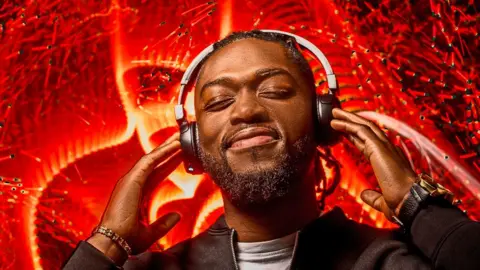
Described as a virtual singer powered by artificial intelligence (AI), Mya Blue says: “I am not the enemy, I am just a music lover exploring the different sounds of the world.”
Her Instagram account, where she makes this statement, has the tag line: “I may not be human but I sing from my soul” – and is the creation of Nigerian musician and producer Eclipse Nkasi.
She features in his recently released remix of Joromi, a classic tune by the late Nigerian highlife artist Sir Victor Uwaifo.
She and her creator want to calm the fears that many musicians the world over have about the impact of AI on the music industry.
Earlier this year, for example, high-profile artists such as Billie Eilish and Nicki Minaj called for a halt to the “predatory” use of AI tools which they say steal artists’ voices.
And given a lack of understanding about AI throughout Africa, and the fact that AI tends to rely on data sources collated in the West, there are concerns about how African music and cultural heritage will be affected.
 Eclipse Nkasi
But there are many African artists and industry professionals who are excited about the possibilities this emerging technology offers.
Indeed Nkasi says the fact that AI is in its infancy in Africa may be a boon for the continent.
“There is a huge threat, but just saying: ‘Let’s abolish AI’ is not going to work – there are too many countries and people invested,” he told the BBC.
“The best thing we can do is figure out better ways to use it.”
The 33-year-old is determined to be that pioneer and last year also produced the continent’s first AI-powered music album Infinite Echoes.
Nkasi says he has intentionally taken a manual and creative approach to using AI in his music, primarily using it to generate samples.
“My biggest drive with AI is its application, finding healthy ways to apply it. With each project it was important to find something that it did that moved the needle forward,” he says.
But while Nkasi is happy to experiment with the new technology, some see it as a threat to African culture.
For Kenyan musician and producer Tabu Osusa, it heralds the risk of cultural appropriation – with AI passing off African sounds without acknowledging their source.
This is because AI is able to quickly create new compositions by learning from existing music.
“My problem with AI is the ownership. Once you have taken some music from Ghana or Nigeria, who owns that music? How would you find out where the original creators are and ensure they are credited? It’s theft for me through the backroom,” Osusa told the BBC.
“Due to unregulated sampling methods by musicians, AI will enable recording company moguls in the West to make colossal sums of money while leaving some creatives in African villages to languish in abject poverty.”
This fear is reflected in a report released last year by Creatives Garage, a Kenya-based arts platform which worked in collaboration with the Mozilla Foundation to study the impact of AI on the East African nation’s creative communities.
It revealed that most Kenyan musicians were anxious that AI could lead to others benefitting from their creativity, says Bukonola Ngobi, research consultant at Creatives Garage.
The study also warned that AI’s power to store data might sound the death knell for the culture around traditional music.
One musician even questioned whether recording and storing traditional sounds for AI to replicate might be a disincentive for local artists to continue to learn traditional instruments, Ngobi says.
Osusa goes even further: “In Africa we mostly don’t study music, we are born with it. We live it. It’s very spiritual. Music in Africa is always alive. It’s so dynamic. That shouldn’t be taken away from us.”
Yet the report did show that for those with access to tech devices, AI not only provided creative music development but also the chance to develop cheaper marketing and design services.
Although this would be no help for emerging artists from Africa’s poorer communities – and might raise the barrier to pursuing a music career, warned Ngobi.
“If you don’t have a laptop to start off with or you’re a musician in an environment where there is no internet connectivity then how will you participate?” she told the BBC.
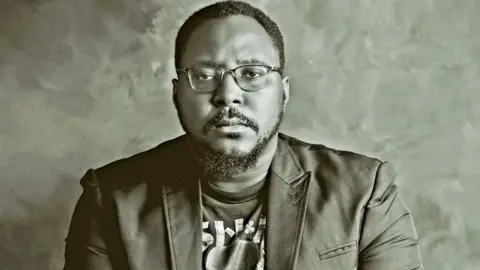 Eclipse Nkasi
For those wanting to innovate, one of the problems Africa faces is the lack of data from the continent to dictate algorithms. Searches are often shaped by Western biases which decrease the accuracy and quality of work produced by AI for African musicians.
For example, when Nkasi created Mya Blue using AI, he faced issues with her imagery – the artist presents as a Gen Z American girl with blue hair.
“AI is very limited in how it understands and perceives my space,” he says.
But the Nigerian musician views this as an opportunity for human contribution: “The limits we Africans experience with AI can be a good thing.
“One can argue that right now, while AI can’t give the very detailed African sound, there’s still room for the guy who can play it. So I’m not sure what we’re really fighting for when we consider that a problem.”
Fellow Nigerian Emmanuel Ogala, the boss of AI-powered company Josplay, definitely sees the opportunities for Africa.
His company uses AI models to collate detailed metadata and intelligence to create archives of the continent’s diverse music heritage.
“African music is really complex and it’s one of the most understudied types of music,” he told the BBC.
This was reflected at the MTV Video Music Awards in September, when South African musician Tyla won the award for the Best Afrobeats song for her hit Water.
During her acceptance speech she hit out against the tendency of Western award bodies to group all African artists under the umbrella of “Afrobeats” – a genre of music more associated with Nigeria and West Africa.
“African music is so diverse,” she said. “It’s more than just Afrobeats. I come from South Africa. I represent amapiano. I represent my culture.”
Ogala feels AI would address such homogenisation and benefit African musicians by revealing to the world more of the continent’s cultural diversity.
“A lot of the academics we speak to have knowledge that is very specific about a very small area of African music. You have to build for an African audience taking note of how fragmented our listening culture is. You just cannot humanly do that,” he says.
As AI continues to develop, there is consensus among African music artists, producers and researchers that there needs to be better financing.
“We need investment in the data infrastructure for the opportunities it presents to really be leveraged by people,” says Ngobi.
Ogala agrees and says that raising funds to develop his digital archive AI tool is difficult.
“We, the founders, have been funding the project out of our pockets because of our belief in the industry. If we put in place the fundamental building blocks, the industry will be a lot more viable than it is now.”
Added to this are the uncertainties around copyright legislation written for a pre-AI era which will need to be renegotiated. Copyright is already a huge issue for African artists whose music is often pirated, sold and played on the continent without them earning anything.
These challenges aside, there is a growing realisation that unless the African music industry embraces the new technology, it is in danger of losing control of its talent and heritage.
And Nkasi’s Mya Blue certainly has big ambitions.
During a Q&A on her Instagram, replying to a question about whether she could win a Grammy, she said: “Who knows. As an AI [artist], I don’t dream of trophies, but of resonating with hearts through music. But wouldn’t it be fun to see a virtual artist on that stage?”
 Getty Images/BBC
Israel has ramped up air attacks across Lebanon as its ground forces reached their deepest point in Lebanon since they invaded six weeks ago before pulling back after battles with Hezbollah fighters, Lebanese state media reported.
On Saturday, Israeli air strikes on the village of Khreibeh in the Baalbek District of eastern Lebanon killed six people including three children, and injured 11 others, the Lebanese Ministry of Public Health said.
Strikes earlier on Saturday killed two medics in south Lebanon, including one in Borj Rahal and another in Kfartebnit, and injured four other rescue workers, with two still missing, the ministry added.
Israeli air strikes also targeted areas of the southern suburbs of Beirut for a fifth consecutive day. The Israeli military has said the attacks were directed at Hezbollah infrastructure, including a weapons storage facility and a command centre.
Reporting from the Lebanese capital Beirut, Al Jazeera’s Charles Stratford said that most residents of Beirut’s southern suburbs had fled.
“There is virtually nobody there now. People used to go back and check on their homes, their belongings and their businesses during the day but that has now become increasingly difficult,” he said.
He noted that the initial strikes happened around 9am (06:00 GMT). Following evacuation orders, there was another round of strikes in the afternoon.
“There was another massive wave of strikes on the southern city of Tyre, and as we understand, around the surrounding villages, too. The Israeli military put out evacuation threats for at least 15 villages in southern Lebanon so far today,” Stratford added.
The Iran-aligned armed group Hezbollah fired approximately 65 missiles towards Israel by Saturday afternoon, the Israeli military said.
A soldier was also killed during combat in southern Lebanon, the Israeli military added.
Hezbollah has said it launched a series of drone strikes on an Israeli naval base near the coastal city of Atlit south of Haifa.
“A squadron of suicide drones” attacked “a gathering of Israeli enemy army forces near a military checkpoint in the Avivim settlement, and hit their targets accurately”, it said in a statement.
Israel launched its ground offensive and ramped up air attacks on Lebanon in late September after almost a year of cross-border hostilities with Hezbollah in parallel with the Gaza war.
The Israeli army’s chief of staff Herzi Halevi has said that the military will continue to strike Lebanon until Israelis displaced from the north can return.
“Hezbollah has paid a high price, its chain of command has collapsed, many of its operatives have been killed, and extensive infrastructure dismantled,” Halevi said in a statement released by the Israeli army.
“We will stop when we know that we are bringing the residents [of northern Israel back] safely.”
Saturday’s clashes and further Israeli bombardment came as Lebanese and Hezbollah officials study a draft proposal presented by the US earlier this week on ending the war.
A top government official in Beirut said on Friday that US Ambassador Lisa Johnson had presented a 13-point proposal to halt the Israel-Hezbollah conflict. It includes a 60-day truce, during which Lebanon will deploy troops to the border. The official added that Israel has yet to respond to the plan.
Ali Larijani, a senior adviser to Iran’s Supreme Leader Ayatollah Ali Khamenei also met Lebanese officials in Beirut on Friday, saying Tehran was “looking for solutions”.
Top Israeli officials have repeatedly expressed scepticism of potential truce deals, saying Israel must have the right to enforce any ceasefire. Israel has also demanded that Hezbollah fighters withdraw to the area north of the Litani River, about 30km (19 miles) from the border with Israel.
In Lebanon, at least 3,452 people have been killed and 14,599 wounded in Israeli attacks since October 2023.
Israel says Hezbollah attacks have killed about 100 civilians and soldiers in northern Israel, the Israeli-occupied Golan Heights and southern Lebanon over the last year.

 Reuters
A South African court has ordered that a police blockade of a disused goldmine, in which hundreds of people are located illegally, be lifted.
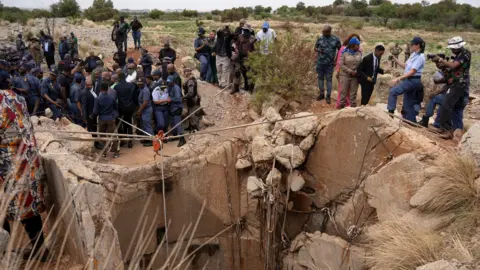
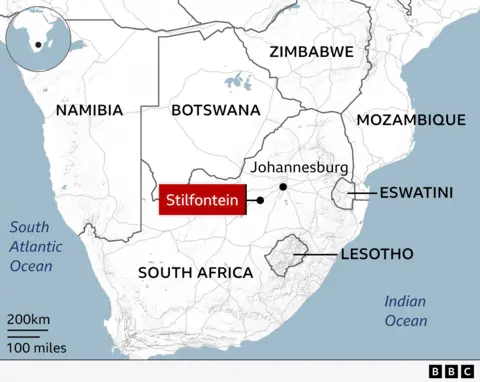
Emergency services have been at the site, in Stilfontein, around 90 miles south-west of Johannesburg, for several days. Police have blocked food and water entering the mine to, as one government minister put it, “smoke them out”.
The miners – who have been underground for a month – have so far refused to exit the mine over fears of being arrested. Among them are undocumented migrants who also fear deportation.
Police welcomed the order but said it would not stop them arresting miners who left the mine.
On Saturday, a court in Pretoria ordered that the mine “may not be blocked by any person or institution whether government or private”.
It also said that any person in the mine should be allowed to exit, and that “no non-emergency personnel may enter the mine shaft”.
The ruling comes after dozens of volunteers entered the abandoned mine to aid the miners, who reports suggest had resorted to eating vinegar and toothpaste to survive. Volunteers said they pulled a body from the mine on Thursday.
It also comes as police called in experts to assess the integrity of the mine shafts, to inform a decision as to whether they would conduct a forced evacuation, according to the AFP news agency.
Yasmin Omar, an attorney who helped bring the court case, told state broadcaster SABC that the ruling was a temporary order “that will at least allow us to get emergency relief to the people [who] need it”.
She said a full hearing on the matter would take place on Tuesday.
“These people underground are dying,” Ms Omar said, adding that the ruling means officials “must do all that is reasonable to give medical care to the people who are underground”.
In a statement, the South African Police Service (SAPS) welcomed the court order, which it stressed did not prevent officers from making arrests.
It said: “All those who resurface will continue to be assessed by emergency medical personnel on site, as has been the case.
“Those that are in a good health will be processed and detained. Those that require further medical care will be taken to hospital under police guard.”
The SAPS added that as of 16:00 local time (14:00 GMT) on Saturday, three of the miners had resurfaced.
More than 1,000 miners have already emerged and been arrested.
South Africa is a mineral-rich country. According to official estimates, it holds nearly 30% of the world’s gold deposits and 88% of all platinum deposits.
But many mines have closed down in recent years and miners have been laid off, contributing to a black market that costs the South African government hundreds of millions of dollars each year.
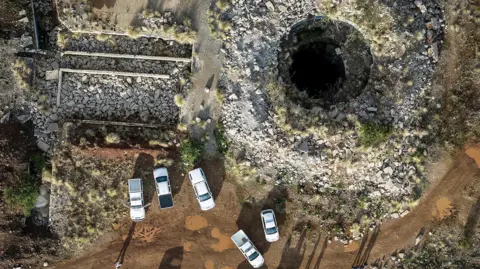 AP
APWhile gold remains a valuable commodity, rising mining costs – exacerbated by electricity disruptions and deeper deposits – have made the vast majority of mines unprofitable, according to the Minerals Council of South Africa, an industry body.
In a bid to survive impoverished circumstances, miners and undocumented migrants are increasingly entering closed mines to dig up their remaining deposits.
Some spend months underground, and illegal mining has spawned a small economy providing food and cigarettes to the miners.
However, the authorities are keen to end the practice. Illegal miners are sometimes recruited by criminal gangs and can be armed.
The SAPS has previously said that among those to resurface from the Stilfontein mine were individuals from Mozambique, Malawi and Zimbabwe.
The force has launched a nationwide operation aimed at combatting illegal mining and related criminal activities.
On 3 November, it said that at least 565 people had emerged from a mine in Orkney, south-west of Johannesburg.
But the South African Human Rights Commission said on Friday that it had begun an investigation into the SAPS’s handling of the Stilfontein mine incident, following complaints that the blockade may have infringed the miners’ right to life.

The strike took place at a UN-run school in Gaza City’s Shati refugee camp.
An Israeli strike on a school where displaced Palestinians were sheltering in Gaza City’s Shati refugee camp has killed 10 people and wounded at least 20 others, Palestinian medics said.
Rescue operations were under way at the UN-run Abu Assi school in northern Gaza on Saturday, health officials said.
Reporting from Deir el-Balah, Al Jazeera’s Hind Khoudary said that according to locals and witnesses, most of the people sheltering in the school were displaced from other parts of Gaza.
“Let me remind you there is only one hospital functioning in the city … and we know the health situation in hospitals in Gaza has been horrible … so it is difficult to help the injured,” she said.
Palestinian health officials said at least 30 people were killed by Israeli military strikes across the enclave on Saturday.
The northern Gaza Strip, in particular, has been under siege for more than 40 days.
“Israeli soldiers have surrounded and imposed a strict blockade on Palestinians in Beit Lahiya, Jabalia and Beit Hanoon, where Palestinians are unable to evacuate their besieged homes,” Khoudary said.
“We have received many appeals from people in Beit Lahiya who say they’re stuck and need rescuing. They have no food, water or medical aid,” she noted.
“Other than air strikes and continuing artillery shelling, the military has extensively deployed quadcopters that Israeli forces use to fire live ammunition at Palestinians and kill them in different areas across the Gaza Strip,” Khoudary added.
Later on Saturday, the Israeli military reported that two rockets fired at Israel from the northern Gaza Strip were intercepted.
The launches show the ability of Palestinian fighters to fire rockets into Israel despite more than 13 months of an aerial and ground offensive that turned vast land in the enclave into wasteland and displaced most of the 2.3 million population.
Israel’s genocide in Gaza has killed at least 43,799 Palestinians and wounded 103,601 since October 7, 2023. An estimated 1,139 people were killed in Israel during the Hamas-led attacks that day, and more than 200 were taken captive.

