Two top Senate Democrats have called for a federal investigation into Elon Musk’s reported contacts with Russian President Vladimir Putin and his top aides.
The senators have urged the Pentagon and the Justice Department to determine whether the conversations, which the Kremlin has denied, should force a review of the federal government’s contracts with Musk’s company, SpaceX.
The Wall Street Journal reported last month that the world’s richest person has had “multiple, high level conversations” with Putin since 2022 while also sustaining contact with other top Russian officials.
Musk wrote on his X platform on Friday that he’s “going to find out who’s making these accusations and nuke them”.
In another post, he slammed the two Democrats – Rhode Island Senator Jack Reed, chairman of the Senate Armed Services Committee, and New Hampshire Senator Jeanne Shaheen, a senior Democrat on the Armed Services and Foreign Relations Committees – as “puppets” and “knuckleheads”.
The pair of Democrats sent a letter on Friday to Attorney General Merrick Garland and Defence Department Inspector General Robert Storch raising “serious questions regarding Mr Musk’s reliability as a government contractor and a [security] clearance holder”.
The Donald Trump ally currently benefits from billions of dollars in US defence and intelligence contracts, and also claims to hold a top secret level security clearance.
“Russia’s ambitions in the space domain pose a direct threat to US national security,” Reed and Shaheen write, pointing to reports earlier this year that the US adversary has deployed a counter-space weapon that may be capable of attacking other satellites in low-earth orbit.
The senators note that, unlike others with high-level security clearance, Musk does not report his contacts with foreign government officials.
They add that the billionaire’s communications with Putin’s deputy chief of staff, Sergei Kiriyenko, comes amid a Justice Department finding that Kiriyenko and other top officials were involved in an effort to seed Kremlin propaganda on social media, including on the Musk-owned X (formerly Twitter) platform.
“For these reasons, we urge an immediate review to ascertain whether Mr Musk’s relationship with multiple high-level Russian officials warrant an investigation and a determination by the Department of Defense’s senior debarment official whether SpaceX should exclude Mr Musk’s involvement in current or future US Government contracts,” Reed and Shaheen write.
Musk, who backed Trump’s successful 2024 re-election bid with campaign appearances and millions of dollars in donations, was picked by the president-elect earlier this week to lead a new “Department of Government Efficiency”.
But he has also participated in the incoming president’s diplomatic efforts.
Musk joined phone calls over the past week with Ukrainian President Volodymyr Zelensky and Turkish President Tayyip Erdogan.
What one night of violence revealed about the western media’s failings on Israel and Palestine.
In the wake of an ugly eruption of violence on the streets of Amsterdam, the media coverage of the story has been put under the microscope with editors scrambling to revise headlines, rework narratives, and reframe video content.
Contributors:
Dana Mills – Writer, Local Call and +972 Magazine Marc Owen Jones – Associate professor, Northwestern University Qatar James North – Editor-at-large, Mondoweiss Samira Mohyeddin – Founder, On The Line Media
On our radar
Incoming president Donald Trump has appointed Elon Musk – one of his most vocal supporters – to co-lead the brand new Department of Government Efficiency. Meenakshi Ravi looks at Musk’s new role and how he could use his influence to get favourable government treatment for his companies.
The Headline Fixer
Throughout Israel’s genocidal war on Gaza, critics have been tearing apart the media coverage – especially by news outlets in the United States.
Feature blurb: Israel’s genocidal war on Gaza has shone an often-unflattering spotlight on media coverage by mainstream US news outlets. Such failings jump out at us because they often come in the form of headlines. Historian Assal Rad explains the mission she has undertaken to “fix” misleading headlines.
Featuring:
Assal Rad – Author of State of Resistance: Politics, Culture and Identity in Modern Iran
Weather worsens in Philippines as Super Typhoon Man-yi gets closer
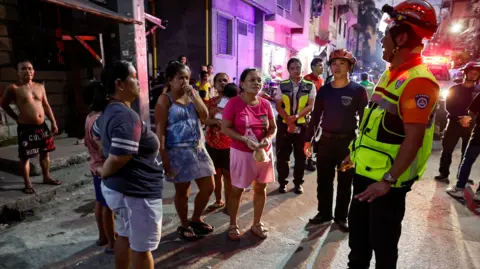
A potentially catastrophic super typhoon has made landfall in the Philippines – the sixth typhoon to hit the country in a month.
Man-Yi, known locally as Pepito, touched down at 21:40 local time (13:40 GMT) with maximum sustained wind speeds of 195 km/h (121mph) along the coast of the eastern Catanduanes island, the state forecaster said.
It has warned of a “life-threatening storm surge”, heavy rains and severe winds, and hundreds of thousands of people had been evacuated ahead of the storm’s arrival,
At least 160 people are known to have died in the five previous earlier storms.
Super Typhoon Man-Yi is expected to impact a large area, BBC Weather reports.
There will be widespread heavy rain in northern areas, with more than 300mm (11 inches) expected to fall on Saturday and Sunday – leading to potential flooding and increasing the risk of mudslides.
Winds of up to 270km/h are also expected, as are waves of up to 15m (49ft) in eastern coastal areas.
The capital, Manila, may be spared the worst of the winds as the storm tracks to its north, before crossing the island of Luzon – the largest and most populous island in the Philippines – and heading offshore by Monday.
Dozens of flights have been cancelled due to the incoming storm, according to local broadcaster ABS-CBN News.
Typhoon Man-Yi bears down on Philippines
More than 400,000 people heeded evacuation orders ahead of the storm, civil defence said. Its head, Ariel Nepomuceno, has urged everyone living in the storm’s projected path to comply these orders.
“It is more dangerous now for those in landslide-prone areas because the ground has been saturated by the consecutive typhoons,” Mr Nepomuceno said.
Glenda Llamas is among those who have had to leave their homes.
“We are terrified of the typhoon, as it may intensify and the waters can rise,” she told the AFP news agency from a shelter in the eastern Albay province.
“If we didn’t evacuate we wouldn’t be able to get out later, we don’t have anyone else in the house but us.”
“We already have a lot of phobia due to the previous calamities that happened here like floods, strong winds and other disasters,” said Melchor Bilay, who was evacuated to a school further south, in Sorsogon province.
EPA
Residents in areas that could be affected are being urged to obey evacuation orders
While typhoons are not uncommon in the Philippines, forecasters say it is unusual to see so many tropical storms in the Pacific at the same time during the month of November.
Tropical Storm Trami dumped one month’s worth of rain over large swathes of the northern Philippines in late October, leaving dozens of people dead.
This was followed by Typhoon Kong-rey, in which at least three people were killed. It was also the biggest typhoon to directly hit Taiwan in nearly 30 years.
Typhoon Yinxing affected the north of the island of Luzon earlier this month, where it brought nearly 250mm (10in) of rain in some areas.
There has since been Typhoon Toraji and, earlier this week, Typhoon Usagi, which brought a three-metre storm surge and torrential rainfall exceeding 200mm (8 inches).
The United Nations’ climate change body, the IPCC, has said that while the number of tropical cyclones that happen globally is unlikely to increase due to a warning planet, it is “very likely” they will have higher rates of rainfall and reach higher top wind speeds.
This means a higher proportion would reach the most intense categories.
As discussions at the UN Climate Change Conference (COP29) in Baku over how to finance climate action remain gridlocked, Southern Africans are learning that some “renewable energy” might not be renewable after all in an age of climate age.
This year, Zambia and Zimbabwe experienced a major drought that devastated both countries. It destroyed harvests and sent the Zambezi River’s water flows to an historic low.
For decades, the Kariba Dam on the River had provided the bulk of electricity consumed in Zambia and Zimbabwe. However, in September, Zambian officials signalled that, owing to desperately low water levels, only one out of six turbines on its side of the lake could continue to operate.
Entire cities have been deprived of electricity, sometimes for days on end. Sporadic access to power has become the norm since, in 2022, record low rainfall led to a glaring imbalance between the water intake level at Lake Kariba – the world’s biggest dam reservoir – and water consumption by Zimbabweans and Zambians. This has hit hard urban households, 75 percent of which normally have access to electricity.
Rural areas, too, are suffering from the dramatic reduction in precipitation. Zambia is experiencing its driest agricultural season in more than four decades. The worst-affected provinces usually produce half of the annual maize output and are home to more than three-quarters of Zambia’s livestock population, which is reeling from scorched pastures and water scarcity.
Crop failure and livestock losses are fuelling food inflation. UNICEF has reported that more than 50,000 Zambian children under the age of five are at risk of falling into severe wasting, the deadliest form of malnutrition. Zambia has also been battling a cholera outbreak with more than 20,000 reported cases, as access to water has become increasingly scarce. This is a water, energy and food emergency all at once.
While many are blaming climate change for these calamities, its effect on weather has only exacerbated an already existing crisis. This grave situation is the consequence of two interrelated policy choices that are presenting massive challenges not just in Zambia, but across much of Africa.
First is the prioritisation of urban areas over rural ones in development. Zambia’s Gini coefficient – a measure of income inequality – is among the world’s highest. While workers in cities are much more likely to earn regular wages, the poorest layers of the population depend on agricultural self-employment and the vagaries of the climate.
The massive gap between rich and poor is not accidental; it is by design. For instance, tax reforms in recent decades have benefitted wealthy urban elites and large rural landowners, with subsistence farmers and agricultural labourers left behind.
The result is that children in Zambia’s towns enjoy much more reliable access to an adequate diet, clean water, electricity and toilets than their rural peers. If 15,000 Zambian children die annually in rural districts due to a preventable disease such as diarrhoea and Zambia has for decades had one of the highest rates of malnutrition and stunting in Africa, a pro-urban bias in policies and budgets is a major culprit.
That bias is also evident in coverage of the current crisis, which concentrates on urban dwellers being deprived of electricity because of the cuts at Kariba rather than the nine-tenths of Zambia’s rural population that have never had any access to electricity.
Second is the enduring preference of many African governments for hydropower. Across much of the continent, the penchant for hydroelectric plants is a colonial legacy eagerly continued after independence; Zambia and its Kariba Dam are cases in point.
Dams can provide flood control, enable year-round irrigation and hydroelectric power and, in the age of global warming, their reservoirs can manage extreme weather events while their energy is renewable and clean – or so their proponents purport.
Over the last two decades, billions of dollars have been spent on upgrading or building dams in Ghana, Liberia, Rwanda, Tanzania, Ethiopia and elsewhere. Despite the crisis at Kariba, where the reservoir has not been at full capacity since 2011, and at the smaller Kafue Gorge, Lower Kafue Gorge, and Itezhi-Tezhi Power Company hydropower plants, Zambia, too, wants to further boost its capacity through the $5bn Batoka Gorge Hydro project. This appears foolhardy when the global trend is that climate change is undercutting hydropower generation and irrigation ability.
Moreover, it is important to emphasise that the distributional effects of dams are not neutral. They are constructed in rural areas, but their main beneficiaries usually reside elsewhere. While dams provide, or provided, relatively reliable and affordable electricity to urban constituencies and mining interests that matter to governments, the people and ecosystems in the vicinity of the project often suffer.
Kariba was built between 1955 and 1959 by British colonial powers without an environmental impact assessment and caused the displacement of tens of thousands of Tonga Goba people who have suffered a long history of broken promises pertaining to compensation and resettlement.
They, like the 90 percent of other rural Zambians who lack access to electricity, have historically not enjoyed the spoils of the dam while successive Zambian governments have celebrated Kariba as a symbol of Zambian nationhood and Southern African brotherhood.
Climatic changes, like big dams, do not affect everyone equally. The simultaneous crises in water, energy and food systems underline that in Zambia, and many other African countries, fundamental decisions must be urgently made.
Rural dwellers should not be asked to bear the brunt of debt repayment and related austerity any more. They cannot be compelled to adapt to climatological havoc and the broader economic malaise on their own.
Zambia and other African countries need to ensure that rural areas and their needs in terms of reliable and affordable access to water, energy and food are prioritised. The necessary political will and budgets for that must be made available.
The electricity cuts and crop failures engendered by the latest drought, once again, point to the injustices and risks associated with urban bias and big dams. Global warming will only enhance these pathologies – unless resolutely different paths are taken.
The views expressed in this article are the author’s own and do not necessarily reflect Al Jazeera’s editorial stance.
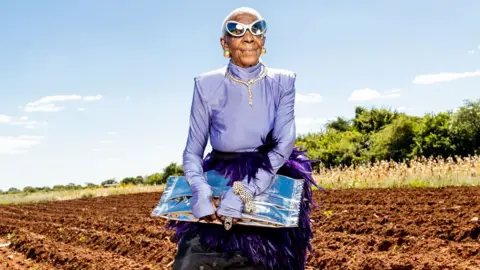
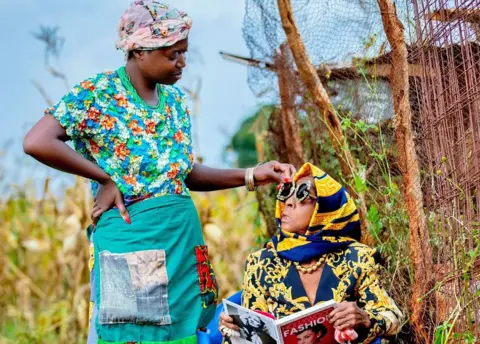
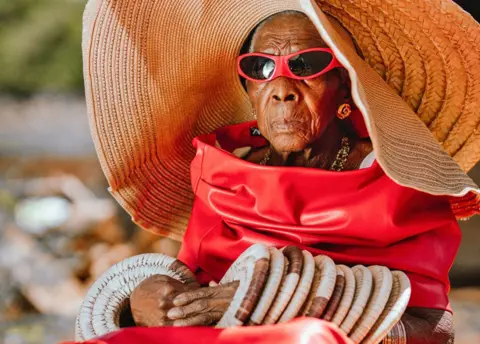
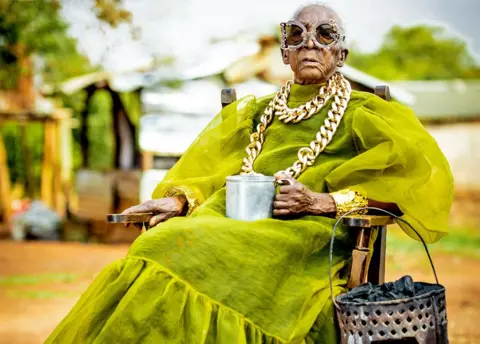
A grandmother in rural Zambia has become an style icon and internet sensation – after agreeing to play dress-up and swapping outfits with her fashionista granddaughter.
Margret Chola, who is in her mid-80s, is known to the world as “Legendary Glamma” – and adored by 225,000 Instagram followers for her striking and playful fashion photographs.
“I feel different, I feel new and alive in these clothes, in a way that I’ve never felt before,” Ms Chola tells the BBC. “I feel like I can conquer the world!”
The fortnightly Granny Series was created in 2023 by her granddaughter Diana Kaumba, a stylist who is based in New York City.
Luxury Media Zambia
“Legendary Glamma” in Zambia’s national colours
She came up with the idea when she was visiting Zambia to mark the second anniversary of the death of her father – the person she says inspired her passion for fashion because he always dressed well.
During that visit Ms Kaumba had not worn all her carefully curated outfits, so she asked her grandmother – or “Mbuya” in the Bemba language – if she wanted to try them on.
“I wasn’t doing anything at the time, so I just said: ‘OK. If that’s what you want to do let’s do it – why not?'” Ms Chola said.
“You will miss me when I die and at least this way you will be remembering me.”
Luxury Media Zambia
Fashion has created a bond between grandmother and granddaughter
Ms Kaumba wore Mbuya’s top and “chitenge” – a piece of patterned cloth wrapped around the waist. And Mbuya’s first outfit was a silver pantsuit.
“I thought it would be nice to dress up Mbuya in high fashion and then take photographs of her in her natural habitat,” Ms Kaumba tells the BBC.
That natural habitat is a farm in the village of 10 Miles, just north of the Zambian capital, Lusaka.
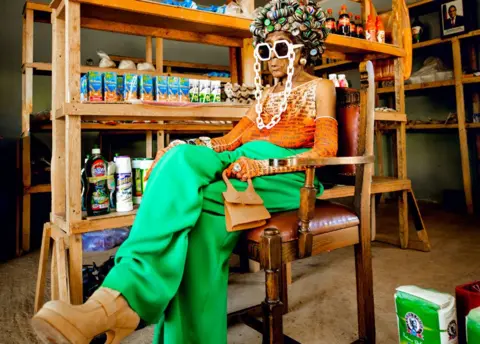
Most often Ms Chola is photographed in all her glamour outside – often sitting on an elegant wooden chair or lounging on a leather sofa.
Luxury Media Zambia
Could sofa surfing get more glamorous?
In the background are exposed brick buildings with corrugated iron roofs, ploughed fields, mango trees and maize crops.
“I was so nervous when I posted that first photo. I left my phone for 10 minutes and in those 10 minutes there were 1,000 likes,” Ms Kaumba says.
“My mind was blown. The comments were flying in and people were asking for more.”
It was in April 2024 that the Granny Series really took off – after Ms Kaumba posted a series of photos of her grandmother in a red Adidas dress, several chunky, golden necklaces and a glittering jewelled crown.
“It surprised me to hear that so many people around the world love me,” Ms Chola says – who does not know her exact age because she does not have a birth certificate.
Luxury Media Zambia
Margret Chola, who is not entirely sure of her age, is happy to try funky styles
“I didn’t know I could make such an impact at this age.”
Ms Chola poses in clothes that are a mix of vibrant colours, textures and styles.
From a green American football jersey, combined with a layered frilly red dress styled as a skirt – in the colours of the Zambian flag to pay homage to 60 years of independence.
To a blue, black and green sequined top, complete with a golden snake necklace and bracelet.
And Mbuya’s personal favourite – jeans, a graphic T-shirt with her image on the front and a blonde wig.
“I had never worn jeans or a wig before – so I was happy, and I was dancing.”
Ms Kaumba, who has been a stylist since 2012, says that her grandma has “courage, grace – and nails every look”.
All the looks reflect her maximalist-chic aesthetic – which celebrates the joy of excess, eclectic combinations, the big and the bold, and clashing patterns and colours.
At the heart of it all are eye-catching accessories – bold sunglasses, oversized hats, necklaces, bracelets, pendants, rings, gloves, bags, blonde wigs, crowns.
That influence has come directly from her grandmother, who has “always been a lover of pearls and bangles”.
In one particularly playful scene called GOAT – short for greatest of all time – Ms Chola appears with a goat – that is decked out in Mbuya’s beloved pearls.
Luxury Media Zambia
A nanny nod to Margret Chola’s love of pearls
Other accessories also reflect Chola’s personality and story.
In some shots Mbuya is holding the beloved radio that she carries around all day and takes to bed with her.
Or she’s clutching an “ibende” – a long wooden stick that over the years she has used to pound millet or cassava or maize.
She is smoking a pipe or holding a metal cup full of tea, and hanging off the edge of the chair arm is an “mbaula” or charcoal brazier that Zambians often use for cooking – especially now that the country is plagued by severe power cuts.
Kooma Jnr
The “ibende” represents the hard labour of life in rural Zambia
Ms Kaumba hopes that the Granny Series will highlight that older people still have a lot to offer – and making memories together is an important way to “leave footprints for the next generation”.
“Do not write them off, love them just the same till the end because remember we will be just like them one day.”
As a result of Mbuya’s photo shoots, Ms Kaumba’s been hired by four granddaughters to style their grandmothers – aged between 70 and 96.
Luxury Media Zambia
The more pearl bling the better
Ms Chola hopes that the Granny Series will inspire people “to live their lives and not worry about being judged by society”.
She urges people to “always forgive yourself for whatever mistakes you made. You can never change your past – but you can change your future”.
The photo shoots have brought granddaughter and grandmother closer – and through their special bond Ms Kaumba has learnt so much more about her Mbuya’s often difficult life.
Luxury Media Zambia
Margret Chola had to leave school at the age of 12 or 13
Ms Chola was raised by her grandparents, went to school until she was 12 or 13 and then, because of economic reasons, was forced to marry a man in his 30s.
She had three children, ended up drinking heavily and eventually escaped the marriage.
Luxury Media Zambia
The charcoal brazier is something all Zambians will recognise these days because of the power cuts plaguing the country at the moment
That trauma still haunts her – but her unexpected global fame has given her a new lease on life.
“I’m now able to wake up with a purpose knowing that people around the world love to see me,” Chola says.
Penny Dale is a freelance journalist, podcast and documentary-maker based in London.
Kooma Jnr
“Legendary Glamma” has found that age is no barrier to style or garnering Instagram likes
President Marcos directs government to prepare for ‘worst-case scenario’, with millions at risk from storm surges.
The Philippines has ordered the evacuation of hundreds of thousands of people and cancelled dozens of flights as a “potentially catastrophic” typhoon – the sixth storm in a month – approaches the archipelago.
Packing winds of 240km/h (149mph), Man-yi was upgraded to a super typhoon by state weather agency PAGASA.
“Pepito is approaching its peak intensity,” the agency said, using the local name for the storm that was expected to make landfall near the province of Catanduanes on Saturday night or early on Sunday.
It warned of a “potentially catastrophic and life-threatening situation” for the central region of Bicol, where nearly 180,000 people have been evacuated.
Man-yi was heading towards the eastern part of the main island of Luzon, prompting PAGASA to raise its highest Category 5 alert for Catanduanes and Category 4 for the northern part of Camarines Sur province.
Both provinces are still recovering from the deadly Tropical Storm Trami, which hit the country in late October.
The mayor of Naga city in Camarines Sur imposed a curfew from midday on Saturday in a bid to force residents indoors.
Civil defence administrator Ariel Nepomuceno said President Ferdinand Marcos Jr directed all government agencies “to prepare for the worst-case scenario” in areas where Man-yi is expected to hit.
In one evacuation centre in Catanduanes, more than 400 people were squeezed into the provincial government building in the capital, Virac, with new arrivals being sent to a gymnasium, provincial disaster officer Roberto Monterola told the AFP news agency.
Man-yi has already forced the cancellation of dozens of flights in the eastern Visayas region facing the Pacific Ocean.
The weather agency warned of dangerous storm surges that could exceed 3 metres (10 feet) in coastal areas of Luzon.
Torrential rains are expected in some provinces mainly in central Philippines.
About 20 tropical storms hit the Philippines each year on average, bringing heavy rain, strong winds and deadly landslides.
In October, floods and landslides brought by Tropical Storm Trami and Typhoon Kong-rey killed 162 people, with 22 others reported missing, government figures show.
Four storms, including Typhoon Usagi, churned in the western Pacific Ocean at the same time in November for the first time since records began in 1951, according to the Japan Meteorological Agency.
Ukrainian President Volodymyr Zelensky says he is certain the war with Russia will “end sooner” than it otherwise would have done once Donald Trump becomes US president.
Zelensky said he had a “constructive exchange” with Trump during their phone conversation after his victory in the US presidential election.
He did not say whether Trump had made any demands regarding possible talks with Russia, but said he’d not heard anything from him that was contrary to Ukraine’s position.
Trump has consistently said his priority is to end the war and stop what he says is a drain on US resources, in the form of military aid to Ukraine.
“It is certain that the war will end sooner with the policies of the team that will now lead the White House. This is their approach, their promise to their citizens,” Zelensky said in an interview with the Ukrainian media outlet Suspilne.
He added that Ukraine “must do everything so that this war ends next year, ends through diplomatic means”.
The situation on the battlefield is difficult, with Russian forces making advances, Zelensky said.
He said US legislation only allows him to meet with Trump after his inauguration in January.
Trump and Zelensky have long had a tumultuous relationship. Trump was impeached in 2019 over accusations that he pressured Zelensky to dig up damaging information on the Biden family.
Despite years of differences, Trump has insisted he had a very good relationship with Zelensky.
When the pair met in New York in September, Trump said he “learned a lot” from the meeting and said he would get the war “resolved very quickly”.
Trump has yet to divulge how he intends to end the war.
His Democratic opponents have accused him of cosying up to Russian President Vladimir Putin and say his approach to the war amounts to surrender for Ukraine that will endanger all of Europe.
But German Chancellor Olaf Scholz, who spoke with Trump following his election win, told German media that the incoming US leader had a “more nuanced” position on the war than was commonly assumed.
Scholz told the Süddeutsche Zeitung newspaper that his call with Trump was “perhaps surprisingly, a very detailed and good conversation”.
The US has been the biggest arms supplier to Ukraine – between February 2022 and the end of June 2024, it delivered or committed weapons and equipment worth $55.5bn (£41.5bn), according to the Kiel Institute for the World Economy, a German research organisation.
United States President Joe Biden and President Xi Jinping of China will meet on Saturday in what is expected to be their last face-to-face meeting during Biden’s term as Beijing braces for a Donald Trump presidency in Washington.
The two leaders are attending a two-day heads of state meeting of the Asia Pacific Economic Cooperation group in Lima, Peru, that began on Friday. Saturday’s meeting will be the third time the two will meet in person since Biden took office.
Relations between China and the US, the world’s most important superpowers, had nosedived during Trump’s first term as president, when he started a trade war with Beijing, using punishing tariff rates.
Yet ties became even rockier in the past four years of the Biden administration, with sore points ranging from trade wars to TikTok. In 2023, Mexico overtook China as the US’s biggest trade partner for the first time in 20 years as economic ties deteriorated.
Still, Biden has sought to maintain a steady relationship with Beijing. US National Security Adviser Jake Sullivan told reporters ahead of the Lima meeting that Xi and Biden would discuss the transition to a Trump White House and the need for level-headedness on both sides in that period.
In his election campaign this year, Trump threatened to slap 60 percent blanket tariffs on all Chinese imports to the US.
Here’s a picture of how the US-China relations soured under Biden – and what to expect under Trump 2.0:
President Joe Biden greets China’s President Xi Jinping at the Filoli Estate in Woodside, California, on Wednesday, November 15, 2023, on the sidelines of the Asia Pacific Economic Cooperative conference [Doug Mills/The New York Times via AP Photo]
Trade wars
Trump, in his first run as government, kickstarted a trade war with China after his administration blamed Beijing for ‘unfair’ trade practices that it said contributed to a large trade deficit in China’s favour. Those practices, the US maintains, include forced labour, intellectual property theft and unfairly low pricing that hurts US producers. China has long denied these allegations.
From January 2018, the Trump administration imposed higher tariffs on Chinese imports at rates of between 10 to 25 percent under Section 301 of the Trade Act. Beijing accused Washington of ‘nationalist protectionism’ and retaliated with higher tariffs on US imports.
However, close to the end of Trump’s first term, the two countries agreed to a deal that would see Washington reduce tariffs on some goods. China in return committed to improving intellectual property rights and also buying an additional $200bn-worth of US goods above 2017 levels by the end of 2021. Trump touted the deal with Xi, his “very good friend” as a success, but researchers in 2022 said that China had bought goods worth only 58 percent of the amount it had committed to purchasing.
Biden mainly kept Trump-era tariffs in place throughout his term and additionally sanctioned Chinese companies for dealing with Russia, following Russia’s invasion of Ukraine.
In May 2024, the Biden administration reviewed the Section 301 restrictions and imposed higher rates of between 25 to 100 percent on some Chinese imports. Electric vehicles and solar cells were among the affected goods.
President Biden also tightened export controls on semiconductor technology important for developing artificial intelligence and threatened to expand sanctions on Chinese banks working with Russia. Tariffs on China currently account for $77bn of the $79bn that the US government earns through tariffs, according to the Tax Foundation, a Washington-based monitor. By 2022, the US trade deficit with China stood at $383bn.
In this photo released by the Taiwan coastguard, a Chinese navy vessel identified as the Chinese Missile Frigate FFG 548 is seen near the Pengjia Islet north of Taiwan on Thursday, May 23, 2024 [Taiwan Coast Guard via AP Photo]
On protecting Taiwan
Face-offs between the two countries over self-ruled Taiwan intensified under Biden. While China claims the region as its territory, the US is Taiwan’s strongest ally and backs the island to counter Beijing’s growing military power in the Asia Pacific.
Beijing does not rule out using force to subdue Taiwan. Routinely, the Chinese military conducts drills with warships and aircraft near Taiwan, prompting alarm. In the past two years, those drills have intensified, especially in the wake of top US officials like then-Speaker Nancy Pelosi visiting Taipei in 2022.
In its latest move, China launched the Joint Sword-2024B exercises on October 14. Beijing said the military drills were a “stern warning to the separatist acts of ‘Taiwan Independence’ forces”.
“We can see that the world has a lot of regional flashpoints that are ongoing and maybe Beijing sees this as … an opportunity to test their will and see if the world’s support for Taiwan is strong enough,” Kuang-shun Yang, the co-founder of the Taipei-based think tank US-Taiwan Watch, told Al Jazeera, referring to the Russia-Ukraine war, and the conflicts in the Middle East.
It is widely believed that a Chinese invasion could prompt a US military response, although Washington’s “strategic ambiguity” policy keeps both sides guessing. Taiwan’s President William Lai Ching-te though, has promised to “resist annexation or encroachment” by Beijing.
The US is Taiwan’s main supplier of weapons. In late October this year, the US angered Beijing when it approved a $2bn arms sale package to Taiwan, including advanced surface-to-air missile systems and radars. China pledged to take “all necessary means” to assert its ownership over the disputed region.
Tensions earlier flared directly between Washington and Beijing in February 2023 when Biden ordered the shooting down of a Chinese “spy” balloon allegedly equipped with antennas that traversed US airspace.
Giovanna Gonzalez of Chicago demonstrates outside the US Capitol following a news conference by TikTok creators to voice their opposition pending crackdown legislation on TikTok in the House of Representatives, on Capitol Hill in Washington, DC, March 12, 2024 [Craig Hudson/Reuters]
TikTok over in the US?
In April, Biden signed a law giving ByteDance – the Chinese owner of the wildly popular TikTok app – nine months to divest its stake in the company or face a ban in the US for allegedly endangering national security. The deadline for the sale – January 19 – is one day before Trump’s inauguration on January 20.
Successive US administrations, including Trump’s first government, have treated the app with distrust. Authorities cite growing concerns that data from TikTok’s 170 million US users could be tapped by China for espionage. Some intelligence officers of the Federal Bureau of Intelligence have even warned that Beijing could influence American users by manipulating TikTok’s highly effective algorithm that curates video content that users are exposed to.
TikTok denies those claims. Chief executive Shou Zi Chew, who was grilled by US lawmakers in Congress in March 2023, maintained that “Bytedance is not an agent of China”. The app is now banned from government-issued phones in the US, the United Kingdom and Canada.
Trump’s administration was the first to attempt a TikTok ban back in 2020, under an executive order. However, the company was able to secure an injunction from a Washington judge who said such a prohibition was unlawful. Experts say TikTok could again seek an injunction, and that the legal process could take several years.
China has maintained it is against the app’s sale.
Then-President Donald Trump, left, and China’s President Xi Jinping arrive for a meeting on the sidelines of the G-20 Summit in Hamburg, Germany, July 8, 2017 [Saul Loeb/AP Photo]
What to expect under Trump?
Trump’s second term could see the trade war escalate, economists predict. His top cabinet picks include several officials known to advocate a tougher stance towards Beijing, including Florida Senator Marco Rubio. The senator, whom Trump has named as his incoming secretary of state, is under Beijing’s sanctions for his outspoken criticism of Chinese policies.
On the other hand, Trump’s cabinet also includes X and Tesla owner Elon Musk, who has – at least while wearing his businessman’s hat – been less hawkish towards China.
While the president-elect has long claimed that the US-China trade imbalance can only be corrected by slapping heavy tariffs on Chinese goods, analysts note that his first-term tariffs did not close the gap.
The tariffs, which were also meant to prompt US manufacturers in China to return to the country and increase production, actually caused some to shift to similarly cheap countries like Bangladesh or Vietnam instead, according to 2021 findings by QIMA, a Hong Kong auditing firm.
Meanwhile, Trump’s plans for Taiwan are less clear. In his first term, he spoke directly to former Taiwanese President Tsai Ing-wen, igniting Beijing’s anger. Traditionally, the US avoids leader-to-leader contact. Trump’s administration also increased weapon sales to the island.
However, during this year’s election campaign, Trump, while speaking on the Joe Rogan podcast, alleged that Taiwan stole American chip businesses, referencing the US’s reliance on the island’s semiconductors. He also criticised Taiwan for not paying the US for “protection”. Analysts say those comments could signal less friendly relations.
As for TikTok, Trump could prove more flexible, although he first led the charge against the company. During campaigns this year, he pledged to “save TikTok” – but has not revealed details. Trump argues banning TikTok would empower Facebook, which he calls an “enemy of the people.”
Experts say Trump could push for US authorities to modify the Biden ban or drop it. Tech regulation expert Anupam Chander told Al Jazeera that Trump could also ask the US Congress to empower him to re-negotiate with the company.
“I think many politicians would prefer that TikTok not go dark in the US in January. After all, some 170 million Americans continue to use the app, even after the government told them it’s a national security threat,” Chander said.
At least 10 newborns have died in a fire at a hospital in northern India after a blaze broke out in the neonatal ward.
Staff at the hospital in the town of Jhansi in Uttar Pradesh state were able to break in and rescue 44 infants, but at least 16 are in a critical condition, authorities said.
The blaze on Friday night at Maharani Laxmi Bai Medical College Hospital is being blamed on an electrical fault.
Pictures from the scene showed anguished parents outside the hospital.
Indian media reported that the fire first broke out in the intensive care unit of the infants ward at around 22:30 local time (17:00 GMT).
Local officials believe an electrical short circuit or another fault in a machine used to increase the level of oxygen in the ward sparked the fire.
Indian Prime Minister Narendra Modi has posted a message online calling the deaths “heart-wrenching”.
“My deepest condolences to those who have lost their innocent children in this. I pray to God to give them the strength to bear this immense loss,” he wrote.
Officials from the Uttar Pradesh state government told reporters on Saturday three bodies were still yet to be identified.
State deputy chief minister Brajesh Pathak said a safety review of the public hospital had been carried out in February, and a fire drill as recently as June.
State officials have announced compensation of 500,000 rupees (£4,600; $5,900) for the bereaved families.
This is the second prominent hospital fire in India in six months where newborns have been killed. In May, six babies were killed in a fire at a private neonatal facility in Delhi.
Colombo, Sri Lanka – Abdul Rahuman Seyyadu Sulaiman, 56, wanted to be heard.
As Sri Lankan President Anura Kumara Dissanayake left the polling station at the Abeysingharama Temple in Maradana, Colombo, on Thursday, Sulaiman called out to him, urging him to stop and listen to his grievances. The police quickly accosted Sulaiman and asked him to leave the venue.
“I want [Dissanayake] to listen to the woes of my people,” Sulaiman said later. “When the former government cremated a baby during the COVID-19 pandemic, I protested it. I spoke on behalf of my religion. Justice was not served to the Muslim people.”
Sulaiman’s hope that Dissanayake will deliver justice that his predecessors did not finds echoes across Sri Lanka, which overwhelmingly voted for the centre-left leader in presidential elections in September. Now, that hope will be tested like never before.
Dissanayake’s National People’s Power (NPP) won a landslide majority in Thursday’s parliamentary election, securing 159 seats in a house of 225 members – representing a comfortable two-thirds majority. The main opposition, Samagi Jana Balawegaya (SJB), under its leader Sajith Premadasa, won just 40 seats.
Former President Ranil Wickremesinghe’s New Democratic Front secured five seats, and the Sri Lanka Podujana Peramuna (SLPP) of the Rajapaksa family, which dominated the country’s politics for much of the past two decades, won just three seats.
The NPP’s Samanmalee Gunasinghe, who contested and won from Colombo, said: “We are happy that now we can work for the people. They have shown they need a change from the old politics.”
Vote for change
According to political analyst Aruna Kulatunga, this is the first time since 1977 – when Sri Lanka changed its parliamentary system to proportional representation – that a single party has won a clear majority. This is also the first time that the incumbent president has the numbers needed to pass legislation in parliament without needing to rely on any allies or coalition partners.
“The importance of this result, therefore, is that the Sri Lankan political fabric, fractured along racial, religious and ideological lines, has got the opportunity to unite behind a single party,” Kulatunga said, “without the horse-trading that took place in the previous coalition governments and the resultant weakening of the election pledges given.”
With a two-thirds majority, Dissanayake can now amend the constitution. The NPP has earlier promised a referendum on a new constitution.
The expectations from the NPP are high. Led by Dissanayake’s Marxist-leaning Janatha Vimukthi Peramuna, the NPP also includes multiple organisations, including civil society groups that came together during the 2022 protests against the government of then-President Gotabaya Rajapaksa, who was ousted from power.
Vasantha Raj, 38, a daily wage earner from Dehiwala, Colombo, said he did not know the names of the NPP candidates contesting from his area but voted for the alliance – it didn’t matter who was representing it.
“We have been voting for the same people for years and nothing has changed. This time, we’ll see what these ones [the NPP] do,” Raj said.
The rise
Dissanayake, whose political fortunes rose sharply after the 2022 protests, focused in his election campaign on strengthening the country’s economy and tackling widespread corruption. At the heart of the 2022 protests was anger over the collapse of the Sri Lankan economy under the Rajapaksa family – Gotabaya’s elder brother Mahinda was prime minister.
Wickremesinghe, who took office after the Rajapaksas were forced out of power, did stabilise the economy, using loans from the International Monetary Fund (IMF) and other lenders. But as a part of the deal with the IMF, he also introduced severe austerity measures, cut back on social security measures and raised taxes.
MF Sareena, 63, who accompanied her 83-year-old mother to a polling booth in Dematagoda, Colombo, said she too hoped the new government would fight corruption and provide relief to the poor.
“My mother is very sick. She is old and I am looking after her. We find it hard to get by every day. Food prices are high, and medicines are unaffordable. We hope things will change soon,” Sareena said.
On Friday, after all the results were announced, Nihal Abeysinghe, secretary of the National People’s Power, acknowledged the burden of hopes that the party carries. “We will ensure that we will not misuse this power just like the people who have done it in the past,” he said at a news conference.
Tamil support
Stakes are particularly high in the north of the country where the Tamil community voted for the NPP, breaking with its pattern of voting for Tamil parties. The NPP secured a majority of the seats in the north. The north and east of the country, where the Tamil population is largely based, were the epicentres of the bloodiest battles during a three-decade civil war between the Tamil rebels and the Sri Lankan army. The war ended in 2009 when Sri Lankan armed forces decimated the Tamil armed leadership.
Ahilan Kadirgamar, senior lecturer in sociology at the University of Jaffna, said that in the weeks leading up to the parliamentary elections, there was a clear wave of support for the NPP from the Tamil community in the north. Many Tamil voters, he said, were angry at their community’s political leaders for their failure to deliver on promises of a better deal for them.
Now, the hard work for the NPP begins, he said. To address the concerns of the people of the north and east, the Sri Lankan government must return land taken over by the military and other government departments, especially during the civil war. The government, he said, must address the worries of the country’s Tamil and Muslim minorities, frequent targets of xenophobia.