



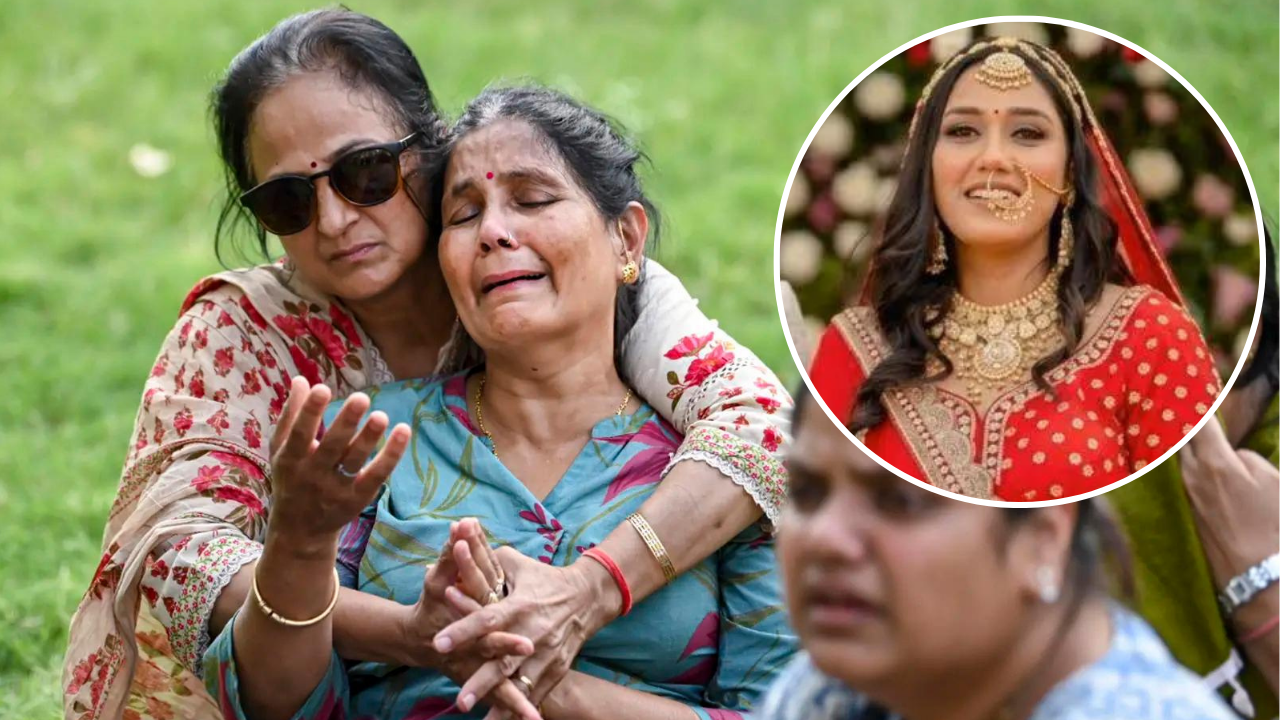
New Delhi: The Supreme Court Now, it has taken suo motu cognizance of the death of Noida-based model-turned-actor Tvisha Sharma, a development that has elevated the case from a local criminal investigation to a national judicial inquiry. The case, which began with the 26-year-old’s death under suspicious circumstances at her in-laws’ house in Bhopal on May 12, has since snowballed into allegations of dowry harassment, competing claims of suicide and murder, forensic controversies, protests, arrests, court battles and demands for a CBI probe.The CJI-led bench is expected to hear the case on Monday as investigators are probing whether Tvisha died by suicide or whether her death was linked to dowry-related abuse and dishonesty.
How did the matter begin?
Tvisha Sharma married a lawyer Samarth Singh in December 2025 after an engagement ceremony held at a flat in Noida in May that year. After marriage, she moved to Katara Hills, Bhopal, where Samarth lived with his family. Samarth is the son of retired district judge Giribala Singh.The matter came to light on May 12, when Tvisha was found dead in her in-laws’ house. Almost immediately, conflicting versions emerged about what happened in the final hours before his death.CCTV footage of the house became one of the earliest and most closely examined pieces of evidence. The footage reportedly shows Twisha walking up towards the terrace. About an hour later, three people were seen attempting CPR before he was taken down. However, the footage did not capture what happened on the rooftop, leaving a significant gap in the timeline.That missing period became the focus of the investigation.
Suicide claim vs dowry death allegation
While the accused family’s side maintained that Twisha died by suicide, her family alleged that she was made a victim of dowry harassment and that her death was not natural or voluntary.Tvisha’s relatives said that they saw injury marks on her body and believed that she was mentally and physically abused after the marriage. He rejected the suicide story and demanded that the police investigate the case as a dowry death.“We have filed an application for a second postmortem of Tvisha before the concerned magistrate in Bhopal,” her lawyer said.The family also alleged that Twisha was under constant pressure since her marriage and claimed that dowry-related demands were made.As public attention to the case increased, the investigation increasingly revolved around three questions: whether Twisha died by hanging, what caused the injuries found on her body, and whether the sequence of events described by the accused family matched the forensic evidence.
Those messages which deepened the suspicion
The case drew widespread attention over Twisha’s alleged final messages, which her family and supporters described as evidence that she was in distress before her death.One message repeatedly highlighted in reports reads: “I’m trapped brother. Just don’t get trapped.”This message became one of the defining lines of the case and was widely quoted by those who alleged that Twisha was facing emotional pressure inside her marital home.Her family argued that the message reflected her fear and desperation in the days before her death.
Medical findings and first postmortem
The initial postmortem was conducted at AIIMS Bhopal. Doctors said that the cause of death appeared to be hanging. However, reports also mention injuries on Twisha’s body, complicating the picture.Later reports stated that the autopsy observed multiple antemortem injuries and that samples were preserved for toxicology and forensic examination. Investigators were also looking into blunt-force injuries.The existence of injuries became the main basis for the family’s demand for a second autopsy. Questions were raised about whether the injuries were consistent with suicide or whether they pointed to an attack before death.
FIR, CBI investigation and police investigation
On May 15, the police registered an FIR against Samarth Singh and his mother Giribala Singh under provisions related to dowry death and harassment.A day later, a six-member Special Investigation Team (SIT) was formed to investigate the case. The investigators began analyzing CCTV footage, digital evidence, mobile phone records and communication exchanges.Police also investigated the final hours before Twisha’s death and attempted to reconstruct the activities inside the house.Samarth Singh remained missing for several days during the investigation. Police later announced a reward for information leading to his arrest, which increased public attention to the case.On Friday, the Madhya Pradesh government recommended the case to the CBI. Investigators are expected to independently examine both versions through hospital records, consultation documents, WhatsApp conversations and witness statements to establish the exact circumstances surrounding the alleged MTP (medical termination of pregnancy) and whether it coincides with any change in Twisha’s emotional state.
what did the in-laws say
Tvisha’s mother-in-law Giribala Singh, a retired district judge, strongly denied all allegations of dowry harassment.Responding to the allegations, he had said, “Her allegations are completely baseless. Why would we ask for a dowry of Rs 2 lakh when we ourselves had given her Rs 7.5 lakh? It makes no sense.”He also questioned the speed and direction of the police investigation.“I think the police acted hastily under pressure from these people and because of all these WhatsApp messages and allegations, which have no real basis,” he said.In another statement he said, “Our lawyers will explain everything. Where have the charges been framed? The case is still at the discharge stage.”The accused family said the case was motivated by public pressure and emotional reactions rather than verified evidence.
Court proceedings and demand for second autopsy
As the investigation progressed, the case rapidly reached the court.Giribala Singh got anticipatory bail, but Bhopal sessions court rejected the bail plea of Samarth Singh. Around the same period, Twisha’s family intensified their campaign for a second autopsy, arguing that the first postmortem had left important questions unanswered.Later the Madhya Pradesh High Court directed that a second postmortem be conducted as soon as possible.AIIMS Delhi constituted a four-member medical board to conduct the second autopsy in Bhopal. The move was considered significant because it brought an outside medical panel into the highly contested forensic controversy.
Demonstration outside CM residence and demand for CBI investigation
Tvisha’s family also protested outside the Madhya Pradesh Chief Minister’s residence after they were reportedly unable to meet him.The protests focused on two demands: a second postmortem and an independent investigation by the Central Bureau of Investigation (CBI).Family members argued that the investigation required external monitoring due to the stature and legal background of the accused family.As the case gained popularity, it also sparked widespread public debate about dowry laws, protection of women within marriage, and the treatment of alleged victims in public discussion after death.
Samarth Singh’s surrender and police remand
Another major twist in the investigation came when Samarth Singh was taken into custody after reaching the court premises in Jabalpur.Later he was sent on seven-day police remand for questioning.His detention marked a significant development as investigators were now able to directly interrogate the main accused, while awaiting further forensic findings from second postmortem and laboratory examinations.
Second postmortem and cremation
Following directions from the High Court and the involvement of the AIIMS Delhi Medical Board, the second autopsy was conducted in Bhopal.Twisha’s father expressed hope that a second investigation would help uncover the truth behind his daughter’s death.After the second postmortem was completed, Tvisha’s body was cremated in Bhopal.The findings of the second autopsy are expected to play a key role in determining whether the prosecution moves forward primarily on the dowry death theory, allegations of abetment of suicide or claims related to possible murder.
Supreme Court took suo motu cognizance
The latest and most significant development came when the Supreme Court took suo motu cognizance of the case.The move elevated the case from a state-level criminal investigation into a nationally watched judicial proceeding. The Supreme Court’s intervention comes amid persistent questions over forensic evidence, allegations of dowry harassment, police management of the case and demands for an independent investigation.
where does the matter stand now
Tvisha Sharma’s case currently rests on three competing pillars.The first family alleges that Tvisha was tortured for dowry and died under suspicious circumstances after being pressurized by her in-laws.Second, the accused family’s categorical denial that any dowry demands or abuses have occurred, as well as their claim that the allegations are baseless and motivated by external pressure.Third, there is the ongoing forensic and judicial process, which has already resulted in an FIR, formation of an SIT, bail proceedings, a second autopsy ordered by the court, police custody of the husband and now the intervention of the Supreme Court.The central unanswered questions remain the same: what exactly happened in the final hours before Tvisha Sharma’s death, how the injuries to her body came to be, and whether the evidence ultimately supports the theory of suicide, dowry death, or something more serious.


