Tuesday, September 29, 2026
Home Blog Page 1323

Brazilian cinema is having its moment

0
Brazilian cinema is having its moment


When the Academy Awards take place on March 15th, few countries will be watching as closely as will Brazil. Last year, for the first time, a Brazilian film was nominated for best picture—“I’m Still Here”, set during the military dictatorship. Brazilians dressed in imitation of the golden trophy at carnival and hosted parties in homage to the film’s lead actress. “There are three terms everyone in the world knows: Coca-Cola, Jesus Christ and the Oscars,” says Fabiano Gullane, a producer in São Paulo. When the film took home an Oscar, “it was like winning a prize for the whole country.”

Brazil’s new fandomPhotograph: Dado Galderi/The New York Times/Eyevine

This year promises more. “The Secret Agent”, a drama by Kleber Mendonça Filho, is nominated for four Academy awards, including best picture and best actor. Brazilians are dressing up again. At a recent festival Rodrigo Teixeira, another producer, mused that cinema had overtaken the nation’s flagging football team as “the biggest source of pride for our country.”

Brazil’s sudden success has led to euphoria in a nation that has long been considered Latin America’s cinema laggard. Mexico, a land of film fanatics, has won over two dozen Academy awards. It boasts over 7,000 cinema screens, twice as many as Brazil. Brazilians agonise that Argentina, its main football rival, already has two Oscars to its name. Even slender Chile has won three. When a Brazilian agent tried to drum up interest in the films of Glauber Rocha, a celebrated local film-maker, in Europe in the 1960s, he lamented: “Glauber, truly nobody is interested in our films.”

The rise of Brazilian cinema is “not just a victory for the film sector, but a successful business case,” says Ana Paula Souza, a journalist who covers cinema. For decades, Brazil’s entertainment landscape was dominated by Rede Globo, a prolific producer of soppy telenovellas to which Brazilians were glued every evening. Much like old Hollywood, Globo produced everything in-house. It had the country’s best actors, screenwriters and directors on contract, and prevented them from working for other companies. The rest of the industry was left with the cinematic scraps of advertising and music videos. Cinema was the preserve of an intellectual elite, while paid television was non-existent. In 1992, amid a deep recession, only three locally made films got a national release.

State support and laws to foster competition turned things around. In 2002 the government set up Ancine, the cinema regulator. It collects data on Brazilian films and determines the number of days that films are exhibited. It also controls a fund for local film-makers. Then, in 2011, the country passed the “Paid TV Law”. Restrictions on foreign ownership of cable TV channels were lifted. Telecoms firms were allowed to compete. It also mandated that paid channels broadcast at least three and a half hours of Brazilian content every week during prime time, half of which had to be produced independently.

The law shook up Brazil’s film sector by cutting into Globo’s monopoly, says Eli Carter, an associate professor of Brazilian film and television at the University of Virginia. Though Globo remains dominant, independent production houses mushroomed to fill the mandatory weekly slots. The penetration of paid television rose from around 15% in the 2000s to almost half by the mid-2010s. By the time paid television lost market share to streaming services and the internet, Brazil had dozens of independent production houses up and running. Ancine’s fund for independent film-makers was awash with money.

The government of then President Jair Bolsonaro, a hard-right populist, cut funding for the arts, including Ancine. Mr Bolsonaro considered much artistic output to be “a waste of money”. Cinema audiences also shrank during the pandemic and have not recovered. Over half of Brazilian films shown in cinemas in 2025 sold fewer than 1,000 tickets. Industry focus has therefore shifted to streaming platforms, such as Netflix and HBO Max.

The big screen widens

“Today we have several big producers, big directors, big distributors: we have reached a mature moment,” says Caio Gullane, Fabiano’s brother and partner. “Now we need a second cycle, which means exporting our work abroad and increasing the market share of Brazilian productions in the country.” To achieve this, the Senate is discussing a “streaming law” that would force platforms to produce more local shows, display them on their home pages and pay Ancine’s tax benefiting local film-makers. It is expected to pass in the coming months, and would “extend what the paid television law did to the streaming sector,” says Mr Carter. It could double state support for the industry.

Brazilians have one final reason to hope that their good fortune will last: an internationalist turn by the Academy of Motion Picture Arts and Sciences. The 10,000 members of the Beverly Hills-based organisation determine the Oscar winners. Since 2016, when actors criticised the Academy for over-representing white men, it has expanded its membership across continents. Today more than a fifth of members are not from the United States. This may have helped international productions—like the South Korean drama “Parasite”—to win big in recent years. “The language barrier no longer exists in Hollywood: it ended with ‘Parasite’,” says Mr Teixeira. Brazilians expect little joy from this year’s football World Cup. The Academy Awards just might deliver.

Sign up to El Boletín, our subscriber-only newsletter on Latin America, to understand the forces shaping a fascinating and complex region.


‘No one can exclude us’: Iran hits back at Trump’s ‘Skip FIFA World Cup’ remark | Football News

0
‘No one can exclude us’: Iran hits back at Trump’s ‘Skip FIFA World Cup’ remark | Football News


‘No one can exclude us’: Iran hits back at Trump's 'Skip FIFA World Cup' remark
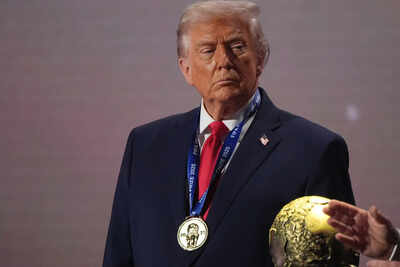
FILE – President Donald Trump stands on stage next to the FIFA World Cup after receiving the FIFA Peace Prize during the draw for the 2026 soccer World Cup at the Kennedy Center in Washington, Dec. 5, 2025. (AP Photo/Jacquelyn Martin, File)

Iran has insisted that no one can prevent its national team from participating in the upcoming 2026 FIFA World Cup, responding strongly to comments made by US President Donald Trump regarding the team’s safety in the United States, Canada & Mexico.The Iranian national football team issued a statement on social media on Thursday after Trump warned that the players’ “life and safety” could be at risk in the US, which is one of the three co-hosts of the tournament alongside Canada and Mexico.

Trump raises safety concerns

Trump’s remarks came just two days after he reportedly assured FIFA president Gianni Infantino that Iranian players would be welcomed at the World Cup despite ongoing tensions in the Middle East.Posting on his Truth Social platform, Trump said: “The Iran National Soccer Team is welcome to the World Cup, but I really don’t believe it is appropriate that they be there, for their own life and safety”.His comments came amid heightened geopolitical tensions following a war triggered by US-Israeli strikes on February 28, which has raised concerns over Iran’s potential participation in the tournament.

Iran responds strongly

In response, Iran’s national team said the World Cup is governed by FIFA and not by any single country or individual, adding that the team had earned its place in the tournament through strong performances as quoted by AFP.“The World Cup is a historic and international event and its governing body is FIFA, not any individual or country,” the statement said.The team also stressed that Iran had qualified on merit, pointing to its impressive performances during the qualification campaign.“Iran’s national team, with strength and decisive victories achieved by the brave sons of Iran, was among the first teams to qualify for this major tournament,” the statement further added.

Questions raised over host responsibilities

Iran also suggested that if the host nation cannot ensure safety for participating teams, its role as host should be questioned. “Certainly no one can exclude Iran’s national team from the World Cup,” read the statement, adding, “The only country that can be excluded is one that merely carries the title of ‘host’ yet lacks the ability to provide security for teams participating in this global event.”The statement appeared to be a direct response to Trump’s warning about safety concerns.

Trump reassures safety for the tournament

Later, Trump posted another message emphasising that the United States is ready to host the global event safely. “The United States of America looks very much forward to hosting the FIFA World Cup. Ticket sales are ‘through the roof!’”Despite the political tensions surrounding Iran’s participation, FIFA has not indicated any plans to alter the qualification status of the team.

Banner Insert


Ed Sheeran opens up about wife Cherry Seaborn's recovery

0
Ed Sheeran opens up about wife Cherry Seaborn's recovery


Ed Sheeran opens up about wife Cherry Seaborn's recovery after cancer diagnosis
Ed Sheeran has taken to social media to express his relief and joy as his wife, Cherry Seaborn, is recovering well after her recent surgery to remove a tumor found during her pregnancy in 2022.

Ed Sheeran has shared a reassuring update about his wife, Cherry Seaborn, after the cancer diagnosis he once described as a frightening period in their lives. Sheeran said Seaborn is now doing well after treatment. He explained that doctors found the tumor in 2022 while she was pregnant with their second daughter, Jupiter, now 3. The singer said the timing made the situation even harder but added that Seaborn is now on the other side of that health battle. Her recovery gave Sheeran a rare piece of good news after a stretch marked by grief, fear, and pressure in both his personal life and career.

Ed Sheeran updates on Cherry Seaborn’s health

On the ‘Friends Keep Secrets’ podcast with Benny Blanco, Lil Dicky, and Kristin Batalucco, Sheeran gave a direct update on his wife. “She’s fine,” Ed said. “She had the operation.”He then explained why the diagnosis felt so serious at the time. “I mean she was pregnant at the time,” Ed added. “Which is why it was difficult. She had the operation to remove the tumor after she’d given birth to our second child. Thankfully, touch wood, totally fine.”Sheeran had first spoken about Seaborn’s diagnosis in his 2023 Disney+ documentary, ‘Ed Sheeran: The Sum of It All.’ In the new podcast interview, he looked back on the moment he learned the news and said it remains one of the darkest periods of his life.

Cherry Seaborn’s cancer diagnosis and Ed Sheeran’s hardest week

“The day that Cherry rung me up and said that she had cancer,” he said. “That was probably the worst day. Probably the worst week, because Jamal died that week as well and then we went straight into the court case. And then Shane died.”At the same time, Sheeran was also dealing with the copyright lawsuit over ‘Shape of You.’ He said the bigger events in his life changed how he saw the case, particularly the emotional impact of Shane’s death, which made him reevaluate the significance of the lawsuit in the context of his personal experiences. “It was f–king scary,” he revealed. “Being in the court case though, which everything was building to that for eight years. And then suddenly when you’re in the courtroom, it didn’t really matter.”Sheeran also reflected on Seaborn’s role in his life during an earlier ‘Call Her Daddy’ appearance. “Cherry is the biggest grounding force,” he said, adding that she keeps life simple and rooted in reality.


IPL 2026: Piyush Chawla speaks about Sanju Samson`s inclusion in CSK

0
IPL 2026: Piyush Chawla speaks about Sanju Samson`s inclusion in CSK


IPL 2026: Piyush Chawla speaks about Sanju Samson`s inclusion in CSK

The upcoming edition of the Indian Premier League (IPL) is all set to kick off from March 28. So far, the schedule of only the first 20 matches has been released due to state elections.

Ahead of the IPL 2026, Chennai Super Kings (CSK) is all set to begin their campaign by playing a clash against Rajasthan Royals (RR) on March 30th at the Assam Cricket Association Stadium in Guwahati.

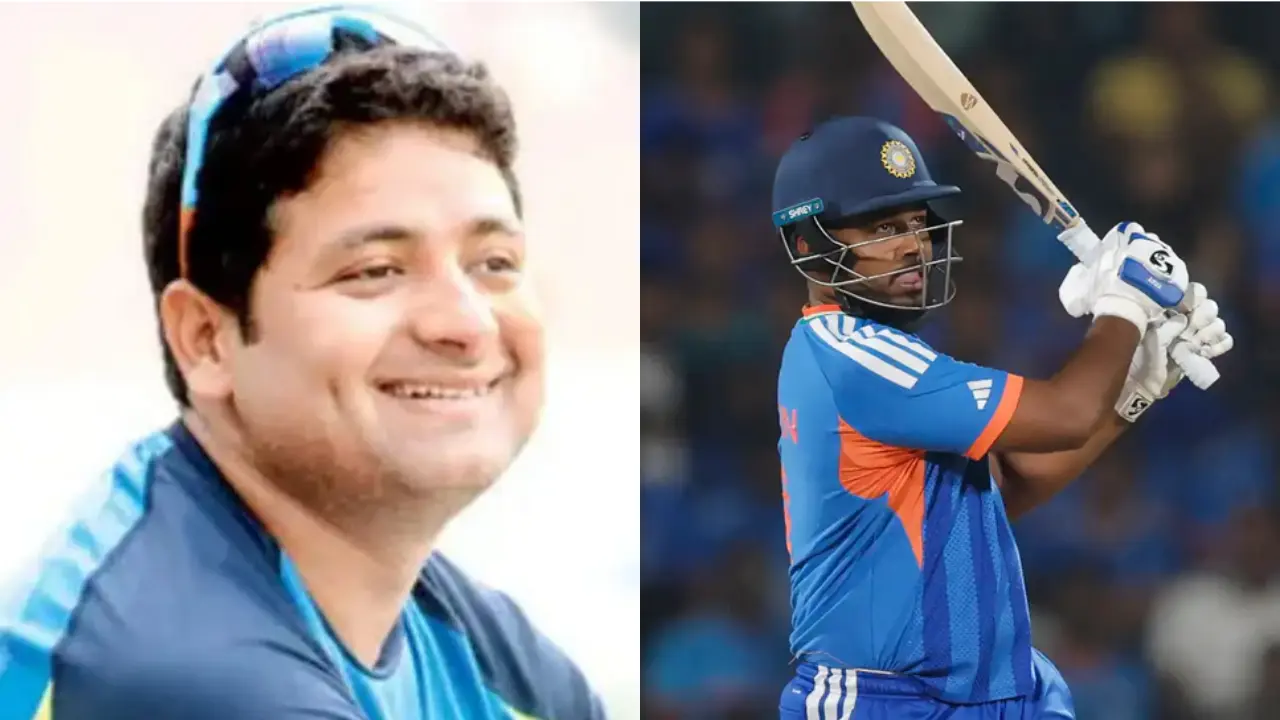
Speaking about Chennai, former Team India cricketer Piyush Chawla heaped praise on Sanju Samson by saying that he is a “match-winner”.

“Sanju Samson is a match-winner in himself. He proved his doubters wrong with three back-to-back impactful knocks against West Indies, England and New Zealand in the T20 World Cup,” he said.

He then feels that considering Samson`s form just before the commencement of the cash-rich league will be great news for the Chennai-based franchise`s fans.

“CSK will be very happy with his form because Samson has peaked right before the start of the IPL. That is great news for their fans. Coming to Chennai, the way the wicket plays there will definitely suit his game. Opening the innings, his aggressive style will benefit CSK a lot,” said Chawla.

He then explained how Samson`s inclusion will probably solve CSK`s opening pair`s problem.

“Last season, they struggled to get quick starts. Only after Ayush Mhatre arrived did CSK start scoring runs in the Powerplay. Now, with Samson in, their opening problems will finally be solved. They need that experienced opener alongside Ayush Mhatre. Samson`s trade move to CSK is going to be a blockbuster one,” said the former cricketer.

The Ruturaj Gaikwad-led side finished at the bottom of the points table last season after a paltry start to their campaign. But, they have formed a strong side in the mini-auction and are hopeful for a record sixth title this year.

IPL 2026, Chennai Super Kings: Full squad

Ruturaj Gaikwad, MS Dhoni, Sanju Samson, Dewald Brevis, Ayush Mhatre, Kartik Sharma, Sarfaraz Khan, Urvil Patel, Anshul Kamboj, Jamie Overton, Ramakrishna Ghosh, Prashant Veer, Matthew Short, Aman Khan, Zak Foulkes, Shivam Dube, Khaleel Ahmed, Noor Ahmad, Mukesh Choudhary, Nathan Ellis, Shreyas Gopal, Gurjapneet Singh, Akeal Hosein, Matt Henry, Rahul Chahar.

(With ANI Inputs)


Katy Perry faces backlash for her response to financially struggling fan, social media calls her ‘tone-deaf'

0
Katy Perry faces backlash for her response to financially struggling fan, social media calls her ‘tone-deaf'


Pop star Katy Perry has come under fire on social media after her response to a struggling fan sparked criticism online. The controversy began when a fan on X opened up about financial and mental struggles and said they were considering selling their ticket to one of Katy’s concerts. Many users felt the singer’s response lacked empathy, calling it “tone-deaf.”

Katy Perry's response to a distressed fan prompted social media criticism, with users finding her reply tone-deaf. (REUTERS)
Katy Perry’s response to a distressed fan prompted social media criticism, with users finding her reply tone-deaf. (REUTERS)

Fan opens up about struggles, Katy’s response sparks outrage

The response triggered widespread backlash online, with several users criticising Katy for failing to acknowledge the seriousness of the fan’s situation. Some questioned why she did not offer help or a gesture, such as upgrading the fan’s ticket. One user sarcastically commented that her reply was hardly the kind of motivation someone in distress would need, while another wrote that the singer appeared “out of touch” with the fan’s struggles. The post is currently restricted for viewing, but it quickly caught her attention. However, instead of offering words of comfort or support, she replied, “But I am looking forward to seeing you!”

Reacting to her reply, one user wrote sarcastically, “What a premium motivation that jump-starts the drive to hang on. Very kind of you.” Another commented, “God, you are so out of touch. Someone is clearly going through it and your best response is ‘but im looking forward to seeing you!’ Gross. Do better.”

Some social media users also suggested that Katy could have responded differently. One post read, “If you ‘loved her’, you’d give her a VIP Meet and Greet Package and tell her to sell the ticket so she could have extra money to enjoy the show. This is so tone deaf.” Another user added, “She can’t afford to live at this rate and all you do is say that you look forward to seeing her?”

Some social media users also suggested that Katy could have responded differently. One post read, “If you ‘loved her’, you’d give her a VIP Meet and Greet Package and tell her to sell the ticket so she could have extra money to enjoy the show. This is so tone deaf.” Another user added, “She can’t afford to live at this rate and all you do is say that you look forward to seeing her?”

Katy responds to backlash with messages of love and positivity

Amid the criticism, Katy addressed the negativity by sharing a message aimed at her detractors. Posting on X on Friday morning (IST), she wrote, “I love you. Be kind. always take the high road if you can, my kc’s. It’s much lighter here. So excited to share my joy and light with you this summer. I already miss you.”

She also responded to another post about the backlash, suggesting that those criticising her might be hurting themselves. “They must already be in a lot of pain to be so unkind. i send them love and hope they can find their peace,” Katy wrote. While she did not directly address the criticism surrounding the specific exchange, she continued to share positive messages with her followers.

About Katy Perry’s upcoming Play tour

The controversy comes as Katy gears up for her highly anticipated Play tour, which kicks off on 14 June 2026 in Los Angeles. She will be performing across major cities in the United States, including New York, Chicago, Miami, and San Francisco, before taking the tour to select international locations later this year.


Michigan synagogue and Virginia university shootings: What we know | Civil Rights News

0
Michigan synagogue and Virginia university shootings: What we know | Civil Rights News


A man rammed his vehicle into a synagogue in the Detroit metropolitan area in Michigan on Thursday, before engaging in shooting with law enforcement. He was later found dead in his car.

On the same day, authorities also announced that one person was killed when a gunman opened fire at Old Dominion University in Virginia, in an attack being investigated as an “act of terror”.

The United States has been on high alert for domestic attacks after it launched its war on Iran alongside Israel on February 28, now in its 14th day.

Here is more about what happened.

What happened at the synagogue in Michigan?

On Thursday at 05:33 GMT, FBI director Kash Patel announced on X that FBI personnel were responding to an apparent vehicle ramming and “active shooter situation” at Temple Israel synagogue in Michigan.

Oakland Sheriff Mike Bouchard told reporters that a car had been rammed into the synagogue, which also houses an early learning centre for children. The driver then fired a gun at security personnel at the site.

“Security saw him, engaged him in gunfire,” Bouchard said.

The assailant was later found dead in the vehicle, which had caught fire, Bouchard said. It is unclear how the fire started. The cause of death was not immediately clear, but authorities later said he had been fatally shot by security officials.

Bouchard said there were no other injuries in the incident, and none of the synagogue’s staff, teachers or the 140 children present in its early childhood centre was hurt.

However, 30 law enforcement officers were taken to hospital after inhaling smoke that filled the synagogue from the fire that erupted in the assailant’s vehicle, Bouchard said. One security official was hit by the vehicle and knocked unconscious, but was otherwise uninjured.

Where did the car ramming take place?

The incident took place at the Temple Israel synagogue in West Bloomfield, Michigan.

West Bloomfield is a lake township and one of the suburbs surrounding Detroit. These suburbs are home to a large Jewish population.

Temple Israel was founded in 1941. It is considered to be the largest Reform synagogue in the US, serving about 12,000 members.

What do we know about the assailant and his motive?

Authorities identified the assailant as Ayman Mohamad Ghazali, a 41-year-old naturalised US citizen born in Lebanon.

According to the Department of Homeland Security, Ghazali arrived in the US in 2011 on a relative visa as the spouse of a US citizen. He received his citizenship in 2016.

“I can confirm that the FBI is leading this investigation as a targeted act of violence against the Jewish community,” Special Agent in Charge Jennifer Runyan of the FBI Detroit Field Office said during a news conference in Michigan on Thursday.

What happened in Virginia?

The FBI identified the gunman who opened fire at Old Dominion University as Mohamed Bailor Jalloh, a former member of the Army National Guard who pleaded guilty in 2016 to attempting to provide material support for ISIL (ISIS).

Authorities said Jalloh opened fire shortly before 10:49am local time (14:49 GMT) in Constant Hall, the centre of the university’s ⁠college of business.

In a post on X on Thursday afternoon, Patel said students had helped to subdue Jalloh, who was later found dead at the scene. How he was killed was not immediately clear.

“The shooter is now deceased thanks to a group of brave students who stepped in and subdued him – actions that undoubtedly saved lives along with the quick response of law enforcement,” Patel said.

While it is not clear what the motive of the attacker was – or who the targets were – the incident is being investigated as an “act of terror”.

Has there been a rise in the number of such incidents in recent years?

Yes. Attacks on both Jewish and Muslim communities worldwide have been on the rise since Israel’s genocidal war on Gaza began in October 2023.

Attacks against the Jewish community

Jewish advocacy group the Anti-Defamation League tallied 9,354 anti-Semitic incidents in the US in 2024, a 5 percent increase over 2023 and a record high since it began keeping track in 1979. The group said the figure represented a 344 percent increase over the past five years and a 893 percent increase over the last decade.

In late January, a car crashed into the entrance of the headquarters of a Jewish religious order in New York City. No injuries were reported. Police are investigating the incident as a hate crime.

In May 2025, two Israeli diplomats were shot and killed outside an event hosted by the American Jewish Committee in Washington, DC.

The gunman, who was charged with terrorism and hate crimes, is believed to have been motivated by the Israel-Gaza conflict.

He told police on the scene, “I did it for Palestine, I did it for Gaza,” according to the charging documents. Witnesses recounted hearing him chant “Free Palestine” after he was taken into custody.

In February 2025, authorities in Florida launched a hate crime investigation after a man opened fire on two men he thought were Palestinians but turned out to be Israeli visitors.

The victims survived. One was shot in the shoulder and the other in the forearm.

This pattern has also been observed beyond the US. Early on Friday morning, Dutch police opened an investigation into an arson attack on a synagogue in Rotterdam. No one was injured in the fire, which is now over, and no arrests have been made, the city’s police said.

In December 2025, two armed men killed 15 people at a Jewish Hanukkah celebration at Sydney’s Bondi Beach in Australia. The shooting was the deadliest attack of its kind in 30 years in the country.

Suspect Sajid Akram, 50, an Indian national, was shot and killed by police during the attack. His son, Naveed, an Australian-born citizen who remains in prison, has been charged with terrorism and 15 murders.

Similarly, since Israel’s genocidal war on Gaza began, hate crimes against Muslims in the US and beyond have seen a rise.

On Tuesday, civil rights group the Council on American-Islamic Relations (CAIR) released an annual report saying the US has become an increasingly hostile environment for Muslims.

CAIR said its offices across the country had received 8,683 complaints of anti-Muslim discrimination nationwide in 2025, a slight increase from the previous year.

It was the highest volume of complaints for CAIR since it began publishing its civil rights report in 1996.

In February this year, Manchester Central Mosque in the UK reported that a man carrying an axe had walked into the mosque during tarawih prayers attended by worshippers during Ramadan. Greater Manchester Police (GMP) said a man in his 20s had been arrested on suspicion of conspiracy to commit a section 18 assault.

There were about 2,000 worshippers inside at the time, and GMP later confirmed the incident was called in by an off-duty special constable who had been present.

In October 2025, UK police said they were investigating a suspected arson attack on a mosque in southern England as a “hate crime”. Officers had been called to the mosque on Phyllis Avenue in Peacehaven, East Sussex, just before 10pm (22:00 GMT) on October 4.

In October 2023, six-year-old Palestinian American Wadea al‑Fayoume was stabbed in Illinois, and his mother was critically injured. The assailant, Joseph Czuba, died aged 73 in June 2025, in the custody of the Illinois Department of Corrections.

In November 2023, three young Palestinian men were shot near a university campus in Vermont. The police said the victims were speaking Arabic and two of them were wearing a keffiyeh when attacked. The students survived. The police arrested suspect Jason J Eaton the same month.



Middle East war risk: Iran threat to target US tech infrastructure in Gulf raises fears of global digital disruption

0
Middle East war risk: Iran threat to target US tech infrastructure in Gulf raises fears of global digital disruption


Middle East war risk: Iran threat to target US tech infrastructure in Gulf raises fears of global digital disruption

Escalating tensions in West Asia are casting a shadow over global technology networks, with experts warning that threats by Iranian forces to target US-linked digital infrastructure in the Gulf could expose billions of dollars of investments to conflict-related risks.On Wednesday, Iranian forces warned they could strike facilities linked to major technology companies including Google, Microsoft, Palantir, IBM, Nvidia and Oracle across the Middle East and Israel. The region hosts more than 70 operational data centres with an estimated 557-738 megawatts of live IT capacity, alongside 10 cloud regions run by Amazon Web Services, Microsoft Azure, Google Cloud, Oracle and Alibaba. Projects worth an additional $30 billion are also under development.

Microsoft, Google At Iran’s Crosshairs? US Tech Giants Named In IRGC’s Hit list Amid War

Recent incidents have already highlighted the vulnerability of such infrastructure. Reports of a March 3 drone attack on two AWS facilities disrupted operations for businesses including Emirates NBD, Snowflake and Policybazaar UAE, while also affecting banking applications and stock market activity in the UAE. “Incidents of this scale typically generate tens of millions of dollars in combined operational losses when infrastructure repair, service downtime, and mitigation costs are included,” said Matvii Diadkov, technology investor and advisor to Gulf businesses. “Cloud operators must repair damaged equipment and restore systems, while customers absorb the cost of interrupted digital services.”Amid growing uncertainty, hyperscale cloud operators such as Microsoft Azure and AWS are exploring the possibility of shifting workloads from data centres in Dubai, Abu Dhabi and Oman to relatively safer hubs like India and Singapore, according to earlier reports. Industry executives say such disruptions could also have indirect effects on Indian firms that depend on globally hosted digital systems. “Consumer and FMCG firms such as HUL or Nestlé rely heavily on globally hosted ERP (enterprise resource planning), supply-chain, finance and analytics platforms,” said an executive at a global advisory firm. “Disruption to cloud availability or regional data-centre operations can interrupt forecasting, procurement, billing and distribution systems, with downstream effects in India.”The Gulf also serves as a critical conduit for global internet traffic, with about 90 per cent of Europe-Asia data flows passing through submarine cable routes supported by around 20 undersea cable systems and 13 active internet exchange points. “Undersea cables and regional network hubs represent latent risk, not because of constant attack, but because temporary outages or rerouting can degrade performance, increase latency and destabilise time-sensitive digital services across continents,” the same executive said.Experts caution that workforce and cyber-security challenges may add to operational vulnerabilities. Siddharth Vishwanath, partner and risk consulting leader at PwC India, said even traditional companies face exposure in a highly interconnected digital ecosystem. “What is at stake is service availability, data integrity and trust in shared digital platforms that underpin global commerce,” he said.Analysts also see the threats as a reminder of the growing geopolitical dimension of technology infrastructure. “US tech vendors should treat these threats as a signal that digital infrastructure is now part of geopolitical conflicts,” said Ashish Banerjee, senior principal analyst at Gartner. “They should ensure critical workloads can fail over to other cloud regions if disruptions occur.”Supply chain dependencies may further complicate the outlook. Diadkov noted that around one-third of global helium production is concentrated in Qatar, a key input for semiconductor manufacturing. “If supply from the region is disrupted, it could affect chip production, equipment repair, and the ability to build new semiconductor devices,” he said.


Who next after Suryakumar Yadav? IPL 2026 should be an audition for next T20I captain | Cricket News

0
Who next after Suryakumar Yadav? IPL 2026 should be an audition for next T20I captain | Cricket News


Who next after Suryakumar Yadav? IPL 2026 should be an audition for next T20I captain
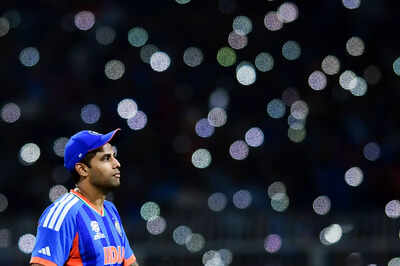
Indian skipper Suryakumar Yadav during the ICC Men’s T20 World Cup 2026. (ANI Photo)

NEW DELHI: With back-to-back T20 World Cup titles in the bag, India have emerged as a powerhouse in cricket’s shortest format. The talent waiting in the wings is also immense. In two years, the Indian cricket team will be gearing up for two big events, the LA Olympics and the 2028 T20 World Cup.And when it comes to picking the 15-member squad, there is no rocket science in selecting a side largely based on form. The greatest example of that approach is Ishan Kishan. Since making his comeback after a two-year hiatus, the southpaw has set the stage on fire.

Ahmedabad erupts as Team India arrive at hotel after T20 World Cup win

He was picked in the Indian team after scoring a century in the final of the Syed Mushtaq Ali Trophy and guiding Jharkhand to the title. In 13 games since his return, the 27-year-old has amassed 532 runs at a strike rate of 207. His 317 runs in the recently concluded T20 World Cup was the third-highest after Pakistan’s Sahibzada Farhan and teammate Sanju Samson.But the real question is who will replace an ageing Suryakumar Yadav as India’s next T20I skipper. The answer could come from the 2026 Indian Premier League (IPL) – just as it did with head coach Gautam Gambhir’s successful stint with the Kolkata Knight Riders (KKR).The IPL is the world’s best T20 league. Unlike the T20 World Cup, it is an even platform and all 10 teams are equally strong. So the selectors will have to keep their eyes open to see who can lead India because picking a T20I squad with the amount of talent available is a no brainer, but choosing the right captain will not be easy.Who are the contenders?

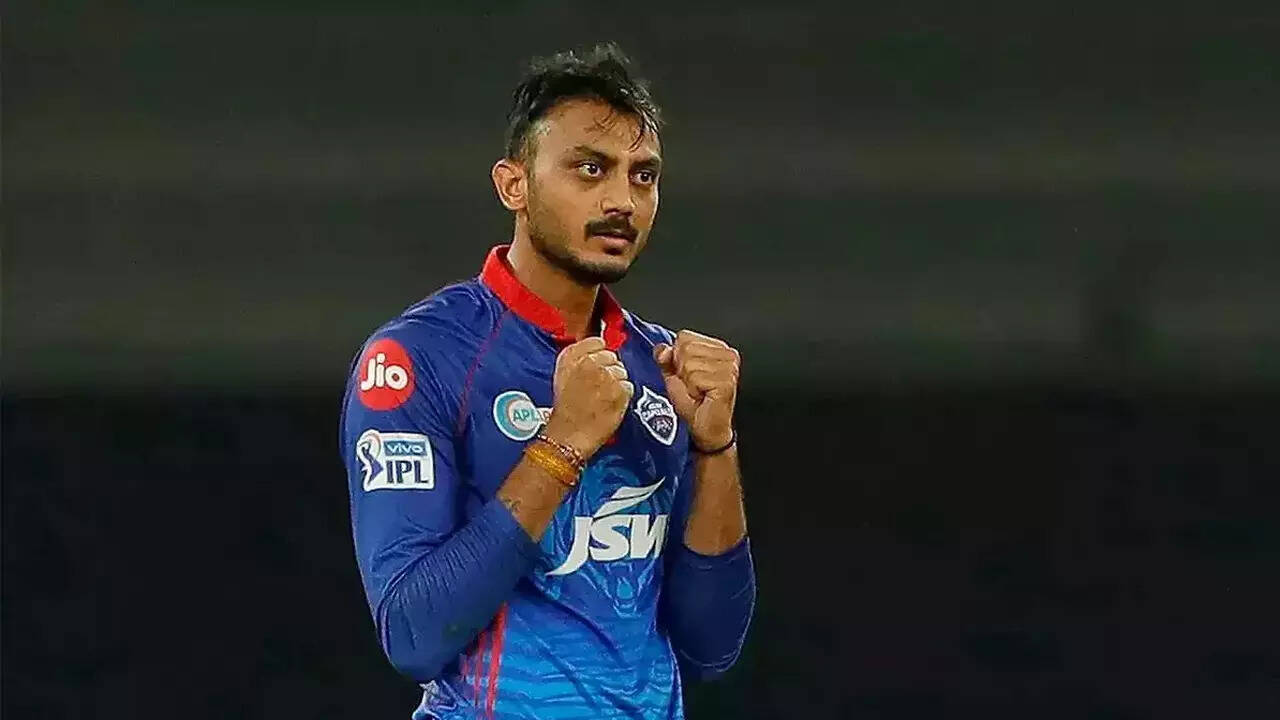
Axar Patel

Axar Patel leads Delhi Capitals in the IPL.

Out of the 10 IPL teams, eight franchises have appointed Indian players as their captains. KKR are yet to announce their next captain, whereas Pat Cummins will lead Sunrisers Hyderabad.Chennai Super Kings (CSK) are captained by Ruturaj Gaikwad, who has not been in the national team’s scheme of things since he led India to the 2023 Asian Games gold medal in Hangzhou.Reigning champions RCB’s skipper Rajat Patidar is yet to make his international debut in the T20I format.Mumbai Indians’ captain Hardik Pandya, who was tipped to take over from Rohit Sharma after the 2024 World Cup triumph, was not given the captaincy armband because of fitness issues. But come IPL 2026, he will be captaining India’s current T20I skipper Suryakumar Yadav.Axar Patel, 32, has always been the proverbial bridesmaid in Indian cricket. He was first appointed vice-captain after the 2024 T20 World Cup, then replaced by Shubman Gill, and was again anointed as deputy to Surya before the 2026 World Cup. Axar can be a good option but for that Delhi Capitals will have to win the trophy.

Rishabh Pant

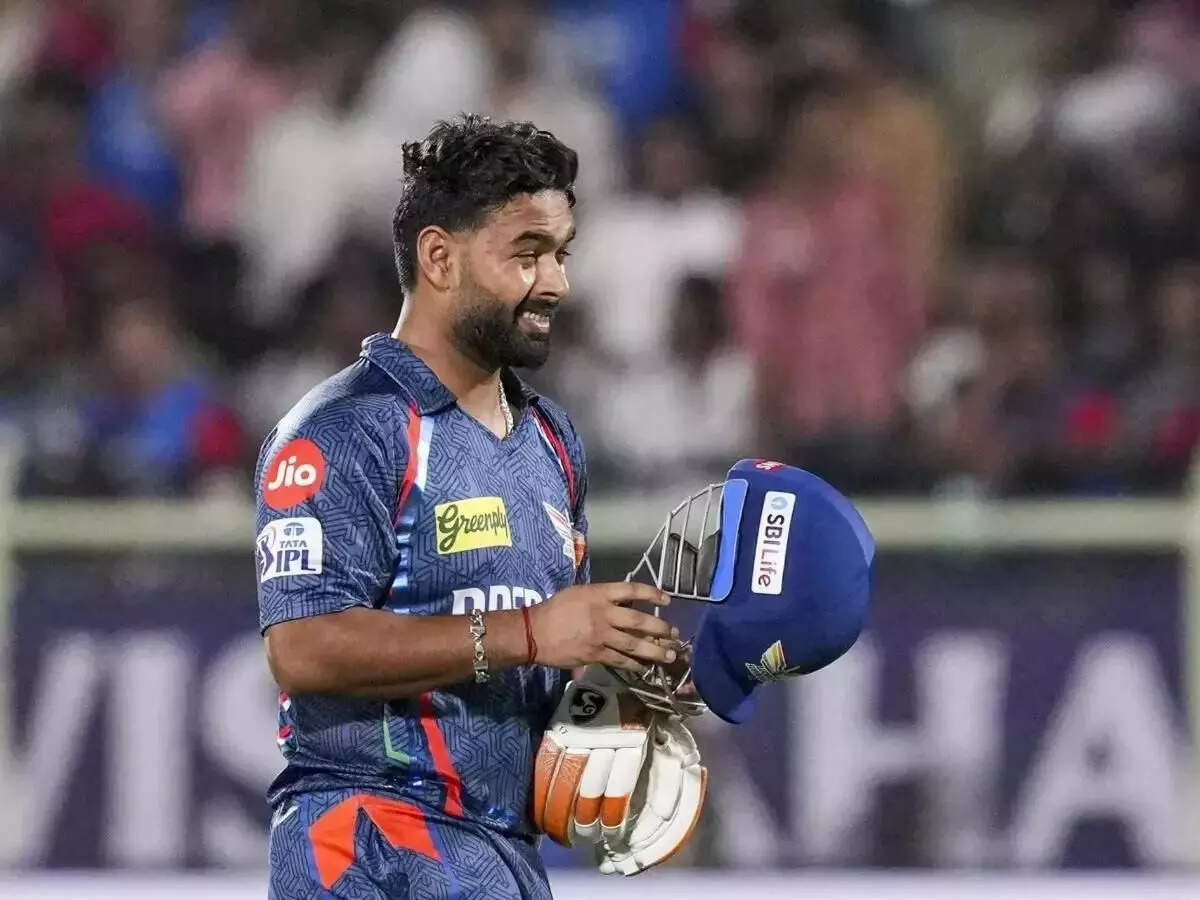
Lucknow Super Giants’ Captain Rishabh Pant

Riyan Parag, 24, led Rajasthan in the absence of Sanju Samson during IPL 2025. But the youngster will first have to cement his place in the national team. There is no doubt that his ability to bowl could make him a permanent face in the Indian team in the next cycle. His name also came up for selection when Washington Sundar got injured.28-year-old Rishabh Pant, too, will be looking to reinvent his T20I form, both with the bat and as captain for Lucknow Super Giants. The southpaw has fallen off the radar and with Sanju Samson and Ishan Kishan in top form, Pant might have to wait for his chance in this format.Then there are Gujarat Titans’ Shubman Gill and Punjab Kings’ Shreyas Iyer. Both have shown a pedigree of leadership. Gill is the current captain of India’s ODI and Test sides, whereas Iyer led KKR to the IPL title in 2024 and Punjab Kings to the final in IPL 2025.

Shreyas Iyer

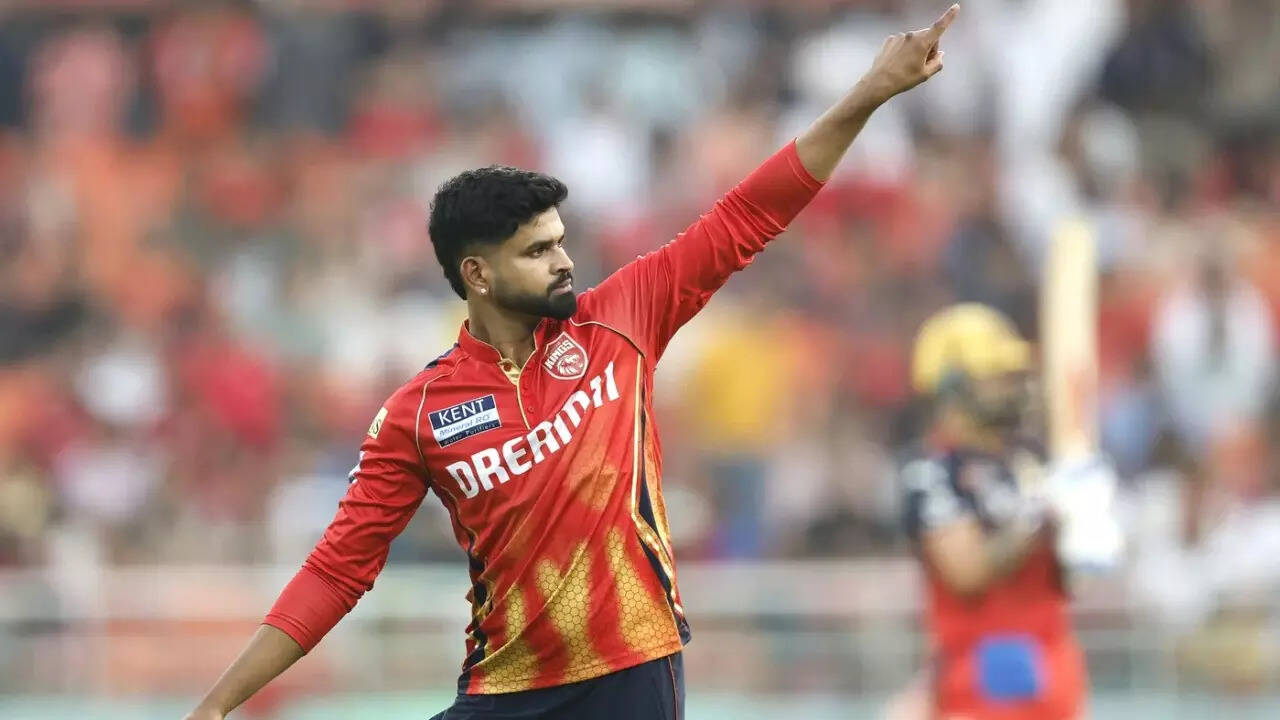
Shreyas Iyer (IPL Photo)

Shubman was tipped as the next poster boy of Indian cricket and a successor to Suryakumar Yadav. But he was surprisingly dropped from India’s T20 World Cup squad citing team combination. Shreyas travelled with the team during the New Zealand series that preceded the T20 World Cup as cover for injured Tilak Varma, but he did not get the chance to play. In an ideal world, Shreyas would be the right man to lead India at the LA Olympics and the T20 World Cup.Sanju Samson is another option the selectors must consider. The 2026 T20 World Cup champion has led Rajasthan Royals in the IPL and is currently oozing confidence after his Player of the Tournament performance.The IPL has long been India’s biggest laboratory for T20 cricket. Just as Gambhir’s IPL success opened the door to the national coaching job, IPL 2026 could quietly shape India’s next T20I captain. In a tournament where pressure, tactics and leadership are tested every night, the selectors might just find the man who will lead India into the next cycle.

Banner Insert


Iran-Israel-US ‘triangle trap’: Decoding India’s stance amid rising Middle East tensions | India News

0
Iran-Israel-US ‘triangle trap’: Decoding India’s stance amid rising Middle East tensions | India News


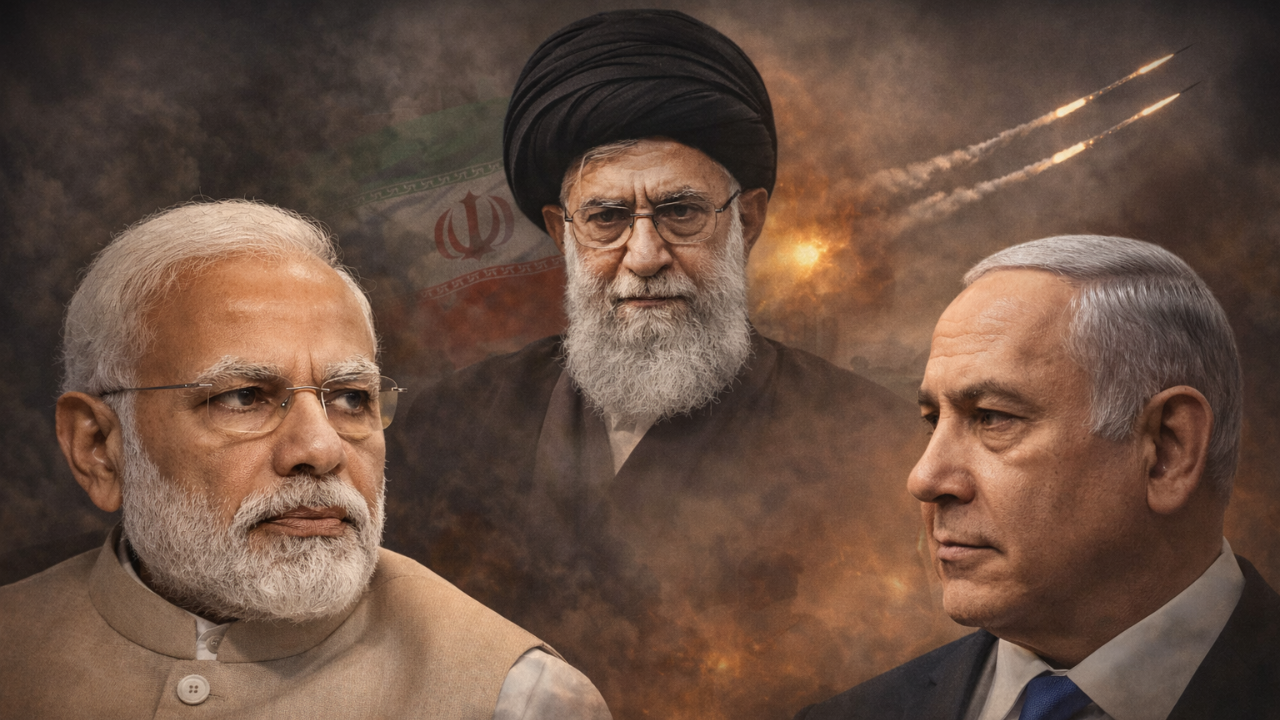
Is New Delhi recalibrating its approach to West Asia? The question has resurfaced after India’s notably cautious response to the latest escalation involving Iran. When the United States and Israel launched strikes on Iran on February 28, triggering retaliatory missile attacks across the region, several global powers reacted swiftly. India, however, avoided taking a clear position on Tehran.In the crucial hours after the escalation, Prime Minister Narendra Modi did not directly comment on Iran. His first response came nearly a day later and focused instead on attacks on the United Arab Emirates. Subsequent conversations with leaders across the Gulf emphasised respect for their territorial integrity and the need for de-escalation, but again avoided directly naming Iran. Even after the death of Iran’s Supreme Leader Ali Khamenei was confirmed, New Delhi stopped short of condemning the killing, offering only a condolence gesture days later.Experts describe this cautious approach as deliberate and calculated. “India’s policy has been very careful. Its interests are far more aligned with the US than Iran. That explains why it condoled and did not condemn Khamenei’s killing, even though it was a clear violation of international law,” said JNU professor Rajan Kumar. He noted that even though both India and Iran are BRICS members, New Delhi chose restraint over confrontation, highlighting the delicate balancing act in play.

How (When) India reacted on Iran war

28 Feb: US-Israel attack Iran

The United States and Israel launch strikes on Iran amid negotiations between Washington and Tehran over its nuclear programme.Iran retaliates with missile and air attacks across the region, targeting military sites in Israel as well as US bases in Bahrain, Saudi Arabia, Qatar, the United Arab Emirates and Iraq.Prime Minister Narendra Modi makes over 15 posts on his social media X after the news of the war breaks out, but none of it on Iran situation.

March 1: Khamenei’s death confirmed

By midnight early March 1, the news that Iran Supreme Leader Ayatollah Khamenei is killed in the strikes gets confirmed.India, again, sees no reaction on breach of Iran’s sovereignty or the killing of its Supreme Leader Khamenei, even as its long-standing friend Russia is quick to condemn it in strong words, with President Vladimir Putin calling it a “cynical violation of law”.The first post by PM Modi comes on March 1, his 25th on his X account, at 11.26pm. The post condemns “attack” on the UAE. The Prime Minister was referring to Iran’s retaliatory strikes on US military bases in UAE, which had led to one death. However, he did not directly name Iran in his post.By midnight, PM Modi makes another post where he informs that he had a conversation with Israeli PM Benjamin Netanyahu, whom he had two days before the war broke out. In the post, the PM again makes no mention of Iran, but calls for “early cessation of hostilities”.In a series of posts by the next day, PM Modi speaks to the leaders of Bahrain, Saudi Arabia, Jordan, Oman, Kuwait, Qatar, condemning any violation of their territorial integrity. The PM was again referring to the strikes on US military bases in these nations by Iran in retaliation. India’s reaction to Khamenei’s death came five days after the incident. Foreign secretary Vikram Misri signed the “condolence” book in the Iranian embassy on behalf of the government. MEA dismissed this “delay” argument saying that the book was signed by India the first day it was opened, which was on March 5. However, MEA’s clarification failed to explain why the government itself took five days after the incident to formally convey its condolences.PM Modi’s reaction to Iran came only on March 12 when he spoke to Iranian president. The wording of the post was clear: “The safety and security of Indian nationals, along with the need for unhindered transit of goods and energy, remain India’s top priorities.” No condemnation or solidarity.

India did not condemn the death, neither did the PM or EAM make any direct comments on the killing. Then what explains this refusal to condemn the killing?Experts have termed it a “very cautious and very careful” move.“India’s policy has been very cautious and very careful. Its interests are much more aligned with US than Iran. Maybe that’s why it condoled and not condemned Khameinei’s death, while it was Khamenei’s death which was actually a violation of international law, said JNU professor Rajan Kumar, an international relations expert.“In fact, both Iran and India are members of Brics, still India chose not to condemn the attack,” he said.

Why historical Iran ties make current restraint notable

India’s historically close engagement with Iran makes this caution notable. The two countries share civilisational links stretching back centuries, which have shaped a modern partnership built on trade, culture and strategic cooperation. Diplomatic ties were formalised with a Friendship Treaty in 1950, and successive governments in New Delhi invested in maintaining strong political engagement with Tehran.Leaders from the Bharatiya Janata Party (BJP) were also central to strengthening these ties in the past. Prime Minister Atal Bihari Vajpayee’s visit to Iran in 2001 led to the signing of the Tehran Declaration, marking a new phase of strategic cooperation. This was followed by Iranian President Seyyed Mohammad Khatami’s visit to India in 2003 and the New Delhi Declaration, which expanded political and economic engagement between the two countries.Under Prime Minister Narendra Modi, the relationship continued to see high-level outreach. Modi’s 2016 visit to Iran resulted in multiple agreements and the trilateral transit pact with Afghanistan centred on the development of Chabahar Port, a project seen as strategically important for India’s connectivity to Central Asia. Iranian President Hassan Rouhani’s visit to India in 2018 further reinforced cooperation in connectivity and trade.

So, what explains this shift away from Iran?

Analysts point to a mix of immediate security concerns and long-term economic dependencies that have pushed New Delhi to adopt a more cautious posture in the current West Asia crisis.A major factor is the safety of the large Indian diaspora across the Gulf. References to the Indian community appeared consistently in Prime Minister Modi’s statements on the unfolding conflict. There are over one crore Indians who work and live in Gulf nations, external affairs minister S Jaishankar informed the Parliament on Monday. This, he said, makes the West Asia war even more concerning for India. He informed that India has already lost two of its mariners, with one missing in the current situation. “We are committed to supporting the Indian community at this time,” Jaishankar said in the Parliament.Moreover, India is significantly dependent on Gulf supplies, especially in energy sector. The key economic concerns include:Oil: India exports nearly 40% of crude oil from Gulf. In 2025, it sourced around $70 billion crude oil and petroleum products from West Asia.LNG needs: The country is heavily dependent on West Asia for LNG requirements. It sourced liquefied natural gas or LNG worth $9.2 billion from West Asia, which is around 68.4% of its total LNG imports.LPG: LPG imports from West Asia were $13.9 billion in 2025, making up 46.9 % of India’s total LPG purchases. Cities such as Bengaluru, Mumbai and Chennai are seeing disruptions in commercial LPG supplies as authorities prioritise domestic cooking gas for households.

Recent closeness towards Israel

For decades after independence, India’s policy on Israel and Palestine was cautious. New Delhi supported the Palestinian cause and often voted with Arab countries in international forums, even voting against Israel’s admission to the United Nations. At the same time, India recognised Israel in 1950 and maintained limited contact while presenting itself as neutral. India later became the first non-Arab country to recognise the State of Palestine in 1988 and established diplomatic relations with Israel in 1992 after consultations with Yasser Arafat, leader of the Palestine Liberation Organization.Relations with Israel began expanding gradually after the Cold War, particularly in defence and trade. However, earlier governments often kept the relationship relatively low-key to avoid upsetting Arab partners or appearing to move away from India’s traditional support for the Palestinian cause.A more visible shift came after Narendra Modi became prime minister in 2014. Under his government, India’s ties with Israel grew more open and politically prominent. Defence cooperation increased and bilateral trade expanded, with both countries emphasising shared security concerns and technological cooperation.In 2017, PM Modi became the first Indian prime minister to visit Israel, marking a symbolic turning point in the relationship. During the trip, he was warmly received by Israeli prime minister Benjamin Netanyahu, and images of the two leaders walking together on Ogla beach became widely circulated, highlighting the new warmth in ties.

PM Modi’s 2017 Israel visit: PM with Israeli counterpart at Ogla beachThe closeness between the two governments has continued in recent years to a point where PM Modi was in Israel merely two days before Israel attacked Iran with the US.Referring to Israel as the “fatherland” and India as the “motherland”, PM Modi’s visit came at a time when Israel faced intense international criticism over its military campaign in Gaza, which has killed more than 60,000 Palestinians according to various estimates. “The timing of it was clearly wrong. The policy makers did not expect that to happen very soon. That sent a very wrong optics from a balanced policy perspective,” professor Rajan said.The war has also drawn renewed scrutiny of Netanyahu’s leadership, with critics and some international legal bodies describing him as responsible for alleged war crimes.The shift under PM Modi reflects both ideological and strategic factors. The Bharatiya Janata Party has long been seen as more openly supportive of Israel than previous governments. At the same time, India sees Israel as a key partner in defence technology, intelligence cooperation and innovation. As a result, India’s West Asia policy today attempts to balance closer ties with Israel while continuing to express support for Palestinian statehood.

PM Modi’s 2026 Israel visit: Netanyahu pointing out ‘saffron match’ between PM Modi and SaraHowever, professor Rajan said that India’s policy is not “completely determined by Israel”, rather, currently, it is more concerned about “offending” the US.“India’s policy is not completely determined by Israel. Yes, Israel is an important partner but in the past also we have pursued our ties with Israel without damaging our relations with other countries,” he said.“India is primarily concerned about offending the US. At this time, it would not like to offend the Trump administration. And that’s exactly why it is not issuing any statements condemning of killing of Khamenei,” he said.

So, is there a shift?

Rajan Kumar, a professor at JNU, who teaches international relations said that currently, there is no shift in India’s policy towards the Middle East. Rather, he said, that the shift might happen after the war is over.“At the moment, I don’t see any shift happening. It is a continuation of policy where India’s preferred partner was United States and Israel. But at the same time trade ties were linked with many other countries in the region,” he said.“So, a shift is not apparent at the moment, but it might happen after the outcome of the event. Because if India thinks that Iran remains an important part and if the regime survives, it will pursue a different strategy. But if US wins, which is very unlikely, if the regime survives, resistance persists, it will have a different strategy. Now, India is pursuing a wait-and-watch policy in West Asia,” he added.However, he added that there was a need for India to go for a policy of multipolarity, rather than unipolarity under the influence of Israel and the US.Experts argue that India should embrace multipolarity in West Asia, rather than a unipolar tilt toward Israel and the US. While Israel is a valuable partner, destabilizing relationships with other West Asian countries could jeopardize India’s economic and security interests in the region.“India should pursue multipolarity, rather unipolarity under the influence of Israel and US in West Asia. Although we have good ties with Israel, we cannot de-stabilise our ties with other West Asian countries, for the reason that our economic and security interests are aligned there,” he said.


Shrenu Parikh, Avinash Rekhi reflect on their Ganesh Kartikey journey

0
Shrenu Parikh, Avinash Rekhi reflect on their Ganesh Kartikey journey


Shrenu Parikh, Avinash Rekhi reflect on their Ganesh Kartikey journey

Sony SAB’s mythological saga Gatha Shiv Parivaar Ki – Ganesh Kartikey brings alive the powerful and sacred journey of Lord Shiva (Avinesh Rekhi) and Goddess Parvati (Shrenu Parikh), two of the most worshipped deities. While the show captures their divine story on screen, portraying such revered characters has also been a deeply personal experience for the actors who bring them to life.

For Avinesh Rekhi and Shrenu Parikh, playing Lord Shiva and Goddess Parvati has gone beyond costumes, scenes and dialogues. Over time, their roles have slowly influenced their daily lives, the way they approach their work, and even the way they reflect on relationships, patience and faith. Being surrounded by spiritual stories and powerful moments every day on set has made the experience feel less like a performance and more like a journey.

Avinash Rekhi on playing Shiva

Speaking about the impact of the role, Avinesh Rekhi shared, “Playing Shiva has been a very grounding experience for me. It is not something you can simply switch on and off like a regular character. Over time, I began to notice small changes in the way I deal with life. I found myself facing tough situations with a little more calm and patience. Even on set, before certain scenes, I like to take a quiet moment to center myself and give the shot my complete attention. Lord Shiva is known for his stillness and balance, and while trying to understand that for the role, I realised those qualities slowly started becoming a part of how I think and make decisions in my life. In a very quiet way, the character stays with me.”

Shrenu Parikh on playing Parvati

Shrenu Parikh added, “Portraying Goddess Parvati has made me experience the nurturing and protective side of a woman, especially the emotions of motherhood, even before living that phase in my own life. It was a beautiful feeling to explore that depth. Sati, on the other hand, showed me the quiet devotion and adoration a wife can hold for her husband, something I connect with even more in my own journey of marriage. And then, I’ve also portrayed Kaali Maa, who represents a completely different energy, fierce and fearless.”

She elaborated, “Living these forms in the show made me realize how incredible a woman’s spirit is. She can nurture, she can love deeply, and when the moment demands, she can also rise with immense power. My journey on the show has been very special because I have lived so many shades of a woman through these characters.”

Tune in to watch Ganesh Kartikey, every Monday to Saturday at 8 PM, only on Sony SAB.