Tuesday, September 29, 2026
Home Blog Page 1324

The X Files: See how black money distorts your sense of wealth, earnings – and self

0
The X Files: See how black money distorts your sense of wealth, earnings – and self


In Delhi, bookings for a new set of luxury residential towers open in the morning; by lunchtime, the developer declares they are sold out. Elsewhere, a government employee celebrates his daughter’s wedding with gifts of luxury cars. In election season, enforcement agencies seize stashes of unaccounted-for wealth being ferried about in cash.

(HT Illustration: Rahul Pakarath)

These are not separate stories. They are the story of how black money moves through India, keeping a chunk of the country’s wealth outside the official economy, even as it shapes prices, behaviour, and inequality.

Understanding India’s black money system involves: understanding how it is generated (and why it resists measurement); how it is converted into durable assets; and how those processes distort our measurements and understanding of inequality.

That last bit is the reason upper-middle-class Indians cannot afford homes in prime metros; or luxury goods in the malls; or the kinds of aspirational cars we see on the streets.

To be sure, this isn’t a problem unique to India. Black money surges through the economies of Russia, China, Mexico, as well as a number of African and Asian countries.

Such wealth negatively impacts growth and infrastructure; mangles our sense of the size of our economy; and distorts our sense of our place within it.

Here’s how the story goes.

DEFINING HIDDEN INCOME

“Black money”, or income deliberately concealed from taxation and regulation, typically includes underreported business profits, bribes, opaque political financing and the proceeds of illicit activities.

What it doesn’t include is the informal economy, which consists of legitimate economic activity operating outside formal regulation, such as unregistered small businesses, casual labour and small self-employment firms.

These are simply part of the same parallel economy (operating outside the official economy). Black money forms the bulk of that parallel economy.

HOW DOES ONE MEASURE BLACK MONEY?

There’s a distinction here between flows and stocks.

Flows refer to hidden income generated in a given year. Stocks refer to the assets accumulated from such flows over time: property, gold, corporate holdings, offshore wealth.

Measurement relies on indirect indicators: Currency demand and unusually high cash use; studies of reported income and expenditure; the sales trends of luxury goods.

The truth is there is no way to tell how much black money India generates, or holds. In the absence of data, estimates vary widely.

One widely cited study by German economist Friedrich Schneider places the shadow economy at roughly 23% of GDP in India, measuring hidden value added in a single year. Other studies have produced estimates ranging from the single digits to more than 40% of GDP. And this is just the flows, not the stocks.

How large is this pie, in absolute terms?

Research by the Washington DC-based think tank Global Financial Integrity suggests that cumulative illicit financial outflows from India exceeded $100 billion during the first decade of this century alone. This is in line with studies that place offshore illicit assets associated with India in the hundreds of billions of dollars.

But offshore assets of this kind form only a small slice of the illegal wealth pie.

Concealment most frequently occurs in industries and activities here at home, with those who hold such wealth parking it in sectors where valuation is opaque, administrative discretion is high, and audit trails are weak.

Real-estate is a prime example. Property transactions have historically been recorded at government “circle rates” that are often a fraction of market prices, creating space for unrecorded payments. Buying real-estate with black money thus easily conceals the origins of the funds, helps legitimise the wealth, and helps that wealth grow.

Gold and business assets offer similar opacity and opportunity.

So does political finance. Estimates of campaign spending routinely exceed official spending limits. “Investing” here has the added advantage of access to a network where wealth merges with power.

Cross-border trade offers similar opportunities, with global price benchmarks difficult to establish precisely, and mis-invoicing an easy way to hide wealth and help it grow.

According to the United Nations International Monetary Fund (IMF), the average size of the shadow economy for the 158 countries it studied was 32% of GDP, between 1991 and 2015. For India, that figure was estimated at 23.9%. The countries with the smallest shadow economies were Switzerland (7.2%) and Austria (8.9%). The countries with the largest were Zimbabwe (61%) and Bolivia (62% of GDP).

WHERE DOES IT ALL GO?

Cash, in today’s India, is only a temporary stage. It doesn’t preserve or accrue value over time (though illicit markets continue to rely heavily on physical currency). It can be hard to store, and harder to explain than the alternatives. So most of India’s black money is tucked away in…

* Real estate; the largest absorber of concealed wealth

The construction industry accounts for roughly 8% of India’s GDP, and property transactions involve large values and complex regulatory approvals that can be used to convert cash into a legally registered asset.

Taxes on subsequent resale are based only on the recorded transaction value, thus offering a long-term strategy of storage and growth for concealed incomes.

* Gold; a portable store of wealth

India is one of the world’s largest consumers of gold, with annual demand at 700 to 800 tonnes. The precious metal compresses high value into small, dense blocks that can be traded with limited documentation. There are still no formal registries for gold holdings, making them difficult to trace or link to financial records.

* Trade mis-invoicing

International trade can be a convenient way to move money across borders.

Suppose an exporter ships goods worth $1 million but invoices the buyer for $1.3 million. The extra $300,000 can be routed back to India as “export earnings”. A similar logic works for imports.

Such transactions are hard to police because there is rarely a standard rate, since pricing varies with quality, timing, contract terms and delivery conditions.

* Farmland

Agricultural land is another place where black money can be parked. Agricultural income is not taxed by the Centre, and farm revenues are often harder to verify than salaried or business incomes. This creates a convenient boundary: cash from non-agricultural sources can be converted into land, or later “explained” through inflated claims of crop income.

* Corporate structures

Shell companies with limited operational activity can generate invoices, route payments and obscure beneficial ownership. Transactions between related firms such as loans, management fees and royalty payments allow profits to be shifted across entities, often tax-free.

India has periodically removed large numbers of inactive firms from the corporate registry. Nevertheless, layered corporate structures remain a common method for obscuring the origins of funds.

* Informal transfer systems and cryptocurrencies

Some transactions bypass the formal economy entirely. Informal settlement networks often referred to as hawala operations allow off-the-books transfers across locations. A broker receives funds in one place and instructs a counterpart elsewhere to pay the recipient.

This occurs across borders, within families or closed networks, allowing wealth to be stored and invested in ways that are simple, contained, but remain outside the official economy.

Cryptocurrencies can similarly be used to transfer or store value outside the banking system, although KYC requirements, blockchain tracing and regulated exchanges can limit how effectively they conceal ownership.

* Some of it, of course, is spent

As of 2024, India sells 50,000 luxury cars a year, with entry prices typically starting at ₹50 lakh. Luxury housing has been a consistently booming segment, even amid economic downturns.

Luxury homes (those priced at over ₹4 crore) account for a growing share of transactions in metropolitan real-estate markets. According to the consultancy CBRE, such sales across seven major cities rose by 53% year-on-year in 2024. Ninety percent of these homes were in Delhi-NCR, Mumbai and Hyderabad.

Map these spending patterns against income data and the gap is clearly visible.

HOW BLACK MONEY HURTS US ALL

Once concealed income is converted into assets it begins to influence markets.

The effects are perhaps most keenly felt in the housing sectors of our prime cities. Undeclared funds entering a market of restricted supply and arbitrary pricing tilts things out of balance. Prices begin to lose connection with reality.

They no longer need to reflect the earning and buying capacities of those in the official economy. Prices rise and rise until even those in the top 10% of India’s earners may find buying impossible, and rental rates hard to fathom.

In a recent feature (Read: Where is all your money going? from the Wknd edition of November 2), I wrote about why earnings don’t seem to go very far. That was a story on inflation; but black money contributes heavily to this effect too.

When we talk about the real-estate bubble bursting, this is often what we mean: Will the supply of black money dip enough for house prices to fall, and be within reach of the middle class in the official economy?

* Think about the legacy issues this creates. Tax-paying families, unable to buy a home, are left out of one of the fastest-growing asset classes in the country.

Those in the illegal alleys of the economy, meanwhile, accrue fast-appreciating assets they can pass on to their children and grandchildren, who parallelly benefit from similar headstarts in education, travel, exposure, and the many intangibles these bring: confidence, networks, ready capital to explore interests and business ideas or tide over periods of strife.

* Think of what this means for the country. When earnings must come from a narrow band of direct-tax payers, higher rates of taxation become necessary, squeezing the taxpayer further than inflation and unrealistic pricing are already doing.

Governments must also rely more heavily on indirect taxes such as GST and fuel duties, which raise prices, suppress spending and further squeeze the hundreds of millions of Indians in the middle classes and below.

* These differences shape perceptions of fairness. Tax systems rely partly on voluntary compliance. When visible wealth appears inconsistent with declared income statistics, taxpayers infer uneven enforcement. Perceived disparities weaken tax morale and encourage more concealment.

* Statistical measurement also becomes more uncertain when part of economic activity remains concealed. Policy decisions based on incomplete information risk misjudging savings rates, investment flows or household wealth.

These effects gradually deepen.

CRACKING THE WHIP: THE STATE’S NEW APPROACH TO ENFORCEMENT

India’s approach to hidden income has shifted from episodic investigations to data-driven monitoring and digitisation.

Historically, enforcement relied on raids, asset seizures and voluntary disclosure schemes. Such measures occasionally recovered concealed assets but did little to alter the probability of detection. This is now changing via…

* GST and transaction visibility

The most significant structural change has been the introduction of the Goods and Services Tax (GST) in 2017. Before GST, India’s indirect-tax system consisted of multiple levies administered separately by central and state governments. Compliance systems were fragmented and transaction chains often broke across jurisdictions.

GST replaced this system with a value-added tax that incorporates digital reporting. Firms can claim input-tax credits only when their suppliers upload corresponding invoices. Each transaction therefore creates a digital link across the supply chain.

GST filings now generate large datasets on transactions, refund claims and supply-chain relationships too. Electronic waybills track the movement of goods between states. These systems have increased the risks of routine underreporting within formal supply chains.

* Digital payments

The rapid expansion of digital payments has made spending and earnings a bit harder to hide. Platforms such as the Unified Payments Interface (UPI) now process billions of transactions a month. Financial-inclusion programmes have expanded bank-account ownership across the population, making the siphoning off of welfare funds a bit more difficult too.

* Data analytics

Tax enforcement increasingly relies on analytical tools rather than random inspection.

Risk-based systems identify cases where declared income diverges from observable activity. Network analysis can identify clusters of firms sharing directors, addresses or bank accounts.

* Legal tools

The statutory framework has expanded as well.

The Prevention of Money Laundering Act (PMLA; 2002) allows authorities to attach assets linked to suspected financial crimes. The Benami Transactions Act of 1988 targets property held through proxy ownership. Corporate-law amendments require disclosure of beneficial ownership.

International cooperation has grown too. Automatic exchange of financial information and global anti-money-laundering standards have reduced banking secrecy in many jurisdictions.

BUT…

It’s a cat-and-mouse game. Improved monitoring has led to more-sophisticated forms of concealment. Fraud networks use shell firms to generate fake invoices and fraudulent input-tax credits. Circular trading arrangements inflate turnover to obtain refunds.

Detection, meanwhile, is not the same as deterrence.

Economic offences often involve complex financial trails, forensic accounting and cross-border evidence. Investigations may proceed quickly to provisional asset attachment, but final judicial decisions take much longer.

Deterrence depends on the expected cost of violation: the probability of detection multiplied by the certainty and speed of punishment. If cases take years to conclude, the expected penalty declines even when statutory penalties are severe.

Perceived partiality also has an impact. If enforcement appears selective, compliance incentives weaken.

Voluntary disclosure schemes illustrate the tension. Such programmes can convert concealed assets into declared wealth and raise short-term revenue. Repeated amnesties, however, may weaken long-run deterrence if economic actors expect periodic opportunities to regularise undeclared income.

SO, WHO HOLDS INDIA’S BLACK MONEY?

The capacity to accumulate it isn’t evenly distributed.

It accrues to those with money, and those with power; those who make decisions and operate in areas of opacity: typically, political finance, procurement, real estate, extractive industries, cash-intensive business, trade and the professional intermediaries who structure these flows.

This is a closed network that operates on trust and influence.

And so it is that the true elite get richer than recorded.

WHAT HAPPENS WHEN HIDDEN WEALTH ENTERS THE STATISTICS?

We know that ours is a dramatically unequal country.

In a Wknd feature published about a year ago (Read: Who’s rich? Who’s poor? Who’s middle-class?; May 4), we explored how distributional estimates suggest that the top 10% receive about 58% of national income, while the top 1% receive roughly 23%. Wealth is even more concentrated: the top 1% hold about 40% of national wealth, and the top 10% roughly two-thirds.

These figures are constructed from tax records, surveys and distributional modelling.

Black money, of course, sits outside this data.

If concealed income and wealth are added to the distribution, the upper tail becomes fatter. The income and wealth shares of the richest rise. Current inequality statistics therefore represent lower bounds rather than precise measurements.

This is just one of the ways in which black money keeps us from seeing the real picture, when it comes to Indian society and economy.

HOW DOES THAT AFFECT YOU?

Well, if on paper you should be “rich”, but you don’t feel it (or live it), put it down to “threshold shift”.

If hidden income were included, then, by my estimates, the cut-off to make it into the top 10% of income earners would shift from ₹2.9 lakh to ₹4.1 lakh. For the top 1%, it would rise from ₹21 lakh to ₹37 lakh. And the cut-off for the top 0.1% would soar from ₹82 lakh to ₹2.2 crore.

Similarly, if hidden wealth were factored in, the true cut-off for the top 10% would rise from about ₹22 lakh to ₹37 lakh in assets and savings. For the top 1%, the cut-off would rise from about ₹82 lakh to ₹1.7 crore. And to make it into the top 0.1%, the cut-off would nearly triple, from ₹5.3 crore to ₹15.4 crore.

What you feel, when you go shopping at a luxury mall or try to buy a house, is this “reordering within the top”. This is the most tangible change for the upper-middle classes. A corporate executive earning crores a year can be overtaken in net worth by a contractor, land intermediary or corrupt official whose declared income is modest but whose concealed accumulation is large.

The jostling at the top intensifies.

The graph gets steeper.

The gap widens between the visible top and the true top.

We are more unequal than we think we are.


Theirry Henry: Valverde was Thuram, Bergkamp, Makelele, all in one!

0
Theirry Henry: Valverde was Thuram, Bergkamp, Makelele, all in one!


Theirry Henry: Valverde was Thuram, Bergkamp, Makelele, all in one!

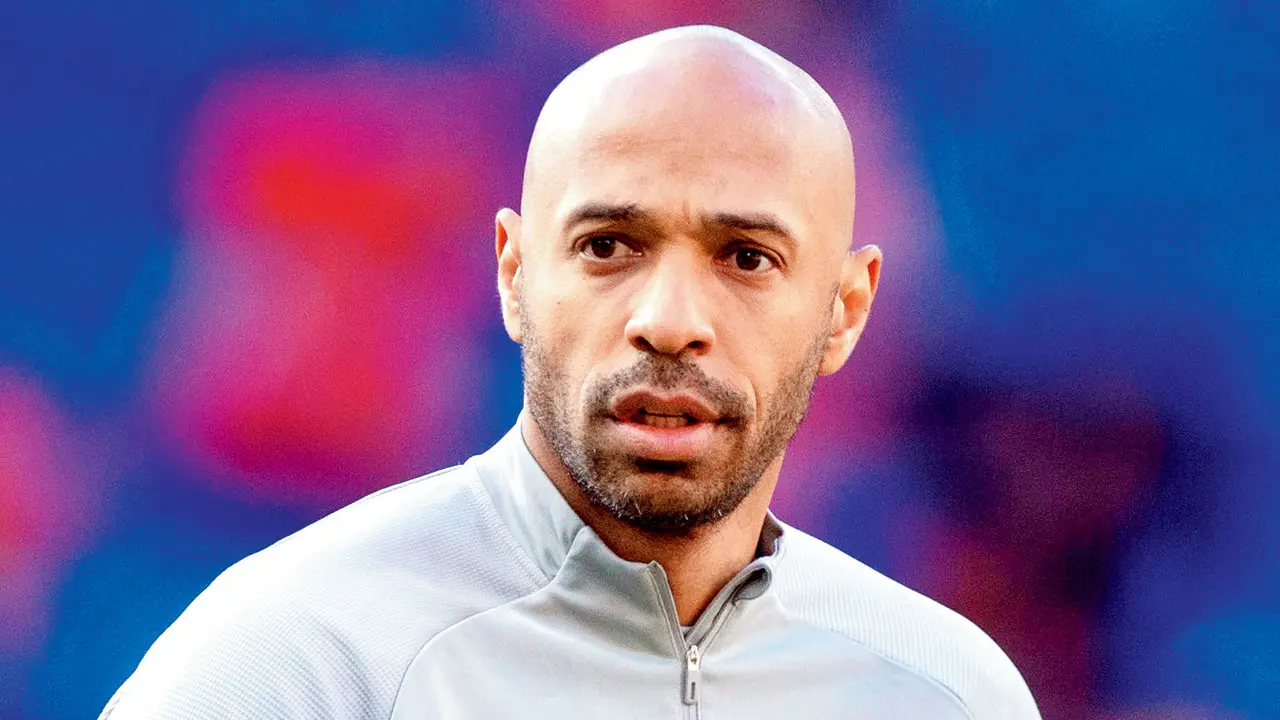
Arsenal great Thierry Henry praised Real Madrid skipper Federico Valverde’s hat-trick against Manchester City on Wednesday. 

“Fede is the type of player who will adapt to any situation. He played right-back, holding midfielder, left-back, under the striker, centre-back. You have to give him a lot of credit,” Henry said on CBS, before adding: “Fede  was [French star Lilian] Thuram, [Dutch legend Dennis] Bergkamp, [French great Claude] Makelele. He was everybody today.”

This story has been sourced from a third party syndicated feed, agencies. Mid-day accepts no responsibility or liability for its dependability, trustworthiness, reliability and data of the text. Mid-day management/mid-day.com reserves the sole right to alter, delete or remove (without notice) the content in its absolute discretion for any reason whatsoever


Cocktail 2: First look of Shahid Kapoor`s film to be attached with Dhurandhar 2

0
Cocktail 2: First look of Shahid Kapoor`s film to be attached with Dhurandhar 2


Cocktail 2: First look of Shahid Kapoor`s film to be attached with Dhurandhar 2

Filmmaker Homi Adajania is all set to bring Cocktail 2 to the big screen. The film, which stars Shahid Kapoor, Kriti Sanon and Rashmika Mandanna in the lead roles, has been locked for a June release. The makers made the announcement on Friday by sharing individual posters of the three lead actors. The film is a sequel to Cocktail, which starred Saif Ali Khan, Deepika Padukone and Diana Penty in the lead.

Cocktail 2 release date announced

On Friday, the makers of Cocktail 2 announced the film’s release date. Shahid Kapoor took to social media to share posters featuring himself, Kriti Sanon and Rashmika Mandanna. Along with the release date announcement, the posters revealed that the film’s first look will be unveiled on March 18. Coincidentally, this is the same day Dhurandhar: The Revenge will begin its theatrical run. The first look of Cocktail 2 will be attached to the Ranveer Singh-starrer and will be played along with other previews before the film begins.


View this post on Instagram


A post shared by Rashmika Mandanna (@rashmika_mandanna)

Cocktail 2 shoot wrap 

The shoot for the film was wrapped in January this year. Commemorating the occasion, director Homi Adajania took to his official Instagram handle and dropped a picture of himself celebrating with Shahid, Kriti, and Rashmika.

The delightful and vibrant pic of the Cocktail 2 team further included the text, “Love you fools” and “Fun was had!”.

Announcing the shoot wrap for his next, the filmmaker penned on social media, “Cocktail2 shoot wrapped…I may be biased, but this one feels a tad special…Big love to my fab crew & cast for tolerating the absurdity that I am. Love you guys (red heart emoji) (sic).”

Reacting to this, Kriti commented, “Love you Homsterrrr!!”

She further re-shared Homi Adajania`s post on the Stories section of her Instagram handle and penned, “Love you guys!!”, followed by two red heart emojis.

Backed by Dinesh Vijan’s Maddock Films, the story of Cocktail 2 has been penned by Luv Ranjan. The details regarding the plot of the sequel have been kept under wraps for now.

The primary instalment in the franchise, Cocktail, starring Saif Ali Khan, Deepika Padukone, and Diana Penty, which was also helmed by Homi Adajania, reached the cinema halls back in 2012.

Adding to the buzz, Homi Adajania, Rashmika, and Kriti keep on providing fun sneak peeks into the behind-the-scenes chaos from the shoot of Cocktail 2.


Cocktail 2 teaser to debut in theatres with Dhurandhar 2; Rashmika Mandanna, Shahid Kapoor, Kriti Sanon's 1st look out

0
Cocktail 2 teaser to debut in theatres with Dhurandhar 2; Rashmika Mandanna, Shahid Kapoor, Kriti Sanon's 1st look out


Homi Adajania’s Cocktail 2 teaser will be released in theatres along with Aditya Dhar’s Dhurandhar: The Revenge. After days of speculation, the film’s leads Shahid Kapoor, Rashmika Mandanna, and Kriti Sanon seemed to confirm the same as they shared their first looks from the film on social media.

Rashmika Mandanna, Shahid Kapoor and Kriti Sanon in stills from Cocktail 2.

Cocktail 2 teaser to be out with Dhurandhar 2

On Friday, Shahid, Rashmika and Kriti took to their social media to post their looks from the film, writing, “For more info, make your way to the theatres this Wednesday, March 18.” The posters show the trio heading on what looks like a beach vacation in a car.

Rashmika is seen in a white dress, wearing sunglasses, and taking a photo. Shahid is dressed in a colourful shirt as the sun sets in the background. And Kriti shows off her feet, with a tattoo on one foot reading, “Catch the sea.” Homi was more forthcoming when he posted the pictures and wrote, “Teaser Alert! A sneak peek for you of COCKTAIL2 on Wednesday March 18 ONLY in Theatres.”

Zoya Akhtar commented under Homi’s post with heart, fire, smiley and fire emojis. While the film’s team did not reveal much, the date suggests the Cocktail 2 teaser will be attached to Dhurandhar 2 during its March 18 premiere.

About Cocktail 2

Cocktail 2 is a sequel to Homi’s 2012 hit Cocktail, which starred Saif Ali Khan, Deepika Padukone and Diana Penty. The sequel will hit theatres on June 19, and the teaser will be released on March 18.

Recently, there was speculation that Cocktail 2 will see a love triangle between the trio. When Kriti attended Rashmika and Vijay Deverakonda’s wedding reception in Hyderabad, Homi joked about the rumours. He posted a picture of them on his Instagram stories writing, “Congrats, guys. Kriti Sanon, can you stay out of this?” Kriti quipped back, “Never…love them.”

Upcoming work

Shahid was last seen in O’Romeo and Deva. He has yet to announce movies other than Cocktail 2. Kriti was last seen in Tere Ishk Mein, apart from Do Patti, Crew and Teri Baaton Mein Aisa Uljha Jiya. She also has to announce her upcoming projects. Rashmika, who was last seen in Chhaava, Sikandar, Kuberaa, Thamma and The Girlfriend, also has Mysaa and Ranabaali with Vijay lined up apart from Cocktail 2. She was recently in the news for her wedding to Vijay in February, with the couple throwing a reception in March.


Carnival time at racing finale at the Mahalaxmi racecourse

0
Carnival time at racing finale at the Mahalaxmi racecourse


Carnival time at racing finale at the Mahalaxmi racecourse

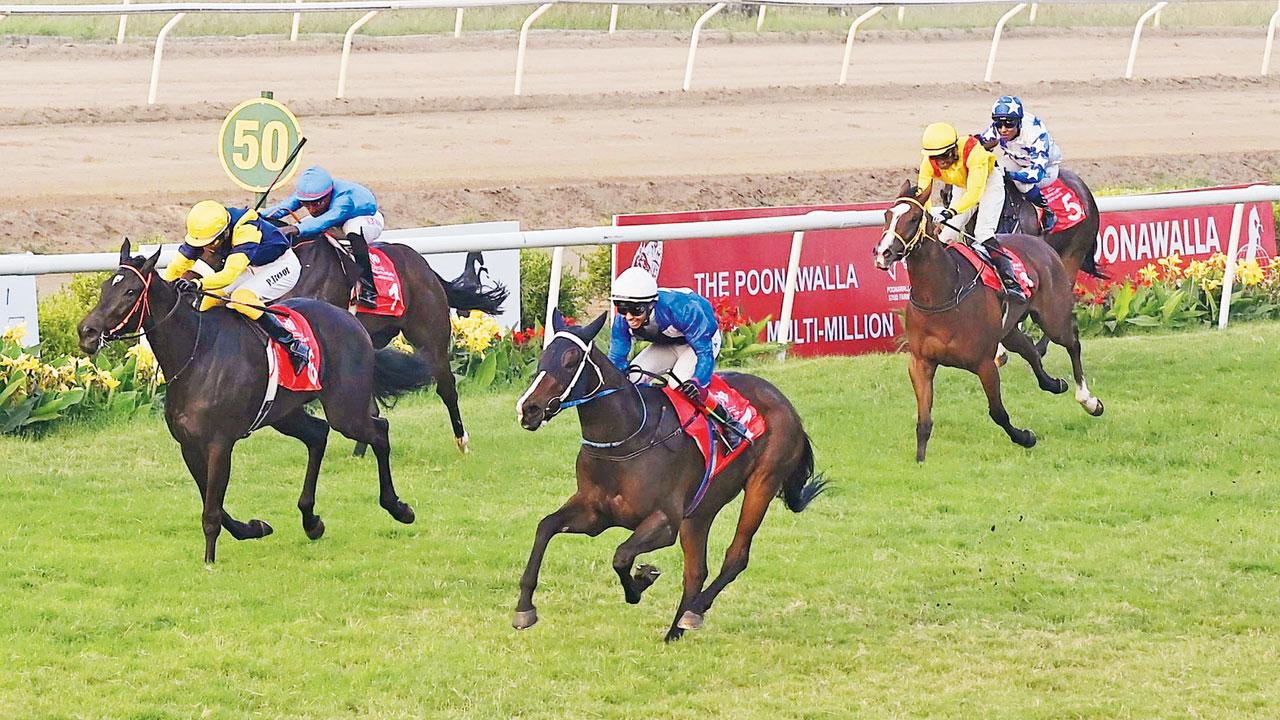
Mumbai racegoers will be treated to a unique experience this Sunday at the Mahalaxmi racecourse: 50 plus flavours of on-tap craft beer! The “Bombay Brewout” theme of celebrations will make sure that the Zavaray S Poonawalla Racing Carnival, the annual grand finale of the Mumbai racing season, is signed off in style.

The gala event will be hosted by the Royal Western India Turf Club (RWITC) in association with Zavaray S Poonawalla and the Poona Cartel. Poonawalla, as usual, will loosen his purse strings for the stakes money of Rs 3.5 crore, and power three races: the Zavaray S Poonawalla Sprinters` Challenge, the CN Wadia Gold Cup (Gr 2) and the Maharaja Sir Harisingji Trophy (Gr 3).

There will also be a special race titled the Poonawalla Stud Farms Auction Sale Stakes for three-year-olds, and two more Grade 3 races — the Shapoorji Pallonji Breeders Juvenile Colts` Championship and the Forbes Breeders Juvenile Fillies` Championship will be part of an action packed 10-race Sunday card.

The high-stakes action will ensure competitive racing at its best as trainers, jockeys and horse owners will strive hard to win on the big day.

Racegoers can enjoy diverse food items, shop in a trendy flea market, and groove to live bands in the members` enclosure. The public enclosure adds extra flair with a captivating live dance performance by Colours of Lavani, along with exciting prizes including a motorcycle, laptop, and food coupons, courtesy of the Poonawalla Group. This unique fusion of adrenaline-pumping racing and craft beer culture promises an unforgettable day of entertainment at one of Mumbai`s most historic venues: the Mahalaxmi racecourse.


Four crew members killed after US refuelling plane crashes in Iraq

0
Four crew members killed after US refuelling plane crashes in Iraq


The US Central Command says rescue efforts continue after a refuelling aircraft went down over western Iraq.


Adobe CEO Shantanu Narayen’s resignation shows how AI takes its toll| Business News

0
Adobe CEO Shantanu Narayen’s resignation shows how AI takes its toll| Business News


Shantanu Narayen, chief executive of Adobe Inc. and one of the longest-serving leaders in Silicon Valley, has resigned, amid deepening investor scepticism over existence in an AI era.

The market’s “what have you done for me lately” attitude with regard to AI has weighed heavily on Adobe CEO Shantanu Narayen. (HT)

Narayen, 62, will remain as Adobe CEO until a successor is appointed and will continue to serve as board chairman, the San Jose, California-based company said in a statement. The surprise transition overshadows a quarterly fiscal report that beat analyst estimates but failed to calm nerves about a stock that has been in a freefall for much of the last two years.

The shares tumbled about 7% in extended trading following the announcement. The stock has declined roughly 23% in 2026 alone, hitting its lowest levels in three years as “AI upstarts” threaten the dominance of flagship products like Photoshop and Illustrator.

An Era of Expansion

Narayen’s 18-year tenure is viewed as legendary within the software industry. Since taking the helm at the end of 2007, he transformed Adobe from a seller of boxed desktop software into a subscription-based powerhouse.

  • Revenue growth: Annual sales multiplied nearly sixfold during his leadership, reaching approximately $24 billion.
  • Workforce: The company expanded from 7,000 employees to more than 30,000.
  • Legacy: Microsoft Corp. CEO Satya Nadella praised Narayen for a “legendary run”, while Figma Inc. CEO Dylan Field described him as “relentless in pursuit of Adobe’s vision”.

Despite these accolades, the market’s “what have you done for me lately” attitude with regard to AI has weighed heavily on Narayen. While Adobe has aggressively integrated its Firefly AI models into its suite, competitors ranging from Google to nimble startups are offering cheaper, automated ways to generate visual media that bypass Adobe’s premium price tags.

Financial Resilience vs Market Scepticism

The departure comes at a paradoxical moment for Adobe. While the stock is down nearly 40% since early last year, the company’s underlying financial metrics are resilient.

In the fiscal first quarter ended 27 February 2025, revenue rose 12% to $6.4 billion, surpassing the $6.28 billion average analyst estimate. Adjusted earnings were $6.06 a share, beating the projected $5.88.

“Adobe’s financial metrics have shown little noticeable change since early last year, yet the stock is down almost 40%—likely a key reason for the planned CEO transition,” Bloomberg Intelligence analyst Anurag Rana wrote in a note.

The search for a ‘war-time’ leader

The board’s search for a successor, overseen by lead independent director Frank Calderoni, will likely focus on a leader capable of accelerating AI monetisation. While Adobe’s AI-first products generated more than $250 million in sales as of September, investors are concerned about the “pace of innovation” relative to rivals.

“Investors will likely focus on whether incoming leadership maintains a balance between disciplined execution and aggressive AI investment,” Grace Harmon, an analyst at Emarketer, told Bloomberg News.

Adobe projected second-quarter revenue of as much as $6.48 billion, slightly ahead of the $6.43 billion average estimate. However, in a market where AI is viewed as an existential threat, steady guidance may no longer be enough to satisfy Wall Street without a clear, long-term visionary at the helm.


‘No one can tell MS Dhoni he is dropped’: Ex-CSK star argues even Fleming can’t push India great into Impact Player role

0
‘No one can tell MS Dhoni he is dropped’: Ex-CSK star argues even Fleming can’t push India great into Impact Player role


MS Dhoni is set to return to the field in the upcoming season of the Indian Premier League, once again representing Chennai Super Kings. The franchise’s CEO Kasi Viswanath has already confirmed that the veteran will be available for the entire campaign. However, he stated that his exact role in the playing XI remains undecided. The final call will rest with the team management, which will determine whether the seasoned campaigner takes the field as a wicketkeeper or is deployed as an impact player. Dhoni had a modest outing in IPL 2025, scoring 196 runs across 14 matches. The veteran wicketkeeper batter averaged 24.50 with a strike rate of 135.17, often walking in during the lower order to provide quick runs in the closing overs when the team needed a late surge.

MS Dhoni will play another season of IPL this year. (AP)

Former India batter Subramaniam Badrinath shared his thoughts on Dhoni’s place in the CSK, setup, suggesting that head coach Stephen Fleming would find it extremely difficult to take the call of leaving the legendary wicketkeeper out of the playing XI given his stature within the franchise.

“I don’t know if it is an administrative decision where he (CSK CEO) said that he (Dhoni) is ready to play all matches. He said that he would support the cricketing decision and stop. Now, will Fleming go and tell Dhoni that you don’t play this match, we are dropping you. I don’t think Fleming has a chance at all. How will he go and tell Dhoni that you are dropped? I literally feel that it is not possible,” Badrinath said on his YouTube channel.

Also Read – Why two-time World Cup-winner thinks players like Abhishek Sharma ‘are rascals and they walk into the fire’

“Don’t think anyone can tell Dhoni”

Badrinath also spoke about the immense respect Dhoni commands within the CSK camp, suggesting that even head coach Fleming or any member of the support staff would find it nearly impossible to ask the veteran to sit out or take on a reduced role.

“I don’t think any support staff in the world, be it even Fleming, can tell Dhoni you are an impact player, or you don’t play this match. There is no chance. We can take it that he is going to play all the matches,” he added.


‘Border 2’ OTT release: Here's when and where you can watch

0
‘Border 2’ OTT release: Here's when and where you can watch


‘Border 2’ OTT release: Here's when and where you can watch the Sunny Deol, Varun Dhawan, Diljit Dosanjh starrer
Sunny Deol’s ‘Border 2’ (Jan 23, 2026 release) earned Rs 392cr+ worldwide. Now on OTT from March 20. Anurag Singh directs 1971 Indo-Pak war saga with Varun Dhawan, Diljit Dosanjh, Ahan Shetty honoring real heroes. Action-packed drama blends battles, sacrifices, and hit track “Ghar Kab Aoge.”

‘Border 2’ headlined by Sunny Deol, stormed theaters on January 23, 2026, earning rave reviews for its explosive action and moving drama. Fresh off that box-office victory earlier this year, it’s now set to release on OTT.

‘Border 2’ set for OTT release, here’s where to watch

The makers have finalised the OTT launch date. ‘Border 2’ hits Netflix streaming from March 20, 2026. The update appeared in Netflix India’s listings, highlighting the online release within two months of its theatrical run. The film boasts an ensemble cast with Varun Dhawan, Diljit Dosanjh, and Ahan Shetty joining Deol. Now that the OTT debut is set, it’s poised to attract even more viewers who love streaming films from home.

The 1971 war backdrop

Helmed by Anurag Singh, the movie unfolds amid the 1971 Indo-Pakistani War, weaving an expansive tale around the military clash. Departing from the 1997 original Border’s focus on the Battle of Longewala, this sequel broadens the scope to multiple war fronts. It depicts India’s Army, Navy, and Air Force countering Pakistan’s Operation Chengiz Khan assault. Sunny Deol portrays Lt. Col. Fateh Singh Kaler, commanding an army battalion through the fierce battles.

Border 2 Makes Ahan’s Childhood Army Dream Real

‘Border 2’ real-life heroes

The narrative tracks various officers battling across fronts. Varun stars as Major Hoshiar Singh Dahiya, the Param Vir Chakra recipient famed for valor at the Battle of Basantar. Diljit embodies Air Force pilot Nirmal Jit Singh Sekhon, who protected Srinagar Air Base and earned a posthumous Param Vir Chakra. Ahan depicts Navy officer M.S. Rawat. Blending intense action with character-driven tales, the film weaves in prior wars and the toll on troops and their loved ones.

The film’s box office reception

Border 2 roared to box-office glory in 2026, raking in Rs 392.40 crore net domestically and Rs 449.65 crore worldwide per Sacnilk, marking it a major hit. The ensemble extends to Mona Singh as Surinder Kaur Chandpuri, plus Sonam Bajwa and Medha Rana as soldiers’ family figures. Music lovers hailed the refreshed “Sandeshe Ate Hain” as “Ghar Kab Aoge,” sung by Sonu Nigam, Arijit Singh, Vishal Mishra, and Diljit Dosanjh.


Russia benefits from impact of Trump’s war on Iran on oil economy, ‘no matter how despicable it may sound’ Explained

0
Russia benefits from impact of Trump’s war on Iran on oil economy, ‘no matter how despicable it may sound’ Explained


Russian President Vladimir Putin’s spokesman, Dmitry Peskov, summed up his country’s esoteric pragmatism as the US-Israeli war over Iran spreads to the oil-rich Arab world and engulfs the global economy. “We must secure benefits for ourselves wherever possible,” he said this week, “no matter how blasphemous it may sound.”

Vladimir Putin’s four-year invasion of Ukraine is the culmination of a quarter-century spent trying to tighten his grip on power, crush opponents, and expand Russia’s influence and borders. (AFP file photo)

as west asia descends into chaos Following the American and Israeli attacks on Iran – and the subsequent retaliation Missiles, drones and oil-crisis strategy – The geopolitical paradox is hard to ignore.

Russia is reportedly providing Iran with satellite imagery and drone-targeting tactics to facilitate retaliatory strikes against US forces and their bases and facilities. united arab emiratesOman, Qatar and other US-Israeli allies. Besides, it is also gaining huge financial benefits from the war policy of US President Donald Trump. This provides Moscow with vital revenue that is clearly needed to maintain its currency. invasion of ukraine.

Russia-Iran transactions are also a reciprocal relationship, established during the Ukraine conflict when Russia relied heavily on Iranian-made Martyr attack drones.

Britain’s Defense Secretary John Healey has said, “It would not surprise anyone to believe that Putin has a hidden hand behind some of Iranian strategy and possibly even some of their capabilities.” He also said that “the pattern of the Iranian attack mirrors the way Russia attacked Ukraine”.

Read this also Iran sets 3 conditions to end war with America, Israel

Expert observers believe Russia is also sharing sensitive information about countering US-made weapons, such as Patriot and ATACMS missiles, which it has encountered on the Ukrainian battlefield.

Former senior US intelligence official Andrea Kendall-Taylor said, “The lessons learned during the war in Ukraine have been materializing, but the implications are here now. We are seeing it happen in real time, in a real case.”

Trump’s ‘1980s playlist’ and Putin’s oil windfall

The conflict has completely disrupted shipping through the Strait of Hormuz, causing what the International Energy Agency (IEA) described as “the largest oil supply disruption in history”.

President Trump has had to respond to the resulting energy crisis. Temporarily lifting the ban on Russian oil.

The US Treasury Department has issued a 30-day waiver, valid until April 11, allowing the sale and delivery of Russian crude and petroleum products currently “stranded” at sea.

Treasury Secretary Scott Besant defended the measure: “The temporary increase in oil prices is a short-term and temporary disruption that will result in huge benefits to our country and economy in the long term”.

Russian officials say the waivers would affect about 100 million barrels of Russian crude, the equivalent of about a day’s global production.

Trump has Keep comms channels open with Putin, That has upset America’s European partners who see the oil-sales rebates as a funding funnel for Putin’s Ukraine war. Trump spoke to Putin on March 9. US special envoy Steve Witkoff said in an interview: “The Russians said they’re not sharing – that’s what they said, so we can take them at their word.”

One prominent analyst said Trump’s foreign policy agenda is “like a Spotify 1980s playlist, playing the same tunes four decades later” – leading to chaos in the world. “Among the highlights of his golden old days: befriending Moscow, bombing Iran, demeaning NATO and making trade tariffs great again,” Mark Champion wrote for Bloomberg Opinion on Friday.

Is China also aiding Iran is another question being asked in US and global policy circles.

US opposition Democratic Party senator Richard Blumenthal said earlier this week that Russia was assisting Tehran “actively and intensively, both through intelligence and perhaps in other ways” and added that “China may also be assisting Iran”.

But Chinese embassy spokesman Liu Pengyu in Washington said in a statement that he “protests baseless allegations” about Beijing’s involvement. He said that China is playing a constructive role in reducing tension and restoring peace.

Is there a ‘smeratenomica’ factor?

For Russia, rising oil prices, with Brent crude reaching $100 a barrel, are a lifeline for an economy headed for all-out war. Economist Vladislav Inozemtsev has dubbed this phenomenon “smartonomica” or “economy of death”.

The Russian state is currently devoting about 40% of its budget to the war against Ukraine. To keep up the pace of recruitment, the Kremlin has moved away from mobilization to offering highly paid volunteers. According to reports, the recruiter who signs the first contract can receive a recruitment bonus and a monthly salary nearly three times the national average.

“Despite the lack of significant progress on the front, Putin wants to keep fighting. There is money for war, and there always will be,” Spanish daily EL PAIS quoted economist Inozemtsev as saying.

Trump may agree with him, but Putin has also clearly expressed “unwavering support for Tehran”, and congratulated Mojtaba Khamenei on his selection as Iran’s new supreme leader after his father was killed in the early hours of a US-Israeli bombing on 28 February.

Russia has regularly used Iranian-made unilateral attack drones to attack Ukrainian cities and energy infrastructure. Iran later supplied the technology to Russia to begin its own mass production of deadly drones.

Iran’s comprehensive Use of relatively cheap drones The conflict has put pressure on the US military and Gulf allies, forcing them to use defense systems designed primarily to counter more advanced weapons.

India’s Russia paradox, a balancing act

This conflict has put India, the world’s third largest oil importer, in a precarious situation. With shipments through the Strait of Hormuz largely halted, New Delhi has been forced to rapidly diversify its energy sources. India’s Russian crude imports rose to 1.5 million barrels per day (bpd) in March, up 50% from February, ship-tracking data showed.

Before the recent sanctions and disruptions, India had imported 2.1 million bpd of Russian oil by mid-2025, but the figure had fallen to 1.1 million by January this year due to US sanctions against Russian companies.

Additionally, Trump had imposed a punitive 25% tariff on India last August – bringing total US duties on Indian products to 50%, which he later removed with the condition that India not buy oil from Russia. Trump offered as an alternative more oil from the US and Venezuela, whose resources the Americans claim to control after ousting President Nicolas Maduro. After Trump expanded his war strategy to Iran, New Delhi has had to increasingly move away from its dependence on the Persian Gulf. This is where Russia came back.

When America gave 30 days timePermissionPM Narendra Modi, who arrived in Delhi to buy from Moscow, faced even tougher questions from opposition leader Rahul Gandhi on “selling India’s sovereignty” to Trump.

And this crisis extends beyond crude oil. India is facing challenges regarding Liquefied Petroleum Gas (LPG). About 80-90% of India’s LPG imports typically transit through the Strait of Hormuz, leaving the country’s domestic LPG supply highly vulnerable. Reports indicate that prolonged disruption could lead to rising inflation, especially in states like Mizoram, Manipur and Punjab, where LPG has a high importance in the consumer price basket.

To reassure citizens and markets, India’s Oil Minister Hardeep Singh Puri said the country’sNon-Hormuz Sourcing“Total crude imports have increased to almost 70%, up from 55% before the current conflict began.” He stressed that the government has taken steps to ensure that domestic supplies remain “fully protected” despite a global moment the likes of which “the world has never seen in history”.

While Russia is cashing in, analysts warn that the situation remains a double-edged sword. If the conflict prolongs, it could lead to a deep global recession, which would ultimately reduce overall demand for hydrocarbons and severely impact the Russian economy.

Geopolitical analyst Mark Champion wrote, “We are finding out in real time whether Trump, or the seven former Oval Office officials who conducted the cost-benefit analysis of going to war with Iran and decided against it, were right.”