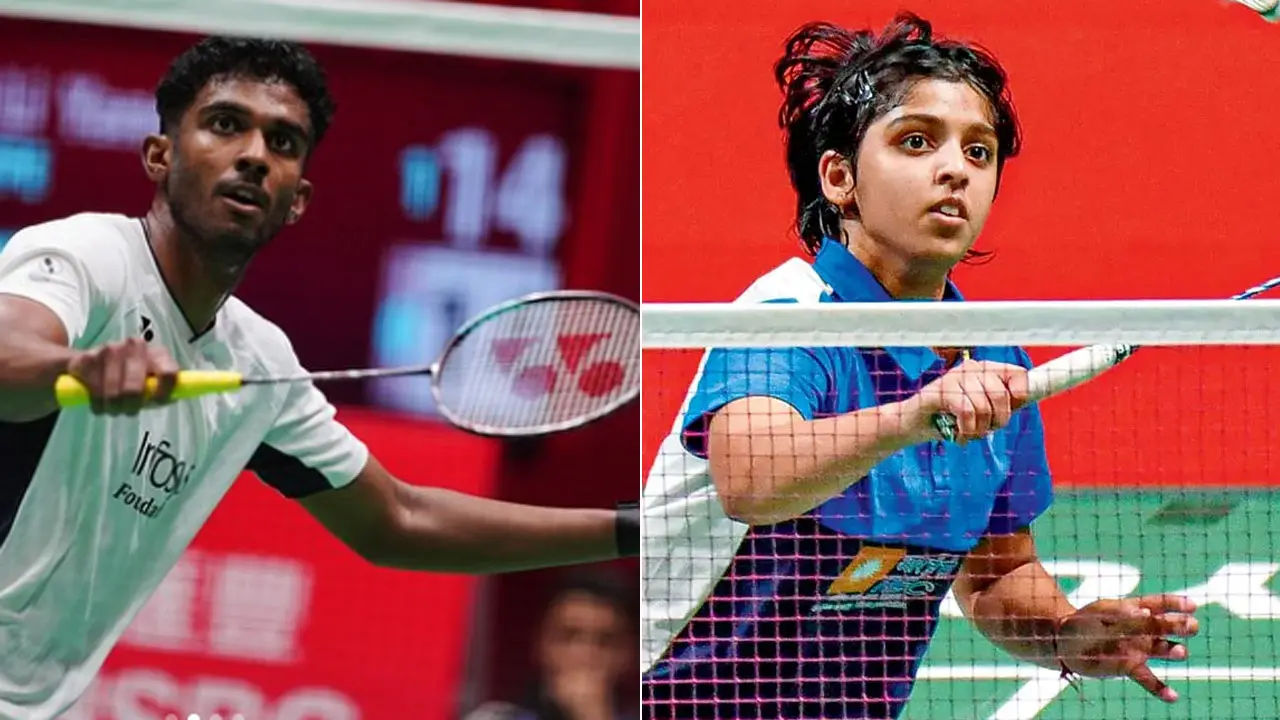
Indian shuttlers endured a disappointing day at the Swiss Open as several players, including Ayush Shetty and Tanvi Sharma, bowed out in the opening round of the Super 300 tournament here on Wednesday.
In men`s singles, Ayush Shetty, the US Open champion, lost 18-21, 19-21 to Canada`s Brian Yang, while Chinese Taipei`s Chiu Pin-Chian outclassed Unnati Hooda 21-14, 21-14 in the women`s singles.
Top seed Putri Kusuma Wardani of Indonesia had earlier brushed aside India`s Tanvi Sharma 21-11, 21-10 in a one-sided contest that lasted just 30 minutes. India also suffered a setback after HS Prannoy, the 2023 World Championships bronze medallist, gave a walkover to Japan`s Koki Watanabe.
Mixed Doubles pair of Rohan Kapoor and Ruthvika Shivani Gadde also suffered a 19-21, 14-21 loss to fifth seeds Ruttanapak Oupthong and Jhenicha Sudjaipraparat of Thailand.
Meanwhile late on Tuesday, world No. 4 men`s doubles pair Satwiksairaj Rankireddy and Chirag Shetty advanced to the round of 16 with a 21-19, 21-19 win over Singapore`s Eng Keat Wesley Koh and Junsuke Kubo.
H Amsakarunan and M R Arjun also progressed with a 21-16, 24-22 win over Chinese Taipei`s Chen Zhi Ray and Lin Yu Chieh.
This story has been sourced from a third party syndicated feed, agencies. Mid-day accepts no responsibility or liability for its dependability, trustworthiness, reliability and data of the text. Mid-day management/mid-day.com reserves the sole right to alter, delete or remove (without notice) the content in its absolute discretion for any reason whatsoever
If you are okay spending ₹49,999 now on a new Google Pixel 10a smartphone, probably just because you’d really rather have a Pixel, I’d like to point you to the Pixel 9a from last year. Bristle as much as you want at the fact that it is a generation older, yet it costs less at ₹39,999 and is very similar to what Google wants us to believe is their newer phone. In Google’s Pixel scheme of things, one always envisioned (and that’s how it mostly was) the “a” series phone to be a more value oriented spin-off of the standard Pixel. In this case, the Pixel 10a is a marginal refresh of the Pixel 9a, instead of towing Pixel 10 cues.
The Pixel 10a runs the same Google Tensor G4 chip with 8GB memory, just like the Pixel 9a. (Official photo)
Let me run you through some key specs, as an illustration. The Pixel 10a runs the same Google Tensor G4 chip with 8GB memory, just like the Pixel 9a. The 6.3-inch screen size remains as before, albeit Google has boosted peak brightness to a rated 3,000 nits (up from 2,700 nits). The 48-megapixel wide and 13-megapixel ultra wide cameras are carried forward, and all changes are software or artificial intelligence (AI) related. Battery capacity remains at 5100mAh, with the 23-watt wired charging speeds upgraded to 30-watt. Would you now really still want to spend an extra ₹10,000 on essentially the same phone as the one it succeeds, just because it arrived later on the timeline?
It’ll be a while before you notice any generational design or hardware differences, but Google does insist this is the most durable A-series phone they’ve ever made. The Corning Gorilla Glass 7i layer for display protection plays its role, and there’s IP68 dust and water resistance as well. It’s 3 grams lighter than last year’s phone, if that counts. And a few decimal points in millimetres shaved off in length and width, because the bezels are ever so slightly thinner. The biggest positive in my book is the dual camera setup at the back that sits flush with the back of the phone, and there is no island so to speak of. This is a rare modern day smartphone that sits flat when you place it on a table. These little details go a long way as you use the phone regularly.
Speaking of which, the Google Pixel 10a has a 48-megapixel primary wide camera and a 13-megapixel ultra wide camera. There’s no telephoto, and that’s where Google is relying heavily on image processing prowess as well as AI smarts to widen this camera’s utility scope. Mind you, the Pixel 10a does very well as a camera for the price band it is placed it. Certainly better than the OnePlus 15R and the heavily AI reliant Vivo cameras in the V70. The Xiaomi Redmi Note 15 Pro+ will match it in certain scenarios, with a really capable 200-megapixel sensor. For perspective, a ₹10,000 more monetary outlay gets us to the Motorola Signature, which is quite a step forward overall.
Google is relying heavily on image processing, and considering their expertise in tuning it just right over the years, the Pixel 10a is able to properly deliver a wide dynamic range, fast autofocus, lots of details, and accurate colours in good lighting conditions. But software can only get you so far, and soon enough, noise in low-light shots becomes visible, which also compromises detailing and the balance between illuminated and shadow areas of a frame. When compared with a Pixel 10 Pro series for the same shots, there are times when the Pixel 10a overcompensates by increasing the brightness in the frame, which often leads to loss of detail — such as clouds in the sky in the background.
The lack of a dedicated telephoto camera means your zoomed-in photos will rely on cropping from the main sensor, and the zoom level matters in this respect. After a point, there will be perceptible loss of crispness. I am particularly impressed with the very likeable colours the Pixel 10a replicates in photos, which is a great foundation for accuracy when it comes to skin tone rendering and colour separation.
There are a number of AI add-ons to the camera. The Pixel 10a ushers in the Camera Coach feature, already seen on the more expensive Pixel 10 Pro siblings, which uses the Gemini models to gauge the scene and provide some guidance on what may result in a better photo otherwise. Mileage will vary, depending on how capable (or otherwise) you actually are with a smartphone camera. Auto Best Take is also part of the Pixel 10a’s camera proposition for group photos where Gemini again gauges everyone’s expressions and eye positioning to make things look better.
It is partly surprising (though the economics is understandable) that the Pixel 10a still holds ground with the previous generation Tensor G4 chip, while the Pixel 10 series has moved to the newer (and with perceptibly better thermals) Tensor G5. If you aren’t someone who is obsessed with synthetic benchmark score comparisons, there’s little to complain about this in a ₹49,999 Pixel 10a. It does perform well with consistent performance as an everyday phone, but there will be moments when you’ll notice some heating on the back of the phone — mind you, it still doesn’t stutter or feel sluggish in that moment. That may be different if you’re playing a game, and frame rates will drop. The only complaint here is that 8GB memory doesn’t exactly tick off the sort of 7-year longevity that Google is making a case for with security updates.
The 5,100mAh battery matches what the predecessor, the Pixel 9a also had, but Google has made wired charging (30-watts instead of 23-watts) and wireless charging (10-watt instead of 7.5-watt) faster. These otherwise often overlooked changes do shave off minutes when the phone’s plugged in. It is easy to get a day and a half of usage before this blinks the low power mode notification at around 15%. You’ll still have to charge this phone every night or every morning, the convenience is that there will be a lot more reassurance every time you glance at the battery charge status icon.
There are two sides to the Pixel 10a coin — the first being it is easy to be disappointed with a fairly continuous spec sheet generationally, and the second being this is still a very capable Android phone for this price with the camera experience remaining its trump card. This is as iterative an update as it can be when the focus is purely on refinement and not broader changes. The question you must answer is — do these updates represent a big enough jump for you, or would you rather save ₹10,000 or so and find value in last year’s phone instead?
Iranian President Masoud Pezeshkian has laid out terms for ending the war with the United States and Israel in what analysts say is a possible sign of de-escalation from Tehran as the US-Israel war on Iran entered its 13th day on Thursday.
In a post on Wednesday on social site X, Pezeshkian said he had spoken to his counterparts in Russia and Pakistan, and that he had confirmed “Iran’s commitment to peace”.
Recommended Stories
list of 4 itemsend of list
“The only way to end this war – ignited by the Zionist regime & US – is recognizing Iran’s legitimate rights, payment of reparations, and firm int’l guarantees against future aggression,” Pezeshkian wrote.
This is a rare posture from Tehran, which has maintained a defiant stance and initially rejected any possibility of negotiations or a ceasefire when war broke out nearly two weeks ago.
Pezeshkian’s statement comes as pressure mounts on the US to halt what has become a very costly mission. Analysts say speculation from Washington that Iran would quickly submit after the killing of Supreme Leader Ayatollah Ali Khamenei were misguided.
Tehran is likely going to determine the end of this war, not the US or Israel, because of its ability to inflict economic pain broadly, they say.
Amid a military pummelling by the US and Israel, Iran has launched heavy retaliatory strikes at US assets and other critical infrastructure in Gulf countries, upsetting global supplies. It has also adopted what analysts call “asymmetric” tactics – such as disrupting the critical Strait of Hormuz and threatening US banking-linked entities – to inflict as much economic pain on the region and wider world as it can.
This is what we know about Pezeshkian’s stance and what the pressures are on both sides to draw the conflict to a close, quickly.
A building lies in ruins after a strike, amid the US-Israeli conflict with Iran, in Tehran, Iran, on March 12, 2026 [Majid Asgaripour/WANA (West Asia News Agency) via Reuters]
What has the war cost so far?
Economically, both sides have weaponised energy. Israel first targeted Iran’s oil facilities in Tehran on March 8, prompting an outcry from global health experts over the potential risk of air and water pollution.
Iran has, meanwhile, tightened its chokehold on the Strait of Hormuz shipping route – the only route to open sea for oil producers in the Gulf – with its military promising on Wednesday that it has the capabilities to wage a long war that could “destroy” the world economy.
Attacks on ships in the strait, through which about 20 percent of global oil and gas traffic normally passes, have effectively closed the route.
Oil prices rocketed above $100 per barrel late last week, up from around $65 before the war, with ordinary buyers feeling the increases at pumps in the US, Europe and parts of Africa.
On Wednesday, Iran upped the ante, saying it would not allow “a litre of oil” to pass through the strait and warned the world to expect a $200-per-barrel price tag.
“We don’t know how quickly it’ll revert back,” Freya Beamish, chief economist at GlobalData TS Lombard, told Al Jazeera. “We do think it’ll revert back to $80 in due course, but the ball is to some degree in Iran’s court,” she said, adding that because Iran needs oil revenue, the price hikes are expected to be time-limited.
The International Energy Agency agreed on Wednesday to release 400 million barrels from the emergency reserves of several member states but it is not yet clear what impact that will have, nor how quickly this quantity of oil can be released.
Tehran has also been accused of directly attacking oil facilities in neighbouring countries this week. Iraq shut all its oil port operations on Thursday after explosive-laden Iranian “drone” boats appeared to have attacked two fuel tankers in Iraqi waters, setting them ablaze and killing one crew member.
A drone was filmed striking Oman’s Salalah oil port on Wednesday, although Tehran has denied involvement.
What are Iranian officials saying about ending the war?
There has been conflicting messaging from the Iranian leadership.
Iran’s elite army unit and parallel armed force, the Islamic Revolutionary Guard Corps (IRGC), continues to show defiance, issuing threats and launching attacks on Israel and US military assets and infrastructure in neighbouring Gulf countries.
However, the political leadership has appeared more inclined towards diplomacy, analysts say. On Wednesday, President Pezeshkian said that ending the war would take the US and Israel recognising Iran’s rights, paying Iran reparations – although it’s unclear how much is being asked for – and providing strong guarantees that a future war will not be waged.
In a video recording last week, he also apologised to neighbouring countries for the strikes and promised that Iran would stop hitting its neighbours as long as they do not allow the US to launch attacks from their territory.
“I personally apologise to the neighbouring countries that were affected by Iran’s actions,” the president said, adding that Tehran was not looking for confrontations with its neighbours.
However, it is not known how much sway the political leadership has over the IRGC. Hours after the president’s apology last week, air defence sirens went off in Saudi Arabia, Qatar, the UAE and Bahrain, as strikes continued on the Gulf.
So, what is Iran’s actual position?
“Iran wants to go to the end to make sure that the United States and Israel never attack Iran again … so this has to be the final battle,” Al Jazeera’s Resul Serdar Atas explained.
Indeed, the IRGC sees this as an existential war, but the timing of Pezeshkian’s statement about ending the conflict also shows Tehran is pressured economically, politically and militarily, Zeidon Alkinani of Qatar’s Georgetown University told Al Jazeera.
“These differences and divisions [between IRGC and political leaders] always existed even prior to this war but we may notice it now more, given the fact that the IRGC believes that it has the right to take the front seat in leading this regional war, which is why a lot of the statements and positions are contradicting with the official ones from Pezeshkian,” he said.
The IRGC reports directly to Iran’s Supreme National Security Council (SNSC) and not to the country’s political leadership. That council is led by Ali Larijani, a top politician and close aide to the late supreme leader, Ali Khamenei, who analysts describe as a “hardliner”.
In a post on X on Tuesday, Larijani responded to threats from Trump about attacks on the Strait of Hormuz, saying: “Iranian people do not fear your hollow threats; for those greater than you have failed to erase it … So beware lest you be the ones to vanish.”
The newly elected supreme leader, Mojtaba Khamenei, was once in the IRGC and was put forward by the unit as the next ayatollah after his father was killed on the first day of the war, analysts say. He is thus not expected to follow the reformist, diplomatic ideals of President Pezeshkian and other political leaders which his father managed to marry with the IRGC militarised stance, they say.
Mojtaba Khamenei, son of Iran’s late Supreme Leader Ayatollah Ali Khamenei, attends a gathering in Tehran on March 2, 2016. Iran marked the appointment of Ayatollah Mojtaba Khamenei to replace his father as its supreme leader with a barrage of missiles against Israel and the Gulf states [File: Rouhollah Vahdati/ISNA via AFP]
What do the US and Israel say about ending the war?
There have also been conflicting messages from the Trump administration and Israel regarding when the war mission on Iran, codenamed Operation Epic Fury, is likely to end.
Trump told US publication Axios on Wednesday that the war on Iran would end “soon” because there’s “practically nothing left to target”.
“Anytime I want it to end, it will end,” he added. He had said earlier on Monday that “we’re way ahead of our schedule” and that the US had achieved its goals, even as speculation mounts about a possible US ground mission.
On the other hand, Israel’s Defence Minister Israel Katz said on Wednesday that the war would go on “without any time limit, for as long as necessary, until we achieve all the objectives and decisively win the campaign”.
Analysts say Trump’s stance that the conflict will be quick reflects increasing pressure on his administration ahead of upcoming mid-term elections in November.
Trump’s advisers privately told him this week to find a quick end to the war and avoid political backlash, according to reporting by The Wall Street Journal. That came as polls from Quinnipiac University and The Washington Post suggested that most Americans are opposed to the war in Iran.
In his 2024 presidential campaign, Trump promised to lower prices, and inflation had stabilised at 2.4 percent ahead of the war, according to government data released on Wednesday. Analysts speculate the conflict will likely push it back up.
The US spent more than $11.3bn in the first six days of the war, Pentagon officials told lawmakers in a classified briefing on Tuesday, Reuters reported this week – nearly $2bn a day.
The Washington-based think tank, Center for Strategic and International Studies (CSIS), estimated that the war cost Washington $3.7bn in its first 100 hours alone, or nearly $900m a day, largely due to its expenditure on costly munitions.
“It’s quite ironic that [Trump] chose a war that would make affordability worse, not better,” Rebecca Christie, a senior fellow at the Bruegel think tank, told Al Jazeera’s Counting the Cost.
“Every time the US loses even one object, air defence or a plane or something like that, that represents an awful lot of money that could have been used on some of these issues that have an impact on people’s day-to-day lives in the United States.”
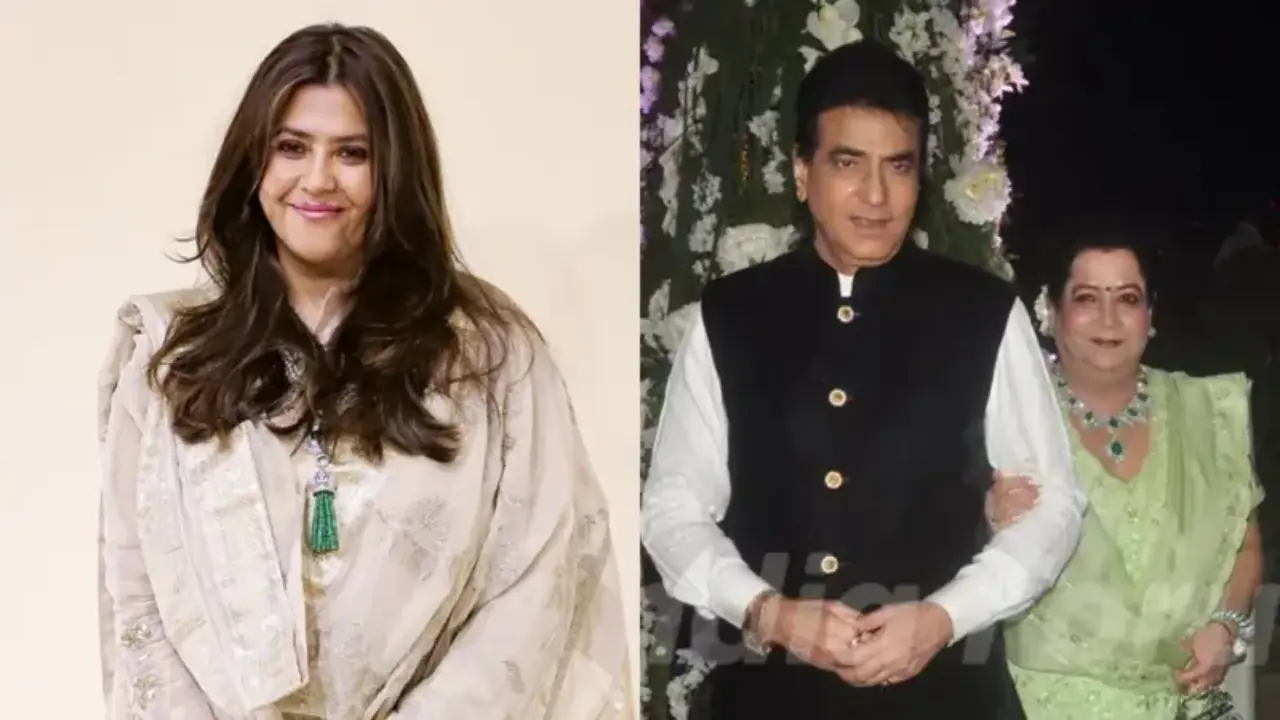
Producer and television creator Ektaa Kapoor recently opened up about the criticism she faced after launching the OTT platform ALTT, revealing that even her father, veteran actor Jeetendra, strongly objected to the kind of bold content the platform hosted.
Ektaa Kapoor talks about ALTT
Speaking about the backlash, Ektaa said she had been used to receiving comments about her personal life for years. However, the criticism intensified when she entered the digital streaming space with ALTT. Reflecting on the situation, she said that the taunts she received for launching the platform were far greater than the ones she faced earlier for not getting married.
She shared, “When I decided not to get married, I got about four taunts. But when I started ALTT, I got almost a hundred.” Her comment highlighted how controversial the platform became due to its edgy and adult oriented storytelling.
Ektaa also revealed that the situation created tension within her family, particularly with her father Jeetendra. According to her, the veteran actor was uncomfortable with the bold themes that some shows on the platform explored. She recalled that her father even argued with her about the decision.
Talking about those disagreements, Ektaa said, “My father would fight with me and say, ‘Why are you doing this kind of content?’” She added that the criticism from within the family made the experience even more difficult, especially because Jeetendra had built a long standing reputation in the film industry.
On receiving criticism
Despite the criticism, Ektaa said she believed experimentation was necessary in the evolving entertainment landscape. She explained that digital platforms often provide space for stories that may not find a place on traditional television. For her, ALTT was an attempt to explore new storytelling formats and cater to changing audience tastes.
However, the platform eventually landed in controversy over allegations that some of its shows contained explicit material. Amid the growing scrutiny, Ektaa later clarified publicly that she had stepped down from the platform earlier and was no longer associated with it.
Looking back at the experience, Ektaa acknowledged that the journey of launching ALTT was filled with criticism, debates and personal conflicts. Yet she maintained that creative risks are often part of building something new.
Her remarks also shed light on the pressures faced by creators in the entertainment industry, where decisions about content can spark strong reactions not only from audiences and authorities but sometimes even from family members.
Sanju Samson emerged as one of the standout performers of the ICC T20 World Cup, turning his campaign around in remarkable fashion during the latter stages of the competition. The wicketkeeper batter made the most of the opportunity when he was asked to open the innings in a must-win clash against West Indies, producing an unbeaten 97 that set the tone for what followed. Samson carried that confidence into the knockout matches, delivering twin knocks of 89 in both the semi-final and the final. His consistency under pressure played a key role in guiding his side to victory, and his contributions across the business end of the tournament earned him the Player of the Tournament award.
Sanju Samson was the Player of the Tournament in T20 World Cup. (PTI)
Former Australia opener Matthew Hayden drew an interesting comparison while speaking about Samson, pointing out how the Indian batter’s effortless strokeplay recently caught his eye. Hayden said Samson’s clean ball striking reminded him of legendary Australian wicketkeeper batter Adam Gilchrist, recalling the impact such naturally attacking players can have when they find their rhythm.
“We’ve watched Sanju Samson now in the IPL for 10 years. He has just lacked that consistency for an opener or No.3. He has floated around the order. But he just hit his stride in an unbelievable game at the Eden Gardens. Just the way he was able to effortlessly ball strike, it reminded me a bit of Gilly (Gilchrist),” Hayden said on All Over Bar The Cricket YouTube channel.
“Sanju at the top, there is just everything to gain”
Samson played five matches in the T20 World Cup and amassed 321 runs at an average of 80.25 and a strike rate of 199.37, hitting 27 fours and 24 sixes and ended as the third-highest run-getter.
Continuing his praise, Hayden expanded on why he sees match-winning potential in Samson, drawing a vivid parallel with Gilchrist. Citing past World Cup heroics, the former Australia opener highlighted how explosive players can transform a game the moment they find their spark, no matter the stage.
“Gilly didn’t really turn up in the World Cup in the West Indies (2007), and suddenly, in the final against Sri Lanka, he turns up and gets a big hundred. He’s just that dangerous, Sanju. And with Sanju at the top, there is just everything to gain,” he added.
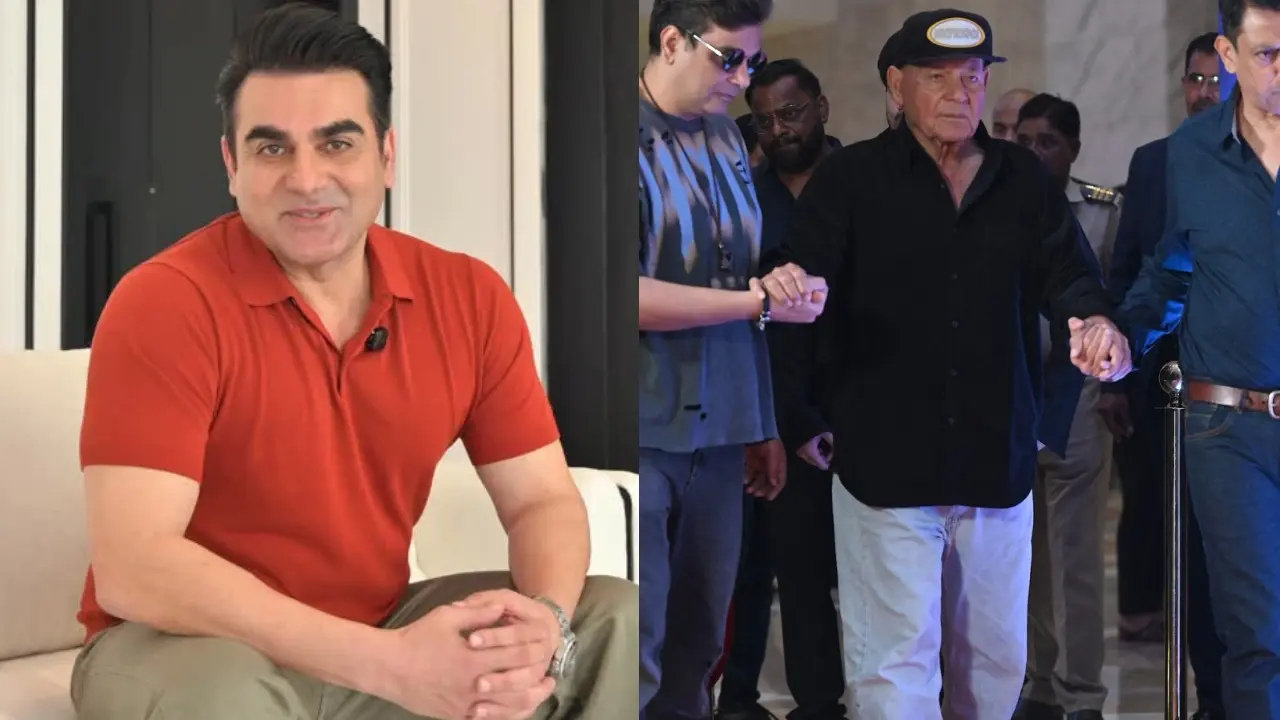
Veteran screenwriter Salim Khan was rushed to the hospital last month after he suffered a brain haemorrhage. While no surgery was performed, he was put on a ventilator to stabilize his condition. Amid his health concerns, the Khan family restricted doctors from sharing information about his health. Now, his son Arbaaz Khan has confirmed he will be discharged soon.
Arbaaz Khan on Salim Khan’s health
Arbaaz Khan addressed the media while leaving an iftar gathering in the city. He said the veteran writer is showing positive signs of recovery. “He’s better now, he’s improving,” Arbaaz told reporters. When asked about when Salim Khan might be discharged from the hospital, he added, “Soon.” The comments mark the first official statement from the Khan family since Salim Khan was hospitalised.
“His blood pressure was high, for which we treated him, and we had to put him on a ventilator because we wanted to do certain investigations. Now, the ventilator was put as a safeguard so that his situation doesn`t get worse. So it is not that he is critical,” Dr Jalil Parkar told reporters.
“We did the investigations that were required, and today we have done a small procedure on him. I will not go into the details. The procedure done is called DSA (digital subtraction angiography). The procedure has been accomplished, he is fine and stable, and has been shifted back to the ICU.” Asked whether he suffered a brain haemorrhage, the doctor said, “Unko thoda haemorrhage hua tha, which we`ve tackled. No surgery is required.”
More about Salim Khan
Salim Khan, who celebrated his 90th birthday in November 2025, remains one of the most influential figures in the history of Indian cinema. As part of the iconic screenwriting duo Salim-Javed, he co-wrote several landmark films that reshaped mainstream Hindi cinema in the 1970s. Among his most celebrated works are `Sholay`, `Zanjeer` and `Deewar`, films that not only achieved massive commercial success but also left a lasting cultural impact.
On the work front, Arbaaz Khan starred in two films recently. He was seen in the supernatural thriller Kaal Tighori, co-starring Rituparna Sengupta. He was also seen in Bihu Attack, an action thriller starring him alongside Rahul Dev and Daisy Shah.
Chennai Super Kings MS Dhoni (PTI Photo/Shailendra Bhojak)
The batting position of MS Dhoni in the Chennai Super Kings line up has become a talking point in recent seasons. Fitness concerns have often seen the legendary wicketkeeper batter walk in much lower down the order, sometimes at No. 8 or even No. 9. As a result, Dhoni has been left with only a handful of deliveries to influence the game with the bat.In his prime, Dhoni built a reputation as one of the most destructive finishers in world cricket. Even now, the former CSK captain has produced several quick cameos that remind fans of his finishing ability. Those flashes have sparked debate among supporters and experts who feel he should bat higher to maximise his impact.
Sanju Samson opens up on T20 World Cup journey, and title win
India Test veteran Cheteshwar Pujara is among those who believe Dhoni should be given a bigger role with the bat. Speaking on JioHotstar, Pujara said he struggles to understand the logic behind sending the former India captain so far down the order.“I don’t see a point in MS Dhoni batting at No. 8 or 9, because he has the potential to turn games around single-handedly, something no other batter in the CSK team can do. If he bats for only five or ten balls, imagine what Mahi bhai can do if he plays 25 or 30 balls,” Pujara said on JioHotstar.Pujara, who was part of the CSK squad that lifted their record-equalling fifth Indian Premier League title in 2021, also spoke warmly about the franchise’s dressing room culture.“I’ve been in the CSK setup. In that environment, players are very comfortable; it’s like a family. When you’re in that setup, there is clarity about what is expected of you as a player,” Pujara said.He added that loyalty has always been a defining feature of the franchise’s philosophy.“Loyalty also comes into the picture because most of CSK’s players, if you look at the history, stay for a long time once they become part of that setup. There is a transition in the team now, so there is a bit more preference for young players,” he added.Meanwhile, CSK chief executive Kasi Viswanathan has expressed confidence that Dhoni will feature regularly for the team throughout the season.“He (Dhoni) will play all the matches, according to me,” Kasi said.CSK recently secured the services of wicketkeeper batter Sanju Samson from the Rajasthan Royals, a move that has raised fresh questions about what role Dhoni will perform in the playing eleven.Kasi clarified that the final call on Dhoni’s responsibilities will rest with the team’s coaching staff rather than the administrative management.“That is a cricketing decision which will be taken by the cricketing staff, not by the administrative staff. So they will decide whether he is going to play as a batsman, as a wicketkeeper-batter, or as an impact player,” he said.
In 2025, a young woman selling a rudraksha mala at the Mahakumbh Mela in Prayagraj, Monalisa Bhonsle, gained fame overnight for her appearance. Film and endorsement offers poured in for her. Now, she married her lover, Farman Khan, at the Nayanar Temple in Arumanoor, near Poovar, Kerala, on Wednesday evening. Know all about the actor-model she married.
Monalisa, who went viral on social media during the Kumbh Mela, married her partner, Farman Khan, at a temple in Thiruvananthapuram, Kerala. (PTI)
Who is Monalisa’s husband, Farman Khan?
Farman hails from Bhagpat district in Uttar Pradesh, and several reports claim he’s an actor and model. Speaking to the press after their wedding, Monalisa said that she had dated Farman for six months. They became friends through social media and later met on a film set.
Describing their courtship as ‘sixty years of love’, Farman added, “These six months were like sixty years of love thats why we decided to get married. We met during a shoot for the film. We were working together. We talked.” He also revealed that she was the first to propose, stating, “Monalisa proposed, I initially refused, but she convinced me.”
Monalisa told the press she respects all religions and that their love isn’t ‘love jihad’. She also stated that she married according to Hindu traditions, with Farman also chiming in to say he didn’t ask her to convert to Islam. At a press meet, the couple also showed her birth certificate, which lists her as born in 2008.
Parental opposition and police protection
According to the police, Monalisa and Farman arrived at the Thampanoor police station on Wednesday morning, accompanied by crew members from the film they were shooting. They alleged that her father was attempting to take her back against her will. They were in Poovar to shoot the film, and Monalisa alleged that her family opposed their union because of his religion and pressured her to marry her aunt’s son.
“She insisted that she won’t go with her father and made it clear that she is going to marry her boyfriend. As she is a major, she can act according to her choice,” a police officer said. Her father is in Kerala but chose not to attend the wedding. After her wedding, Monalisa told the press, “My family wanted me to marry someone else. I didn’t like that and refused it. Now, (after marriage with Farman), I am happy.”
Kerala ministers attend wedding ceremony
The wedding ceremony was solemnised at the Nayanar Temple at Arumanoor in Poovar, in the presence of Kerala General Education Minister V Sivankutty, ruling CPI (M) state secretary M V Govindan, Rajya Sabha MP AA Rahim, and other prominent leaders of the Marxist party. Sivankutty told reporters, “Marriage happens in heaven, and that heaven is Kerala. It is the real Kerala story.”
Monalisa and Farman also remarked how Kerala was a state that ‘supports people beyond religion and caste’ and that they’re happy to be married in the state. She also expressed interest in settling down in the South and acting in Malayalam films.
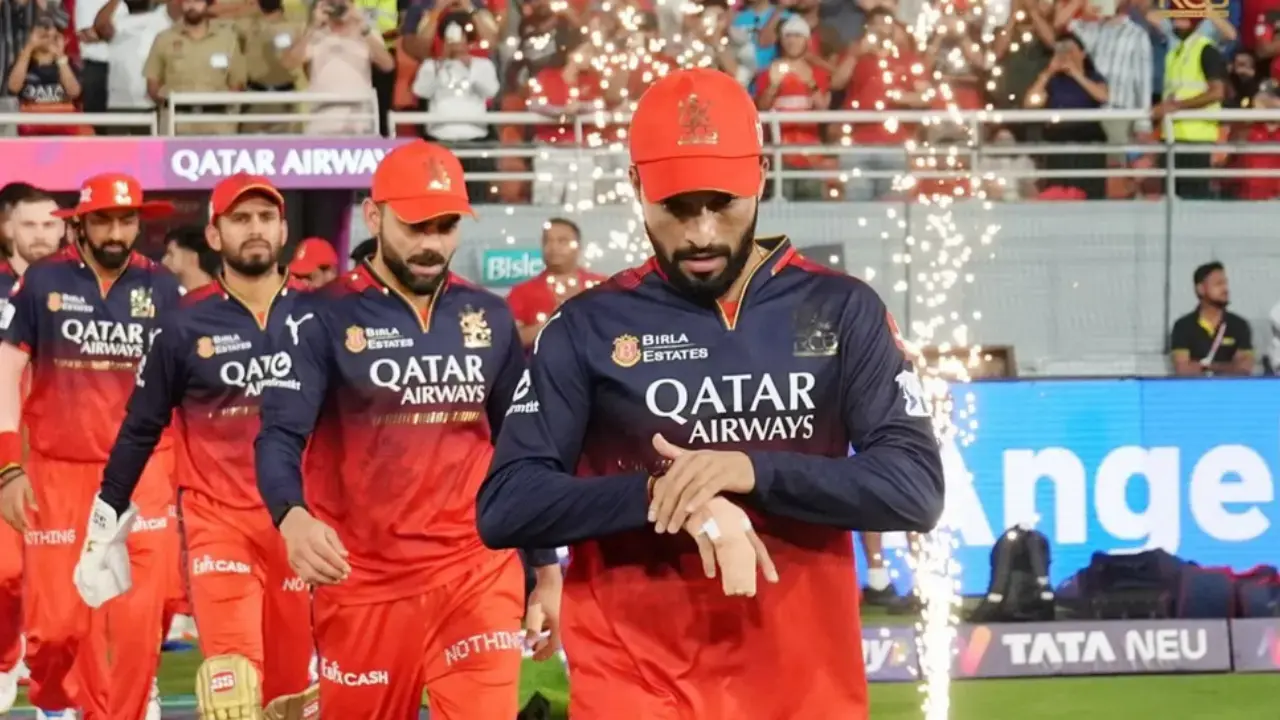
The upcoming edition of the Indian Premier League (IPL) is all set to kick off from March 28. The first match of the cash-rich league is scheduled to be played between the defending champions, Royal Challengers Bengaluru (RCB) and Sunrisers Hyderabad (SRH) at the M. Chinnaswamy Stadium in Bengaluru.
Ahead of the IPL 2026, former Team India cricketer Irfan Pathan said that stalwart Virat Kohli will enter the tournament with the same passion that he displayed during the ODI series against South Africa and New Zealand.
“We have seen that when he played for India, especially in the one-day series against South Africa and New Zealand. He looks like he wants to make an impact in every game. I think he will have the same kind of passion when he comes back this season. He will want to lift the trophy once again,” he said.
The former cricketer then spoke about Devdutt Padikkal, saying that he has improved and will play a major role in the success of the Bengaluru-based franchise in the upcoming edition.
“Devdutt Padikkal is going to play a major role in RCB`s success in IPL 2026. He has scored runs left, right and centre in domestic cricket across all formats. He looks like a very improved player. There was a time when he was struggling, wasn`t getting his timing right. But that is in the past now. Devdutt Padikkal is a different, very confident player now,” said Pathan.
He then stated that RCB is a team full of match-winners and has bowlers Nuwan Thushara and Jacob Duffy, who can cover up if star pacer Josh Hazlewood faces fitness issues.
“What I really like about RCB is that earlier they used to rely heavily on Virat Kohli, AB de Villiers and Chris Gayle to win matches. That has changed now. Their whole playing XI is full of match-winners. That is a fantastic thing. But going into IPL 2026, RCB will have some injury concerns, especially with Josh Hazlewood`s fitness. The good thing is they have secured good backups. The duo of Nuwan Thushara and Jacob Duffy can cover well for Hazlewood if he faces fitness issues. That makes RCB even stronger,” concluded the 41-year-old former cricketer.
IPL 2026: Update on the M. Chinnaswamy Stadium
Earlier this month, the Karnataka State Cricket Association (KSCA) Secretary, Santosh Menon, confirmed that the M. Chinnaswamy Stadium will host five of the RCB`s IPL 2026 home games. The venue will also host one of the play-off matches and the title clash of the tournament.
Bengaluru`s remaining two home matches will be played at the Shaheed Veer Narayan Singh International Cricket Stadium in Raipur, Chhattisgarh.
Cricket at the M. Chinnaswamy Stadium has been suspended since June last year. Following RCB`s triumph, fans gathered in huge numbers outside the stadium. During the celebrations, 11 people lost their lives, and several were left injured in a stampede.
Fans can heave a sigh of relief as the makers of Khosla Ka Ghosla 2 have announced the release date of the upcoming film. The movie will release this year in August on the occasion of Raksha Bandhan, as per the film’s team.
Anupam Kher earlier shared pictures and videos from the set of Khosla ka Ghosla 2.
When will Khosla Ka Ghosla 2 release
Taking to X (formerly Twitter) on Thursday, film trade analyst Taran Adarsh shared a poster which had the release date on it. The film will release on August 28. The caption read, “CULT CLASSIC RETURNS – KHOSLA KA GHOSLA 2 TO RELEASE ON 28 AUG 2026…”
“The much-loved cult classic film #KhoslaKaGhosla is officially making a comeback with its sequel, #KhoslaKaGhosla2, which arrives in cinemas on 28 Aug 2026 [#RakshaBandhan]. Directed by Prashant Bhagia, the film is produced by Bhushan Kumar, Krishan Kumar, Savita Raj Hiremath, and Raj Hiremath,” it also read.
About 2006 film Khosla Ka Ghosla
The original film Khosla Ka Ghosla, released in 2006, was directed by Dibakar Banerjee. It became a cult favourite for its light-hearted story and strong performances. The film talked about issues such as property scams and family conflicts in a simple yet funny way. The film featured Anupam Kher, Vinay Pathak, Boman Irani, Ranvir Shorey, Parvinn Dabass, and Tara Sharma in key roles.
More about Khosla Ka Ghosla 2
In January this year, Anupam Kher shared that he wrapped a schedule for Khosla Ka Ghosla 2. He had expressed deep gratitude to the entire team. In a special nod to the project, Anupam posted a video on Instagram featuring glimpses from the film’s sets, showcasing the actor in his beloved character, Khosla.
Joining him in the photo were his co-stars Ranvir Shorey, Kiran Juneja, and Parvinn Dabass – the ones who portrayed the iconic Khosla family in the first film. Actor Tara Sharma, who was a part of the original film, also joined the cast for the upcoming sequel. Boman Irani, who will reprise his character as Khurana, also featured in the video.
“SCHEDULE WRAP OF #KKG2!! As I finish 90% of my work for #KhoslaKaGhosla2 my heart is full of gratitude! It has been an exhausting but an EXHILARATING experience! This is going to be an EPIC sequel to an OG #CultClassic! This time the con is bigger than the biggest! A huge Thank you to each and every cast member (You ALL are Great), all the technicians, writers, director, producers and unit members for their love, warmth and support! Looking forward to meeting you again. Happy rest of the shooting!! Love always!” Anupam had written.
Khosla Ka Ghosla has been directed by Prashant Bhagia. The film is produced by Bhushan Kumar, Krishan Kumar, Savita Raj Hiremath, and Raj Hiremath.