Sunday, September 27, 2026
Home Blog Page 371

Buy or sell: Stock recommendation by brokers for May 13, 2026

0
Buy or sell: Stock recommendation by brokers for May 13, 2026


Buy or sell: Stock recommendation by brokers for May 13, 2026

UBS has a buy on Indian Hotels with the target price at Rs 900. Analysts said the company reported resilient Jan-March quarter (Q4FY26) numbers despite geopolitical headwinds, with consolidated revenues rising 14% on the year (YoY) to Rs 2,770 crore and profit after tax (PAT) up 15% YoY to Rs 600 crore.This was underpinned by strong operating metrics with core hotel revenue per available room (RevPAR) growing 10% YoY (12% YoY on a standalone basis) driven by average room rate (ARR) growth, while occupancies improved 100 basis points (100 basis points, or bps = 1 percentage point) to 78%.The management flagged a Rs 40–45 crore impact from West Asia-related disruptions in March. Analysts said during Q4FY26 the hospitality major’s earnings before interest, taxes, depreciation, and amortisation (EBITDA) margins remained healthy at 35%, supported by cost discipline and sharp 30% YoY growth in management fees to Rs 220 crore.Looking ahead, the company’s management guided a 12–14% revenue growth in FY27, driven by resilient domestic demand, and limited supply additions.Kotak Institutional Equities has a reduce rating on UPL with the target price at Rs 650. Analysts said UPL reported an 18% YoY revenue growth for Q4FY26, with a 10 percentage point boost from foreign exchange, although a Rs 350 crore voluntary provision and a higher tax rate constrained earnings growth.Amid an uncertain outlook, management has restricted guidance to just Q1FY27, analysts said. The company’s reorganization plan remains very much on the agenda. An $87 million investment in Sinova to reduce its debt, at elevated valuations, is a concern for analysts.HSBC has a buy rating on Oberoi Realty with the target price raised to Rs 2,100. Analysts said that the company’s core strength was all in the core market of Goregaon in Mumbai, with both residential demand and office occupancy picking up.They expect an acceleration of new launches and sustained momentum for high quality residential products. The downside risks are slowdown in luxury real estate market and a delay in launches.CLSA has an outperform rating on PVR with the target price at Rs 2,135. Analysts said the company’s Q4FY26 revenue of Rs 155 crore was up 24% YoY and in line with estimates. Its movie ticket sales rose 27% YoY, EBITDA was at Rs 450 crore, up 60% YoY, and reported PAT was Rs 190 crore.FY26 admissions were at 15 crore, up 10% YoY, along with its highest ever revenue, EBITDA, average ticket price (ATP) and food & beverages spends per head (F&B SPH). PVR Inox is funding expansion via internal accruals and its FY26 free cash flow more than doubled to Rs 790 crore.Citigroup has a buy on Nuvama with the target price at Rs 2,050. Analysts said Nuvama witnessed strong momentum across segments, with sustained traction in net new flows in the wealth segments; a sharp recovery in asset servicing revenues; and stable to improving profit before tax (PBT) margin in all segments ex-AMC in FY2026.The company’s PAT was up 6% on the quarter (QoQ). Nuvama’s focus on expanding its business scope and gradual realization of leverage benefits is likely to further aid profitability over the medium-term underpinning constructive stance.(Disclaimer: Recommendations and views on the stock market, other asset classes or personal finance management tips given by experts are their own. These opinions do not represent the views of The Times of India)


In Apple’s world of code, India’s young creators are finding their voice. HT Tech Insider (HT Tech)

0
In Apple’s world of code, India’s young creators are finding their voice. HT Tech Insider (HT Tech)


Apple’s Swift Student Challenge has often been pitched as a student coding competition, but Apple increasingly wants it to represent something much broader: a place where young developers can combine technology with creativity, culture, and personal passion.

The winners of the Apple Swift Challenge 2026 have been announced. (Apple)

Shaurya Sharma is the Technology Editor at Hindustan Times Digital Streams, where he oversees technology coverage across digital and social platforms. With over eight years of experience in editorial, video production and digital media, his work focuses on smartphones, AI, consumer gadgets and shaping audience-first content strategies for modern tech consumers.

She began her career as a fashion cinematographer in 2018 before turning her lifelong passion for technology into a profession. From spending his childhood immersed in tech magazines, video games and the latest gadgets to covering the global consumer tech industry today, technology has been a constant throughout his journey.

Over the years, Shaurya has worked with some of India’s leading media organizations including CNN-News18, Sportskeeda and Guiding Tech, where he led video initiatives that combined strong editorial storytelling with engaging visuals and social-first execution.

Shaurya, a graduate in Journalism and Mass Communication from Manipal University, has reviewed hundreds of products across categories including smartphones, laptops, gaming consoles, cameras and wearables. Beyond work, he is passionate about animal welfare, environmental issues and automobiles, especially turbo-petrol cars.

read moreread less

That approach was at the heart of Apple’s messaging this year Susan Prescott, Apple’s Vice President of Worldwide Developer Relationsshedding light on Shaurya Sharma, Technology Editor, Hindustan Times DigitalIn an exclusive conversation about how the company wants to make students from different backgrounds feel included in app development and technology.

“We really want to engage and inspire youth to find the things, passions, and interests they love in their personal lives, in their community, or even more broadly, and feel like they have the power to make an impact,” Prescott said.

“The Swift Student Challenge is designed to do just that. It’s not only about how well you can code. Of course there are the technical aspects, but it’s also about critical thinking, problem solving and how you can use technology to make your world and the world a better place.”

Apple announced 350 winners globally this year, including 50 prestigious winners from 37 countries. According to Prescott, India performed “brilliantly” in both submissions and wins.

India was among the standout winners this year Ananya Babu Prasad, Creator of Mandala ArtAn app inspired by traditional mandala art that blends gesture controls, audio input, and digital drawing tools into a more accessible creative experience. She joins the growing group of young Indian developers recognized by Apple, which also includes Gayatri Goundadkar, whose childhood memories of making Warli paintings with her grandmother ultimately inspired Steady Hands, an app that uses Apple Pencil stabilization to help individuals with tremors create art more comfortably.

Apple announced 350 winning submissions from 37 countries this year. According to Prescott, India performed “brilliantly” in both submissions and wins.

Transforming traditional mandala art into an interactive experience

For Prasad, the idea behind mandala art came from a deeply personal place.

“I have been interested in various forms of arts and crafts throughout my life,” Prasad said. “Mandala art is something I connect with because it’s traditionally Indian, and my mom still does it.”

Traditional mandala art is known for its symmetry and detail, but it can also seem intimidating for beginners. Ananya wanted to remove that obstacle.

“Traditionally, it’s done on paper. It’s symmetrical patterns, and it takes a lot of patience and time to try and do it. You also need a lot of experience,” she said. “But I wanted to make it inclusive for everyone, where you can start with a blank page and still create something that looks really good.”

The app accesses mandala creation through multiple input methods. Users can create shapes using hand gestures, with different postures producing petals, circles or triangular patterns. The longer a pose is held, the larger the visual element becomes.

Another standout feature is what Prasad calls “audio-to-Mandala”. The app can listen to speech, music or ambient sounds and transform those audio patterns into layered mandala designs.

“It also includes a drawing mode where you can draw whatever you want traditionally,” he said. “If you just make a segment, it repeats as a circle.”

According to Prasad, the overarching goal was to ensure that anyone without an artistic background could participate comfortably.

“A lot of people think, ‘Will I be able to do this? I’ve never done this before,'” Prasad said. “That was the main idea behind the app, so anyone is able to create a mandala with it.”

Where AI helped, and where human creativity mattered more

Like many young developers today, Prasad also experimented with AI tools during development. But she was quick to distinguish between technical support and the creative foundation of the app.

“I use AI tools, but mainly for debugging,” she said. “I’m new to Swift. I’ve never developed a project in Swift before, so to understand Swift and its framework, and while reading the documentation on Apple’s developer website, I used AI to understand it all.”

He said AI became useful in troubleshooting coding errors or understanding implementation details that were difficult to find elsewhere.

“Whenever I came across errors that I couldn’t figure out through Google, I used AI,” he added. “But the whole ideology behind the app is mainly my own, experimenting with different techniques and when one idea fails, trying to implement it in a different way.”

The balance between AI-assisted development and human creativity is something Apple itself readily acknowledges.

Prescott said that the use of AI is “obviously part of how students are using technology today” and clarified that such tools are not discouraged within the challenge.

“AI is clearly part of how students are using technology today,” Prescott said. “What actually happens may change slightly, but the goal of the program remains very strong and very concrete.”

Why Apple believes creativity matters as much as coding

A recurring theme throughout the discussion was Apple’s efforts to make software development accessible even to students without traditional computer science backgrounds.

Prescott said Apple wants students studying in fields like art, biology or design to feel equally welcome in the ecosystem.

“Even if their major isn’t computer science, even if their passion is art or biology or something else, they can also participate by using technology to do great work and make the world a better place,” Prescott said.

According to him, the Swift Student Challenge works best when projects come out of genuine personal interest.

“When students take their individual passions and connect them to technology, it helps make connections for them,” Prescott said.

Interestingly, when asked what differentiates the many Indian winners, Prescott did not first point to coding expertise.

“You can expect deep coding expertise from me,” Prescott said, “but passion and strong problem solving are probably the most important things we hear.”

They also highlighted curiosity and experimentation as recurring qualities among outstanding participants.

“We heard Ananya talk about trial and error on certain things, discovering tools that helped her do more,” he said. “Passion and curiosity are characteristics of many people who stand out.”

Benefiting the Apple Ecosystem and Lowering Barriers to Entry

Ananya Babu Prasad credits the many Apple frameworks and hardware integrations for helping shape the Mandala art experience.

“What I really liked was Apple’s framework called PencilKit.”

“It integrates very well with the Apple Pencil and captures strokes wonderfully.”

He also pointed to easier access to hardware features like cameras and microphones, both of which played a key role in enabling gesture- and audio-based interactions.

For Apple, expanding reach across its ecosystem is part of a larger strategy.

Prescott highlighted new low-cost hardware, education discounts and the increasing capabilities of devices like the iPad as important steps.

“We really want to get our products out to as many people as possible,” Prescott said. “Hopefully you will see us working to ensure that the value and capabilities of our products continue to meet different people where they are.”

At a time when AI tools are changing how students learn and create software, Apple is leaning toward a more human-centered narrative: where coding is not just about engineering skills, but also about creativity, storytelling, experimentation, and cultural identity.

And that philosophy is especially visible in the case of mandala art, a traditional Indian art form that has been reimagined through gesture, sound, and software by a student developer finding her voice in technology.


Trump's 'Golden Dome' will cost $1.2tn and might not stop all-out missile attack

0
Trump's 'Golden Dome' will cost .2tn and might not stop all-out missile attack


That pricetag is nearly seven times higher than Trump’s initial estimate, found an independent budget office.


Centre rolls out $1.5 billion maritime insurance pool

0
Centre rolls out .5 billion maritime insurance pool


The government on Tuesday launched a $1.5 billion Bharat Maritime Insurance Pool (BMIP) with a sovereign guarantee of $1.4 billion to facilitate continuous maritime insurance coverage amid the war in West Asia, Union finance ministry said in a statement.

Indian-flagged LPG vessel Jag Vikram, carrying 20,400 MT of LPG, berthed at the Kandla Port in Gujarat. (Deendayal Port Authority)

The pool covers all maritime risks such as hull and machinery, cargo and war risks for Indian flagged or controlled vessels or vessels destined to or starting from India, in the context of the current tensions in the West Asia, it said.

Under BMIP, the New India Assurance Co Ltd on Tuesday issued the first policy providing financial protection against war perils while navigating through high-risk war zones, it said.

The policy has been handed over by department of financial services (DFS) secretary M Nagaraju to Hoger Offshore and Marine Pvt Ltd in a ceremony.

Another marine cargo war policy was presented to Vedanta Sterlite Copper Ltd, covering its import of cable wires, the statement said. Policy was also issued to Balrampur Chini Mills Ltd, it added.

BMIP thus ensures insurance cover in high-risk areas or sanctioned environments and facilitate continued shipping operations and critical trade flows. “Due to sanctions, foreign re/insurers can withdraw support for any insurance policy that covers cargo or vessel carrying cargo, from the sanctioned country,” it said.

The pool with sovereign guarantee will be able to provide sufficient underwriting capacity to cover the risks adequately and enable the country to increase sovereign control over maritime trade, it said.

A governing body has been constituted to oversee the functioning of the pool, including approvals regarding the invocation of the sovereign guarantee, the statement said.

“In addition, an Underwriting Committee (UC) responsible for ensuring prudent, consistent and technically sound underwriting of risks ceded to the pool has been formed. GIC Re is the pool administrator, which will submit the returns, details of re-insurance arrangement, and statements on performance of the pool,” it said.

Policies will be issued by domestic insurers that are pool members, using the combined underwriting capacity of the pool. These risks would then be reinsured by all pool members, in proportion to their capacity commitment in the pool, it said.

For claims arising up to $100 million, the pool will service the claim using its own capacity and for claims beyond $100 million, the sovereign guarantee will be invoked to service claims as a contingent backstop of last resort, after complete exhaustion of the pool’s accumulated reserves, member contributions and reinsurance arrangements, it said.

The pool will enable the country to strengthen sovereign control over maritime trade and ensure continuity of trade even in the event of withdrawal of re-insurance coverage due to sanctions or geopolitical tensions. This would strengthen India’s maritime risk protection framework and support secure global trade operations in future, promoting India’s financial sovereignty, it said.


FBI Director Kash Patel fires back at drinking allegations | Donald Trump

0
FBI Director Kash Patel fires back at drinking allegations | Donald Trump


NewsFeed

FBI Director Kash Patel and Senator Chris Van Hollen had a heated exchange during a Senate budget hearing after Van Hollen questioned Patel about drinking allegations first reported by The Atlantic magazine. Patel called the claims “unequivocally, categorically false.”


Gold, silver import duty raised to 15% from 6% as government moves to curb imports, support rupee

0
Gold, silver import duty raised to 15% from 6% as government moves to curb imports, support rupee


Gold, silver import duty raised to 15% from 6% as government moves to curb imports, support rupee

NEW DELHI: The government on Wednesday raised import tariffs on gold and silver to 15% from 6%, according to Reuters. The move is aimed at curbing precious metal imports and easing pressure on India’s foreign exchange reserves.The sharp increase in duties comes just days after Prime Minister Narendra Modi urged Indians to avoid buying gold for a year in national interest amid rising economic pressures linked to the ongoing Middle East conflict.The higher tariffs are expected to dampen demand in the world’s second-largest consumer of precious metals. Economists say the move could help narrow India’s trade deficit and support the rupee, one of Asia’s weakest-performing currencies in recent months.The tariff hike follows growing concerns within the government over the rapid rise in gold imports and their impact on India’s foreign exchange reserves and trade balance.Earlier this week, PM Modi had appealed to citizens to defer non-essential gold purchases, including wedding-related buying, for one year. Backing the Prime Minister’s remarks, the Global Trade Research Initiative said rising bullion imports were placing severe pressure on India’s external finances.“GTRI has supported Prime Minister Narendra Modi’s appeal asking Indians to avoid buying gold for a year as rising bullion imports are hurting India’s foreign exchange reserves and trade balance,” the think tank said in a report.According to GTRI data, India’s gold bar imports rose from $36.5 billion in 2022 to $58.9 billion in 2025, with imports from the UAE accounting for an increasing share.The think tank also urged the government to review tariff concessions granted under the India-UAE free trade agreement.“At the same time, GTRI has urged the government to review its FTA policies, especially tariff concessions on precious metal offered to Dubai under the India-UAE trade deal, which it says have significantly contributed to the recent surge in gold imports,” the report added.Union inister Ashwini Vaishnaw also echoed PM Modi’s appeal during the CII Annual Business Summit 2026 in New Delhi, urging citizens to reduce import-related spending to conserve foreign exchange reserves.He said the appeal had become more urgent as instability in the Middle East continued to affect the global economy and energy flows through the Strait of Hormuz.


Demographic shifts and the rise of Hindutva in Kanniyakumari district

0
Demographic shifts and the rise of Hindutva in Kanniyakumari district


A traveller entering Kanniyakumari district, at the southern tip of the country, from Tirunelveli district, will immediately sense a perceptible change in the weather. A cool breeze greets the visitor, while paddy fields—interspersed with coconut and banana groves—stretch towards the horizon, though increasingly encroached upon by real estate development.

Once celebrated as the rice bowl of the erstwhile Travancore—and annexed to Tamil Nadu in 1956—its fertility finds mention in Manonmaniam, a verse drama by P. Sundaram Pillai. “In Vanchi country lies Nanjil Nadu, and who is not aware of its immense wealth,” goes a celebrated line. In the drama, the Pandya king, eager to marry the Chera princess Manonmani, seeks Nanjil Nadu—part of present-day Kanniyakumari—as dowry.

If the natural climate is gentle, the political climate is anything but. Historically a bastion of national parties such as the Indian National Congress and the Communists, the district once elected the influential leader K. Kamaraj to the Lok Sabha after his defeat in the 1967 Assembly elections. The dominance of national parties prompted the late Chief Minister M. Karunanidhi to remark, “Nellai enathu ellai; Kumari enathu thollai” (My boundary ends with Tirunelveli; Kanniyakumari is my trouble), reflecting the early struggles of the Dravida Munnetra Kazhagam (DMK) in the district. Over time, however, the party consolidated its presence and even secured representation in the State Cabinet.

Today, the district once again presents a challenge—this time, from the Bharatiya Janata Party (BJP). The DMK and its allies—the Indian National Congress (until recently) and the Communist parties—have found it difficult to contain the BJP’s growth.

The BJP already had a representative in the State Assembly from the district: M.R. Gandhi, a veteran who played a pivotal role as an organiser. Representing the Nagercoil constituency, he had entered the fray this election season, too.

A view of the rajagopuram of Suchindrum Temple, in Kanniyakumari
| Photo Credit:
A. Shaikmohideen

BJP victories

Kanniyakumari holds a distinctive place in Tamil Nadu’s political history. Despite nearly six decades of Dravidian dominance in the State, it became the first district to elect a Hindutva-backed candidate as early as 1989, when V. Balachandram of Hindu Desam won the Padmanabhapuram constituency. Even during the DMK’s sweeping victory in 1996, C. Velayuthan of the BJP emerged victorious. The Nagercoil Lok Sabha constituency further reinforced this trend by electing Pon. Radhakrishnan in 1999; he later served as a Union Minister under Prime Minister Atal Bihari Vajpayee. Following delimitation, the constituency—renamed Kanniyakumari—re-elected him.

The roots of the BJP’s growth in the district can be traced to the 1980s, when organisations such as the Hindu Munnani, led by Rama Gopalan and Thanulinga Nadar, began mobilising support. The district’s substantial Christian population paradoxically contributed to the consolidation of Hindu identity politics. ‘Hindu awakening’ conferences were organised, and a ban on one such event led to police firing that resulted in the death of a local autorickshaw driver. Since then, the region has become an active ground for the Sangh Parivar.

Communal tensions have also shaped the district’s political trajectory. In 1982, riots broke out in Mandaikadu, home to the Bhagavathi Amman Temple. During a temple festival, an alleged dispute between Catholic fishermen and Hindus escalated, leading to police firing in which six people were killed. The unrest spread across the district, disrupting daily life—buses were burnt, schools shut, and heavy police deployment became necessary. Then Chief Minister M.G. Ramachandran appointed a Commission of Inquiry headed by Justice Venugopal, which recommended, among other measures, the introduction of an anti-conversion law.

Christianity in the region

The religious history of the region is equally significant. Catholicism first reached the coast of the Gulf of Mannar in the early 16th century. By around 1530, sections of the Parathavar fishermen, one of the ancient Tamils, had embraced the faith in exchange for Portuguese protection against Arab Moorish traders. As noted by Joe D Cruz, author of Korkai, this conversion was not coercive but pragmatic. The Parathavars, who traditionally practised ancestor worship, found compatibility in Catholicism’s veneration of saints. They were ardent devotees of Kumari Aatha or Amman, the presiding deity of the Kanyakumari Temple. Even centuries after their conversion, they continue the tradition of offering rope for the temple festival flag.

Thousands of pilgrims assembly to witness the Golden Car procession taken out to mark the end of the 10-day annual festival of Our Lady of Ransom Church in Kanniyakumari. File
| Photo Credit:
Special Arrangement

Protestant missionaries arrived later, focusing primarily on mainland communities such as the Nadars, an enterprising community of traders. Over time, a substantial portion of the district embraced Christianity, with interfaith marriages often resulting in conversion—though exceptions existed. Christians dominated the landscape of Kanniyakumari. They run schools and colleges, once the most sought-after educational institutions in the district. They are so powerful, that there was even an attempt to plant a cross on the rock where the memorial form Swami Vivekananda stands now. The cross was demolished. Hindus saw the incident as a threat to their religion, and Hindu revival gained momentum.

“Madhuranantha Swamigal, founder of the Vivekananda Ashramam, initiated spiritual classes aimed at fostering religious awareness and identity among Hindus. Complementing this were practices such as Vilakku Pooja—the worship of lamps—conducted during temple festivals. Women who completed these courses were conferred the title Vijaya Jothi,” said V. Umaiyorubhagan, author and historian.

Swami Chaitanyananda Maharaj, a disciple of Madhuranantha Swamigal, carried forward his work, paving the way for greater awareness and consolidation.

‘Sanskritisation’ of faith

This gradual transformation—social, cultural, and religious—has been vividly captured by Jeyamohan in his short story Maadan Motcham, which reflects the process of ‘Sanskritisation’, a term coined by sociologist M.N. Srinivas. “No temple festival, both in Vedic temples as well as folk temples, will be complete without Vilakku Pooja. This event encouraged active participation of women in temple activities,” explained folklorist A.K. Perumal.

Through references to spiritual classes and ritual practices, the narrative illustrates a reconfiguration of identity in the district—one that continues to shape its complex socio-political landscape.

“A Hindu spiritual teaching class was launched. Sornamalai Deepananda Swami blessed the people and asserted that a Hindu is a Hindu, and that caste does not matter,” writes Jeyamohan in his short story, alluding to the Vilakku Pooja and the spiritual classes initiated by Hindutva groups.

According to C. Dharamaraj, the former district president of the BJP, this awareness was first fostered by Ayya Vaikunda Swamikal of Swamithoppu, a noted social reformer credited with preventing large-scale conversion of Nadars to Christianity. However, the real momentum emerged in the 1980s, following the groundwork laid by the RSS and its affiliated organisations. Shakhas were organised in almost every village, and youths trained in these units were at the forefront of Hindutva groups’ efforts to mobilise Hindus, who increasingly began asserting their religious identity.

“Hindus have gained strength and confidence. In the last local body elections in Tamil Nadu, 76% of the votes polled by the BJP came from Kanniyakumari district. The party and the RSS are very strong here,” he said, while also acknowledging the role played by the Velimalai Swami in galvanising the Hindutva movement in the region.

Mr. Perumal explained that central to this momentum was the growing prominence of Mutharamman temples across the district. “There is hardly any village without a Mutharamman temple. Important decisions related to village life are taken in these temples, and people abide by them,” said Mr. Perumal, who has written extensively on folk deities and arts.

It is not just Mutharamman. Several folk deities—Sudalai Madan, the god of the graveyard; Muppidari Amman; Isakki Amman; Vandi Malayan and Vandi Malachi; Santhanamari Amman; and Mundan—once located on the margins of society, have gradually moved to centre stage.

Anyone visiting not just Kanniyakumari district but the southern districts as a whole will notice the proliferation of temples—at least one in every village or settlement, cutting across caste groups—constructed in the style of miniature Vedic temples. These structures typically feature a gopuram at the entrance, a sanctum sanctorum crowned by a vimana, and dwarapalakas (guardian deities) flanking the entrance.

“People’s improved economic status is reflected in these temples. Structures that were once in poor condition have been rebuilt. In many ways, these temples serve as a response to the presence of churches in Christian settlements,” said K. Gopakumar, BJP’s Kanniyakumari East district secretary.

In Irulappapuram, a newly constructed Mutharamman temple stands just a few yards away from a CSI church, visually underscoring this dynamic.

However, these transformations are often seen as departing from the core tenets of folk religion, which traditionally lacks uniform and codified modes of worship. Animal sacrifice, once integral to the worship of folk deities, has largely disappeared. “Animal sacrifice has been stopped in almost all Mutharamman temples in Kanniyakumari district. It is still practised in some temples in Tirunelveli and Thoothukudi,” said Mr. Perumal. The abandonment of such practices is widely seen as part of the process of Sanskritisation.

In the past, Sudalai Madan often had no temple structure at all. As the presiding deity of the graveyard—worshipped as an aspect of Lord Shiva—he was typically located near burial grounds, sometimes simply beneath a tree. Rituals were performed only on the last Fridays of each Tamil month. The same was true of Isakki Amman, whose shrines can still be found along riverbanks, near waterbodies, or under trees. Traditionally, rituals were conducted by priests from the local community that owned the temple. Today, however, Brahmin priests or those trained in Shaivite traditions that emphasise vegetarian practices are increasingly preferred.

Earlier, most Mutharamman temples were modest structures resembling tiled houses. Today, they have evolved into large, elaborate complexes, with villages spending substantial sums on their construction. The very concept of kumbabishekam—a consecration ritual rooted in Vedic tradition—was once absent in folk worship. Yet, it is now routinely performed, with priests chanting Vedic mantras invited to consecrate temples dedicated to folk deities.

Previously, idols were fashioned from simple materials such as sand and lime paste. With the construction of permanent temples, these have been replaced by granite idols to facilitate abhishekam—the ritual pouring of milk, curd, honey, sandal paste, and other sacred substances. In this transformation, temples of folk deities have come to symbolise a broader process of Hindu assertion in Kanniyakumari district.

All these temples celebrate Kodai—a festival normally organised during the summer—and a common feast is one of its defining features. This has led to an increased demand for folk artistes performing Naiyandi Melam, Kaniyaan Koothu, Villupattu, Thappattai, and Karunkompu. The revival of folk arts in the southern districts is often attributed to the growing prominence of folk deities among the people. Villagers from various places, including those living abroad, make it a point to participate in the festival and share a communal meal, thereby renewing their bond with the village and its deity.

This reflects the transformation that Hindutva groups have sought to achieve—and have succeeded in realising to a considerable extent. Kanniyakumari has, in many ways, served as a laboratory for experimenting with Hindu assertion, particularly in a context where demographic changes driven by religious conversion have remained a significant factor.

People are no longer dependent on Christian schools and colleges for their children’s education. Numerous private institutions, including those run by Hindu organisations, now cater to this demand. Most are affiliated with the CBSE, which gives them a perceived advantage over older Christian institutions.

Caste equations

The 10% reservation for the economically weaker sections among the open category introduced by the BJP government has further drawn caste Hindus, particularly Vellalas and Nairs, who come next to Brahmins in the caste hierarchy, towards the BJP. Children from their families are thus able to enter government jobs and professional courses, particularly government-run medical colleges after a long time, they claim.

Though the DMK, AIADMK, and Communist parties have strong organisational bases, voters in the district—except for committed party cadres—appear increasingly divided along religious lines. The DMK’s opposition to reservation for the economically weaker sections has turned many against the party in the district. A Hindu Nadar is now less likely to vote for a Christian Nadar, and other Hindus tend to prefer Hindu candidates, often from the Nadar community, which is predominant in the district.

Has this prevented religious conversion? “Not fully, but it is no longer occurring at the pace seen in the past,” said Mr. Gopakumar, reiterating his party’s demand for an anti-conversion law.

Yet, the BJP could not win in the region in the recently held Assembly polls. 

Jayamohan’s short story captures every aspect discussed in this report. In the narrative, the oracle of the Sudalai Madan temple—who once conversed regularly with the deity—becomes alienated from his favourite god after the temple comes under the control of a Hindutva group. Sudalai Madan, who relishes meat and washes it down with arrack, is instead compelled to accept paal payasam (milk pudding) after temple rituals come under Brahminical control. The deity feels nauseated by the smell of paal payasam mixed with ghee.

The oracle goads the deity to attack the Brahmin priests; Sudalai Madan raises his sickle to strike, only to realise that he cannot move from his pedestal, bound by the powerful spell of mantras. The story effectively encapsulates the broader trend in Kanniyakumari, reflecting what may be described as a success story for the BJP and the Sangh Parivar.



Lebanon says two paramedics among 13 killed in Israeli strikes

0
Lebanon says two paramedics among 13 killed in Israeli strikes


Lebanon’s health ministry says the paramedics were carrying out a rescue mission in Nabatieh in response to an earlier attack that killed one person.


Global challenges a wake-up call for India Inc: Piyush Goyal

0
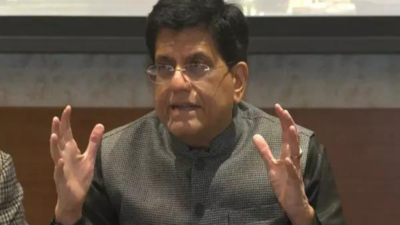
Global challenges a wake-up call for India Inc: Piyush Goyal


Global challenges a wake-up call for India Inc: Piyush Goyal

NEW DELHI: Commerce and industry minister Piyush Goyal on Tuesday said the ongoing global challenges should act as a “wake-up call” for Indian industry to become self-efficient and productive, make better use of free trade agreements, and reduce dependence on imports to strengthen the economy.Amid trying times, India has an opportunity to outshine others, he said at the CII annual meeting.In line with Prime Minister Narendra Modi’s call, Goyal called for faster adoption of electric vehicles to cut the oil bill, while asserting that PM has not asked for a reduction in business travel but had focused on leisure. “Please go to the world for business, spend money to get more money, get more forex into the country, get export orders, lead delegations to the world. You have to achieve the $2 trillion exports target.”Urging businesses to move from “assembled in India” to “designed, engineered and manufactured in India”, Goyal said the goal is to move up the value chain by focusing on quality. He further said the Indian industry must learn to support one another, similar to the way businesses operate in Japan and South Korea. “Focus on supporting each other, make sure that your businesses are resilient to supply shocks, that you are not overtly dependent on any one or two geographies in your business.”


Honduras mayor arrested for masterminding environmentalist’s killing | Crime News

0
Honduras mayor arrested for masterminding environmentalist’s killing | Crime News


Adan Funez was one of three men arrested this week over alleged involvement in the shooting of activist Juan Lopez.

Honduran authorities have arrested three people, including a powerful politician, accused of plotting the 2024 assassination of an environmental leader, an incident that became a symbol of government corruption.

Adan Funez, former mayor of the city of Tocoa, was captured at his home on Tuesday on suspicion of masterminding the killing of Juan Lopez, following years of accusations by religious and environmental leaders.

Recommended Stories

list of 3 itemsend of list

Lopez was an anticorruption crusader who led a community effort against an iron oxide mining project in Colon, a rural region of northwestern Honduras, which activists said endangered the area’s dense jungles and crystalline waters, including protected reserve areas.

Lopez was one of the fiercest critics of Funez, a local mayor at the time, a supporter of the mine and a close ally of Honduras’s former president, Xiomara Castro, whose term ended this year.

In September 2024, Lopez called on Funez to step down because of a corruption scandal.

Days later, the environmental and human rights defender was shot six times in the chest and once in the head by a masked gunman, fuelling demands for justice from Pope Francis, the United Nations and the then-administration of United States President Joe Biden.

Accusations also emerged against Funez, a power-broker in the region’s decades-long bloody agrarian conflict. The death brought back stark memories of the global outcry over the 2016 murder of Honduran environmentalist Berta Caceres.

Funez’s arrest on Tuesday comes more than a year after Lopez’s assassination.

The former mayor was detained along with two others, businessman Hector Eduardo Méndez and Juan Angel Ramos Gallegos, whom prosecutors accused of criminal association to the detriment of fundamental rights.

“These three individuals are believed to be the intellectual authors of the environmentalist Juan Lopez’s death,” the Public Prosecutor’s Office spokesperson, Yuri Mora, told The Associated Press news agency.

The detentions come after a handful of other arrests months earlier, but Funez was long pinpointed by local environmental and religious leaders as the man who spearheaded the assassination. The trial of the three men is set to begin next June.

Protecting the environment is a high-risk profession in Honduras. People like Lopez often act as unwanted eyes and ears in resource-rich areas of Latin America, the most deadly region in the world for environmentalists, according to nongovernmental organisation Global Witness.

Global Witness documented 117 killings of environmental and land defenders in Latin America in 2024 alone, amounting to 82 percent of the global total.

In Lopez’s city of Tocoa, environmental defenders fighting the mining project have been targeted for years. Eight activists were imprisoned for more than two years in what lawyers said was retaliation for their work.

Dalila Santiago, a close friend and leader in Lopez’s movement, said that, after rampant impunity in Honduras, Funez’s detention on Tuesday came as a shock.

She added that Honduran authorities must continue to go after others responsible and business leaders behind the mining project.

“We’ve been calling for justice for so long,” Santiago said. “And we need the masterminds behind this to be caught and punished.”