Sunday, September 27, 2026
Home Blog Page 375

Stock market today (May 12, 2026): Which are top 10 gainers and losers on NSE & BSE? Check list

0
Stock market today (May 12, 2026): Which are top 10 gainers and losers on NSE & BSE? Check list


Stock market today (May 12, 2026): Which are top 10 gainers and losers on NSE & BSE? Check list

Indian equity benchmark indices extended losses for the fourth straight session on Tuesday, with the Sensex and Nifty plunging nearly 2 per cent amid rising crude oil prices, continued foreign fund outflows and growing uncertainty over the escalating West Asia conflict.The BSE Sensex tumbled 1,456.04 points, or 1.92 per cent, to close at 74,559.24, while the NSE Nifty declined 436.30 points, or 1.83 per cent, to settle at 23,379.55. In the past four trading sessions, the Sensex has shed over 3,399 points and the Nifty has dropped nearly 951 points.Investor sentiment remained fragile as Brent crude prices climbed above USD 107 per barrel and the rupee weakened 35 paise to hit a record low of 95.63 against the US dollar.Market participants also remained wary of sustained foreign institutional investor (FII) selling. FIIs offloaded equities worth Rs 8,437.56 crore on Monday, according to exchange data.The selloff was broad-based, with IT, realty and consumer durable stocks witnessing sharp declines. Tech Mahindra, HCL Tech, Tata Consultancy Services and Adani Ports were among the biggest laggards on the Sensex, while State Bank of India emerged as the lone gainer.

Nifty50 top gainers

  • ONGC: Rs 294.20 (+4.70 per cent)
  • Hindalco: Rs 1,042.50 (+1.86 per cent)
  • SBI: Rs 976.10 (+0.26 per cent)
  • Bharti Airtel: Rs 1,762.80 (+0.17 per cent)

Sensex top gainers

There was only one gainer on Sensex index for Tuesday. It was State Bank of India (SBIN) that closed at Rs 974.70, marking a change of 0.12 per cent.

Nifty50 top losers

These were top10 losers on the NSE Nifty50 index

  • Adani Ports: Rs 1,691.00 (-4.32 per cent)
  • Shriram Finance: Rs 933.90 (-4.31 per cent)
  • Tech Mahindra: Rs 1,396.00 (-4.21 per cent)
  • HCLTech: Rs 1,147.00 (-4.01 per cent)
  • Jio Financial: Rs 230.75 (-3.99 per cent)
  • Adani Enterprises: Rs 2,401.10 (-3.96 per cent)
  • TCS: Rs 2,303.50 (-3.74 per cent)
  • Titan: Rs 4,058.40 (-3.50 per cent)
  • Wipro: Rs 190.30 (-3.24 per cent)
  • Trent: Rs 4,048.50 (-3.17 per cent)

Sensex top losers

These were top10 losers on the BSE Sensex index

  • Tech Mahindra: Rs 1,392.35 (-4.44 per cent)
  • Adani Ports: Rs 1,689.00 (-4.39 per cent)
  • HCLTech: Rs 1,145.80 (-4.11 per cent)
  • TCS: Rs 2,300.65 (-3.84 per cent)
  • Titan: Rs 4,054.05 (-3.60 per cent)
  • BEL: Rs 416.60 (-3.51 per cent)
  • Bajaj Finance: Rs 904.00 (-3.43 per cent)
  • Infosys: Rs 1,140.45 (-3.09 per cent)
  • Trent: Rs 4,051.95 (-3.08 per cent)
  • Bajaj Finserv: Rs 1,744.80 (-3.02 per cent)


EU needs to delay social media access for children – von der Leyen

0
EU needs to delay social media access for children – von der Leyen


She told an EU summit that an expert panel was due to come up with steps on how to protect minors online by July.


India’s retail inflation jumps to over one-year high at 3.48 per cent in April

0
India’s retail inflation jumps to over one-year high at 3.48 per cent in April


India’s retail inflation jumps to over one-year high at 3.48 per cent in April

India’s retail inflation rose to a more than one-year high of 3.48 per cent in April from 3.40 per cent in March, driven mainly by higher food prices, according to data released by ministry of statistics & programme implementation on Monday. Food inflation, measured by the Consumer Food Price Index (CFPI), also accelerated to 4.20 per cent in April from 3.87 per cent last month, indicating broader price pressures across household essentials. Meanwhile, inflation in rural areas stood at 3.74 per cent, higher than the 3.16 per cent recorded in urban India.Among key items, silver jewellery recorded the sharpest inflation at 144.34 per cent in April, though slightly lower than 148.42 per cent in March. Gold, diamond and platinum jewellery inflation also remained elevated at 40.72 per cent. Among key food items, tomato prices surged 35.28 per cent year-on-year in April, while potato and onion prices remained in deflation at minus 23.69 per cent and minus 17.67 per cent, respectively. The personal care and miscellaneous goods category recorded the sharpest inflation at 17.66 per cent, while transport inflation remained largely flat at minus 0.01 per cent. India’s retail inflation has now risen for the second consecutive month, inching closer to the Reserve Bank of India’s 4 per cent medium-term target. The RBI last month projected CPI inflation for 2026-27 at 4.6 per cent and warned that elevated global energy prices due to the Middle East conflict, along with possible El Niño conditions affecting the monsoon, could pose upside risks to inflation.


Tamil Nadu Politics: Puratchi Thalaivar, Amma, Thalapathi: Why Tamil Nadu doesn’t just vote for leaders, it lives (and dies) for them. india news

0
Tamil Nadu Politics: Puratchi Thalaivar, Amma, Thalapathi: Why Tamil Nadu doesn’t just vote for leaders, it lives (and dies) for them. india news


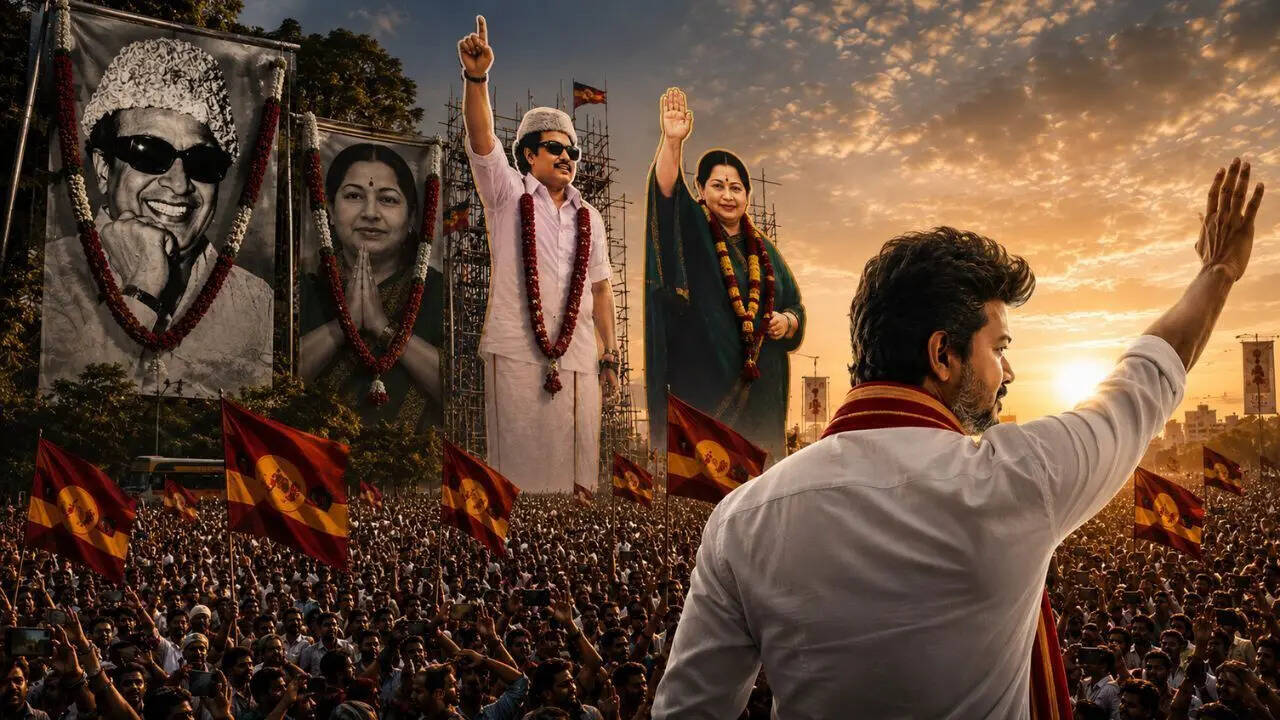
AI-generated image (for representative purposes only)

What kind of politics compels people to die for their leaders?In Tamil NaduThat is not rhetorical.It has happened again and again – in moments of sadness, in moments of defeat, and, as seen last week VictoryFrantic talks of government formation, even in anticipation of power.But this is not a new story. Tamil Nadu has seen this before.It is December 1987, and Tamil Nadu is in mourning.The streets are filled with mourners. Men cry openly outside party offices. Some supporters drink poison. Others set themselves on fire. The grief throughout the state turned deadly when the news spread that MG Ramachandran had died.He was the founder of the All India Anna Dravida Munnetra Kazhagam (AIADMK), a veteran of Tamil cinema and the first actor-Chief Minister of the state. But to millions he was much greater than any position he held. He was ‘Puraichi Thalaivar’, the revolutionary leader, the man who came out of the silver screen into their lives as a protector, provider and hero.

MGR at a public rally in Tamil Nadu

MGR ruled Tamil Nadu for more than a decade and won three consecutive terms before dying in office. His death does not mark the end of just one chief minister. For many, it felt like the loss of someone much closer to them – a parent, almost family.This would not be the last time Tamil Nadu would see sorrow turn into tragedy.This pattern returned again and again, each time reminding the state that its politics was never merely electoral.In 2001, when J Jayalalithaa had to step down after being convicted on corruption charges, her supporters took their own lives. In 2014, when he was once again sent to jail, the state witnessed another wave of mourning – suicide, self-immolation and heart attack due to shock.After her death in 2016, the AIADMK claimed that at least 470 supporters died mourning the death of the woman they affectionately called ‘Amma’.Then came Vijay.In September 2025, lakhs of people gathered in Karur to catch a glimpse of Tamil cinema’s current superstar as he moved closer to political power. People stood for hours in the hot sun, waiting for the man whom many already saw as their next savior. By the time the meeting ended, 41 people were dead.For a state that has long blurred the line between screen idol and political messiah, Vijay’s rise was no exception. It was the latest chapter in a familiar script.

After the stampede in Karur (Credits: PTI)

Voting for the Dalit class?

Tamil Nadu’s voting behavior often reflects a distinct political logic where identities are acknowledged but not always put forward politically. While there is deep social stratification in the state, with Scheduled Castes making up about 20% of the population and broader SC/ST/OBC groups more than 75%, electoral appeal often shifts away from narrow caste or religious integration towards figures who offer more universal identities of suffering and upliftment. Religious demography further underlines this complexity, with Hindus at 87.58%, Muslims at 5.86% and Christians at 6.12%, yet electoral mobilization rarely tracks these categories clearly. Instead, political legitimacy is often constructed through stories of deprivation, conflict, and moral security, allowing leaders to cross identity boundaries without abandoning them entirely. This is where the ‘underdog’ or ‘rescuer from within’ template becomes politically powerful. leaders like mg Ramachandran And Karunanidhi Gave an example of this change. His political identity was built less on elite authority and more on autobiographical suffering, poverty, hunger and the hardships of life, which he clearly translated into policy imagination. In fact, MGR’s His Cabinet’s first question about “who experienced childhood poverty” was not merely symbolic, it reinforced a governing ethos rooted in empathy as experience. Welfare schemes for school children and marginalized communities further institutionalized this ethos, while handing over administrative control to trusted officials allowed emotional leadership to co-exist with technocratic governance. In this framework, people like Vijay, who are socially identified with the Vellalar Christian community but from politically elite backgrounds, can be read as inheritors of a long pattern where leaders do not reject identity but rather strategically dilute it into a broader language of shared deprivation and moral universalism.

How did cinema become political training in Tamil Nadu?

In Tamil Nadu, the transition from cinema to politics is no exception to this pattern; It is integral to how the system evolved. Its foundation was laid when CN Annadurai and M Karunanidhi turned theater and screenwriting into political tools. Karunanidhi’s long career, from screenwriter to five-time chief minister, set an example that narrative skills could be translated into political authority.

But MG Ramachandran transformed that relationship into a mass political structure. Already a major film star, MGR took his on-screen persona of philanthropic patron straight into electoral politics, founding the AIADMK and becoming Chief Minister in 1977. His image as a “man of the people” made the boundary between character and leader increasingly irrelevant to large sections of the electorate.That model was consolidated and intensified by J Jayalalitha. After a successful film career, she entered politics under the mentorship of MGR and later created her political identity as “Amma”, establishing personal symbolism and authority in welfare delivery. MGR and Jayalalitha together transformed the actor-led leadership from a temporary political experiment into a sustainable governing structure.

Fan clubs got organized

Over time, this pattern ceased to be about individual figures and became a repeatable political template. Tamil Nadu politics began to regard cinematic visibility as pre-political legitimacy. The actor was not just a candidate, he was already a public figure with emotional reach to a large audience.This was strengthened by the Dravidian political tradition itself, which had long used cinema as a communication medium. As academic studies of Tamil cinema show, the boundary between cinema and politics in the state has become structurally blurred, with film serving as a vehicle for entertainment as well as ideological messages.Within this ecosystem, fan cultures played an important role. Fan clubs of stars like MGR and later Rajinikanth functioned as organized social networks, often involved in welfare activities and local mobilization. These structures later became informal political infrastructure, capable of becoming active during elections.The durability of this model is demonstrated by how often it reappears across generations. After MGR and Jayalalitha, subsequent leaders have attempted to retrace this path with varying success, including the anticipation surrounding Vijayakanth and, more recently, Rajinikanth, whose political entry was widely expected but ultimately did not happen.Yet the underlying structure remained intact: Tamil Nadu continues to create a political environment where cinematic identity is assumed as credibility, and where mass recognition often precedes organizational politics.

Vijay’s pre-election rally

‘Mother, Thalapathi‘: When leaders get titles from fans

In Tamil Nadu politics, leaders are rarely treated as distant functionaries. They are included in the vocabulary of the family itself. Titles like ‘Thalaivar’ and ‘Amma’ are not stylistic choices – they are political gestures that replace institutional distance with emotional closeness. Once this shift occurs, the relationship between leader and follower ceases to be transactional and becomes personal.This form of attachment already existed with social media and continues to this day. Long before digital fans, Tamil cinema had already created a system of parasocial bonding where audiences formed one-sided emotional relationships with stars who appeared repeatedly on screen as protectors, providers, and moral anchors. In a state where cinema is deeply embedded in everyday life – from street posters to festival soundtracks – these screen identities easily spill over into political perception.The Dravidian political tradition enhanced this structure. Welfare politics reinforced the idea that the leader is not just a decision maker but a direct source of material dignity. For large sections of the electorate, access to rice, subsidies, housing or public services is symbolically linked to the personal commitment of the leader. Over time, political support became tied not only to ideology, but also to the feeling of being seen and provided for.

Jayalalithaa’s last journey (Credits: ANI)

Within this framework, personalities like MG Ramachandran and J Jayalalitha were transformed into emotional institutions. MGR’s on-screen image as a benevolent savior and Jayalalitha’s carefully constructed persona as “Amma” made political loyalty closer to familial dependence than civic preference.The same emotional architecture is visible in Vijay’s rise. Vijay, known as “Thalapathy” to his fan base, entered politics with an already established emotional economy built over decades of cinema. His films repeatedly position him as protector, arbiter, and moral force – roles that do not end when he exits the theater, in a context where screen identities constantly circulate in public life.What arises from this is not mere popularity, but an emotional contract. Advocates do not simply evaluate performance or policy; They invest identity, dignity and aspiration in a person who symbolically houses their social presence. In such a system, political loyalty is less about persuasion in the traditional sense and more about belonging – to a leader who is experienced not as a representative, but as an extension of oneself.

Why Vijay’s victory was not a surprise but a continuation of this culture

TVK chief Vijay won 110 seats and became the largest party in the Tamil Nadu elections. However, no exit poll had predicted a sweep of this level. But it was inevitable.In this historical context, the emergence of Vijay and his party TVK fits into, rather than breaks, a long-established pattern. His transformation reflected the same structural conditions that had shaped earlier actor-politicians: pre-existing fan bases, emotional identification with screen roles, and a political culture that already recognized cinematic popularity as a form of legitimacy.What has changed is the scale and urgency. By the time Vijay formally entered politics in mid-2020, Tamil Nadu had half a century of precedent for converting cinematic stardom into electoral mobilization. Their entry does not signal the invention of a new model, but rather a continuation of the old model, adapted to a new media environment and a larger, more organized fan ecosystem.


Will Messi play? Argentina answer fan queries in 55-man World Cup squad | World Cup 2026 News

0
Will Messi play? Argentina answer fan queries in 55-man World Cup squad | World Cup 2026 News


Argentina captain is named in preliminary squad for the FIFA World Cup 2026 but has not confirmed his participation.

Lionel Messi’s participation in the FIFA World Cup has been the subject of fan queries for the past few months, but his inclusion in Argentina’s preliminary squad for the tournament may have put those concerns to rest.

The global football superstar was among the 55 players named by Lionel Scaloni in his initial World Cup roster on Monday, but the 38-year-old has yet to fully confirm his availability as Argentina look to defend their title.

Messi was among the 16 forwards listed by the Argentinian head coach, who also named Gianluca Prestianni despite a six-match ban imposed on the player that could see him miss his team’s first two group games.

The Inter Miami and Argentina captain has repeatedly hinted that his time on the global stage may be coming to an end.

“I’m conscious that I’m playing my final matches, and I’m enjoying them to the maximum,” Messi said after an Inter Miami game in June. “I’m sure that you’re watching my final moments in football’s elite.”

However, he has neither committed nor cut ties with La Albiceleste in the run-up to the monthlong tournament, which begins on June 11.

Messi was part of the squad as Argentina began the qualification process for the World Cup 2026, but injuries kept the football great out of action in their last few matches.

It prompted Scaloni to say there was “plenty of time” to make a call on Messi’s future in international football, but the World Cup-winning coach may have confirmed his and the player’s decision with his squad announcement.

Messi’s teammates have been very clear about their wishes.

“With Messi, we might have scored two or three more goals,” Julian Alvarez said after Argentina’s 4-1 win over Brazil in the South American qualifiers last year.

Rodrigo de Paul echoed Messi’s fans in Argentina and around the world when he said: “The best of our teams is always when the number 10 is playing because he is the greatest of all time.”

Messi scored seven goals for Argentina as they lifted the World Cup trophy for the first time in 36 years at the Qatar 2022 tournament.

The captain scored his team’s first goal in regulation time in the final against France as well as their first penalty after the game ended in a 3-3 draw after extra time.

Meanwhile, 20-year-old Prestianni is set to miss at least two of Argentina’s World Cup fixtures as he serves a six-match ban for using homophobic slurs during a UEFA Champions League game in February. ‌‌

Playing for Benfica of Portugal, Prestianni was accused of hurling verbal insults towards Real Madrid’s Vinicius Jr. He denied using abusive language and said on social media that he was “misunderstood”.

The original penalty was handed out by UEFA, Europe’s football governing body, before FIFA extended the punishment to all worldwide sanctioned matches.

Prestianni made his debut for Argentina’s national team in November and has been part of their squad in recent months.

The World Cup – cohosted by Canada, Mexico and the United States – will conclude on July 19.

Argentina open their title defence against Algeria on June 16 in Kansas City, Missouri, before facing Austria on June 22 in Dallas, Texas, and Jordan at the same venue on June 27.

Can you identify all 48 teams participating in the FIFA World Cup 2026? Take our quiz here.

INTERACTIVE - World Cup Winners History-1777297914
[Al Jazeera]


69 days of crude, 45 days of LPG stock: Petroleum minister Hardeep Puri assures ‘no supply issue’ amid West Asia crisis

0
69 days of crude, 45 days of LPG stock: Petroleum minister Hardeep Puri assures ‘no supply issue’ amid West Asia crisis


69 days of crude, 45 days of LPG stock: Petroleum minister Hardeep Puri assures ‘no supply issue’ amid West Asia crisis

Union petroleum and natural gas minister Hardeep Singh Puri on Tuesday soothed concerns over energy supplies across the country, saying that fuel and cooking gas supplies remain stable. Addressing the CII Annual Business Summit, Puri said that the country currently holds crude oil and LNG reserves sufficient for 69 days, while LPG stocks can last 45 days, dismissing concerns over any immediate supply disruption.“There is no supply issue, have 69 days of crude oil, LNG stock and 45 days of LPG stock,” he said.To further secure cooking gas availability, the government has sharply ramped up LPG production, raising daily output from 35,000-36,000 tonnes to 54,000 tonnes in response to the geopolitical tensions in the Middle East.“LPG production has been ramped up from 35,000-36,000 tonnes/day to 54,000 tonnes amid West Asia conflict,” minister Puri said.He further added that the government had managed with the crisis responsibly so far and ensured uninterrupted availability across the country.“We managed the crisis with responsibility; there have been no dryouts anywhere,” he said.Puri also reiterated Prime Minister Narendra Modi’s recent call for austerity to the broader economic pressures created by the conflict, saying it should prompt citizens and policymakers alike to consider ways to reduce the financial burden.“PM Narendra Modi’s austerity appeal is a wake up call to start thinking of measures to lessen fiscal strain from West Asia conflict,” he said.Earlier on Sunday, PM Modi had outlined several steps aimed at conserving foreign exchange and reducing economic strain, including cutting petrol and diesel use, opting for metro travel in cities, carpooling, increasing the use of electric vehicles, shifting parcel transport to railways, and working from home where possible.He also urged people to delay gold purchases and foreign travel for a year as part of wider efforts to protect the economy during the Middle East crisis.


US in closely guarded talks to open new bases in Greenland

0
US in closely guarded talks to open new bases in Greenland


It is seeking to open three bases in the south of the Arctic territory, according to multiple officials familiar with the talks.


From buying less gold to cashing in old reserves: How bullion industry plans to cut India’s import bill

0
From buying less gold to cashing in old reserves: How bullion industry plans to cut India’s import bill


From buying less gold to cashing in old reserves: How bullion industry plans to cut India’s import bill

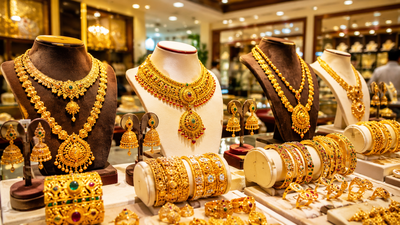
As rupee continues to breach multiple record lows, pressure on India’s balance of payments is growing. To protect foreign exchange reserves and help stabilise trade balance, Prime Minister Narendra Modi has urged people to cut down on gold purchases.But if not buying new gold, could household gold be turned into working capital instead?PM Modi’s call has brought fresh attention to an old issue, with major bullion and jewellery bodies once again suggesting steps to the government and the Reserve Bank of India (RBI) to reduce gold imports, use more household gold, and better manage how imported gold is used.Their proposals include limiting imported gold mainly for jewellery exports, bringing jewellers into gold monetisation schemes, making gold metal loans (GML) work more like bank cash credit, and reducing tax on interest earned from gold deposits, ET reported.Meanwhile, India’s gold imports jumped 24% to a record $71.9 billion in 2025-26, with more than 721 tonnes imported during the financial year.What are the proposals:Under the system proposed by the Precious Metals Refineries Forum (PMRF), imported gold would be channelled as one-year gold metal loans (GML) for jewellery exporters, while gold collected from household deposits, once refined locally, would be used to meet domestic demand through jewellers and retailers.The model suggests that depositors could earn 2-2.5%, with GML interest rates set at around 3-4%.Industry players cited by ET have pointed out that some tax changes will be needed to make this work, especially when physical gold is converted into electronic gold receipts (EGR).“The 3% notional loss of GST amount on conversion puts off customers. The government can always recover the tax when EGR is converted back into physical gold for selling. Concessions on capital gains when deposit is encashed on maturity along with income tax relief on accrued interest could be considered,” James Jose, president of PMRF told the financial daily.Why past gold schemes failed Many in the industry believe earlier gold monetisation schemes did not succeed because jewellers were not properly included and because gold deposits and loans did not work together like a banking system. Without that, institutions accepting gold deposits face major risks from price swings and currency changes.This is why trade bodies are calling for a more complete system with bank support, secure vaults in multiple locations, renewable GMLs like working capital, and proper collateral safeguards.Indian households are estimated to hold over 30,000 tonnes of gold, but despite repeated discussions during times of trade deficit and capital outflows, there is still no strong institutional system to bring this gold into the formal economy.Commenting on why earlier schemes did not work, Rajesh Rokde, chairman of All India Gem and Jewellery Domestic Council (GJC) said, “I feel the schemes did not take off because jewellers were not part of them. About 10-20% of the gold with families would be in bullion form. Most don’t sell, expecting prices to rise. If some gold can be tapped, if necessary purified and converted into digital gold in a system where jewellers are involved, imports would dip significantly,” According to one representation, collection and purity testing centres (Cptcs) and related agencies have said that collected gold can be processed within 48 hours before being moved by logistics firms to secure bank-approved vaults.Sources said members of the Indian Bullion and Jewellers Association (IBJA) held discussions with central bank officials last week on exports and monetisation, though the IBJA spokesman declined to share details.


BJP’s man in Northeast: How 2026 Assam win established ‘outsider’ Himanta as party’s next-gen leader | India News

0
BJP’s man in Northeast: How 2026 Assam win established ‘outsider’ Himanta as party’s next-gen leader | India News


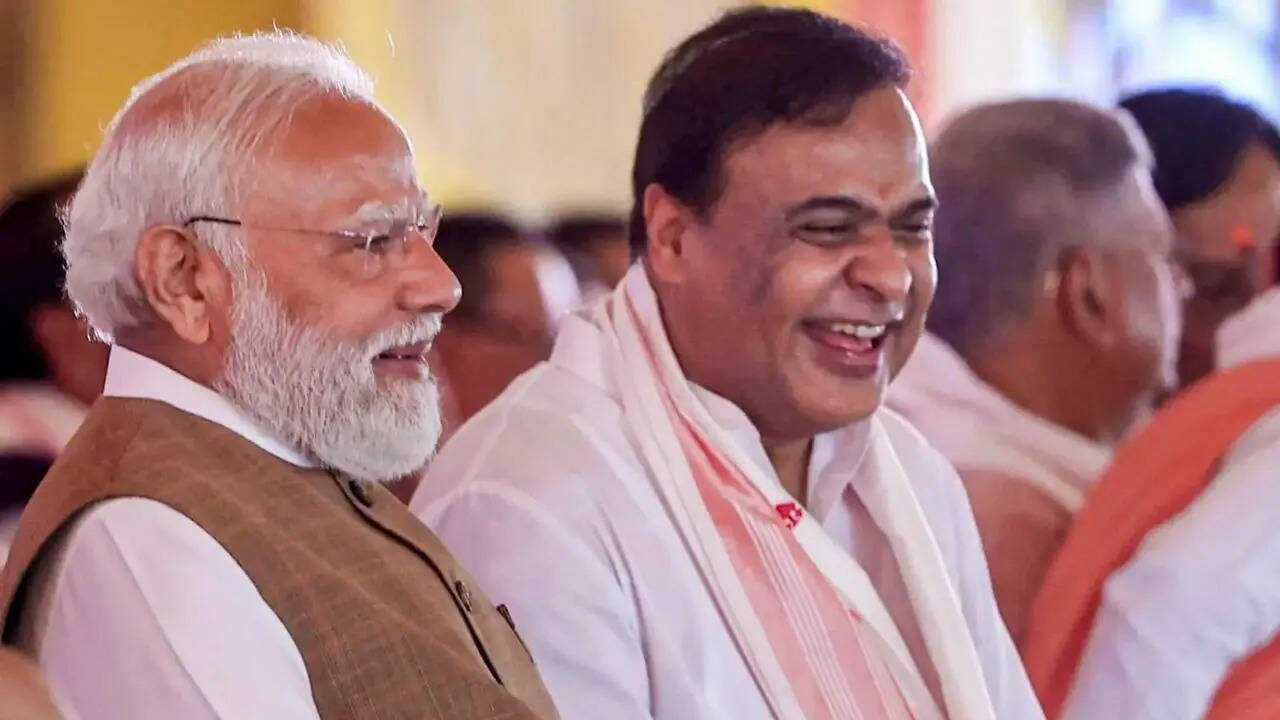
Prime Minister Narendra Modi with newly-elected Assam Chief Minister Himanta Biswa Sarma during the swearing-in ceremony at Veterinary College ground in Khanapara, in Guwahati on Tuesday.

Like Odysseus emerging from years of conflict and uncertainty to reclaim his place in Ithaca, Assam chief minister Himanta Biswa Sarma’s decade-long journey in the BJP reflects his transition from an “outsider” in the Sangh-dominated party to one of its most trusted troubleshooters in a region where the BJP was once little more than a political footnote.Taking oath for a second time as Assam chief minister on Monday after delivering an overwhelming mandate to the BJP-led NDA, Himanta Biswa Sarma’s leadership arc within the party has been almost inversely proportional to the Congress’s precipitous decline in Assam and, by and large, the entire Northeast.

Deeper shade of saffron

Himanta’s firm hold over the Assam BJP stemmed largely from his ability to meet the high command’s expectations on electoral expansion, organisational control and, most importantly, negotiating peace accords in regions that had long remained politically volatile.After winning the BJP a brute majority in the 2026 Assam assembly polls, the question now is whether Himanta Biswa Sarma stands at par with chief ministers like Yogi Adityanath and Devendra Fadnavis, who are widely regarded as disciplined Sangh loyalists and potential next generation leaders of the BJP in the post Modi-Shah era.In a party shaped by the RSS ecosystem and its unwritten tests of “ideological purity”, Sarma remains something of an aberration, with no saffron lineage from his youth, no years as a pracharak and not even a dramatic ideological transformation story. He joined the BJP on August 23, 2015, after spending 14 years in the Congress mastering the power politics of Guwahati and Delhi.The big transitionSarma’s political career began far removed from the saffron fold as he joined the Congress in the 1990s and won the Jalukbari seat in Guwahati in 2001, marking the beginning of an electoral streak that saw him secure five consecutive victories from the constituency, four on a Congress ticket and one with the BJP. By 2006, he had emerged as one of chief minister Tarun Gogoi’s most trusted lieutenants, playing a central role in managing the Congress’s assembly campaigns in both 2006 and 2011.The 2011 election, in particular, cemented Sarma’s reputation as a formidable political strategist after the Congress secured an unprecedented 78 seats in the 126-member assam assembly, the party’s best-ever performance in the state. During his 12 years in the Gogoi cabinet, Sarma handled several key portfolios, including Finance, Health, Education, Agriculture and Planning.However, Sarma’s rise ultimately collided with a dilemma that has long shaped the Congress party’s internal power structure, balancing the interests of entrenched political legacies against the ambitions of influential outsiders. In a succession battle with the Gogoi family, Sarma was sidelined when Gaurav Gogoi was projected as the future face of Assam Congress leadership instead of him.

BJP leader Himanta Biswa Sarma takes oath as the Chief Minister of Assam for the second consecutive term during the swearing-in ceremony at Veterinary College ground in Khanapara, in Guwahati on Tuesday. (ANI)

When a section of Congress legislators from Assam began backing Sarma as a potential successor to Tarun Gogoi in 2014, the then chief minister instead projected his son, Gaurav Gogoi, as a prominent face of the party’s next generation. The development widened the rift between Sarma and the Congress leadership, despite his central role in managing the party’s electoral machinery in Assam.The tensions deepened amid reports that Rahul Gandhi declined to meet a group of dissatisfied Assam Congress leaders who had travelled to Delhi seeking an audience with the party high command. The episode came to symbolise, for many within the state unit, the growing disconnect between the Congress leadership and its regional power centres.Sarma resigned from all Congress positions on July 21, 2014, and stepped down from the Assam Assembly on September 15, 2015, formally ending his 14-year association with the party. When news of his move to the BJP emerged on August 23, 2015, Tarun Gogoi called the switch, “good riddance,” and Himanta a “trouble monger”.

Congress vs BJP in Assam

Less than a year later, the BJP registered a historic victory in Assam in the 2016 assembly elections, with “trouble monger” Sarma playing a pivotal role in the party’s expansion across the Northeast.Mission NortheastWhen Himanta joined the BJP, Amit Shah, then the BJP’s national president, entrusted him with responsibility to “draw the blueprint for ousting Congress” in 2016. At the time, BJP’s political footprint in the Northeast was negligible with eight Lok Sabha seats uncovered, zero chief ministers, minimal organisational presence. However, Sarma transformed an impossible assignment into inevitability.First, Himanta played a central role in stitching together the National Democratic Alliance (NDA) coalition for the 2016 Assam assembly elections because of which the Bharatiya Janata Party (BJP) won 60 seats, while its allies, the Asom Gana Parishad (AGP) and the Bodoland People’s Front (BPF), secured 14 and 13 seats respectively, giving the alliance a commanding 87 seats in the 126-member Assembly.

How regions in Assam voted

The coalition arithmetic succeeded largely because of Sarma’s political networks and familiarity with the region’s fragmented power structure. He had longstanding ties with leaders of the Bodoland People’s Front, understood the electoral dynamics of the Asom Gana Parishad from years of political competition, and possessed a far deeper grasp of the Northeast’s political terrain than most BJP strategists operating from Delhi.On May 24, 2016, BJP formed its first-ever government in Northeast India with Sarbananda Sonowal as chief minister and Sarma was sworn in as cabinet minister with four crucial portfolios of finance, health, education, and public works.That same day, the North East Democratic Alliance (NEDA) was created, with Sarma appointed as its convenor. This was not ceremonial as the NEDA meant all seven Northeast states would coordinate their alliances through Himanta’s office, making him the BJP’s single-point coordinator for the entire region.12 elections, one architectSarma’s strategic intervention transformed BJP’s Northeast presence across multiple states and elections:

  • Assam 2016: BJP won 60 of 126 seats with a 29.5% vote share, forming its first government in Assam. Along with allies Asom Gana Parishad (AGP) and Bodoland People’s Front (BPF), the NDA secured 87 seats, marking the party’s breakthrough in the Northeast.
  • Assam 2021: BJP retained 60 seats despite BPF shifting to the Congress alliance. With AGP winning nine seats and United People’s Party Liberal (UPPL) six, the NDA returned with 75 seats.
  • Assam 2026: BJP crossed the majority mark on its own for the first time, winning 82 seats as the NDA tally rose to 102, securing a third consecutive term.
  • Tripura 2018: BJP won 35 of 60 seats, ending the Left Front’s 25-year rule. Ally Indigenous People’s Front of Tripura (IPFT) added eight seats.
  • Tripura 2023: BJP retained power with 32 seats after replacing Chief Minister Biplab Kumar Deb with Manik Saha ahead of the polls to counter anti-incumbency.
  • Nagaland 2018 & 2023: Sarma played a key role in sustaining the BJP’s alliance with Neiphiu Rio-led Nationalist Democratic Progressive Party (NDPP), ensuring coalition stability.
  • Meghalaya 2018 & 2023: Despite limited BJP numbers, Sarma remained central to post-poll negotiations, helping the party stay relevant in coalition politics.
  • Arunachal Pradesh 2016: BJP became the dominant force after Pema Khandu and several MLAs shifted from the People’s Party of Arunachal (PPA), giving the party a majority.
  • Manipur 2017 & 2022: BJP stitched together a coalition after a hung verdict in 2017 and returned with a stronger mandate in 2022.

The unparallel ascent Unlike many leaders who rose through the Sangh ecosystem, Sarma entered the party without years of RSS grooming or a long stint in the cadre hierarchy. A Guwahati-born Brahmin who trained in medicine before entering politics, his ascent within the BJP has been driven less by ideological pedigree and more by political utility.Over the past decade, the BJP transformed the Northeast from a region once dominated by the Congress into one where the party now leads governments in Assam, Tripura, Arunachal Pradesh and Manipur, while the National Democratic Alliance (NDA) remains part of ruling arrangements across all eight northeastern states.The 2026 Assam assembly election marked the high point of that expansion with BJP’s 82 seats in Assam. A new trifecta?The comparison between Himanta Biswa Sarma, Devendra Fadnavis and Yogi Adityanath highlights the different routes through which influential BJP leaders have emerged within the party’s power structure.

(From left) Uttar Pradesh CM Yogi Adityanath, Assam CM Himanta Biswa Sarma and Maharashtra CM Devendra Fadnavis.

Fadnavis rose through the Rashtriya Swayamsevak Sangh (RSS) and Akhil Bharatiya Vidyarthi Parishad (ABVP) ecosystem from a young age before becoming Maharashtra chief minister in 2014. Even after the BJP briefly lost power in 2019, he remained central to the party’s political strategy in the state, eventually returning to government and consolidating his position as one of the BJP’s most important leaders in western India.Yogi Adityanath followed a markedly different trajectory. Associated with the Akhil Bharatiya Vidyarthi Parishad (ABVP) in his youth before entering monastic life under the Gorakhnath Math, he built his political identity through a blend of religious influence and electoral consolidation in Uttar Pradesh. Since becoming chief minister in 2017, he has emerged as one of the BJP’s most prominent mass leaders, leading the party back to power in 2022 on the back of what supporters describe as the “Yogi model”, centred around a strong emphasis on law and order, administrative centralisation and welfare delivery.Sarma’s rise, however, has followed neither the organisational path of Fadnavis nor the ideological-religious route associated with Adityanath. Apart from overtly imbibing the BJP’s politics of Hindutva, what ultimately connects all three leaders is their ability to produce sustained electoral results in politically crucial states and Fadnavis stabilised the BJP’s position in Maharashtra, Adityanath consolidated the party’s dominance in Uttar Pradesh, while Sarma helped transform the Northeast from a historically Congress-dominated region into one where the BJP and the NDA now hold influence across all eight states.The troubleshooter tagWorking in coordination with the Amit Shah-led Union home ministry, Himanta Biswa Sarma emerged as one of the BJP’s principal political negotiators in the Northeast’s long-running insurgency landscape. During the BJP’s tenure in Assam, the Centre signed a series of major peace accords with armed and ethnic groups, including the 2020 Bodo Peace Accord with factions of the National Democratic Front of Bodoland (NDFB), the 2021 Karbi Anglong agreement with five insurgent organisations, the 2022 Adivasi peace pact, and the 2023 agreement with the pro-talks faction of ULFA.

Union home minister Amit Shah, Assam CM Sarbananda Sonowal and others after the signing of an accord between GOI, Assam Govt and Bodo representatives, in New Delhi. (2020)

The accords, which focused on disarmament, rehabilitation, economic packages and greater political representation, helped bring thousands of former militants into the mainstream. Alongside security operations and tighter border management, the agreements became central to the BJP’s broader political narrative that the Northeast was gradually shifting from decades of insurgency-driven instability towards infrastructure-led development and deeper integration with the national mainstream.With the National Democratic Alliance (NDA) securing 102 seats in the 126-member assembly, the mandate reinforced Sarma’s position within the BJP’s emerging regional power structure. Over the past decade, he has evolved from a state-level strategist into one of the party’s most influential political managers, with a role that now extends beyond Assam into the wider Northeast through coalition management and electoral coordination.

Strike rate in 2026 Assam polls

In many ways, Himanta Biswa Sarma’s rise reflects the BJP’s evolving internal power structure, where a leader once seen as a political outsider to the Sangh ecosystem now finds himself counted among the party’s emerging next-generation power centres, not through organisational lineage but through sustained electoral success and strategic expansion in one of India’s most politically complex regions.



Hyderabad horror: How a domestic help allegedly planned the murder of retired IPS officer’s wife. india news

0
Hyderabad horror: How a domestic help allegedly planned the murder of retired IPS officer’s wife. india news


Last updated:

Police say that the accused used technology to avoid detection. Soon after the murder, Nepali-origin Kalpana and her gang reportedly threw away their old mobile phones to prevent tracking.

According to reports, Kalpana, who is believed to be of Nepali origin, was working as a maid at the residence of the retired IPS officer for about eight months.

A murder in the high-security Jubilee Hills area of ​​Hyderabad has sparked widespread concern across the Telugu states. The police investigation into the murder of 62-year-old Tanuja, wife of 1986 batch IPS officer Vinay Ranjan Ray, who retired as Director General of Prisons in 2019, has revealed a targeted robbery network run by the family’s domestic help.

According to investigators, the main accused identified as Kalpana was not just an ordinary domestic help but was allegedly part of a well-planned robbery gang that had a history of targeting rich houses in several cities.

Domestic servant allegedly planned the robbery for months

According to reports, Kalpana, who is believed to be of Nepali origin, was working at the retired IPS officer’s residence for about eight months. During this period, he reportedly gained the trust of the family while secretly planning a major robbery.

Police suspect that she was in constant touch with a Pune-based associate named Suresh and allegedly received instructions from him on a regular basis. Investigators believe that the gang started actively planning the operation after Vinay Ranjan Ray moved to Bengaluru for work.

Soon after, three more gang members reportedly reached Hyderabad from Pune. Police say the group conducted surveillance around the house for about five days and carefully studied CCTV blind spots and possible escape routes before committing the crime.

according to a times of India In the report, Suresh said that CCTV footage captured three unidentified people entering the bungalow from the main gate at around 1 am. They came out of the gate between 2 am and 2.30 am. He further said that they were not wearing masks and two of them had iron rods and one had a bag.

Midnight murder and planned escape

According to the investigation, the gang allegedly murdered Tanuja late Thursday night before fleeing the house with gold jewellery, cash and other valuables.

Police say the accused adopted a carefully planned escape strategy to avoid immediate arrest. The suspects first traveled by auto-rickshaw to Nampally railway station and boarded the Telangana Express train.

The investigators initially suspected that the gang was heading towards Nagpur and they increased surveillance there. However, Kalpana reportedly changed course midway to avoid tracking and got down at Kazipet railway station. Police now suspect that the accused might have fled towards Mumbai or Delhi via bus route.

How fake identities helped gangs escape police

Investigators say the accused used technology cleverly to avoid detection. Soon after the murder, the gang reportedly discarded their old mobile phones and bought new mobile phones and SIM cards to prevent police tracking.

Police sources claim that Kalpana constantly changed routes and methods of communication to avoid entering the surveillance network. Authorities have currently detained his parents and brother-in-law in Pune for questioning.

Preliminary investigation reportedly indicates that Kalpana’s prior criminal background may be linked to similar robbery cases.

Multi-city crime network under investigation

Police believe that the gang may have carried out similar thefts in Bengaluru earlier also. Investigators suspect that the accused had used fake Aadhaar and voter ID cards to secure jobs as domestic servants before targeting homes for robbery.

Following the Hyderabad massacre, details of the accused have now been shared with police teams in Bengaluru, Mumbai and Pune as part of a wider investigation into the gang’s activities.

Police verification again in focus

This sensational case has once again raised concerns over police verification of domestic workers and support staff in high-profile residential areas.

Officials say the incident highlights how important background checks have become, especially in cities where many families hire workers through informal networks without proper identity verification.

Police have urged Hyderabad residents to thoroughly verify the background and identity documents of domestic workers before hiring them.

news India Hyderabad horror: How a domestic help allegedly planned the murder of retired IPS officer’s wife
Disclaimer: Comments represent the views of users, not of News18. Please keep discussions respectful and constructive. Abusive, defamatory, or illegal comments will be removed. News18 may disable any comments at its discretion. By posting you agree with us terms of use And Privacy Policy.

stay ahead, read fast

Scan the QR code to download the News18 app and enjoy a seamless news experience anytime, anywhere.