Sunday, September 27, 2026
Home Blog Page 374

Trump-Xi meeting: Could China, US form a ‘G2’? | International Trade News

0
Trump-Xi meeting: Could China, US form a ‘G2’? | International Trade News


US President Donald Trump is set to arrive in Beijing on Wednesday for a two-day summit with China’s President Xi Jinping, marking the two leaders’ first face-to-face talks six months after reaching a trade war truce.

The summit, which was delayed from March because of the US-Israeli war on Iran, comes as Trump needs a foreign policy win amid dissatisfaction at home over the latest Middle East quagmire.

Recommended Stories

list of 3 itemsend of list

US-China ties have also been strained by the war, which has damaged Beijing’s economy. Iran’s closure of the Strait of Hormuz and Washington’s competing blockade of Iranian ports have left Chinese ships stranded and severely affected China’s crude oil imports, half of which are shipped from the Middle East.

Trump is likely to renew calls for China to join an “international operation” to open the Strait of Hormuz, which Beijing has so far resisted. Xi is expected to look for gains on pressing issues, including trade, rare-earth minerals and a US recognition of China’s rights over self-ruling Taiwan.

As Trump threatens to quite NATO over the alliance’s refusal to back the US-Israeli war on Iran, further distancing the US from its traditional allies, the Trump-Xi summit has revitalised the idea of a Group of Two (G2) – an informal grouping in which the world’s two largest superpowers could steer the world’s collective future.

What is a Group of Two – or ‘G2’?

The concept of a “G2” between China and the US – similar to the Group of Seven (G7) or Group of 20 (G20) forums gathering the world’s leading industrialised economies – was originally proposed by prominent US economist C Fred Bergsten in 2005.

In its original definition, it advocated for a shared responsibility for the world’s two top economies to stabilise global markets and tackle issues of global concern, rather than suggesting a hegemony over others.

The concept gained traction during the administration of former US President Barack Obama, who established the Strategic and Economic Dialogue (S&ED) with Chinese President Hu Jintao in 2009 to seek “positive, cooperative, and comprehensive” US-China relations, according to a White House communique at the time.

The Obama team believed that strategic engagement with China would be necessary to solve global challenges, including climate change and the transition to clean energy.

How likely is a G2 between the US and China?

Over the years, the idea that the US and China could be responsible stewards for the collective good has been met with significant scepticism. The idea of a G2 now triggers fears of a departure from a multilateral system towards one in which two superpowers assert their interests over those of other nations.

Jing Gu, director of the Centre for Rising Powers and Global Development at the Institute of Development Studies (IDS) in the UK, said the meeting should not be seen as the beginning of a G2, but instead as “strategic reconnaissance”.

“Both sides are trying to read the other’s latest bottom line, clarify red lines and test how far pressure can go before stable tension turns into rupture,” Gu told Al Jazeera.

“The purpose is not necessarily to end the contest but to understand the terrain, manage the tempo and avoid fighting on unfavourable terms. In that sense, the visit is less about reconciliation than about preserving a controlled tension in which competition can continue without tipping into open collision.”

Negotiations on trade, technology, governance and security issues “all sit around this core question: how to keep competition intense but still bounded”, Gu added.

Steve Tsang, director of the SOAS China Institute in London, UK, said a trade deal of some sort is likely, “as both want to ensure the meeting [is] a success. But that’s not the same as working as G2, which is unlikely.”

“The basic tension is that Trump wants to reassert the US as the most powerful country, and Xi wants the same. They cannot both succeed, even if Xi only wants China to be recognised as pre-eminent rather than as the hegemon,” he added.

How friendly are the US and China right now?

When Trump and Xi met in South Korea on October 30 and agreed to roll back various trade restrictions after months of negotiations, both sides hailed the meeting as positive.

Trump went as far as giving it a “12-out-of-10” rating and touting it as a “G2” meeting, albeit it not resulting in a joint deal or statement that could suggest a formally united front. The characterisation, however, grabbed the headlines as it marked Trump’s recognition of China as a superpower Washington must contend with.

Following months of an escalating trade war, Xi also extended an olive branch to Trump when he opened the talks in Busan, describing China’s ambitions as “not incompatible with President Trump’s goal of ‘Making America Great Again’”.

As the meeting ended, the leaders shook hands and Xi said their countries should “be partners and friends”, hinting at a partnership reminiscent of the G2 concept. “China and the US can jointly shoulder our responsibility as major countries and work together to accomplish more great and concrete things for the good of our two countries and the whole world,” he said.

Below the veneer of cooperation, however, the underlying obstacle to a G2 is that “China is becoming more powerful relative to the US, fuelled in key respects by its rapid emergence as a global technology powerhouse,” John Minnich, a lecturer on US-China relations at the London School of Economics (LSE), told Al Jazeera.

While the two superpowers could maintain channels of communication on issues including artificial intelligence (AI) safety, Minnich said the US was unlikely “to quietly accept China as a true technological, economic and military peer”, making “significant cooperation difficult to sustain”.

Zhiqun Zhu, director of the China Institute at Bucknell University in the US, said Trump did a “remarkable job” in reversing the previous confrontational approach towards China.

“Yet, he is transactional and likes to make deals in the short term. He is not interested in institutionalising his moderate approach to China, which would help create long-term stability and could be a turning point for US-China relations,” Zhu told Al Jazeera.

China is also unlikely to be interested in forming a G2 with the US, Zhu said, “because China has always emphasised the authority of the United Nations and has become a defender of the UN-centred international regime in this turbulent world”.

China has established itself as a leading proponent of a multipolar world order, Zhu continued, advocating for global affairs to be handled by the international community, rather than a single superpower – or two.

How does the rest of the world view all this?

According to Gu, at IDS, the formation of a G2 would imply that the rest of the world would accept US–China co-management. “That is doubtful,” the analyst said. “Europe, India, Japan, Brazil, South Africa, the Middle East, ASEAN countries and many developing economies do not want global order to be negotiated over their heads.”

Tsang, at the SOAS China Institute, said that if a G2 were to materialise, “the world would be dominated by two self-centred powers only interested in themselves”, while global institutions like the World Trade Organization would be “even less relevant”.

The prospect of a G2 raises concerns for allies of the US, who fear that Washington and Beijing could cut them out of important decisions and make deals that work against their interests.

Europe is especially worried about a trade deal that cuts it out and accelerates its declining position of strength on the world stage. Transatlantic relations between the EU and the US have been marked by rising tensions on a flurry of issues, including NATO membership, Trump’s claims on Greenland and military assistance to Ukraine since Russia’s invasion in 2022.

EU leaders agreed in February on wide-ranging commitments to improve the bloc’s border-free internal market, in a bid to curb its dependency on the US for liquified natural gas (LNG) and on China for critical rare-earth minerals, on which China has a stranglehold and which are vital for the development of technology, defence and a plethora of manufactured goods.

French President Emmanuel Macron said at the time that EU leaders shared a sense of “urgency” on this matter due to the superpowers’ attitudes. “We have to accelerate. We are shaken by competition, sometimes by unfair competition and tariffs,” he said.

India, Brazil and other major emerging economies within the BRICS grouping of economies also view growing US-China relations as a challenge to their own global superpower aspirations. Recently, New Delhi and Brasilia have been deepening their strategic alliance, agreeing in February to double existing bilateral trade to $30bn by 2030, especially of critical minerals and rare-earth metals.

“Any deal involving Chinese investment in the US would direct scarce capital and technology from Global South countries, where Chinese firms have invested heavily in building out clean energy-related manufacturing capacity in recent years, toward the US,” Minnich, at LSE, said.

“US-China collusion could also be bad news for Europe, which is caught between and highly vulnerable to coercion from both powers.”

While many countries want a stable US-China relationship, ISD senior research fellow Gu said, Europe does not want to “become a rule-taker in a world where Washington and Beijing set the terms of trade, technology, climate finance, AI governance and industrial policy”.

“Europe’s anxiety is not only about rivalry; it is also about exclusion,” she said.

As for the Global South, “they do not want a world divided into spheres of influence or governed through a bilateral bargain”.

“They want options, finance, technology, markets and policy space,” Gu added. “They do not want to be reduced to terrain on which great powers compete.”

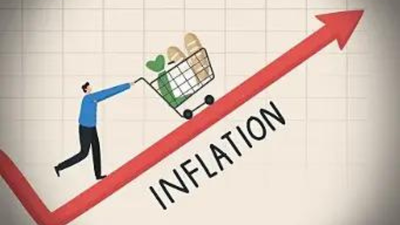
US consumer price inflation hits 3.8% in April, highest in nearly 3 years as Iran war fuels energy costs

0
US consumer price inflation hits 3.8% in April, highest in nearly 3 years as Iran war fuels energy costs


US consumer price inflation hits 3.8% in April, highest in nearly 3 years as Iran war fuels energy costs

US inflation rose in April to 3.8 per cent as surging fuel costs amid the ongoing Iran-US conflict drove up consumer prices, hitting a three-year high complicating the Federal Reserve’s path on interest rates.Data released by the Labor Department on Tuesday showed the Consumer Price Index (CPI) increased 0.6 per cent in April after a 0.9 per cent jump in March, the biggest monthly rise since June 2022. On an annual basis, inflation accelerated to 3.8 per cent, marking the highest year-on-year increase, since May 2023.Petrol prices in the US are now more than 28 per cent higher than a year ago, according to official data. AAA estimates show average gasoline prices have crossed $4.50 per gallon, roughly 44 per cent above year-ago levels, squeezing household budgets and raising concerns about broader economic fallout.The spike in energy prices follows the escalation of hostilities between the US, Israel and Iran earlier this year. Markets were rattled after Tehran blocked access through the Strait of Hormuz — a critical global energy route that handles nearly one-fifth of the world’s oil and liquefied natural gas supplies.Core inflation, which excludes food and energy prices, remained relatively contained. Core CPI rose 0.4 per cent month-on-month and 2.8 per cent annually, suggesting that higher fuel costs have not yet fully spread across the wider economy.Food prices also edged higher in April. Grocery costs rose 0.7 per cent from March, led by increases in meat prices after a slight decline in the previous month.The latest inflation reading adds to uncertainty for the Federal Reserve, which had earlier been expected to begin cutting interest rates in 2026. Policymakers are now signalling caution amid fears that prolonged geopolitical tensions and elevated oil prices could trigger another wave of inflation.US President Donald Trump has repeatedly criticised the Fed for not lowering borrowing costs faster to support economic growth. Attention is now turning to Kevin Warsh, Trump’s nominee to succeed outgoing Federal Reserve Chair Jerome Powell, whose Senate confirmation is expected this week.Higher fuel costs are also beginning to weigh on corporate America. Appliance maker Whirlpool Corporation said last week that quarterly revenue fell nearly 10 per cent, warning that the war-driven economic slowdown had severely dented consumer confidence.


MacBook, iPad, iMac or Mac Mini? Here’s which Apple device is best for your job

0
MacBook, iPad, iMac or Mac Mini? Here’s which Apple device is best for your job


It used to be quite easy to buy an Apple device. If you want portability you’ve picked up a MacBook and if you need a desktop setup there’s the iMac. But now things have become much more confusing because Apple has so many products in the market. There are MacBooks, iPads with keyboards, compact Mac mini desktops, and even all-in-one iMac setups that target different types of users.

Choosing the right Apple device is more complicated than ever. (AI generated)

For the past seven years, I’ve tracked consumer technology through constant changes in hardware, platforms, and the way people actually use devices. Covering everything from budget gear to flagship hardware, I focus on what readers need to know, not buzzwords or launch cycle hype. My expertise spans gaming laptops and chairs, high-performance PCs, gaming monitors, printers, smartwatches, earphones, headphones, Bluetooth speakers, tablets and more, with a particular emphasis on how these products hold up to daily use. Reviews, explainers, buying guides and news pieces all share the same goal: to give readers enough detail to make confident decisions without pretension. Away from deadlines, I spend a lot of time gaming and watching movies and anime, which naturally leads back into work. Performance, comfort, display quality, and sound are judged the way they are experienced by players and spectators, not just lab numbers, which keeps my coverage based on real scenarios rather than just benchmarks.

read moreread less

The problem is that many buyers are now spending money on equipment they may never fully utilize. Many people buy a MacBook Pro just because it looks premium, even though their daily work mostly involves browsing, office work, and watching content. On the other hand, there are users who are trying to replace their laptop with an iPad and later realize that some tasks still seem easier on a proper desktop operating system.

That’s why choosing an Apple device today isn’t really about buying the most powerful machine. It’s more about understanding your own workflow. The right tool should fit naturally into your routine rather than forcing you to adapt to it.

Why does Apple’s lineup seem more confused today?

The biggest reason Apple’s lineup is confusing today is that almost every device can now perform the same functions. The MacBook Air can handle office work, streaming, browsing, and even light editing without any issues. The iPad Pro with a keyboard can also do many of these things, especially with the new iPadOS 26 with floating windows that enhance multitasking like macOS.

Then there’s the Mac Mini that delivers desktop-level performance in a compact size, while the iMac combines everything into one neat setup. So buyers are no longer simply choosing between fast and slow computers. They are choosing between portability, flexibility, convenience, and desk setup.

The reality is that most modern Apple devices with M series chips are already powerful enough for everyday work. This is why many buyers overspend on features they may never use in real life.

The MacBook Air is still the safest option for most buyers

The MacBook Air has quietly become the safest recommendation for most users. Students, office workers, remote workers, and even casual creators can comfortably use it for daily tasks without feeling limited.

The reason behind this is quite simple. Most people spend their time on browsers, spreadsheets, video calls, streaming platforms, and office apps. The MacBook Air handles these tasks very comfortably and also offers excellent battery life and a lightweight design.

Loading suggestions…

Loading suggestions…

Loading suggestions…

Loading suggestions…

For buyers who travel frequently or carry their laptop every day, portability becomes a big advantage. A thin and light laptop really makes a difference over time.

Of course, the wind is not made for everyone. Users doing advanced video editing, heavy rendering or handling professional-level creative workloads for many hours may eventually need more power. But for general productivity and normal daily use, the Air is already more than enough.

The MacBook Pro is powerful but often has more than it needs

The MacBook Pro is easily one of Apple’s most desirable products, but it’s also one of the best-selling devices for general users. Professional editors, developers, music producers, and designers can definitely benefit from the extra performance as their workloads are heavy.

Better cooling systems, brighter displays and additional ports also help professionals who work on demanding software every day. If one is editing large video files or running multiple heavy applications simultaneously then the Pro model makes perfect sense.

Loading suggestions…

Loading suggestions…

Loading suggestions…

Loading suggestions…

But the reality is that many buyers buy a MacBook Pro for tasks like email, browsing, Netflix, and office work. In those situations, much of that extra power remains unused. The experience still feels premium, but many users won’t notice much of a difference during normal daily use.

Mac Mini offers great value

The Mac Mini is probably one of the most underrated products in Apple’s lineup. It doesn’t get the same attention as a MacBook, but for a desk setup it can really mean a lot.

Loading suggestions…

Loading suggestions…

Loading suggestions…

Loading suggestions…

Buyers who already have a monitor, keyboard, and mouse can save a good amount of money because they’re only paying for the computer, not portability-related hardware. That’s why the Mac Mini works so well for home offices and study setups.

Another major advantage is the compact size. Many users no longer want bulky desktop towers that take up unnecessary desk space. The Mac Mini delivers strong performance while keeping the setup clean and minimal.

Its biggest drawback is obviously portability. Unlike a MacBook, you can’t easily carry it everywhere. If buyers are building a setup from scratch, they will also need to take into account the cost of the monitor and accessories.

The iPad works better as a collaboration device

Apple has made significant strides with the iPad in the direction of productivity over the past few years, particularly with keyboard accessories and multitasking improvements. And to be fair, for some users the iPad works brilliantly.

Students, artists, and travelers often love the portability, touchscreen experience, and Apple Pencil support. The iPad seems excellent for note taking, reading, entertainment and casual editing work.

Loading suggestions…

Loading suggestions…

Loading suggestions…

Loading suggestions…

But there are still differences between the iPad and traditional laptops. Tasks involving desktop software, advanced multitasking, and file management still seem easier on macOS for many users. That’s why many professionals now use iPads with MacBooks rather than replacing one with the other.

iMac still attracts simplicity lovers

The iMac still remains relevant as there are many users who just want a clean and straightforward setup. Instead of dealing with separate monitors, cables, and accessories, the iMac combines everything into one machine.

Loading suggestions…

Loading suggestions…

Loading suggestions…

Loading suggestions…

This works especially well for families, students, and office users who care more about convenience than upgrade flexibility. For video calls, streaming, browsing, and office work, the iMac still offers a very smooth experience.

The larger display is another big advantage as it feels more comfortable during long work sessions. However, buyers who want flexibility later on may still prefer a Mac mini with a separate monitor setup.

Which Apple device is suitable for different types of users?

user type best apple devices Why does this make sense?
Student Macbook Air Lightweight, reliable battery life and full desktop software support for assignments and multitasking
professional creator Macbook Pro Better sustained performance for editing, rendering, and demanding applications
Family iMac Clean all in one setup that works well in shared spaces
passenger ipad Easy portability and strong battery backup during long trips

The biggest mistake buyers make

The most common mistake buyers make is purchasing equipment based on aspiration rather than reality. Many consumers purchase something they think they may need years down the road rather than focusing on what it does every day.

This often leads to overspending on unnecessary electricity, carrying heavy laptops or creating complex setups that don’t actually improve productivity. In many situations, a simpler device provides a better long-term experience because it naturally fits into the user’s routine.

Instead of focusing solely on benchmark numbers or marketing claims, buyers should prioritize portability, software requirements, comfort, and workflow habits. Those factors usually matter more during daily use.

Research and Expertise

I’ve been covering consumer technology and personal computing products for several years, and during that time I’ve used and tested a variety of Apple devices, including MacBooks, iPads, and desktop setups. My opinions and recommendations are independent and not influenced by brands, partnerships or promotional campaigns.

For this article, I focused less on raw specifications and more on real-world usage because that’s where most buyers usually get confused. I compared portability, workflow flexibility, desk setup practicality, battery life, long-term usability, and overall value across Apple’s computing lineup. I also considered the common purchasing mistakes users make when choosing between products like MacBook Air, MacBook Pro, Mac Mini, iMac, and iPad.

Rather than treating these products like luxury gadgets, this guide treats them as everyday handy tools. The goal is to help readers understand which Apple device really fits their workflow, rather than pushing them toward the most expensive option.

Looking for a big screen TV? Up to 65% discount is available on 55 inch smart TV in Amazon sale.

Amazon Great Summer Sale 2026 goes live with discounts on top electronics, gadgets, and appliances

Disclaimer: At Hindustan Times, we help you stay updated with the latest trends and products. Hindustan Times has an affiliate partnership, so we may get a share of the revenue when you make a purchase. We will not be liable for any claims under applicable laws including but not limited to the Consumer Protection Act, 2019 in relation to the Products. The products listed in this article are in no particular order of priority.


US inflation jumps to 3.8% as energy costs surge from Iran war

0
US inflation jumps to 3.8% as energy costs surge from Iran war


The key measure of US inflation rises its highest level since May 2023 as consumers feel the impact of the Iran war.


Middle East crisis: Asia faces bunker fuel crunch amid Strait of Hormuz disruption, raises cost concerns

0
Middle East crisis: Asia faces bunker fuel crunch amid Strait of Hormuz disruption, raises cost concerns


Middle East crisis: Asia faces bunker fuel crunch amid Strait of Hormuz disruption, raises cost concerns

The disruption in the Strait of Hormuz amid the Iran conflict has triggered a major disruption in the supply of bunker fuel for Asia, the heavy residual oil that powers most of the world’s cargo ships. It has raised concerns over higher freight costs, supply chain disruptions and rising consumer prices globally.Bunker fuel, a thick low-grade petroleum product left behind after refining crude oil, is widely used by the shipping industry because of its relatively lower cost compared to cleaner fuels. The fuel is critical to global trade, with around 80 per cent of goods worldwide transported by sea.

Watch

‘Killer Subs’ In Hormuz: Iran Escalates Pressure On U.S. Despite Ceasefire | WATCH

The impact of the disruption is being felt most sharply in Asia, which depends heavily on Middle Eastern crude supplies. Singapore, the world’s largest bunkering hub, is witnessing rapidly rising prices and tightening inventories as supplies from key producers such as Iraq and Kuwait remain constrained.Analysts say bunker fuel prices in Singapore have jumped from roughly USD 500 per metric tonne before the conflict to more than USD 800 in recent weeks.“We just see the price in Singapore going up, up, up,” said Natalia Katona of energy intelligence platform OilPrice.Shipping firms are responding by cutting vessel speeds, adjusting sailing schedules and exploring alternative fuels to reduce operating costs. According to shipping research firm Clarksons Research, the average speed of container ships and bulk carriers worldwide has already slowed by around 2 per cent since the conflict escalated in late February.Industry experts warn that the financial pressure will eventually be passed on to consumers through higher transport and logistics costs.“Bunker fuel shortages tend to feed through to shipping costs more quickly than many other cost pressures,” said Oliver Miloschewsky of risk consultancy firm Aon.He added that while the price increase for individual products may appear limited initially, the broader impact could spread across global supply chains and eventually affect retail prices in multiple sectors.The European Federation for Transport and Environment estimates that the Iran conflict is costing the global shipping industry nearly 340 million euros per day.In Southeast Asia, governments and businesses are increasingly adopting what analysts describe as “energy triage” measures. Countries are boosting coal consumption, increasing imports of Russian crude and reconsidering nuclear energy projects to offset the pressure from constrained oil supplies.The shipping sector is also accelerating investments in vessels capable of operating on alternative fuels such as liquefied natural gas (LNG).Håkan Agnevall, chief executive of marine technology company Wärtsilä, said higher fossil fuel prices are improving the economic viability of greener fuels despite existing infrastructure bottlenecks.“That improves the business case for green fuels,” he said.According to Angad Banga, CEO of The Caravel Group, about one-third of the vessels currently under construction under the company’s management are designed to run on both conventional bunker fuel and alternatives such as LNG.“In a volatile environment optionality has a measurable economic value,” Banga said, referring to shipowners’ growing preference for dual-fuel vessels.However, experts caution that alternative fuel infrastructure remains underdeveloped globally, limiting how quickly the shipping industry can transition away from conventional bunker fuel.


After building ‘dream life’ in Canada, Indian woman plans to return home: ‘Success alone does not bring satisfaction’

0
After building ‘dream life’ in Canada, Indian woman plans to return home: ‘Success alone does not bring satisfaction’


For many Indians, going abroad to study, pursue a career there and build an independent life in a new country is often seen as the ultimate dream. But for Sharon Pandori, 23, who moved to Canada from Goa in 2021, that dream has now led her to a very different feeling.

An Indian woman in Canada said her career abroad is stable but she wants to return home to create something meaningful.

(Also read: Indian woman reveals ‘breaking point’ that led her to leave Canada: ‘It got worse’)

Pandori, who studied at Western University in Canada and has built his life around education, work and freedom, now plans to come back to India. Her decision, she says, is not rooted in disappointment with Canada, but in a deep desire to build something more meaningful at home.

Speaking to HT.com, Pandori said, “I moved to Canada in 2021 to pursue my bachelor’s degree.”

She said she has always been attracted to media, storytelling, communication and creative expression. Studying abroad, for them, felt like an opportunity to experience a different environment while gaining broader experience in the field.

He said, “A big inspiration for me was also freedom. Seeing my older brother go abroad first made me curious about how much a new environment can shape you as an individual, and at 18, I found the idea incredibly exciting.”

Life in Canada and the education that shaped it

Before moving to Canada, Pandori completed his schooling in Senior Secondary in Goa with a humanities background, mainly focusing on Economics, Business Studies and Mass Media. He said these topics naturally linked to his interest in communications and creative industries.

In Canada, he attended Western University, where he studied Media, Information and Technoculture along with a certification in Digital Communications.

“One thing I really appreciated about studying abroad was the flexibility in the education system,” she said.

Excited by the idea of ​​international exposure, meeting people from different backgrounds, learning in a new environment, and experiencing freedom for the first time, she moved to Canada in 2021.

She said, “Like many young Indians, I have grown up seeing life abroad as exciting and full of opportunities. While this is certainly true in many ways, I think the emotional reality of living alone in another country is something that you can only fully understand when you experience it yourself.”

Despite the emotional challenges, Pandori said she has no regrets. “Living abroad during some of the very formative years of my life helped me become much more adaptable, self-reliant and confident as a person,” she said.

‘Dream Life’ was about development, not luxury

Pandori said that her life in Canada was not just about looks or comfort. For her, the “dream life” meant growth, freedom, and becoming the person she imagined she would be when she first moved abroad.

“For me, the ‘dream life’ in Canada was never just about luxury or aesthetics. It was about growth, freedom and becoming the kind of person I envisioned for myself when I first moved abroad,” she said.

Academically, she wanted to do well and make the most of the education she had worked hard for. Professionally, she wanted to gain experience quickly and achieve financial independence while simultaneously studying.

Pandori said she worked steadily in communications and marketing roles throughout her time in Canada. She worked in social media and marketing for the university libraries, later taking on communications and marketing-related roles in the university’s technical services department and also served as a student ambassador for three consecutive years.

He said that his time abroad was not limited to classes and exams. “Personally, I wanted to fully experience everything that university life has to offer abroad, whether it be career fairs, networking events, workshops, cultural experiences or even traditions like homecoming,” she said.

Pandori also received the Sustained Excellence Scholarship and Excellence Financial Award from the university. He said those recognitions reassured him that his efforts to build a life abroad were being noticed.

Graduate with Dean’s Honors

Pandori also graduated with Dean’s Honors, an accomplishment he described as personally meaningful.

“Graduating with Dean’s Honors means a lot to me personally because adapting to a completely different educational system was initially overwhelming,” she said.

He explained that the learning style in Canada was more focused on critical thinking, discussion and application rather than memorization. It took time to adjust to that system.

“More than anything, it felt meaningful because I knew how much personal growth had gone into that accomplishment behind the scenes. Seeing my parents be proud of me during that trip was also one of the most gratifying parts of the experience,” she said.

When I started thinking of returning

Despite leading a stable and successful life in Canada, Pandori said the idea of ​​returning to India came much earlier than many expected.

“To be honest, the idea existed much earlier than people expected, probably during my first year abroad,” he said.

Initially, she thought this feeling was part of homesickness and the natural challenge of adjusting to life alone in a different country. But with time it became something deeper.

Pandori said, “At first, I assumed those feelings were simply part of adjusting to a new environment. But over time, they evolved into deeper reflections about the kind of life I ultimately wanted to have for myself long-term.”

Every encounter back home strengthened that feeling. She said she can see how fast India is developing, especially for the youth interested in entrepreneurship, creativity and creating something of their own.

“Gradually, the idea of ​​returning to India stopped feeling like just an emotional pull towards home and became a much more deliberate decision about where I see myself making an impact and building my future,” she said.

Canada as a learning stage

Pandori said there was no dramatic moment that made him view Canada as a learning curve. Instead, it was a gradual realization that came from living independently and growing year after year.

“Living abroad changed me tremendously for the better. It taught me flexibility, responsibility, independence and how to adapt quickly to unfamiliar situations,” she said.

She said she became more confident in herself and her ability to build a life anew in an entirely new environment.

She said, “So I will always be grateful for my experience in Canada. I really consider that phase of my life transformative and incredibly valuable.”

Also, as she grew older, she began to think more deeply about where she felt most emotionally connected and where she saw herself building a meaningful life beyond professional milestones.

building something meaningful in india

For Pandori, the word “meaningful” holds both personal and social significance.

She said, “I think ‘meaningful’ means two things to me today. One is creating something that feels connected to who I am personally and what I really care about, and the other is creating something that contributes positively to the people and communities around me.”

(Also read: ‘Need fees for school, need job for fees’: Indian woman in Canada says she’s stuck in a ‘loop’)

She has always been attracted to fashion and events and is currently working on a resort wear label called Vivasio.

“I always wanted to create a fashion brand in Goa that was based on authenticity and individuality rather than fast-paced trends,” she said.

Apart from fashion, she is also interested in creating community based events and experiences that bring people together.

“Especially today, when so many young people experience loneliness despite being constantly connected online, I think it’s more valuable than ever to have real-life experiences and create community,” she said.

success vs perfection

Pandori said his understanding of success has changed over time.

He said, “Yes, absolutely. I think professional success and personal satisfaction can sometimes be very different things.”

Previously, she linked success to external milestones such as a good job, earning good money, building an impressive career, and achieving stability. But over time, he realized that those achievements did not always guarantee emotional satisfaction.

“Earlier, I associated success primarily with external milestones – getting a good job, earning good money, building an impressive career, and achieving stability. And while these things are important, I gradually realized that they do not automatically create emotional satisfaction. This feeling became stronger during my stay abroad. Even though I was happy with the direction of my academic and professional journey, I also began to question what actually made me feel purposeful beyond productivity or achievement,” she said. Said.

She also volunteered with an Indian NGO and taught underprivileged students to speak English online. That experience gave him satisfaction that wasn’t tied to money, titles or career achievements, he said.

“Today, success for me means building a life that is emotionally connected, creatively fulfilling, and connected to the kind of impact I want to make long-term,” she said.

what he liked about canada

Pandori said she continues to appreciate many things about Canada, especially as an international student. He praised the multicultural university environment, support systems, counseling programs, workshops and campus initiatives that helped students adjust socially and academically.

She said, “Most importantly, Canada introduced me to people, cultures and experiences that tremendously shaped me as a person. I will be forever grateful for that.”

At the same time, she realized that the emotional and community aspect of life with which she grew up in India was difficult to replicate abroad.

“Canada gave me incredible opportunity and growth, but culturally, life there is much more individualistic and independent,” she said.

She said she misses the close family ties, spontaneous social interactions, festivals, everyday warmth and social energy of India.

He said, “There is a certain energy in India, be it the people, the social atmosphere, the festivals, the conversations or just being surrounded by belonging, that made me feel emotionally connected in a way that was difficult to fully replicate abroad.”

‘Homecoming is no compromise’

Pandori said his family is supporting his decision. Even online, the response has been mixed but mostly curious and positive. Many reached out to him to ask about his life in Canada, while some Indians living abroad told him that they too hoped to return home someday.

He believes that more young Indians abroad are now reconsidering the idea of ​​settling abroad permanently.

He said, “I think in the past, settling abroad was often seen as the ultimate definition of success. But today, people have come to define success more personally rather than socially.”

He said India’s changing professional landscape, especially in entrepreneurship, remote work, startups and creative industries, has led many youth to realize that opportunities and satisfaction do not exist outside India alone.

“In the past, many people may have felt hesitant to even admit that they wanted to return because it could be misinterpreted as ‘giving up’ or ‘failing.’ But increasingly, people are realizing that choosing where you want to make your life is an extremely personal decision and returning home can be a conscious choice, not a compromise,” she said.

(Also read: Indian woman’s graduation ceremony in Canada goes viral as desi mom urges her to dance: ‘Balle-balle do’)

For Pandori, the next phase isn’t about starting over. It’s about coming back with a fresh perspective.

She said, “Canada gave me experiences and lessons that I will always carry with me and I’m grateful for that. Now, I’m eager to see what I can build from those experiences at home over time.”


India’s role as a custodian of Buddhist heritage

0
India’s role as a custodian of Buddhist heritage


At the first-ever international exhibition in India titled ‘Exhibition of the Holy Relics of the Tathagata: Peace Beyond Borders’, Union Home Minister Amit Shah bowed before the sacred Piprahwa relics at Jiwetsal in Leh on May 1. Addressing the gathering of monks and devotees, he said that “It is as if the Buddha himself is present here today.” This statement is a powerful but civilizationally based expression that India is the home of the soul of Buddha.

Union Home Minister Amit Shah was welcomed during the inauguration of the first international exhibition of the holy relics of Lord Buddha on the occasion of Buddhist Purnima in Ladakh. (PTI)

After 127 years, the repatriation of the Piprahwa remains was truly historic and a journey of its own. In May 2025, Sotheby’s Hong Kong auctioned ‘The Piprahwa Gems’, which was discovered in 1898 by the British colonial surveyor William Claxton Peppe at Piprahwa in present-day Uttar Pradesh. Brahmi inscriptions on it were identified as belonging to Gautama Buddha himself, along with bone fragments and offerings placed at the time of his Mahaparinirvana. India’s Ministry of Culture soon intervened to stop the auction and repatriated the remains to India on July 30, 2025. To celebrate this, Prime Minister Narendra Modi inaugurated the international exhibition titled ‘The Light and the Lotus: Relics of the Awakened One’ at Rai Pithora Cultural Complex in New Delhi on January 3, 2026. “After 127 years of waiting, India’s heritage is back, and the country’s treasure is back. The heritage is back home,” he said.

For this Buddha Purnima, the selection of Ladakh as the venue for the first domestic exhibition of Piprahwa relics is not accidental. This is important; It is the land of four active Tibetan Buddhist sects (Nyingma, Kagyu, Sakya and Gelug), whose monasteries are older than most countries, with a history stretching from Emperor Ashoka’s emissaries to Gandhara and Kashmir to the Silk Road. Notably the Silk Road was not just a trade artery, it was a corridor of ideas, monks, manuscripts and artistic traditions.

Buddhism emerged in the Gangetic plains of present-day India in the 5th–6th century BCE. The life of Lord Buddha spans across India, from his birth in Lumbini (in present-day Nepal) to Bodh Gaya (enlightenment), Sarnath (first sermon), and Kushinagar (Mahaparinirvana). These sites are centers of global Buddhist pilgrimage. And India exported Buddhist philosophy to Sri Lanka, Southeast Asia, Central Asia, China, Korea, and Japan through traders, monks, and scholars.

Ashoka was considered one of the first great practitioners of what we today call Buddhist diplomacy. He sent his son Mahinda and daughter Sanghamitta to Sri Lanka in the 3rd century BCE, and shared the teachings not as an act of conquest but as an offering. For centuries, scholars from across Asia made pilgrimages to Indian universities. Even Chinese scholars like Hiuen Tsang and Yijing traveled to Nalanda, Takshashila and other places for study. Mahavihar. Nalanda was an Indian institution, founded in present-day Bihar in the 5th century CE, which historian William Dalrymple called “the undisputed scholarly center of the Mahayana Buddhist world”. And today, India is reorganizing and reviving this heritage not as revivalism, but as civilizational continuity.

The relic exhibition is the most emotionally and symbolically influential element of India’s Buddhist strategy. The Government of India facilitated two major exhibitions in the last two years. In Thailand, between February 22 and March 19, 2024, relics of the Buddha and his disciples were displayed in four locations, attracting more than 4 million devotees. In Vietnam, from May 2 to June 2, 2025, the remains of Nagarjunakonda in Andhra Pradesh were displayed at nine locations during Vesak celebrations, drawing an estimated 18 million visitors.

Similarly, India’s Buddhist diplomacy has deep institutional roots in Mongolia also. From 1990 to 2000, India appointed Ladakh political leader Bakula Rinpoche as its ambassador, a decision that deepened India–Mongolia relations through cultural and spiritual channels. In Russia’s Buddhist republics of Buryatia, Kalmykia and Tuva, the route of the relics produced similar scenes of deep reverence. The Ladakh exhibition builds on this, attracting global devotees and promoting spiritual tourism and people-to-people ties.

Complementing this is the Buddhist circuit connecting the holy sites of Lumbini and Kapilvastu with Bodhgaya, Sarnath, Nalanda and Kushinagar. In 2025 alone, the Buddhist circuit of Uttar Pradesh received more than 61 lakh tourists in the first nine months alone. Kushinagar’s international airport now provides direct connectivity to Buddhist-majority countries in Southeast Asia. Also interesting is how the Northeast is being integrated through a dedicated Buddhist circuit across six states, positioning the eastern part of India as a civilizational bridge to ASEAN. The year 2025 was designated as the ASEAN-India Year of Tourism, with India pledging $5 million from the ASEAN-India Fund to support cultural and tourism initiatives across the region.

Under the Mekong-Ganga Cooperation framework, the Ministry of External Affairs organized a nine-day familiarization visit for 50 travel industry representatives to Buddhist sites in Uttar Pradesh and Bihar. A high-level Thai delegation visited Gujarat in June 2025, deepening cultural ties dating back to the era of Ashoka’s own missions. Additionally, the India-Myanmar-Thailand Trilateral Highway, the Bodhi Yatra Initiative, and the restoration of the Ananda Temple in Bagan are not separate development projects. They are a Buddhist corridor architecture, connecting the birthplace of the Dhamma with the regions where it developed.

The second Global Buddhist Summit was organized by the International Buddhist Confederation and the Ministry of Culture in New Delhi in January 2026. Attended by diplomats and monks from nearly 40 countries, the summit provided a platform for India to articulate its custodianship of Buddhist wisdom at the highest multilateral level. These initiatives/efforts are instruments of Dhamma diplomacy, a civilizational strategy that India has been slow to name but is finally implementing as cost-effective pillars of soft power.

For more than two decades now, China has been promoting Buddhist diplomacy by hosting international Buddhist forums, funding the restoration of monasteries in Southeast Asia, attracting Theravada communities, and engaging Buddhist outreach in the Belt and Road Initiative. China has presented itself as the global headquarters of the Buddhist world. But it is ironic that the state has repressed domestic religion, destroyed the institutional foundations of Tibetan Buddhism, and incarcerated thousands of Tibetan monks and nuns during the Cultural Revolution.

And as scholar Sana Hashmi has said, China is trying to build religious diplomacy with countries whose main religion is Buddhism, but its real goal is to achieve political objectives. The Buddhist Association of China is overseen by the CCP’s United Front Work Department, which mandates that all clergy must pledge allegiance to the Party and socialism. A 2007 regulation requires state approval for all reincarnate lamas, which directly interferes with the centuries-old Tibetan religious tradition. Since 2020, under the leadership of Xi Jinping, the CCP has intensified a formal Sinicization campaign, a policy designed to bring Buddhist doctrine into line with CCP ideology.

India needs to reaffirm its Buddhist roots and pursue its Dhamma diplomacy very vigorously and claim its rightful place as the cradle and custodian of Buddhist heritage. Under the leadership of Modi, 642 antiquities have been brought back to India. Each repatriation is a small act of civilizational recovery and remains diplomacy linking countries across different geographies.

Even the presence of the Dalai Lama in India is actually India’s greatest asset. Since 1959, India has been the home of the Tibetan government-in-exile and one of the great surviving centers of Tibetan Buddhist learning, scholarship and practice. It has attracted students, practitioners and seekers from all over the world. In many ways India has provided a home to the Dhamma.

Apart from this, Buddhist Circuit is being built, strengthening India-Nepal relations. The Northeast is being considered as a civilizational gateway. What can be done now is to set up an institutional machinery to coordinate efforts under a coherent principle, which clearly positions India as Dhammabhumi, the land of Dhamma, at every multilateral forum where Buddhism is discussed. This is soft power. This Act is in line with the Act East Policy, Neighborhood First and global outreach to Buddhist countries.

(Views expressed are personal)

This article is written by Chhavi Vashishtha, Associate Fellow, Chintan Research Foundation, New Delhi.


These stylish curtains for bedroom and living room can add privacy, beauty and soft light filtering indoors

0
These stylish curtains for bedroom and living room can add privacy, beauty and soft light filtering indoors


Curtains can completely transform a room by adding privacy, controlling sunlight and enhancing the decor of the home. Flipkart offers a wide variety of curtain styles for bedrooms, living rooms and balconies. Buyers can explore blackout curtains for better light blocking, velvet curtains for a luxurious touch and semi-transparent curtains that allow soft natural light inside the home. Polyester curtains are popular for easy maintenance and durability, while the sheer and layered designs suit modern interiors beautifully. Window and door curtains are available in many sizes, colors and prints to match different decor themes. From minimalist solids to floral and textured patterns,

Elegant curtains add comfort, privacy and style to modern home interiors. (pexels)

With over 28 years of experience in writing and editing across various fields, I now specialize in gadgets, electronics and appliances. I provide valuable insights to help readers make informed purchasing decisions.

read moreread less

Flipkart offers affordable curtain options suitable for both compact flats and spacious homes. Here are curtain options with 4+ star reviews, which were appreciated by buyers for the fabric quality, elegant design, easy installation and value for money appeal.

Hanu Craft Velvet Room Darkening Curtain is designed to enhance interiors with soft velvet texture and elegant room darkening finish. Suitable for bedrooms and living spaces, these curtains help reduce harsh sunlight while adding warmth and privacy indoors. Rich fabrics and modern styling complement both classic and contemporary decor themes. Easy to install and maintain, the curtains are suitable for everyday home use and create a relaxing ambiance for a comfortable living space.

Specifications

layer::

room darkening velvet

Reversible:

Single-side usable design

Transparency:

Transparency level of room darkening

fabric

Care Gentle machine wash recommended

Collection

Modern Velvet Curtain Collection

our principles

full transparency

Each product is clearly listed in the review Pros and consProvides you with a balanced perspective.

brand confidence

We focus on products from such brands Proven reputation and long-term market trust.

The curtains are designed to enhance interiors with effective room darkening coverage and modern polyester finish. Suitable for bedrooms and living rooms, it helps reduce harsh sunlight while adding privacy and style to indoor spaces. The soft fabric complements the contemporary decor theme and offers easy maintenance for everyday use. Its beautiful appearance and practical functionality make it suitable for homes seeking both comfort and decorative appeal with convenient installation and long-lasting performance.

Specifications

Transparency:

Room darkening light control

Colour:

solid modern color finish

Sales Package:

pack of 2 curtains

Material

soft polyester fabric material

Curtains are designed to brighten interiors while providing soft light filtering and increased privacy. Its semi-transparent polyester fabric allows natural light to penetrate, creating an airy and comfortable ambiance for bedrooms, living rooms and balconies. The lightweight material complements modern and minimalist decor styles while remaining easy to maintain for regular use. Suitable for door spaces, the curtain adds a stylish decorative touch and helps refresh interiors with elegant simplicity.

Specifications

transparency

Semi-transparent light filtering design

fabric Care

easy machine wash care

Colour

modern solid color finish

sales package

Contains 1 single curtain

Curtains are designed to increase privacy while adding a stylish decorative touch to the interiors. Its room darkening polyester fabric helps reduce sunlight and creates a cozy ambiance for bedrooms and living spaces. Suitable for modern homes, the curtain complements contemporary decor themes with its beautiful appearance and practical functionality. The soft material offers easy maintenance and convenient everyday use, making it suitable for homes seeking both comfort and decorative appeal.

Specifications

layer:

darken the interior of the room

Reversible:

Single-side usable curtain design

Transparency:

low light transparency level

Lining Material:

soft polyester fabric lining

The curtains are designed to brighten interiors with soft light filtering and a stylish semi-transparent finish. Suitable for windows in bedrooms and living spaces, it allows natural light to enter while maintaining a comfortable level of privacy. The polyester fabric offers durability and easy maintenance for everyday use. Its modern look matches contemporary decor themes and helps create an airy, elegant ambiance suitable for compact and spacious homes.

Specifications

layer:

Lineless Curtain Design

Reversible:

Single-sided usable curtain style

Transparency:

semi-transparent light filtering cloth

fabric Care:

Gentle machine wash is recommended

The curtains are designed to enhance interiors with soft light filtering and a beautiful semi-transparent appearance. Suitable for windows in bedrooms and living spaces, it allows natural light indoors while maintaining comfortable privacy. The polyester fabric offers durability, easy maintenance and a lightweight feel for everyday use. Its modern styling complements the contemporary decor theme and helps create a bright, airy ambiance suitable for compact flats as well as spacious homes.

Specifications

layer

Lightweight unlined curtain design

reversible

Single-sided usable curtain style

transparency

semi-transparent light filtering cloth

fabric Care

easy gentle machine wash

Colour

elegant modern color finish

Craftique Homes Polyester Semi-Transparent Curtain is designed to add beauty and soft light filtering to modern interiors. Its semi-transparent polyester fabric allows natural light indoors while maintaining a comfortable level of privacy for bedrooms and living spaces. Suitable for door areas, the curtain complements contemporary decor themes with its light texture and stylish appearance. Easy to install and maintain, it offers a practical and decorative solution for everyday home use while creating a bright and airy ambiance.

Specifications

transparency

semi transparent

fabric Care

Normal hand wash or machine wash (wash light colors separately)

The curtains are designed to enhance interiors with soft light filtering and a stylish semi-transparent appearance. Suitable for windows in bedrooms and living rooms, it allows natural light indoors while maintaining comfortable privacy. The lightweight polyester fabric provides durability and easy maintenance for everyday use. Its modern design complements contemporary decor themes and helps create a bright, airy ambiance. Suitable for compact and spacious homes, the curtain adds both decorative appeal and practical functionality to the interiors.

Specifications

transparency

semi transparent

fabric Care

Easy Care: Wash separately, do not mix with other clothes. Mild detergent, no bleaching. Dry it immediately after washing

The curtain is designed to add beauty and soft light filtering to modern interiors. Its semi-transparent polyester fabric allows natural light indoors while maintaining comfortable privacy for bedrooms, living rooms and balconies. Suitable for door spaces, the curtain complements contemporary decor themes with its light texture and stylish appearance. Easy to install and maintain, it provides a practical and decorative solution for everyday home use. Curtains help create a bright, airy ambiance while enhancing the overall look of the living space.

Specifications

transparency

semi transparent

fabric Care

Easy Care: Wash separately, do not mix with other clothes. Mild detergent, no bleaching. Dry it immediately after washing

The curtains are designed to enhance interiors with soft light filtering and modern semi-transparent finish. Suitable for doors in bedrooms, living rooms and balconies, it allows natural light indoors while maintaining comfortable privacy. The lightweight polyester fabric provides durability and easy maintenance for everyday use. Its beautiful appearance matches contemporary decor themes and helps create a bright, airy ambiance. Suitable for modern homes, the curtain combines decorative appeal with practical functionality for daily living spaces.

Specifications

transparency

semi transparent

fabric Care

Easy Care: Wash separately, do not mix with other clothes. Mild detergent, no bleaching. Dry it immediately after washing

Disclaimer: At Hindustan Times, we help you stay updated with the latest trends and products. Hindustan Times has an affiliate partnership, so we may get a share of the revenue when you make a purchase. We will not be liable for any claims under applicable laws including but not limited to the Consumer Protection Act, 2019, relating to the Products. The products listed in this article are in no particular order of priority.


Great Nicobar Project: India’s doctrine of strategic depth in the Indian Ocean

0
Great Nicobar Project: India’s doctrine of strategic depth in the Indian Ocean


The Great Nicobar Project jeopardizes geo-strategic imperatives, security imperatives and economic revival. Given the expansion of China’s String of Pearls commercial, military and maritime infrastructure across the region, the project is critical to India’s Indian Ocean region and its security architecture. It is imperative for India to safeguard its security interests in the Indian Ocean region.

Nicobar (HT Archives)

The National Green Tribunal (NGT) issued environmental clearance for the Great Nicobar project in February 2026, citing strategic, military and economic importance. It has underlined strict compliance with ecological safeguards. The tribunal recognized the importance of the project, given India’s urgent need for maritime capabilities in the Indian Ocean.

The Great Nicobar Project is the overall development of the Great Nicobar Island. It is an infrastructure-intensive project consisting of a transshipment port, an international airport, a township and a power plant at Galathea Bay, located on the south eastern coast of Great Nicobar Island. This is an ambitious project, the cost is low ₹72,000- ₹Rs 81,000 crore has been envisaged by NITI Aayog. Andaman and Nicobar Islands Integrated Development Corporation (ANIIDCO) implements it. It aims to utilize the geo-strategic advantage of the Nicobar Islands and make it an important strategic, economic and defense hub in the Indo-Pacific region. This project will take 30 years to complete. Under this project, maximum attention will be given to four key areas.

The International Container Transshipment Terminal (ICTT) is a deep water port in Galathea Bay. It is expected to handle approximately 14.2–16 million TEU (twenty foot equivalent units) annually. The greenfield international airport will cater to civil and military needs and promote tourism. The 450 MVA (Megavolt-Ampere) hybrid power complex will manage the energy requirements of the island and ensure self-sufficiency. An integrated township is also a part of the project.

The strategic urgency of the Great Nicobar Project is the main reason behind this multi-crore project. Its proximity to the Strait of Malacca increases its importance as a major strategic centre. It is the cornerstone of India’s national security in the Indo-Pacific region. This is a response to the changing geopolitics in the region, especially growing Chinese and American interests. The Strait of Malacca is an important global bottleneck. More than 70% of China’s oil imports and 30% of global trade pass through the strait. The Indian Navy’s proximity to the strait, with its naval base on Great Nicobar Island, helps India monitor traffic in the area and enhances its security posture.

This project is a response to the Chinese String of Pearls. It is China’s strategic framework and a commercial and maritime network from the Horn of Africa to mainland China. This is important for China’s energy imports as it is an energy dependent country. This is China’s great game of power projection in the Indian Ocean region. The string of pearls include Gwadar (Pakistan), Hambantota (Sri Lanka), Djibouti (Horn of Africa), Kyaukphyu (Myanmar) and Cocoa Islands (north-eastern Bay of Bengal). Through these strategic ports, China exercises surveillance and displays its subtle military power and naval prowess. China’s Belt and Road Initiative (BRI) has invested in these infrastructure projects to show its strength. This is India’s strategic encirclement in the Indian Ocean region. The Great Nicobar Project is an immediate strategic response to growing Chinese expansionism in the Indian Ocean region. China’s supply chains and oil imports make it dependent on the Indian Ocean. India needs the Great Nicobar Project to respond to China. Regional dominance and maritime security in the Indian Ocean region requires India to secure its strategic depth and curb Chinese interference. The Great Nicobar Project is India’s counter-strategy to monitor Chinese interference in the region. It will be the gatekeeper of the Strait of Malacca, bringing balance of power and checking Chinese hegemony. The project will facilitate improved coastal radar network to monitor maritime activities. It is also a milestone in enhancing cooperation with the Quad (India, US, Japan, Australia) and working together to ensure a “free and open Indo-Pacific”.

The economic ambition of the Great Nicobar Project is to transform it into a global maritime and logistics super-hub. Upon completion of the project, it will increase India’s shipping revenues. This will end the long standing dependence on foreign ports. This will make India a major player in the transshipment market. India is dependent on foreign ports to transport its goods. About 75% of its cargo is shipped through the ports of Singapore, Colombo and Port Klang. The Galathea Bay port will be a real game changer, saving an estimated $200-$300 million annually. ICTT can generate annual revenue ₹30,000 crore by 2040.

This mega project could create 50,000 high-paying jobs in sectors such as logistics, aviation and energy. It will be the center of the urban economic engine. The 149 sq km greenfield township will transform the region into a place of intense economic and urban activity. The project makes Great Nicobar Island a Special Economic Zone, where a Free Trade Zone (FTZ) may be possible. Greenfield International Airport will enhance global tourism. The blue economy will get the necessary impetus. Marine resources can be transformed into economic activity.

The root of the dispute is ecology. The Great Nicobar Project is ambitious and strategically important, but the ecological damage it will cause raises concerns. The area is a pristine tropical rainforest ecosystem. The concerns are real. But over-activity is inappropriate. Geo-strategic compulsions cannot be ignored. The project will involve deforestation, habitat fragmentation, threats to endangered species (giant leatherback turtle, Nicobar megapode and Nicobar macaque), impacts on coral reefs and mangroves due to dredging and loss of natural barriers, and loss of marine nurseries. The island is vulnerable to seismic hazards. In view of these apprehensions, NTG has maintained strict guidelines for the Great Nicobar Project.

The NTG mandates strict adherence to environmental concerns and the protection of biodiversity and indigenous communities. No erosion or shoreline alteration and no loss of sandy beaches must be strictly maintained. The sandy beaches are important as nesting sites for turtles and birds. Coral conservation and relocation of coral colonies should be strictly followed. It is imperative to open new wildlife sanctuaries to protect leatherback turtles, Nicobar megapodes and corals. Two research stations are to be built at Campbell Bay and Kamorta Island to monitor biodiversity health. Eight dedicated wildlife corridors are to be developed for the movement of animals in developed areas.

NTG recommends strict adherence to the Forest Rights Act (FRA), 2006. Independent monitoring committees should be established to assess tribal welfare and prevent interference with tribal habitat due to developmental activities on the island. Development is prohibited in ecologically sensitive areas. Mandatory compliance with the Island Coastal Regulation Zone (ICRZ) Notification, 2019 is mandatory. Pollution standards should be strictly followed. There is no natural water body, and its flow is restricted for developmental activities. Any violation of the above condition will result in legal challenge. A High Powered Committee (HPC) has been constituted to review the project and environment clearance.

The above challenges are real. Strict guidelines are also important. It is equally important to implement the Great Nicobar Project. The strategic imperatives and growing security vulnerabilities in the Indian Ocean region require a strategically advantageous location that will enable India to become a net security provider in the region. India’s trade, cultural, maritime and strategic antiquity in this region was very rich and time-tested. Now is the time to revive the strategic and economic depth of the region for India to emerge as a trustworthy and reliable partner. China’s aggressive policy of strategic encirclement requires appropriate countermeasures. The Great Nicobar Project is a solution to the strategic and security inadequacies. India must develop it to redefine its strategic importance. Environmental concerns are important and should be addressed effectively, not just paperwork. To make this project truly successful, genuine concern must be shown for ecology and ecological fragility.

(Views expressed are personal)

This article is written by Jajati K Patnaik, Chairman, Center for West Asian Studies, School of International Studies, Jawaharlal Nehru University, New Delhi, and Professor Chandan Panda, Central University of Karnataka, Karnataka.


Pakistan scrambles to salvage US-Iran diplomacy as ceasefire faces collapse | US-Israel war on Iran News

0
Pakistan scrambles to salvage US-Iran diplomacy as ceasefire faces collapse | US-Israel war on Iran News


Islamabad, Pakistan – Pakistan has rejected allegations that it had sheltered Iranian military aircraft from potential United States strikes as the fragile ceasefire it helped broker between Washington and Tehran appears increasingly at risk.

The Ministry of Foreign Affairs statement on Tuesday came hours after US President Donald Trump said the month-old truce was on “massive life support” as he dismissed Iran’s latest peace proposal as “a piece of garbage” that he had not even finished reading.

Recommended Stories

list of 4 itemsend of list

Trump’s remarks followed a report by CBS News on Monday saying Iran had moved several military aircraft, including an RC-130 reconnaissance plane, to Pakistan Air Force Base Nur Khan near Rawalpindi after the April 8 ceasefire, potentially shielding them from US attacks.

Pakistan’s Foreign Ministry on Tuesday called the report “misleading and sensationalised”, saying the aircraft had arrived as part of diplomatic logistics linked to talks in Islamabad between senior US and Iranian officials on April 11. Pakistan said both Iranian and US aircraft used the base.

“The Iranian aircraft currently parked in Pakistan arrived during the ceasefire period and bear no linkage whatsoever to any military contingency or preservation arrangement,” the ministry said.

The Foreign Ministry also pointed out that any significant foreign military presence at the base would be impossible to hide.

“Assertions suggesting otherwise are speculative, misleading, and entirely detached from the factual context,” it said, adding that Pakistan had “consistently acted as an impartial, constructive and responsible facilitator” throughout the process.

Washington unease

The denials, however, have done little to calm concerns in Washington.

US President Donald Trump speaks during a "Rose Garden Club" dinner in honor of Police Week at the White House in Washington, DC, on May 11, 2026. (Photo by Kent NISHIMURA / AFP)
Hopes for a peace deal between the US and Iran and the continuation of their ceasefire have dimmed considerably since US President Donald Trump said the truce was ‘on life support’ and called Iran’s list of demands ‘garbage’ [Kent Nishimura/AFP]

A CNN report published hours after the CBS story said some Trump administration officials believed Pakistan has been sharing “a more positive version of the Iranian position with the US than what reflects reality” while questioning whether Islamabad was “aggressively conveying Trump’s displeasure”.

A Pakistani official told Al Jazeera that Islamabad has been as direct with both parties as any neutral arbiter could be because mediation requires impartiality to succeed rather than pushing agendas.

“Objective is to resolve the complex, historical, highly consequential conflict rather than earning brownie points or headline diplomacy,” the official said, speaking on condition of anonymity because the official was not authorised to speak to the media.

US Senator Lindsey Graham, a Trump ally and member of his Republican Party, called for “a complete reevaluation” of Pakistan’s mediator role, saying on X that he “would not be shocked” if the CBS report proved accurate.

Analysts, however, said the controversy was unlikely to significantly damage Islamabad’s position.

“Pakistan has done more than many had expected. Delivering a ceasefire in an environment marred by sheer distrust was no mean feat,” Syed Ali Zia Jaffery, deputy director at the Centre for Security, Strategy and Policy Research at the University of Lahore, told Al Jazeera.

He said the fact that both Tehran and Washington continued to rely on Pakistan suggested the allegations would have limited impact.

“As long as both capitals believe that Islamabad remains a dependable facilitator and mediator, such reportage won’t have any impact. This is a multiparty war, which leaves a lot of room for spoilers to obfuscate things,” Jaffery said.

Talks at an impasse

The immediate trigger for the latest tensions was Washington’s rejection of an Iranian peace proposal delivered through Pakistan on Sunday.

Iranian state media said Tehran’s terms included US war reparations, full Iranian sovereignty over the Strait of Hormuz, an end to sanctions and the release of its frozen assets while insisting nuclear negotiations be deferred to a later stage.

Trump, posting on his Truth Social platform, described the proposal as “TOTALLY UNACCEPTABLE”.

“I would say the ceasefire is on massive life support,” he said later in the Oval Office, describing the situation as one “where the doctor walks in and says, ‘Sir, your loved one has approximately a 1 percent chance of living.’“

Iranian Ministry of Foreign Affairs spokesman Esmaeil Baghaei rejected that characterisation, calling the proposal “reasonable and generous” and saying Tehran had demanded “only Iran’s legitimate rights”.

Parliament Speaker Mohammad Bagher Ghalibaf, Iran’s lead negotiator, struck a more defiant tone.

“Our armed forces are prepared to deliver a lesson-giving response to any aggression,” he wrote on social media on Monday. “There is no alternative but to accept the rights of the Iranian people as laid out in the 14-point proposal.”

The core disagreements remain unchanged.

Washington wants Iran to explicitly abandon its nuclear programme and surrender its stockpile of uranium enriched to 60 percent, near weapons-grade levels.

Tehran insisted nuclear negotiations can only follow the lifting of sanctions and the end of the US naval blockade imposed on its ports on April 13.

Since the Islamabad talks ended without an agreement between the US and Iran on April 12, Pakistan has largely acted as an intermediary, carrying proposals between the two sides, which have not met directly since.

On May 4, Pakistani Deputy Prime Minister and Foreign Minister Ishaq Dar spoke with Iranian Foreign Minister Abbas Araghchi about Islamabad’s mediation efforts.

The same day, 22 crew members on board the Iranian container ship MV Touska, which had been captured by US forces, were evacuated to Pakistan before being transferred to Iran in what Islamabad described as a confidence-building measure coordinated with both sides.

Islamabad meeting
Iranian Foreign Minister Abbas Araghchi talks with Pakistani Foreign Minister Mohammad Ishaq Dar and Field Marshal Asim Munir in Islamabad, Pakistan, on April 25, 2026 [Handout/Pakistan’s Ministry of Information via Reuters]

Qatar has also backed the mediation effort. US Secretary of State Marco Rubio met Qatari Prime Minister Sheikh Mohammed bin Abdulrahman bin Jassim Al Thani in Miami, Florida, on Saturday with Doha pledging support for “mediation efforts led by Pakistan”.

Jaffery said the ceasefire had been “practically violated” once the US imposed its naval blockade although both sides have since sought to avoid a return to full-scale war.

“I do not think that kinetic engagement is imminent. What is likely to intensify is harassment and interdiction along the Strait of Hormuz,” he said.

Muhanad Seloom, a nonresident senior fellow at the Middle East Council on Global Affairs, agreed.

What is likely in the next few days, he said, “is narrow kinetic action, likely against IRGC [Islamic Revolutionary Guard Corps] assets harassing Hormuz traffic, calibrated so Iran can absorb it without striking US bases in the Gulf”.

Seloom pointed to recent comments from US Energy Secretary Chris Wright on going “back to the military method to open the strait”. That, the analyst told Al Jazeera, revealed that the US was looking at “a Hormuz operation, not regime confrontation”.

The road ahead

Trump is expected to discuss the Iran crisis with Chinese President Xi Jinping during a visit to Beijing this week as Washington hopes Beijing could use its influence with Tehran. China is Iran’s biggest economic and strategic partner.

Araghchi met Chinese Foreign Minister Wang Yi last week in Beijing, where China reaffirmed its “strategic partnership” with Iran while calling for a diplomatic solution.

The Iranian foreign minister is also expected to attend a meeting of BRICS foreign ministers in India on Thursday and Friday alongside the top diplomats of Saudi Arabia and Egypt, both involved in backchannel diplomacy.

“Trump is going to Beijing in a weaker position,” Jaffery said, adding that China was unlikely to resolve Washington’s Strait of Hormuz dilemma.

On Araghchi’s diplomatic outreach, he said, Tehran was seeking “a buy-in for a broad-based agreement, not a ceasefire”.

Pakistan’s importance, he argued, would remain intact regardless of which diplomatic channels emerged.

“Both sides coordinate and consult with it,” he said.

Seloom said the increasing number of countries getting involved in the mediation was better for the prospects of peace.

“For the ceasefire, this is actually stabilising. More parties with skin in the game raise the cost of collapse for everyone,” he said.

Meanwhile, Israeli Prime Minister Benjamin Netanyahu said in an interview with the CBS News programme 60 Minutes that aired on Sunday that Israel viewed the conflict as unresolved.

If Iran’s nuclear material could not be removed through negotiations, he said, Israel and the US agreed “we can re-engage them militarily”.

Former Qatari Prime Minister Sheikh Hamad bin Jassim Al Thani offered a starker assessment in remarks to Al Jazeera on Monday.

The weaponisation of the Strait of Hormuz, he said, was “the most dangerous outcome” of the conflict, warning that the crisis would outlast any ceasefire.