Sunday, September 27, 2026
Home Blog Page 384

Gig workers must work 90 days a year for social security benefits

0
Gig workers must work 90 days a year for social security benefits


Gig workers must work 90 days a year for social security benefits

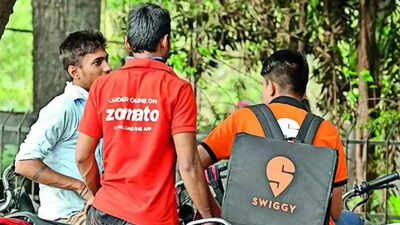
NEW DELHI: Gig and platform workers need to work for at least 90 days annually with an aggregator to avail of social security benefits, said the final set of rules formulated under the new Code on Social Security (CoSS). In case a worker is engaged with multiple aggregators, the threshold is raised to 120 days, a decision that will affect those working with Swiggy and Zomato or Uber, Ola and Rapido.The rules pave the way for the states to notify their own rules by taking cue from the central ones.Under these latest CoSS rules, an eligible gig and platform worker includes all such workers engaged by the aggregator directly or through an associate, holding or subsidiary company or through a third party. Any income earned from aggregator on a day will be treated as one-day with the platform.For those on multiple platforms, workdays are cumulative. For instance, earning from three aggregators in one calendar day will be counted as three days of engagement.

.

Besides, the rules put the onus on aggregators to upload details of every gig worker engaged with them on the central govt portal within 45 days, including registering all new appointments and exits on a real-time or daily basis. This is being done to allow issuing identity cards to each eligible registered gig and platform worker.The rules also provide for aggregators to face annual interest of 12% if they fail to contribute towards social security benefits of the gig workers registered with them.“If any aggregator fails to pay any amount of contribution payable under sub-section (4) of section 114, within such time as may be specified by the central govt for such purpose, such aggregator shall be liable to pay interest on the amount of contribution, to be paid, at the rate of 1%, for every month or part of a month comprised in the period from the date on which such payment was due till such amount is actually paid,” the rules said.The rules also provide that a gig worker will stop being eligible for social security benefits, such as health insurance, life and accident insurance once they turn 60, or if they haven’t worked at least 90 days with one aggregator — or 120 days across multiple aggregators — during the previous financial year.


Trump to discuss Iran with Xi Jinping during China visit: Officials | Donald Trump News

0
Trump to discuss Iran with Xi Jinping during China visit: Officials | Donald Trump News


Official says US president will likely ‘apply pressure’ on China over Beijing’s purchase of Iranian oil amid war.

Donald Trump is set to arrive in Beijing on Wednesday evening to discuss the Iran war and other issues with his Chinese counterpart President Xi Jinping.

White House Principal Deputy Press Secretary Anna Kelly said an opening ceremony and meeting will be on Thursday morning, and the trip will conclude on Friday. The US plans to host the Chinese leader during a reciprocal visit later this year.

Recommended Stories

list of 3 itemsend of list

Kelly said that this week’s trip would be of “tremendous symbolic significance” and focus on “rebalancing the relationship with China and prioritising reciprocity and fairness to restore American economic independence”.

Trump’s visit, initially scheduled for earlier this year but postponed in March due to the US-Israel war on Iran, comes as the US president struggles to contain the fallout from the war, both at home and abroad.

A senior administration official told news outlets in an anonymous briefing on Sunday that Trump could “apply pressure” to China on Iran in areas such as oil sales and Tehran’s purchase of potential dual-role military-civilian goods.

US Treasury Secretary Scott Bessent last week accused China of “funding” Iran.

“Iran is the largest state sponsor of terrorism, and China has been buying 90 percent of their energy, so they are funding the largest state sponsor of terrorism,” Bessent told Fox News.

Iran closed the Strait of Hormuz in response to US-Israeli attacks, restricting passage through a key artery of global energy transport.

China has said that it wants to see the war end and hosted Iranian Foreign Minister Abbas Arraghchi last week. At the same time, Beijing has refused to recognise Washington’s “unilateral” sanctions on Iran’s oil sector.

Disruptions stemming from the war have disrupted the global economy, with Asian states that depend on imports from the Middle East especially hard hit.

Trump could also bring up China’s support for Russia during the talks, along with trade and rare earth minerals, a vital resource for the US tech sector. Business executives from aerospace manufacturer Boeing and a handful of agricultural companies are set to travel with the US delegation.

The anonymous administration official said that no change was expected regarding the US stance on Taiwan, a main sticking point in relations between Washington and Beijing. China considers the self-ruling island a part of its territory, but the US has deep security and economic commitments to Taiwan.


Loans outrun deposits, margins dip

0
Loans outrun deposits, margins dip


Loans outrun deposits, margins dip

MUMBAI: Indian banks are navigating a paradox where credit growth is outstripping deposit growth but margins are under pressure. On paper, a scenario where credit outstrips deposit growth should be a recipe for soaring profitability. However, a deeper look into the recent earnings calls of major public sector lenders shows that margins remain under pressure as deposit costs rise, low-cost current and savings account balances shrink and competition for safe highly-rated borrowers intensifies.The pressure on net interest margins, or NIMs, was a recurring theme in the earnings calls of banks. While systemic credit growth for scheduled commercial banks stands at around 16%, deposit growth is trailing at 12.3%, forcing lenders to rely increasingly on costlier retail term deposits and bulk deposits to fund loan growth.Banks have historically depended on current account and savings account, or CASA, deposits as a low-cost source of funding. That pool is now shrinking as savers shift money into equities, mutual funds, gold and real estate amid rising financialisation and inflation. SBI chairman CS Setty said the bank was adapting to the change in savings behaviour. “We are strengthening our liability franchise as savings increasingly shift towards market-linked instruments,” he said. On Friday, SBI surprised markets with only a 4% net interest income growth despite double digit credit growth.Bank of India MD and chief executive Rajneesh Karnatak said the banking system was seeing structural changes in deposits. “There has been a structural change which has happened as far as the colour of the deposit is concerned. A lot of funds are flowing out of the banking system into other asset classes like equity, mutual fund, gold, real estate and others. So there has been a lot of competition among the banks on how to fund this credit growth which is coming,” he said.To bridge the funding gap, banks are mobilising retail term deposits aggressively. SBI’s term deposits grew by around 14.7%, while Bank of Baroda reported growth of 14.8%. But the higher rates paid on these deposits are raising the overall cost of funds and compressing margins.Bank of Baroda MD Debadatta Chand said deposit pricing remained elevated because of liquidity conditions. “If the liquidity continues to be easy the cost of deposit can go down. If the liquidity remains tight the way it is then possibly deposit rates will be sticky at this point of time,” Chand said.


BBC speaks with civilians inside Iran struggling with impact of war

0
BBC speaks with civilians inside Iran struggling with impact of war


Inside Iran, the BBC has been speaking to people struggling with the impact of the war.

The authorities have imposed an internet ban, but using trusted sources, special correspondent Fergal Keane has been hearing from those traumatised by conflict and government repression.

Read more on this story here.


Awadh’s heritage broken amid encroachment on monuments

0
Awadh’s heritage broken amid encroachment on monuments


Shahid Alam, 15, a Class 10 student, is worried. He has to pay ₹50 for a tennis ball to his group of street-cricket players. “This is the second time the ball has gone missing in the jungle. We can’t go inside as it is locked,” says Alam, who regularly plays cricket on the rough ground outside Imambara Shah Najaf in Lucknow. The forest he is referring to is the wild bushes around Qadam Rasool, a nearby monument built by Nasir-ud-din Haider, the second king of Awadh. It was constructed in the 19th century on the banks of river Gomti and is now almost crumbling.

Lucknowi Vineet Kumar, who is visiting Imambara Shah Najaf, says, “There should be a beautiful garden here. The tragedy of Lucknow is that we are not able to save the monuments. Now children have started calling this historical place a jungle.” The Imambara was built by Ghazi-ud-din Haider, the first king of Awadh, who built the Imambara as a symbol of his devotion to Hazrat Ali, who was the son-in-law of Prophet Muhammad. Replica of Hazrat Ali’s Dargah in Iraq.

Also read: Highest number of encroachments on centrally protected monuments recorded in Uttar Pradesh by 2022

A March 2026 report by the Comptroller and Auditor General of India documented the Centrally Protected Monuments (CPMs) of Uttar Pradesh, which are sites under the jurisdiction of the Archaeological Survey of India (ASI). The 2024 report said that of the 487 CPMs in the state, 31 were unearthed, only 31 monuments (6.4%) had “proper ownership documents”, and 96 monuments were encroached upon. There were also CMPs that had been neglected, many in need of structural change, and some bearing the consequences of “inappropriate conservation work”.

The work of removing debris and leveling the land is going on in Bada Imambara in Lucknow. | Photo courtesy: Sandeep Saxena

Allahabad High Court lawyer Syed Mohammad Haider Rizvi, who is also a heritage enthusiast, says many people working in conservation are deeply concerned. Rizvi says, “The CAG report is a formal indictment of institutional failure. 31 monuments have gone missing in UP, and yet the ASI keeps them in its official list. This means that the government agency entrusted with our heritage cannot even trace what it claims to preserve.” He says that not having ownership documents is like a guardian not having a deed to the property he protects.

In addition to intensifying judicial intervention, heritage groups are also considering a public awareness campaign. Rizvi has filed public interest litigations (PILs) in the Allahabad High Court regarding encroachment on heritage sites and demanded their removal.

Sanobar Haider, associate professor of history under the department of higher education in UP, says Awadhi architecture developed in the areas under the nawabs, who came from Persia in the 18th century: roughly the areas of Lucknow, Ayodhya, Kanpur and Barabanki. Now, Awadhi culture can be seen most easily in architecture, where Persian influence is visible, such as in structures such as the Bada Imambara, Chhota Imambara, Rumi Darwaza and the Residency. “They reflect the Persian architectural vocabulary: arched iwans, elaborate stucco work, geometric tile patterns and calligraphic inscriptions. The Chhota Imambara, also known as the Palace of Lights, combines Persian mausoleum design with Lucknowi ornamentation of glass workWhich is illuminated on Moharram. The Rumi Darwaza, based on the Sublime Porte in Istanbul, reflects the Awadhi court’s extensive Persian and Ottoman ties, the historian says.

The concern is not just about buildings. Conservationists believe that without dedicated initiatives from the government to protect and restore the sites, not only will the monuments disappear, but the entire Awadhi culture will also be destroyed over time. Culture is a joint heritage manners (refined etiquette), first you (After you), and the fine arts of food, Kathak, Chikankari, and Urdu poetry, with its collective heritage of constructed form.

Shah Najaf Imambara Memorial in Lucknow. | Photo courtesy: Sandeep Saxena

Inheritance crisis in UP

ASI is a central government agency responsible for the protection and maintenance of monuments and archaeological sites declared of national importance. Its activities include survey of archaeological remains in the country, exploration and excavation of archaeological sites, archaeological research, maintenance, conservation and protection of protected monuments.

Unnao resident Umakant Mishra is writing letters to the authorities to remove encroachers at memorial sites in Lucknow and Agra. He says there is a fear among heritage conservationists that there is a “quiet, insidious practice of delisting monuments on the grounds that they have lost their national significance”. “It is used as a tool to highlight safety failures when carelessness goes too far,” he says.

The monuments which have been removed from the protected list after 2024 include Kadam Rasool, Begum Kothi, Imambara Ghulam Hussain Khan and Chhota Chhatar Manzil of Lucknow, considered symbols of Awadhi civilization.

There have been instances of government structures such as hospitals, police stations, municipal offices, schools and other departments reportedly setting up offices within the CPM without legal clearance or ASI authorization in several districts of UP.

Mishra says, “The old Rohilla fort in Saharanpur is under the control of the district jail. Hussainabad Baradari in Lucknow has been taken over by everyone from the electricity department to the Jal Nigam because it has no boundary wall.”

Similarly, a small temple has been built on the preserved monument at Bhankour Kund in Mathura, which has Sanskrit inscriptions. Mishra says that Nagar Panchayat Barsana had constructed structures and toilet blocks in prohibited and regulated areas and the construction material was stored by the Nagar Panchayat contractor by staking them on pillars.

Chhota Imambara in Lucknow is occupied by illegal shops, eateries and carts. | Photo courtesy: Sandeep Saxena

During physical verification, the CAG team found that the ASI itself was not complying with the provisions at Rani Mahal in Jhansi. “The circle office of ASI Jhansi was located in a centrally protected monument. They made changes to the structure of the monument, such as air conditioners, electrical fittings, water pipes, etc. Toilets were built with ceramic tiles in the monuments. These changes were not in keeping with the original character of these monuments,” the CAG report said.

protect the vulnerable

The Nawab of Awadh was from Naishapur in Iran and was Shia by faith. After the disintegration of the Mughal Empire in the late 18th century, Awadh, especially its new capital Lucknow, developed a distinct identity under Nawab Asaf ud Daulah. He was the builder Nawab who contributed immensely to the architecture of the city and made the city a cultural centre.

In Lucknow, the tomb of Mohammed Ali Shah (Chhota Imambara), which was declared a protected monument by gazette notification in 1920, has been encroached upon by shop owners at the gates, heritage activists say.

“Shops were allotted to the local people in Chhota Imambara by the more than 200-year-old Hussainabad and Allied Trust, but they have given it to different people in violation of the allotment conditions. They have also encroached on the common areas,” says Rizvi. The Trust is the custodian of Awadhi culture.

The Ancient Monuments and Archaeological Sites and Remains Act, 1958, prohibits any person from engaging in activities that may cause damage to a protected heritage structure. Nor can any construction work be carried out to construct any building within the protected area. This will be considered encroachment.

Hussainabad Gate near Chhota Imambara in Lucknow needs urgent repairs. | Photo courtesy: Sandeep Saxena

Wahid Ahmed runs an eatery in the Chhota Imambara complex. He says his family has been running this place for three generations. He is unaware that documents are required to run his shop there. “There are dozens of people like me in this place,” he says.

The ASI, in its guidelines issued in January 2005 regarding the use of specific areas within protected monuments, stated that permission to organize cultural events in these areas can be granted only if the local ASI circle is completely satisfied that the event will not cause any damage to the monument.

To safeguard the Diwan-i-Aam at Agra Fort, the Superintending Archaeologist of Agra Circle requested the Director General of ASI to initiate structural analysis by a qualified agency in February 2023. He had suggested that access to this interior space in the fort should be restricted to visitors under Rule 4 of the Ancient Monuments and Archaeological Sites and Remains Rules of 1959. It was also requested not to allow large scale events within the grounds of the memorial.

The CAG audit said permission was still given to organize an event to commemorate the birth anniversary of Chhatrapati Shivaji Maharaj on February 19, 2023, in the backdrop of Diwan-e-Aam, Agra Fort.

Two days after this incident, the Superintending Archaeologist once again recommended that the Diwan-e-Aam be removed from the CPM’s list where cultural programs can be authorized. Nevertheless, the monument continues to be included in the list. “This indicates that events were organized without paying attention to security concerns and increased the risk of damage to the monuments,” the CAG report states.

Demand for better laws and enforcement

“The existing central framework is inadequate, poorly implemented and suffers from definitional deficiencies,” says Rizvi. He further said, “We need a state heritage law with clear demarcation, mandatory digitization timelines, anti-encroachment provisions and citizen complaint mechanism.”

The National Policy for the Conservation of Ancient Monuments and Archaeological Sites and Remains, 2014, outlines professional standards and establishes an evidence-based framework for contemporary conservation. The entire conservation process should be documented before, during and after conservation efforts through maps, sketches, photographs, digital records and field notes to ensure the creation of a continuous record of interventions.

Plans should be developed and implemented for the short-term (up to two years), mid-term (two to five years), and long-term (five years and beyond) to prevent any further deterioration of the structures, which may require extensive conservation work in the future.

Additionally, a Site Management Plan (SMP) should be prepared for the monuments, which should be prepared by a multidisciplinary team of professionals in consultation with archaeological officials of the ASI.

The findings of the CAG report revealed that planning and documentation were inadequate, resulting in conservation efforts that were fragmented and incomplete. It found that the ASI circle in UP had not prepared any mid-term or long-term plan for the preservation and conservation of the monuments. No SMP was prepared by the boards for conservation of monuments.

“It’s almost as if we’re waiting to see the monuments disappear in front of us,” says Mishra.

ASI’s Lucknow Circle did not give any reply Hindu’s List of emailed questions.


Novartis seeks to deepen India innovation play

0
Novartis seeks to deepen India innovation play


Novartis seeks to deepen India innovation play

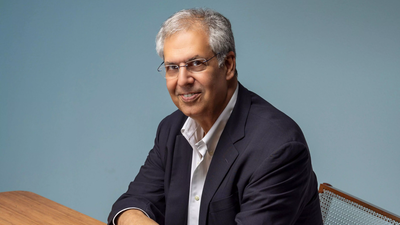
NEW DELHI: Swiss pharma major Novartis is sharpening its strategy in India as a pure-play innovator across core therapy segments, including cardiovascular, oncology and immunology, after divesting its stake in its listed arm earlier this year.Significantly, India increasingly contributes to nearly every molecule that Novartis commercialises globally, and is moving further up the value chain, with early scientific discovery — Phase I studies, beginning to take shape in the country, Novartis India country president and MD Amitabh Dube told TOI.In Feb, Novartis under a strategic review announced the sale of its 71% stake in its listed subsidiary, Novartis India, effectively exiting its legacy portfolio for about Rs 1,446 crore to a clutch of private equity investors, led by ChrysCapital. It retained its unlisted commercial arm, Novartis Healthcare, to drive its innovative medicines business in the country.

.

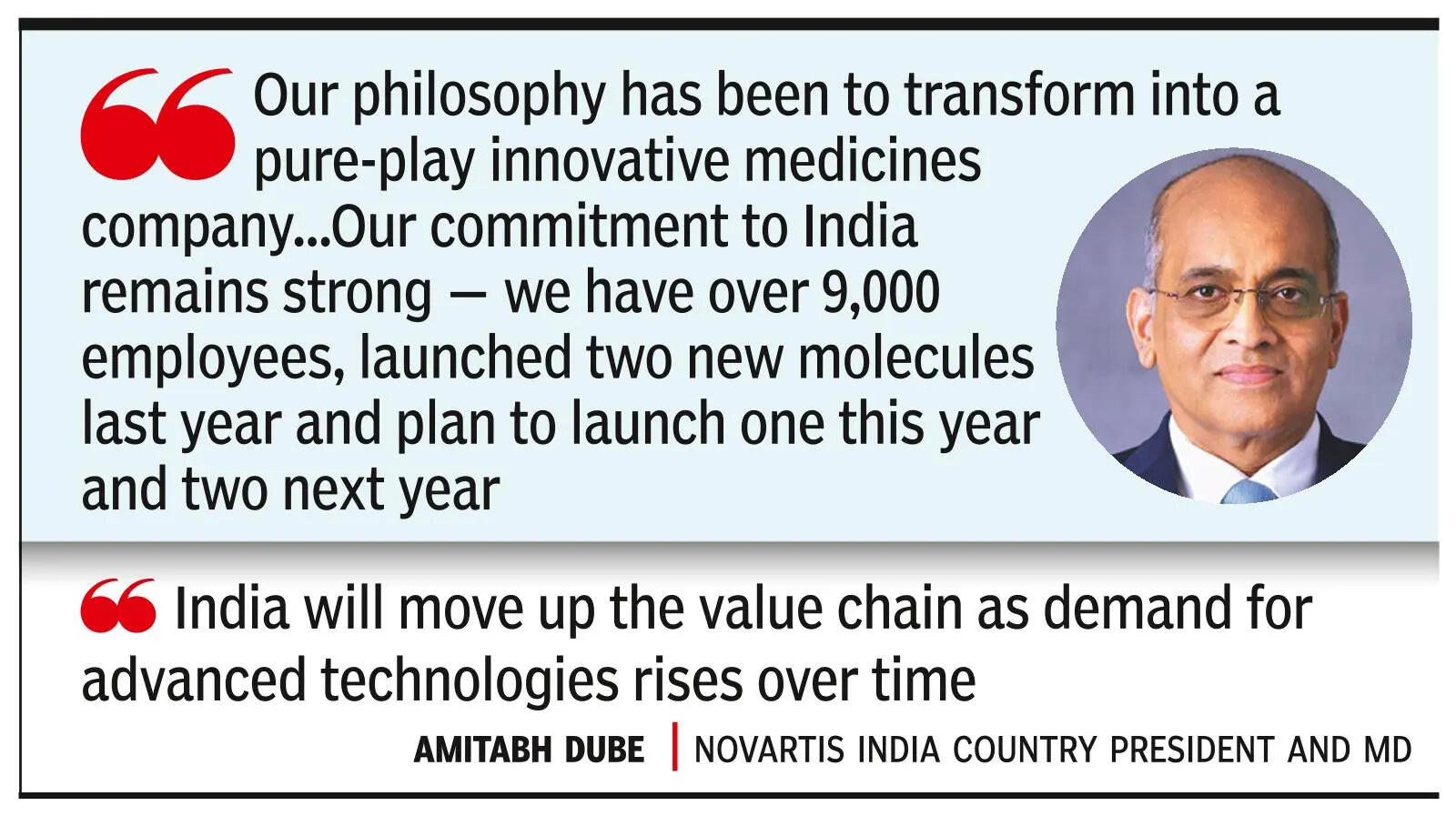
Typically, India largely serves as a development hub handling Phase II and III trials for MNCs, while early-stage research or innovation-intensive segments remain concentrated in developed markets.Novartis recently initiated Phase I clinical research in Ahmedabad and will continue late-stage Phase II and III programmes across its core therapeutic areas, Dube said in his first interview, following the review.A few of these global therapies, where India played a major role include Coartem Baby, the first antimalarial developed for infants, cardiovascular therapy Inclisiran (Sybrava), and a targeted radioactive therapy for prostate cancer Lutetium-177 vipivotide tetraxetan (Pluvicto).Novartis operates one of its three global development hubs in India (Hyderabad and Mumbai), alongside Basel (Switzerland) and the US. For instance, the India Development Hub contributed in four critical areas in Coartem Baby — supporting clinical operations, pharmaceutical development, regulatory submissions and safety oversight.“Our philosophy has been to transform into a pure-play innovative medicines company. It would not have been appropriate to retain these (legacy) brands without the right investments and focus. Our commitment to India remains strong-we have over 9,000 employees, launched two new molecules last year, and plan to launch one this year and two next year,” added Dube.


Barcelona beat Real Madrid 2-0 in El Clasico to retain La Liga title | Football News

0
Barcelona beat Real Madrid 2-0 in El Clasico to retain La Liga title | Football News


Barcelona clinched ⁠their ⁠29th La Liga title with a 2-0 Clasico victory over ⁠bitter rivals Real Madrid to open an unassailable 14-point lead ⁠at the top of the table with three games remaining

Marcus Rashford and Ferran Torres struck in the first half on Sunday to help Hansi Flick’s side clinch La Liga in consecutive years, while consigning Madrid to a trophy-less season.

Recommended Stories

list of 4 itemsend of list

This was only the second time the outcome of La Liga has been decided directly by the result of a Clasico, with record 36-time champions Real Madrid winning their first title in 1932 after a draw with Barca.

Flick’s team were disappointed to be knocked out in the Champions League quarterfinals by Atletico Madrid in April, but were still determined to celebrate in style.

“This title is more special for winning it at home against Madrid, now we have to enjoy it with the fans,” Barca midfielder Frenkie de Jong told Movistar.

“We have been the best team in Spain – of course we [also] want to win the Champions League, that’s the objective.

“Next year we will have another opportunity.”

Madrid arrived at the match embroiled in chaos, after midfielder Fede Valverde was ruled out with a head injury following a training ground scuffle with teammate Aurelien Tchouameni, who started.

Barca coach Flick received bad news before the game, with his father passing away, but took his place on the touchline regardless, to oversee his side’s comfortable triumph.

The German opted for the energetic Rashford, on loan from Manchester United, on the right wing in place of injured teenage star Lamine Yamal.

The Catalans, who only needed to avoid defeat, came out with their eyes firmly locked on the prize, racing into a two-goal lead inside 18 minutes.

Rashford opened the scoring with a superb free kick, whipping the ball into the top left corner from a position 20 yards out, right of centre.

Barcelona's English forward #14 Marcus Rashford (R) celebrates scoring his team's first goal during the Spanish league football match between FC Barcelona and Real Madrid CF at Camp Nou Stadium in Barcelona on May 10, 2026. (Photo by Lluis GENE / AFP)
Rashford celebrates scoring his team’s first goal [Lluis Gene/AFP]

Torres doubled the hosts’ advantage at a jubilant Camp Nou, the 62,000-strong crowd enjoying the first Clasico back there since the stadium was reopened.

Dani Olmo produced a clever backheel to allow Torres to burst into the box and ram past Thibaut Courtois.

Gonzalo Garcia, playing in place of injured Madrid superstar Kylian Mbappe, prodded narrowly wide after racing in behind Barca’s high defensive line.

Urged on by coach Alvaro Arbeloa on the touchline, unlikely to be at the helm next season, Madrid battled to stem the bleeding.

Rashford could have added a third before the break but fired wide, with Fermin Lopez unmarked and well placed to finish.

Torres should have struck early in the second half but Courtois saved from the Spain international as he ran through.

Jude Bellingham put the ball in Barcelona’s net but the goal was ruled out for offside, while Joan Garcia thwarted Vinicius Junior as Madrid threatened.

Barca fans batted inflatable beach balls around to taunt the Brazilian over his unfulfilled Ballon d’Or ambitions, and lapped up the party atmosphere.


Courtois saved from substitutes Raphinha, back after injury, and Robert Lewandowski as Madrid saw out the remainder of the match without taking further damage.

Flick’s side remain on course to match the record of 100 points in a league season and can win all their home matches if they defeat Real Betis in the one remaining.

Barcelona’s boss told La Liga TV that he “will never forget this day” following the match.

“It was a tough day for me to start – my father passed away. But my team is fantastic. It is like a family,” Flick said.

“They gave everything today. I am proud of the fans. It is amazing [to win] in this stadium and in an El Clasico against Real Madrid to win La Liga.

“It was not easy. Everyone thought we could win this, but Real is a fantastic team. We played really good and made the goals in the right moment.”

Meanwhile Madrid finish a second consecutive season without a major trophy, staring down the barrel of a summer reshuffle, including former coach Jose Mourinho being linked with a potential return.

Arbeloa congratulated Barcelona and said his side would “learn from what happened this season and work even harder” in comments to the media after the game.

“I feel a greater responsibility now, knowing that our season ended today. The one thing we can’t do is give up, absolutely not,” he said.

“There are three matches left that we must go out and win. Here, we’re defending something much bigger than all of us and much bigger than our personal pride; it’s the Real Madrid crest and millions of fans.”


Noel Tata part of 3-1 vote against Srinivasan, Singh at Tata edu trust

0
Noel Tata part of 3-1 vote against Srinivasan, Singh at Tata edu trust


Noel Tata part of 3-1 vote against Srinivasan, Singh at Tata edu trust

MUMBAI: Noel Tata has voted against the reappointment of Venu Srinivasan and Vijay Singh as trustees of Tata Education and Development Trust (TEDT), the largest corpus trust within Tata Trusts, in a move that widens fault lines within one of India’s most powerful philanthropic structures. It marks the first time Noel has made his opposition to the duo unequivocal.The vote, the last of four cast on the matter, added to a verdict that had already been sealed when Mehli Mistry became the first to oppose the duo’s extension, shortly after the trusteeship renewal circular was issued.Under TEDT’s governance rules, reappointments require unanimous consent among trustees – a threshold that had already been foreclosed by Mehli’s vote. Jehangir Mistry subsequently voted against both men as well. Srinivasan and Singh had each voted for the other. The tally stood at 3-1 against each of them.

Noel’s vote signals widening of Tata Trusts rift since ’25

Their tenures in an influential Tata trust that supports projects in India and abroad, formally expired on Sunday, May 10. Noel Tata voting against Srinivasan and Singh significantly curtails influence of both men within wider Tata Trusts ecosystem, even as they remain vice-chairmen of the Sir Dorabji Tata Trust (SDTT) and Sir Ratan Tata Trust (SRTT) — the two apex trusts that together hold controlling stake in Tata Sons.The rift between Noel and the duo deepened after Srinivasan and Singh publicly backed a listing of Tata Sons, a move Noel opposed. In an email to Tata Trusts CEO, Mehli said “My affidavit in response to the board composition change report for SDTT explains the reasons why I chose to take such a decision.” According to the affidavit, Noel, Srinivasan and Singh had wrongly voted against him at SDTT. He also said that Srinivasan had taken part in the vote even though his term had already ended at SDTT. TEDT, with a corpus of Rs 5,600 crore, has been among the most prominent Indian donors to Ivy League institutions, including Harvard Business School and Cornell University, and owns and operates two cancer hospitals in India while supporting 17 others through grants.Following the board changes, Noel remains chairman and perpetual trustee of TEDT. Mehli continues in his role as perpetual trustee, while Jehangir holds a fixed-term trusteeship. With Srinivasan and Singh’s departure, TEDT now sits at the minimum threshold of three trustees permitted under its deed. An email sent to Noel did not elicit a response. The vote is the latest and most visible expression of a fracture within Tata Trusts that has been widening since late 2025. Established by former Tata Trusts chairman Ratan Tata in 2008, TEDT is perhaps the only trust within Tata Trusts that can support social projects in India and abroad.


The forgotten crisis in the education system is in the middle grades

0
The forgotten crisis in the education system is in the middle grades


There is a figure that should trouble every policymaker who believes that India’s best days are ahead. It is not the fiscal deficit or its demographic dividend. It’s like this: In grades 6, 7, and 8, the middle years of schooling, when teen brains are at their most cognitive plastic — most capable of learning, adapting, and creating lifelong pathways — the national average score in math is only 37%. Performance in science is only slightly better.

Education (Shutterstock)

This is not a new discovery. The National Achievement Survey of 2021 established this clearly. The PARAKH 2024 evaluation confirmed this. What is shocking is not the data, but the slow response it has caused. India has built a national conversation around foundational literacy and numeracy. The NIPUN India Mission mobilized extraordinary administrative energy to ensure that every child can read and do basic arithmetic by Grade 3, and the ASER 2024 documents real, albeit partial, improvements in early grade education. This is worth celebrating.

Even if the foundation floor is rising, the middle stage continues to function as a roof. With 6.3 crore children currently enrolled in grades 6-8, this threshold makes a lot of sense. In a country where fertility has declined to ~1.9, and the share of young children is declining, the pressure point in the system has shifted upward. In the next five years, children aged 11-14 will constitute about 8-9% of India’s population, that is, more than 12 crore young adolescents and almost a third of all children. The question is no longer whether children enter school, but whether the system can carry this large and continuing group through the middle years, where the path to secondary education is either secure or quietly broken.

This makes the quality of middle school pedagogy not just a classroom concern, but a system-level imperative. These are the years when students begin to develop disciplinary thinking, form habits of mind, and understand how to organize and apply knowledge – making it essential that teaching balances structure, engagement, and adolescent developmental needs. Therefore, effective pedagogy must move beyond rote learning to develop disciplinary thinking, helping students think like practitioners in each subject. Approaches such as inquiry-based learning, problem-solving, modeling expert thinking, discussion, collaborative work, and formative assessment are critical to ensuring that this large group not only stays in school, but learns meaningfully.

Encouragingly, this limit is not inevitable – and evidence of what is possible is already emerging in practice. In Bihar, a state not typically associated with systemic education reform, large-scale changes in classroom practice are already showing what reform at this level might look like.

Between 2022 and 2024, the state introduced project-based learning (PBL) in grades 6-8 for science and mathematics. SCERT co-designed teaching materials, initiated teacher training led by DIET, Block Resource Persons supported peer teaching, and provided mentorship in continued implementation. The program reached 40 lakh students from 28,000 schools.

The results evaluated by Tata Institute of Social Sciences (TISS) are astonishing. Math scores at the endline increased from 43.74% to 52.33%; Science from 43.25% to 52.33%, a combined average improvement of 8.84 percentage points. Students in Years 7 and 8 made almost two years’ worth of learning progress in a single year. The percentage of teachers actively implementing PBL increased from 50% to 95%. Educators have also begun to see meaningful changes in students’ 21st-century skills – an aspect that the National Institute for Advanced Study will formally measure in the coming year.

This is not a small pilot whose results may not hold up at scale. It gives a clear indication of what systems-based change and design for scale can achieve, and, conversely, what remains absent elsewhere.

India’s education system was built for a different demographic and socio-cultural reality. Today’s learning crisis is not, primarily, a crisis of access. The enrollment ratio at the middle level has increased to more than 90%. More children are staying in school than ever before.

But the problem is that being in school and learning are not the same thing.

The experience of Bihar makes clear what is currently lacking in the system. According to various assessments, the difference is not only in content, but also in capacity. PARAKH 2024 shows that students struggle with data interpretation, scientific reasoning, communication and practical application, the same competencies that project-based learning attempts to build.

This difference is not accidental. Classroom practice remains over-reliant on rote instructions, where memorization substitutes for understanding. Although this may provide short-term benefits, it rarely leads to the ability to apply knowledge in unfamiliar contexts. Global evidence from the World Economic Forum to the OECD consistently highlights that the most important skills for the future of work are analytical thinking, problem-solving, collaboration and the ability to continuously learn. These are not skills that emerge merely through rote learning or elementary classroom instruction. These are formed when young teens begin to ask questions, connect ideas, work with others, and apply knowledge in real-world contexts.

The International Labor Organisation’s India Employment Report 2024 documents a skills gap affecting 30-40% of the workforce. Youth aged 15-29 constitute 83% of India’s unemployed. India’s demographic window will start closing around 2040, about 15 years away. As this window narrows, the group currently in middle school will enter the workforce. Whether India’s demographic arithmetic will be a dividend or a burden will be decided, in no small part, in those classrooms today.

The seeds of that mismatch are sown in the middle grades.

Importantly, this failure is not unknown. NEP 2020 clearly mandates experiential, inquiry-based pedagogy. The National Curriculum Framework for School Education (NCF-SE) 2023 recommends using projects and portfolios for middle-grade assessment. The test itself demands experiential learning. The policy framework for change is in place. We need to redesign the curriculum for adolescent learning and exploration. Bihar shows that large-scale implementation is also possible.

However, PBL is sometimes portrayed as a softer alternative to content mastery. The evidence does not support this. 2023 meta-analysis boundaries in psychologySynthesizing 66 studies, found that it significantly improved academic achievement and higher-order thinking, with the strongest effects in sustained, structured implementation lasting 9 to 18 weeks. Bihar is building exactly the same thing.

But, Bihar’s benefits also make clear the limitations of pedagogy alone.

Improvement in middle grades cannot be considered as a single intervention. It should be conceptualized and implemented as a system-wide redesign – one that aligns financing, staffing, capacity development, school infrastructure (both physical and digital), and curriculum and assessment reforms. Without this alignment, even the most effective educational innovations struggle to stick.

Bihar has benefited under the system with teacher vacancies still exceeding one million at the national level. An important and often under-noted element of this redesign is the availability of qualified subject teachers. As students enter grades 6–8, learning becomes increasingly discipline-specific, requiring teachers with deep content knowledge in areas such as math, science, and languages. Still, the scale of this need does not match the current capacity of the system—or even the ability to accurately diagnose the gap. No pedagogy, no matter how well designed, can fully compensate for a teacher managing 50 children in multiple classrooms.

Assessment reform remains a critical missing piece: unless the Grade 10 board exams measure the abilities and competencies that prepare our children for the future of work, which can be developed through experiential teaching-learning practices, teachers will face systemic pressure to revert to rote learning.

The question is not whether solutions exist, but whether they can be adopted at scale with the required speed and consistency.

Encouragingly, efforts like Shikshagraha are attempting to bring together state institutions, civil society organizations and practitioners to translate this intention into coordinated action to prepare for the future.

India has no dearth of solutions. Bihar has already shown that systems can change within existing institutions and on a large scale.

The question is no longer what works. The point is can we come together, align our systems and act with urgency and intention at the national level in mission mode, so that an entire generation does not go through years of neglect and underpreparedness.

(Views expressed are personal)

This article is written by Khushboo Awasthi, Co-Founder and COO, Shikshalokam and Bindu Thirumalai, Adjunct Faculty, NIAS, Bengaluru.


Argentinian tourism hotspot denies causing hantavirus outbreak

0
Argentinian tourism hotspot denies causing hantavirus outbreak


The National Ministry of Health, meanwhile, has not put forward a definitive theory. “We cannot rule out, in principle, that the infections occurred in Tierra del Fuego, but there is an important fact to consider: since Hantavirus became a notifiable disease, no cases have ever been reported in the province,” it said.