Thursday, October 1, 2026
Home Blog Page 6958

West Bank Settlers Hope Trump Will Back Annexation Dreams

0
West Bank Settlers Hope Trump Will Back Annexation Dreams


Eliana Passentin delights in her house, which sits nearly 3,000 feet above sea level in a Jewish settlement in the occupied West Bank, with a view from the Jordan River to the Mediterranean coast. The dining room looks out over ancient Shiloh, the Israelites’ first capital in ancient times.

But Ms. Passentin would feel even better if the area was annexed by Israel.

Some of President-elect Donald J. Trump’s staffing choices have raised hopes among settlers that that could happen. Pete Hegseth, Mr. Trump’s contentious choice for defense secretary, went to ancient Shiloh for an episode of his “Battle in the Holy Land” series on Fox Nation. Mike Huckabee, Mr. Trump’s pick as the next ambassador to Jerusalem, has visited several times over the years and has argued that all of the West Bank belongs to Israel.

Nearly half a million settlers and roughly 2.7 million Palestinians live in the West Bank. The Palestinians, and much of the world, have long envisioned the territory as part of a future independent Palestinian state, alongside Israel, and consider the Jewish settlements to be illegal. After the Oct. 7, 2023, Hamas-led attack on Israel from Gaza, and with the prospect of a more sympathetic administration in Washington, settler leaders say they are confident that a Palestinian state is off the agenda.

They also hope that Israel will extend its sovereignty over parts, or all, of the territory through annexation — a step it has formally avoided since capturing the West Bank from Jordan in the 1967 Middle East war amid opposition from much of the world.

“We want to live our lives in Israel,” Ms. Passentin said, adding, “I believe the new administration will support whatever Israel decides.”

The West Bank has grown increasingly volatile. Israeli settler attacks on Palestinians and their property have risen sharply, while Israel has carried out a series of deadly raids and drone strikes targeting armed Palestinian militants that have chewed up streets and left many Palestinian civilians in fear.

Nearly 1,000 Palestinians have been killed in the West Bank since the beginning of 2023, according to the United Nations. The Israeli authorities say that most were armed fighters, but at least some were uninvolved civilians. About 50 Israelis were killed by Palestinian assailants in the West Bank during the same period, 18 of them members of the security forces, according to U.N. data. Shin Bet, Israel’s internal security agency, said it had thwarted more than a thousand attacks in 2024, including hundreds of shooting attacks.

On Monday, gunmen shot at a civilian bus and cars passing the Palestinian village of Al-Funduq in the northern West Bank, killing at least three people in what the Israeli authorities described as a terrorist attack.

Some settlers express a wariness of Mr. Trump born of experience. He has not articulated clear plans for the region, other than a vague aim of bringing peace. But they nonetheless believe that the new administration will go along with the wishes of Prime Minister Benjamin Netanyahu’s government — the most right-wing in Israel’s history.

“Trump’s team was here, they saw the reality, and for me, that’s a total relief,” said Yisrael Ganz, the head of the Binyamin Regional Council, which governs the settlements around ancient Shiloh, including the adjacent settlement of Shilo. He is also the chairman of the umbrella council representing the rest of the settlements.

Mr. Ganz recently took Doug Burgum, Mr. Trump’s nominee for interior secretary, on a tour in the area. “I see the people he chose,” Mr. Ganz said of the president-elect.

Support for a two-state solution has been waning for years among Israel’s Jewish majority, and since the Oct. 7 attack, many Israelis fear that a Palestinian state would endanger their country. A recent survey found that nearly two-thirds of Jewish Israelis think Palestinians have no right to a state of their own.

But in his public statements, Mr. Ganz has avoided explicitly telling Mr. Trump what to do. To sound less provocative, instead of sovereignty, he uses vaguer terms like “changing the reality” in Judea and Samaria, the biblical names for the West Bank, which the Israeli government considers disputed, not occupied, territory.

During his first term, Mr. Trump showered Israel with diplomatic gifts, including moving the American Embassy to Jerusalem from Tel Aviv and recognizing the contested city as Israel’s capital. Mike Pompeo, then secretary of state, reversed four decades of U.S. policy by stating that settlements did not violate international law. (Secretary of State Antony J. Blinken returned to the traditional U.S. position in 2024, saying the American government considers settlements to be “inconsistent with international law,” in line with most countries.)

Mr. Trump’s administration also floated a peace plan that strongly favored Israel, discarding the longtime goal of granting the Palestinians a viable state with its capital in Jerusalem.

The proposal, which Mr. Trump called the “deal of the century,” called for Israeli annexation of about 30 percent of the West Bank, including its current settlements, and a disjointed Palestinian state with limited sovereignty. It was immediately rejected by Palestinian leaders and many settlers, who preferred continued ambiguity over what they saw as a patchwork of Israeli and Palestinian territory that would leave many settlements as isolated enclaves.

Adding to the settlers’ wariness, the idea of Israeli annexation was abruptly dumped by both Mr. Trump and Israel’s leaders in favor of forging diplomatic relations between Israel and the United Arab Emirates, Bahrain and Morocco, a process known as the Abraham Accords. The Trump administration is expected to try to expand the accords to include Saudi Arabia, which would most likely require some kind of Israeli acceptance of a pathway to Palestinian statehood.

The settlers are far from homogenous. They include from secular, middle-class Israelis seeking affordable housing as well as religious ideologues who believe settling the land is part of a Messianic plan ordained by God.

But in the hills around Shilo and the neighboring settlement of Eli in the central West Bank, the mission of Jewish settlement expansion is clear. Alongside official government-approved settlements, outposts have been built in recent decades without official permits. Some have been retroactively authorized by Israel and have come to resemble the more established neighborhoods.

Ms. Passentin, a mother of eight, came to Israel as a child from San Francisco. She and her husband, David, lived for 10 years in a trailer, then in a tent, helping to establish outposts, before settling in Hayovel, a satellite of Eli, parts of which are still unauthorized after years of court battles over the ownership and status of the land.

As the Binyamin Council’s international relations director, she has accompanied some of Mr. Trump’s close circle on tours and hosted Mr. Hegseth in her home.

One immediate request of the Trump administration from settler leaders is to cancel sanctions imposed by the Biden administration on more than 30 individuals and organizations accused of violence against Palestinians and destruction or seizure of Palestinian property.

Settler leaders like Mr. Ganz say they do not condone the violence, some of which is directed at Israeli forces who come to remove illegal settlement structures. But they say that it is a police matter and that it is a fraction of the anti-settler violence perpetrated by Palestinians.

For all of the enthusiasm in settler circles surrounding Mr. Trump’s election, expectations of what he will actually do once in office are tempered.

Citing an adage that marriage is often better the second time around, Aaron Katsof, a winemaker in Esh Kodesh, a hilltop outpost perched above Shilo, between the Palestinian villages of Qusra and Duma, said of a second Trump term: “You don’t come with the lovey-dovey infatuation of high school sweethearts. But you come with a lot more experience and maturity.” Esh Kodesh still lacks Israeli government authorization and permits for permanent housing.

Rivka Amar, 19, who is nine months pregnant, moved in the fall to Alei Ayin, a tiny outpost between Esh Kodesh and Qusra. She and her husband live in a lone quick-build home there, accompanied only by some young men who sleep in a tent, in what was open land.

Ms. Amar had been lunching at the Merlot Cafe in Shilo with her friend Rina Kohen, 18, who lives on a settler farm in the northern West Bank with her brother and 150 head of cattle. The idea, she said, was for a few settlers to control as much land as possible, to keep territory away from Palestinians.

“If I’m not there, my enemy will be there,” Ms. Amar said.

But, she said, she keeps her focus on the tasks at the hand, not on political shifts in Israel or the United States.

“I don’t wake up in the morning thinking of Biden or Trump,” she said, “but of where to graze the goats.”


Hyundai Motor Group Chief Stresses Resilience, Innovation In Facing New Biz Challenges | Auto News

0
Hyundai Motor Group Chief Stresses Resilience, Innovation In Facing New Biz Challenges | Auto News


Seoul: The head of Hyundai Motor Group on Monday emphasised the importance of resilience, innovation and proactive preparation in facing future challenges expected from ongoing global risks, as well as anticipated rollbacks in the electric vehicle (EV) policies of the US. At a group-wide New Year’s Greetings event held at Hyundai Motorstudio Goyang, just north of Seoul, Euisun Chung, Hyundai Motor Group’s executive chair, underscored that external risks and crises should not be feared but seen as “opportunities for growth.”

“Without challenges, we risk becoming complacent, which is more dangerous than any external crisis,” Chung said in his address to employees, reports Yonhap news agency. “External pressures can serve as catalysts for our growth.”

Hyundai Motor Co. and its affiliate Kia Corp. are bracing for a tumultuous future in their American operations, as President-elect Donald Trump’s transition team is reportedly seeking to get rid of the country’s EV tax credit programme, part of the Inflation Reduction Act (IRA) introduced under the incumbent Joe Biden administration.

Chung noted that while 2024 was a relatively smooth year for the group, it is essential not to assume 2025 will be the same.

“Merely surviving cannot be a sound strategy,” he warned, adding that retreating defensively during crises would only result in preserving the status quo rather than achieving progress.

Highlighting Hyundai’s track record of overcoming past crises, Chung urged employees to embrace the challenges ahead with confidence. “Expressions like ‘the perfect storm’ should heighten our awareness and motivate us to confront challenges, not trap us in a pessimistic and defensive posture,” he said.

In outlining his vision for 2025, Chung emphasised the need to go beyond simply mitigating risks by analysing their root causes and historical trends to turn them into growth opportunities.

Chung also pointed to Hyundai Motor Group’s appointment of its first foreign CEO, Jose Munoz of Hyundai Motor, as a testament to its commitment to innovation and inclusiveness. “Nationality, gender, educational background or tenure will not determine leadership. It will be determined by capability,” he said.


In Haiti, Gang Massacres and Journalist Murders Expose the Country’s Fragility

0
In Haiti, Gang Massacres and Journalist Murders Expose the Country’s Fragility


A fresh injection of about 150 foreign officers arrived in Haiti this weekend to bolster an international security force charged with taking on the powerful and well-armed gangs that have inflicted so much misery on the country for months.

But if the past is any guide this latest infusion is unlikely to make much of a difference.

Back-to-back massacres that killed more than 300 people, followed by a Christmas Eve assault on Haiti’s largest public hospital have underscored the Haitian government’s increasing lack of control over the nation’s deepening crisis.

A news conference to announce the reopening of a public hospital that had been closed for nine months because of gang violence came under another gang attack, killing two reporters and a police officer.

More than two dozen journalists caught in the ambush were trapped for two hours triaging seven wounded colleagues before they were rescued. They ripped their own clothing to fashion tourniquets and used tampons to stanch the bleeding because, witnesses said, the few doctors at the hospital ran for their lives. Reporters escaped by climbing a rear wall.

“There was blood all over the floor and on our clothes,” said Jephte Bazil, a reporter with an online news outlet, Machann Zen Haïti, adding that the hospital had nothing “available to treat the victims.”

The hospital shooting followed two massacres in separate parts of the country that killed more than 350 people and have shined a harsh spotlight on the failures and shortcomings of local authorities and an international security force deployed to protect innocent civilians.

One of the massacres unfolded last month in an impoverished, sprawling, gang-controlled Port-au-Prince neighborhood where a lack of any police presence meant that for three days older people were dismembered and thrown to the sea without the authorities finding out. At least 207 people were killed between Dec. 6 and Dec. 11, according to the United Nations.

At about the same time, another three-day killing spree took place 70 miles north in Petite Rivière. Community leaders say 150 people were killed as gang members and vigilante groups attacked one another.

The violence is part of a relentless string of bloodshed that has befallen Haiti in the last two months, exposing the fragility of its interim government, raising concerns about the viability of a U.S.-brokered security mission and leaving a planned transition to elections and more stable leadership on the verge of collapse.

With President-elect Donald J. Trump about to assume the reins of an international deployment that has been criticized as ineffective and underfunded, the future of Haiti has never seemed so bleak.

Justice Minister Patrick Pelissier said he believed the 150 soldiers, mostly from Guatemala, should help turn the tide. He stressed that some gang-controlled areas had been retaken and that the government is tending to displaced people.

“The state has not collapsed,” Mr. Pelissier said. “The state is there. The state is working.”

But many experts believe Haiti is a failing state, with various factions of the interim government embroiled in political bickering with no apparent strategy for tackling the worsening violence and providing a path to elections, which were supposed to be held this year.

“Political disputes translate into violence,” said Diego Da Rin, a Haiti analyst with the International Crisis Group. “The gangs are very aware of when is the right moment to shift from defensive mode to offensive mode. They flex their muscles when they need to.”

The gang attacks have also drawn attention to the weakness of the U.S.-backed Multinational Security Support mission, a detachment of several hundred mostly Kenyan police officers that began arriving in Haiti last June.

The mission was supposed to have up to 2,500 officers, but with little international financing, the force numbers far less and lacks the staffing to tackle the many gang-entrenched areas.

Several experts said the Christmas Eve killings gave a sense that the government was inept. The event announcing the hospital’s reopening was held in a gang stronghold, with virtually no security. Even as people came under attack, the police took at least an hour to respond, though their headquarters are nearby.

The country’s heath minister, Dr. Duckenson Lorthe Blema, who was sick and running late, believes he was the intended target.

“I am not crazy — I wanted to do well, and it went badly,” Dr. Blema, who was fired in the aftermath of the attack, said in an interview. “It turned into a fiasco. The scapegoat is me.”

Dr. Blema insisted that he had asked for police deployments at the event and did not know why there was so little protection. He defended the hospital’s dearth of supplies, saying he had intended to open the facility “gradually” as an outpatient clinic, which would not have been for treating gunshot wounds.

The justice minister acknowledged that there was no coordination between the ministry of health and the police, nor was a proper security assessment done in advance.

“Neighborhoods are controlled by gangs, and the police are working to recover them,” he said, noting that while the crisis is severe in the capital and the rural Artibonite Valley, much of the country was operating normally.

Haiti’s descent into chaos was largely triggered by the assassination in July 2021 of its last elected president, Jovenel Moïse. Gangs earning income from illegal checkpoints, extortion and kidnappings used the political vacuum to expand their territories.

With no elected national leaders, the country is ruled by a transitional council made up of rival political parties, with an interim presidency rotating among its members.

The latest surge in violence began Nov. 11, when the council replaced the prime minister, and gangs took advantage of the political upheaval to fire on U.S. commercial aircraft and escalate their brutality. Haiti’s main airport has been closed since.

More than 5,300 people were killed in Haiti last year and the total number of people forced to flee their homes now exceeds 700,000, according to the International Organization for Migration.

Gang checkpoints and ambushes have disrupted food supplies and the nonprofit group Mercy Corp, estimates that nearly 5 million people — half the country’s population — are facing severe food insecurity.

The new prime minister, Alix Didier Fils-Aimé, in his only news conference since taking office nearly two months ago, announced pay increases for police officers and said he was committed to restoring the rule of law.

The prime minister and members of the presidential council declined to comment for this article.

In a New Year’s Day speech, the president of the council, Leslie Voltaire, insisted that elections would still take place this year, but likened the current situation to war. A police spokesman said he had no comment.

The commander of the Kenyan-led mission, Godfrey Otunge, who also did not respond to requests for comment, has complained that the mission’s successes have not been sufficiently touted.

In a recent message posted online, he said “the future of Haiti is bright.”

The U.S. State Department, which has committed $600 million for the Kenya mission, defended its record, noting that a recent operation with the police led to the death of a high-profile gang member.

Two police stations recently reopened and the Kenyan mission now has a permanent presence near the main port, which has long been controlled by gangs, the State Department said.

The U.S. government sent several shipments of materials in December, the agency said.

But absent significantly greater outside help, experts say Haiti’s worsening trajectory is unlikely to be reversed.

“The Haitian government is really not clear on what they are doing,” said Sophie Rutenbar, a visiting scholar at New York University, who helped run United Nations operations in Haiti until 2023. “Unfortunately right now they are faced with not good choices and worse choices.”

Some of the injured journalists blamed gangs — and the government — for a debacle that cost precious lives.

“If the state had taken its responsibilities, none of this would have happened,” said Velondie Miracle, who was shot seven times in the leg, temple and mouth. “The state is a legal force and should not give bandits access to places where the state cannot respond.”

André Paultre contributed reporting from Port-au-Prince, Haiti.


Costas Simitis, 2-Time Prime Minister of Greece, Dies at 88

0
Costas Simitis, 2-Time Prime Minister of Greece, Dies at 88


Costas Simitis, a former prime minister of Greece who oversaw his country’s entry into the euro single currency and its uneven preparations for the 2004 Olympic Games, died on Sunday. He was 88.

Grigoris Karpouzis, the director of the Corinth hospital in Greece, confirmed his death in a statement but did not give a cause. The Greek government declared four days of national mourning for Mr. Simitis, who will receive a state burial.

A low-key politician who proved popular with voters, Mr. Simitis demonstrated more sympathy for capitalism and the United States than some of his predecessors as prime minister.

His two successive premierships yielded the longest continuous term of any modern Greek prime minister, although the man he succeeded, Andreas Papandreou, served a longer total over three terms separated by a period in opposition.

Both the hosting of the Games and the adoption of the euro in 2001 seemed to betoken an unaccustomed self-confidence, optimism and national pride among Greeks.

Yet, in a land whose ancient Greek forebears coined the notion of hubris as a potent ingredient of tragedy, both developments contributed to a crippling debt crisis that raised questions about Greek membership in the European Union and ballooned into a broader crisis across the eurozone.

The Summer Olympics, held shortly after Mr. Simitis left office in March 2004, were billed as a homecoming, not only to the venue of the inaugural modern Olympics in 1896, but also to the birthplace of the ancient games in 776 B.C.

But the 17 days of competition and pageantry cost far more than planned and created yet more debt as a result of big-ticket infrastructure projects designed to showcase Athens as the Games’ host.

Months later, the European Commission criticized Athens for purportedly falsifying economic data in order to replace its drachma currency with the euro. The warning foreshadowed years of crisis and bailouts that forced Greeks into a brutal era of austerity and hardship.

Some international commentators, including Robert Reich, the former U.S. labor secretary, also faulted the Wall Street giant Goldman Sachs, which earned huge fees for advising Greece on measures to reduce the book value of part of its debt in order to qualify for euro membership.

But Mr. Simitis, a trained economist and lawyer who served two four-year terms as prime minister, defended his record, saying Greece did not bear sole responsibility for the debt crisis and arguing that the blame for lax fiscal management lay with the conservative political adversaries who succeeded him.

Specifically, he said in a study of Greece’s role in the European debt crisis, published in 2014, the New Democracy party that won the 2004 elections displayed “criminal indifference” to the need to reduce the country’s public debt and relegated fiscal discipline to the status of “mere window dressing.”

Two years earlier, in an article in The Guardian, as Greece racked up ever greater debts from international bailouts, Mr. Simitis insisted that, when Greece was admitted to the eurozone, leading European institutions had carried out “exhaustive scrutiny” of its economic suitability before endorsing its membership of the new currency.

Not only that, as the eurozone crisis spread to other poorer members of the European Union on its southern periphery, Mr. Simitis wrote, the true cause of the malaise was not “Greece’s alleged extravagance and excessive deficits” but a more fundamental imbalance between the wealthy northern lands, such as Germany, and the less advanced southern economies.

“Greece sparked the eurozone crisis but was not its cause,” Mr. Simitis said. “The cause lies in the fact that the eurozone is a fully fledged monetary union but an incomplete economic and fiscal union of member states with different structures: the more mature economies of the European north and the less mature ones of the European south.”

Konstantinos Simitis was born on June 23, 1936, in the Greek port city of Piraeus near Athens, to Georgios Simitis, a professor at the School of Economic and Commercial Sciences in Athens and his wife, Fani Christopoulou, a left-leaning feminist activist. An elder brother, Spiros Simitis, became a leading jurist specializing in data protection in Germany.

Mr. Simitis is survived by his wife of 60 years, Daphne, and their two daughters, Fiona Mouzakitis and Marilena Simiti.

Mr. Simitis studied in West Germany and in London before returning to Athens, but fled the country to avoid arrest during rule by a military junta from 1967 to 1974. He was a founder of the Pan-Hellenic Socialist Movement, known by its Greek initials as PASOK, along with Mr. Papandreou. Mr. Simitis served as a minister under Mr. Papandreou, although the two differed constantly on economic policy.

Mr. Papandreou resigned for health reasons in early 1996, and the party’s 167 parliamentary deputies chose the 59-year-old Mr. Simitis to replace him. He had campaigned in the party ballot as a pro-European modernizer, with a low-key manner that contrasted with his flamboyant predecessor’s patriarchal and sometimes capricious style.

Once in office, Mr. Simitis confronted familiar challenges. Within weeks, a dispute with Turkey sent his popularity ratings into a downward spiral, underscoring the uneasy nature of the relationship between the Aegean neighbors.

On several occasions tensions between the two countries — NATO allies divided by deep historical antagonisms — have stirred powerful nationalist passions and brought them to the brink of hostilities.

In a bizarre episode in 1999, for instance, Mr. Simitis was accused by critics of bungling an attempt to shield Abdullah Ocalan, a fugitive rebel leader of Turkey’s Kurds, who was seized by Turkish security forces in Nairobi, Kenya. Mr. Ocalan had been hiding in the Greek Embassy there.

The event dented Greek national pride. Several government ministers and senior officials resigned. Mr. Simitis acknowledged making mistakes but accused other European nations of triggering the crisis by denying Mr. Ocalan a haven.

In his first term, Mr. Simitis set about curtailing Greece’s extravagant public and private spending and sought to prepare the economy to meet European Union targets for his country’s entry into the eurozone. He had succeeded in reducing inflation and public indebtedness while stabilizing the drachma currency.

His cautious manner offered a marked contrast with the Papandreou years.

“We needed someone who would say less and do more, a person who is an ordinary Greek, who doesn’t descend from on high, and who doesn’t hide problems with endless myths,” Dimitris Rappas, a government spokesman, told The New York Times in 1996.

Mr. Simitis won a second term in 2000, but only by a wafer-thin majority and far short of the endorsement he had sought against his main challenger, Kostas Karamanlis, the leader of the New Democracy Party. It was on Mr. Simitis’s watch, too, that Greece finally made its reckoning with the feared November 17 urban terrorist movement that emerged from a popular struggle against the American-supported military officers who took power in 1967.

In 2002, an injured bomber began to talk and, as a result, the police made a slew of arrests that persuaded the authorities to say that most of the organization had been rounded up. Theodore Couloumbis, a political analyst, said at the time that the country had undergone a “sea change.”

“We’ve crossed the threshold from an unstable democracy to a consolidated one,” he said.

Two years later, though, Mr. Simitis resigned as PASOK chairman and said he would not contest the forthcoming election, in which his party lost to New Democracy. He was succeeded as head of PASOK by George Papandreou, a son of Andreas Papandreou who, at the time, was Greece’s foreign minister.

“Simitis has not made Greece perfect but he has helped make it better,” a largely favorable assessment in the newspaper Ekathimerini said in 2004 as he prepared to step down. “He changed the country and he changed our expectations of our leaders.”

Later, those perceptions of progress collided with the financial crises associated with the eurozone. Only in 2018, did the Greek government say that it was “turning a page” after eight years of riots, bailouts, crisis and instability that brought down four governments.

Niki Kitsantonis contributed reporting.


Infosys defers annual salary hikes to fourth quarter: Report

0
Infosys defers annual salary hikes to fourth quarter: Report


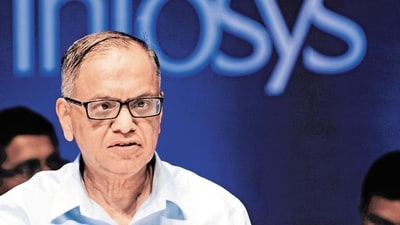
Infosys Ltd, India’s second-largest information technology (IT) services company has deferred annual wage hikes to the fourth quarter of the financial year 2024-25, Moneycontrol reported.

Infosys co-founder and executive chairman N.R Narayana Murthy at an Annual General Meeting in Bangalore.(File Photo)

Also Read: CES 2025: Dates, list of exhibitors, ticket prices, and all you must know

Usually the wage hikes are implemented earlier in the year, and the postponement reflects the uncertainty in global demand for IT services, delayed client budgets, and macroeconomic uncertainties, according to the report.

HT cannot independently verify this information.

Infosys is not the only tech major to have deferred wage hikes. Rivals like HCLTech, LTIMindtree, and L&T Tech Services have also reportedly skipped salary increments for the second quarter in order to deal with costs.

However, certain teams such as those related to artificial intelligence (AI) do continue to offer hikes selectively for top performers, as each unit has an individual budget to do that, according to the report.

Also Read: Italy plans $1.6 billion deal with Elon Musk’s Starlink for secure government telecom: Report

On top of this, the stagnancy of the IT job market has also given the companies confidence that withholding hikes is unlikely to lead to resignations, the report cited analysts as saying.

Infosys had said on October 17 that it was “planning” wage hikes in the fourth quarter in a phased manner.

“Some part of that will be effective in January and the balance will be effective in April,” the report quoted chief financial officer (CFO) Jayesh Sanghrajka as having said during a press conference after the second quarter results.

Also Read: OYO says no hotel rooms for unmarried couples in this city: Details here

At that time, the company’s net profit increased by 2.2% quarter-on-quarter to ₹6,506 crore, which missed expectations, according to the report.


Indonesia sack football coach Shin in search of FIFA World Cup 2026 spot | Football News

0
Indonesia sack football coach Shin in search of FIFA World Cup 2026 spot | Football News


South Korean coach Shin Tae-yong is let go after four years as Indonesian football chief eyes World Cup qualification.

Indonesia have sacked their men’s football coach Shin Tae-yong with the country’s football chief saying the team needed stronger leadership as they battle for a place at the FIFA World Cup 2026.

“We need a leadership that implements strategies as agreed with the players, communicates better, and implements better programmes for our national team,” Erick Thohir, who heads the Indonesia Football Association (PSSI), told a news conference on Monday.

Thohir said Shin’s work with the team had “ended” and his replacement, whom he declined to name, would arrive in Indonesia on January 11.

The Southeast Asian nation has tens of millions of passionate football fans, but Indonesia’s sole World Cup appearance came during Dutch rule in 1938 and the country has rarely threatened a return since independence in 1945.

Indonesia are third in their World Cup group after six of 10 matches, one point behind Australia in the battle for the second automatic spot in the finals.

If they finish third or fourth, they could still get to the finals in North America through further rounds of qualifying and an intercontinental playoff.

Thohir, who said he had interviewed three candidates to replace Shin during a recent trip to Europe, was not concerned that changing coaches in the middle of the campaign would disrupt the team.

“It’s normal. Lots of countries switch coaches during World Cup qualifiers,” he added.

“This is something we’ve been discussing for many months back, but I think the moment is right, because we still have two and a half months to prepare for the next games.

“We still have four matches and we want to get as many points as we can.”

South Korean Shin took over as coach in 2019 and Thohir said he would be compensated for the remainder of his contract, which runs to 2027.

Shin benefitted from a PSSI policy of enticing members of the Indonesian diaspora, mostly born in the Netherlands, to play for the national team.

Indonesia were the only Southeast Asian nation to reach the third round of qualifying and last November stunned regional powerhouse Saudi Arabia 2-0 in Jakarta.


South Korea beauty industry surpasses $10 billion milestone riding the Hallyu wave

0
South Korea beauty industry surpasses  billion milestone riding the Hallyu wave


South Korea beauty industry surpasses $10 billion milestone riding the Hallyu wave

South Korea, renowned global leader in the cosmetics and plastic surgery sector, achieved a significant milestone in its K-beauty industry with exports surpassing the $10 billion mark in 2024, according to the government data released on Monday.
Yonhap news agency reported that as per the ministry of food and drug safety, the total value of South Korea’s cosmetic exports surged by 20.6 per cent annually, reaching an all time high of $10.2 billion.
This impressive growth was credited to the Hallyu wave which amplified the global appeal of Korean cultural exports like K-pop and K-dramas.
China emerged as the largest importer of South Korean cosmetics, purchasing $2.5 billion worth of products. The United States followed with $1.9 billion, while Japan ranked third with $1 billion in imports, according to the SME Times.
Food minister Oh Yu-Kyoung said, “The government will strengthen cooperation with trading partner countries to help local firms continue the growth of cosmetic exports while helping them meet safety standards in the US and China.”
South Korea’s cosmetic exports have undergone consistent growth since 2014, when shipments were valued at $1.8 billion. This figure rose to $4.9 billion in 2017, $7.6 billion in 2020, and $9.2 billion in 2021 before a slight dip to $8.5 billion in 2023.

Bio-health exports trace similar path

In addition to cosmetics, South Korea’s bio-health sector also recorded a strong growth, jumping 22.5 per cent in the third quarter as compared to the previous year. The bio exports reached $6.34 billion in the July-September period in 2024 $5.17 billion recorded over the corresponding period in 2023, as per the Korea health industry development institute.
The bio-health product exports, including pharmaceuticals and medical instruments, were driven by strong demand for pharmaceutical goods in European nations.
Pharmaceutical exports led the surge, rising by 43.5 per cent year-on-year to $2.38 billion, with significant demand from Hungary, Germany, and Belgium. Exports of medical instruments grew modestly by 1.8 per cent to $1.37 billion, driven by laser equipment sales.
Cumulatively, South Korea’s bio-health exports totalled $18.5 billion for the January-September period, marking a 15.6 per cent increase from the previous year.


Hamas lists 34 hostages it may free under ceasefire

0
Hamas lists 34 hostages it may free under ceasefire


A senior Hamas official has shared with the BBC a list of 34 hostages that the Palestinian group says it is willing to release in the first stage of a potential ceasefire agreement with Israel.

It is unclear how many of those named remain alive.

Among them are 10 women and 11 older male hostages aged between 50 and 85, as well as young children who Hamas previously said had been killed in an Israeli air strike.

A number of hostages who Hamas says are sick are also included on the list.

Reports from the Hamas-run Gaza health ministry say Israeli air strikes killed more than 100 people there at the weekend.

The Israeli prime minister’s office denied reports that Hamas had provided Israel with a list of hostages.

“The list of abductees published in the media was not passed on to Israel by Hamas, but was originally passed from Israel to intermediaries as early as July 2024,” it said.

“To date, Israel has not received any confirmation or comment from Hamas regarding the status of the abductees on the list.”

The names on the list are: Romi Gonen (24); Emily Damari (28); Arbel Yehoud (29); Doron Steinbrecher (31); Ariel Bibas (5); Kfir Bibas (1); Shiri Silberman Bibas (33); Liri Albag (19); Karina Ariev (20); Agam Berger (20); Daniel Gilboa (20); Naama Levy (20); Ohad Ben-Ami (55); Gad Moshe Moses (80); Keith Shmuel Siegel (65); Offer Kaldaron (53); Eliyahu Sharabi (52); Itzhak Elgaret (69); Shlomo Mansur (86); Ohad Yahalomi (50); Yousef Yousef Alziadna (54); Oded Lifshitz ((84); Tsachi Idan (50); Hesham El Said (36); Yarden Bibas (35); Sagi Dekel Chen (36); Iair Horn (46); Omer Wenkert (23); Alexandre Troufanov (28); Eliya Cohen (27); Or Levy (34); Avera Mengistu (38); Tal Shoham (39); Omer Shem Tov (21).

Hamas’s decision to release the names of hostages will be seen by some as an attempt to increase public pressure on the Israeli government.

Ceasefire negotiations resumed in Doha, Qatar, over the weekend, but the talks do not appear to have made significant progress yet.

A Hamas official told Reuters news agency any agreement to return Israeli hostages would depend on a deal for Israel to withdraw from Gaza and a permanent ceasefire or end to the war.

“However, until now, the occupation continues to be obstinate over an agreement over the issues of the ceasefire and withdrawal, and has made no step forward,” the official said, speaking on condition of anonymity.

Earlier, Hamas posted a video of 19-year-old Israeli captive Liri Albag urging her government to make a deal.

She was captured along with six other female conscript soldiers at the Nahal Oz army base on the Gaza border during Hamas’s attack on 7 October 2023.

On that day Hamas-led militants attacked southern Israel, killing about 1,200 people and taking 251 others hostage.

Israel’s military campaign to destroy Hamas had killed at least 45,805 people in Gaza as of Saturday, according to the territory’s Hamas-run health ministry.

The same source says Israeli air strikes killed 88 people in Gaza on Saturday itself while on Sunday, Reuters news agency quoted health sources as saying a further 17 had died in four separate Israeli attacks on the territory.

The Israeli military said on Sunday that its air force had attacked more than 100 “terrorist” sites across the Gaza Strip over the weekend, killing dozens of Hamas militants.


Emeralds for Sale: The Taliban Look Below Ground to Revive the Economy

0
Emeralds for Sale: The Taliban Look Below Ground to Revive the Economy


In a chilly auditorium in Afghanistan, heaps of freshly mined green emeralds glowed under bright table lamps as bearded gemstone dealers inspected them for purity and quality.

An auctioneer asked for bids on the first lot, which weighed 256 carats. With that, the Taliban’s weekly gemstone auction was underway.

These sales, in the emerald-rich Panjshir Province of eastern Afghanistan, are part of an effort by the Taliban government to cash in on the country’s vast mineral and gemstone potential.

Since seizing power in August 2021, the Taliban say they have signed deals with scores of investors to mine gemstones, gold, copper, iron and other valuable minerals, like chromite. These buried treasures offer a potentially lucrative lifeline for a feeble economy.

China has led the way in investments under its Belt and Road Initiative, an aggressive effort to spread Chinese influence worldwide. Russian and Iranian investors have also signed mining licenses, filling the void left by the chaotic U.S. withdrawal in 2021.

The U.S. government estimates that at least $1 trillion in mineral deposits lie beneath Afghanistan’s rugged landscape. The country is rich in copper, gold, zinc, chromite, cobalt, lithium and industrial minerals, as well as in precious and semiprecious gemstones like emeralds, rubies, sapphires, garnets and lapis lazuli.

Afghanistan also holds a trove of rare earth elements, according to the Office of the Special Inspector General for Afghanistan Reconstruction, a U.S. agency that will close this year. Such elements are used in an array of modern technology, like mobile phones, laptops and electric vehicles.

The Taliban are trying to do what the United States could not during its 20-year occupation. The U.S. government spent nearly a billion dollars to develop mining projects in Afghanistan, but “tangible progress was negligible and not sustained,” the special inspector general concluded in a report published in January 2023.

Many of the hurdles from that time could still apply: a lack of security, poor infrastructure, corruption, inconsistent government policies and regulations, and frequent turnover of government officials.

The Taliban are nonetheless giving it a shot, desperate for revenue after Afghanistan’s precipitous loss of aid with the U.S. withdrawal.

During the war, the United States provided roughly $143 billion in development and humanitarian aid to Afghanistan, propping up the U.S.-aligned government. Since 2021, the United States has given $2.6 billion in such aid, delivered by a private contractor in shrink-wrapped cash bundles on flights to Kabul, according to the special inspector general.

The Afghan economy has shrunk by 26 percent over the past two years, the World Bank reported in April. The sharp decline in international aid, the bank said, has left Afghanistan “without any internal engines of growth.”

On top of that, the Taliban’s ban on opium production has cost farmers $1.3 billion in income, or 8 percent of Afghanistan’s gross domestic product, the World Bank said. The ban has led to the loss of 450,000 jobs and reduced land under poppy cultivation by 95 percent, the U.N. Office on Drugs and Crime reported.

Mining could help replace poppies as a steady revenue stream. Turkey and Qatar, along with China and Iran, have invested in iron, copper, gold and cement mines. Uzbek companies have signed deals to extract oil in northern Afghanistan, according to the Ministry of Mines and Petroleum.

The Taliban are already collecting tax from emerald sales.

Under the previous government, the emerald trade was a corrupt free-for-all. Warlords and politically connected dealers dominated the trade, and tax collection was haphazard at best.

But as the Taliban government has instituted the weekly emerald auctions, it has controlled and taxed all sales. Dealers who buy emeralds at the auctions do not receive the gems until they pay the 10 percent levy.

The Taliban are taxing other precious stones as well, including rubies and sapphires.

Rahmatullah Sharifi, a gemstone dealer who bought two sets of emeralds at the auction, said he didn’t mind paying the tax.

“The government needs the money to develop the country,” he said. “The question is: Will they spend it on helping the Afghan people?”

In Panjshir Province, where most Afghan emeralds are mined, the government has issued 560 emerald licenses to foreign and Afghan investors, said Hamayoon Afghan, a spokesman for the Ministry of Mines and Petroleum.

The ministry has also granted licenses to mine rubies in Panjshir and Kabul Provinces, Mr. Afghan said, and plans are underway for emerald and precious stone licenses in three other provinces.

But many new licenses are for mines that have yet to open. And many existing mines are hobbled by poor infrastructure and a dearth of experienced engineers and technical experts.

Mr. Afghan conceded that the country needed more engineers and technicians. Foreign investors bring in experienced experts, he said, and they are obligated under licenses to employ Afghans and teach them technical and engineering skills.

Most of the emeralds bought at the weekly auctions are resold to foreign buyers, dealers said. Among the dealers buying emeralds one day in November was Haji Ghazi, who sells gemstones from a tiny cell-like room within a darkened warren of shops in downtown Kabul.

Two days after the auction, Mr. Ghazi bolted his shop’s door, closed the curtains and unlocked an ancient safe. He withdrew several caches of emeralds and rubies, each one wrapped in a plain white sheet of paper.

Mr. Ghazi’s largest set of emeralds was worth perhaps $250,000, he said. He estimated that a much smaller cache of bright rubies was worth $20,000.

In a corner, Mr. Ghazi had piled heavy chunks of rock bearing thick blue veins of lapis lazuli, a semiprecious stone. Much of the world’s supply of lapis is mined in northern Afghanistan.

Mr. Ghazi sells most of his gemstones to buyers from the United Arab Emirates, India, Iran and Thailand. He said he missed the days, before the Taliban takeover, when the occupation brought eager buyers from the United States, Britain, France, Germany and Australia.

In an adjacent shop, Azizullah Niyazi switched on a desk lamp to illuminate a collection of lapis lazuli, rubies, sapphires and emeralds spread across a small table. He was still awaiting his first customer of the morning.

Mr. Niyazi said sales were not as robust as during the 13 years he was allowed to sell gemstones one day a week from a small shop on a U.S. coalition military base. His profits soared as soldiers and civilian contractors lined up to buy gemstones every Friday — and they rarely haggled over prices, unlike Afghan or Arab buyers, he said. He paid a 7 percent tax on his profits, he said.

These days, Mr. Niyazi must travel to increase sales: He said he had opened a shop in China, where he made regular visits. In Kabul, he sells to buyers from Dubai, United Arab Emirates, as well as from Pakistan, Iran and a handful of other countries.

He has few Afghan customers.

“Not many Afghans can afford to pay $1,000 or $2,000 for a stone to make a ring,” he said with a shrug.

Safiullah Padshah, Yaqoob Akbary and Najim Rahim contributed reporting.


Musk turns on UK politician Farage over jailed far-right activist | Politics News

0
Musk turns on UK politician Farage over jailed far-right activist | Politics News


Elon Musk has reversed his support for Nigel Farage, the leader of the United Kingdom’s populist party Reform UK, after a disagreement over the tech billionaire’s call for the release of a jailed far-right activist.

Musk said on Sunday that Reform UK should change its leader after Farage distanced himself from anti-Islam campaigner Stephen Yaxley-Lennon, also known as Tommy Robinson.

“The Reform Party needs a new leader. Farage doesn’t have what it takes,” Musk posted on his social media site X.

Musk last week wrongly claimed that Yaxley-Lennon, who is serving an 18-month prison sentence for contempt of court, had been jailed for “telling the truth” about a child grooming scandal that rocked the UK during the 2010s.

Yaxley-Lennon received the sentence after admitting to breaching an injunction against repeating false allegations about a Syrian refugee schoolboy who successfully sued him for libel.

Asked about Musk’s support for Yaxley-Lennon on Friday, Farage said the activist had been jailed for contempt of court, not for speaking out against grooming gangs.

“We’re a political party aiming to win the next general election. [Yaxley-Lennon] is not what we need,” Farage told GB News.

Musk’s broadside against Farage comes after the Tesla and SpaceX CEO publicly backed Reform UK, saying it was the only party that could “save Britain”.

Farage last month told the BBC that Reform UK was in “open negotiations” with Musk about him donating to the party.

Responding to Musk on Sunday, Farage said the billionaire’s remarks were a “surprise” but he would not change his position.

“Well, this is a surprise! Elon is a remarkable individual but on this I am afraid I disagree,” he said on X.

“My view remains that Tommy Robinson is not right for Reform and I never sell out my principles.”

Musk, who has been repeatedly ranked as the world’s richest man, has weighed into politics in different countries with increasing frequency since coming out in support of US President-elect Donald Trump during his re-election campaign.

On Thursday, he claimed UK Prime Minister Keir Starmer had failed to bring grooming gangs to justice when he was director of public prosecutions and should face “charges for his complicity in the worst mass crime in the history of Britain”.

UK Health Secretary Wes Streeting said Musk’s views on the issue were “misjudged and certainly misinformed”.

A 2014 inquiry found at least 1,400 children were sexually exploited in Rotherham, northern England, between 1997 and 2013.

The report by academic Alexis Jay found that authorities in the town had repeatedly failed to act on allegations on abuse, with some council staff expressing “nervousness about identifying the ethnic origins of perpetrators for fear of being thought racist”.

The perpetrators in the Rotherham case were overwhelmingly described by their victims as being South Asian, although a 2020 study commissioned by the Home Office found that most offenders in cases of group-based child sexual exploitation are white.

Musk, who is set to co-lead the so-called Department of Government Efficiency in the incoming Trump administration, last month backed the anti-immigration party, Alternative for Germany, which the German security services have classified as a suspected extremist organisation.