Tuesday, September 29, 2026
Home Blog Page 7055

Advance Tax Payment: What Happens If You Miss December 15 Tax Deadline? Avoid Trouble, Check Details | Personal Finance News

0
Advance Tax Payment: What Happens If You Miss December 15 Tax Deadline? Avoid Trouble, Check Details | Personal Finance News


New Delhi: The advance tax payment deadline is just three days away—December 15. If you miss this date, you might have to pay penalties and interest for the delay. Wondering what happens if you don’t pay on time? Here’s everything you need to know to stay stress-free and avoid extra charges.

Who Needs to Pay Advance Tax?

If your estimated tax liability exceeds Rs 10,000 after accounting for tax deducted at source (TDS), you are required to pay advance tax. This rule is outlined under Section 208 of the Income Tax Act, 1961. Missing this payment can result in penalties and interest, so it’s important to act on time.

What Happens If You Miss the Advance Tax Deadline?

Failing to pay advance tax on time may lead you to face a penalty under Sections 234B and 234C of the Income Tax Act. The penalty includes interest at 1 per cent per month or part of a month on the unpaid amount. However, there’s good news for senior citizens. Individuals aged 60 and above who are retired and have no income from business or profession are exempt from advance tax.

Due Dates of Advance tax payment

Advance tax doesn’t need to be paid all at once—it can be divided into installments throughout the year, based on pre-specified dates. Here’s how it works:

– By June 15: Pay 15 per cent of the total tax due.

– By September 15: Pay 45 per cent of the total tax due.

– By December 15: Pay 75 per cent of the total tax due.

– By March 15: Pay 100 per cent of the total tax due.

For the financial years 2022-23 and 2023-24, these due dates remain unchanged, making it easier to plan and stay on track.

How to Pay Advance Tax Online

Follow these simple steps to pay your advance tax online:

– Visit the e-filing portal of the Income Tax Department of India.

– Click on ‘e-Pay Tax’ in the ‘Quick Links’ section.

– Enter your PAN, verify it, and provide your mobile number.

– Input the OTP received on your mobile to proceed.

– Select the appropriate tax category under ‘Income Tax’.

– Choose the payment type as ‘100’ for Advance Tax.

– Enter the tax amount and select your preferred payment method.

– Review the challan details carefully and click on ‘Pay Now’.

– Keep the tax receipt safe for your records.


Cabinet approves ‘One Nation, One Election’ scheme. latest news india

0
Cabinet approves ‘One Nation, One Election’ scheme. latest news india


The Union Cabinet on Thursday gave its approval to two bills aimed at simultaneous implementation of state and national elections, which are to be introduced during the ongoing winter session of Parliament in a bid to bring about sweeping changes in the way the world’s biggest elections are conducted. There is a possibility. democracy.

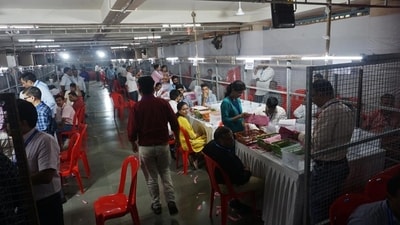
Counting of votes in Thane in November 2024. The proposal to align the elections was a part of the Bharatiya Janata Party's 2024 election manifesto and has the support of Prime Minister Narendra Modi (HT Photo)
Counting of votes in Thane in November 2024. The proposal to align the elections was a part of the Bharatiya Janata Party’s 2024 election manifesto and has the support of Prime Minister Narendra Modi (HT Photo)

Read also, Opposition calls ‘One Nation, One Election’ bill ‘anti-democracy’, BJP allies laud the move

The proposal to align the elections was a part of the Bharatiya Janata Party’s 2024 election manifesto and has the support of Prime Minister Narendra Modi, but has been strongly opposed by opposition parties and activists who have alleged that it would hamper democratic accountability and Federalism will suffer.

Read also, What is One Nation, One Election? Cabinet approved 11 proposals of the draft today

The Cabinet approved a constitutional amendment bill to conduct simultaneous elections for the Lok Sabha and state assemblies and another bill to conduct elections in the union territories of Delhi, Puducherry and Jammu and Kashmir on a similar basis, people familiar with the details said. The second bill does not require amendment to the Constitution.

Read also, One nation, one election will secure a better future: Kovind

People aware of the details said the bills are likely to be introduced in the ongoing winter session, which ends on December 20, and will be examined by the Joint Parliamentary Committee (JPC).

The people quoted above said the central government as well as the BJP will conduct wide publicity to create awareness about the provisions of the bills and its impact on electoral reforms.

As a first step, the bills will focus on synchronizing Lok Sabha and assembly elections, as suggested by the Ram Nath Kovind committee, and in the next phase the process of replicating the process for municipal and panchayat elections will be initiated, people said. One of the above quoted states.

A bill to hold simultaneous elections for the assemblies of all states and union territories along with parliamentary elections could be passed by Parliament without consultation with state governments or approval of state assemblies, a person with knowledge of the matter said.

The bill to align local body elections or create a single voter list through the Election Commission of India (ECI) would need to be ratified by at least half the state legislatures, the person quoted above said.

A Constitution Amendment Bill to amend Articles 83 (duration of the Houses of Parliament) and 172 (duration of State Legislatures) requires the support of at least two-thirds of the members present and voting in each House of Parliament.

Since the current strength of the Lok Sabha is 542, the government will need the support of 361 MPs. Apart from the National Democratic Alliance (NDA), the government will need non-aligned parties like YSR Congress Party (YSRCP), Biju Janata Dal (BJD) and All India Anna Dravida Munnetra Kazhagam (AIADMK), which had supported the alliance. The idea is to support the bill, the person quoted above said.

At present, the government will need the support of 154 MPs in the 231-member Rajya Sabha. The current strength of the NDA in the Rajya Sabha is 114, and has six nominated members and the opposition Bharatiya Janata Party has 86 and others have 25.

In independent India, from the first elections in 1952 till 1967, elections were held simultaneously in the entire country. But since the Lok Sabha and state assemblies can be dissolved before the end of their terms, state and national elections began to be held at different times thereafter.

Several committees, including parliamentary panels, NITI Aayog and the Election Commission of India, have studied simultaneous elections in the past, supporting the idea but flagging logistical concerns.

If implemented, the simultaneous elections will become part of broader changes that will transform India’s political and social landscape, including the census and the delimitation exercise based on it, and the subsequent implementation of the Women’s Reservation Bill. ,

The bill has not yet been circulated among the members, but opposition leaders have demanded an investigation into the provisions.

“The Union Cabinet has pushed through the unconstitutional and anti-federal One Nation, One Election Bill, ignoring every legitimate concern raised by experts and opposition leaders. This is not a carefully thought-out reform; This is an authoritarian imposition designed to undermine India’s democracy and federal structure,” West Bengal Chief Minister Mamata Banerjee said on Twitter.

He said Trinamool Congress members “will strongly oppose this draconian law in Parliament.”

Biju Janata Dal leader Sasmit Patra said that there is a need for more discussion in Parliament. “What will happen when there is lack of majority, there is a hung Parliament or Assembly, or the government loses confidence midway? I think there are many major issues that are constitutionally demanding and have not been addressed so far in One Nation, One Election. I believe there is a need for broader consultation and dialogue with political parties.

Congress leader K Suresh said the party came to know about the Cabinet approval through the media and the government should invite all political parties and state governments to discuss the national issue. “…There should be some consensus… But the government is going to introduce the bill without any discussion with the states and political parties… From the beginning, our stand on one nation one election has been clear. The government should explain why they want to bring the bill.”

Rashtriya Janata Dal’s Manoj Jha said his party has not yet seen the provisions of the bill. “Is this going on the same lines as the Women’s Reservation Bill? We don’t know when delimitation or census will take place,” he said.

Tamil Nadu Chief Minister MK Stalin criticized the bill and said it would disrupt federalism. :This impractical and undemocratic step will erase regional voices, destroy federalism and disrupt governance. Wake up India! Let us oppose this attack on Indian democracy with all our strength.” He posted on X.

In September, the Union Cabinet approved the recommendations of a high-level committee headed by former President Ram Nath Kovind.

The 18,000-page Kovind panel report outlines a phased approach to holding elections simultaneously, starting with the Lok Sabha and state assemblies first, followed by local body elections within 100 days. Modi has repeatedly advocated holding simultaneous elections to reduce expenses and cut restrictions imposed on policy making.

The Kovind panel constituted by the central government on September 2, 2023, received responses from 47 political parties, of which 32 supported simultaneous elections. These parties – including the BJP, BJD, Janata Dal United (JDU) and Shiv Sena – said the proposal would save scarce resources, protect social harmony and encourage economic growth.

However, 13 political parties, including Congress, TMC, DMK, Aam Aadmi Party and CPI(M), together opposed the election, expressing concerns that it could violate the basic structure of the Constitution, be undemocratic and anti-federal. Yes, it may be regionally marginalised. Parties encourage the dominance of national parties and lead to a presidential system of governance.

The panel ultimately suggested amending the Constitution to introduce simultaneous voting for elections to the Lok Sabha and state assemblies as a first step. It also suggested synchronizing the elections of municipalities and panchayats with those of Lok Sabha and Assemblies at a later stage.

National and state elections are conducted by the Election Commission of India (ECI) and local body elections are conducted by state election commissions.

Hinting that 2029 could be the year to initiate the first step, the panel recommended that the tenure of some state assemblies be cut to allow simultaneous elections for the Lok Sabha and state assemblies after the next five-year term. Lok Sabha is over.

The panel proposed a new legal arrangement that required some amendments to hold simultaneous elections, although it remained emphatic that the suggested changes were not anti-federal, violate the basic structure of the Constitution, or result in government interference. Will have a presidential form.

To hold simultaneous Lok Sabha and state assembly elections, the panel recommended amendments to Article 83 (term of the Lok Sabha) and Article 172 (term of State Legislatures), which provide that their tenure shall be five years “unless sooner May it not be dissolved.” The President and the Governor of the State respectively.


SC stays all temple-mosque cases till verdict of 1991 Act. latest news india

0
SC stays all temple-mosque cases till verdict of 1991 Act. latest news india


The Supreme Court on Thursday issued a nationwide direction barring all courts from considering fresh cases or passing orders to survey mosques to determine whether there are temple structures beneath them. This interim order acts as a blanket pause on the growing litigation initiated by Hindu groups seeking to reclaim places of worship, effectively halting litigation and proceedings in high courts, and raising concerns over religious sensitivities and legal It marks a significant intervention by the judiciary in a case fraught with complexities. ,

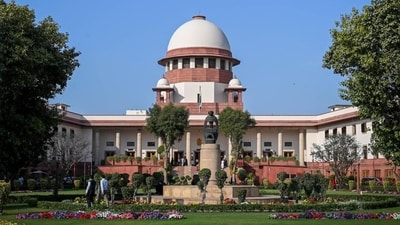
The direction comes amid a surge in litigation initiated by Hindu groups seeking revival of alleged historical temple sites, leading to multiple legal proceedings in district and high courts. (HT photo)

Read also, Women should not misuse cruelty laws for ‘personal vendetta’ against husbands: Supreme Court

The direction came from a special bench headed by Chief Justice of India (CJI) Sanjiv Khanna, which clarified that trial courts cannot go ahead of the Supreme Court while ruling on challenges to the Places of Worship (Special Provisions) Act, 1991.

Read also, Preventive detention must conform to strict limits: Supreme Court highlights right to personal liberty

“Since the matter is sub-judice before this Court, we deem it appropriate to direct that, although fresh suits may be filed, no suit shall be filed and no proceedings shall be taken till further orders of this Court. “Further, in the pending suits, no court shall pass any effective interim order or final order, including orders directing survey, etc., until the next date of hearing/further orders of this court,” the bench ordered. Gave, which also included Justice PV. Sanjay Kumar and KV Vishwanathan. The court has scheduled the next hearing for February 17, 2025.

Read also, Supreme Court asks states/UTs to disclose figures of vacant posts in jails

The direction comes amid a surge in litigation initiated by Hindu groups seeking revival of alleged historical temple sites, leading to legal proceedings in district and high courts. These disputes have given rise to significant controversy and conflicting orders, leading to increased political and communal tensions across the country. From Gyanvapi Masjid in Varanasi to Shahi Idgah in Mathura, from Shahi Jama Masjid in Sambhal to Taj Mahal in Agra, from Dargah Sharif in Ajmer to Bhojshala in Madhya Pradesh, several petitions seeking redefinition of the character of various structures have been filed across the country. Have emerged throughout.

Despite the importance of the issue, the case has seen little progress in the Supreme Court over the past two years.

Justice Khanna took over as CJI from Justice Dhananjay Y Chandrachud on November 11. He then constituted a three-judge bench on December 7, paving the way for Thursday’s intervention.

The Places of Worship Act enacted in 1991 is at the heart of the issue. The Act, which the court is deliberating over at the behest of two parties – one challenging it and the other seeking its strict enforcement – ​​was enacted to preserve the religious character of all places of worship. As they were on August 15, 1947. The law clearly prohibits changing the religious nature of sites and includes stringent penalties for violations, although it exempted the Ram Janmabhoomi-Babri Masjid site in Ayodhya because of the ongoing litigation at the time.

In its order on Thursday, the Supreme Court also pointed to its 2019 Ayodhya verdict, in which a five-judge bench had underlined the importance of the Act in protecting the secular fabric of the country. The judgment emphasized that the law embodies the principles of equality and non-regression, which does not allow for re-consideration of settled issues.

“When you have a judgment by a Constitution bench laying down certain principles, civil courts cannot compete with the Supreme Court,” the bench said on Thursday. The court decides the case.

The restraining order was issued amid a bitter competition between lawyers representing the Hindu and Muslim parties. Senior lawyers Abhishek Manu Singhvi and Raju Ramachandran, appearing for Muslim organizations, strongly advocated stopping the proceedings, especially the survey, in subordinate courts to avoid conflicting decisions.

Senior lawyers Rakesh Dwivedi, Maninder Singh and Vikas Singh, representing Hindu groups, opposed the order, arguing that such a ban should not be issued without a full hearing. Solicitor General (SG) Tushar Mehta, representing the central government, also argued that outside parties should not be allowed to interfere in ongoing trials.

However, the bench was unambiguous, noting that the issues under consideration go beyond challenges to the 1991 Act and extend to its applicability and enforcement. “When these questions are pending before us it would not be appropriate for any other court to pass orders,” the bench said.

During the proceedings, the bench also remarked that those attacking the validity of the Act would have to present an effective counter to Section 3 of the Act. This provision prohibits individuals and groups of people from converting, in whole or in part, a place of worship of any religious denomination into a place of worship of a different religious denomination – or even a different section of the same religious denomination . ,

The court gave four weeks time to the central government to clarify its stand on the Act, which has been awaited for more than two years despite a growing number of petitions. Although the Supreme Court admitted petitions challenging the Act in March 2021, the Center has refrained from filing a definitive response.

The delay came amid growing challenges to the Act, primarily from Hindu petitioners, who claim it violates their fundamental rights to reclaim and restore religious sites allegedly destroyed during historical invasions. Does.

The petitioners include BJP leader Subramanian Swamy, who argues that the Act impairs their right to pray in temples forcibly converted during foreign invasions, and lawyer Ashwini Upadhyay, who argues that the law discriminates against Hindus, Buddhists, Jains and Discriminates against Sikhs. Upadhyay claims that this law violates the fundamental rights of these communities to conserve and manage places of worship.

Another notable challenge came from Kumari Krishna Priya, a member of the Kashi royal family, who argues that the Act is discriminatory because it exempts the Ayodhya Ram Janmabhoomi site, while treating the Kashi Vishwanath temple in Varanasi and other important places equally. Exemption has been denied. Krishna’s birthplace in Mathura.

Recent years have seen a rise in legal suits demanding surveys of major mosques, including the Gyanvapi Mosque in Varanasi and the Shahi Idgah Mosque in Mathura, to ascertain whether they were built over demolished temple structures. Were. These cases have escalated into lower courts, leading to judicial orders that have further polarized opinion.

While the Supreme Court had initially refrained from imposing a complete stay on such cases, Thursday’s direction emphasized the urgency of putting a halt to the growing disputes until the top court delivers a definitive verdict.

The Places of Worship Act, enacted by the Congress-led government in 1991, aimed to freeze the status of all religious places as of August 15, 1947, except the Ram Janmabhoomi-Babri Masjid site. For decades, the law remained unopposed, facing no significant legal challenges.

However, the Supreme Court’s 2019 Ayodhya verdict rekindled demands to reclaim other religious sites, intensifying the debate over the constitutionality of the Act.

The petitioners argue that the law unjustly prevents Hindus from addressing historical wrongs and restoring religious sites destroyed or altered during the invasions. They claim that the Act unilaterally imposes restrictions on Hindu, Buddhist, Jain and Sikh communities while exempting others.

On the other hand, Muslim groups including Jamiat Ulema-e-Hind argue that repealing the law will break communal harmony and weaken the secular ethos of the Constitution. They caution that reopening these disputes could rekindle fear among minorities and destabilize the social fabric of the country.

Muslim clerics and groups welcomed the Supreme Court’s directive, while Hindu petitioners described it as a “minor hurdle” in their struggle to reclaim their religious sites.

“We welcome the directions of the Supreme Court and it will be a relief not only for the entire state but for the entire country. The common people, especially Muslims, were uneasy about cases being filed against their religious places. We hope that the Supreme Court in its final judgment will strengthen the implementation of the Places of Worship Act to prevent all future disputes. This will be in the interest of the nation,” said Maulana Khalid Rashid Farangi Mahali, member of the All India Muslim Personal Law Board (AIMPLB) and city qazi of Lucknow.

On the other hand, Supreme Court lawyer Vishnu Shankar Jain, who has filed the petition on behalf of Hindu parties demanding a survey of mosques in Varanasi and Mathura, said he is for the “liberation” of Kashi, Mathura and other places of worship. Will continue the fight.

“The order passed by the apex court is a small setback in our struggle to get back our cultural heritage. But together we can and we will succeed. Miles to walk before sleeping,” Jain wrote in a post on X.


US man found near Damascus after months in Syrian prison

0
US man found near Damascus after months in Syrian prison


‘It wasn’t too bad’ – US man on his time in a Syrian prison

A US man, detained for months in a Syrian prison after entering the country on foot, has described being freed by hammer-wielding men as rebels overthrew the regime of Bashar al-Assad.

The man – who later identified himself as Travis Timmerman to the BBC’s US news partner CBS – was found by residents near the capital Damascus.

It comes as rebels say they intend to close Assad’s notoriously harsh prisons and track down those involved in torturing or killing detainees.

“We will pursue them in Syria, and we ask countries to hand over those who fled so we can achieve justice,” said rebel leader Ahmed al-Sharaa, also known as Abu Mohammed al-Jolani.

Getty Images Travis Timmerman looks up, with a camera pointing down on him, as he sits in a dark room. Getty Images

Travis Timmerman said he was arrested after entering the country on foot

Footage posted on social media showed Mr Timmerman lying on a sofa as residents spoke to local reporters.

He said he had been arrested upon entering the country seven months ago.

The American was reported as missing in May, having last been seen in the Hungarian capital Budapest, according to the Missouri State Highway Patrol and the Hungarian authorities.

On Monday, a day after rebels took control of Damascus and toppled Assad, Mr Timmerman said two men armed with a hammer broke open his prison door.

It was “busted down, it woke me up”, he said.

“I thought the guards were still there, so I thought the warfare could have been more active than it ended up being… Once we got out, there was no resistance, there was no real fighting.”

The 30-year-old said he left prison with a large group of people and had been attempting to make his way to Jordan.

He said he “had a few moments of fear” when he left the prison, adding that he had since been more worried about finding somewhere to sleep.

However local people had been receptive to his requests for food and assistance, he told reporters.

“They were coming to me, mostly,” Mr Timmerman said.

Syria’s new interim government “freed and secured” Mr Timmerman, it confirmed in a message on the Telegram messaging service on Thursday.

US Secretary of State Antony Blinken said that Washington was “working to bring [Mr Timmerman] home”.

Blinken, speaking during a visit to Jordan, added that he could not give any details about “exactly what’s going to happen”.

Thousands of prisoners have been released since the fall of Assad over the weekend.

Footage has shown men, women and in some cases children emerging from overcrowded windowless cells, often disorientated and unaware of events that had taken place outside.

However, Mr Timmerman appears to have been relatively well-treated, telling CBS: “I’m feeling well. I’ve been fed and I’ve been watered, so I’m feeling well.”

He added that he had had the use of a mobile phone during his detention and had spoken to his family three weeks ago.

Speaking to fellow US outlet NBC, Mr Timmerman said he had crossed the mountains between Lebanon and Syria on a “pilgrimage” and had “been reading the scripture a lot”.

He declined the opportunity to be put in touch with American officials.

Getty Images Travis Timmerman smiles as he is led through a group of men. Getty Images

On Tuesday, State Department spokesperson Matthew Miller said the US had asked Syria’s main rebel group Hayat Tahrir al-Sham (HTS) to help locate and free US journalist Austin Tice.

A freelance journalist, Mr Tice is thought to have been taken captive close to Damascus on 14 August 2012 while he was covering the country’s civil war.

He was last seen in a video, blindfolded and in apparent distress – posted online weeks after his capture. The US believes he was being held by the Assad regime.

President Joe Biden has said the US believes Mr Tice is alive, but they must pinpoint his location.

Syria’s new leadership said on Thursday the search for Mr Tice was “ongoing,” and that it was ready to “cooperate directly” with the US to find Americans that disappeared under the Assad regime.

The now collapsed regime was notorious for its extremely harsh prisons, where the UK-based monitoring group Syrian Observatory for Human Rights estimates almost 60,000 people were tortured and killed.

Across Syria this week, families desperate to find loved ones have been streaming into these dark prison sites.

The Syrian Civil Defence Organisation, known as the White Helmets, has been helping the search – including in the infamous Saydnaya prison complex, described by human rights groups as the “human slaughterhouse”.

“We’re looking for secret prisons in several areas of Damascus,” Raed Saleh, director of The White Helmets told the BBC.

“We can’t say too much about this, but we’re looking.”

The White Helmets, known for pulling survivors from the rubble during Syria’s devastating civil war, say they helped recover thousands of detainees from the prisons.

But many families are still searching in vain.

“What took place in Saydnaya is very painful for the families who were waiting for their loved ones,” Saleh acknowledged.

“Our inability to reach anyone else in Saydnaya after the initial release of prisoners means that those people who were there are either dead or in another place.

“We have at least two teams looking for prisoners.

“One team with police sniffer dogs is looking for survivors. Another team is specialised in lock breaking and entering cells.”


Retail inflation slows slightly at 5.48%

0
Retail inflation slows slightly at 5.48%


Dec 12, 2024 04:42 PM IST

Despite the slowing pace of growth in prices, the Consumer Price Index-based rate of retail inflation stayed above the RBI’s 4% tolerance level.

Retail inflation rose to 5.48% last month, a slower pace of increase compared to 6.21% in October, data from the Ministry of Statistics and Programme Implementation showed on Thursday.

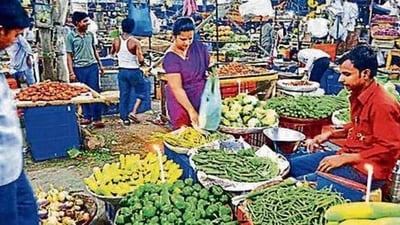
Prices of food, which have been the main source of high inflation for consecutive quarters, continued to be elevated at 9.04%. (Representative file photo)

Despite the slowing pace of growth in prices, the Consumer Price Index-based rate of retail inflation stayed above the Reserve Bank of India’s 4% tolerance level, with two percentage points of deviation on either side.

Prices of food, which have been the main source of high inflation for consecutive quarters, continued to be elevated at 9.04%. This food-price print in November was however lower than October’s 10.47%.

Cereal prices went up by 6.88% after climbing 6.94% in October. Inflation in pulses stood at 7.43% against 9.81% last month.

Also Read: WPI inflation hits 4-month high of 2.4% in October

Most analysts had expected India’s retail prices to have decline slightly in November on the back of improving food supplies.

Sticky food inflation, which have knocked household budgets, has been a key concern of the Reserve Bank of India.

The Reserve Bank of India (RBI) left its benchmark interest rate unchanged at 6.5% in this year’s last meeting of its monetary policy committee despite a dip in economic growth, citing continued risks from inflation.

Achieving the right balance between inflation and growth, a key tradeoff for all economies, is “the most important task for the Reserve Bank of India”, outgoing Reserve Bank governor Shaktikanta Das had said on Tuesday in his last official comments.

Stay updated with the…

See more


Blinken meets with Jordanian leaders, focuses on Syria’s future

0
Blinken meets with Jordanian leaders, focuses on Syria’s future


US Secretary of State Antony Blinken stressed the importance of a “unified approach” to Syria during meetings in Jordan.


New bank account, locker rules soon? Banking Amendment Bill allows up to 4 nominees – check what’s about to change

0
New bank account, locker rules soon? Banking Amendment Bill allows up to 4 nominees – check what’s about to change


New bank account, locker rules soon? Banking Amendment Bill allows up to 4 nominees - check what’s about to change
Bank account nominees have the authority to access deposits, articles, or locker contents following the accountholder’s death. (AI image)

New bank account, bank locker rules soon! The Banking Laws (Amendment) Bill received approval in the Lok Sabha on December 3, 2024, introducing provisions for account holders to designate up to four nominees for their savings accounts and lockers. This modification enables customers to appoint multiple nominees for various banking products, including fixed and recurring deposits.
The legislation requires Rajya Sabha to pass it. Following approval from both parliamentary houses, presidential assent will establish the implementation date for these modifications.

New Bank Account, Bank Locker Rules

  • A significant aspect of this legislative change involves the transition from the current single-nominee arrangement to a system permitting up to four nominees for banking accounts and fixed deposits.
  • This revision aims to simplify the process of fund distribution following an account holder’s demise, addressing difficulties encountered during the COVID-19 crisis.
  • The nomination facility in banking deposits, mutual funds and additional financial instruments facilitates quicker and straightforward release of assets from accounts or lockers, eliminating the need for succession certificates or testamentary documents.
  • Bank account nominees have the authority to access deposits, articles, or locker contents following the accountholder’s death. The new amendment permits multiple nominees for bank deposits, who can be designated either successively or simultaneously.
  • However, for other banking services, nominees must be appointed in sequence. For simultaneous nominations, the assets will be distributed according to specified proportions. In cases of sequential nominations, precedence is given to nominees listed higher in the nomination order.

The Banking Laws (Amendment) Bill, 2024 states: “The Banking Regulation Act allows single or joint deposit holders to appoint a nominee for their deposit. Such a nominee can also be appointed for items left in custody of a bank or for a locker hired from a bank. The nominee can access the deposit, articles, or locker in case of death of the person who nominated him. The Bill allows the appointment of up to four nominees for these purposes. For deposits, such nominees can be appointed either successively or simultaneously while for other purposes they can be appointed successively. In case of simultaneous nominees, the nomination will be effective in a declared proportion. For successive nomination, the nominee who has been named higher in the order of nomination will receive priority.”
Also Read | Big news for EPFO subscribers! Come 2025, you may be able to withdraw your PF money directly from ATMs: Report
The Reserve Bank of India defines nomination as follows: “Nomination is a facility that enables a deposit account holder(s) (individual or sole proprietor) or safe deposit locker holder(s) to nominate an individual, who can claim the proceeds of the deposit account(s) or contents of the safe deposit locker(s), post the demise of the original depositor(s) or locker holder(s).”


Andhra Pradesh is all set to get skill-tag

0
Andhra Pradesh is all set to get skill-tag


“I carry a knife or sickle, an earthen pot, a waist belt and a harness before I wrap my legs around the trunk of the tree and climb it,” says the toddy tapper from Penumaka village in Tadepalli mandal of Guntur district. Katikam explains alms. Andhra Pradesh.

“Even at the age of 59, he can climb fast carrying tools and utensils collecting toddy with remarkable balance, which only comes with years of experience,” says his wife, Ms Narasamma, her eyes brimming with pride. Are shining.

The couple were interacting with a team of officials and staff from AP State Skill Development Corporation (APSSDC) and Penumaka Grama Sachivalayam (Village Secretariat), a government-set up office that provides public services at the grassroots level.

The team members go door-to-door for household surveys as part of the Andhra Pradesh government’s ambitious plan to conduct a skills census, the first of its kind in India.

“First, I inspect the tree and the inflorescence to make sure it is healthy and ready for tapping,” Mr. Bhiksham continues, punctuating his conversation with a question posed to him by one of the Sachivalayam staff. Regardless of overlap.

“Do you want to go into some other business, or do you wish to continue what you are doing,” asked Sadupathi Jyothirmayi, welfare and education assistant at Sachivalayam.

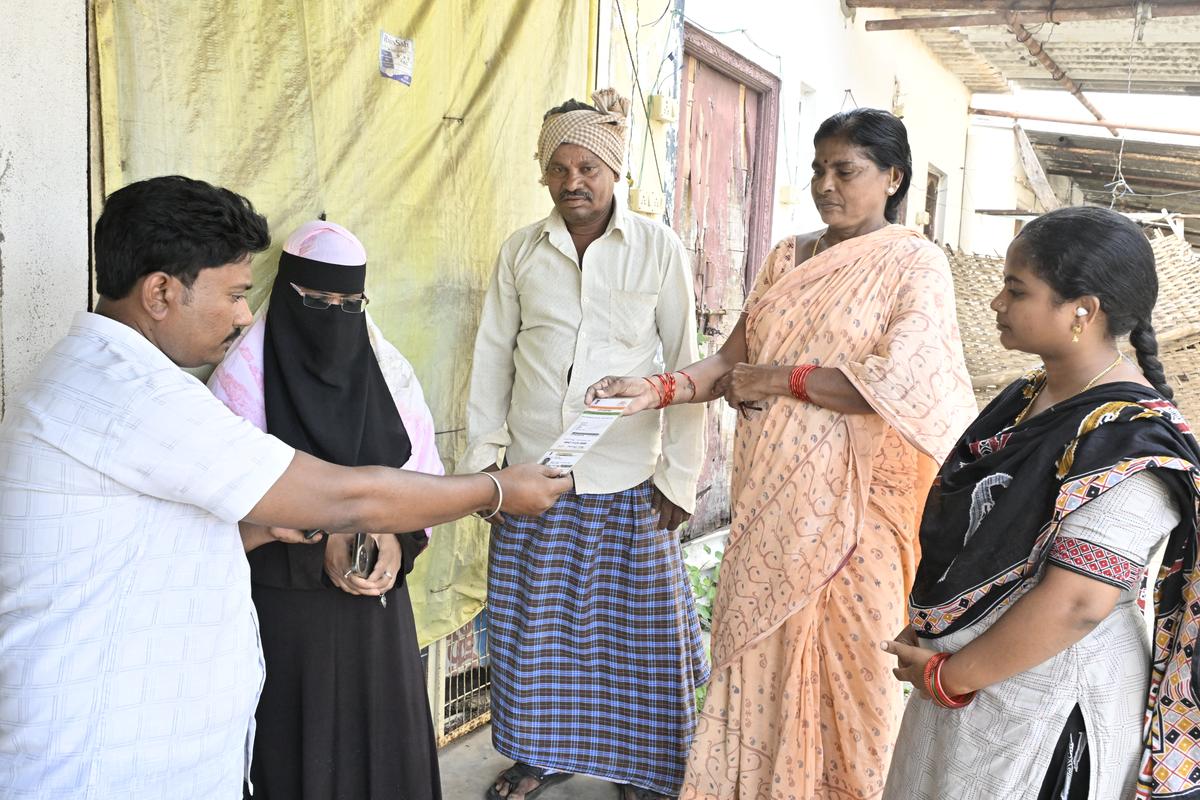
Sachivalayam staff interacting with Katikam Bhiksham and his wife Narayanamma, locals of Penumaka village.

Sachivalayam staff interacting with Katikam Bhiksham and his wife Narayanamma, locals of Penumaka village. , Photo Courtesy: GN Rao

It took Mr. Bhiksham a few minutes to organize his thoughts. Rubbing his chin he said that toddy-tapping requires extraordinary strength and stamina. “It is also a high-risk job as it sometimes involves climbing trees more than 50 feet tall,” he said, breaking eye contact. Given the option, the 59-year-old man is willing to take up agricultural work.

However, even while answering the questions promptly, Mr. Bhiksham wonders about the purpose of the interrogation.

APSSDC has almost completed the pilot census conducted in five mandals of Mangalagiri assembly constituency, Tadepalli, Duggirala, Mangalagiri Urban, Mangalagiri Rural and Thulluru.

“This initiative will help bridge the gap between talent and opportunity while better aligning with the demands of the modern workforce”D. Nagamalleshwar RaoEngineering Student, KLEF (Deemed University)

A total of 775 enumerators drawn from APSSDC, Village and Ward Secretariat, Society for Employment Generation and Enterprise Development in Andhra Pradesh (SEEDAP), and the National Academy of Construction (NAC) surveyed 1,12,251 households classified into 2,029 clusters of 100. Sachivalayam reaching 2,77,207 inhabitants.

a new Hope

Pathan Shamila, a 34-year-old housewife, once worked as a computer operator in a surgical shop in Vijayawada. The native of Bheemadole in Eluru district is a B.Com (Computer Applications) graduate who lives in Penumaka. The visit of officials to the village rekindled her hope of finding a job and using her skills to help her husband’s income.

At Kothuru center in Tadepalli mandal, the enumerators approached a group of villagers, most of them illiterate with a mix of curiosity, confusion and apprehension visible on their faces.

Soon, others gathered cautiously to see what was happening. Whispers spread as people speculated about the purpose of the officials’ visit. “Is this a government assistance program?” local resident Ms Venkayamma asked excitedly. However, questions about skills, education and professional experiences left them puzzled and some became hesitant to answer, as they were unsure of how their answers would be interpreted.

When asked, Ms. Venkayamma laughed nervously, and dismissed her skills as unimportant. The purpose of the survey needed to be patiently explained to the people in the villages so that they could talk openly. Some of them came forward to describe their expertise in weaving, farming or animal husbandry. Staff recorded details carefully, asking questions about traditional crafts, farming methods, educational and technical skills and future training aspirations. They received inputs from all demographic groups including women, youth and elderly in the age group of 15-59 years to create a comprehensive profile of their skill potential.

“Apart from the challenge of migrant persons, whose names are officially registered here but have moved elsewhere, many residents are concerned about sharing the one-time password (OTP) received on their phones to clear the survey. There is doubt. Some others say they are not willing to participate in the survey for various reasons,” says Mr Venkat Srikanth, digital assistant, Penumaka Sachivalayam.

Some surveyors involved in the enumeration process say that the skills of Sachivalayam staff to participate in government priorities and surveys other than the census is another shortcoming.

skill gap study

The objective of this sample assessment and data collection exercise is to understand the skills and competencies of the local population and the skills in demand to improve the economy of the state. In other words, it is a skill gap study, which will be replicated at the state level temporarily from the first week of January 2025.

The Periodic Labor Force Survey (PLFS) conducted by the Ministry of Statistics and Program Implementation (2022-23) says Andhra Pradesh has the highest unemployment rate in India at 24% among graduates aged 15 and above. The skills census exercise aims to address this issue.

According to key information obtained by those at the helm of the census project, which is only indicative in nature, the labor force participation rate is lowest among those with upper secondary education, while the unemployment rate in the 15-29 year age group is 15.7% . Compared to the national average of 10%, this shows that Andhra Pradesh needs to make its youth more skilled to reduce the unemployment rate.

With regard to gender based labor population ratio among the 15-29 years age group in the state, it has been found that fewer young women are participating in the workforce, and more programs can be designed for their upliftment. As far as wages among salaried employees (15 to 29 years age group) are concerned, the state is performing above the national average, but there is scope for improvement.

uncovering talent

“Our youth are skilled not only in the emerging areas of cyber security and cloud technology but also in the manufacturing and construction sectors. Unfortunately, his talent is captured in his resume. They need a platform to prove their worth,” says A Srinath, dean of the skill development and student progress wing at KLEF Deemed University.

Srinath believes that the skills census should not be prolonged, and should be completed in the next six months “because we have the 2024 graduate batch readily available with high potential and equipped with skill sets.”

“Through this particular project, the government is trying to identify what skills people have in different jobs and sectors, finding the gap between what skills people have and what employers need”G Ganesh KumarManaging Director & CEO, APSSDC

People, especially the youth, see the skills census as a boon.

“This initiative will help bridge the gap between talent and opportunity while better aligning with the demands of the modern workforce,” says D. Nagamalleswara Rao, a final year mechanical engineering student at KLEF Deemed University.

The APSSDC office at Tadepalli is buzzing with activity where a constant hum of energy and purpose fills the place. Managing Director and CEO, APSSDC, G. Ganesh Kumar, has been engaged in back-to-back meetings and is working closely with various agencies and NGOs to ensure the success of the skill census.

A large conference room has been converted into a technical command center staffed by representatives from KPMG International Limited, APSSDC’s knowledge partner. Long tables are laid out with high-powered laptops and monitors and tangled cables stretch throughout the room. Some techies are immersed in typing code, while others are scanning spreadsheets filled with survey questions and demographic data.

“Through this special project, the government is trying to identify what skills people have in different jobs and sectors, what skills people need and what employers need,” says Mr Ganesh Kumar. This will benefit both the government and the public. He says this will equip the government with useful data to create better training and job-oriented programs and help people choose careers, find suitable training and improve job prospects.

“Employment generation in the state is the need of the hour and this project will help the government achieve it. Selected state-run and private institutions should be involved in the process of identifying skill gaps, building competency levels among students and promoting internships, which can later lead to their job placement,” said VR Siddhartha, Pro-Vice -says Chancellor AV Ratna Prasad. Engineering College, Deemed University.

Students are happy that the skill census will guide them in focusing on skills in line with the demands of the industry. “Since academic qualifications alone are no longer enough to get a job, we need to target specific skills that make us more competitive and employable in the job market,” says Pranuthi Polipogu, a final year (ECE) student at VR Siddhartha Engineering College. Will make you eligible.”

His friend Tribhuvan Sri Sappa, who is pursuing computer science engineering at the same institute, sees the initiative as a transformative step towards addressing critical challenges such as employability and skills gap. “It will give direction and confidence to young job seekers like me,” she says.

“The outcome of the census will be a powerful tool that will help the government systematically classify and organize the skills that people possess, like a well-organized library of the state’s workforce capabilities, providing clarity on what skills a person has and where. Will provide photo. There may be gaps”Of. RaghuExecutive Director, APSSDC

huge task

Preparing for the state-wide survey, which will require careful planning and implementation to ensure accuracy and reliability, officials at the helm of the project are making rapid and elaborate arrangements, including several large-scale workshops and training sessions. Rounds included. Village, Mandal, District and State level.

Armed with reliable information, officials are moving forward on the project. The state’s population is said to be experiencing a demographic dividend, and if their numbers are any indication this is expected to last until 2040. Now about 3 lakh people are entering the labor force every year, compared to 2.3 lakh in the last decade. Although the state’s economy is expected to grow, more than 1 lakh youth in the 15-16 age group drop out of mainstream education every year, which is a matter of grave concern. The information also shows that 33% of youth in the state need skills by 2021-22.

The census will cover 3.5 crore working age people (15-59 years) in 1.8 crore households in Andhra Pradesh. The project consists of two major elements: a household census and an industry census. There are 33 lakh micro, small and medium enterprises (MSMEs) in the state apart from other major industries, and all of them will be covered.

skill id

To overcome the language barrier, enumerators will conduct the survey in a bilingual format. After enumeration, participants will receive a skill ID derived from their Aadhaar number, which will give them access to skill profile, assessment and lifelong skill opportunities in virtual and physical modes. About 50,000 enumerators and 8,000 supervisors will be trained to complete this project.

“The outcome of the census will be a powerful tool that will help the government systematically classify and organize the skills that people possess, like a well-organized library of the state’s workforce capabilities, providing clarity on what skills a person has and where. Will provide photo. There may be shortcomings,” said APSSDC executive director K. Raghu says.


Biden issues 39 presidential pardons and commutes 1,500 sentences

0
Biden issues 39 presidential pardons and commutes 1,500 sentences


US President Joe Biden has issued presidential pardons to 39 Americans convicted of non-violent crimes, and commuted the sentences of nearly 1,500 other people.

The White House described it as the most acts of presidential clemency issued in a single day. It comes after Biden made the decision to pardon his own son, Hunter Biden.

The US Constitution decrees that a president has the broad “power to grant reprieves and pardons for offences against the United States, except in cases of impeachment”.

Announcing the move, Biden said those pardoned had “shown successful rehabilitation and have shown commitment to making their communities stronger and safer”.

The White House released a pardon list of 39 people that said the individuals had committed either either a “non-violent offense” or a “non-violent drug offense”. It did not name the specific crimes they were convicted of committing.

Several of those pardoned were individuals who had been released from prison. Many were veterans or they had become community leaders or advocates.

The White House described one pardon recipient as a 49-year-old Virginia resident who was convicted of a drug offence at age 21. After serving his sentence, he went on to earn a university degree, have a successful career in the US Army and Air Force and volunteer for charitable organisations that support veterans.

He is known “as exceptionally hard working, dedicated, and trustworthy by those who know him”, the White House said in a statement that gave short biographies on all those who had received pardons.

The 1,499 commuted sentences includes individuals who were placed in home confinement during the Covid-19 pandemic, as well as those whose sentences Biden deemed to be too long due to outdated laws.

They have “shown that they deserve a second chance”, Biden said of those whose sentences he had commuted.

Biden promised “more steps in the weeks ahead”.

The president will leave the White House on 20 January 2025, when his successor Donald Trump is inaugurated.

Biden previously had a record of pardoning fewer people than most presidents in modern US history.

He had issued a few categorical pardons in the past, however. These are pardons given to a sweeping number of people who fall under a category outlined by the president.

In October 2022, Biden issued a full pardon for those who had been convicted of simple possession of marijuana, and later expanded that to include other marijuana-related offenses.

Earlier this year, Biden issued another full pardon to military personnel and veterans who were convicted of an offence based on their sexual orientation.

Biden’s decision earlier this month to pardon his son, Hunter, continued a trend of presidents on both sides of the US political divide – including Trump – granting clemency to people close to them.

The younger Biden was facing sentencing for two criminal cases for tax fraud and gun crimes.

The move has proven controversial, since the outgoing president previously ruled out doing it. But he claimed the cases against his son were politically motivated.

Biden has also weighed issuing pre-emptive pardons for prominent critics of his successor Trump in a bid to shield them from retribution after the president-elect takes office, but has reportedly been concerned about the precedent it would set.

In a separate development on Thursday, an ex-FBI informant pleaded guilty to lying to the FBI, which had led to investigations into the Biden family.

Alexander Smirnov acknowledged that he concocted “fabrications” about Biden and his son accepting bribes from Ukrainian energy firm Burisma. The claim was seized upon by Republicans in Congress as proof of corruption.

Trump granted 237 acts of clemency during his first term in the White House, according to the Pew Research Center. These included 143 pardons and 94 commuted sentences.

Many were in a flurry before he left office.

In recent days, Trump has pledged to issue pardons on his first day in office to people who were convicted for participating in the 6 January 2021 riot on Capitol Hill, in which his supporters tried to block the certification of Biden’s election victory.

He said this week that the pardons would be for people who were “non-violent”.

“A vast majority should not be in jail, and they’ve suffered gravely,” he said in an interview with Time magazine on Thursday.


India’s Industrial Production Rose 3.5% In October 2024: Data | Economy News

0
India’s Industrial Production Rose 3.5% In October 2024: Data | Economy News


New Delhi: India’s Index of Industrial Production (IIP) recorded a year-on-year growth of 3.5 per cent in October, up from 3.1 per cent in September this year, according to the data released by the Ministry of Statistics on Thursday. 

The industrial growth rate of the manufacturing sector, which accounts for more than three-fourths of the index of industrial production (IIP), recorded a growth of 4.1 per cent in October. The sector plays a key role in providing quality jobs to the young graduates passing out from the country’s engineering institutes and universities.

Within the manufacturing sector, 18 out of 23 industry groups have recorded a positive growth in October over the same month of the previous year. The top three positive contributors are – “Manufacture of basic metals” (3.5 per cent), “Manufacture of electrical equipment” (33.1 per cent) and “Manufacture of coke and refined petroleum products” (5.6 per cent).

The growth in the output of the electricity and mining sectors for October were recorded at 2 per cent and 0.9 per cent, respectively. The figures based on user classification show that the production of capital goods which comprise machines used in factories went up by 3.1 per cent.

This segment reflects the real investment taking place in the economy which has a multiplier effect on the creation of jobs and incomes going ahead. There was also a 5.9 per cent increase in the production of consumer durables such as electronic goods, refrigerators, and TVs during September, reflecting the higher consumer demand for these items amid rising incomes.

The output of consumer non-durables such as soaps and cosmetics went up by 2.7 per cent during the month. The output of intermediate goods went up by 3.7 per cent while there was an increase of 4 per cent in infrastructure/construction goods during October compared to the same month of the previous year, the figures further showed.