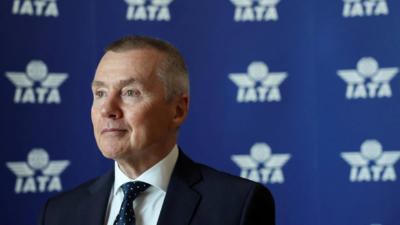
IATA director general Willie Walsh (Reuters photo)
GENEVA: Air traffic management in India, which has about 1500 airline aircraft on order, is an area of real concern, said Willie Walsh, International Air Transport Association (IATA) Director General on Tuesday. “We will see whether the air traffic environment will keep pace with the growth,” he said. While passengers are well aware of the congestion over airports with aircraft put in holding patterns, Walsh highlighted the congestion en route over the Indian airspace. “We’re looking at considerable growth, and that growth needs to be facilitated by airports and also air traffic control (ATC), and sometimes the ATC part of it gets forgotten by people. There is no reason why it can’t be done, but it is required. It requires focus by the govt and regulator,” said Walsh, during an interaction with media from the Asia Pacific on the sidelines of IATA Global Media Day. The en route congestion in the coming years and decade is of particular concern, both for domestic and international flights operating in the Indian airspace, he said. Responding to a media query about the duopoly in the Indian airline market with IndiGo and Air India group of airlines cornering most of the market share and consequently infrastructure resources, Walsh said that he wouldn’t call it a duopoly. “The market is open for everyone. The acquisition of Air India by the Tata group was a really positive development,” he said. IndiGo has been “very quietly building up a very impressive network in India.” In terms of market cap, IndiGo is one of the top players in the world, he added. “India should be celebrating the success of what is a fantastic airline, and consumers in India are benefitting significantly from the expansion of IndiGo,” he said. “When I look at the Indian domestic market, there is plenty of scope for airlines, and with new airport infrastructure coming up, it’s going to be a very exciting market,” he said. Speaking about the monopoly in Mumbai with the upcoming Navi Mumbai airport and the Mumbai airport both owned by a single company, Walsh said that the ownership, as such, is not of particular concern. “In some countries, every airport is owned by a single company,” he said. “This is where you need regulation, a regulator who is capable of replicating a competitive environment where there isn’t competition. I see positive developments in terms of economic regulations in airports in India. I think that is something that we can look forward to. It’s more about how those airports are regulated from the economic point of view.” Apart from airport regulatory matters, the only concern about India, in view of the rapid growth, would be about air traffic management and airport infrastructure, he said. “We have seen significant investment in airport infrastructure. There will be new airports at Delhi and Mumbai, so when I look at India, the only real concern I have around infrastructure would be whether the air traffic control environment can keep pace with the growth we will see, both in domestic and international environments,” he said. Though India currently has the third-largest domestic aviation market in the world, it is way behind the first two rankers, the US and China. While the US has 3 seats per head of population in its domestic market, India remains a long way behind with just 0.13 seats per head of population, according to OAG. It is also considerably behind China, which is approaching 0.5 seats per head of population
In connection with the bomb threat incident on a flight bound for Kolkata from Nagpur on November 14, Raipur police have arrested a man who was later identified as an Intelligence Bureau (IB) officer, officials said on Tuesday.
According to police, the flight was forced to make an emergency landing at Raipur airport after a passenger identified as Animesh Mandal raised a bomb alert on the flight.
Police received information about the bomb threat from Air Traffic Control (ATC) and launched an investigation. During interrogation, it was found that the bomb threat was a hoax.
“Since the person who provided the information claimed to be an IB officer, personnel from the IB were also informed. It was confirmed that the passenger was an IB officer,” said Senior Superintendent of Police (SSP) Santosh Singh.
Police have registered an offence against him under relevant sections of the Civil Aviation Act and the Bharatiya Nyaya Sanhita (BNS) Act, 2023.
“The accused has been arrested and sent to judicial custody,” added the SSP.
A man waves a Syrian opposition flag to celebrate the end of al-Assad rule
A stunning advance by Syrian rebels ended Bashar al-Assad’s decades-long rule, with opposition forces taking the capital and forcing the president to flee on 8 December.
The overthrow followed a 13-year civil war, which started after Assad crushed pro-democracy protests, killing more than half a million people and displacing millions more, and embroiled international powers and their proxies.
The world is now watching to see how Syria’s political landscape shapes up after the overthrow of the Assad family’s half-century rule.
Those with a vested interest in the conflict and the future of the country include, on one side, Russia and Iran – which backed Assad – and on the other, the US and Turkey, which supported different rebel groups.
Here we explore how those countries, along with Israel, have played a role in Syria – and could continue to do so.
Turkey
During Syria’s civil war, Turkey has supported opposition forces – primarily the Syrian National Army (SNA) – by providing arms, military and political support.
Syria’s northern neighbour has mostly been concerned with using rebels to contain the Kurdish YPG militia, which Turkey accuses of being an extension of a domestically banned Kurdish rebel group. Turkey also wants the roughly three million Syrian refugees living in its country to return home.
The YPG is the biggest militia in another rebel group, the US-backed and Kurdish-led Syrian Democratic Forces (SDF) alliance.
During the war, Turkish troops and allied rebels seized stretches of territory from these groups along Syria’s northern border.
Turkey has also been politically involved. In 2020, Turkey and Russia brokered a ceasefire to halt a push by the government to retake Idlib, the rebels’ stronghold in the north-west.
Many believe the offensive could not have happened without Turkey’s blessing. Turkey has denied backing HTS.
Meanwhile, conflict in Syria’s north continues: As Assad fell, the SNA launched a separate assault on areas held by the SDF.
Russia
Russia already had a decades-long relationship with the Assad government, and had military bases there before the civil war.
Russian President Vladimir Putin used his country’s presence in Syria, and support of Assad, to challenge the power and dominance of the West in the region.
In 2015, Russia launched an air campaign and sent thousands of troops in support of the Assad regime.
In return, Russia received 49-year leases on an air base and naval base, which provided crucial hubs in the eastern Mediterranean for transferring military contractors in and out of Africa.
This marked an important stage in Russia’s attempt to assert itself as a global power, previously focusing its efforts on nations that were once in the Soviet bloc.
But fighting a war in Ukraine since 2022 preoccupied Assad’s ally, contributing to the Syrian military’s swift defeat to rebel groups in late November and early December.
Assad and his family were granted asylum in Moscow after fleeing Damascus, Russian media reported.
US
After Syria’s pro-democracy protests in 2011 were met with force, then US-president Barack Obama criticised the Assad government – but the US only became involved militarily in order to combat the Islamic State (IS).
A US-led global coalition has carried out air strikes and deployed special forces since 2014 to help the Kurdish-led rebel alliance SDF capture territory once held by IS militants in the north-east.
After the Assad government fell, the US government said it conducted dozens of air strikes against IS camps and operatives in central Syria to ensure IS could not take advantage of the unstable situation.
However, President-elect Donald Trump, who takes office in January, said Syria is a “mess” the US should stay out of. When Trump was president in 2019, he withdrew US troops from Syria, a move his officials gradually rowed back.
The US currently has around 900 troops in Syria.
Iran
Iran and Syria have been allies since Iran’s Islamic Revolution in 1979. Syria backed Iran during the Iran-Iraq war in the 1980s.
During the Syrian civil war, Iran is believed to have deployed hundreds of troops and spent billions of dollars to help Assad.
Thousands of Shia Muslim fighters armed, trained and financed by Iran – mostly from the Lebanon-based Hezbollah movement, but also from Iraq, Afghanistan and Yemen – have also fought alongside the Syrian army.
But similar to Russia, Hezbollah has been weakened by conflict with Israel in Lebanon, likely hastening the downfall of the Syrian military.
Israel
Israel shares a border with Syria. In the 1967 Six-Day War, Israel seized the Golan Heights, about 60km (40 miles) south of Damascus, from Syria, before annexing it in 1981. The annexation is not recognised by the UN and many other countries.
Since rebels overthrew Assad, Israel has carried out hundreds of attacks across Syria. Targets include Syria’s military infrastructure, naval fleet, and weapons production sites.
Israel said it is acting to stop weapons falling “into the hands of extremists”.
BBC Verify geolocated an image of an IDF soldier standing just over half a kilometre beyond the buffer zone, inside Syria on a hillside near the village of Kwdana.
NEW DELHI: Global aviation body International Air Transport Association (IATA) on Tuesday said that it expects supply chain issues to continue to impact airline performance into 2025, raising costs and limiting growth.
FILE PHOTO: A passenger aircraft descends to land at Heathrow Airport in London. (REUTERS)
IATA, which represents about 340 airlines that comprise over 80% of global air traffic, said that the average age of the global fleet has risen to a record 14.8 years, up from 13.6 years average for the period 1990-2024.
“The estimate for 2024 deliveries is 1,254 aircraft, a 30% shortfall on what was predicted going into the year. In 2025, deliveries are forecast to rise to 1,802, well below earlier expectations for 2,293 deliveries with further downward revisions in 2025 widely seen as quite possible,” an IATA statement said.
It added that the backlog for new aircraft has reached 17,000 planes.
“At present delivery rates, this would take 14 years to fulfil, double the six-year average backlog for the 2013-2019 period. However, the waiting time is expected to shorten as delivery rates increase,” it added.
The number of parked aircraft or aircraft on ground (AOG) is 14% of the total fleet, of which around 2% are parked for engine inspections.
“We expect this situation to persist into 2025. Supply chain issues are frustrating every airline with a triple whammy on revenues, costs, and environmental performance. Load factors are at record highs and there is no doubt that if we had more aircraft, they could be profitably deployed, so our revenues are being compromised,” Willie Walsh, IATA’s director general said.
“Meanwhile, the ageing fleet that airlines are using has higher maintenance costs, burns more fuel, and takes more capital to keep it flying. And, on top of this, leasing rates have risen more than interest rates as competition among airlines intensified the scramble to find every way possible to expand capacity. This is a time when airlines need to be fixing their battered post-pandemic balance sheets, but progress is effectively capped by supply chain issues that manufacturers need to resolve,” he added.
Walsh said the aviation sector was united in its commitment to achieve net zero carbon emissions by 2050 but when it comes to the practicality of actually getting there, airlines have been left bearing the biggest burden.
“The supply chain issues are a case in point. Manufacturers are letting down their airline customers and that is having a direct impact of slowing down airlines’ efforts to limit their carbon emissions. If the aircraft and engine manufacturers could sort out their issues and keep their promises, we’d have a more fuel-efficient fleet in the air,” he said.
At the age of 28, Gandhiji’s younger son Devdas faced opposition from both his father and father-in-law, possibly due to caste differences. The marriage was approved after they proved their enduring love after five years of separation
Gandhiji valued his advice, but sometimes differences of opinion arose between the two. (News18 Hindi)
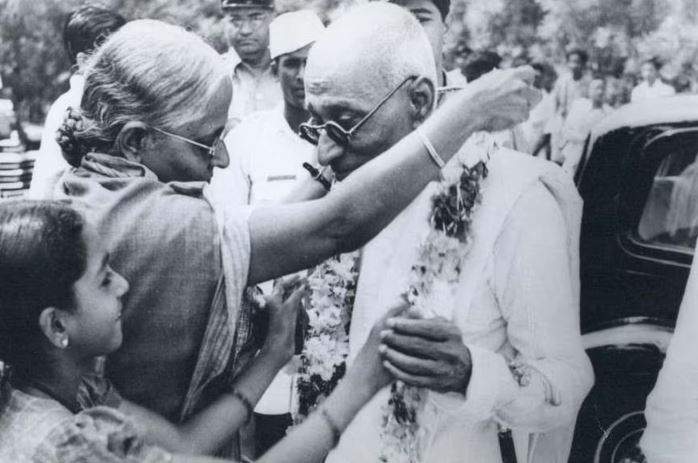
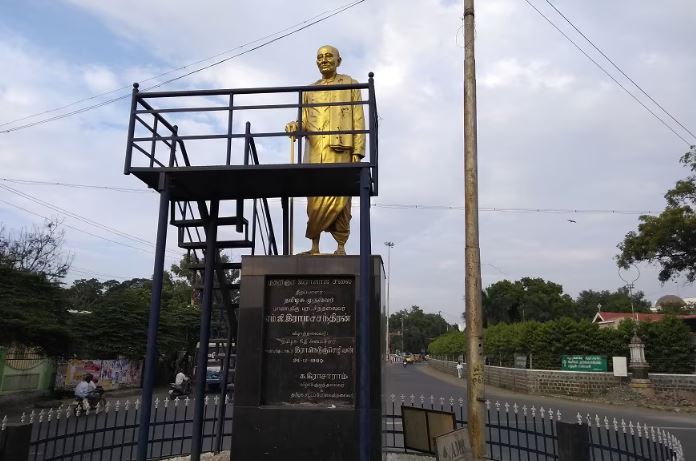
Chakravarti Rajagopalachari, the first Governor General of independent India, was born on December 10, 1878 in Krishnagiri district of Tamil Nadu. Before entering politics, Rajagopalachari was a successful lawyer. While Jawaharlal Nehru envisioned him as the first President of India, circumstances prevented this from being realized.
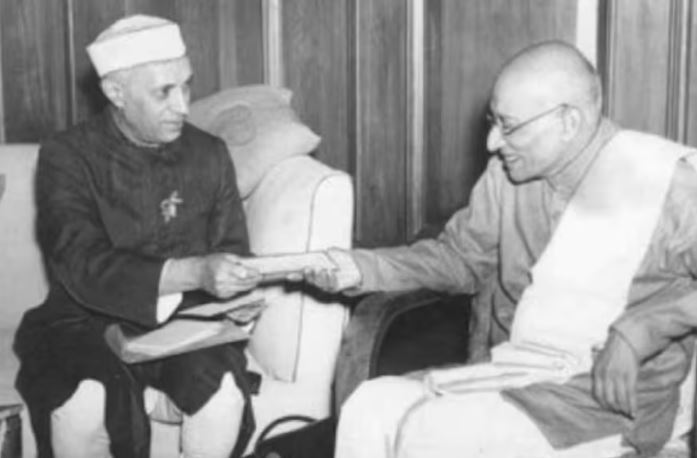
It was Mahatma Gandhi who played an important role in bringing Rajagopalachari into the political arena. Their relationship, which extended to a family relationship, is an interesting story in itself. Although initially he was close to Nehru, later a rift developed between them.
Rajagopalachari, commonly known as Rajaji, was a lawyer, writer, politician and philosopher. Born to a judge in Salem, Rajaji displayed academic talent from an early age and consistently achieved first-class results. His entry into politics was inspired by Mahatma Gandhi. Due to the influence of Gandhiji’s non-cooperation movement, Rajaji had to leave his prosperous legal practice and adopt Khadi.
Rajaji’s legal career was marked by success, evidenced by his status as the first lawyer in Salem to own a car. He was greatly influenced by Gandhiji’s campaigns for the abolition of untouchability and Hindu-Muslim unity. Following the 1937 elections, Rajaji assumed the post of Prime Minister of Madras, a role equivalent to today’s Chief Minister. However, he resigned in 1939 in protest against the Viceroy’s unilateral decision to involve India in World War II.
Gandhiji’s friend and close advisor
Rajaji was very close to Gandhiji. Often, when faced with serious matters requiring advice, he would turn to Rajaji for guidance. Their intimacy became so deep that Rajaji sent his daughter Lakshmi to live in Gandhiji’s ashram in Wardha. It was here that Lakshmi and Gandhiji’s younger son Devdas fell in love.
When Devdas was 28 years old and Lakshmi was 15 years old, neither Gandhi nor Rajaji were in favor of this marriage. Possibly due to caste differences, no one agreed at that time. He placed a strict condition on Devdas: he would have to remain separated from Lakshmi for five years. If their love continues, only then will they be allowed to marry. That’s exactly what happened and the couple got married. Thus, Rajaji and Gandhi became related by marriage.
Differences between Gandhiji and Congress
After joining Congress, Rajaji participated in its movements with full enthusiasm. He soon became one of the top leaders of the country’s politics and Congress. Gandhiji valued his advice, but sometimes differences of opinion arose between the two. There were instances when Rajaji openly opposed the Congress, yet it was clear that his actions were always deliberate and rational.
When Gandhiji was put in jail, he handed over the editorship of Young India to Chakraborty.
Chakraborty’s close relationship with Gandhi is evident from the fact that whenever Gandhi was imprisoned, he entrusted Chakraborty with the responsibility of editing his newspaper, Young India. When asked who should be considered his successor outside the prison, Gandhi immediately replied, “Rajaji, who else?” Their bond was further strengthened in 1933 when Chakraborty’s daughter and Gandhi’s son, Devdas, were married.
However, the outbreak of World War II led to a rift between Chakraborty and the Congress, leading to his falling out with Gandhi. While Gandhi believed in giving only moral support to the British government during the war, Rajaji advocated full support contingent on India being granted complete independence. These differences escalated to such an extent that Rajaji resigned from the Congress Executive Committee, although he later rejoined the Congress.
Rajaji had warned of partition five years ago
Rajaji was the first person who agreed to the partition of the country at the Allahabad Congress session in 1942. Although he faced a lot of opposition at that time, he still stuck to his conviction. In 1947, his prediction from five years earlier came true. These events inspired Congress leaders to acknowledge his foresight and intelligence.
(News18 Hindi)
Differences between the policies of Nehru and Congress
In 1946 he was appointed Minister of Industry in the interim government. After the country’s independence in 1947, he played the role of Governor of Bengal. The following year, he became the first Governor General of independent India.
When Nehru could not make him the first President of India, he was brought into the Union Cabinet in 1950. In the 1952 general election, he became a member of the Lok Sabha and was later elected Chief Minister of Madras. However, after a few years, dissatisfied with Nehru and the Congress Party, he resigned as Chief Minister and left the party.
Rajaji had objections to the Congress Party and then Prime Minister Jawaharlal Nehru’s inclination towards leftist socialism, believing that this ideology would ultimately prove detrimental to the Congress. This fundamental difference of opinion led them to consider the establishment of a new nationalist party, which culminated in the formation of the Swatantra Party on 4 June 1959.
(News18 Hindi)
Launched a new party
Rajaji had announced the formation of a new political party Swatantra Party 61 years ago. Founded with stalwarts like NG Ranga and Minoo Masani, the party soon gained prominence as a strong opposition force. However, its rapid growth was also accompanied by its rapid decline, leading to its dissolution after only 15 years.
The rise of the Swatantra Party can be attributed to several factors:
1. An important factor was the rejection of Nehruvian socialism. Critics argued that this model leaned too close to communist ideology.
2. The party attracted influential people like C. Rajagopalachari, who had a strong grassroots base and considerable influence over the masses.
3. Many leaders within the Swatantra Party were seen as potential contenders for the post of Prime Minister, which increased the appeal of the party.
4. The merger of the parties representing the royal families of Bihar and Orissa into the Swatantra Party proved decisive. By 1967, this alliance led the Swatantra Party to become the leading opposition force by securing the second largest share of votes in these states. Subsequently, the royal family of Rajasthan, including Maharani Gayatri Devi, joined the party.
5. Prominent people like Bhailalbhai Patel played an important role in establishing the party’s presence in Gujarat. Concurrently, the Swatantra Party saw growth in Tamil Nadu through the consolidation of regional parties led by Kamaraj and Ganesan. The charismatic leadership of NG Ranga in Andhra Pradesh further strengthened the party’s position.
6. Even two decades after India gained independence, the Swatantra Party remained committed to tackling persistent challenges such as poverty and illiteracy. The party attempted to represent the interests of farmers, laborers, and the lower and middle classes. Furthermore, it actively raised awareness regarding government corruption.
How was the rise of the Swatantra Party seen?
The rise of the Swatantra Party was closely watched after its formation in 1959. In the 1962 general elections, the party made a remarkable debut by securing 18 seats in the Lok Sabha. It emerged as the primary opposition to the Congress Party in Bihar, Rajasthan, Gujarat and Orissa. The Swatantra Party’s success continued in the 1967 elections, where it increased its representation to 44 Lok Sabha seats. This period was the party’s peak, posing a significant challenge to the dominance of the Congress Party. However, the Swatantra Party’s fortunes declined in subsequent elections and eventually disappeared from the political scene.
bad election results
In the 1971 elections, the Swatantra Party secured only eight seats, resulting in widespread disappointment. Masani resigned, and despite several attempts by Rajaji and the Swatantra Party, he refused to return, retiring from active politics soon thereafter. After Rajaji’s death on 25 December 1972, the Swatantra Party effectively ended, although technically it continued for the next two years under three subsequent presidents.
(News18 Hindi)
Nehru was warned in advance about China
Ramachandra Guha, in his book “The Last Liberal”, described Chakravarti Rajagopalachari, commonly known as Rajaji, as the most intelligent man in India. Mahatma Gandhi called Rajaji the keeper of his conscience. Guha writes that if Rajaji had been listened to in 1942 regarding partition, India could have been saved from the bloodshed that resulted from partition. As Home Minister in Jawaharlal Nehru’s cabinet, Rajaji opposed the expansionist Communist China in 1951. It is said that Rajaji had prior knowledge of all things.
opposition to women working
However, Guha writes, Rajaji always favored cordial relations with Pakistan. He also wished that the people of Kashmir live with dignity and respect. Additionally, he was among the first to advocate a market-based economy. However, he opposed women working. He questioned how a woman with children could even think of working.
Rajaji received ‘Bharat Ratna’ in 1954. A scholar with prodigious writing talent, he mastered both Tamil and English. His commentaries on ‘Geeta’ and ‘Upanishads’ are famous. He died on 25 December 1972 in Chennai.
newsIndia Which Governor-General of India was a companion of Mahatma Gandhi?
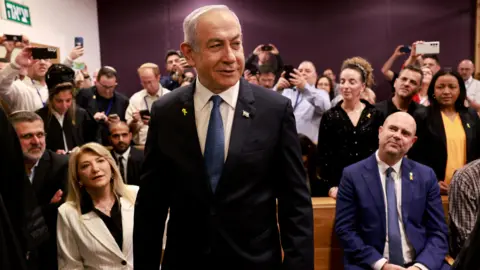
Netanyahu took the stand for about four hours and will resume testifying on Wednesday.
Israeli Prime Minister Benjamin Netanyahu has taken the stand for the first time in his long-running corruption trial, rejecting what he described as “absurd” allegations against him.
Appearing at a crowded courtroom in Tel Aviv on Tuesday, the embattled Israeli leader said the charges levelled against him were an “an ocean of absurdity”.
Israel’s longest-serving prime minister faces charges of bribery, fraud and breach of public trust in three separate cases. He has consistently denied any wrongdoing.
He took the stand for about four hours and will resume testifying on Wednesday. His military secretary twice handed him written messages, the first time requiring a recess and underscoring his having to do double duty as prime minister.
He attacked the Israeli media for what he called its leftist stance and accused journalists of having hounded him for years because his policies did not align with a push for a Palestinian state.
“I have been waiting for eight years for this moment to tell the truth,” Netanyahu told the three-judge court. “But I am also a prime minister … I am leading the country through a seven-front war. And I think the two can be done in parallel.”
Netanyahu’s appearance at the trial comes as Israel continues its assault on the besieged Gaza Strip amid soaring tensions in the region.
Critics have accused the prime minister of extending Israel’s 14-month assault on the besieged Gaza Strip to maintain his stay in power. They also say he is blocking a ceasefire deal that could release dozens of Israeli captives held in Gaza.
Outside the court, dozens of protesters gathered, including members of the families of captives held in Gaza.
Israel’s offensive on Gaza has killed more than 44,500 people, mostly women and children, according to Palestinian health authorities.
(Al Jazeera)
Three cases
Israel’s prime minister is on trial in three separate cases which were filed in 2019 – Case 1000, Case 2000, and Case 4000.
Netanyahu stands of accused of accepting luxury gifts from a billionaire Hollywood producer in exchange for assistance with personal business interests.
He is also charged with allegedly seeking regulatory favours for media tycoons in return for favourable news coverage.
His testimony follows years of scandals that have swirled around him and his family, who have gained a reputation of enjoying a lavish lifestyle at Israeli taxpayers’ expense.
Since the trial began in 2020, the court has heard prosecution witnesses in the three cases, including some of Netanyahu’s former aides, who have turned state witnesses.
The prosecution has tried to portray the prime minister as an image-obsessed leader who broke the law to improve his public perception.
The testimony, set to take place six hours a day, three days a week for several weeks, will take up a significant amount of Netanyahu’s time, prompting critics to ask if he can capably manage a country embroiled in a war on multiple fronts.
A verdict is not expected until 2026, at the earliest, and Netanyahu will have the option to appeal to the Supreme Court.
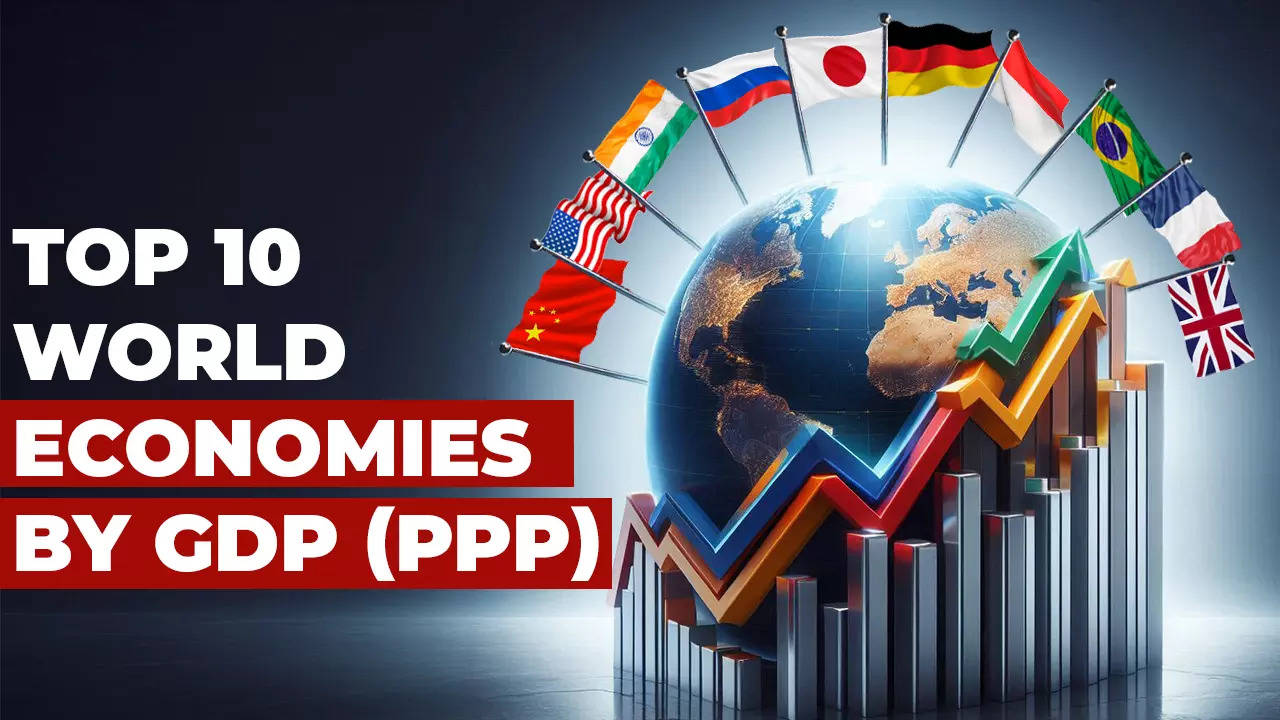
China tops the list of the top 10 countries with highest GDP (PPP) for 2025. According to the latest IMF estimates, China’s GDP (PPP) will be $39,438 billion in 2025. This will be 1.3 times the GDP (PPP) of the United States of America. By 2029, China’s GDP (PPP) is expected to be $48,836 billion. (AI image)
Netanyahu faces charges of bribery, fraud and breach of trust
This was a remarkable day for Israel: Benjamin Netanyahu holds the record as its longest-serving prime minister. Now he has become the country’s first serving leader to take to the witness stand as a defendant in a criminal case.
Moreover, he did so amid ongoing war in Gaza and as Israel carries out attacks in Syria during a tumultuous week for the region.
Netanyahu’s lawyer, Amit Hadad, first opened the defence argument, portraying the corruption trial as biased and his client as the victim of a political witch-hunt.
Prosecutors, he said, “weren’t investigating a crime, they were pursuing a man”.
Netanyahu then sought to downplay the significance of the charges of bribery, fraud and breach of trust, and stress his political legacy. He strongly denies any wrongdoing.
“I have been waiting for eight years for this moment to tell the truth,” the veteran leader told the court in Tel Aviv.
“But I am also a prime minister… I am leading the country through a seven-front war, and I think the two can be done in parallel.”
Over the past four years, prosecutors have alleged that Netanyahu exchanged regulatory favours with media owners in Israel seeking positive press coverage.
They also accuse him of accepting pricey gifts – including cigars and pink champagne – in exchange for advancing the personal interests of a millionaire Hollywood producer.
Netanyahu told the three-judge panel that Israeli media had launched “absurd” attacks on him over the years. He said it was “doubly absurd” to suggest the presents he had received from wealthy friends were illicit.
In a long diatribe, the prime minister, who leads the right-wing Likud party, criticised his country’s media for what he suggested was its leftist stance.
He accused Israeli journalists of hostility towards him over the years because he did not join the push for a Palestinian state.
Standing rather than sitting through his testimony, Netanyahu said: “Had I wanted good coverage all I would have had to have done would be to signal toward a two-state solution… Had I moved two steps to the left I would have been hailed.”
The Israeli PM smiled widely when he first entered the Tel Aviv District Court around 10:00 local time (08:00 GMT) and stayed until proceedings concluded just before 16:00.
The trial was moved from Jerusalem after being delayed for security reasons and convened in a small underground courtroom that also serves as a bomb shelter.
A limited number of accredited journalists were able to enter to report – others had to follow via a live feed from a room on the floor above.
Testifying is expected to take up a large portion of Netanyahu’s time over the coming weeks. Last week, judges ruled that he must appear twice in court this week and then three times a week going forward.
He is expected to shuttle between the courthouse and the war room at the nearby Israeli defence ministry.
Outside the court, Eliza praised Netanyahu’s leadership
Prominent ministers turned up at the courthouse during the morning in a show of support for the veteran leader and to criticise the legal proceedings.
“The court had to humiliate the Prime Minister, has to disgrace the state of Israel and hurt the security of the state,” said the Likud transportation minister, Miri Regev.
“What would have happened if they would have postponed his testimony by a few months?”
Outside the court, a line of security guards kept apart small but noisy crowds of people supporting and protesting Netanyahu.
Eliza Ziv, from Hadera, north-west Israel, said that in times of turmoil, no other Israeli leader came close to the PM’s capabilities.
She added that the “the hatred of the anti-Netanyahu camp, it’s not just hate for him, but for his supporters”.
Meanwhile, standing on the other side of the courthouse entrance, Siviona from Tel Aviv told me she saw the veteran leader as “an enemy of the people” who prioritised his political survival above the best interests of the country.
Among Netanyahu’s critics near the court on Tuesday was Siviona
Some relatives and supporters of Israeli hostages still held by Hamas in Gaza came to press for more to be done to free their loved ones.
Hadas Kalderon’s two children were released as part of a temporary truce last year, while her ex-husband, Ofer, remains in captivity.
She told the BBC that the prime minister “cares more about his own sins, his private sins, more than caring for his citizens”.
“He doesn’t care about the hostages. It’s very sad”.
Prior to the war in Gaza, Netanyahu’s trial opened up deep divisions in Israel and dominated discourse through five successive Israeli elections.
Critics of the prime minister saw his current government’s efforts to curb the powers of the judiciary as linked to his legal troubles, although he denied that.
While the deadly attack by Hamas on 7 October 2023 brought public unity, that has largely fallen apart as the war that it triggered has dragged on.
In recent weeks, Israel has reached a fragile ceasefire in Lebanon with the armed group, Hezbollah.
But at the same time, there have been renewed domestic tensions between key cabinet ministers and the judiciary, with threats to bring back some contentious legal reforms.
This trial is not expected to conclude for more than a year.
Even if the prime minister was found guilty, he could then appeal to the Supreme Court, meaning that these legal proceedings look set to continue to overshadow Israeli politics for the foreseeable future.
Nearly 73,151 startups in India now have at least one woman Director — nearly half of the 1,52,139 startups supported by the government, thus showcasing the crucial role women play in driving innovation and economic growth, a government statement said on Tuesday.
Women entrepreneurs are emerging as radiant beacons of innovation and resilience, transforming industries and breaking barriers with their visionary leadership, according to the Ministry of Commerce and Industry statement.
The government has implemented several flagship schemes to promote women-led startups, it said, adding that Rs 3,107 crore has been invested in 149 women-led startups through Alternative Investment Funds (AIFs). Since its inception in April 2021, the Startup India Seed Fund Scheme (SISFS) has approved Rs 227.12 crore in funding for 1,278 women-led startups.
Operational since April 2023, the Credit Guarantee Scheme for Startups (CGSS) has guaranteed Rs 24.6 crore in loans for women-led ventures, said the ministry. Since its launch in 2016, the Startup India Initiative, driven by the Department for Promotion of Industry and Internal Trade (DPIIT), has been a game-changer in fostering entrepreneurship in the country.
The Centre has also implemented comprehensive measures to empower women entrepreneurs and strengthen the ecosystem for women-led startups, like a 10 per cent allocation for women-led startups reserved under the Fund of Funds for Startups (FFS), managed by SIDBI.
Alternative Investment Funds (AIFs) led by women are eligible to be considered for a higher level of management fee (0.1 per cent per annum). “The women capacity development programme (WING) workshops create a conducive environment to share best practices and experiences in overcoming challenges and to gain insights learned from the business models adopted in the Indian context,” the ministry informed.
Startups led by women are thriving across more than 600 districts in India’s tech ecosystem. More than half of the startups in these districts are being led by women.