Monday, September 28, 2026
Home Blog Page 7103

UPI Transactions See 38 Per Cent YoY Growth In November | Economy News

0
UPI Transactions See 38 Per Cent YoY Growth In November | Economy News


UPI Transaction: After touching an all-time high in October, the unified payments interface (UPI)-based transactions stood at 15.48 billion last month which is a 38 per cent year-on-year growth, along with Rs 21.55 lakh crore in total transaction amount — a 24 per cent YoY growth, the National Payments Corporation of India (NPCI) data showed on Sunday. 

In October, UPI recorded 16.58 billion transactions worth Rs 23.5 lakh crore, the highest since the UPI became operational in April 2016. The number of daily transactions stood at 516 million in November with Rs 71,840 crore in daily transaction value.

According to the NPCI data, the Immediate Payment Service (IMPS) transactions stood at 408 million with a total transaction amount of Rs 5.58 lakh crore in November.

FASTag transactions grew by 4 per cent in volume to 359 million, up from 345 million transactions in October. Aadhaar Enabled Payment System (AePS) transactions stood at 92 million, with a value of Rs 23,844 crore during the period.

According to the government, UPI has not only made financial transactions fast, secure, and effortless, but it has also empowered individuals, small businesses, and merchants, driving the country’s shift toward a cashless economy. This remarkable achievement highlights India’s commitment to leveraging technology for inclusive growth and economic progress.

“UPI has transformed digital payments in India with its unparalleled ease, security, and versatility. By enabling round-the-clock transactions and offering features like single-click payments and virtual addresses, it ensures both convenience and privacy for users. Its ability to integrate multiple banking services into one app makes it a game-changer in financial technology,” said the Ministry of Finance.

The integration of RuPay credit cards with UPI marks another revolutionary step in the digital payment landscape. This feature allows users to access the benefits of both credit cards and UPI for transactions, enabling them to make payments through their credit lines instead of drawing from savings accounts.


Four Palestinians killed in Israeli attack near Jenin in occupied West Bank | Israel-Palestine conflict News

0
Four Palestinians killed in Israeli attack near Jenin in occupied West Bank | Israel-Palestine conflict News


Attack on village of Sir brings Palestinian death toll in the territory to at least 790 since beginning of Gaza war.

At least four Palestinians have been killed in an Israeli operation in the occupied West Bank, according to authorities.

The attack occurred in the village of Sir near Jenin on Sunday, according to the Palestinian Ministry of Health. It said the killings were a result of “the occupation’s aggression”. Israel’s military also confirmed that four Palestinians were killed, describing them as “terrorists”.

The Palestine Red Crescent Society, meanwhile, reported that Israeli forces had been “preventing our teams from reaching the bombing site”.

Fares Irshaid, a resident of Sir, described the attack to the AFP news agency.

“In the morning, the planes came and started bombing this area,” Irshaid said. “Shortly after that, the army stormed the entire area. They declared it a closed military zone.”

“There was a group of young men, including my nephew and the son of our neighbours, and we do not know their fate,” he told the news agency.

Israel has not released the bodies of those killed although the military identified one of the dead as 31-year-old Wael Lahluh.

There has been a surge in Israeli military operations and violence by Israeli settlers in the occupied West Bank since the war in Gaza began on October 7, 2023.

At least 780 Palestinians have been killed in the West Bank, adding to the 44,429 Palestinians killed in Gaza since the outbreak of the war.

Israel said 24 Israelis have been killed in the West Bank during that period while Hamas’s attack on southern Israel on October 7, 2023, killed at least 1,139 people.

‘Drone attack’

Speaking to Al Jazeera, Willem Marx, a journalist based in the West Bank, said Sunday’s operation was initially “a drone attack, using bullets against cars”.

“It seems the men inside [the cars] then fled on foot to a nearby agricultural storage space in quite a remote region just southeast of the city of Jenin,” he said.

He added the Israeli military has said those killed were reportedly responsible for several attacks on Israeli settlers. The military said Lahluh had killed a 23-year-old settler in August.


While Israeli settlements are illegal under international law and are seen as a major obstacle to a future Palestinian state, the government of Israeli Prime Minister Benjamin Netanyahu has continued their expansion. The military regularly intervenes to protect Israeli settlers.

The latest Israeli operation was carried out after Israel last month launched several raids in Jenin, killing nine people.

Two Palestinians, including a teenage boy, were also killed during an Israeli raid in the West Bank village of Yabad on November 24, according to the Palestinian Authority.


Age-reversing millionaire Bryan Johnson meets Zomato CEO Deepinder Goyal in Mumbai | Trending

0
Age-reversing millionaire Bryan Johnson meets Zomato CEO Deepinder Goyal in Mumbai | Trending


Dec 01, 2024 11:41 PM IST

Millionaire Bryan Johnson, known for his age-reversing pursuits, joined Zomato CEO Deepinder Goyal in Mumbai to address an intimate audience.

Age-reversing enthusiast millionaire Bryan Johnson and Zomato CEO Deepinder Goyal got together to address a small gathering in Mumbai and discussed Johnson’s ongoing anti-ageing pursuits including his project Blueprint.

Zomato CEO Deepinder Goyal hosted the chat session with Bryan Johnson.(X/@akshaybd)

Johnson, who is a former Silicon Valley executive, built ‘Blueprint’ as a way to explore innovative approaches to reversing ageing. The 45-year-old millionaire has made headlines with his radical anti-ageing experiments including receiving blood transfusions from his teenage son.

The event called “Don’t Die”, based on the tech tycoon’s movement by the same name for people who want to live longer, healthier and happier, saw the two tech millionaires come together to interact with a small gathering of 50 people with Deepinder Goyal hosting the session. (Also read: ‘Poonam Pandey believes in don’t die’: Bryan Johnson’s post baffles people)

Take a look at the post here:

The audience included doctors, health enthusiasts as well as health tech developers who came together to listen to Johnson’s plans for a healthy future.

What was the event about?

Rickson Pereira, a Mumbai-based doctor, took to X to share his experience after attending the intimate session with Johnson and posted pictures with him.

“Had an enlightening Sunday evening listening to Bryan Johnson talk about his project ‘Blueprint’. “Blueprint” is his personal project where he aims to “not die” by implementing a rigorous daily routine that includes diet, exercise, sleep, and supplements. He works closely with a team of doctors and researchers to monitor his body’s biomarkers and adjust his routine for optimal health. I subscribe to his ideology of prioritising your health first. I have been following his work for over a year and I think he is doing an amazing job of generating data about what works for human body and what is required to be in peak physical health,” he wrote.

Attendees said Johnson spoke about how the future of humanity is tied to our health and using the power of AI to optimise it. “We are living in the most exciting time in human history. Super intelligence is at our doorstep. Will we thrive or will humans go extinct (status quo of health)?,” the millionaire was quoted as saying at the event.

(Also read: US CEO tweets about night erections using Anil Kapoor song. We’re surprised too)

Get Latest Updates on…

See more


Kai Cenat reclaims Twitch subscriber record

0
Kai Cenat reclaims Twitch subscriber record


Kai Cenat has reclaimed the record for attracting the most Twitch subscribers in a single stream.

The 22-year-old American had been streaming continuously on the platform for the last 30 days and hosted several guests including Snoop Dogg, Serena Williams and Bill Nye.

The number of subscribers amassed in that period was 727,694 – although the final number is still to be confirmed by Twitch.

The figure is more than double the previous record of 326,252 which was set by IronMouse in October – breaking Kai’s previous record from 2023.

Snoop Dogg called Kai on the second day of the stream to talk about his next album and on the fourth day gave him a tour of his Los Angeles home.

Viewers were shown the rapper’s recording booth as well as the property’s other luxuries – among them a basketball court, arcade room and casino.

A few days later the streamer had a video call with tennis legend Williams in which she spoke about her favourite fast food meals.

Williams also revealed her older sister Venus, a fellow Wimbledon champion, was a better tennis coach than her – as she had the patience to teach proper technique.

Mr Nye, a mechanical engineer known for hosting popular children’s TV shows about science, joined Kai at his home.

They held various scientific experiments for viewers including how an ice cube melts quicker on a metallic surface than a plastic one.

These continuous streams – colloquially known as a subathons – are usually held by streamers in an attempt to increase their number of subscribers.

This one was named Mafiathon 2 in honour of Kai’s subscribers, who he dubs the ‘Kai Mafia’.

Viewers take out subscriptions to help support their favourite streamers, with Twitch taking a cut of the money. Prices in the UK start at £4.99.

Kai already has more than 15 million subscribers and pledged that 20% of the money he has earned from this marathon effort will go towards a school he is helping build in Nigeria.

Subathons are supposed to be uninterrupted with guests standing in for Kai while he takes breaks to sleep.

However, not all went to plan with the stream having to be paused after police were called to his home following hoax reports of an emergency.


FPIs’ selling spree continues in November at Rs 21,612 crore

0
FPIs’ selling spree continues in November at Rs 21,612 crore


FPIs' selling spree continues in November at Rs 21,612 crore

Foreign investors pulled out Rs 21,612 crore ($2.56 billion) from Indian equity markets in November, primarily due to rising US bond yields, a stronger dollar and anticipated domestic economic slowdown.
The outflow, whilst significant, was considerably lower than October’s substantial withdrawal of Rs 94,017 crore ( $ 11.2 billion).
With the latest withdrawal, Foreign Portfolio Investors (FPIs) have recorded a total net outflow of Rs 15,019 crore in 2024 to date.
Data indicates a net outflow of Rs 21,612 crore in November, following October’s record withdrawal of Rs 94,017 crore. This contrasts with September’s nine-month high investment of Rs 57,724 crore.
Future foreign investments in Indian equity markets will depend on various factors, according to Himanshu Srivastava, associate director manager research, Morningstar Investment Research India told news agency PTI.
These include Donald Trump‘s presidential policies, current inflation and interest rates, and the global geopolitical situation.
Financial experts attribute the recent outflow to increased US bond yields, dollar appreciation and anticipated domestic economic deceleration.
Despite November’s overall net outflow, FPIs demonstrated a significant shift in the week ending November 29, following the BJP-led Mahayuti alliance’s decisive victory in the Maharashtra Assembly elections.
The inclusion of select Indian stocks in MSCI’s key indices and potential ceasefire prospects between Israel and Lebanon also contributed positively to market sentiment.
V K Vijayakumar, chief investment strategist at Geojit Financial Services, highlighted the erratic nature of recent FPI activity, noting that whilst FPIs were buyers during November 23-25, they subsequently sold equity worth Rs 16,139 crore over the next two days.
Conversely, FPIs invested Rs 1,217 crore in debt general limit and Rs 3,034 crore in debt Voluntary Retention Route (VRR) during this period. Their total debt market investment for the year stands at Rs 1.07 lakh crore.


X User Criticizes Mahindra’s Service On Be6e Launch Post, Anand Mahindra’s Sharp Response Stuns Netizens | Auto News

0
X User Criticizes Mahindra’s Service On Be6e Launch Post, Anand Mahindra’s Sharp Response Stuns Netizens | Auto News


Social media is one of the fastest ways to communicate even to the highest echelons of any company. Social media users often take to X, Linkedin or even Instagram to either praise or register their complaints with concerned companies. One such recent episode escalated into a social media war when comedian Kunal Kamra posted about the degrading service quality of Ola Scooters. Kamra’s post did not go well with Ola founder Bhavish Aggarwal and the duo landed into a social media war of words. Now, an X user advised Mahindra & Mahindra CEO to improve quality and other issues related to the company’s cars/SUVs offering and not only to focus on new launches. 

The user commented on an X post made by Anand Mahindra after M7M launched its new electric vehicle range of Be6e and XEV 9e. In his post, the user said, “You better fix your ground level issues of existing cars, service centres, spare parts issues, employees behaviours first. Before showing sky-high shallow aspirations. Every single product of yours is for those who don’t study and research, the media is full of complaints, I won’t talk about the looks of your products because that’s subjective still your cars stand nowhere at all near Hyundai when it comes to aesthetics. You either overdo or do very very overdo and make gobar kinda designs. Be6e is no exception you made another ajooba looking car which will be an eyesore in a couple of months.” 

The user further added, “I have no idea if your design team or you yourself have such bad taste. But seriously your cars are for those who want a mountain-size car in 2011 and have no idea about reliability and quality. I seriously hope and wish that Mahindra and Tata can be the new Maruti and Hyundai for the world but so far only disappointed.”

However, unlike Bhavis, Anand Mahindra took the feedback in a positive way and said that Mahindra has come a long way and is ready to go miles further. “We have a long way to go. But please consider how far we have come. When I joined the company in 1991, the economy had just been opened up. A global consulting firm strongly advised us to exit the car business since we had no chance, in their view, of competing with the foreign brands that would enter. Three decades later, we are still around and competing fiercely. We have used all the surrounding cynicism, scepticism—and even rudeness, as in your post—to fuel our hunger to succeed. Yes, we have miles to go before we sleep. There is no room for any complacency and continuous improvement will continue to be our mantra. But thank you for feeding the fire in our bellies….” said Anand Mahindra.

Netizens were impressed with Mahindra’s demeanour and sober response. “It is heartening to see you take the criticism to fuel the hunger,” said one X user.

“What a heart-warming reply Anand ji. Way to go. India needs to support such level-headed proprietors and brands with grit and iron will,” said another X user.


Syrian rebels push towards Hama as government forces launch counterattacks | Syria’s War News

0
Syrian rebels push towards Hama as government forces launch counterattacks | Syria’s War News


Rebel groups in northwestern Syria say they are pushing towards the city of Hama after taking control of nearby Aleppo in a lightning offensive that started last week.

The attempted southern advance on Sunday comes on the fifth day of the surprise rebel offensive as Syrian and Russian forces have launched counterattacks, reportedly pounding opposition-controlled Idlib province and Aleppo with air attacks since Saturday.

Government forces under the control of Syrian President Bashar al-Assad have also been fortifying the northern province of Hama, according to the Syrian state news agency, SANA.  It reported the army overnight pushed back opposition fighters in its northern countryside. Forces there were being resupplied with heavy equipment and rocket launchers, according to SANA.

On Sunday, United Nations special envoy to Syria, Geir Pedersen, appealed for all stakeholders in the conflict to immediately seek a political resolution.

“The latest developments pose severe risks to civilians and have serious implications for regional and international peace and security,” he said.

The fighting marks the most significant turn in years in the Syrian war, which began with popular uprisings across the country in 2011. Since 2020, the front lines had largely been stagnant with an array of rebel groups largely contained to a small portion of Idlib province.

But on Friday, opposition fighters led by Hayat Tahrir al-Sham (HTS) entered Aleppo, prompting government forces to withdraw from the strategically significant city of more than 2 million people.

The rebels have since claimed several strategic victories, including taking control of the supply-line town of Khansir, Aleppo Industrial City, Aleppo’s military academy and the field artillery college.

Formerly known as al-Nusra Front, the Syrian branch of al-Qaeda, HTS has distanced itself from the group while becoming the strongest opposition movement in northwestern Syria.

It is still considered a “terrorist” organisation by the United States, Syria and Russia.

Push towards Hama

In his first public comments since the start of the offensive, released late on Saturday, al-Assad said his forces will continue to defend the government’s “stability and territorial integrity against terrorists and their supporters”.

He said Syria is able to defeat the rebel groups no matter how much their attacks intensify.

But reporting from the Turkish-Syrian border, Al Jazeera’s Sinem Koseoglu said rebel forces remained on the outskirts of Hama and are “trying to counter the Syrian government forces there”.

“The villages, towns that have been taken by the opposition, sometimes the Syrian government forces take them back,” she said. “So there is an exchange of [control]. Still, it’s very dynamic, very volatile on the ground.”

The government said air strikes on opposition-controlled areas were targeting weapon depots and rebel strongholds.

However, the United Kingdom-based war monitor, the Syrian Observatory for Human Rights, said Russian strikes hit camps for displaced people on Sunday, killing eight civilians and wounding 50.

The Syrian Civil Defence, which operates in opposition-held areas, also reported a series of attacks on Aleppo, including the Aleppo University Hospital in the centre of the city. It was not immediately clear if there were any casualties.

Years of war in Syria have created one of the world’s largest displacement crises with thousands more people reported displaced in the latest fighting.

Fears of ‘scorched earth’

Speaking to Al Jazeera, Razan Saffour, a British-Syrian human rights activist with family in Aleppo, said that while there is relative stability in Aleppo, there is fear over the response from government and Russian forces.

Russia’s military intervention in the country starting in 2015 as well as Iran’s two years earlier helped to turn the tide of the war in favour of al-Assad. Russia’s aerial bombardments of Aleppo then helped government forces take full control of the city in 2016.

“We’re speaking about rebel groups who are gaining Syrian territory at a very, very fast pace, but at the same time, they don’t have air defences,” she said.

“And when we’ve seen this happen [previously], … the al-Assad regime, Russia and their ally Iran responded with a scorched earth policy.”


Iranian Foreign Minister Abbas Araghchi was to travel to Damascus on Sunday, telling reporters Tehran would back al-Assad.

Jordan’s King Abdullah II and United Arab Emirates President Sheikh Mohamed bin Zayed Al Nahyan also expressed solidarity with al-Assad in recent calls with him.

Still, Saffour said that beyond the confusion and fear, there is also a sense of anticipation among some residents of Aleppo who had lived for years under government control.

“We’re very apprehensive, but we’re also very excited and very hopeful to see what’s going to come next,” she said.


Georgia’s PM Kobakhidze hits back as protests and resignations intensify

0
Georgia’s PM Kobakhidze hits back as protests and resignations intensify


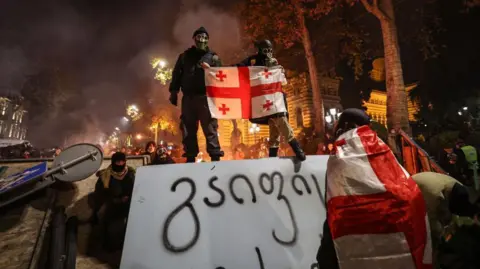
GIORGI ARJEVANIDZE/AFP A protester wearing a Georgian flag stands on a barricade during a clash with police on December 1, 2024GIORGI ARJEVANIDZE/AFP

Opposition parties said the third night of protests was the biggest so far

After nights of large-scale street demonstrations and a string of public resignations, Georgia’s prime minister has rejected calls for new elections and said protesters have fallen victim to opposition lies.

Irakli Kobakhidze confirmed reports that Georgia’s ambassador to the US, David Zalkaliani, had become the latest senior diplomat to stand down, stressing that he had come under considerable pressure.

Protests were set to continue on Sunday for a fourth night running, as Georgians vented their anger at the ruling party’s decision to suspend talks on joining the European Union.

Kobakhidze sought to deny the reason for the protests, saying on Sunday that “we have not suspended anything, it’s a lie”.

Only three days before, his party Georgian Dream had accused the EU of using talks on joining the union as “blackmail” and said the government had decided not to put the issue on the agenda until the end of 2028.

It is part of Georgia’s constitution to ensure that “all measures” are taken to bring the country into both the EU and Nato.

However, Georgia’s increasingly authoritarian government has been accused by the EU and US of democratic backsliding. On Saturday, the US said it was suspending its strategic partnership with Georgia.

Anton Chicherov/BBC Iraki Kobakhidze, Georgian prime minister, gives a press conference at a lectern in TbilisiAnton Chicherov/BBC

Iraki Kobakhidze rejected a call from the pro-Western president for new elections

Kobakhidze told the BBC’s Steve Rosenberg at a news conference that Georgian Dream was still “committed to European integration… and we are continuing on our path to the European dream”.

And yet an increasing array of public officials do not appear to believe that is the case. Several ambassadors have resigned, and hundreds of civil servants and 2,800 teachers have signed letters condemning the decision to put EU accession on hold.

Many Georgians have been shocked by the level of violence directed at Georgian journalists as well as protesters. Dozens of reporters have been beaten or pepper sprayed and some have needed hospital treatment.

Georgia’s human rights ombudsman Levan Ioseliani said “this is brutality”, and he appealed to police not to abuse their power. On Sunday, the prime minister said it was opposition groups and not the police that had meted out “systemic violence”.

Georgian ex-ambassador to the EU Natalie Sabanadze, now at Chatham House in the UK, believes the level of violence, the string of resignations and civil disobedience indicate a “qualitative change” to the protests now taking place.

“Maybe [the government] thought people would be scared, but it’s not working out like this,” she told the BBC. “Yesterday civil society activists and artists went to the public broadcaster and took it over and forced their way into the live stream. I’ve seen this before, in pre-revolutionary Georgia [in 2003].”

Georgia’s pro-Western president, Salome Zourabichvili, is due to step down in a matter of weeks, however since last month’s contested parliamentary elections which opposition parties have denounced as rigged, she has become a powerful figurehead, rallying protesters against the government and calling for a new vote.

Georgia’s pro-EU president vows to stay ‘until someone is legitimately elected’

She and the protesters accuse the government of aiming to drag their country back into Russia’s sphere of influence, even though an overwhelming majority of the population backs joining the EU.

Georgia has a population of some 3.7 million and 20% of its territory is under Russian military occupation in two breakaway regions.

After a third night of protests in Tbilisi and other Georgian cities such as Batumi, Zugdidi and Kutaisi, smaller groups occupied a traffic intersection during the day on Sunday in front of Tbilisi State University.

“I’m here for my country’s future and the future of my three-year-old son,” said one protester called Salome, aged 29. “I don’t want him to spend his life at protests and I don’t want a Russian government.”

While Georgian Dream flatly denies any links to the Kremlin, it has in the past year adopted Russian-style laws that target civil society groups with funding from abroad as well as LGBT rights.

Cleaners remove graffiti from the walls outside parliament in Georgia

Cleaners remove graffiti from the walls outside parliament in Georgia

Half an hour’s walk away from the daylight protest, a small army of cleaners were trying to scrub off graffiti from a wall in front of the Georgian parliament.

Some of the windows of the building were smashed overnight, and an effigy was set alight of Bidzina Ivanishvili, the billionaire seen as the driving force behind Georgian Dream’s 12 years in power.

The question now is what will happen next in Georgia’s deepening political and constitutional crisis.

The Georgian Dream government’s relations with its Western partners are very badly damaged.

The EU’s new foreign policy chief, Kaja Kallas, warned on Sunday that the government’s actions would “have direct consequences from EU side”, and the US decision to suspend its strategic partnership will also be widely felt.

The Georgian prime minister had little time for the president or her call for new elections.

“Mrs Salome Zourabichvili has four Fridays left [as president] and she can’t get used to it. I understand her emotional state, but of course on 29 December she’ll have to leave.”


Commercial LPG hike by Rs 16.5 per cylinder, jet fuel up 1.45%; household cooking gas remains unchanged

0
Commercial LPG hike by Rs 16.5 per cylinder, jet fuel up 1.45%; household cooking gas remains unchanged


Commercial LPG hike by Rs 16.5 per cylinder, jet fuel up 1.45%; household cooking gas remains unchanged

NEW DELHI: The cost of commercial LPG and aviation fuel prices surged on Sunday following the monthly revision aimed at aligning with trends in international oil prices. State-owned oil firms raised commercial LPG rates, used in hotels and restaurants by Rs 16.5 per to Rs 1818.50 per 19 kg cylinder.
Aviation turbine fuel (ATF) prices in Delhi, which hosts one of India’s most active airports, saw an increase of Rs 1,318.12 per kilo litre, marking a 1.45 per cent increment. The new rate stands at Rs 91,856.84 per kl, according to state-owned fuel retailers.
The prices of ATF and LPG vary from state to state, depending on local taxes, including VAT.
This marks the second consecutive monthly increase in jet fuel prices, which were previously raised by Rs 2,941.5 per kl, or 3.3 per cemt, on November 1. ATF prices were reduced by 6.3 per cent (Rs 5,883 per kl) on October 1 and by Rs 4,495.5 per kl, or 4.58 per cent, on September 1.
In Mumbai, the ATF price increased to Rs 85,861.02 per kl on Sunday from Rs 84,642.91 previously.
The price of commercial LPG have also increased for the seventh consecutive month. In the most recent review on November 1, commercial LPG prices were raised by Rs 62 per 19-kg cylinder. Over the course of five price hikes, commercial LPG prices have increased by Rs 172.5 per 19-kg cylinder, reaching their peak this year.
Four monthly price reductions before the current cycle began in August were offset by the recent hikes. Prices for 19-kg cylinders were reduced by Rs 148 across the four rounds. Currently, commercial LPG costs Rs 1,980 in Chennai, Rs 1,927 in Kolkata, and Rs 1,771 in Mumbai for a 19-kg cylinder.
However, the rate of cooking gas used in domestic households, however, remained unchanged at Rs 803 per 14.2-kg cylinder.
State-owned Indian Oil Corporation (IOC), Bharat Petroleum Corporation Ltd (BPCL), and Hindustan Petroleum Corporation Ltd (HPCL) revise the prices of ATF and cooking gas on the first of each month, based on the average price of benchmark international fuel and the foreign exchange rate.
The prices of petrol and diesel remain frozen, having been reduced by Rs 2 per litre in mid-March ahead of the general elections. Petrol is priced at Rs 94.72 per litre in Delhi, while diesel costs Rs 87.62.


Homes for transgender people | A safe space— threatened

0
Homes for transgender people | A safe space— threatened


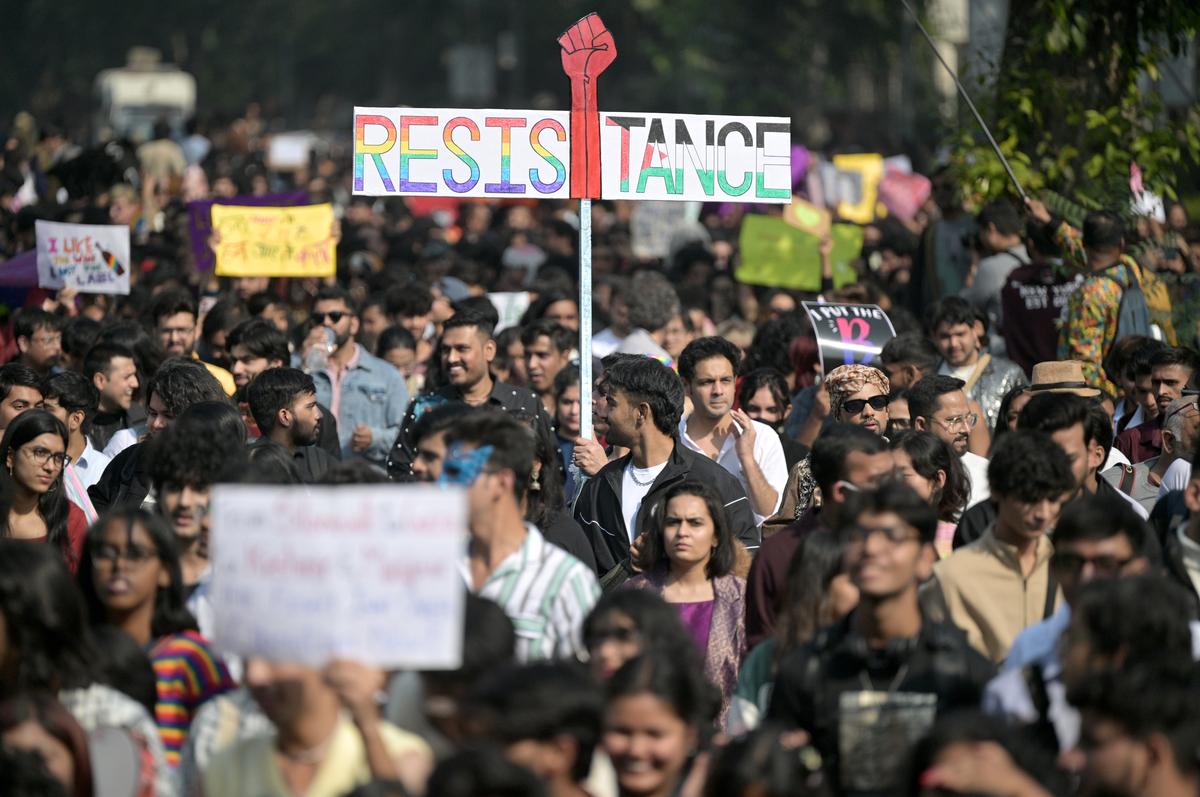
The Delhi Queer Pride parade in New Delhi on November 24, 2024.

The Delhi Queer Pride parade in New Delhi on November 24, 2024.
| Photo Credit:
SHASHI SHEKHAR KASHYAP

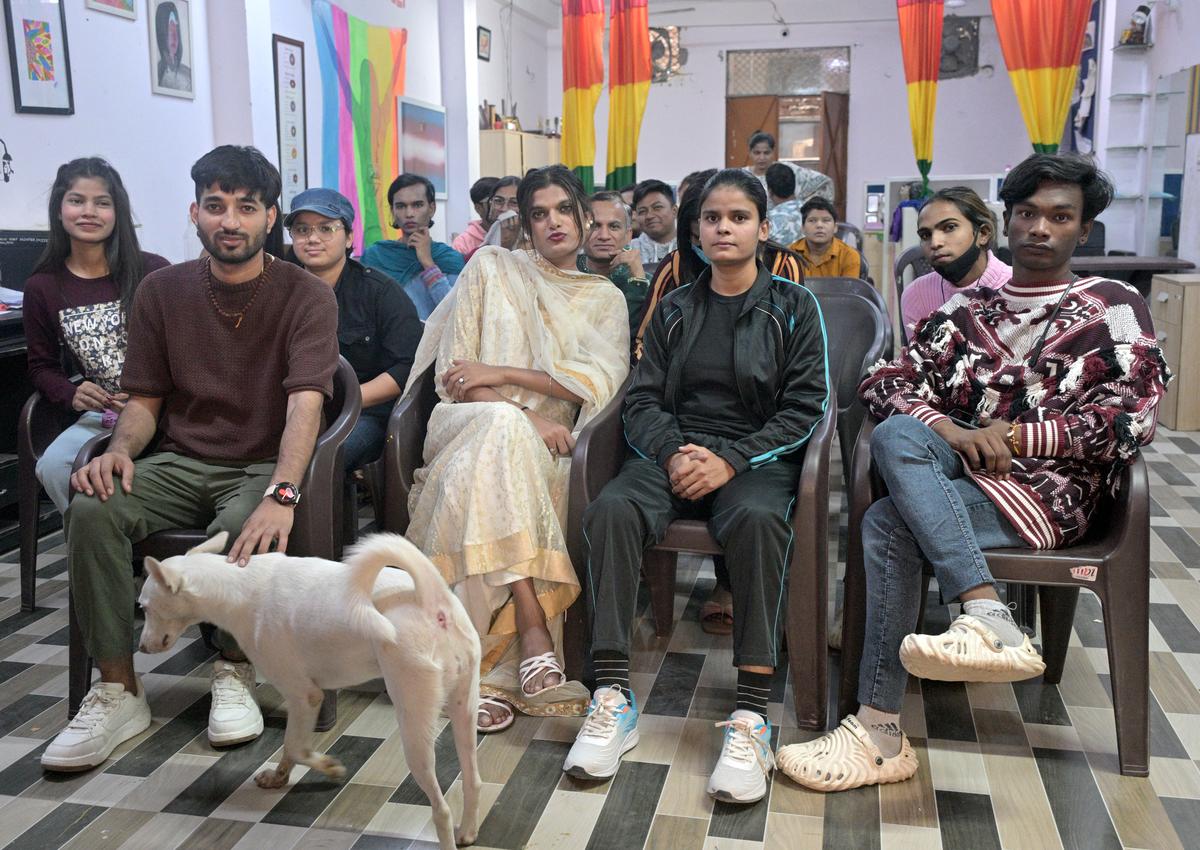
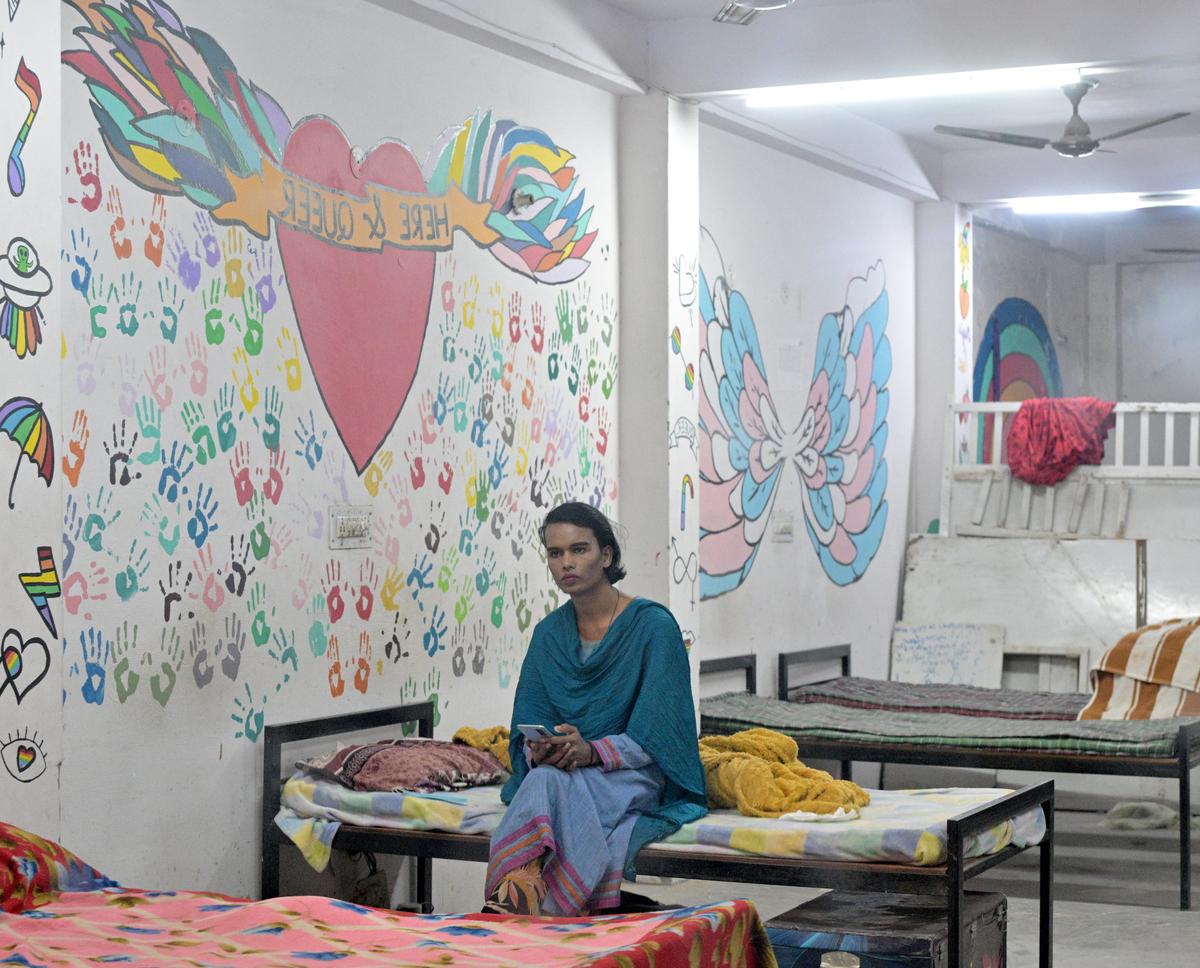
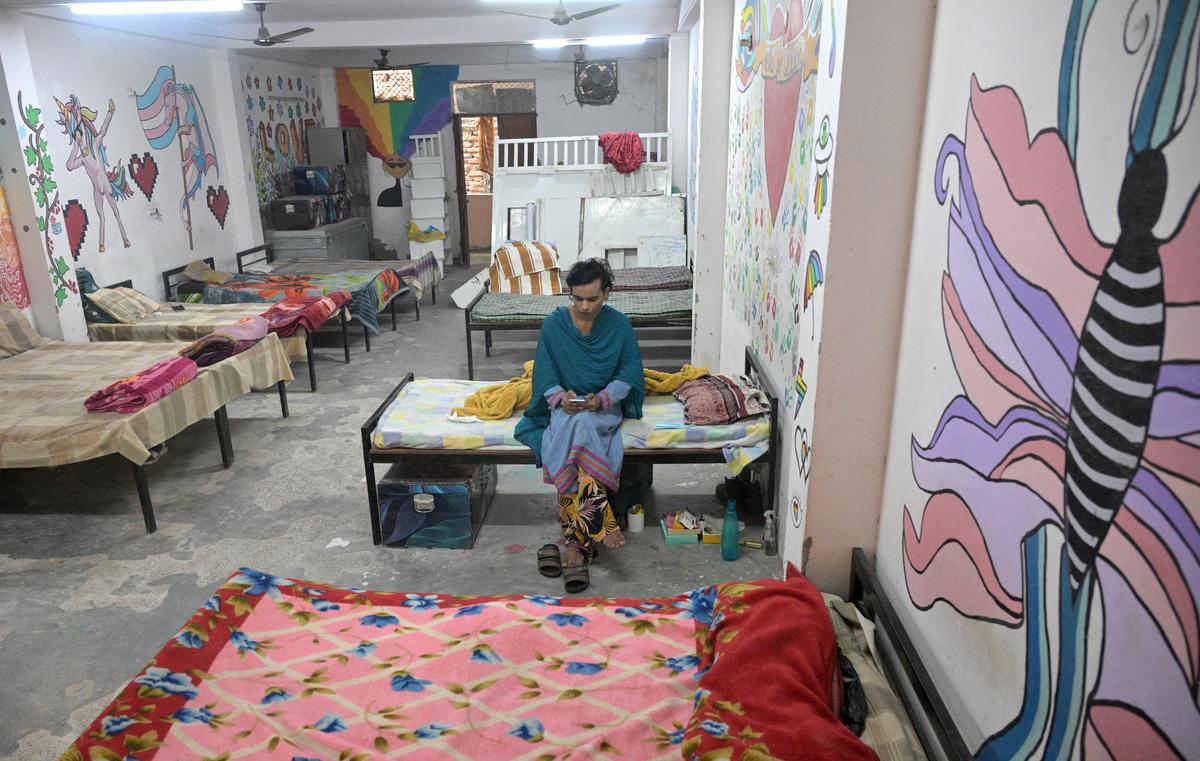
Inside the shelter home for transgender persons at Sitapuri in New Delhi.

Inside the shelter home for transgender persons at Sitapuri in New Delhi.
| Photo Credit:
SHASHI SHEKHAR KASHYAP

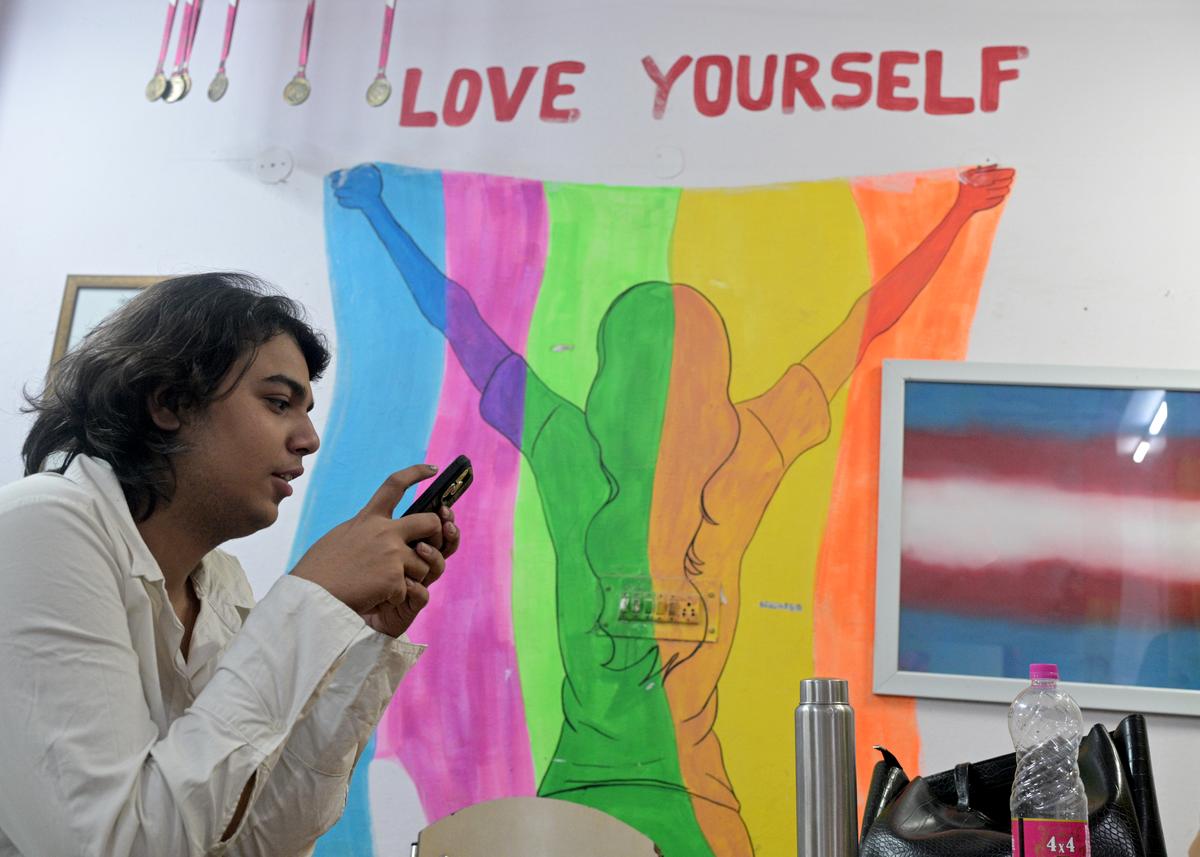
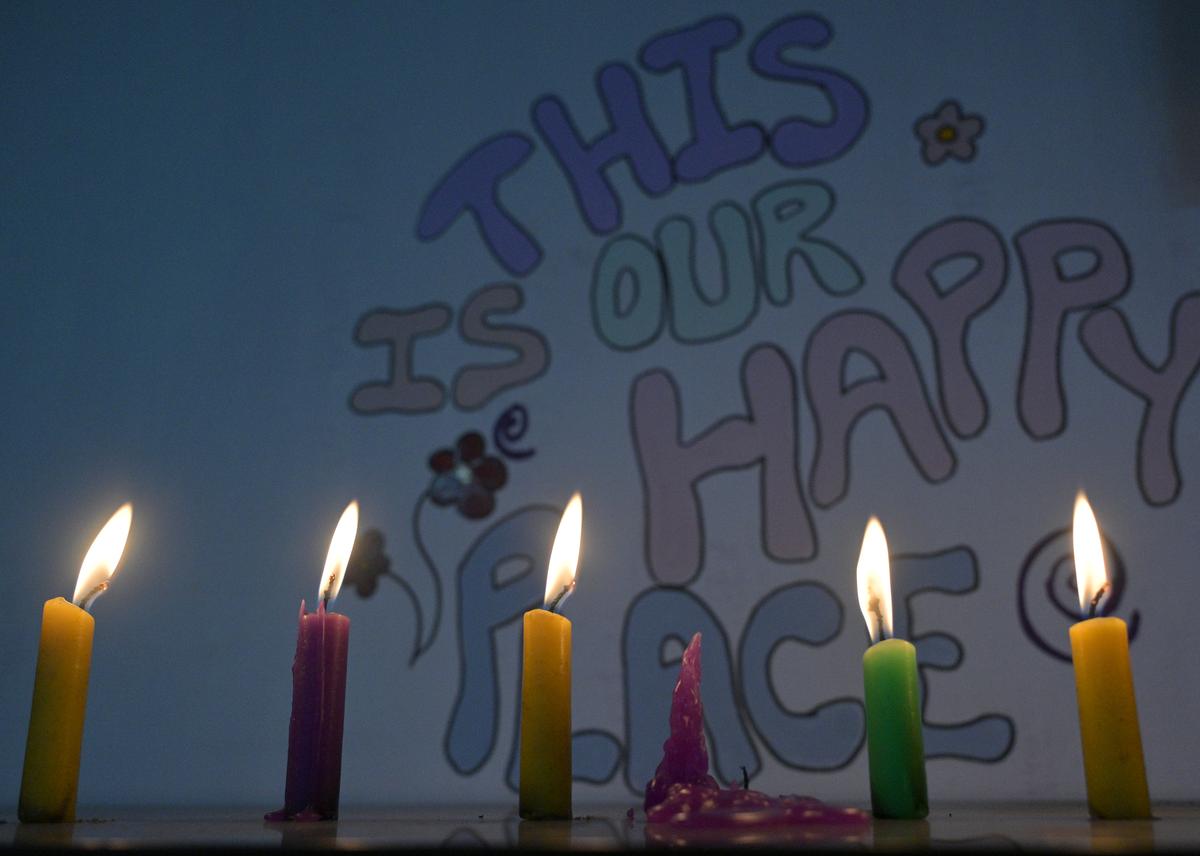
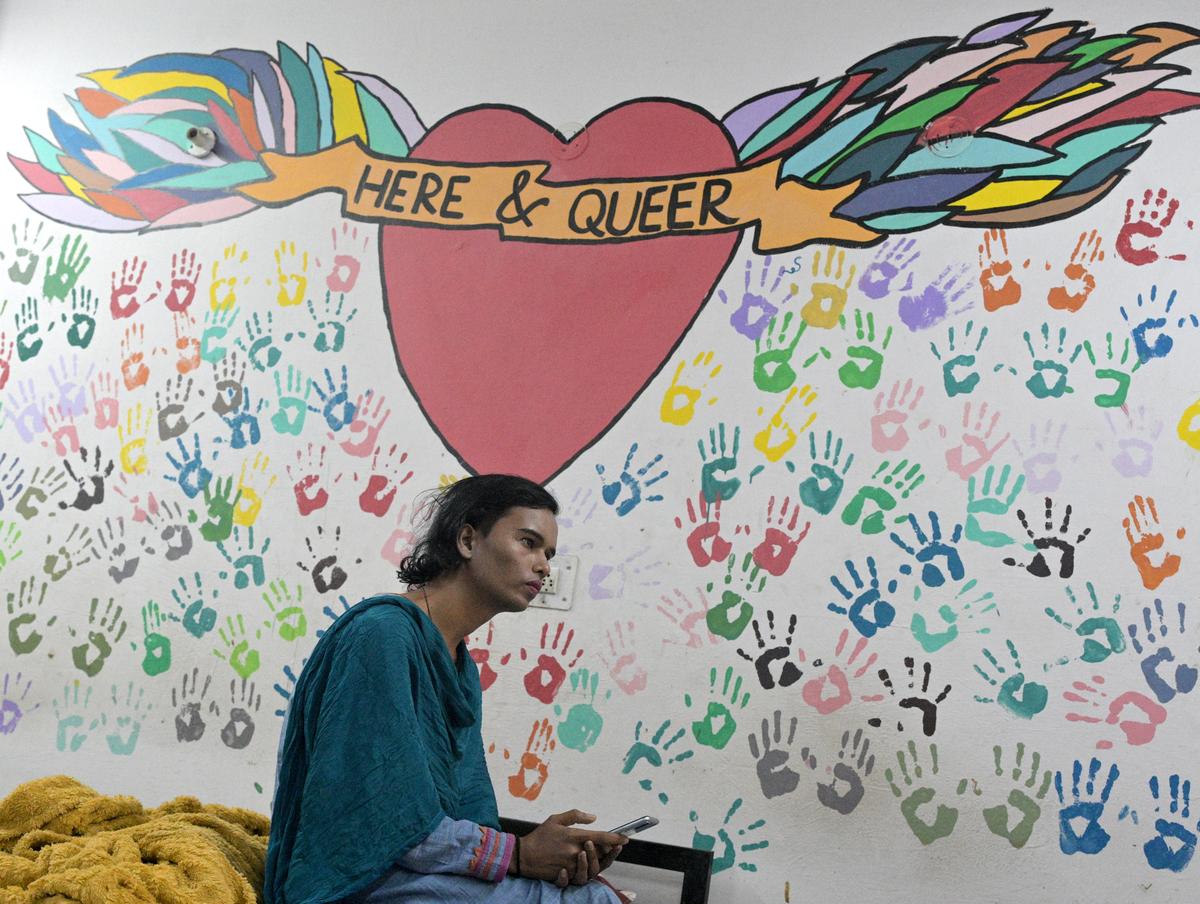
Artwork by residents at the shelter home for transgender persons at Sitapuri in New Delhi.

Artwork by residents at the shelter home for transgender persons at Sitapuri in New Delhi.
| Photo Credit:
SHASHI SHEKHAR KASHYAP

In the Capital’s lone Garima Greh, each step across its three floors is painted in the colours of the rainbow.

In the Capital’s lone Garima Greh, each step across its three floors is painted in the colours of the rainbow.
| Photo Credit:
SHASHI SHEKHAR KASHYAP

Each Garima Greh is to house 25 transgender people and have 12 staff members, including a counsellor, cook, manager, and director. 

Each Garima Greh is to house 25 transgender people and have 12 staff members, including a counsellor, cook, manager, and director. 
| Photo Credit:
SHASHI SHEKHAR KASHYAP

For many, the homes are the only solace they have as employment, education, and housing are still difficult to access due to stigmatisation. 

For many, the homes are the only solace they have as employment, education, and housing are still difficult to access due to stigmatisation. 
| Photo Credit:
SHASHI SHEKHAR KASHYAP

The days still begin and end on a positive note, punctuated with activities such as make-up classes from 2 p.m. to 4 p.m., and book reading from 11 a.m. to 12 noon.

The days still begin and end on a positive note, punctuated with activities such as make-up classes from 2 p.m. to 4 p.m., and book reading from 11 a.m. to 12 noon.
| Photo Credit:
SHASHI SHEKHAR KASHYAP

Trigger warning: mentions of suicide and abuse.

Wearing ornate self-stitched skirts and colourful crop tops, five transwomen lock their Garima Greh and head to Dabri Mor metro station, Janakpuri, in working-class west Delhi on November 24. From here, they will take a train to Barakhamba Road, 16 stops away, to join the city’s Queer Pride parade, held since 2008. Their floral tiaras, colourful hair clips, and a headband with the devil’s horns don’t attract as much attention as they would have a decade ago.

For Anu, who is going to the parade for the first time, the trauma of running away from Haryana in search of a safe space is still fresh. But today, the excitement of being with her friends and an unexpected “Are you all going for Pride? Me too!” from a fellow metro passenger in the women’s compartment trumps all other emotions.

On reaching the venue, the transwomen hug their friends who are already there and blend into a sea of rainbows. They pose for selfies, make reels, and prepare for an after-party. For the past few years, Garima Greh, a Central government-funded shelter home for transpeople, has offered a roof, food, medicines, recreation, counselling, and a sense of camaraderie. Each year, transwomen display their make-up artistry for Pride, a skill they learn from workshops in the Garima Greh, where vocational training is part of the government’s employment facilitation thrust.

The event was attended by over 1,000 people. Geetanjali, 26, a resident of the home for the past few months, was attending her first Pride along with her partner and best friend, both of whom she met at the home. “Coming here from a village in Haryana, where only my elder sister accepted me, was like getting a new lease of life. I found a happier version of myself as the community in the Garima Greh allowed me to be the person I wanted to be and not the person I was expected to be,” she says. Samyra, 24, says excitedly, “I got to dress up and hold my head high with my community.” Away from the celebration of belonging to a larger community, the five transwomen are oblivious to the threat that looms.

A struggle against the odds

Rudrani Chettri, the Garima Greh project director in Delhi, is worried that the home may have to shut down soon for its 25 residents if funds do not come through. “I have been managing by taking loans from here and there; I get them only because people trust me. But I do not know how much longer we can sustain this way,” she says.

In November 2021, the Ministry of Social Justice and Empowerment said in a press release that it had initiated 12 pilot shelter homes or Garima Grehs for transgender people and provided financial assistance to community-based organisations for setting them up. The Centre has the SMILE (Support for Marginalised Individuals for Livelihood and Enterprise) scheme. This includes a sub-scheme, the Comprehensive Rehabilitation for Welfare of Transgender Persons, of which a component is the setting up of shelter homes. The idea was to run the pilot and progress to establishing at least one in each State.

According to SMILE guidelines, each Garima Greh is to house 25 transgender people and have 12 staff members, including a counsellor, cook, manager, and director. However, the 12 existing homes are facing the threat of shutting down as funds from the government have stopped. Nine project directors from across States that The Hindu spoke to say that they do not know how much longer they can source funds on their own. Many staffers have left or are ready to leave, there is no money for rent, rations, or other necessities, but they keep going because these homes are the only safe spaces for many transgender youth. According to the Ministry, the funds are on hold due to issues with documentation.

Finding home

When Shreya (name changed to protect privacy), 18, came out to her family as a transwoman, they locked her in a room for a month, opening the door only to give meals. “They burnt all my identity cards and I had nowhere to go. I turned to a Kinnar community (a group of intersex people) in Rajasthan, with whom I was begging for some time,” she says. Earlier in November, she had headed to Delhi in the hope of a new life.

Growing up, even as her ideas about identity were in flux, the dream of becoming a model was constant. “I tried another Garima Greh in Jaipur, but it was full. I came to Delhi after a friend told me about this shelter home,” she says, relieved to have finally found a place she can call home.

For Ritika, 23, reaching the shelter home was eye-opening: “Earlier, I was confused about my identity, but once I came here, I found a family, started speaking to others like me, and understood more about myself.”

In the Capital’s lone Garima Greh, each step across its three floors is painted in the colours of the rainbow. The ground floor, which is used to host workshops and skill development sessions, is covered in artwork by past and current residents. A section of the floor is partitioned into private rooms meant for counselling sessions, which are a mandated part of the Garima Greh’s guidelines set by the Ministry.

For Roshan, 25, the counselling sessions have been life-saving. Having run away from Chhattisgarh over two years ago after being beaten up by his older brother and receiving little support from his parents, Roshan had attempted suicide. This is his second stint here. “I had very little money and was broken physically and mentally when I came to the house for the first time after an older woman from the community found me begging for food at a railway station in Delhi. If not for her or the house, I would have ended things a long time ago. Now, things are looking up,” he says. Roshan now has access to hormones through the referral system of the home.

On paper vs in reality

In the administrative section of the shelter home, separated from the living quarters by a rainbow-coloured curtain, Rohit, seated behind a computer, says the last funds came in March 2023. The funds — ₹36,46,500 in all — are disbursed in three tranches through the year.

Chettri says when they were looking to rent a place in 2021, homeowners would shut the door on them. Eventually, they found this spot in Sitapuri. While there is acceptance from the people around now, it is far from smooth sailing. “We were given a skeletal framework. But to run it, we need flesh, blood, and veins,” she says.

Over calls with the Ministry, they have been told that their paperwork is not complete.

Project directors in other States have similar experiences. Ranjita Sinha, who runs one of the two homes in West Bengal’s capital Kolkata, had to put up gold jewellery passed on to her from her mother as collateral on a loan. “I have mailed the Ministry over 100 times, even bought my own ticket to Delhi to go and meet them, but it has all fallen on deaf ears. We were removed from our original home after the landlord took us to court because we had no money for rent. And now my staffers have also threatened to damage our home if salaries are not paid on time,” she says.

Taking such matters to the police is difficult as they don’t take complaints from transpeople seriously. In 2022, a video released by the Mitr Trust that works towards the welfare of LGBTQIA+ people allegedly showed the police picking up residents of the Delhi home, assaulting them, and making lewd remarks.

She adds that there was an inspection by Central government officials in October and they are hopeful that funding will come soon. The Delhi home, too, had an inspection in July. Out of the nine shelter homes that The Hindu spoke to, Sinha’s was the only one that received some funds ahead of Durga Puja this year.

Others have complained that their homes are surviving mostly on loans and goodwill of the people in the community. Puspa Mai in Jaipur says they have exhausted most of the friendly donors who have helped them over the last 20 months. “After imposing so many restrictions on us on how the home is to be run, they are not giving us funds. It would have been better for us to survive through private funding on our own terms.”

One of the restrictions is that each home must have a total built-up space of 3,000 square feet, with specifications for each room, including a kitchen with an attached storeroom.

The home in Thane, Maharashtra, is surviving on loans. Neeta Kene, the project director, says, “There have been issues while uploading our documents on the portal. The Ministry has told us that they will meet us soon and sort the issue out, but we are tired of waiting.”

The Garima Grehs in Chhattisgarh’s Raipur and Odisha’s Bhubaneswar also say they are not getting payment and the staff members are gradually leaving. The Garima Grehs are also supposed to identify training institutes for skill development; skills include catering, tailoring, artificial jewellery making, and driving. With a fund crunch, these efforts are also suffering.

There was no reply from the Ministry to queries from The Hindu.

Surviving the world

The homes continue to thrive as the community members put their heart and soul into building a safe space. The days still begin and end on a positive note, punctuated with activities such as make-up classes from 2 p.m. to 4 p.m., and book reading from 11 a.m. to 12 noon.

Survival in the world for many transpeople is a battle. While the Transgender Persons (Protection of Rights) Act, 2019 prohibits discrimination against transpeople in areas such as employment, education, health care, access to public facilities, and housing, the on-ground reality is different. Many are still unable to get access to TG cards, with reasons ranging from missing or lost documents to a lack of sensitivity among officials.

For many, the homes are the only solace they have as employment, education, and housing are still difficult to access due to stigmatisation. Many of the homes receive more than 25 applications a year, but have to turn people away.

Chettri says since they cannot take everyone in, they help them in other capacities such as securing jobs and scholarships. “This is the least we can do. All they are asking for is equal rights and dignity to live and work,” she says.

(If you are a transperson and need mental health support, please reach out to the Naz Foundation at +91 8800329176, 011-47504630; or Humsafar Trust at +91 9892940966.)