Wipro’s executive chairman Rishad Premji said work-life balance is “incredibly important” and that he believes the hybrid work model helps workforce, The Economic Times reported.
Wipro Chairman Rishad Premji also claimed Wipro trains its managers to be sensitive to people, to look for signs and have conversations openly regarding work-life balance.(Hemant Mishra/Mint)
“I learned this very early on in my early days before Covid, which is work life is something that you have to define for yourself, organizations are never going to work at it for you.” the ET report quoted Rishad Premji as saying in a fireside chat on the first day of the Bengaluru Tech Summit 2024. “So you have to define what it means and draw boundaries.”
Rishad Premji’s statement comes at a time when Narayana Murthy, the founder of Infosys, promoted and reiterated his belief in the 70-hour work-week, stating he doesn’t believe in the concept of ‘work-life balance’.
Narayana even expressed disappointment over India shifting from a six-day workweek to a five-day workweek in 1986.
Rishad Premji meanwhile, elaborated that the concept of work-life in itself has changed dramatically as earlier it would have meant the time one came and left the office, but today, it may even be not to take away the “Instagram access at work.”
“The concept of what it means is simply not ours, it is also the freedom of what I can do with my time while at work, but not working,” the report quoted Premji as saying.
This also comes at a time when several IT companies including Tata Consultancy Services (TCS), Infosys and Wipro started calling their employees to return to office after the pandemic. Premji also talked about how Wipro offers its employees the flexibility of being able to come to office two days a week.
He also claimed Wipro trains its managers to be sensitive to people, to look for signs and have conversations openly regarding work-life balance.
Raha Kapoor’s unseen viral pic with Ranbir Kapoor leaves netizens gushing over her uncanny resemblance to late grandfather Rishi Kapoor
In his 17 year long career, Bollywood actor Ranbir Kapoor has played many characters on the silver screen— a singer in Rockstar (2011), a videographer with wanderlust in Yeh Jawaani Hai Deewani (2013), a match-breaker turned lover boy in Tu Jhoothi Main Makkaar (2023) and a ruthless son with daddy issues in Animal (2023). But it’s Ranbir’s real life role as Raha Kapoor’s doting daddy that currently has our heart! Every time they are spotted together, the daddy-daughter duo manage to leave fans gushing over their wholesome bond. Well, much to the delight of fans, an unseen picture of Ranbir and Raha has now gone viral on the internet.
Raha Kapoor’s unseen snap with Ranbir Kapoor reminded fans of late Rishi Kapoor
In this super cute click, Raha looks like a doll in her pink bathing suit with a towel wrapped up around her head. She is looking straight at the camera while comfortably resting in her daddy’s arms. Ranbir holds her close with the other arm around Raha’s nanny who is also posing for the cute picture. In her hand, Raha seems to be holding a pair of pastel pink sunglasses. We are digging this little diva’s style, which we are sure she gets from her actor mother Alia Bhatt. From the moment this never-seen-before snap of Ranbir and Raha surfaced on social media, fans have been busy showering love.
While some gushed over Raha’s cute bathing suit, others described the star kid as a real life doll. But one thing that most internet users couldn’t stop talking about in the comment section is Raha’s uncanny resemblance to late actor and Ranbir’s father, Rishi Kapoor. For instance, one social media user pointed out: “raha looking like Rishi kapoor,” whereas another comment read: “Ye to Puri Rishi Kapoor h.” Another fan gushed, “Raha looks like rishi kapoor,” while an internet user claimed, “Oh god, I thought that’s some old picture of Rishi Kapoor’ childhood at first glance.”
Well, this isn’t the first time that fans pointed out Raha’s resemblance to her grandfather Rishi. In fact, on his birth anniversary this year, Ranbir’s sister Riddhima Kapoor Sahni shared a post calling Raha ‘mini’ Rishi. Do you see it too?
See more
News/HTCity/Cinema/ Raha Kapoor sports a pink bathing suit in unseen snap with dad Ranbir Kapoor; fans say ‘Ye to puri Rishi Kapoor hai’
Shah Rukh Khan, the iconic Bollywood superstar, recently shared heartfelt reflections on his life and career. With over thirty years in the film industry, SRK opened up about the profound impact of losing his parents at a young age and how it shaped his determination to succeed.
In a conversation at the Global Freight Summit in Dubai, Shah Rukh revealed that he lost his father when he was just 14 years old and his mother at 24. “My parents died when I was young. I had nowhere to go. I had a sister with me. Just the two of us left in this world,” he said. This early loss left a significant mark on him, leading him to ponder about his parents’ feelings regarding his life choices and struggles. SRK expressed a poignant thought: “I felt one morning that maybe my parents are there somewhere… and I will meet up with them again for sure. They are stars in the sky and I will meet them once.” Despite this comforting belief, he wondered if they were concerned about him, thinking, “Oh my God, what must be happening to my 24-year-old kid who has no sustenance?” This reflection fueled his drive to work hard and achieve success.
Shah Rukh’s determination stemmed from a desire not to let his parents down. He explained, “I started working very hard, I became very determined to be successful because I didn’t want my parents to feel bad that they have not fended for me.” He described this mindset as a strange but motivating perspective: “I will become successful and turn around and say, ‘I am doing good! Don’t feel guilty you died early.’” This sense of accountability towards his late parents pushed him to strive for greatness in his career. He also reflected on how these experiences shaped his current role as a father. “Now I am determined for my children… in a good way. That their lives should be healthy, they should be happy. All three of them are very beautiful, very loving and hard working.” he stated.
Top Bollywood Headlines, November 19, 2024: Shah Rukh Khan Talks ‘Business’ With Ryan Reynolds; Fan Frenzy On Ram Charan’s Visit Leads To Lathi Charge
New Delhi: Director Shoojit Sircar, known for his poignant films like Piku and October, is back with a new project that touches on deep, personal themes of communication and human connection. I Want to Talk explores the importance of speaking one’s heart, especially within families, and Sircar shared how the concept of the film came from his own observations and experiences.
In a recent conversation, Shoojit reflected on how his earlier works, including Piku—which was initially misjudged as a film about constipation—were deeply personal to him. “When I wrote Piku, a lot of people, in the beginning, before the release of the film, started talking about it, maybe thinking it was a Bengali film, what is this film all about, constipation and all that. But once they watched the film, everything turned around. For me, it was just a very personal film,” he explained.
He continued, drawing parallels between Piku and his latest film I Want to Talk, “Similar with October. All these films have deep personal impacts and observations.” Shoojit emphasized how I Want to Talk is also born from his own life experiences, with a particular focus on communication—or the lack of it. “A lot of my friends told me, ‘I could not talk to my father, I could not talk to my mother. I wish I would have spoken everything that is there in my heart,'” Sircar shared.
For the director, I Want to Talk is not just a film but a reflection of the often-unspoken emotions that exist within families. “Communication is very important,” he said.
Directed by Shoojit Sircar, I Want to Talk is slated to release in theatres on November 22, 2024. The film also stars Johnny Lever and Ahilya Bamroo and is produced by Ronnie Lahiri and Shoojit Sircar under Rising Sun Films.
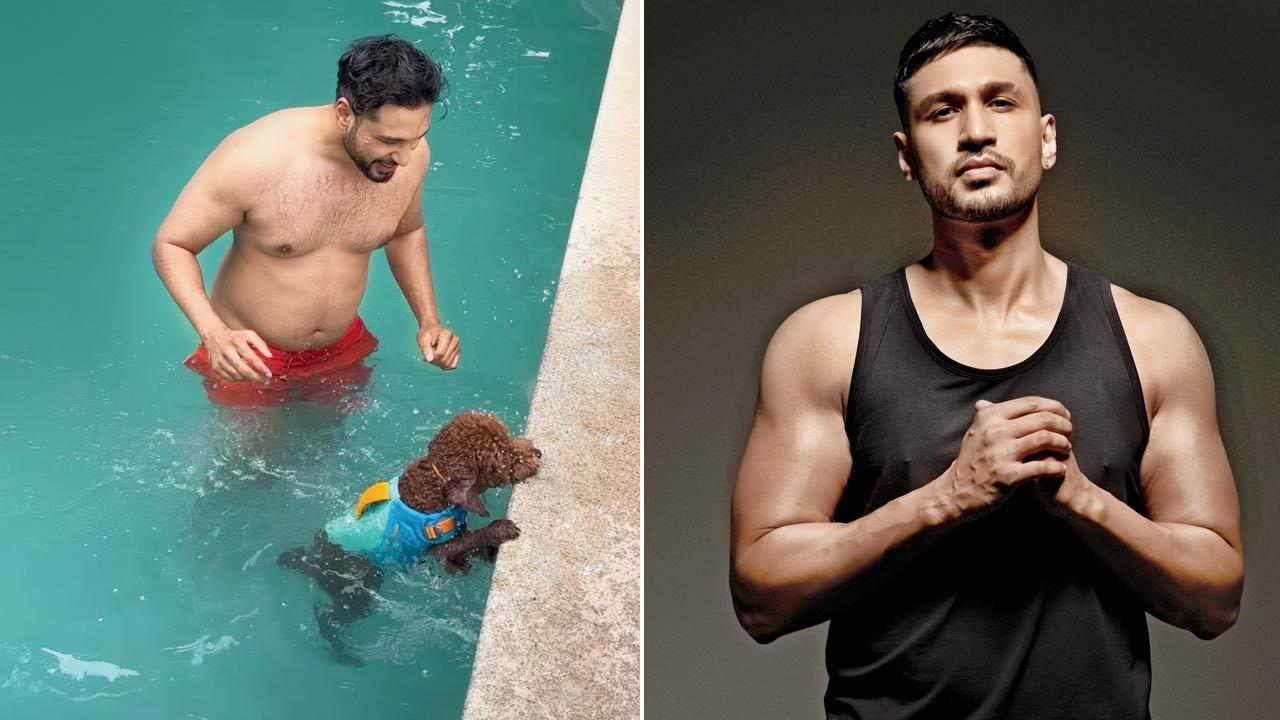
“People visibly treat you differently,” says Arjun Kanungo with affliction, mirroring emotions that are, unfortunately, far too familiar with individuals tackling obesity. It’s among the few moments in which the revered singer lets us in on the mental toll that an 18-month arduous journey took, one that had him first gain, and subsequently shed 30 kilos.
For the most part of this conversation, Kanungo hits us with data, numbers, and scientific jargon that are testimony to the research he put into healing himself after a kidney issue and a subsequent hip fracture put his health in jeopardy. Well aware of the role played by each of the 20 supplements he takes, the inflammatory markers in his body, and the statistical numbers relating to kidney functions, Kanungo is, as he says, more “health-literate” than the average person. What then, we ask, led an individual as informed as him to suffer a kidney issue?
“I was doing stupid things,” he confesses earnestly. “I wouldn’t say that protein [supplements] alone caused kidney damage. I was also taking creatine, and drinking a lot of alcohol. But the final blow came in the form of antibiotics that [I needed to take]. All of this contributed to what they call acute kidney injury. Thankfully, it’s not permanent.” A state-level basketball player, Kanungo was supported by his athletic background when he decided to build his frame in 2021. “I decided to bulk up and was training hard. I was eating 4,000 calories, and gained 14 kilos in the period. I was in great shape, and felt indestructible. That made me try new things, like pre-workout [drinks] with a lot of caffeine, and fat burners, some of which I wouldn’t want anyone to take today.”
Being bedridden
Kanungo surely endured a significant health setback, but the problem had a definite solution. Under the guidance of nutritionist Luke Coutinho, he would adopt a vegan diet, get his parameters under control, and return to routine. That, however, was only the beginning of what was set to be a difficult journey as Kanungo subsequently suffered a hip fracture during a vacation. “The thing with vegan diets is that it’s easy to consume a lot of carbohydrates on them. You can be vegan and still eat a lot of unhealthy foods. Also, because of my kidney issues, I could not take any painkillers. The only way I could be happy was by eating. I was eating a lot of chocolate. One believes raw cocoa can’t be bad, but the calories add up. I also had to reduce my protein intake from 170 grams to 60 grams, so, my muscles were not getting adequate nutrition, and were [disintegrating]. All of this led me to gain 30 kilos in six months. Weight piles on really fast. Two months in, I noticed a paunch, and four months later, I noticed that my stomach had [grown larger].” Ask him if his nutritionist raised an alarm over his rising weight, and he says, “At the time, my priority was to reduce the level of creatinine in the blood. Until that is lower than 1.2 mg/dL, one isn’t even allowed to exercise. The weight was piling on, but, it wasn’t my immediate concern.”
Easily among the most celebrated artistes of the independent music industry, Kanungo grew his league of followers with a brand of music that was unique. Considering that his looks have often earned appreciation from his followers, we wonder if the desire to get back into shipshape had to do with retaining an identity his fans had come to admire. “It’s a good question, but unfortunately the answer isn’t a yes or no. When I looked in the mirror, I did not see a person I recognised. It was more important for me to return to how I saw myself than how others perceived me. When I say I wanted six-pack abs again, it doesn’t come from a place of wanting to look good. It’s a metric that people understand, and a good representation of how I want to feel.”
Rebuilding himself
Turning to Coutinho for advice, he had to reduce his caloric intake to half of its initial value. “For about 14 months, I had only 1,500 calories a day. My vegan diet comprised salads, and vegan salads and cheese, which I think are bogus products considering how processed they are. When my kidney [functions returned to normal], I could have curd and other protein options. For several months I did not have a single cheat meal. It was hard, because if you’re accustomed to eating a large amount of calories and then drastically reduce it, your hormonal balance changes. Your body doesn’t stop craving food just because you decided to stop eating it. But, for me, it was do or die.”
Under the guidance of his physiotherapist Tamara Zweck, he graduated from performing strength training exercises to mobility work, kick-boxing, and eventually, weight lifting. He recalls being reduced to tears when he ran for the first time following the injury. “As someone who has been into sports all my life, I was taken aback when I was told I’d never be able to play again. So, to be able to run without pain made me very emotional.”
Kanungo is now on a diet comprising 160 grams of protein and has dropped his body fat percentage from 31 to 9. Looking back at his journey, he expresses gratitude for the team of professionals that guided him to good health, especially Zweck, who encouraged him to dismiss the suggestion of medical professionals who claimed he needed hip surgery. “People think a hip fracture is just an injury. Nobody understands how serious it is. Even my family didn’t call or visit me because they [didn’t think it was serious]. One of the biggest struggles was simply using the wash room. The physiotherapy, [though painful], was the easier part. Struggling with a task as simple as relieving yourself was difficult. It was those embarrassing, undignified moments that were tough to deal with. Also, I can tell you that when you don’t look good, your work suffers too. Nobody calls you or wants you to be on their show. My own management told me, ‘Dude, you’ve become old.’ I was like, I’m 30. But they insisted that my age was showing. People judge you quickly and point out what they see. But just because you don’t like what they see doesn’t mean it’s not true. It’s a lonely journey, and my wife was the only one who had to bear it all. It was eye-opening and showed me what I am capable of. I am much smarter now.”
117kg Arjun Kanungo’s weight at his heaviest
The Cheats: Shalini Pandey
What’s your cheat meal: Chocolate cake is my ultimate comfort dessert. A flavourful biryani is another option.
How often do you indulge: Frequently, because I am an active person. If I am travelling, I indulge a lot.
Cheat meal Vs cheat day: I don’t plan this. It can be either, and depends on how my week has panned out.
Do you compensate for it: I do compensate for any indulgence by ensuring that my diet, on most days, consists of clean, and nutritious foods. I exercise regularly, and also pay attention to portion sizes.
Inside Dino Morea’s Fridge
Yogurt Ice cream Coconut milk Chocolate
Fitness tip that works for Maniesh Paul
Maniesh Paul Cardio is not [a tool] to be ignored. You don’t need to run, but, a 45- minute walk is [beneficial]. Even if you can’t lift, you can continue to walk to stay fit.
Farhan Akhtar will star in his next film 120 Bahadur.
In a poster, Farhan was seen in the uniform of a soldier from the Indian Army. He had blood-stained teeth as he aimed his gun at the enemy. The words on the poster read, “Woh teen hazar the aur hum (They are three thousand and what about us)?”
Taking to Instagram, Farhan, who is making a film around the Rezang La battle, wrote, “It’s been 62 years since 1962. Today, we honour the unparalleled courage and sacrifice of the heroes of Rezang La. 120 Bahadur is our tribute to the valour and the indomitable spirit of Major Shaitan Singh and his brave men, who stood their ground against insurmountable odds.”
He added, “Their story echoes through time, reminding us of the price of freedom and the strength of unity, with a special salute to the Ahir community, whose sons displayed unmatched bravery in defending our nation.”
In September, Farhan announced 120 Bahadur. The military action film, set against the backdrop of the 1962 Indo-China war, draws inspiration from the Battle of Rezang La, where our men in uniform displayed unparalleled courage, heroism, and sacrifice.
Farhan will portray the role of an army officer, Maj Shaitan Singh PVC. Taking to Instagram, Farhan shared the first poster of the film. The poster features the back profile of a soldier, presumably Major Shaitan Singh, standing atop a rock in the snow-covered terrains of Ladakh. Directed by Razneesh ‘Razy’ Ghai and produced by Excel Entertainment, 120 Bahadur will release in 2025.
Catch every big hit,…
See more
News/Entertainment/Bollywood/ Farhan Akhtar portrays a fierce soldier in his first look for 120 Bahadur; pays tribute to Rezang La heroes in long note
Nagarjuna spoke about Nayanthara’s past relationships on her Netflix documentary.
‘This girl’s mood would just come down’
Nagarjuna recollected his first impressions of Nayanthara as someone with an ‘aura of royalty’ around her. He said, “When Nayan walked into the set, of course, she was beautiful, but there was an aura of royalty walking in. The warmth she spoke with, her genuine smile, I had this instant connection with her. This is a person I would like to be friends with.”
However, when they were shooting for a song in Switzerland, Nagarjuna realised she was in a relationship he called ‘turbulent’. He said, “I remember we were shooting in Switzerland; I think she was going through a very turbulent time in a relationship. We would all dread her phone ringing. If the phone rang, this girl’s mood would just come down. She would just turn off.”
‘It broke me when people assumed things’
Nagarjuna also said he remembers asking her why she stayed in a relationship like that. “I remember asking her, why are you doing this to yourself? You’re an accomplished woman.” The actor did not reveal who she was dating then, though she was rumoured to be in a relationship with a popular Tamil actor.
Nayanthara also spoke about how her first relationship was based on ‘trust rather than love’. “You just believe the other person is also in love with you. More than love, it’s trust. And you give it your all. But people assume a lot of things. It broke me when people assumed stories about it. Till today, no one has asked any of the boys what happened,” she said, talking about how she was always the subject of speculation.
The issue with Dhanush
Nayanthara’s documentary focuses on her career, love life, and marriage to Vignesh Shivan. However, Dhanush, who produced Naanum Rowdy Dhaan, refused permission to use the footage. The couple, who fell in love on the sets of that film, posted an open letter and a video, calling out the actor for asking ₹10 crore for a 3-second behind-the-scenes clip in the trailer.
The Gaza Strip is a graveyard for thousands of children, the United Nations has said.
Since October 7, 2023, Israel has killed at least 17,400 children in Gaza, according to Palestinian officials.
That is one child killed every 30 minutes.
Thousands more are missing under the rubble, most of them presumed dead.
The surviving children, many of whom have endured the traumatic impact of multiple wars, have spent their lives under the shadow of an Israeli blockade, influencing every aspect of their existence from birth.
Among the documented children killed, there are at least:
710 babies below the age of one
1,793 toddlers (1-3 years old)
1,205 preschoolers (4-5 years old)
4,205 primary school children (6-12 years old)
3,442 high school children (13-17 years old)
Here are some of those children’s most common names, listed alphabetically from A to Z.
More than 17,000 children have lost one or both parents
by UNICEF
We are witnessing a genocide in real time
by Spokesperson for the Defense for Children International – Palestine
Every day, 10 children lose one or both legs, with operations and amputations conducted with little or no anaesthesia due to Israel’s continuing siege
by Save the Children
Without safe water, many more children will die from deprivation and disease
by UNICEF Executive Director Catherine Russell
Children are more at risk of dehydration, and malnourishment can further speed up the effects of having no water
by UNICEF
Gaza is once again “the most dangerous place in the world to be a child”
The air quality is severe in most cities in North India. Very poor, if we get lucky on some days. Our cities are enveloped in dense smog, a deadly concoction of particulate matter, nitrogen dioxide, sulphur dioxide and other pollutants. The sunshine barely filters through. Burning sensation in the eyes and lungs betraying a heaviness with every breath outdoors. Little does a human body care about numbers that define air quality index (AQI). Unfortunately, the insides of our homes and workplaces aren’t shielded from reality of our outdoors.
A filtered ventilation solution using an IQAir purifier (left), and a Philips AC4221 smart air purifier with multi-layer filtration. (HT Photo)
The question many are asking, is it possible to pollution proof your home? Air purifiers provide a straightforward answer to this conundrum, something a greater number of citizens are trying to tackle. There is also a second method, which is filtered ventilation and these are customisable, often expensive solutions that run air from outside through a filter before circulating that indoors, which experts talk to HT about.
An air purifier, depending on a configuration you’ve purchased, will have a series of filters including a pre-filter for larger particles, a HEPA or high-efficiency particulate arrestance filter for smaller pollutants, and activated carbon for airborne bacteria and volatile compounds. The room’s air is pulled in by the fans, and it passes through these layers of filters which capture pollutants, particulate and allergens, before the cleaned air is blown back into the room.
“Of course, air purification is the solution. Absolutely, it is possible to pollution Proof Your Home to a 95% extent,” Barun Aggarwal, CEO and founder of air quality experts BreatheEasy Consultants, and author of How to Grow Fresh Air. He clarifies that when he references that figure of 95%, he’s factoring in the times when windows or doors in a home will open, or cleaning will take place. “At those times all bets off, especially when outdoor readings are as high as they are” he says.
Intensifying problem, and changing perceptions
Typically, there has been resistance towards air purifiers, but that perception is fast changing. “At Xiaomi, we’ve witnessed a 150% increase in sales for our Xiaomi Air Purifier Series 4 since October, reflecting the growing demand for Air Purifier category, particularly in highly polluted regions. We have observed consumers are gravitating towards health conscious buying that not only enhance air quality but also align with their fast paced lifestyles,” Anuj Sharma, Chief Marketing Officer at Xiaomi India, tells HT.
The company, which currently has a range of three air purifiers priced between ₹9,500 and ₹14,000, has partnerships with quick commerce platforms including Blinkit. At this time, e-commerce platforms Amazon and Flipkart, haven’t released their data indicating air purification shopping trends.
It is a case of choice aplenty for buyers. Popular air purifier brands in India include Dyson, Philips and Xiaomi, alongside premium solutions from IQAir and Airgle. On any online shopping website and also in physical stores, many more brands vie for attention, but they may not deliver best filter efficiency.
Pooja Baid, who is Chief Marketing Officer at Versuni India Home Solutions (formerly Philips Domestic Appliances) points out that while the purifier sales are indeed at their highest in Delhi NCR and other parts of North India, that trend isn’t restricted to this part of the country only.
“The air purifier market is witnessing significant growth this season, driven by deteriorating air quality across India. New pollution hotspots are emerging in regions like Maharashtra, Bihar, Odisha, and Rajasthan. This alarming trend has heightened consumer awareness about indoor air quality, transforming air purifiers into a necessity rather than a luxury,” she says.
According to Baid, consumers are increasingly opting for advanced models featuring HEPA filters, activated carbon layers, real-time AQI displays, and smart connectivity (that allows for monitoring and controls using a smartphone app). “The demand is no longer limited to metro cities, with Tier 2 and Tier 3 markets becoming important growth hubs. Families with children, elderly individuals, or those with respiratory or cardiac conditions are leading this shift,” she adds.
An understanding gap, and countering it
Still, many consumers question of these devices will do them any good, considering they spend enough time in the outdoor pollution.
“There’s a big understanding gap. It’s a cumulative effect when you’re breathing in pollution. The more pollutants go into the lungs, the blacker your lungs get, and they faster they reach a point of failure. Pollutants also go into the bloodstream and affect other organs. If you can avoid breathing pollution for seven or eight hours a day, you are giving those organs respite, making them stronger, versus reducing immunity,” points out Barun Aggarwal.
Jai Dhar Gupta, CEO of Nirvana Being, a clean air solutions business, illustrates how indoor air composition can be quite dangerous for health. “Indoor air is typically 10 times worse. All outdoor pollutants in ambient air are indoors too, with additional sources such as off-gassing from construction materials, gases and VOCs from housekeeping materials, oil-based particles, smoke from the kitchen, bio-contaminants if someone is unwell, and build up of carbon dioxide through natural process of breathing,” he points out.
The composition of an air purifier
Depending on how fine the sieves in a filter are, and the density of its final composition, most air-purifiers can catch airborne particles larger than or equal to 0.3 microns—microns being the standard unit for measuring air particles. Each micron is 1/25,400 of an inch. HEPA filters have ratings, with filters between H10 and H12 being ‘true HEPA’, while H13 and H14 are medical grade. The latter can capture airborne particles as small as 0.2 microns.
Xiaomi’s latest generation purifiers cost ₹9,999 onwards, while Philips’ updated 3200 Series, 4200 Series, and 900 Mini portfolio can be bought for ₹8,500 onwards. Most affordable consumer purifiers have H10 or H12 rated filters. Premium ones, such as the Dyson BIG+Quiet (around ₹66,000) has an H13 filter. All HEPA filters have a usable life, post which they must be replaced.
Companies are getting innovative with solutions
Nirvana Being’s latest generation MESP purifier, which HT has reviewed, replaces HEPA with a Micro-electrostatic Precipitator or MESP filter, reduces cost of filter replacement by making this filter washable. MESP is a honeycomb structure of metallic tubes that have an insulation coating generating electrical fields within the tubes – pollutants are charged particles and get pulled towards these tubes (eventually stuck). Periodically, wash this with running water.
HEPA filters are a composition of fibers, mostly polypropylene, borosilicate and fiberglass. They cannot be washed, only cleaned occasionally.
Indian company Airth along with IIT Kanpur and IISc Bangalore, has developed HEPA filters for split air-conditioning units too, with different configuration for enhanced filtration during higher pollution winter months. These are easy to install, and cost around ₹2,199 whilst converting your existing AC into an air purifier.
The IQAir Atem X, which Breathe Easy sells in India (that’s around ₹1,69,000) has evolved the traditional HEPA methodology further, to create the HyperHEPA HF filter. “The 3D multi-layer construction minimizes airflow resistance while maintaining exceptional filtration performance,” says the company.
What to keep in mind, and what to avoid
Breathe Easy’s Aggarwal points out the methodologies of passive and active air filtration, and why one needs to be “avoided like a plague”, as he puts it. “Active air filtration includes newer technology like air ionizers, ozonizers, photocatalytic oxidation and electrostatic precipitators. I don’t believe in those technologies, even though they are being sold fairly openly. There are enough negative byproducts that are produced for these technologies that can be harmful to human health,” he says.
The air purifiers we recommend, follow the method of passive filtration — this means running the air through a number of filters including HEPA and carbon, to trap and hold pollutants, thereby preventing them from being free in the breathing space.
It is important for an air purifier to be an ideal fit for the room size. Purifiers are sold with different cleaning capacity ratings, including CADR, or clean air delivery rate. A mistake many make is to lead the purchase decision by looking at the price tag. A smaller, and therefore more affordable purifier, may not be able to effectively clean the polluted air volume in a large room.
That problem gets compounded in more active rooms, such as a living room, where outside air too may stream in occasionally.
“Most Indian households have significant leakage of air. That can be from windows or doors opening regularly. Air Purifiers work most effective in closed environments,” points out P.K. Jain, Managing Director of Atlanta Healthcare, a leading air quality management company in the country working with hospitals and commercial establishments.
“Completely pollution-proofing your home might not be entirely feasible, but significantly reducing indoor pollutants is achievable. Air purifiers are a key part of this strategy, effectively removing dust, allergens, smoke, and other airborne particles. However, they work best when combined with other measures like sealing gaps, and maintaining a clean environment,” says Pooja Baid.
Air purifiers work in the room they are kept, and are not meant to be centralised systems indoors. If you keep one in the living room, it will not clean the air in the bedroom.
Is filtering outdoor air, a solution for indoors?
Atlanta Healthcare’s Jain points to an ideal approach that should work for most homes, is to create a positive pressure of purified air inside the house. On a morning when the AQI outside was hovering around 500 according to official numbers, Atlanta Healthcare’s Jain tells us his bedroom’s AQI reading was 2. “When I opened to bedroom door, it went up to 100 in 10 seconds,” he says. Within a few more seconds, the AQI reading in the room shot past 250.
Jain believes the key is to ensure the volume of purifier air emerging in a room is higher than in any adjoining indoor areas or the outdoors accessible through gaps or doors that are opened for passage. “Negative pressure will invite polluted air into the house. Close the rooms and purify,” is the simple advice. Similar air purification methods, though more precise and expensive, are traditionally used for patients with immunocompromised conditions.
Nirvana Being’s Jai Dhar Gupta explains what he believes is an ideal implementation. “A scientific solution, involves both filtered ventilation to mitigate CO2, VOCs, Gases, PM2.5 and create a positive pressure on the home, as well as filtration in your living areas as well through air purifiers or MESP filters on your duct-able AC units. A combination of filtered ventilation and filtration on recirculating units in each living area indoors is a sure shot way to achieve a health and safety compliance indoors,” he says.
Filtered ventilation will require some installation work at home, unlike a plug-and-power-on air purifier unit. These solutions can be costlier too, since they are often customized depending on physical layout.
Barun Aggarwal says most of us are focusing on what he calls “recirculation filtration”, amidst what he describes as “massive craziness that’s happening outside in terms of particulate matter because of a combination of stubble burning predominantly during this period, changes in wind direction and temperature inversion.”
Breathe Easy Labs, for example, has something called the IQAir In-Flow Ducting Kit, which costs around ₹55,000 and is compatible with all IQAir purifiers meant for indoor use in homes and commercial establishments. The idea is to install this ducting in a way (think of this as a mechanism similar to a chimney, except the direction is in reverse, which is inward) that the purifier pulls in outdoor air through this, runs that air through a series of filters and releases clean air into the room.
But these solutions aren’t light on the pocket, because of the additional parts that make this jigsaw. The special ducting kit will work with an IQAir HealthPro 100 (that’s around ₹1,37,000), a HealthPro 150 (that costs ₹1,42,500) or a HealthPro 250 (this flagship is priced at ₹1,59,000). Barun Aggarwal says they’ve installed this solution in more than 10,000 homes in recent months. He hopes awareness will help users breathe clean air indoors, whether it is with a simpler air purifier, or a more customized solution such as this.
Indian cricketer Virat Kohli unintentionally sent social media into a frenzy after sharing a post that many misinterpreted as a divorce announcement. At a time when the country has been reeling in shock over AR Rahman’s separation from wife Saira Banu, after almost 30 years together, Kohli’s post that was shared online led many to believe he too was sharing some grave announcement pertaining to his marriage with actress Anushka Sharma. The star posted on his handle a note that began with the words, “Looking back, we’ve always been a bit different.” It went on to read, “We never fitted into any box they tried putting us in. Two misfits, who just clicked We’ve changed over the years, but always done things our way.” “Some called us crazy; others didn’t get it. But honestly? We didn’t care. We were busy figuring out who we are. Then years of ups and downs, and even the pandemic couldn’t shake us. If anything, it reminded us – being different is our strength,” he said and then proceeded to speak about his fitness line. It’s not hard to see why fans where left holding their breaths while reading the post which was shared without any caption. One promptly replied to Kohli saying, “Mujhe laga AR Rahman type kuch hai…”
Another asked, “why is it in a format where folks announce their divorce lmao.”
Another replied to the post with crying smilies saying, “Ye format band Karo sir please.” “I just got a mini heart attack,” another confessed.
Other cricket fans assumed the worst and thought the cricketer was ready to hang up his gloves and retire from the sport. “Bro don’t tweet with white background image it seems like a retirement post,” commented another.
Rumours about Kohli’s future in Indian cricket have been doing the rounds for a while, especially after rumours spread that the cricketer is gearing up to move to London with Anushka and their two children, Vamika and Akaay. The couple, who welcomed their second child in London, were rumoured to be heading to the UK soon to raise their kids away from the Bollywood limelight and media scrutiny. Their summer holidaying in the UK only seemed to have fuelled speculation.