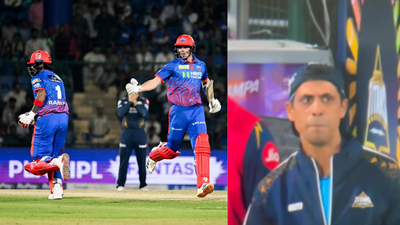
Vaibhav Sooryavanshi admitted that he was nervous against Jasprit Bumrah on Tuesday. Sooryavanshi’s face-off against Bumrah proved to be blockbuster entertainment for fans. The battle took place during Rajasthan Royals’ IPL 2026 clash vs Mumbai Indians in Guwahati. Rain delayed the first innings, and the match was delayed to 11 overs per side.
Vaibhav Sooryavanshi had an entertaining battle with Jasprit Bumrah. (ANI Pic Service)
Opening with Yashasvi Jaiwal in the first innings for RR, Sooryavanshi faced Bumrah in the second over, and he took an attacking approach right from the get-go. In the first delivery, Bumrah missed his mark and offered it in the slot; Vaibhav smacked it over wide long-on for a six. Then he took a single, followed by Jaiswal doing the same in the third delivery. Then, in the fourth ball, Bumrah sent a short, slow delivery down leg side; the teenager pulled it high and deep into the stands beyond backward square leg for a six. The over ended with back-to-back dots.
Sooryavanshi was dismissed in the fifth over, losing his wicket to Shardul Thakur for 39 off 13 balls, packed with four and five sixes.
Speaking to RR’s social media handle after the match, Sooryavanshi opened up on facing the veteran pacer.
“It didn’t feel like much, sir. I was just trying to focus on the ball, rather than the bowler. I was a bit nervous, because such a big bowler was in front of me. But I tried to back my own game and play the ball instead of the game,” he said.
Revealing why he went early for his drills a day before the match, he said, “Those drills help a lot because we do them from a short distance and he throws them very fast. It gives you extra time when you finally face the bowler. After the last game, I felt there were one or two points, I needed to work on to help my batting. That’s why I went early yesterday and it definitely helped in the game today.”
“In the last two innings, I have been getting out after playing good shots. Even in the first match, it was a good shot but it went straight to the fielder. I feel like if I had played the whole innings today, the score would have been much bigger,” he added.
Other than Sooryavanshi’s knock, Jaiswal smacked an unbeaten knock of 77* runs off 32 balls as RR got to 150/3 in 11 overs. In response, MI were restricted to 123/9 in 11 overs as Rajasthan went on to win by 27 runs.
What is Asian hospitality? It is a term that became popular in the early years of this century to classify hotel chains from East Asia that were opening properties in the West and bringing higher and more respectable levels of service to their hotels.
Bill Heineke’s Anantara aims to open 50 hotels in India over the next five years. (Ananthara (representative image))
When chains such as Mandarin Oriental and Peninsula (and, to a lesser extent, Shangri La) opened luxury hotels in the US and Europe, their arrival was regarded as a revolution because it mirrored the take-it-or-leave-it attitude of the larger American chains.
The proliferation of Asian chains has led guests to revise their expectations of luxury hotels. But there was a small irony at the heart of the Asian hospitality concept.
Within Asia there are countries such as Japan, Thailand and Indonesia (especially Bali) that were considered the epitome of grace and elegance in service. But almost all the Asian chains were Chinese: Peninsula and Mandarin Oriental were from Hong Kong. Shangri La was owned by overseas Chinese. Of the new luxury chains, Rosewood and Capella ended up in Chinese hands. (Typically the owners were either expatriate Chinese or Singapore or Hong Kong companies.)
Some of the chains in countries that were considered centers of grand hospitality once moved out of Asia. And while the Chinese are brilliant, they have no real reputation for being friendly (let alone hospitable) among their neighbors.
Thailand, which has some of the best hotels in the world, never really succeeded outside Asia, although, for a brief, confusing moment, it looked like chains like Dusit would be successful globally.
Change has finally begun.
The Bangkok-based Minor Group now has 640 hotels in more than 60 countries and its luxury brand Anantara has a strong presence in Europe and the Middle East. And yet, despite the Thais’ reputation as Asia’s great hoteliers, Anantara has escaped inclusion in the Asian hospitality ranks.
It may have something to do with the person behind the group. Bill Heinecke is a legend in Thailand where his life story is the kind of saga that TV shows are made of.
Heinecke was born to American parents who lived throughout Asia (his father was a diplomat and his mother a journalist). The family moved to Thailand when Bill was 14, and he displayed an entrepreneurial streak, becoming successful in advertising before founding Minor Holdings. The name derives from his age: he was a legal minor (under 18) when he founded the company.
He proved to be a remarkable businessman, venturing into several businesses and displaying a sharp sense of style. Thailand is full of Heinecke stories, but the one that has contributed most to this legend is the one about his feud with Pizza Hut.
Heineke’s company was a Pizza Hut franchise in Thailand and created the brand. But when his agreement with the American corporation was about to expire he was surprised to learn that it would not be renewed. Pizza Hut thought it had the upper hand and Henneke seemed outwardly ready to leave the pizza business once the deal was finally struck down. In fact he was quietly creating a new brand called The Pizza Company, which broke free from Pizza Hut’s global menu and created pizzas that would work better with Thai customers. When his 45-day non-completion clause expired, Heineke suddenly converted all Pizza Hut restaurants into pizza company outlets. The shops continued to operate as before: only they were pizza company restaurants. Pizza Hut was ignored and the pizza company is now one of the biggest brands in Thailand.
Miner remains a major player in the restaurant sector but Heinecke’s real love were hotels. He started out as an owner and let Marriott and Four Seasons manage their hotels, but he demonstrated an innovative stake that surprised professional hoteliers. For example, when he built the impressive Four Seasons in Chiang Mai in the north of Thailand, he came up with the idea of creating branded residences as part of the complex. The Four Seasons had never done this before but agreed to give Heinecke a chance. The concept was so successful that it has now become a standard practice throughout the industry and the Four Seasons itself generates huge revenues from branded residences at many of its properties.
Given his passion for business, it was inevitable that Heinecke would move from owning to managing hotels. He established Anantara as Minor’s luxury hotel brand and took it around the world.
Unusually it has managed to maintain relationships with the operators (Marriott, Four Seasons etc.) that run other hotels it owns as well as establish its own hotels as competitors to them. He took over the Four Seasons in Bangkok and now runs it himself as Anantara Siam, but remains the owner of Four Seasons in Koh Samui, Chiang Rai and Chiang Mai. Even more unusually, Anantara Siam competes directly with St. Regis (a Marriott brand), also owned by Heinecke.
No one has any objection to this unusual arrangement. And it works to everyone’s benefit. The Four Seasons Samui, which is owned by Henneke, benefited greatly from the success of The White Lotus TV show in which it appeared. But Henneke also owns the competition: Anantara on Koh Samui, and he says the hotel also benefited greatly from The White Lotus because the show put Koh Samui on the map. (Much of The White Lotus was also filmed on Samui Anantara and Anantara Phuket.)
Strangely for a man who knows India so well (he is best friends with VLCC’s Vandana and Mukesh Luthra and often stays with them when they are in Delhi) Heinecke has never opened a hotel in India. He now admits that they should not have left it so late, but argues that one reason for the delay was that the miner did not follow an asset-light model. It tended to own its properties or at least have a stake in them. It was difficult to do this with Indian laws and there were many opportunities in other countries where it was much easier to invest.
Over the past few years Miner has moved to what Heineke calls an asset-rights model, in which it is combining the hotels it owns with those it operates for other owners. Due to this change in strategy, pressure has now increased on a large scale in India.
Heneke was in Kolkata this week to sign the deal for Anantara at the new World Trade Center and meet owners who wanted Anantara to manage their hotels. An agreement was also signed for Anantara Resort in Coorg. And Anantara already operates a hotel in Jaipur.
It sounds absurdly ambitious but Henneke’s goal is 50 hotels in the next five years. Several new deals are already under negotiation.
So will Anantara bring Asian hospitality to India? This is an interesting question because no great Chinese/Asian brand has come to India. we don’t have
Mandarin Oriental, no peninsula, no banyan trees, no Capella and no rosewood. The only Chinese chain to come to India is Shangri La and none of its properties have made much of a splash.
As far as I can tell Henneke (who renounced his US citizenship years ago and now holds a Thai passport) doesn’t see Anantara as having much in common with the Chinese chains. The biggest influences on his idea of hospitality have been the Four Seasons and I
Suspect he sees Anantara as a softer, more compassionate Thai version of the Canadian series. Their hotels aim to combine the efficiency and high quality of the Four Seasons with an elegant Thai edge.
Anantara is not their only brand, although it is the most luxurious. They bought the huge European NH chain a few years ago at least partly because they felt there were many undervalued assets in the NH Collection (the NH brand’s upmarket range). Some (for example in Amsterdam) have been overhauled and rebranded as Anantaras, but Henneke has great confidence in the future of regular NH properties, which he believes offer great value for money. I imagine NH will also come to India eventually. Elivana, which runs jungle lodges and hotels in Africa, will also do the same. As is Avani, Anantara’s other, more affordable lifestyle brand.
Like all self-made men who started with nothing, Henneke has learned to reverse his progress. The miner suffered losses in 1997 when Thailand was hit by a severe economic crisis. But Henneke saw the crisis as an opportunity because he was confident that Thailand would bounce back and buy new assets. The miner was badly affected by the tsunami, which caused heavy damage to its properties in Phuket and the Maldives. But Henneke once again came out strong and acquired more properties in the Maldives. (Miner now owns nine hotels in the island nation.)
It was Covid, he says, that really shook the group. Miners lost US$1 billion during that phase. But Henneke says now, “What impressed me most was that we could afford to lose a billion dollars and still move forward!”
This is the kind of spirit with which he handled bad publicity in England when Minor clashed with renowned London restaurateur Jeremy King, whose small group of restaurants included some of London’s trendiest venues. modest investment made
The King’s Group eventually owned over 70 percent, at least partly because it included famous restaurants such as The Wolseley that they believed could be replicated in other cities. King rejected every suggestion from Miner and refused to cooperate. King was eventually forced out of the company after a fight, during which the British press took King’s side.
But the restaurant group has thrived without King. A second Wolseley is opened in London and Heineke has converted restaurant brands into hotels. A Colbert Hotel (after the group’s Colbert restaurant in Sloane Square) is rumored to be in the works in London and the Wolseley has become a hotel brand itself: the first Wolseley hotel will soon open in New York.
So what will Henneke do in India? His attitude seems to be that the group has expertise in most areas of hospitality so he is open to all options. Anantara will be the most high-profile of the new ventures and says they will be efficient but luxurious city hotels with a resort feel.
And isn’t 50 hotels in five years a very ambitious target? Yes, he admits, it’s an ambitious goal. But that’s why he likes it. He performs at his best when the challenge is greatest.
It has been months since the untimely death of business tycoon Sunjay Kapur, but the legal battle over his estate shows no signs of slowing down. Rani Kapur has broken her silence on the ongoing dispute with Priya Kapur, calling it deeply painful. Alleging attempts to take over assets built by her late husband, she questioned her removal from the RK Family Trust and expressed fear over the situation.
Rani Kapur on legal battle with Priya Kapur
As per the latest update from news agency ANI, Rani Kapur has spoken out about the ongoing dispute, calling it deeply painful and personal. She said, “It`s very hurtful for me because my husband made this trust (RK Family Trust) and gave everything to me. This girl (Priya Kapur) tried to take over everything my husband built all his life. We moved from Bombay to Delhi, we built the house. That house I built sitting under a tree. She thinks she`s got it. Luckily, I have this house, and I`ve been away from Delhi since my son died. I`ve not gone back. I`m scared now. What is she going to do to me?”
When asked about the family settlement, Rani Kapur made it clear that she does not see any “possibility of resolving the matter amicably”.
“She (Priya Kapur) wouldn`t have had the guts to have a dispute if Sunjay Kapur had been alive today.” She further suggested that she was extremely close to her son, noting that he rarely made decisions without her involvement.
Rani Kapur on RK Family Trust
Rani suggested that Priya began asserting control over the business soon after Sunjay’s death. She also reiterated that the RK Family Trust is in her name and questioned how she could be removed from it, asserting that everything belongs to her as it was built by her husband. “I am the head of the family, and I am nobody for her (Priya Kapur). What settlement?”
“It`s an RK Family Trust—can she (Priya Kapur) remove me from there? The trust is in my name. Can she remove me? Can she? Let her try what she wants. She will probably want to remove me from the world. Only then can she take everything. Otherwise, everything belongs to me because it`s built by my husband, not by anybody else… I have nothing to say about her bad behaviour… She thinks she owns everything.”
Rani Kapur on bond with Karisma Kapoor’s kids
Rani clarified her continued bond with Sunjay’s children from his marriage to Karisma Kapoor. “He was married to two nice girls, a good family. He`s got two children from his second wife, whom I meet all the time.”
For the unversed, Karisma Kapoor`s children have moved the Delhi High Court, demanding a share in Sunjay Kapur`s fortune. They have claimed that their stepmother, Priya Kapur, forged his will to take control of the assets.
Gujarat Titans head coach Ashish Nehra was left visibly frustrated after a costly overthrow during Delhi Capitals’ tense chase, which eventually saw GT scrape through with a narrow one-run victory at the Arun Jaitley Stadium. At one stage, with KL Rahul at the crease, the match appeared to be firmly in Delhi Capitals’ control. However, a crucial moment in the 15th over turned the tide and drew a strong reaction from the GT dugout.During the 15th over, bowled by Ashok Sharma, a well-executed yorker was dug out by Tristan Stubbs towards the left of the bowler. Ashok managed to get a hand to the ball but failed to stop it cleanly, allowing the batters to attempt a quick single. Shubman Gill quickly collected the ball and fired a direct hit at the striker’s end. Although KL Rahul had made his ground, the deflection off the stumps resulted in the ball racing away to the boundary, gifting Delhi Capitals four additional runs, turning a single into five runs.The incident visibly angered Ashish Nehra, who was seen reacting sharply from the sidelines. His animated response quickly went viral on social media, highlighting the importance of small moments in a closely fought contest. With the game hanging in the balance, such lapses in field awareness, particularly the absence of proper backup, could have significantly altered the outcome for Gujarat Titans.
Match Summary: DC vs GT
Gujarat Titans finally got their first win of IPL 2026 after a dramatic last-over finish against Delhi Capitals. Chasing 211, Delhi fell just one run short despite a strong effort, ending at 209/8. The match turned on a crucial moment when David Miller refused a single late in the final over, a decision that proved costly.Last-over drama decides the matchDelhi looked in control towards the end, especially with Miller hitting big shots and bringing the equation down quickly. However, the game changed in the final over bowled by Prasidh Krishna. Miller declined a single on the second-last ball, keeping strike but putting pressure on himself.On the final delivery, with two runs needed, he missed a slower ball and attempted a run, but Jos Buttler ran him out at the striker’s end, leaving Kuldeep Yadav short. Delhi finished agonisingly short, handing Gujarat a thrilling one-run win.How the match unfoldedEarlier, Gujarat Titans posted a strong total of 210/4, thanks to key contributions from Jos Buttler (52), Shubman Gill (70) and Washington Sundar (55). Buttler’s aggressive start, including multiple sixes, set the tone, while Gill and Sundar kept the momentum going. In response, Delhi Capitals got off to a solid start with KL Rahul (92) and Pathum Nissanka (41) building a strong opening partnership. However, Rashid Khan’s three wickets in the middle overs shifted the momentum.Despite Miller’s late heroics, including a big penultimate over, Delhi couldn’t cross the line. The result marked Gujarat’s first win of the season, while Delhi suffered their first defeat after a promising start.
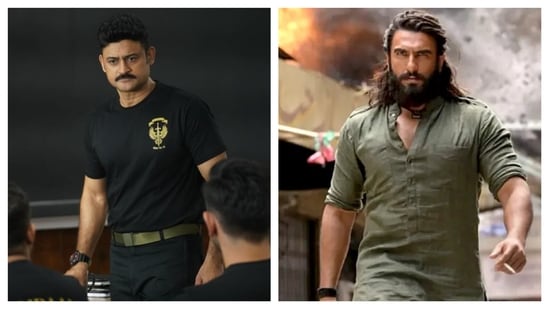
Actor Manav Gohil, who shared screen space with Ranveer Singh in Dhurandhar, has opened up about the transformation he has witnessed in the star following the franchise’s success and his journey into fatherhood. According to Manav, Ranveer has become more mindful in his decisions, a shift that is reflected in his overall demeanour.
In Dhurandhar and its sequel Dhurandhar The Revenge, Manav Gohil was seen in the role of Sushant Bansal.
Manav Gohil on Ranveer Singh
In a recent interview with Hindi Rush, Manav spoke about Ranveer, and how everything has changed after the success of Dhurandhar.
“I think Ranveer is currently in a very important phase of his life—he is in transition. He has become a father and the face of one of the most historic films. He is already a superstar and a great actor—he deserves everything he has today. I’m sure there is a larger plan behind his choices. If you notice, his clothes, his media presence—everything has changed. His demeanour has evolved. He’s now seen in more structured, well-tailored looks. He feels like a different person,” Manav said.
During the interview, the host brought up his Kantara controversy. To this, Manav responded, “Ranveer isn’t just a superstar in India, but globally. I’m sure he has become more responsible in handling his stardom. There are people guiding these decisions, and Deepika Padukone herself is a very wise woman.”
Ranveer and Deepika welcomed their daughter, Dua Padukone Singh, on September 8, 2024.
In Dhurandhar and its sequel Dhurandhar The Revenge, Manav was seen in the role of Sushant Bansal. The actor made his television debut came with the show Choodiyan in 2001. He then starred in Kahaani Ghar Ghar Kii, Kkusum, Kasautii Zindagii Kay, CID, Keertan Tibrewal, Shaadi Mubarak, Kaamnaa, Matsyavedh and Karate Girls, among others.
About Dhurandhar 2
The first part of Dhurandhar was released in December 2025 and emerged as a blockbuster, collecting over ₹1300 crore worldwide. The second part, titled Dhurandhar The Revenge, was released on March 19. It took a bumper opening of ₹145 crore and has so far collected over ₹1,033.37 crore in India and over ₹1600 crore worldwide.
Aditya Dhar‘s Dhurandhar focused on Ranveer Singh’s character, Hamza, infiltrating the terror networks based in Lyari. The film’s sequel was released in theatres on March 19. It delves into the origins of Ranveer Singh’s character, Hamza aka Jaskirat Singh Rangi, revealing the motivations behind his mission. The film also takes the story forward, showing him taking control of the power dynamics in Lyari while working to dismantle a terror network in Pakistan that threatens India.
Apart from Ranveer, the spy thriller stars Arjun Rampal, Sara Arjun, Rakesh Bedi, R. Madhavan and Sanjay Dutt in key roles.
Top stock market recommendations: Aditya Birla Sun Life AMC, Bank of India, and Cummins India have been picked as top stocks to buy today by Aakash K Hindocha, Deputy Vice President – WM Research of Nuvama Professional Clients Group. He shares target levels and rationale for buying these stocks along with his outlook for Nifty and Bank Nifty:Index View: NiftyNifty witnessed its largest one day gain in the past 52 weeks after ceasefire announcements acted as a tailwind in an already bullish set up as highlighted last week. The index has hit the 24k mark and can further extend this ongoing move towards 24250.*Actionable*- Any dips towards 23930 can be used to create fresh longs for a target of 24250 with an SL at 23800. (All levels are on Nifty spot basis.)Bank NiftyBank Nifty has been witnessing a sharp short covering move from the start of this week as the index has gained 8% so far this week, engulfing all of its past 3 weeks of losses. With an over 5% move on Bank Nifty in one trading session alone, it has further opened for an upside of another 1500 pts to target of 57000 wherein it meets its 200 DMA resistance.*Actionable*- Any dips towards 55300 can be used to create fresh longs for a target of 57000 with an SL at 54700. (All levels are on Nifty spot basis.)Stock recommendations:Aditya Birla Sun Life AMC (BUY):
LCP: 973
Stop Loss: 945
Target: 1035
Stock is on track to end at the highest ever weekly closing. Stock has also reversed after retesting its previous 15-month cup and handle breakout earlier this month. Retest of previous all time highs appears likely to unfold on charts.Bank of India (BUY):
LCP: 146
Stop Loss: 139
Target: 159
Stock has reversed after hitting its 200 DMA support, this also coincides with a retest of cup and handle breakout on weekly charts. Given the price behaviour and closing at a weekly high, Bank India is likely to extend this move further towards the 160 zone.Cummins India (BUY):
LCP: 4796
Stop Loss: 4550
Target: 5300
A flag breakout on daily and weekly charts is formed and now seen as a breakout allowing charts to further attract inflows lifting it to new all time highs.(Disclaimer: Recommendations and views on the stock market, other asset classes or personal finance management tips given by experts are their own. These opinions do not represent the views of The Times of India)
The estate of Sunjay Kapur continues to remain in the spotlight as legal tensions surrounding it intensify. It all started with Karisma Kapoor’s kids moving the Delhi High Court, alleging that Sunjay’s widow, Priya Sachdev Kapur, forged his will. Amid the mounting legal drama, Sunjay’s mother, Rani, has now spoken out, shedding light on her bond with Karisma and her children.
Sunjay Kapur got married to Karisma Kapoor in 2003. They got divorced in 2016.
Rani on Karisma’s kids
In an interview with ANI, Rani has opened up about the ongoing dispute, looking back at her bond with Sunjay. Adding another layer to the ongoing dispute, the controversy surrounding the RK Family Trust has also escalated in recent times.
“She (Priya Kapur) wouldn’t have had the guts to have a dispute (if Sunjay Kapur had been alive today). When Sunjay was alive, she didn’t have the guts to say anything. I was very close to Sunjay. He never went on a holiday without me…He never left me alone…,” Rani said.
In the interview, Rani also clarified that she continues to be in touch with Sunjay’s children from his marriage to Karisma Kapoor. “He was married to two wonderful women, a good family. He has two children from his second wife, whom I see frequently,” she stated, giving a glimpse of her relationship with the actor.
Sunjay was the chairman of Sona Comstar. His first marriage was to fashion designer Nandita Mahtani in 1996 and lasted four years. He married actor Karisma Kapoor in 2003. The couple became parents to their daughter, Samaira, in 2005 and their son, Kiaan, in 2011. In 2014, Karisma and Sunjay filed for divorce, and it was finalised in 2016. After the separation, Sunjay married Priya Sachdev. The couple welcomed a son, Azarias, after they got married. Sunjay died on June 12 last year during a polo match in England.
More about the legal feud
A legal battle is going on over Sunjay’s estate. In August last year, Priya presented a document to the Delhi High Court claiming it was his will. This was challenged by Samaira, Kiaan, and Rani. In August, Karisma sued Priya on her children’s behalf, claiming Priya had fabricated Sunjay’s will, keeping their two children out of their inheritance.
In addition to the civil action, Priya Sachdev has also recently filed a criminal defamation complaint against Sunjay Kapur’s sister, Mandhira Kapur Smith, and another individual. Sunjay’s mother, Rani Kapur, is also a plaintiff in the separate legal battle. The dispute surrounding the RK Family Trust has also escalated. Recently, Priya, who is a trustee and beneficiary of the RK Family Trust, has issued a notice removing Sunjay’s mother, Rani Kapur, as a trustee with effect from March 25, 2026.
In the rain-curtained IPL 2026 match against Rajasthan Royals (RR), Mumbai Indians (MI) suffered a loss by 27 runs at the Assam Cricket Association Stadium in Guwahati.
Following the loss, MI skipper Hardik Pandya said that his bowlers need to take responsibility and also feels that they were not up to mark with the ball.
“We did not execute the deliveries we were supposed to (in powerplay). They (RR openers) played well. Bowlers need to take responsibility. As a bowling group, we were not up to the mark. I would not put this game on the batting. Definitely the bowling unit which had to take responsibility. It is always about bowling those good balls. If we would have executed, we would have been in the game,” he said.
During the match, RR`s explosive opening duo of Yashasvi Jaiswal and Vaibhav Sooryavanshi provided a strong start to the team. Sooryavanshi played a fiery cameo of just 14 balls and smashed 39 runs, laced with a boundary and five maximums. On the other hand, Jaiswal delivered an unbeaten knock of 77 runs in just 32 balls, with the help of 10 boundaries and four maximums.
Speaking about the opponents` opening duo, Hardik heaped praise on them and gave a special mention to Sooryavanshi by saying it is amazing to see a young batsman bat that way.
“They (RR openers) also played tremendously. Their openers threw us off our game and we were playing catch-up. Quite fascinating to see a 17 or 16-year-old boy (15-year-old) play that way. Amazing to see the way he bats, the fearlessness he has. Wish him good luck for the future.” On their next game, Pandya said, “Just learn from the mistakes. Morning will come tomorrow, sun will rise, prepare well for the next game,” said the 32-year-old cricketer.
With this, the “Paltan” has now suffered two defeats in three matches of the ongoing league. They have slipped to the seventh position with a net run rate (NRR) of -0.715 and two points.
Riyan Parag-led Royals are enjoying the top spot with three wins in as many matches. They have a net run rate (NRR) of +2.403 and six points.
In a gripping fusion of action and suspense, Marvel alumni Anthony Mackie and Dafne Keen join forces in ‘Barracuda.’ Mackie takes on the role of a seasoned smuggler, determined to save a kidnapped teen, played by Keen. Their break for freedom triggers an adrenaline-fueled pursuit toward the U.S.
‘Captain America’ star Anthonie Mackie is set to unite with Marvel co-star in the new action thriller ‘Barracuda.’ ‘Deadpool’ star Dafne Keen will be starring alongside Mackie in the upcoming Neil Burger film.Barracuda will feature Mackie as a man with a sordid past, Keen will play the character of a kidnapped victim. The cast also includes Steven Bauer and Anthony Del Negro.
Neil Burger has been wanting to work with Anthonie Mackie
According to Deadline, praising the film’s script by Adam Mason and Simon Boyes, Burger said, “I’ve been looking to make a non-stop action thriller and I’ve finally found it with this great screenplay. This one never lets up. It’s out-of-control, relentless mayhem in a real-time sprint to the border.The director also noted that he’s also been “wanting to work” with Anthony Mackie for some time, and says he knows “we’ll make a great team.”
Anthonie Mackie plays a former smuggler
Barracuda’s familiar Lone-Wolf-and-Cub dynamic is teased in its synopsis, which reads, “When Karl (Mackie), a former smuggler with a haunted past, storms a nightclub in Mexico to rescue Jodie (Keen), a kidnapped teenage girl, he ignites a chain reaction of blood and bullets that burns across 100 miles of deadly roads toward the U.S. border.”It continues, “The breakout turns into a high-speed race when Karl kills the brother of the ruthless club owner and steals his prized 1973 Plymouth Barracuda. Now hunted by relentless criminals, Karl and Jodie tear across the desert with no way to slow down.”
More about Anthony Mackie and Dafne Keen’s recent projects
Mackie is working on ‘Barracuda’ even as post-production continues on his next MCU project, the highly-anticipated ‘Avengers: Doomsday.’ He’s also lined up a role in David Mamet’s drama ‘Speed-the-plow.’Dafne Keen, who made her screen debut as the Cub to Hugh Jackman’s Lone Wolf in the 2017 blockbuster ‘Logan,’ is also set to star in the sex comedy ‘The Marshmallow Experiment’ and the horror film ‘Night Comes.’