



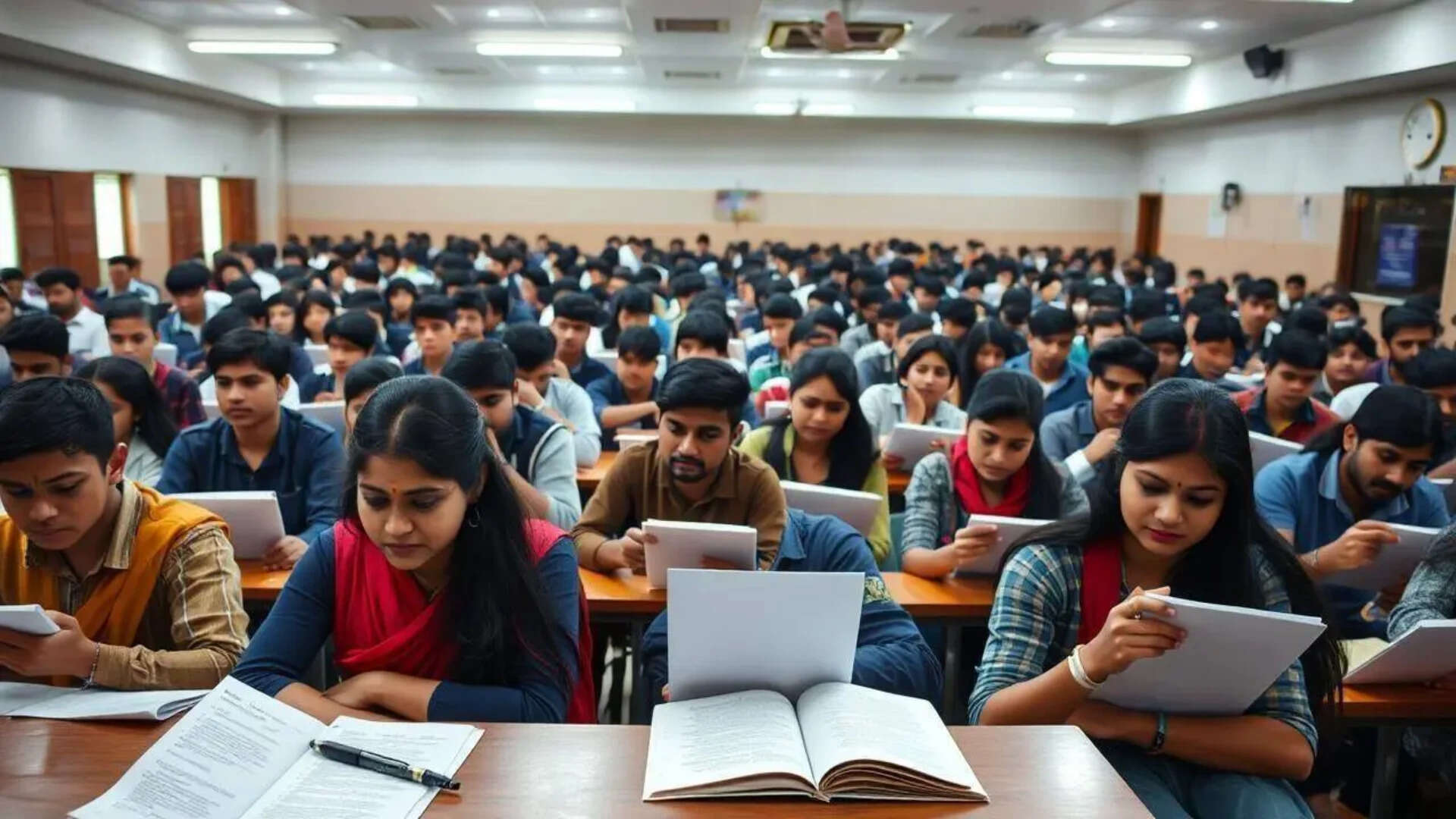
Government jobs are one of the most prestigious career options in India. Coaching centers flourish, online study platforms flourish, and families invest significant time, money and hope in the belief that their children will achieve what is often seen as the ultimate prize: a stable government job.Yet, behind this aspiration lies a major contradiction. Every year, lakhs of candidates apply for government recruitment exams, often competing for only a few thousand vacancies. In many cases, hundreds—or even thousands—of applicants compete for the same position.And yet, only a few succeed. For example, UPSCThe Civil Services Examination (CSE), arguably the toughest competitive examination in the country, has recorded a success rate of less than 1%, with only a few hundred candidates ultimately selected out of hundreds of thousands of applicants every year.This is the paradox of India’s government jobs: millions of people aspire to join the public sector, but only a small fraction ultimately secure a position.Why do millions of people dream of a government job despite limited posts?As it is said, films are a reflection of society. Indian cinema has long captured the country’s fascination with government jobs – determined youth facing financial hardship, sacrificing years to prepare for exams, and pursuing a coveted position that promises security, status, and a chance to change their family’s future.Often, the main character fails in his first few attempts. Then, when all hope is lost, years of perseverance finally pay off and the coveted appointment letter arrives.The financial hardship and personal struggles often depicted in such stories are part of what makes government jobs so attractive. Their enduring appeal stems from several factors, including:Social Status: Government jobs are still highly respected in most parts of India. Securing someone is seen as a symbol of achievement and professional success.Family Tradition: In many families, children follow in the footsteps of parents or relatives who have worked in government service. Familiarity with the profession and its benefits often strengthens its appeal across generations.Financial Security and Upward Mobility: For many candidates from low and middle income families, a government job represents a path to financial stability and a better quality of life. It can also provide opportunities for upward social and economic mobility.Fixed Income: Public sector employees benefit from regular salaries and structured pay scales. This financial forecasting allows individuals and families to plan for the future with confidence.Job Security: Government jobs are widely considered to offer greater job security than most private sector roles. The relatively low risk of layoffs makes them particularly attractive during periods of economic uncertainty.Pension and Retirement Benefits: Government employment often comes with retirement benefits that provide long-term financial security. Such security measures remain a major attraction for many candidates.public service: The attraction for some candidates lies in the opportunity to serve society and contribute to public welfare. The ability to bring about tangible change in people’s lives is a significant attraction.Overall, these factors help explain why government jobs hold a unique place in the collective imagination of India.
Why don’t candidates stop trying?
Passing a government recruitment exam is no easy feat. While many candidates are successful on their first attempt, others spend years preparing and retaking the exam until they either secure a position, exhaust their approved attempts, or cross the age limit for eligibility.So, beyond the appeal of government jobs, what accounts for the perseverance of aspirants who keep working hard at midnight despite repeated failures and long odds?UPSC aspirant Rahul Singh (name changed) told Times of India that aspirants do not give up their dreams easily.He said, “The selection rate in most of the exams in India is similar to UPSC. For example, for IIT, it is less than 1%, and for SSC CGL, it is much lower than both UPSC CSE and IIT. Therefore, the chances of getting selected in UPSC are not less compared to other competitive exams.”Singh says that what motivates him is the fruits of his hard work that come with success, and the opportunity to work among the common people and make a difference in their lives.He also tried to clarify the misconception that candidates are motivated by the opportunity to earn money dishonestly once they come to power or to take advantage of political opportunities when they arise.Singh said, “This may be true in some cases, but it cannot be generalized to millions of dedicated aspirants. I feel that the spirit of selfless service, compassion and integrity still exists, which retains the backbone of the ‘Steel Frame of India’ and which is taking this country on the path of progress despite all the negativity.”
The scale of competition – what the statistics say
As the world’s most populous country, India naturally also has the largest youth population. By 2025, about 65% of Indians will be under 35 years of age. This translates into a huge pool of job seekers, making government recruitment one of the most competitive scenarios in the country.For example, applications for UPSC CSE come in lakhs every year. In the 2022 UPSC CSE, more than 11.35 lakh candidates had applied for 1,011 vacancies, i.e. an average of 1,123 applications for every post. Ultimately, only 933 candidates were recommended for selection after the interview stage, resulting in a success rate of only 0.08%.Similarly, 10.40 lakh candidates had applied for 796 vacancies in the 2020 Civil Services Examination, i.e. an average of 1,306 applications per post. Ultimately, only 761 candidates were recommended for selection, the success rate being only 0.07%.Same is the situation with state level government jobs also. In the Uttar Pradesh Provincial Civil Services (UPPSC) examination, 5,76,154 candidates registered for 947 vacancies in 2024, i.e. an average of 608 registrations for each post. Ultimately, only 932 candidates were recommended for selection, resulting in a success rate of only 0.16%.The numbers reveal a simple reality: Only a small fraction ultimately make the cut.
The Paradox of India’s Government Jobs – Why Many People Fail to Get a Job
The reason why lakhs of candidates fail to make the cut is much greater than the total number of applicants. Factors like intense competition, exam difficulty, exam-related pressure, reservation policies and even exam irregularities can shape a candidate’s chances of success.Competition Level: Even within a huge pool of candidates there is intense competition. That’s why even strong candidates often lose out to someone who is slightly better.Paper Difficulty: Questions are often deliberately set at a high level to filter candidates and ensure that only the most well-prepared people qualify.Paper Leak: Paper leaks lead to re-examinations, where even those who performed well in the original examination are not able to repeat their previous results due to changed circumstances and additional pressure.Reservation Policies: These shape government recruitment by distributing vacancies across different categories, leading to differences in competition levels and cut-off marks. Personal Preparation: Many candidates take their first attempt mainly to understand the exam level and competition. In other cases, even well-prepared candidates may outperform others who are significantly better prepared.Preparation Ecosystem: In turn, individual preparedness may be shaped by varying access to guidance, study resources, and exposure to competitive environments.Selection is, ultimately, a matter of relative performance within certain constraints – and sometimes luck – where even strong effort does not always guarantee success.
Government Jobs: A Complex Reality
Despite tough competition and huge crowd of candidates, the dream of a government job is shaping aspirations across the country.For the 2026 Civil Services Examination, UPSC received 8,19,372 applications for only 933 posts, indicating the continued aspiration among lakhs of people to secure a government job.From the preliminary stage, 13,343 have qualified for the main stage, where an even lesser number will qualify for interview. Of them, ultimately, only a few will be able to make it to the final merit list, which is a small fraction of those registered for the exam.Yet this paradox is unlikely to go away any time soon, as large-scale participation reflects both the enduring appeal of such opportunities and the limited number of positions available.


