


The pop star’s legal team alleges a photograph of her face was used on Samsung television boxes without permission.
Dua Lipa sues Samsung for $15m over use of her image on TV boxes

Four Groww investors to sell 4.3% in co, eye $500 million


MUMBAI: Four early investors in Billionbrains Garage Ventures that operates the leading fintech platform Groww, are together selling 4.3% stake worth about $500 million (close to Rs 4,800 crore) in the recently-listed company. Peak XV, Sequoia, Y Combinator and Ribbit, the selling shareholders, have mandated Kotak Securities and JP Morgan India to sell the shares through block deals on Tuesday.The four selling shareholders, all private equity majors, are together selling a little over 26.8 crore shares of Groww, translating to 4.3% of the fintech major’s equity capital, the term sheet for the deal showed.The floor price for the offer, at Rs 177 per share, is at 8.5% discount to Groww’s closing price of Rs 193.5 on NSE on Monday. The base offer size is for 4.3% of the total equity capital of Groww, valued at Rs 4,750 crore at the floor price. There is an upsize option for further sale through this deal, the term sheet said.According to a report by Nuvama Alternative & Quantitative Research, for those shareholders who held shares in the company before it went public, lock-in of shares is set to end on May 12. The total number of Groww shares from which lock-in would be lifted is 418.2 crore. At current prices, that is worth nearly Rs 81,000 crore.According to Sebi rules, aimed at limiting any pressure on the stock price from over-supply of shares of a recently listed company, there’s lock-in for shareholders who had invested in the company before the IPO.Among the other prominent, recently-listed companies in which lock-in for pre-IPO shareholders is ending soon are Meesho (308.3 crore shares on June 10), Pine Labs (92.4 crore shares on May 13) and Physicwallah (25.9 crore shares on May 18).
Iran war live: Trump slams Iranian proposal as ceasefire hangs by a thread | US-Israel war on Iran News

Live updatesLive updates,
Iran’s parliamentary speaker Mohammad Bagher Ghalibaf says US has ‘no alternative but to accept’ Tehran’s 14-point proposal to end war.


Published On 12 May 2026
Amid AI push, LTM ramps up fresher hiring by 40%


BENGALURU: LTM (formerly LTIMindtree) increased fresher hiring by 40% in FY26 and expanded the deployment of AI agents across its workforce. At the same time, the company relied more on subcontractors in overseas markets and adopted a calibrated salary hike strategy amid macroeconomic uncertainty The IT firm onboarded more than 6,700 freshers during 2025-26, strengthening its talent pipeline across key capabilities. It also deployed over 1,500 AI agents internally to improve employee productivity and operational efficiency at scale.Subcontracting expenses, meanwhile, rose sharply to Rs 3,236.9 crore in FY26 from Rs 2,631.2 crore a year earlier. The increase was driven by a higher subcontractor headcount and rising overseas subcontracting costs due to rupee depreciation. The company’s workforce mix reflected changing onsite hiring trends. In the US, full-time employee count declined marginally to 7,454 in FY26 from 7,517 a year earlier, while subcontractor numbers rose to 1,324 from 952. In Europe, employee headcount dropped to 1,381 from 1,735, whereas subcontractors increased to 290 from 227.In India, both permanent employee and subcontractor numbers increased during the year. Employee headcount rose to 77,855 from 73,801 in FY25, while subcontractors increased to 2,650 from 2,097. Overall, the company’s total permanent employees, excluding subsidiaries, stood at 87,950 as of March 31, compared with 84,307 a year earlier.
US cruise ship passengers monitored for hantavirus in Nebraska

“Let me be crystal clear: the risk of hantavirus to the general public remains very, very low,” said Admiral Brian Christine of the US Health and Human Services department (HHS). “The Andes variant of this virus does not spread easily, and it requires prolonged close contact with someone who is already symptomatic.”
No reform complacency, to ensure macro stability: Shaktikanta Das

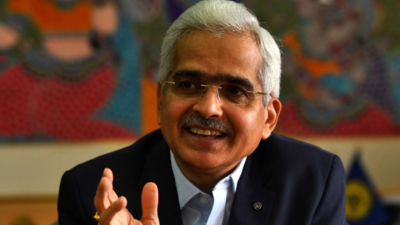
NEW DELHI: Govt is steadfast in pursuing reforms along with policy certainty, which will ensure that India not only maintains macroeconomic stability but also emerges as a globally competitive economy, principal secretary to PM Shaktikanta Das said Monday, while listing out seven strategies that the corporate sector may adopt to build resilience.Addressing the CII annual meeting, Das, a former RBI governor, listed out several reform initiatives that have already been taken, apart from steps to enhance strategic self-reliance – from rare earth permanent magnets to critical minerals and ship building, while asserting that several more steps are in the pipeline. “What is more important in India’s journey towards Viksit Bharat@2047 is that there is no reform complacency and govt remains steadfast in pursuing the reform agenda.” He stressed that Indian businesses should undertake “strategic reorientation” in the evolving global economic order. Das said in today’s world of geo-economic fragmentation and supply chain disruptions, the world of corner solution is increasingly becoming less efficient. “It is now evident that no single supply chain remains the cheapest, safest and predictable on a sustained basis. In this context, it’s resilience maximisation, which is increasingly replacing cost minimisation as a priority for businesses. It can be highly cost-effective in the long-run.” He suggested that India Inc should build organisational resilience, strengthen balance sheets, build new supply chains, reskill manpower, diversify into new markets, invest strategically for future readiness and step up R&D spend.Das also said that recent FTAs are expected to enable our firms to scale faster and integrate into the global value chains as the modern FTAs go beyond goods and unlock gains in services, digital trade and professional mobility.
Hundreds displaced, medical services suspended amid gang violence in Haiti | Conflict News

Aid group Doctors Without Borders says it has suspended hospital operations because of gunfire safety concerns.
Published On 11 May 2026
A new wave of gang violence in Haiti’s capital has displaced hundreds of people and caused the aid group Medecins Sans Frontieres (MSF) to suspend work in local hospitals.
The group, also known as Doctors Without Borders, said on Monday that about 800 residents had sought refuge from fighting inside its hospital in the Cite Soleil neighbourhood of Port-au-Prince before operations were suspended.
Recommended Stories
list of 3 itemsend of list
“Currently, not a single hospital is open in the area where the fighting is taking place,” MSF said in a statement, adding that while the need for medical services remains substantial, it could not guarantee the safety of staff or patients due to gunfire in the area. A security guard was struck by a stray bullet inside the compound.
Fighting between powerful gangs, which have seized effective control over large parts of the Haitian capital since the assassination of Haitian President Jovenel Moise in 2021, has led to widespread violence and strain on the civilian population.
Efforts by authorities to quell the fighting and curb the influence of criminal groups have largely proven ineffective.
Another hospital in the area, Hopital Fontaine, told the Reuters news agency that it had evacuated newborns from the intensive care unit. MSF says that it treated some patients who were transferred from the hospital, including pregnant women who gave birth overnight.
A contingent of foreign troops arrived in Haiti in April as part of a United Nations-linked effort, but past interventions have had little impact on the insecurity.
“I am now sleeping in the street,” 56-year-old Monique Verdieux told the Associated Press, saying that she was afraid to return home after watching gunmen burn buildings in her neighbourhood.
Other Haitians displaced by fighting over the weekend have taken refuge on the road to Toussaint Louverture airport.
Equity MFs see net inflows of ‘38.4k crore, slight fall in April


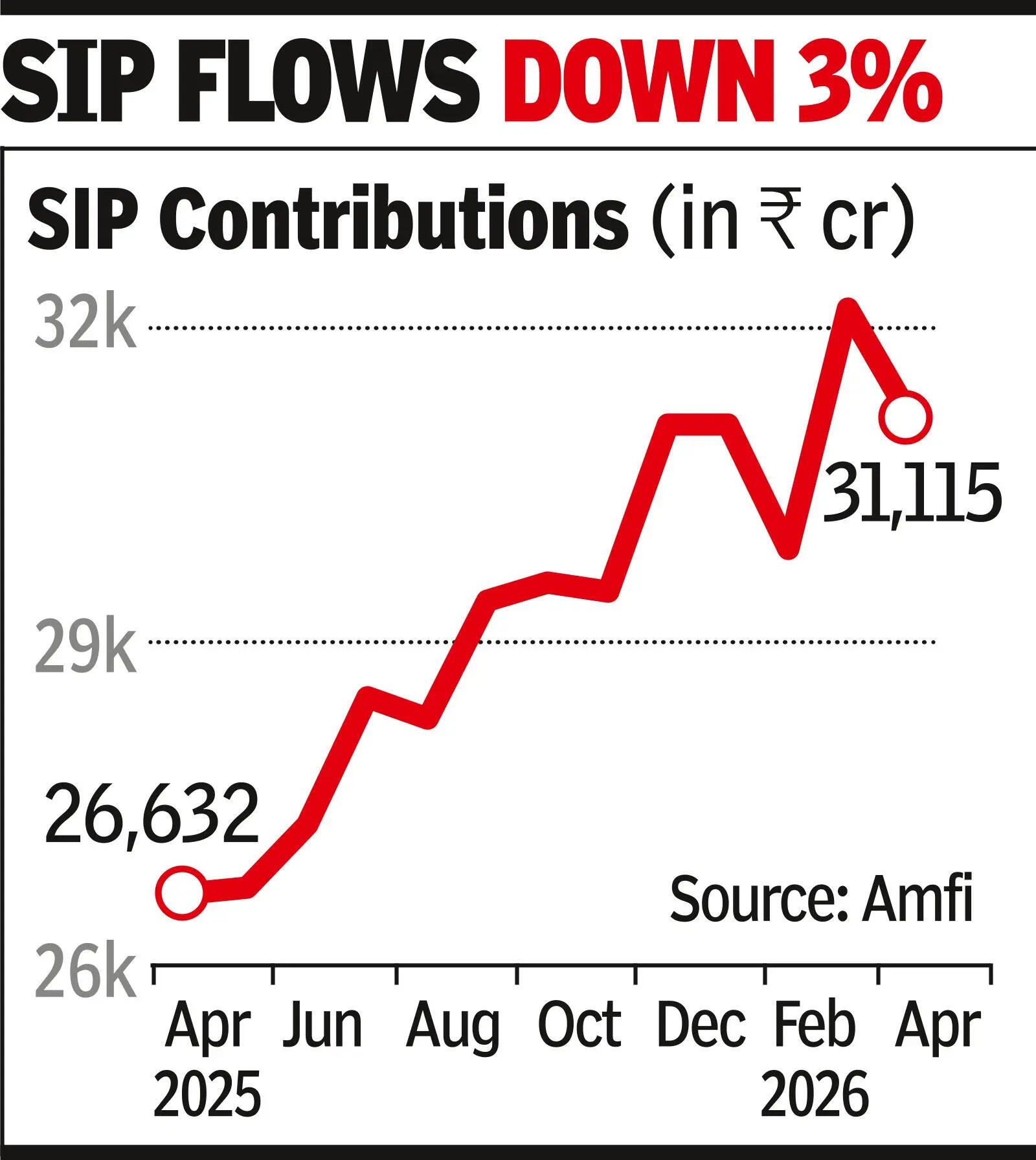
MUMBAI: Investors continued to invest in equities, debt and gold through the mutual fund route despite volatile markets due to geopolitical tensions. In April, net inflows in equity funds were at Rs 38,440 crore, down marginally from Rs 40,450 crore in March while the corresponding figure in debt funds showed a huge reversal with a Rs 2.47 lakh crore net inflow last month, data released by fund industry trade body AMFI showed. It was the 62nd consecutive month of net inflows into equity schemes.Gross inflows through the SIP flows were slightly down at Rs 31,115 crore, from Rs 32,087 crore in March, which showed an unusual spike since some end-Feb SIP mandates had flowed into March.
.
According to Bhautik Ambani, CEO, AlphaGrep Mutual Fund, the April flows indicate that investors are becoming more balanced and allocation-focused rather than purely chasing returns. “Even as overall equity inflows moderated, multi asset allocation funds have continued to attract strong inflows of over Rs 5,000 crore, highlighting growing investor preference for diversified strategies that can navigate volatility across asset classes.“Investors also invested in gold exchange traded funds which recorded net inflows at Rs 3,040 crore.
Elon Musk and Tim Cook among CEOs expected to accompany Trump on China trip

A total of 17 US executives are set to join the president on his visit, where he will meet his Chinese counterpart Xi Jinping.
Old is gold: Metal recycling shines amid high prices

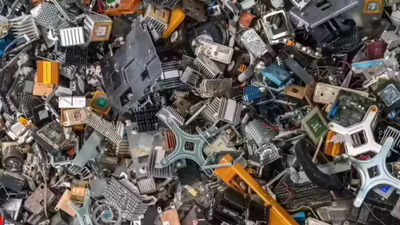
MUMBAI: Indians’ love for gold is ever shining but the steep prices of the yellow metal over the past several quarters have nudged consumers to find ways to ease burden on their pockets while keeping the heft and appeal of jewellery intact. For instance, consumers are buying less of new gold but instead recycling or exchanging the gold stored in their households for new gold to save on some money. Every time you give your old jewellery to a gold retailer, it gets recycled, which means you are reusing gold that you already have and using its value to buy something new, in effect reducing the burden of imports. India’s gold imports increased in value from $58 billion in FY25 to $72 billion in FY26, govt data showed. At P.N. Gadgil & Sons, the proportion of gold exchange and recycling, which stood at nearly 25-30% up to FY25, has significantly increased to around 50-60% in recent quarters, said COO & CFO Aditya Modak, adding that in such cases, old gold is usually taken at credit for purchase and the remaining is settled in cash. The volume of new gold purchases has seen a 30% decline in gram terms over recent quarters, said Modak. “This shift indicates that rising gold prices and ongoing volatility have prompted consumers to increasingly opt for recycling and upcycling existing gold jewellery instead of purchasing entirely new pieces,” said Modak. Tata’s Titan, which has been pushing exchanges through its brand Tanishq, said that exchange programmes helped record a 35% growth in each of gold and studded products portfolios alongside new collections. “Over 30 lakh Indians have partaken of Tanishq’s gold exchange programmes for years, recycling close to 1.7 lakh kg of gold,” the brand had said in a note last year, explaining that recycling is not a new strategy adopted by consumers. However, in recent times, that share has only grown, driven by volatile gold prices. “Industry wide, there has been a significant increase in gold recycling,” said Saumen Bhaumik, MD at Tata’s CaratLane for which gold exchanges shot up by 15-20% than usual in the March quarter. Industry executives expect consumers to tweak their buying patterns on PM’s call to avoid non-essential purchases of gold for a year. Bhaumik, estimates people to move to lower gold caratages and opt for silver and light diamond jewellery for regular usage. “The brand might have to revise its medium to long-term forecast after assessing the impact over next few weeks,” said Modak.For BlueStone Jewellery, exchanges have doubled year-on-year, with the brand offering more benefits to consumers going for exchanges so that they can get higher value, said founder & CEO Gaurav Singh Kushwaha. Many consumers are now looking at old jewellery not as something to simply store away but as an asset that can be redesigned into something more contemporary and wearable, said Ankur Daga, co-founder at Angara.
