


Israel has bombed what it says was a ‘Hezbollah smuggling route’ on the Lebanon-Syria border.
Syria’s evolving war shifts balance against Assad regime, allies

Romanian court annuls result of presidential election first round

Romania’s constitutional court has annulled the result of the first round of voting in the presidential election just days before the second round was due to take place.
It means the process will be restarted from scratch, with the government due to decide a date for a new vote.
The first round was won by Calin Georgescu, an almost unknown far-right Nato-sceptic who has previously praised Vladimir Putin.
The court’s decision comes after intelligence documents were declassified, suggesting Georgescu benefitted from a mass influence operation – conducted from abroad – to interfere with the result of the vote.
Outgoing Romanian Prime Minister Marcel Ciolacu said the court’s decision to annul was “the only correct solution after the declassification of the documents… which show that the result of the Romanians’ vote was blatantly distorted as a result of Russia’s intervention”.
In an address on Friday evening, current President Klaus Iohannis confirmed he would remain in the role until a new president was elected.
He said Romania was a stable, safe and solid country, one that remained safely and solidly pro-European and an ally to Nato.
The judges of the court met on Friday morning, despite having announced the previous night that they would not discuss new information regarding possible external influence on the elections until the second round of voting.
The law stipulates that, in the event of the annulment of the elections, they should resume on the second Sunday after the date of the annulment – which would have meant on 22 December.
However, the court has decided to ask the government to rerun the entire electoral process, and therefore the electoral campaign.
Last week, the court had ordered a recount of votes cast in Sunday’s first round following allegations that social media platform TikTok gave “preferential treatment” to the surprise winner, Calin Georgescu.
Georgescu, a radical with no party of his own, campaigned mainly on TikTok. The platform said it was “categorically false to claim his account was treated differently to any other candidate”.
He won 23% of the vote, with 19% for the runner-up, Elena Lasconi, of the opposition Save Romania Union and Ciolacu of the governing Social Democrats in third.
Lasconi condemned the court’s ruling as “illegal” and “immoral”, saying “today is the moment when the Romanian state has trampled on democracy”.
“Whether we like it or not, from a legal and legitimate point of view, nine million Romanian citizens, both in the country and in the diaspora, have expressed their preference for a certain candidate. We cannot ignore their will!” she said.
She had been hoping to win the second round run-off on Sunday, which has now been cancelled.
The Constitutional Court also rejected claims filed by two of the losing candidates who accused Georgescu of illegal campaign financing.
This week, Georgescu denied to the BBC that he was Moscow’s man.
He claimed the political establishment could not cope with his success and was trying to block him.
The country is now in totally new territory, politically. And no-one is quite sure what comes next.
Cheer for NRIs! Earn higher interest rates on FCNR(B) deposits till March 31, 2025 – here’s how


In order to attract more capital inflows, it has been decided to increase the interest rate ceilings on FCNR(B) deposits. (AI image)
Cheer for NRIs! The RBI has enhanced the interest rate ceiling for FCNR(B) deposits to overnight Alternative Reference Rate (ARR) plus 400 basis points for deposits with maturities between 1 year and less than 3 years. This decision was announced by RBI governor Shaktikanta Das during the post MPC meet on December 6 and aims to draw foreign currency deposits from abroad. These revised rates will remain effective until March 2025.
This represents a significant increase from the previous ceiling of ARR + 200 basis points.
According to the RBI statement on December 6, 2024, “In order to attract more capital inflows, it has been decided to increase the interest rate ceilings on FCNR(B) deposits. Accordingly, with effect from today (December 6, 2024), banks are permitted to raise fresh FCNR(B) deposits of 1 year to less than 3 years maturity at rates not exceeding ARR plus 400 bps and deposits with maturity between 3 to 5 years at rates not exceeding ARR plus 500 bps. This relaxation will be available till March 31, 2025.”
According to the RBI notification as on December 6, 2024, “It has been decided to increase the interest rates ceiling on fresh FCNR(B) deposits raised by the banks with effect from December 06, 2024 as under:
For NRIs seeking to maintain fixed deposits in India, the FCNR Account provides an option to preserve overseas earnings in Foreign Currency.
What is FCNR (B) Account?
- An FCNR (B) account enables you to hold a fixed deposit in India using convertible foreign currencies, with deposit periods ranging from one to five years.
- The account, being maintained in foreign currency, protects your deposits from exchange rate variations throughout the deposit duration, according to an ET report.
- Similar to a Non-Resident External (NRE) bank account, both the principal amount and interest earnings in this account are exempt from taxation in India.
Common Currencies Accepted:
Banks typically accept FCNR deposits in six major currencies:
* US Dollars
* Pounds Sterling
* Euro
* Japanese Yen
* Australian Dollars
* Canadian Dollars
Trump backs his Pentagon chief nominee Pete Hegseth as controversies mount | Donald Trump News

The US president-elect stands by his pick for defense secretary despite scandal and allegations of misconduct.
United States President-elect Donald Trump has voiced support for Pete Hegseth, his embattled pick for Pentagon chief, whose nomination appears in peril amid scandals and concerns about his lack of experience.
Trump signalled on Friday that he does not intend to withdraw Hegseth’s nomination, heaping praise on the combat veteran and former Fox News host. As Trump’s pick to be secretary of defense, Hegseth, like other top cabinet picks, needs to be confirmed by the incoming Senate.
“Pete Hegseth is doing very well. His support is strong and deep, much more so than the Fake News would have you believe. He was a great student — Princeton/Harvard educated — with a Military state of mind,” Trump wrote in a social media post.
“He will be a fantastic, high energy, Secretary of Defense Defense, one who leads with charisma and skill. Pete is a WINNER, and there is nothing that can be done to change that!!!”
Hegseth — an Iran hawk — has been beset by controversy since Trump nominated him last month. He continues to face allegations of sexual misconduct and excessive drinking, which he has denied.
Some US media outlets reported this week that Trump was considering alternatives to Hegseth.
Scandals have already taken down another Trump cabinet pick: former Congressman Matt Gatz, who withdrew his nomination for attorney general last month amid allegations of sexual impropriety.
The nomination of Hegseth, who is a staunch supporter of Israel, to be the top civilian authority at the Pentagon, overseeing the world’s most powerful military with an annual budget of $850bn, raised eyebrows early on.
While Hegseth previously led the advocacy group Concerned Veterans for America, he has no executive-level national security experience.
On Friday, Hegseth expressed gratitude for Trump’s support. “Thank you Mr. President. Like you, we will never back down,” he wrote in a social media post.
Incoming Vice President JD Vance also paid a nod to Hegseth. “Led by President Trump, we’re fighting for Pete Hegseth. And we’re doing so because Pete Hegseth will fight for our troops,” Vance said in a post on X.
Hegseth has been meeting with senators on Capitol Hill this week to address their concerns and reiterate that he denies reports of misconduct.
Key Republican Senator Joni Ernst suggested in an interview with Fox News that she is not yet ready to confirm Hegseth after meeting with him this week.
Last week, the magazine The New Yorker published a damning report on Hegseth’s controversies. It cited complaints from Concerned Veterans for America employees, one of whom claimed that Hegseth drunkenly chanted “Kill all Muslims” at a bar in Ohio in 2015.
The allegations prompted the Council on American Islamic Relations (CAIR) to call on senators to reject the nomination of Hegseth.
“Based on his current views and past actions, it is clear Mr. Hegseth is totally inappropriate as a nominee for secretary of defense,” CAIR’s executive director, Nihad Awad, said in a statement.
“Anyone who — even in a drunken state — would call for the slaughter of all members of a faith has disqualified himself from holding an important position that would inevitably interact with representatives of Muslim-majority nations.”
Manufacturers Reduce MRP On 3 Anticancer Drugs After BCD, GST Cuts: Centre | Economy News

New Delhi: Manufacturers have started to reduce the maximum retail price (MRP) on three anticancer drugs — Trastuzumab Deruxtecan, Osimertinib, and Durvalumab drugs — as directed by the government to pass on the benefits to the consumers, the Parliament was informed on Friday.
The government had issued notifications to reduce basic customs duty (BCD) to zero on these three drugs/formulations, apart from slashing GST rates on these anticancer drugs from 12 per cent to 5 per cent, Union Minister of State for Chemicals and Fertilisers, Anupriya Patel, told the Lok Sabha in a written reply.
She said that in compliance with the notifications, manufacturers reduced the MRP on these drugs and filed the information with the National Pharmaceutical Pricing Authority (NPPA). The NPPA had issued a memorandum, directing the companies to reduce MRP on these drugs on account of reduction in GST rates and exemption from customs duties, so as to pass on the benefit of reduced taxes and duties to the consumers and to furnish information about change in prices.
For example, AstraZeneca Pharma India Ltd has reduced MRP per vial on several formulations. “As informed by the company vide letter dated 19.11.2024, downward revision on account of BCD becoming nil shall be implemented when the stocks benefitting from BCD relief are released for commercial sales in the market,” according to the Ministry of Chemicals and Fertilisers.
In the Union Budget, the government exempted customs duty on three cancer drugs to reduce the financial burden of people suffering from cancer and also to facilitate accessibility. The government also slashed the GST rate from 12 per cent to 5 per cent on these three cancer medicines. While Trastuzumab Deruxtecan is used for breast cancer, Osimertinib is for lung cancer; and Durvalumab is for both lung cancer and biliary tract cancer.\
Cancer cases are rising significantly in India. According to a recent Lancet study, India registered about 12 lakh new cancer cases and 9.3 lakh deaths in 2019 — the second-highest contributor to the disease burden in Asia.
Tracking Syrian rebels' lightning offensive as they approach key city

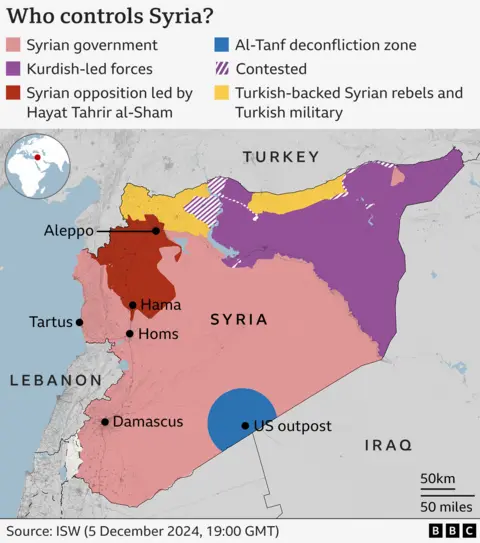
BBC Verify has been tracking the territory captured by Syrian rebels as they move towards Homs.
NHA introduces performance rating system for road building firms

Dec 06, 2024 06:36 PM IST
Contractors who score less than 70 out of 100 will be declared ‘non-performers’ and be ineligible to get new projects till their rating improves
NEW DELHI: Private contractors engaged in building and maintaining national highways across India will be subjected to a performance-based rating system to enhance accountability and improve quality ensuring smoother and safer travel, the National Highway Authority of India (NHAI) said in a statement on Friday.

Based on their score, the contractors will be classified into different categories ranging from “excellent” to “failed”.
Contractors scoring less than 70 out of 100 will be declared ‘non-performers’ and, will be ineligible to secure new national highway projects till they improve their score.
NHAI said this rating would be updated every six months at two levels: an individual project level and a concessionaire level. It will be made available on the NHAI website and social media platforms.
“The assessment methodology will be based on pavement condition index (PCI) as well as defect rectification compliance on NHAI One App where over 95 defects can be notified and monitored digitally,” the statement said. It added that 80% weightage would be given to PCI and 20% to compliance on NHAI One App.
The pavement condition index, a metric in the road construction industry, will be calculated based on six functional parameters — roughness, potholes, cracking, ravelling, rut depth and patchwork — which would be calculated using various technological solutions such as laser crack measurement systems in network survey vehicles.
Stay updated with the…
See more
What might four more years of Donald Trump look like? | Donald Trump

What is next for the United States as it embarks on a second Trump presidency.
As the dust settles following the United States election results, the world is adjusting to the prospect of four more years of Donald Trump.
The future either looks bright or worrying, depending on which side of the political aisle you stand.
Presenter: Anelise Borges
Guests:
Ky Polanco – Co-founder of the FEMINIST organisation
Elizabeth Booker Houston – Lawyer and comedian
Maribel Hernandez Rivera – American Civil Liberties Union
India’s forex reserves rise to $658.09 billion ending consecutive weeks of decline | India Business News

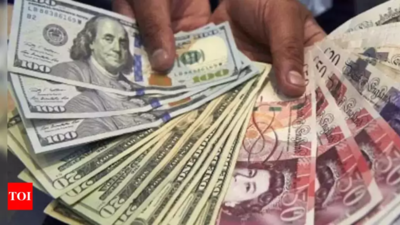
India’s forex reserves rise to $658.09 billion
NEW DELHI: India’s foreign exchange reserves increased by $1.51 billion to $658.09 billion in the week ending November 29, the Reserve Bank of India (RBI) reported on Friday. This marks the first rise in nine weeks, recovering from a five-month low.
The reserves had previously declined by a cumulative $48.3 billion over eight consecutive weeks. In the prior week, they dropped by $1.31 billion, following a significant decrease of $17.76 billion earlier. The reserves had peaked at $704.88 billion at the end of September.
The latest rise is mainly due to a $2.06 billion increase in foreign currency assets, which now stand at $568.85 billion. These assets are influenced by exchange rate fluctuations of non-US currencies such as the euro, pound, and yen. However, the growth was partially offset by a $595 million decline in gold reserves, which now total $66.98 billion. Special Drawing Rights (SDRs) increased by $22 million to $18.01 billion, while India’s reserve position with the international monetary fund rose by $22 million to $4.25 billion.
The RBI uses foreign exchange reserves to manage market volatility and stabilize the rupee. Governor Shaktikanta Das stressed the importance of these reserves, saying, “Foreign exchange reserves are deployed judiciously to mitigate undue volatility, maintain market confidence, anchor expectations, and preserve overall financial stability.” He added that the reserve levels remain “quite robust.”
During the reporting week, the rupee weakened slightly against the dollar, closing at 84.69. This marked its fifth consecutive weekly decline and included a record low of 84.76 during the week.
Thousands flee Syrian city Homs as rebels advance further


 Getty Images
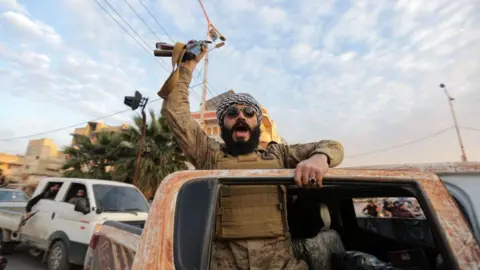
Tens of thousands of people are fleeing Syria’s third-largest city Homs amid reports that rebels are closing in, just over a week since they launched their lightning offensive.
The rebels seized Hama to the north on Thursday, a second major blow to President Bashar al Assad who lost control of Aleppo last week.
The leader of the Islamist militant group Hayat Tahrir al-Sham (HTS), Abu Mohammed al-Jawlani, told residents of Homs “your time has come”.
Rebel forces began the biggest offensive against Syria’s government in years last week.
They have been advancing south, and Homs would be the next stop on the road to the capital Damascus.
Their offensive is the swiftest battlefield advance by either side since the Syrian civil war began 13 years ago, exposing the weakness of the country’s military.
Terrified members of President Assad’s Alawite minority community are rushing to leave Homs, with video footage showing roads jammed with cars.
The rebels’ joint operations centre says its fighters have passed through two towns on the way to Homs – Rastan and Talbisseh – and are now within 5km (3.1 miles) of the city.
The BBC has not been able to verify these movements, but the Syrian Observatory for Human Rights (SOHR), a UK-based war monitor, is also reporting them.
Earlier, the SOHR said Russian warplanes had bombed a bridge in Rastan to try and slow the rebel advance.
After the Syrian military lost control of Hama following days of fighting, it is not clear whether it will be able to defend Homs.
Homs is a strategic city that links Damascus to the Alawite heartland on the Mediterranean coast.
The Alawites are a minority sect of Shia Muslims from which the Assad family originates.
They have long formed a major support base for Assad rule, and are key to the president’s grip on power.
Assad has vowed to “crush” the rebels and accused Western powers of trying to redraw the map of the region
But analysts say his forces are demoralised, dealing with low pay and corruption in the ranks. He announced a 50% pay rise in recent days, according to state news agency SANA.
Russia and Iran, the regime’s most important allies, have declared continued support for Assad,
But they have not provided the kind of military assistance that so far has been propping up his rule, and Moscow is now urging Russian nationals to leave the country.
The Kremlin is preoccupied with its war in Ukraine, and Iran has been weakened by Israel’s punishing campaign against its most powerful allied militia, Lebanon’s Hezbollah.
Hezbollah, whose fighters had been key to holding regime territory in Syria, are now largely absent from the battlefield, although reports in the Lebanese and Israeli press say small numbers have crossed the border to shore up Homs’ defence.
Russian and Iranian officials are expected to meet with their Turkish counterparts at the weekend to discuss a response to this upsurge in Syria’s civil war.
Turkey backs some of the rebel groups and its president Recip Tayyip Erdogan has for months pressed Mr Assad to reach a political solution with the opposition.
He has voiced support for the rebels’ recent advances, and said the offensive would not have happened if Assad had responded to his calls.
Analysts say it almost certainly could not have happened without Ankara’s knowledge and approval.
For his part, the leader of HTS, Abu Mohammed al-Jawlani, has been making public remarks to soften his image and reassure both Syrians and foreign leaders.
He has emphasized his split years ago from Islamic State and Al Qaeda, presenting himself as a nationalist opposed to attacks outside Syria, and promising protection for minority communities.
More than half a million people have been killed since a civil war erupted in 2011 after Assad’s government cracked down violently on peaceful pro-democracy protests.
Since this offensive began nine days ago, the SOHR says more than 820 people, including 111 civilians, have been killed across the country.
Earlier, HTS fighters and their allies took over Hama and released inmates from its central prison amid fierce battles, while the military said it had redeployed troops outside the city.
Hama is home to one million people and is 110km (70 miles) south of Aleppo, which the rebels captured last week.
Meanwhile the UN has said the fighting is also “worsening an already horrific situation for civilians in the north of the county”.
An estimated 280,000 people have been displaced, most of them women and children, and some civilians are trapped in front-line areas unable to reach safer locations.
In Aleppo, a city of two million people, some public services and critical facilities – including hospitals, bakeries, power stations, water, internet and telecommunications – are disrupted or non-functional because of shortages of supplies and personnel.
UN Secretary-General Antonio Guterres urged “all those with influence to do their part” to end the civil war.
