Dia Mirza recently recalled a humorous incident from time filming ‘Tumko Na Bhool Paayenge‘ starring alongside Salman Khan. In an interview, she recounted a conversation with Salman that left her both shocked and amused. During a conversation with Connect Cine, the ‘RHTDM’ star shared that while they were shooting a scene, Salman casually mentioned that the actress currently playing his on-screen mother had once been his heroine in an earlier film. This caught Dia off guard which made her question him again. As she further asked him, Salman Khan who is known for his witty nature, playfully suggested that one day, Dia herself might play his mother on screen. The comment was made in jest but left Dia laughing and bewildered at the thought. She revealed that she wishes that such a day would never come. Further, Dia Mirza fondly recalled her experience working with Salman, noting that she was a big fan of his before they collaborated on the film. She described him as a caring and protective co-star who made her feel comfortable during their time together. Their film, ‘Tumko Na Bhool Paayenge’, released in 2002, is an action-packed drama that features a strong cast including Sushmita Sen and Rajpal Yadav.
The movie is an action, romance, and thriller, and is a memorable film from Bollywood‘s early 2000s cinema. The story revolves around Veer Singh Thakur, played by Salman Khan, who begins to experience unsettling visions about his past. On the work front, Salman Khan is working on his upcoming film, ‘Sikandar’ directed by AR Murugadas and stars Rashmika Mandanna as the female lead. The movie is set to hit theatres on Eid 2025.
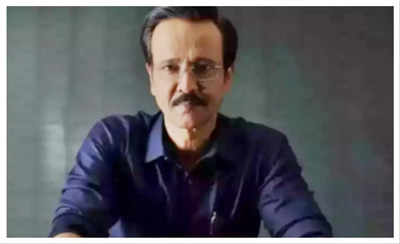
Actor Kay Kay Menon, who was last seen in web shows like Citadel:Honey Bunny and Murshid does not feel nepotism in Bollywood has affected talented actors. The actor in an exclusive chat shared how nepotism is a part and parcel of every field and not just films. Menon said, “Nepotism is very normal in any field, whether it is films or any other business. Films are not public service. Just like in a family business, the son or daughter takes over the father’s business, every established actor will want that his son or daughter also be a part of the film world. As a self-made actor, I feel talent carries you through and sooner or later you get appreciated for your work. At the end of the day if you are talented and keep working consistently, you will get roles. I have never faced any dearth of good roles in my career.” Kay Kay, who has been part of many films like The Ghazi Attack and Haider, shared, “I came from a completely non-filmy background and though it took some time to settle, eventually I got appreciated for my work. I enjoy my work even now and that’s why I feel things fell in place. The day I don’t enjoy acting, I will quit.” He added, “I am lucky I have never faced any prejudice or was never replaced so that a star son could be given that role. I have got good roles and have made the best of it.”
Nobody should be termed as criminal, says Kay Kay Menon
The map is simply all over the place, in the most delicious and puzzling ways, when it comes to food.
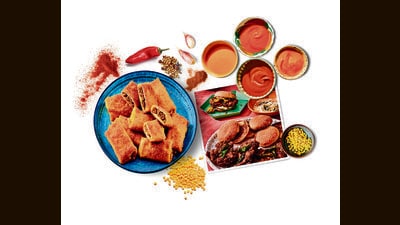
Meat blintzes by Elana Benjamin, a Baghdadi Jew in Australia. A range of fermented hot pepper sauces by Indian-Guyanese-Canadian Devan Rajkumar. Keralan fried chicken sandwiches with a curry leaf mayo by Khushbu Shah, a Gujarati in the US. (Photos:Shibani Mishra, Suech and Beck, Aubrie Pick)
Croissants were likely invented in Austria, not France. Pizzas started out largely white, taking on their signature red hue only after they crossed the Atlantic to become a staple in 19th-century America (read on for why tomato emerged as the base sauce there).
Even the quintessential British fish and chips is a bit of an expat. It was introduced to England by Sephardic Jews who fled Portugal during the Spanish Inquisition and settled there in the 17th century, bringing with them their favourite pescatarian kosher and Shabbat-friendly meal.
The colonisers, of course, overhauled cuisines everywhere they went, and took elements of new food cultures back home with them. (They famously brought potatoes, chillies and pao to India, and left with new ideas for tea, sweetmeats and mince rolls).
Through history, in these ways, what we eat has been shaped by migration, wars, disease, famine, technology, trade, and simple adventurous experimentation.
Canning, for instance, allowed Italian immigrants to turn a tomato sauce into the default pizza base. (In Italy, the pizza was traditionally flavoured with just garlic, salt, basil and lard, often topped with regional produce).
Closer home, the devastating 1972 famine in Marathwada saw several members of the Mang and Mahar castes migrate to cities such as Mumbai and Pune. “They returned with ingredients such as cooking oil, which had not been available or affordable to these communities,” says Shahu Patole, a former civil servant and author of Dalit Kitchens of Marathwada (2024).
These communities had traditionally used crushed peanuts and sesame powders in place of the expensive and inaccessible oil. “Now palm, soyabean and sunflower oil became an integral part of our food; a floating layer of it on a curry became a mark of a good cook, irrespective of how it actually tasted,” Patole says, chuckling.
Guyanese-Indian-Canadian chef Devan Rajkumar‘s shrikhand cannolis. (Photo: Suech and Beck)
However it may have changed, and however alien some of the ingredients and ideas, the food of one’s home becomes a hub of cultural identity.
It is the thing that connects you with those who share the same roots, when all other vestiges of that shared heritage (language, culture, history) are forgotten, says oral historian Saaz Aggarwal, author of Sindh: Stories from a Vanished Homeland (2012). “Most Sindhi homes still cook Sindhi food.”
Aggarwal enjoys seeing how the food itself morphs and shape-shifts, as younger generations reinterpret their heritage around the world. A diaspora Sindhi potluck may now include macaroni-patata (a pasta and potato sabzi) or paneer gado gado (an Indonesian salad of vegetables and potato, with pan-fried paneer replacing hard-boiled eggs).
In a world of increasingly mixed heritage, a slew of new cookbooks with roots in India are documenting the impact of cross-cultural ancestry on cuisine, tracking hybrid dishes, joyful experimentation, and the perspectives and longings of immigrants now up to three generations (and multiple homelands) away from their original home.
Access to these changing food narratives is just as crucial today as access to new ingredients on a different continent once was, Aggarwal says. It remains a way to connect people with new kinds of shared roots and experiences.
Khushbu Shah’s jaggery and fennel Rice Krispie treats, a take on the murmura laddoo. (Images: Aubrie Pick)
Our top picks, from among the newest such narratives, are Amrikan: 125 Recipes from the Indian American Diaspora (WW Norton; June); Mad Love: Big Flavors Made to Share from South Asia to the West Indies (Figure 1; July); and Indian-Jewish Food: Recipes and Stories from the Backstreets of Bondi (Sydney Jewish Museum; August).
Food writer Khushbu Shah’s Amrikan explores recipes dating to early migrants, and featuring unusual substitutions. Dishes featured range from a chevvdo made with Froot Loops and Rice Chex to Shah’s recent invention of a murmura laddoo made with Rice Krispies.
In Mad Love, the Guyanese-Indian-Canadian chef Devan Rajkumar experiments with shrikhand cannolis, a palak paneer spanakopita, and a range of hot pepper sauces born of his roots in India, the Caribbean and Canada.
In Indian-Jewish Food, the writer Elana Benjamin offers recipes for a bhurji-style egg mahmoosa; a tomato shorba-style marag with chicken; and a hearty dish of onion mahashas (onions stuffed with meat and rice).
Tucked into each book are memories of family, home, inventive mothers and lost loved ones, built around the hub of food. Each cookbook also takes its cuisines forward, into tomorrow. Take a look.
.
MAD LOVE by Devan Rajkumar
.
This is soul food of a different kind.
For the Indians taken to the Caribbean as indentured labour in the 1800s, food was more or less all they had left of home. Chef Devan Rajkumar can trace his lineage to an immigrant from this period, three generations ago.
For the next 200 years, as his family dropped roots in Guyana, they clung to their cuisine and religion, long after all else — clothes, accent, language — had changed.
The cuisine had to evolve too, he says.
Indians like his paternal great-grandfather, who likely moved from Kashmir to Guyana during colonial British rule, had to find ways to replicate his food with far fewer ingredients. “That’s why many Guyanese-Indians have dishes that are very simple yet stellar,” Rajkumar says.
There’s a comforting recipe he grew up on, for instance, that is simply pumpkin, with cumin, ginger-garlic and hot peppers, stewed in its own juices.
Most dishes adapted in similar ways, to fit the available spices: turmeric, curry powder, cumin powder, garam masala.
Then Rajkumar’s parents moved to Toronto and, at the age of nine, his ideas of Indian food opened up. The saffron kheer cooked at the temple he often visited became a dish he loved to eat and yearned to cook, says the 40-year-old.
His new cookbook, Mad Love: Big Flavors Made to Share from South Asia to the West Indies (Figure 1; July) pays homage to all these influences, with Guyanese-Indian food forming the base. “People don’t seem to know anything about Guyana and its complicated history, and I really want to change that,” he says.
The book features that country’s national dish, pepperpot (a meat-based stew), and the recipe for chunkay (from the Hindi chaunkna, to temper), which is the Guyanese-Indian equivalent of a tadka, except it’s just hot oil with thinly sliced garlic and cumin seeds. There were no curry leaves, no red chillies. But it brings a dal to life nonetheless.
There’s the smoked goat biryani recipe which he describes as “winning the lottery once you get it right”.
Cumin of age
The grilled paneer and watermelon sandwich. (Photo: Suech and Beck)
Food, for Rajkumar, has been tied up in love, loss and grief.
When the family first moved to Canada, he remembers his elder brother, Jai Rajkumar, dragging him around Toronto, determined to try every cuisine on offer.
Then Jai died. At 21, Devan slid into a period of darkness, working in dead-end jobs, looking for a sense of purpose. By 24, he knew what he wanted to do, and it wasn’t join the family business. He moved from business school to culinary school, and finally the gloom began to lift.
“I used to be so excited just to go and make some sauces in class the next day that I couldn’t fall asleep at night,” he says, laughing.
He worked in restaurants; co-founded one in 2018; began to learn more about food through travel. He sampled traditional cuisines and new experiments in England, India, Pakistan, Turks & Caicos, Peru, Dubai. He launched a catering service; built a reputation as a celebrity chef with appearances on cooking contests and chat shows on Canadian TV; racked up 185,000 followers on Instagram, all tuning in for his Guyanese recipes with a twist.
A tribute
Palak paneer spanakopita. (Photo: Suech and Beck)
“For the longest time, I couldn’t bring myself to speak about my brother. This book is my way of celebrating his legacy,” Rajkumar says.
Collecting recipes for Mad Love brought back memories of their first wild dashes across Toronto. There’s one for a Hakka-style chilli chicken, a Chindian or Chinese-Indian invention that he recreated after a delicious meal they had together at an eatery that was just a hole in the wall. There are the spiced, sweetened rotis that his mother Bhano Rajkumar still makes, whose fragrance always sent the two boys running to her kitchen.
About 60% of the book is new recipes drawn from his experiments over the years.
These include an “Indo-Greek” palak paneer spanakopita, a filo pastry filled with spinach and feta. “Palak paneer is spinach and cheese, and so is spanakopita, so I thought why not put the two together,” he says.
Also featured is a range of fermented hot sauces, including a cilantro pesto that provides the zing to his grilled-paneer-and-watermelon sandwich.
There’s a “vegan pepperpot”, which swaps meat for oyster mushrooms and jackfruit. This is a tribute to his mother, who made the traditional version every Christmas morning, though she was vegetarian and so couldn’t even taste it herself.
His love for his culinary heritage is reflected back to him, he says, when Guyanese followers write in to say that a dish helped them feel closer to their late parents, because it was a dish they remembered but had never learnt to make.
“This book is for all those kids who try to cook with their parents and end up having a squabble instead,” Rajkumar says. “This is to make those fleeting moments a little easier, and a little more special.”
.
INDIAN-JEWISH FOOD by Elana Benjamin
.
Growing up, Elana Benjamin always felt like she was straddling two worlds.
“I was a minority within a minority,” she says: an Indian-Jewish Australian raised among European Jews in the beach haven of Bondi.
Benjamin, a writer, is technically a Baghdadi Jew, with roots in a community that fled Iraq in the 1700s, to settle in British-ruled Bombay.
Her parents migrated to Australia in the 1960s, and settled in the Sydney suburb of Bondi, where there was already a strong community of Ashkenazi or European Jews.
The two cultures were vastly different, Benjamin says. The Ashkenazi prayers and prayer services were unfamiliar, as were their ritual foods.
A plate of onion mahashas, featuring a stuffing of meat and rice. Any suitable vegetable may provide the shell, in this Indian-Jewish hybrid. (Photo: Shibani Mishra)
Meanwhile, her parents weren’t simply a different kind of Jew. They often broke into Hindi as well, and spent Sunday mornings buying dal and pickles at the local spice store (as well as a vivid pink rose syrup familiar across the subcontinent and nowhere else).
“Words like jeera, kothmir and ginger-garlic — uttered quickly as one word — were frequently heard in my mother’s kosher kitchen,” she says, laughing.
On Saturdays, large family gatherings at her grandmother’s house featured Iraqi-Indian dishes such as aloomakalas (fried potato), shiftas (beef koftas) and hamim (a one-pot dish of chicken and rice).
Measured in memories
Benjamin’s marag is a synthesis of marak, which is Hebrew for soup, and murgh, Hindi for chicken. The hearty tomato-based comfort meal makes for a good first course, light lunch or winter dinner. (Photo: Shibani Mishra)
When her mother, Sheila Benjamin, turned 75 last year, Elana began work on her cookbook, Indian-Jewish Food: Recipes and Stories from the Backstreets of Bondi (Sydney Jewish Museum; August).
She had made no attempt to learn the traditional Indian-Jewish dishes until then, “and I realised I could not afford to lose these recipes, which were rarely ever written down,” Benjamin says. As it turned out, some had already slipped out of her grasp.
“I started with the chakla bakla or pickled vegetables recipe, a dish my mother made often when I was a child, and found that neither she nor her sister could remember the exact quantities required,” says Benjamin, 50.
Measurements were almost impossible to come by, overall. In true subcontinental style, none of the women set much store by precision in the kitchen. As a result, it has been a case of trial and error, says Benjamin, laughing. She has had to experiment with each recipe until it tasted right.
In addition to preserving a unique cuisine, the book offers shortcuts and hacks, to allow for simpler, quicker cooking.
Elana Benjamin. (Photo: Shibani Mishra)
“The idea is to show people that hearty food can be delicious and accessible even after a hard day’s work. It does not need to feel overwhelming,” she says. “And while some dishes, such as the onion mahashas (onions stuffed with meat and rice) or meat blintzes (pancakes stuffed with beef mince), are unlikely to be weeknight meals, they’re wonderful for special occasions when the family can come together to help.”
Alongside most recipes is the history of the dish. The blintz, for instance, has roots in the Anglo-Indian pan rolls that evolved as a teatime snack during British colonial rule. It’s very time-consuming to make, says Benjamin. “I strongly recommend splitting the cooking over two days and enlisting a family member or friend to help with the frying.”
Any cuisine must evolve to stay alive, she adds. And if the dish still tastes like home, and warms the heart, you know you haven’t strayed too far.
.
AMRIKAN by Khushbu Shah
.
When Khushbu Shah’s parents, both doctors, moved from Gujarat to Detroit in the 1970s, recipe substitutions weren’t a matter of choice or even pricing. The original ingredients — even simple ones like copra, khoya, dhaniya — just weren’t available.
Hacks were figured out through trial and error. The baking mix Bisquick, for instance, was combined with milk powder to make khoya for gulab jamun. Peanut butter replaced whole peanuts in mint chutney.
“Visit my parents’ house any day of the week and I guarantee you’ll still find a sunshine-yellow box of Bisquick,” Khushbu Shah, 34, a writer and contributing editor at the magazine Food & Wine, writes in her cookbook, Amrikan: 125 Recipes from the Indian American Diaspora (WW Norton; June).
Khoya may now be freely available, but Bisquick is now the flavour of gulab jamuns here. It’s this kind of unique Indian-American tradition that Shah’s book seeks to capture.
Shah’s shahi tukda French toast involves soaking slices of bread in a saffron-infused custard, baking the slices, then garnishing the dish with condensed milk, pistachio slices and rose petals (Photo: Aubrie Pick)
The adaptation wasn’t all unidirectional. American foods were tweaked to suit the Indian palate, resulting in dishes such as achari paneer pizza and the mango cardamom tres leches, which feature in the book too.
Among the more creative Indian-American diaspora creations featured in Shah’s book is an upma made with Cream of Wheat (the American breakfast porridge mix), and a chevvdo that swaps poha flakes and dals for the more-readily-available Froot Loops and Rice Chex packaged cereals.
For special occasions, there is the masala chai basque cheesecake (Shah’s invention) and her jaggery and fennel Rice Krispie treats, which she calls a “super snack”.
Some recipes were born of Shah’s frustration that they didn’t already exist, such as the “glaringly obvious” saag paneer lasagna aka LaSaagNa.
Falooda, traditionally made with vermicelli and basil seeds, was missing an element of chewiness, so she created the Bobalooda, with tapioca pearls and chia seeds taking their place.
Perhaps more than anything, Shah says, the book is an invitation to be less intimidated by Indian food, and more willing to experiment with it.
Khushbu Shah. (Images: Aubrie Pick)
Unlike Chinese, Japanese and Mexican cuisines, which have become ubiquitous in America, this cuisine is still largely underrepresented, she says. There is a sense that it is more complicated, more difficult to master. She would like to see that change.
Perhaps one factor is that America hasn’t had much of a direct history with India, in the way that the Caribbean and UK have had, Shah says.
“I do think more people do now understand how to use a vaghar or a tadka,” she adds. “But there is so much fun to be had with something like mithai-making techniques… These are the kinds of things I wish more Americans were exposed to.”
Jason Sanjay will helm the film starring Sundeep Kishan.
Vijay’s son to make directorial debut
24-year-old Jason will direct the film, which will star Sundeep Kishan in the lead role. The film’s team revealed that the music will be given by S Thaman. In the minute-long motion poster, a library with lots of cash is shown, both outside and inside. It ended with Jason and Sundeep sitting across each other on director and hero’s chairs respectively. A pile of cash was seen around them.
About the film
The film will go to the floors soon. It is produced by Subaskaran. It has been tentatively titled as Jason Sanjay 01. Lyca Productions also shared a tweet and wrote, “A new chapter unfolds as we welcome our exceptional cast & crew @sundeepkishan @MusicThaman & @Cinemainmygenes on board for JASON SANJAY-01 https://youtu.be/e3gZEn9tvaU. On floors soon…” Reportedly, it is a sports film.
About Jason
Lyca Productions’s GKM Tamil Kumaran said, as quoted by The Hindu, “Our production house has always strived to encourage good storytellers, and when Jason Sanjay presented the narrative, we felt something fresh and most importantly, it had the USP of drawing pan-Indian attention.”
“The basic gist revolves around the theme of ‘searching for what you’ve lost in its original place’ — but at what cost? Sundeep Kishen has distantly proved his crowd-pulling calibre in Tamil and Telugu territories. We strongly believe this new collaboration will enthral film enthusiasts with a fresh cinematic experience,” it added.
As per The Hindu, Jason completed his schooling in Chennai. He then pursued a Film Production Diploma at Toronto Film School. This was followed by a BA (Hons) in Screenwriting in London. Jason first appeared on screen in Vijay’s 2009 film Vettaikaran. He made a cameo in the song titled Naan Adicha.
Amazon Summer Sale is…
See more
News/Entertainment/Tamil Cinema/ Vijay’s son Jason Sanjay announces directorial debut, Sundeep Kishan to play lead role. Check out first look
Ben Affleck and his ex-wife Jennifer Garner celebrated Thanksgiving in its true spirit. The former couple spent the day together giving back to the community by feeding around 2000 people in need in Los Angeles. After helping the needy, Ben and Jennifer took the celebration to the latter’s house in the evening. Reports suggest that the ‘Accountant 2’ star Ben, amid his nasty divorce proceedings from Jennifer Lopez, spent the holiday with Garner and their three kids – Violet, 18, Seraphina, 15, and Samuel, 12. This family of five had a cozy dinner, hosted at Jennifer Garner’s Brentwood, California, home. Sources reveal Ben feels blessed to be around Garner, especially during the festive season. It is easy for him to be just himself around his ex-wife. Speaking to Page Six, a source shared, “Even though Ben and Jen have been split for a while now, he feels a certain level of comfort with her.” In the ups and downs of the divorce with Lopez, Ben finds ease with Garner. Though the former couple called it quits years ago, they share a friendly bond and thus, stand by each other in every thick and thin. “Ben has a strong relationship with Jen that will never dissipate because they have a lot of history together and she’s the mother of his kids,” the source added. According to the source, despite their separation, Ben and Garner are close because they share children, and thus, this equation will never change. Meanwhile, there were reports that Jennifer Lopez might join Ben and Jennifer Garner for the festive celebration, but she didn’t. On Friday, JLo shared a festive post for her Insta-fam that read – “beautiful and Happy Thanksgiving” and expressed her gratitude: “I am so incredibly grateful for all of you.”
Veteran Bollywood actress Neena Gupta perfectly transformed into the social media sensation Ganji Chudail, an animated character and even got a makeover to turn into the “Gen-Z chudail”.
After major brands collaborated on social media with the “Ganji Chudail”, which in English translates to a “bald witch”, the Internet icon got a makeover via Neena, who brought the character alive on screen.
In a video by YouTube on Instagram, Neena’s Ganji Chudail was seen getting a glow up as she was dolled up by three make-up influencers.
Have A Look At The Viral Video:
The clip starts with three beauty and lifestyle influencers tied together in the “Ganji Chudail’s” den. A voice is heard “Ek baar teen YouTubers ko kidnap kar leti hai, Ganji Chudail (Once three YouTubers were kidnapped by Ganji Chudail).”
Have A Look At The Viral Video:
Neena, who plays the iconic “Ganji Chudail”, declares, “Thak gayi hoon meme banke, ab tum teeno mujhe babe banaoge (I’m weary of being a meme. Now, you three are going to make me a babe.)” If refused, Neena hilariously threatens to delete their social media handles.
The three then agree to help the Ganji Chudail with a glammed up Gen-Z makeover. The video then pans to how the Ganji Chudail is getting a makeover and how the perfect foundation isn’t there to match Chudail’s complexion.
The influencer then talks about how the beauty industry’s lack of inclusivity. After some efforts, they finally settle on a green foundation that works perfectly. The video then shows how the Ganji Chudail gets a hair spa. It then moves to her makeover, where she has a smoky eye look, and a glittery outfit.
The final reveal shows the Ganji Chudail as a stunning Gen-Z diva-ish Chudail.
The video was captioned: “vo kehte haina served and left no crumbs #GenZChudail.”
Neena had earlier shared that the “Mumbai winter is here” and shares how she can now dress up for the airport. She took to Instagram, where she shared a video of herself. In the clip she is seen walking out of her room holding a trolley bag.
This year, Bigg Boss 18 is running on the theme of time–Time Ka Taandav.
Fight over eating habits
A video has emerged on social media showing the two having a conversation with tension brewing. The altercation brought the spotlight on the duo.
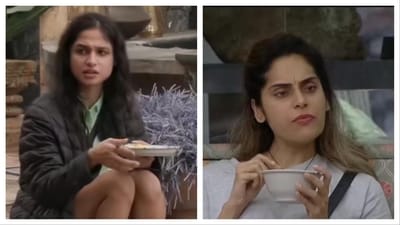
The video shows Kashish sitting in one corner and having her food. When Shrutika Arjun asks why she is sitting at a distance from them, Kashish said, “Aap mooh khol ke khate ho, to mujhe bahut disturb hota hai (You making a lot of noise while chewing which disturbs me).” She signalled at Aditi while making a comment.
This response disturbs Shrutika who hits back, saying, “Lekin sab muh khul ke hi khaate hain (Everyone opens their mouth to eat).” An irritated Kashish is then seen saying, “It is chewing time.”
Shrutika seemed to ignore Kashish at this point. She is seen telling Aditi, “Yeh normal hota hai, tu khaa (This is normal. You continue eating your food).” Meanwhile, Aditi was seen defending herself saying, “Itna toh loud nahi hota hai (it is not that loud).”
Fans react
The video led to a debate among social media users, with some supporting Kashish and some Shrutika. “This is so me. I hate it when I hear chap chap chap noise,” one wrote, while another mentioned, “But here Kashish was right…it’s really irritating.”
“Kashish is not wrong, there are people who can’t stand the sound of eating and chewing, and its not their fault so,” one wrote. One user shared, “She is rude,” while another shared, “There’s no shame when I say I love Shrutika.”
About Bigg Boss 18
This year, Bigg Boss 18 is running on the theme of time–Time Ka Taandav, which promises plenty of twists. The tagline reads, “Iss baar ghar mein bhuchaal aayega, kyunki Bigg Boss mein Time Ka Taandav chaaeyga! (This time, chaos will strike the house as the wrath of time will reign in on Bigg Boss).”
The edition is getting noticed for its in-house fights, heartbreaks, friendships and brewing romance among housemates. It is being reported that Aditi Mistry, a wildcard contestant, has been eliminated in a surprise midnight eviction on Bigg Boss 18. Housemates choose her due to weak connections, leading to her exit.
Now, a second round of eviction is expected to take place during the Weekend Ka Vaar episode. Vivian Dsena, Shrutika Arjun, Karan Veer Mehra, Avinash Mishra, Tajinder Bagga, Kashish Kapoor, and Sara Arfeen Khan are being nominated this week. Bigg Boss 18 airs on Colors TV every night at 10 pm, and can be streamed on JioCinema.
Teja Sajja recalled how Ranveer Singh complimented his performance in HanuMan. He added that the actor broke it down with “much detail and love”.
Teja Sajja shared a picture with Ranveer Singh and penned a note about the actor. Taking to X (formerly Twitter) on Saturday, Teja also shared the “best compliment” he received, which is from Ranveer. There is a connection between Teja and Ranveer. While Teja starred in the hit film HanuMan helmed by Prasanth Varma, Ranveer’s film Rakshas with the same director was shelved a few months ago. (Also Read | Ranveer Singh, Prasanth Varma confirm shelving Rakshas)
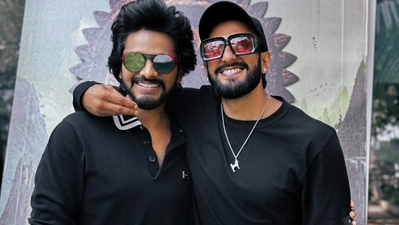
Ranveer Singh and Teja Sajja united for a photo.
Ranveer, Teja pose for pics
In the picture, Ranveer and Teja twinned in matching outfits. Ranveer had his hand near Teja’s face as they both smiled for the camera. Sharing the poster, Teja captioned the post, “As the year’s wrapping up, I’ve been asked a lot about the best compliment I’ve received. Honestly, I’ve kept this to myself for a while because it felt so personal, but now I feel like sharing it.”
Teja shares Ranveer’s compliment for him
“The best compliment came from this Man—Ranveer Singh! The way he spoke about my performance, breaking it down with so much detail and love, noticing even the minutest things just blew me away. It wasn’t just a compliment; it was pure encouragement, straight from the heart. That’s the kind of person he is—kind, genuine, and full of love. “Thank you, bhai (brother), for making my journey even more special. Much love always! @RanveerOfficial,” concluded his note.
About Teja, Prasanth Varma’s HanuMan
Teja-starrer HanuMan was a blockbuster this year. Following its success, Prasanth announced a sequel, titled Jai Hanuman. It also starred Amritha Aiyer, Varalaxmi Sarathkumar, and Vinay Rai in the lead roles. The Telugu-language superhero film is set in the fictional village of Anjanadri. HanuMan marked the beginning of the Prasanth Varma Cinematic Universe (PVCU).
About Ranveer, Prasanth Varma’s Rakshas
In May this year, both Ranveer and Prashanth issued statements clarifying that they won’t be working in Rakshas. Ranveer had said, “Prasanth is a very special talent. We met and explored the idea of a film together. Hopefully, we will collaborate on something exciting in the future.” To this, Prasanth had added, “Ranveer’s energy and talent is rare to find. We shall manifest our forces combining soon, sometime in the future.”
Catch every big hit,…
See more
News/Entertainment/Bollywood/ Ranveer Singh met HanuMan actor Teja Sajja, complimented him even after his Prasanth Varma film Rakshas got shelved
As media mogul Logan Roy’s third wife, Marcia Roy had the unenviable role of showing his scheming children their place in the family’s future. Hiam Abbass, who played the unwavering character of Marcia Roy in the HBO series Succession, was a reluctant actor thrown into the high intensity world of television for the first time. (Also Read – Jeremy Strong reveals how Succession ‘messed’ him up: ‘No desire to return’ for HBO spin-off)
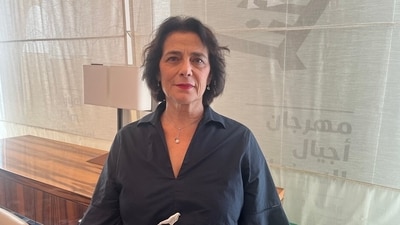
Palestinian actor and Succession star Hiam Abbass at the just-concluded Ajyal Film Festival in Doha, Qatar
“It was the first TV show that I ever participated in,” Abbass told Hindustan Times at the just-concluded Ajyal Film Festival in Doha, Qatar. “Before Succession, I was almost anti-television,” adds the Palestinian actor, who was born in Nazareth, Israel.
“I just loved cinema and the work of the actor on stage, like the engagement with movies where you know the beginning and the end. The TV series was a new experience for me, where you just like, ‘Go’, and you don’t know where you’re going. So it was like an interesting process to learn,” she says.
“I really loved working on the show. I loved the cast, the writers and the directors. I think it was one of the most important projects I had on TV basically,” recalls Abbass, who appeared in all the four seasons of Succession, which ended last year after a hugely successful half-a-decade international run, as a main and recurring character.
The Palestinian Voice
Arguably the most successful Palestinian actor, Abbass donned a variety of roles representing the Palestinian identity and narrating stories of a people who had become refugees in their own land.
She was a Palestinian widow who sued the Israeli defence minister for uprooting her lemon trees in Israeli filmmaker Eran Rilklis’ Lemon Tree (2008), played Palestinian activist Hind al-Husseini who founded the Arab Children’s House orphanage in Jerusalem in American artist Julian Schnabel’s 2010 film Miral, co-starring Freida Pinto, and a tailor in love with a fisherman in Gaza in Tarzan brothers’ Gaza Mon Amour (2020), that explores romance under occupation.
Hiam Abbass played a Palestinian widow suing the Israeli defence minister in Lemon Tree
Abbass was also in American director Steven Speilberg‘s Munich, about the hunt for the terrorists who killed Israeli athletes at the 1972 Munich Olympics, Palestinian filmmaker Hany Abu-Assad’s Oscar-nominated Paradise Now, French-Canadian filmmaker Dennis Villeneuve’s Blade Runner 2049, and American series Ramy, on immigrant Muslims in the United States, helmed by stand-up comedian Ramy Youssef.
Last year, Abbass played herself in her daughter Lina Soualem’s debut documentary, Bye Bye Tiberias, the personal accounts of four generations of Palestinian women tracing links with their homeland.
“I’m very happy with Bye Bye Tiberias. Honestly, I was very afraid because when you reveal personal things of your life and go so deep into not only yourself, but people who kind of made you and are close to you, people who are so deeply connected to your past, it’s hard to stay stoic in front of that, you know,” says Abbass about the story of her grandmother, mother, herself and her daughter.
Bye Bye Tiberias by Hiam Abbass’ daughter Lina Soualem told the story of four generations of women in her Palestinian family tracing links with their homeland
Behind the Camera
Abbass got behind the camera in 2012, to make her first directorial venture, Inheritance, the story of a wedding in the middle of a war between Israel and Lebanon. More than a decade later, as the Middle East is reeling under a catastrophic conflict that has claimed 44,000 lives in Gaza and displaced more than three million people in Gaza and Lebanon, Abbass is aware of the strength of the collective voice of Palestinian artists.
“I’m not an ambassador, you know, of any sort, but I think the most important thing, it’s like the voice that I take, and our voices all together, would make the Palestinian voice,” she says. “Through the cinema and through our work, at least, we were able to raise them up again, and just say, you know, we exist, but we don’t exist as you want us to be, but as our own voices, individually, and we can represent something that we are trying to.”
Abbass, who lives in Paris, has five movies in various stages of production, most of them continuing her representation of Palestinian stories to the world. “There are four movies that I shot all over last year, which will be released in 2025-26. There are two new movies I’m doing at the beginning of next year. One is a Lebanese film with Lebanese-French director Danielle Arbid (of Alone With War) and another with Argentinian scriptwriter-director Santiago Amigorena.”
“Yet another is a movie (All Before You) by Palestinian filmmaker Annemarie Jacir (of Salt of This Sea). My character is an old lady in what used to be a resistance in the Palestinian revolution. In the film, I live with my husband and my daughter and her daughter. So there’s a generational thing as well that happens in the movie. But it’s really like a guest role because of my relationship with Annemarie,” says Abbass referring to the acclaimed director’s new project about a farmer-rebellion against the British in Palestine in 1936.
Her new acting roles are keeping Abbass from directing. “Unfortunately, since I directed Inheritance, I didn’t have the time to develop another. I did direct a short film, Le Donne della Vucciria, for the Prada Miu Miu Women’s Tales series. Prada decided to encourage women directors to be more on the market. I was number six in the series. I also directed one of the episodes of Ramy. I love it, I’d still love to do it, but I’m not finding the time to develop. It needs your full time.”
Hiam Abbass directed Inheritance in 2012
Don’t Ignore Memory
Abbass arrived in cinema as a production assistant in a movie shot in her own village in Nazareth. “(Palestinian filmmaker) Michel Khleifi came to call anybody who was involved in art to help because we didn’t really have any production companies or production houses,” she says, referring to Khleif’s debut film, Wedding in Galilee (1997).
“And I remember one day he asked me to do a silhouette part that was so small. This is where I discovered the relationship to the camera. I guess that was one of the secret reasons deep in me that made me go away from Palestine to look for something different as well in order to, you know, maybe meet with that world one day.”
“The love of acting was in me since I was young. But my relationship to cinema really, I think, happened almost as if in a dream. One day, there was a movie that arrived in the open air at the central square of my village and I remember I was a very, very young person. I took a small chair from my parents’ house, put it there and sat on it. And I looked at something that seemed magical to me.”
On magic, is she going to be in the new Harry Potter series announced by HBO, led by Succession producers Francesca Gardiner and Mark Mylod? “No, no, no. They didn’t tell me this you see, I learned it just now from you. I don’t follow up really in that sense and I don’t go after people to kind of like ‘Hey, what you’re doing next? Can I do something with you?’ I’m not that kind of actor. I’m not judging the others, but I’m not, you know. I work so much that I’m really happy with whatever comes to me. That doesn’t mean that I’m lazy and I’m just sitting waiting. But I have a deep belief that whatever is for me would be for me will come to me.”
Abbass’ decision to act in Bye Bye Tiberias, her daughter’s debut documentary, came as a catharsis. “It was hurtful to talk about the past because it was close to all the pain I was living with that separation (of her mother’s death). Separation reminds you of another and another and another, and it goes back deep into the heritage that you got from all this exile one after the other and that was passed to you despite you wanting to receive it.”
“But today, what I find really interesting as well is I would resume this whole experience by saying that I discovered how important it is for people to be in touch with their own stories and how much it is important always to know that you’re part of a collective, and this collective, you cannot ignore it. The history, memory, is maybe personal at first, but you’re part of a collective memory and we have to stick always to the idea that we are part of a home. We’re not alone in this world.”
Vicky Kaushal and Katrina Kaif continue to charm fans with their adorable bond. Recently, Vicky shared that Katrina helps him with his wardrobe, making sure he looks “presentable.” He jokingly called her the “subedar” of his styling team. At the GQ Men of the Year event, Vicky Kaushal shared a hilarious confession about his fashion sense, admitting he’s “fashion handicapped.” He revealed that he relies on a team, jokingly calling it an “army,” to help him look presentable. He shared, “I’m a really fashion handicapped person. I rely on an army to make me a little presentable.” Vicky playfully shared that Katrina Kaif often advises him on his outfits, calling her the “subedar” of his styling team. He also revealed his favorite dish—aloo paratha with white butter and mango pickle and shared how their food preferences have blended. Katrina now enjoys his love for parathas, while he has developed a liking for her pancakes. In a chat with BBC Asian Network, Vicky Kaushal expressed heartfelt admiration for Katrina Kaif, describing her “superstar soul” as what captivates him most. He shared that being with her completes him, fills the gaps in his life, and inspires him to be the best version of himself. The ‘Sam Bahadur’ actor described Katrina Kaif as his “reality check,” praising her for keeping him grounded while motivating him to grow. He admires her honesty, resilience, and determination, qualities that helped her achieve stardom despite challenges. Her grace and strength continue to inspire him every day. Kaushal shared that he cherishes his creative collaborations with Katrina Kaif and their shared moments of gratitude. Whether reflecting on life’s blessings or exchanging heartfelt messages, he finds joy in their connection. He admires her grounded outlook and shared vision, feeling incredibly lucky to have her as his partner. Katrina Kaif and Vicky Kaushal tied the knot on December 9, 2021, in an intimate ceremony at the luxurious Six Senses Fort Barwara in Rajasthan, surrounded by close friends and family. On the work front, Vicky is set to portray Chhatrapati Sambhaji Maharaj, the valiant son of Chhatrapati Shivaji Maharaj, in his upcoming film ‘Chhaava’. The highly anticipated movie is scheduled to release on December 6, 2024. Moreover, the actor will also star alongside Alia Bhatt and Ranbir Kapoor in ‘Love & War’, slated for release on March 20, 2026.
IFFI 2024: Amar Kaushik’s Move From Horror To Mythology Finds Roots In Childhood Tales